


Up $300 in Three Days! Gold Stages a Short Squeeze, Rally Driven by Chasing May Be Far From Over
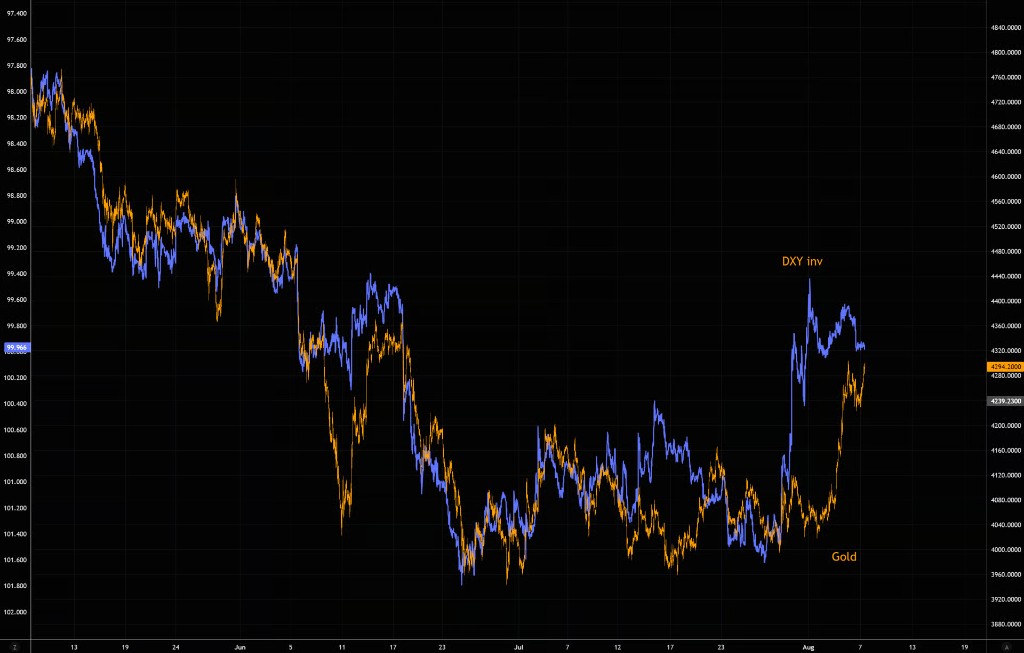
The divergence between gold and the weak U.S. dollar has now been repaired. Previously, many CTA trend-following funds maintained short positions in gold. As gold prices break through key levels, these CTAs are stopping out and flipping to long positions. Meanwhile, a significant amount of speculative capital missed this round of gains, and these funds may be forced to chase the rally in the future, driving a second wave of price increases. In the long term, central bank gold buying is heating up, providing support for demand; in the short term, the RSI has entered overbought territory, suggesting volatility may intensify
In just a few trading days, international gold prices surged by approximately $300, completely reversing the previous consolidation pattern. The market is experiencing a typical "short squeeze".
As CTA trend-following funds stop out and cover their shorts, expectations of a weaker U.S. dollar materialize, and a large volume of speculative capital has yet to rebuild its positions, the rise in gold is no longer just a safe-haven trade. It has evolved into a trend-driven move fueled by positioning.
Although short-term technical indicators are clearly overbought, market participants believe that the easiest part of the rally—the catch-up phase—has ended. However, a new round of gains driven by chasing funds may have only just begun.
Currently, the previous price divergence between the U.S. dollar and gold has been repaired. With CTAs forced to chase the rally, option volatility remaining relatively cheap, and central banks increasing their gold purchases again, the medium- to long-term logic for gold remains unchanged.
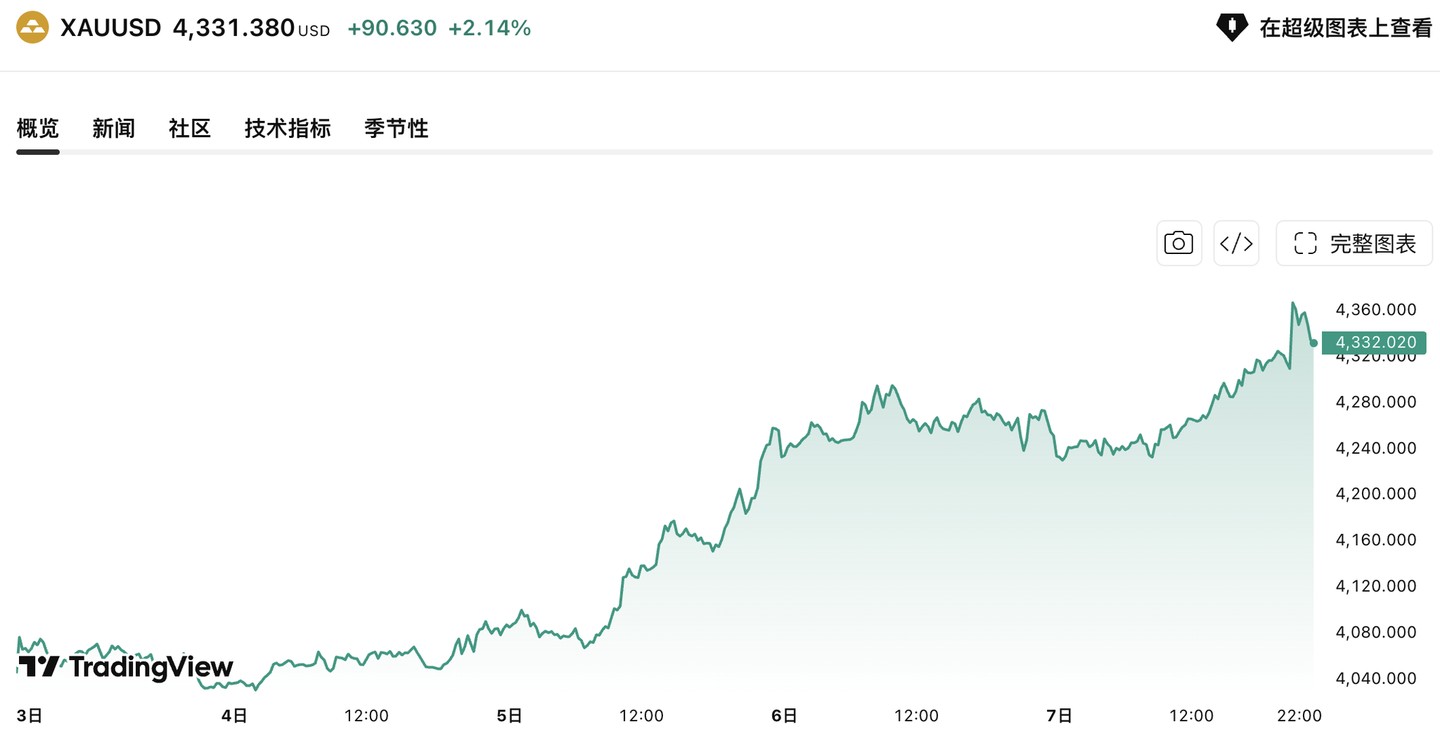
Gold Prices Surge $300 in Days, Entering "Short Squeeze" Phase
International gold prices have risen rapidly in recent days, accumulating a gain of about $300 in just a few trading sessions, far exceeding previous market expectations.
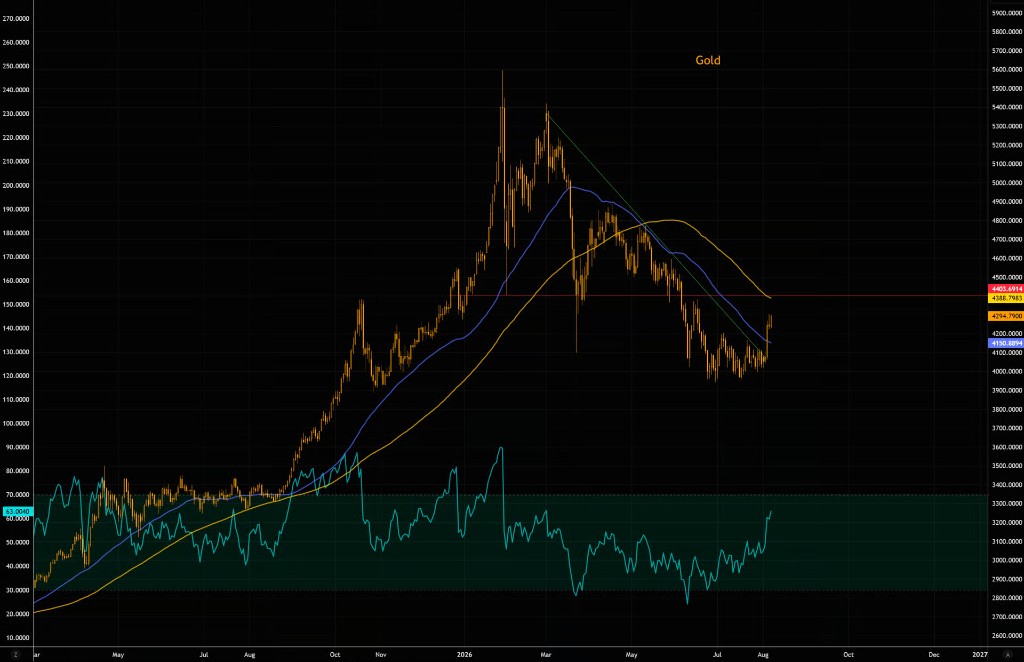
As prices climbed back above the 50-day moving average, gold achieved a key technical breakout. Market focus has now shifted to the area around $4,400 near the 100-day moving average, which has become the next significant resistance level.
Although gold has rebounded by approximately $300 from this week's lows, the Relative Strength Index (RSI) has quickly risen to one of its highest levels in recent years, indicating some short-term overbought conditions.
However, historical experience suggests that RSI levels in gold bull markets can often remain elevated for longer periods. Therefore, it is premature to judge the end of the rally based solely on overbought indicators.
CTA Stop-Loss Covering Begins, New Wave of Chasing Capital Enters
The important force driving this rally is not traditional safe-haven demand, but rather position adjustments.
Previously, many CTAs (trend strategy funds) maintained short positions in gold. As gold prices broke through key technical levels, these trend strategies sequentially triggered stop-losses, forcing them to close short positions and establish long ones.
This passive buying pressure, driven by programmatic trading, often amplifies the magnitude of the rise and is a key characteristic of a typical "short squeeze".
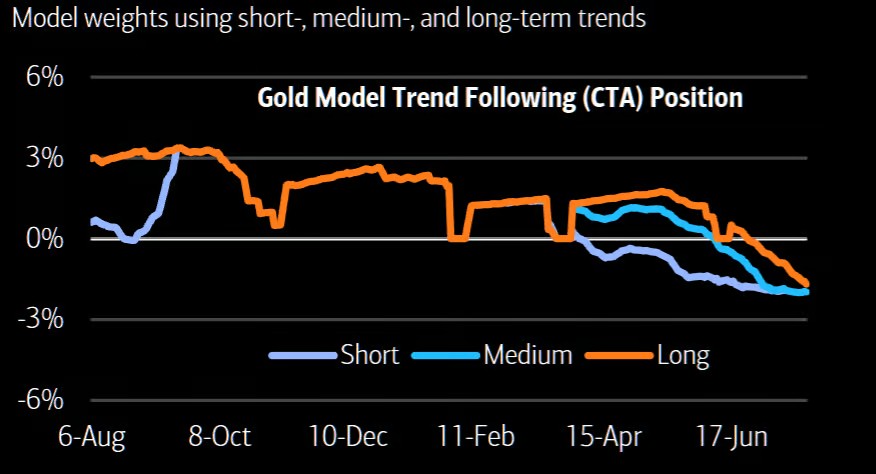
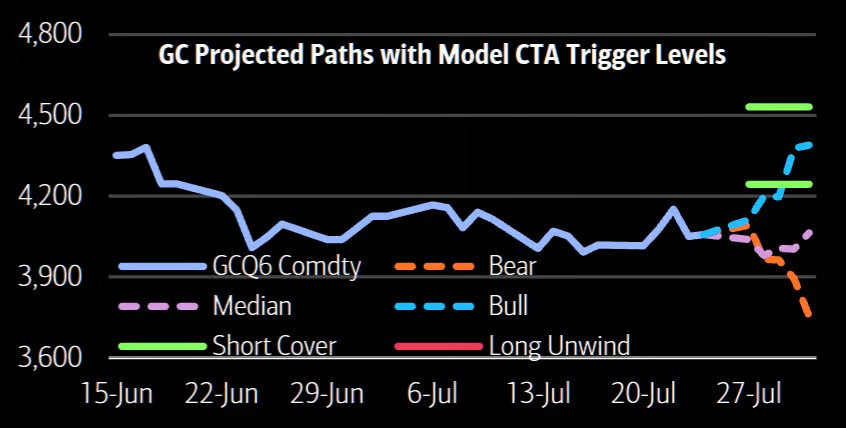
At the same time, market data shows that a large amount of speculative capital in gold almost missed this round of gains.
Previously, many investors were waiting for better entry opportunities. However, as prices continue to hit new periodic highs, this capital is likely to be forced to chase the rally in the future, thereby forming a second wave of fund-driven price increases.
Market participants believe that what deserves attention now is not the price repair that has already occurred, but the subsequent positioning rebuild rally.

Dollar Divergence Fully Repaired, Gold Catch-Up Logic Realized
Another important background to this rally is that the obvious divergence that previously existed between gold and the U.S. dollar has largely disappeared.
Previously, the U.S. Dollar Index (DXY) continued to weaken, while gold's performance lagged significantly. The market once believed that gold had not fully reflected the bullish impact of the dollar's decline.
Now, with gold's rapid catch-up rise, this gap has been basically filled.
In other words, the easiest "catch-up trade" has already been realized. Future further rises in gold will depend more on new capital inflows rather than simple mean reversion.
Central Bank Gold Buying Heats Up Again, Long-Term Demand Provides Support
From the perspective of long-term capital flows, the fundamentals of gold have not deteriorated.
Although global central bank gold purchases decreased by about 28% year-on-year since the beginning of this year, gold buying activities have recently accelerated again, with central banks in China, Turkey, and other countries remaining the main buyers.
It is worth noting that during the previous escalation of tensions in Iran, foreign exchange reserve management agencies in various countries did not show significant selling of gold, indicating that official funds still maintain a high willingness to allocate.
Meanwhile, Goldman Sachs' commodities team pointed out that market discussion on "when to buy gold" has reached its peak heat, but the actual capital participating in the rally remains limited.
The biggest concern in the market still stems from the trend of real interest rates. Only when investors are more certain that U.S. real interest rates have peaked will the demand for gold allocation be expected to release further.
Gold Is Not a VIX Safe-Haven Tool; It Also Benefits from Low Volatility Environments
There has long been a misunderstanding in the market that gold rallies must rely on market panic.
In fact, since last autumn, gold has often continued to rise against the backdrop of declining stock market volatility (VIX).
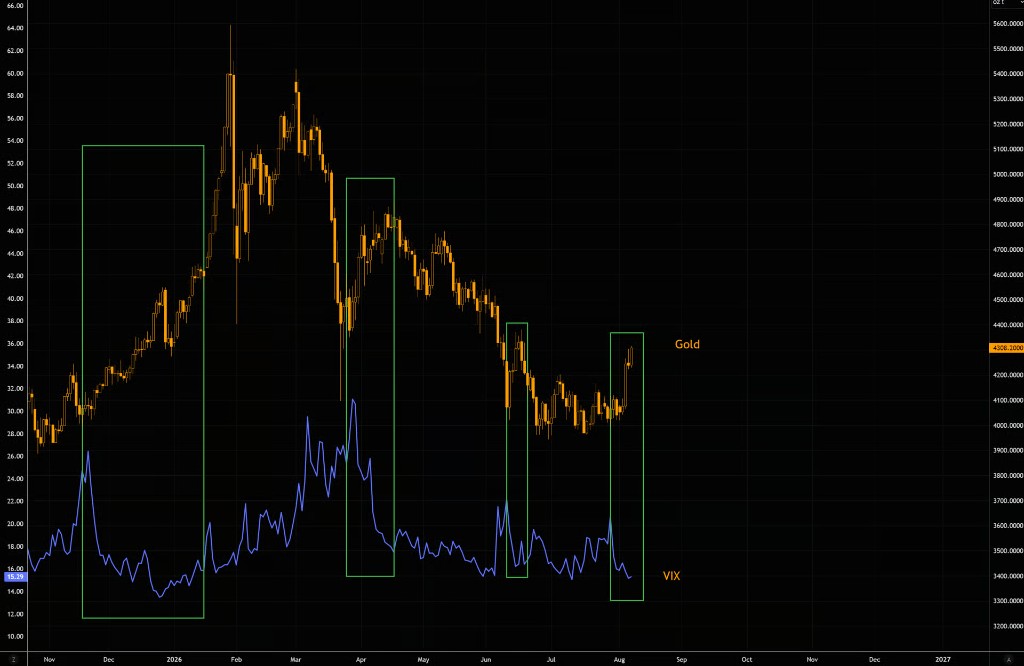
This means that the rise in gold does not rely solely on safe-haven demand, but also benefits from multiple factors such as global liquidity, U.S. dollar trends, central bank allocations, and asset allocation needs.
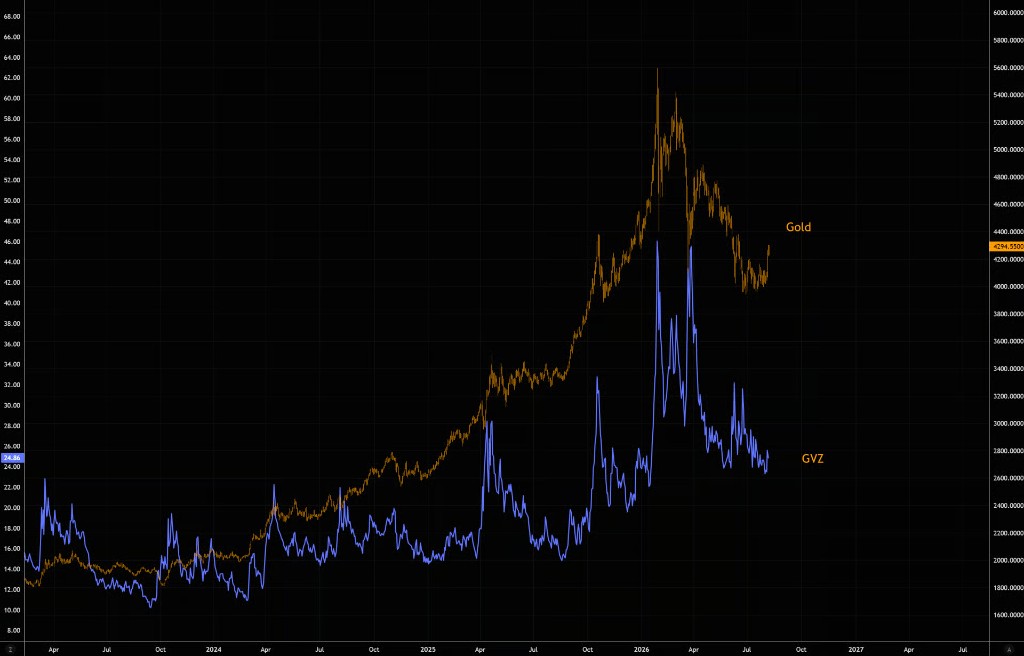
For option investors, implied volatility in gold is currently at a relatively reasonable level. Market participants still tend to participate in the subsequent rise through strategies such as Call Spreads, and suggest dynamically raising strike prices as gold prices rise to improve strategy efficiency.
How to View the Outlook?
After a substantial rise of $300, the risk of chasing gold in the short term has increased significantly.
On one hand, the catch-up space that previously existed between the U.S. dollar and gold has been largely realized, and technical indicators have entered the overbought zone, meaning short-term volatility may intensify.
On the other hand, the core drivers of this rally—CTAs chasing the rise, speculative capital missing out, central banks restarting gold purchases, and lower option volatility—have not fundamentally changed.
Therefore, the market has entered a new phase: the easiest catch-up trades to profit from have ended, but a new round of rallies driven by capital position adjustments may still be on the way.
