


After Surpassing 10,000 Units in Sales, Luxeed Launches a Tough Battle for Brand Building
Luxeed V9 deliveries exceeded 10,000 units in July, with an average transaction price nearing RMB 500,000. Zhao Changjiang, Executive Director of Luxeed, stated that once the management team is fully established in 2026, the brand will enter a new phase. It will no longer rely solely on Huawei's technology but will combine CHERY AUTO's manufacturing expertise with user operations to build its own brand capabilities. Luxeed aims to convert technological credibility into brand assets through distinct product character and long-term fulfillment, initiating a rigorous competition for brand strength
Author | Zhou Zhiyu
Luxeed V9 deliveries exceeded 10,000 units in July, giving Luxeed an opportunity to test its brand capabilities.
For Luxeed, this is certainly an impressive result. However, the more intriguing aspect lies in whether Luxeed can transform this surge in sales into substantial brand weight, especially as the "Huawei factor" becomes increasingly homogeneous across competitors.
Huawei's technological prowess can bring users into showrooms, but Luxeed must ultimately rely on its own product rationale and service experience to convert technological credibility into brand assets.
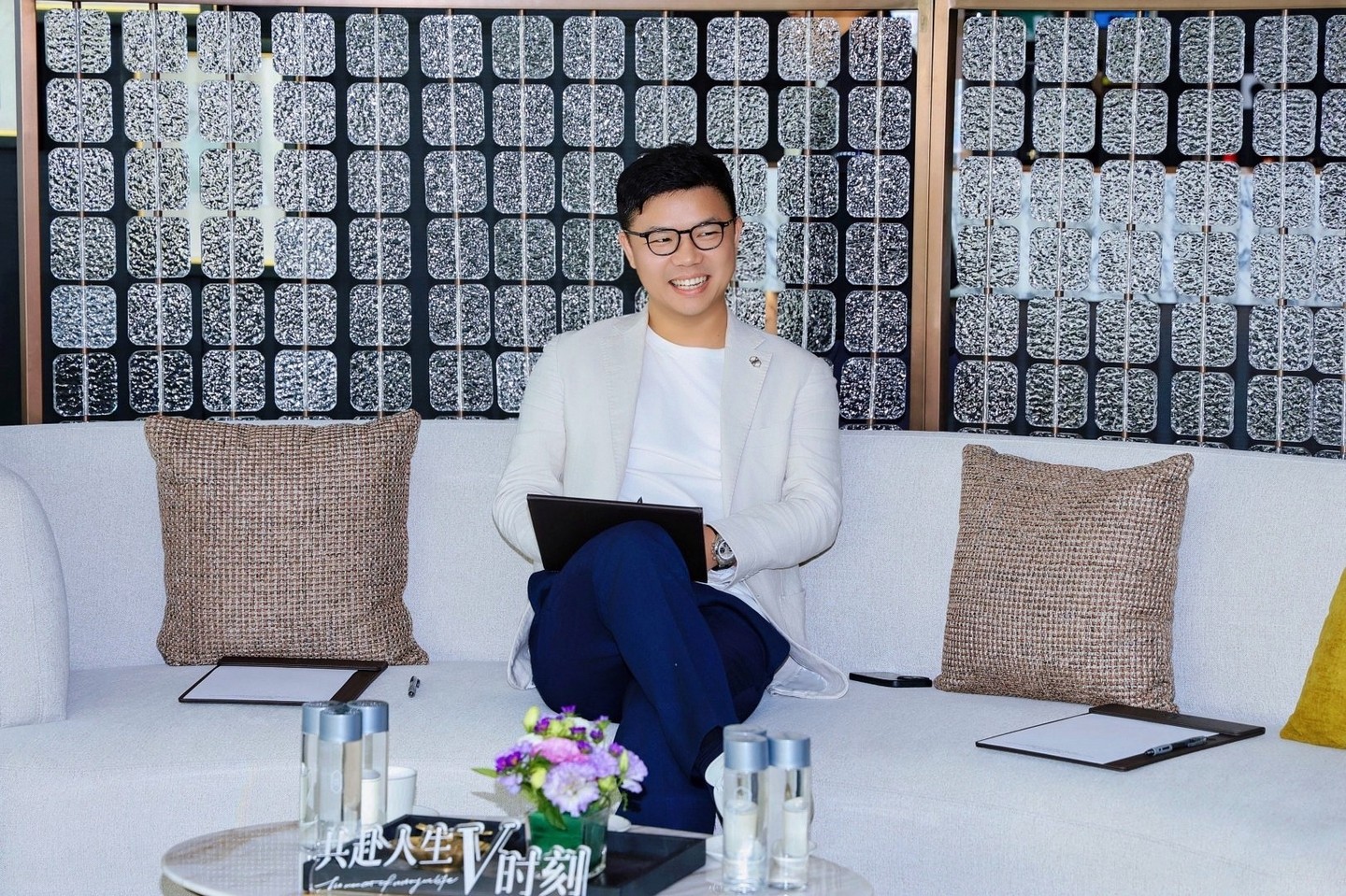
In 2026, with the completion of Luxeed's new management team structure, the brand will enter a new stage of development. On August 6, Zhao Changjiang, Executive Director and Executive Vice President of Luxeed, stated in an interview with Wallstreetcn that Luxeed would not merely continue leveraging Huawei's technology to sell cars. Instead, it aims to transform CHERY AUTO's manufacturing accumulation, product trade-offs, and user operations into its own brand capabilities.
Therefore, the 10,000-unit milestone for the V9 is not the end of the story, but rather the starting point for Luxeed's true entry into brand competition. When technology can be shared, what will ultimately retain users? The answer is: allowing Luxeed to form its own product character in the era of smart vehicles and solidifying this character through long-term fulfillment.
The Real Challenge Begins After Breaking 10,000 Units
Judging by July's performance, the average delivery price of the Luxeed V9 has reached the RMB 500,000 level.
Regarding the pricing of the V9, the team initially discussed price points above RMB 600,000, but ultimately set the top-tier configuration at RMB 519,800: "Do not seek premium pricing; create value." The post-launch average transaction price approaching RMB 500,000 indicates that users are willing to pay for scenarios, handling, and riding experience.
Currently, the competition in smart vehicles is shifting. Hardware and software solutions are diffusing along the supply chain, making it difficult for any single technology to remain exclusive for long. The true differentiator is not which company raises parameters slightly higher, but which company is willing to reallocate costs for a specific usage method.
The configuration structure is not simply about high and low trims. The two high-end versions priced at RMB 520,000 and RMB 460,000 account for 80% of sales, while other configurations correspond to technology-focused, family, and business scenarios. Here, price is not a promotional tool but a reflection of the product's judgment on user needs.
What Luxeed needs to learn is the ability to incorporate technological changes into its product character. BMW turned "driving pleasure" into a stable promise through seven generations of the 3 Series, summarized officially as "Seven Generations, One Promise." What Luxeed needs to do is find its own promise in the era of smart vehicles.
The V9 has completed a validation of product value. Huawei's intelligent capabilities and CHERY AUTO's manufacturing and chassis expertise have been translated into a concrete vehicle. Zhao Changjiang stated that CHERY AUTO is "very strong, but this was not communicated in the past." What Luxeed 2.0 needs to address is precisely this step: transforming CHERY AUTO's 29 years of car-making experience from a partner's background into the brand's own product language.
The real test begins after delivery.
Luxeed needs to extend the validation of product value beyond the delivery phase. It is not difficult for a car to gain attention in the early stages of its launch; the challenge lies in maintaining users' long-term expectations for a high-end vehicle through genuine experiences, service responsiveness, and continuous improvement after delivery.
Luxeed hopes to extend a one-time purchase relationship into a sustained user relationship. The longer the product, service, and reputation interact, the greater the opportunity for the brand to solidify. It is not the advertising cycle that needs to be extended, but the duration over which the product fulfills its promises.
Ten thousand units are just the beginning. For MPVs priced above RMB 400,000, maintaining a stable monthly sales volume of 5,000 units is already a high level. For Luxeed, long-term operation cannot focus solely on delivery scale; price stability, reputation transmission, and user repurchase are the long-term returns for high-priced products.
He also explicitly stated that Luxeed will not rely on price cuts to maintain momentum. Instead, it will set prices and configurations definitively from the start, allowing subsequent value to be delivered through products and services. Luxeed will also "talk less and do more," avoiding dragging communication back into a parameter race. Blockbuster hits bring attention, but stable transaction prices establish pricing power. The latter is harder to maintain and better tests whether product trade-offs are truly accepted by the market.
To build a brand, a car does not need to maximize every metric. What users remember are the choices it consistently makes in different scenarios. Otherwise, the five "Jie" (boundary) brands sharing the same technology will ultimately revert to competing for traffic and promotions.
Luxeed Needs to Prove Itself
In the early development of Harmony Intelligent Mobility Alliance (HIMA), the Huawei label initially solved the trust issue for new brands. Users could first trust Huawei and then get to know a new automotive brand. Today, while Huawei raises the technological starting point, the brand must explain why these technologies are suitable for its specific users.
Shared technology brings efficiency but also makes brands more prone to homogenization. Luxeed attempts to differentiate itself through a more complete product matrix, currently covering sedans, SUVs, and MPVs. Zhao Changjiang also summarized intelligent cockpits, intelligent driving, intelligent manufacturing, and intelligent operations as the "Four Intelligences," implying that the brand must manage more than just in-car functions.
The product matrix is merely the external form; brand character must be implemented in every functional trade-off, every vehicle tuning adjustment, and every user service interaction.
Huawei provides the technological foundation, while Luxeed is responsible for organizing these capabilities into a concrete vehicle and taking responsibility for post-delivery outcomes. The clearer the final trade-offs regarding scenarios, configurations, and vehicle tuning, the stronger Luxeed's brand explanatory power will become.
"More Huawei, More Luxeed" precisely describes this division of labor. "More Huawei" means producing products according to higher technological and quality standards; "More Luxeed" requires Luxeed to take responsibility for functional trade-offs, vehicle tuning, and post-delivery improvements.
To this end, Luxeed has built a team of four to five thousand people, approximately 90% of whom are R&D personnel, adding one to two thousand people in the past year. This team bears the responsibility of helping the brand "take root." The team also applies AI to configuration, pricing, and operational decisions, attempting to imbue the organization itself with intelligent capabilities. It aims to transform Huawei's technology, CHERY AUTO's manufacturing, and user feedback into its own decision-making capabilities.
Regarding channels, Luxeed currently has 100 exclusive outlets connected to the network, with 50 already open and operating. By the end of this year, the plan is to expand the number of exclusive user centers to 150–200. For Luxeed, the ability to maintain the price of products in the RMB 500,000 range depends not only on the car itself but also on whether users feel the same product standard before and after purchase. The number of stores is just the starting point; what truly needs to be established is a stable service experience.
After the first batch of V9 deliveries, some owners even asked when the accompanying mattresses would arrive. Luxeed addressed these issues through user stewards, hotlines, community groups, and senior management joint meetings, summarizing feedback on a daily, weekly, and monthly basis.
Feedback only leads to improvements in subsequent deliveries if it enters the decision-making processes of engineering, supply chain, and management. So-called user operations are ultimately a continuous management cost. It is both a service issue and a question of whether the brand can fulfill its price promise.
The experience of smart vehicles is not finalized on the day of delivery. Traditional luxury brands mainly complete their product expression before handover, whereas smart vehicles must continue to fulfill promises after handover. The same set of choices must also be stably replicated on the manufacturing side.
Currently, Luxeed's super factory integrates multimodal data into the production process, using AI vision, digital twins, and evolvable models for diagnosis and optimization. The offline process uses Huawei's self-developed data collection system and automated End-of-Line (EOL) vehicle detection, with abnormal noises also subjected to AI detection laboratories.
Its significance lies not in the number of machines, but in transforming quality control from one-time spot checks into a continuously learning system, ensuring that cars purchased by users at different times maintain as consistent a product standard as possible.
For Luxeed, the easier Huawei's capabilities are to share, the more difficult it becomes to establish a premium based solely on the "Huawei factor." Product definition and long-term fulfillment will instead become more important.
Shared technology can reduce redundant R&D, but it cannot automatically reduce the cost of persuading users. Without a clear brand character, a brand must rely on more communication and lower prices to secure orders. Only stable product perception can keep the V9's average transaction price at the brand level, rather than limiting it to the launch window of a single model.
This requires Luxeed to make relatively consistent judgments in every pricing decision, every delivery, and every piece of user feedback. The V9 has only taken the first step. Next, Luxeed must prove why users will still choose it years later.
Market risks exist; investment should be cautious. This article does not constitute personal investment advice, nor does it consider the specific investment goals, financial status, or needs of individual users. Users should consider whether any opinions, views, or conclusions in this article align with their specific circumstances. Investment based on this content is at the user's own risk.
