


Tencent: AI spend in overdrive? Rejuvenation needs a final push
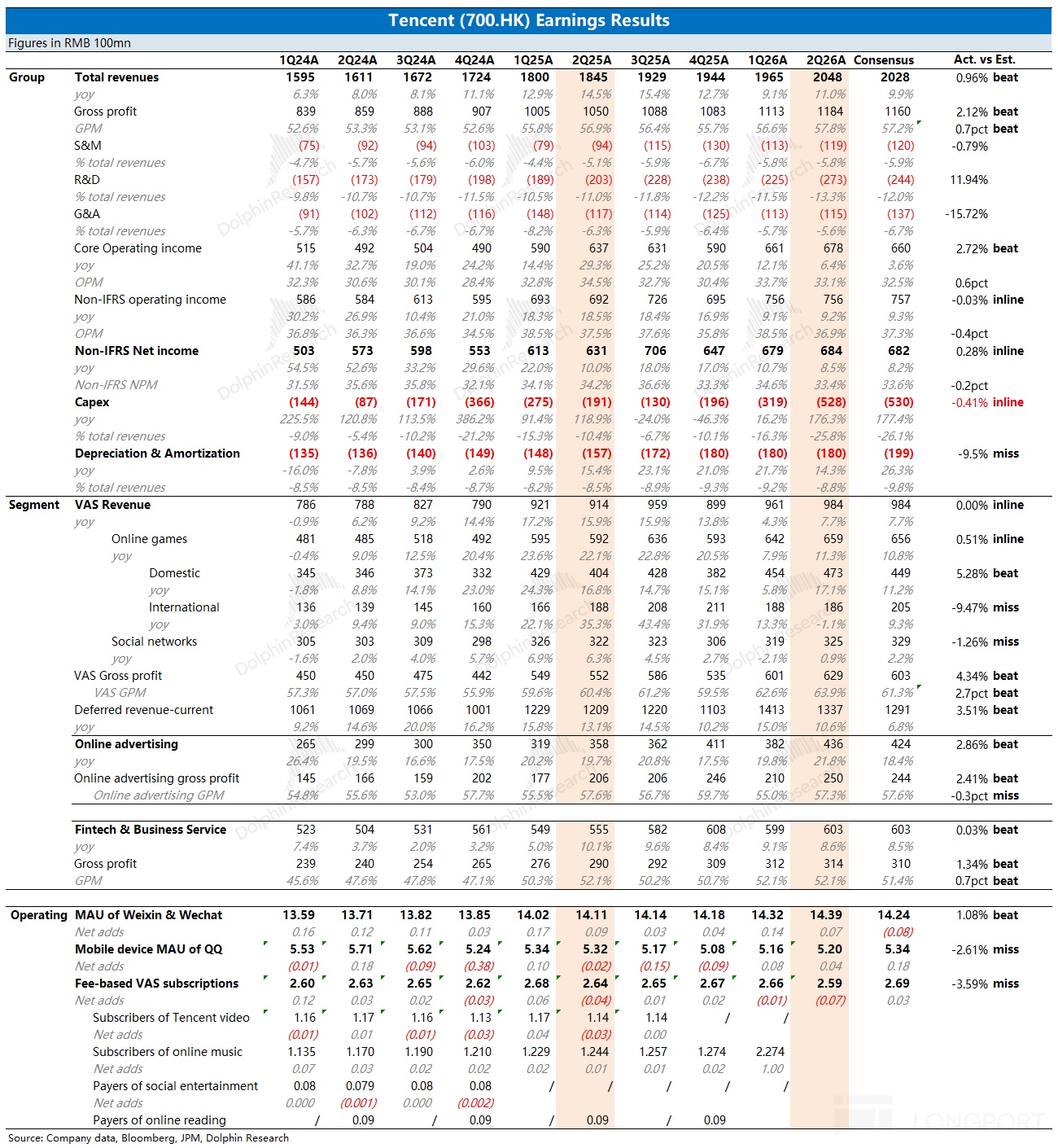
$TENCENT.HK Q2 results were broadly mixed, with most line items tracking close to consensus. The picture underscores the market’s concern — AI spend is already weighing on near-term profit and cash flow.
To alleviate bottom-line pressure, Tencent, as a legacy internet leader, still has room to adjust and monetize at the top, notably in ads. That said, profit pressure is likely to remain elevated in H2.
Specifically:
1) Capex rose sharply as guided; full-year likely needs an upward revision
Management had flagged last quarter that 2024 capex would rise substantially vs. 2023 and ramp sequentially. As Workbuddy gained traction in Q2 and rose in strategic priority internally, the market has ratcheted up its capex expectations.
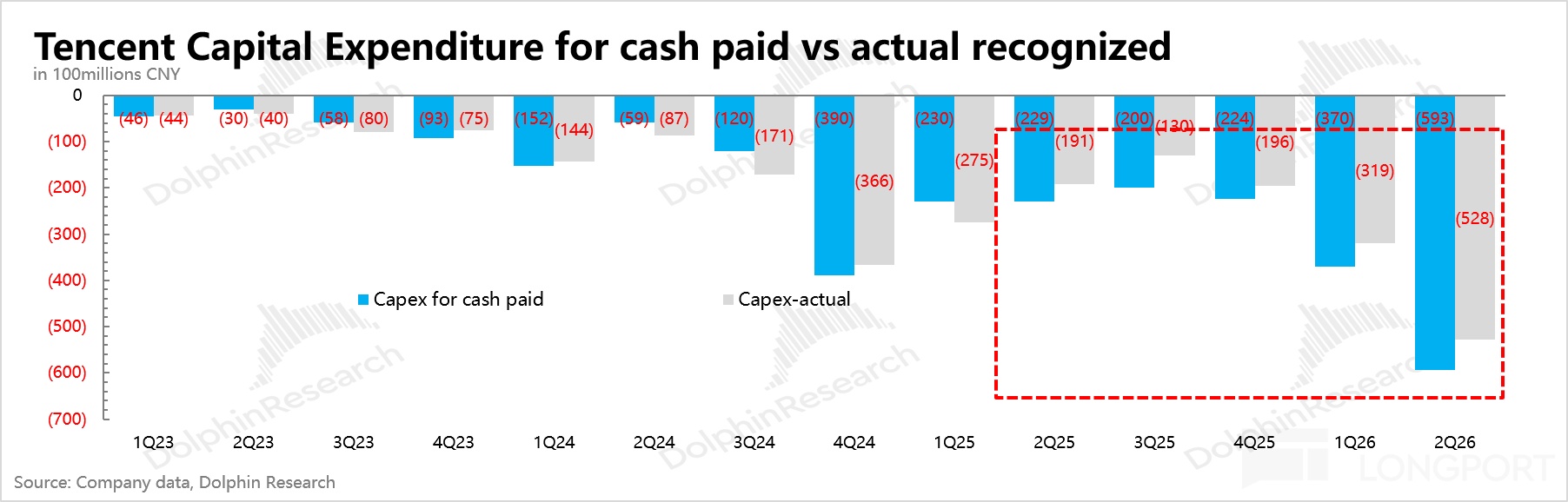
Q2 capex was RMB 52.8bn, 26% of revenue. There was also RMB 51.4bn of compute prepayments (deposits/progress payments), effectively implying over RMB 100bn cash outlays in Q2 — a sign of pre-booking scarce compute. On this trajectory (shifting to domestic compute in H2), full-year capex could reach ~RMB 200bn, above some pre-print sell-side estimates of RMB 150–170bn.
2) Cash flow turned negative ‘on the surface’, but core fundamentals remain solid
Q2 FCF came in at -RMB 13.8bn, likely the biggest negative surprise this print. Beyond the step-up in capex, the aforementioned prepayments (RMB 51.4bn) compressed operating cash flow.
Ex-prepayments, FCF would be RMB 37.6bn. This implies adj. operating cash flow of RMB 104.1bn, +40% YoY (last year likely had prepayment effects too, so true YoY should be lower), still reflecting a robust cash-generative core.
3) Ads beat; remain the near-term lever
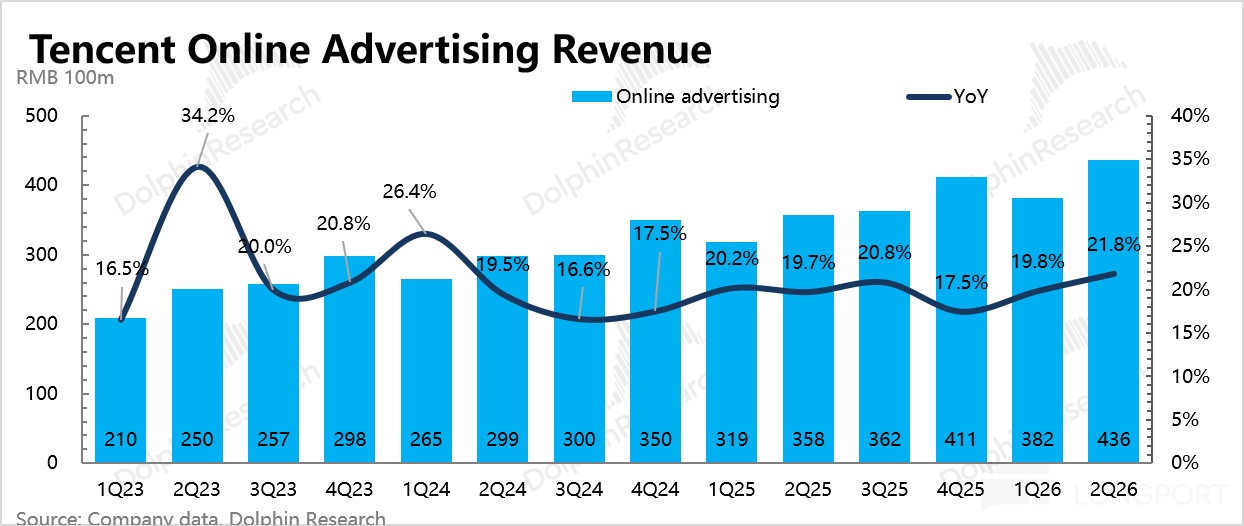
Q2 ads grew 22%, continuing to beat. Despite a weak macro, Video Accounts (higher load) and smarter ad delivery (AIM+, etc.) should sustain strong growth near term.
At least through 2024, ads can serve as the faucet to release profit and cash flow, offsetting front-loaded AI investment.
4) Games: strong domestic, Intl slowed notably
Games rose 11% in Q2, slightly above expectations. Intl slowed to flat due to Supercell, while domestic rose 17% YoY with clear acceleration, easing concerns triggered by Sensor Tower’s YoY grossing decline.
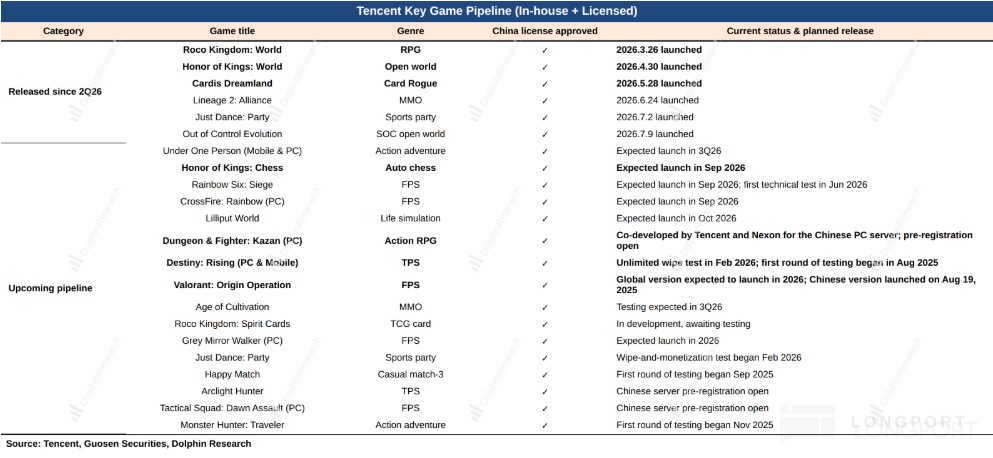
However, caution is warranted into H2 given a tougher base, especially after the first-year sales cycle of ‘Delta Action’. The current pipeline shows few blockbuster launches in H2, with more mid-tier titles expected, mostly launching late Q3 to Q4.
5) Cloud ticked up; FinTech under pressure
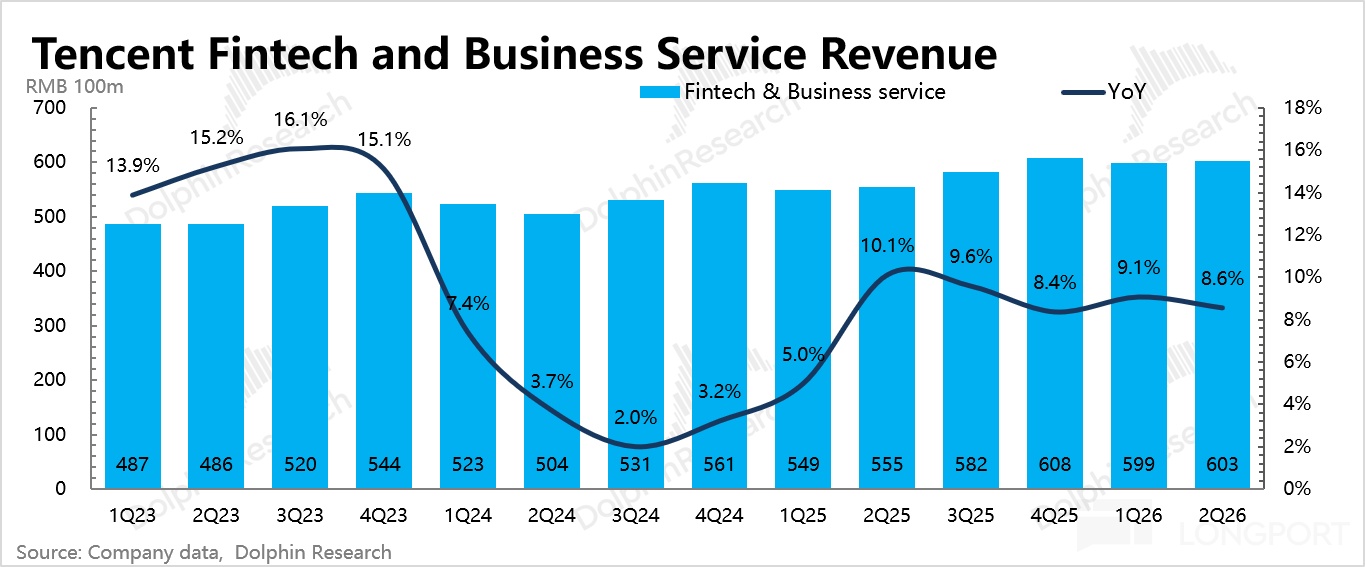
Q2 FinTech & Biz Services revenue grew 8.6% YoY, with FinTech subdued by macro. Dolphin Research’s split suggests enterprise services (external Tencent Cloud plus Video Accounts commissions) grew ~30%, a small uptick vs. ~20%+ in Q1.
Workbuddy’s momentum has strengthened from Q2 to date. We therefore expect Q3 growth to continue accelerating.
6) AI spend impact on profit is showing
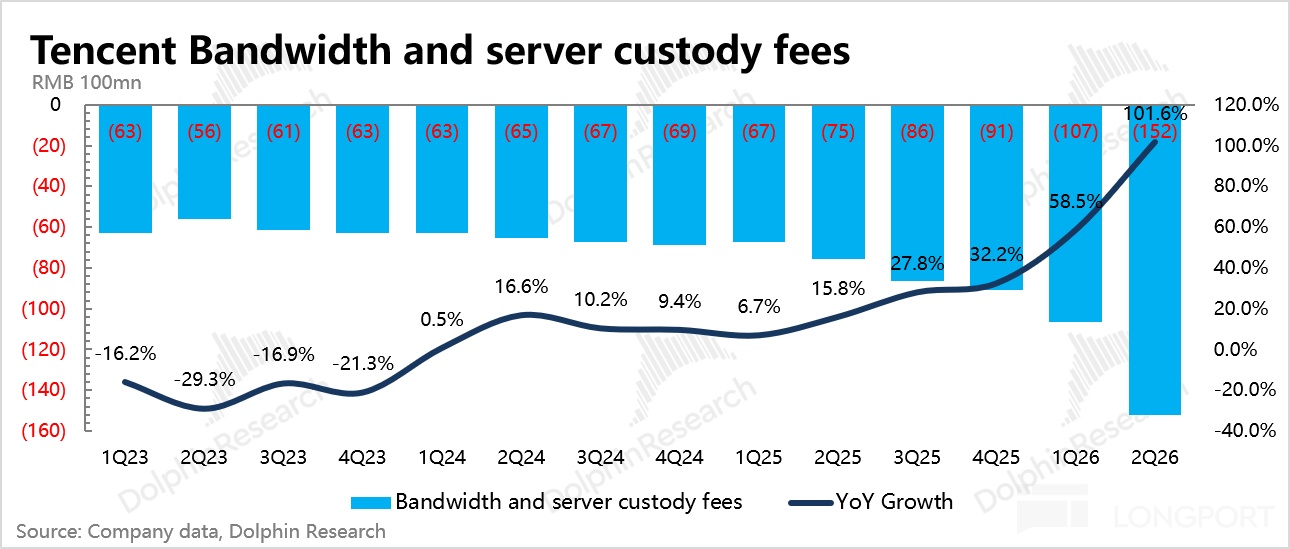
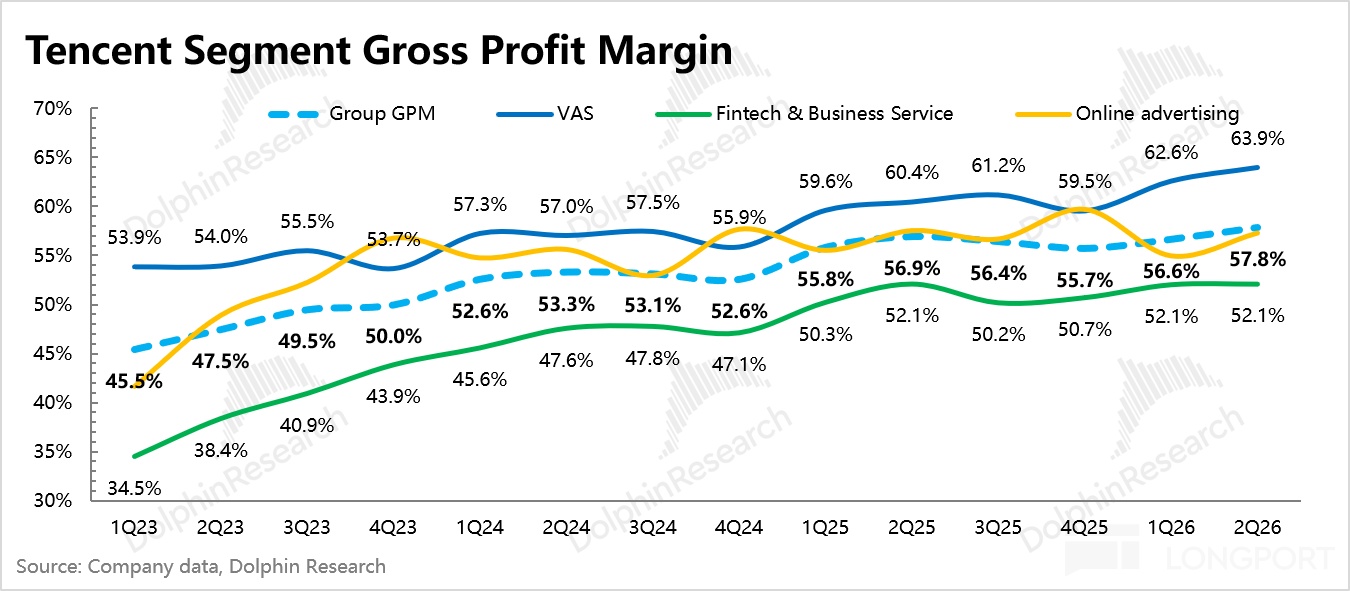
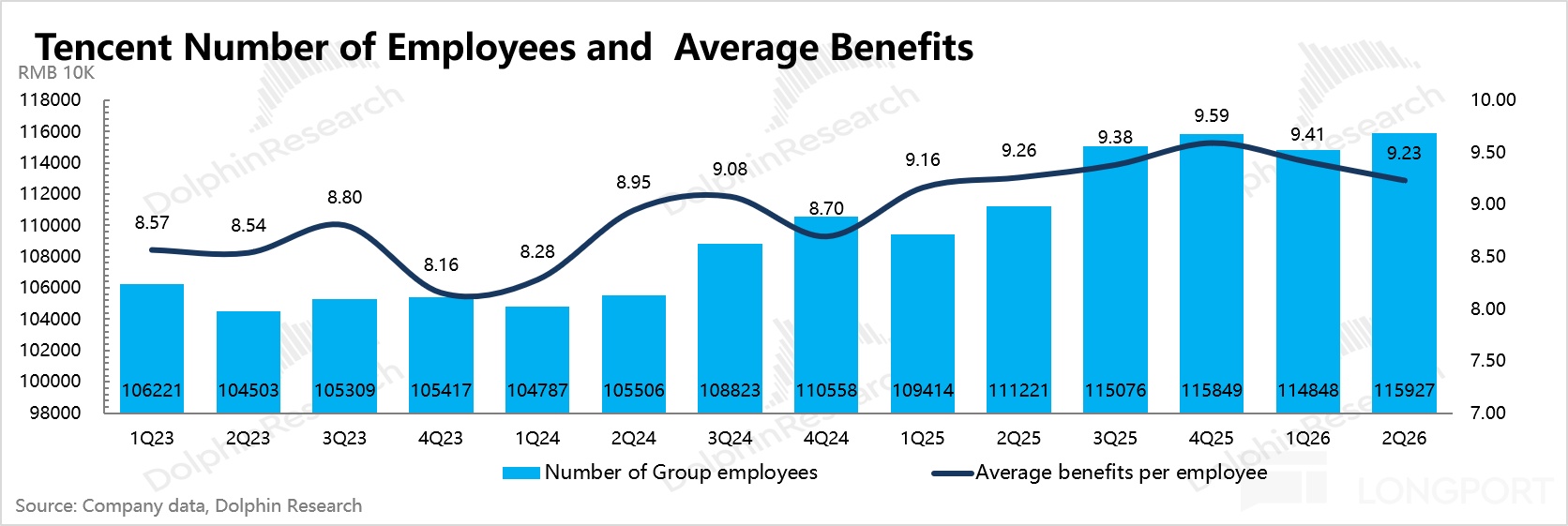
GPM benefited from a higher mix of self-developed games and ads, offsetting part of the stepped-up D&A; overall GPM rose ~100bps. However, most server depreciation and compute leases hit R&D, so Q2 R&D rose 25% with salaries up 8%.
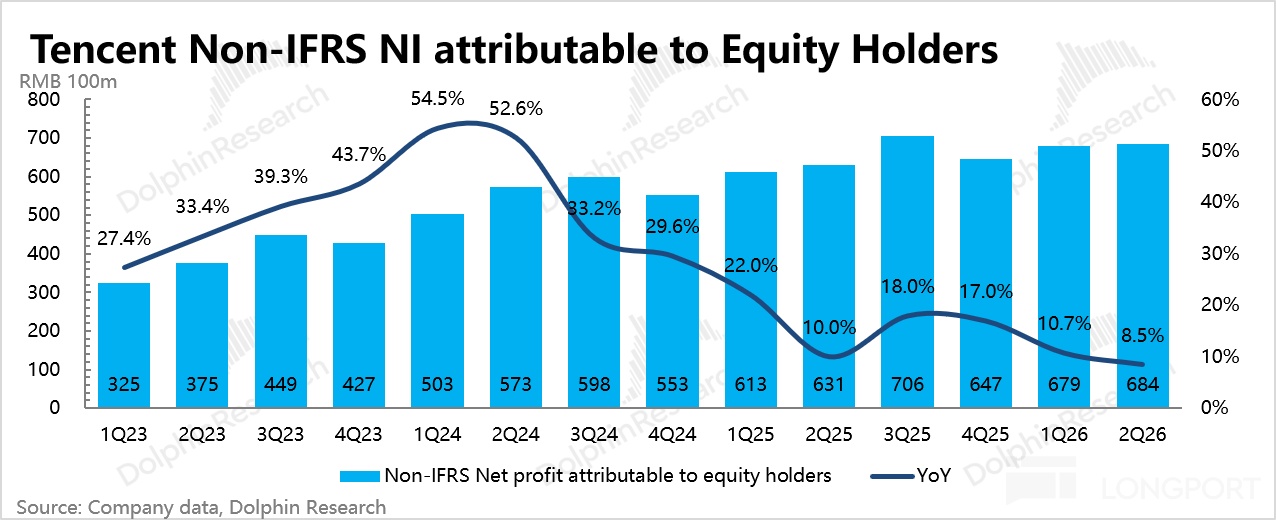
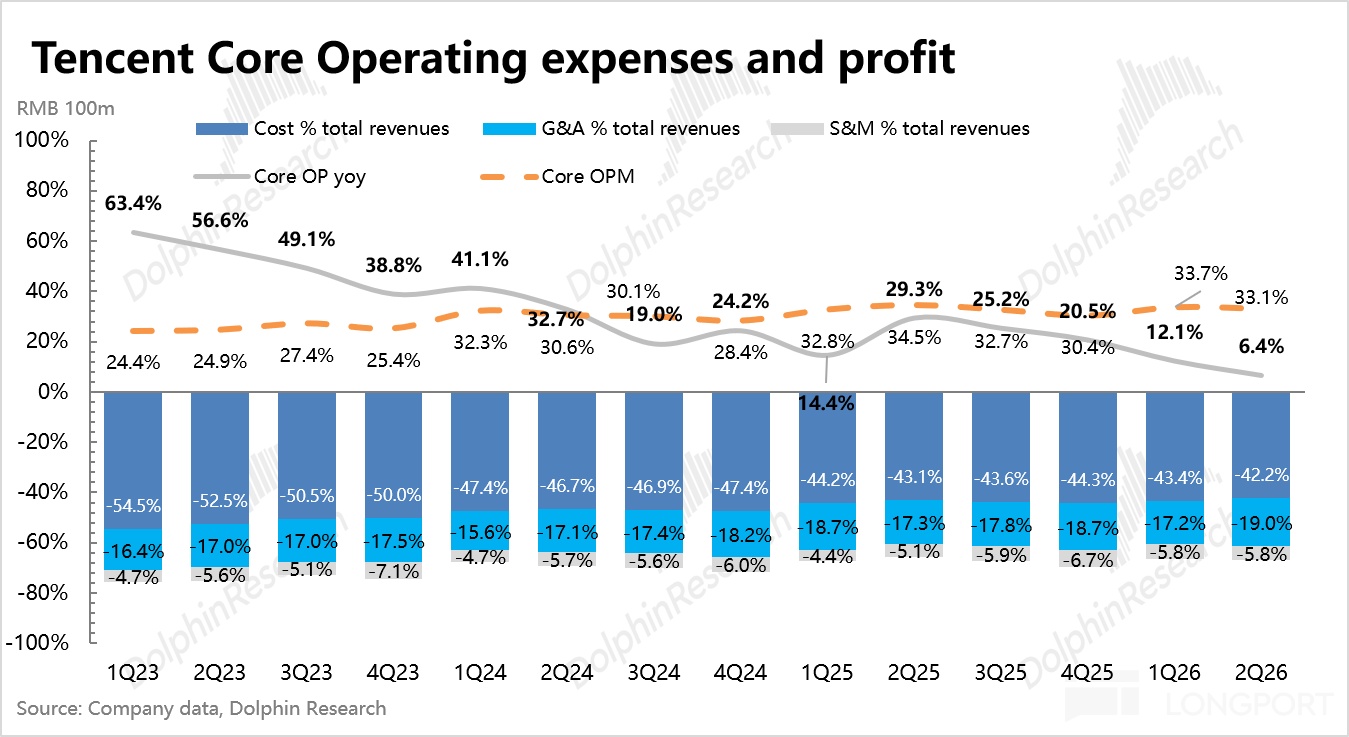
Ex-salaries, tech spend grew 112% YoY, accelerating from +61% in Q1. Core operating profit was RMB 67.8bn, +6.4% YoY, with OPM down ~100bps. Non-IFRS net profit to shareholders was RMB 68.4bn, +8.5% YoY, with margin down nearly ~100bps.
7) Shareholder returns constrained by cash flow
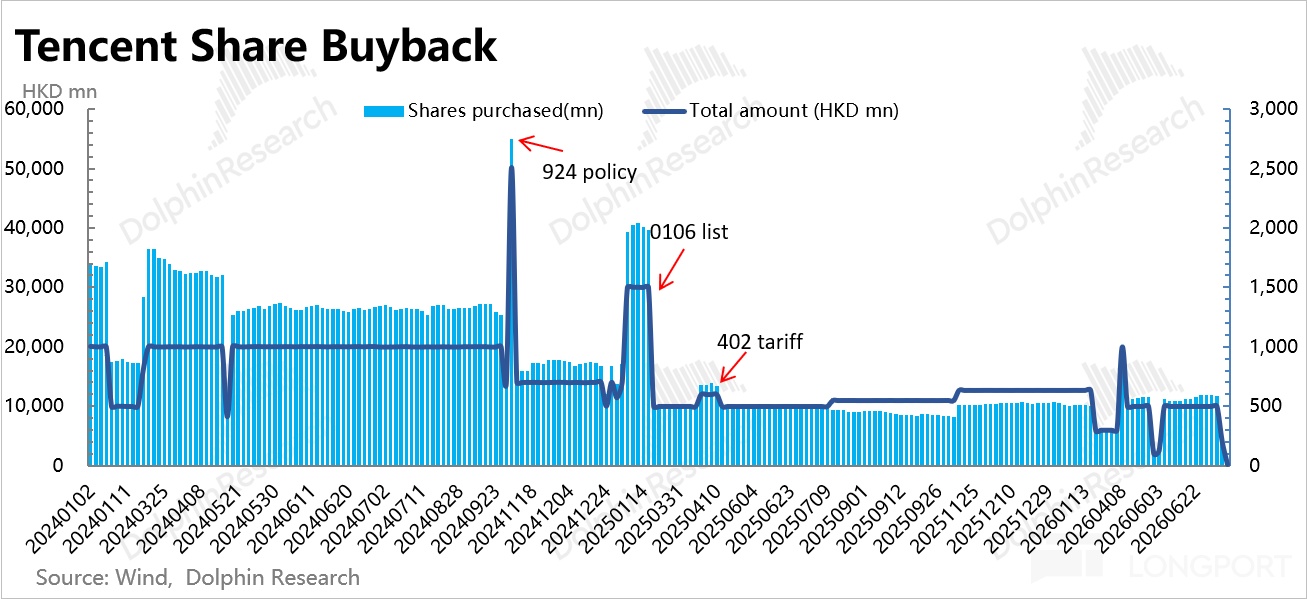
Q2 buybacks totaled HKD 16.8bn at an avg. price of HKD 449/share. H1 totaled HKD 24.4bn, down ~one-third vs. last year, and ongoing AI cash consumption will likely dampen H2 buybacks.
Net cash stood at RMB 58.2bn at Q2-end. While management aims to sustain repurchases, maintaining that pace may necessitate further portfolio divestments from a cash safety perspective.
Still, with the market already pricing heavier AI spend and margin erosion ahead, whether buybacks are RMB 50bn or RMB 80bn, the actual support to the bottom is limited — better to focus resources on core priorities.
8) Full data highlights
Dolphin Research view
What Q2 shows — solid core, faster investment — is more constructive for the compute supply chain than for Tencent itself. At this juncture, investors’ stance on Tencent is conflicted, ‘love and pain’, translating in the stock to sharp selloffs followed by weak bounces.
The ‘love’ is that fundamentals remain steady with scope to flex and hedge profit inside the ecosystem. Yet for a giant with strong social moats, Tencent’s valuation seems to lack any premium in a long-term lens, and unscaled AI is a source of optionality and imagination.
The ‘pain’ is short-term profit and cash flow erosion that could intensify as the game cycle softens in H2, misaligned with many long-only beliefs in Tencent. Whatever the attribution, prepayments squeezing cash flow will weigh on near-term sentiment.
However, after the Q2 step-up in coding AI, few investors still oppose heavy AI investments by Big Tech. What matters for putting real money to work is visible positive ROI.
By that yardstick, Workbuddy’s Q2 breakout is a confidence boost. But looking at financials, cloud — the most direct AI monetization venue — at an estimated +30% in Q2, is still short of a true upside surprise. It’s possible Q2 didn’t fully capture the late-Jun surge, and internal demand (HY4.0 training, WeChat Agent reservations) plus compute constraints limited external delivery.
Watch management’s cloud and Workbuddy commentary on the call, especially operating KPIs. If momentum is strong, it could lift sentiment on Q2 prints.
Competition has intensified since Q2; Tencent faces a Meta/Google-like awkward phase:
(1) On investment pacing, Tencent, like Google, is ‘catching up’. The 2023 ‘lightbulb theory’ on LLMs led to a two-year lag, learning the hard lesson of higher costs and later harvest.
(2) On AI monetization venues, Tencent resembles Meta. Despite entering cloud earlier than Meta, scale is small and not yet fully mobilized (reflecting prudent investment), insufficient to anchor a US$500bn+ market cap alone (Dolphin estimates Q2 cloud at 7–8% of revenue).
(3) Critically, like Meta and Google, Tencent fell behind on frontier LLMs in Q2. While first-mover moats have shrunk to ~3 months and LLM business models may be challenging, for ToC-heavy giants, keeping a self-developed LLM in the global first tier signals technical strength and bolsters brand.
Near-term lag may not decide the commercial endgame — Microsoft and ByteDance show you don’t need frontier LLMs to win capital support. Yet until direct AI monetization contributes meaningfully to the group and supports valuation, trailing base-model performance will cap the market’s AI imagination and dampen risk appetite.
HY3.0’s launch briefly restored confidence, but subsequent iteration speed trails peers. Tencent still needs to prove itself with the large-parameter model slated for year-end.
In the short run, compute constraints may still affect internal resource allocation and output. Hence, organizational and talent stability is equally critical in this ‘foggy’ phase. The WeChat Agent beta in Jun drew positive user feedback, but raised questions about a ‘horse race’ under resource limits; listen for management’s take on this in the call.
Detailed analysis below
I. WeChat ecosystem remains stable
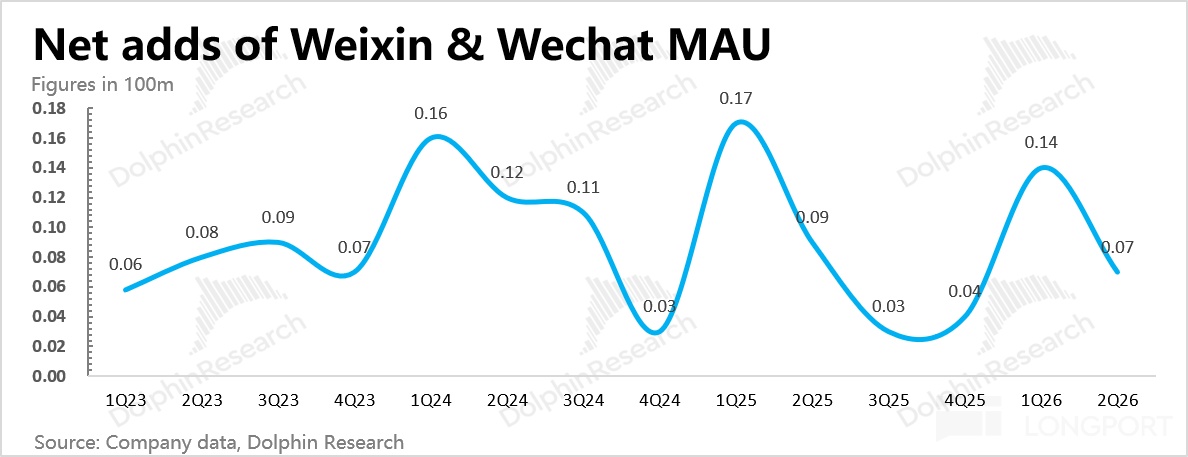
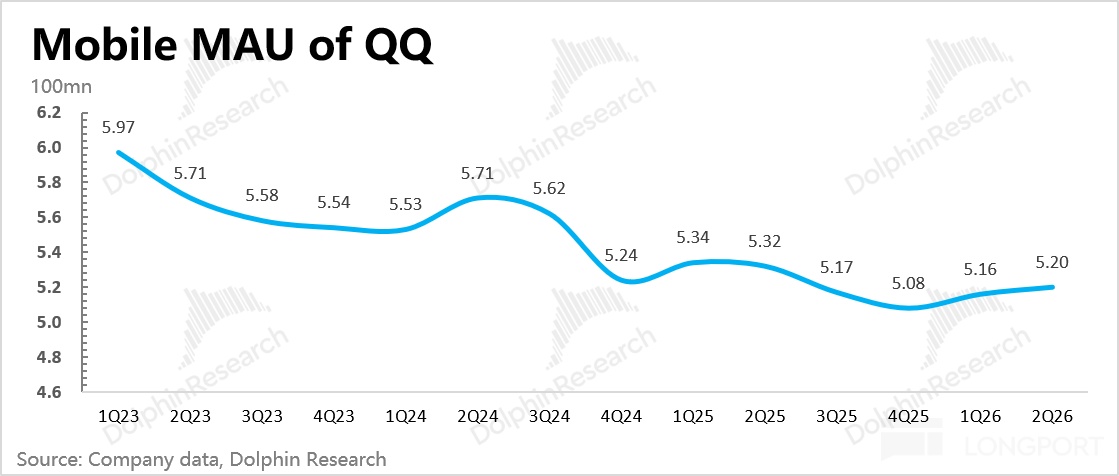
WeChat MAUs reached 1.439bn in Q2, +7mn QoQ. QuestMobile shows total time spent on WeChat still rising, with stable share in the industry; QQ MAUs were 520mn, +4mn QoQ.
On AI apps, consumer-facing ‘Yuanbao’ has yet to scale materially, though per-user time is up modestly. The key C-side push is WeChat Agent, slated for full rollout in H2; industry-wide, chatbot growth has slowed.
Dolphin Research believes compute limits/cost control have constrained free tiers’ features and performance, restraining further mass adoption (high-need users are mostly penetrated). ‘Doubao’ has moved pro skills behind a paywall due to cost pressure, and the free experience is mediocre, slowing mainstream uptake.
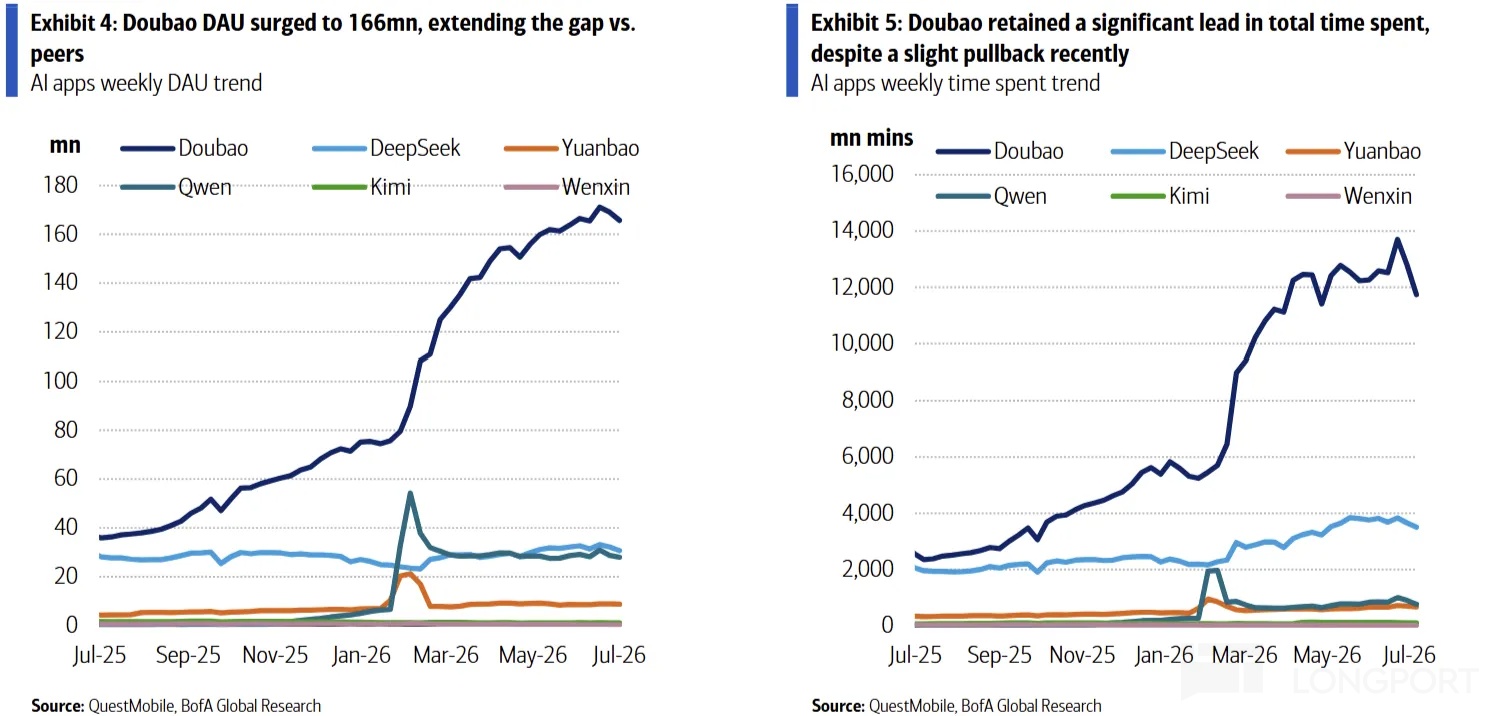
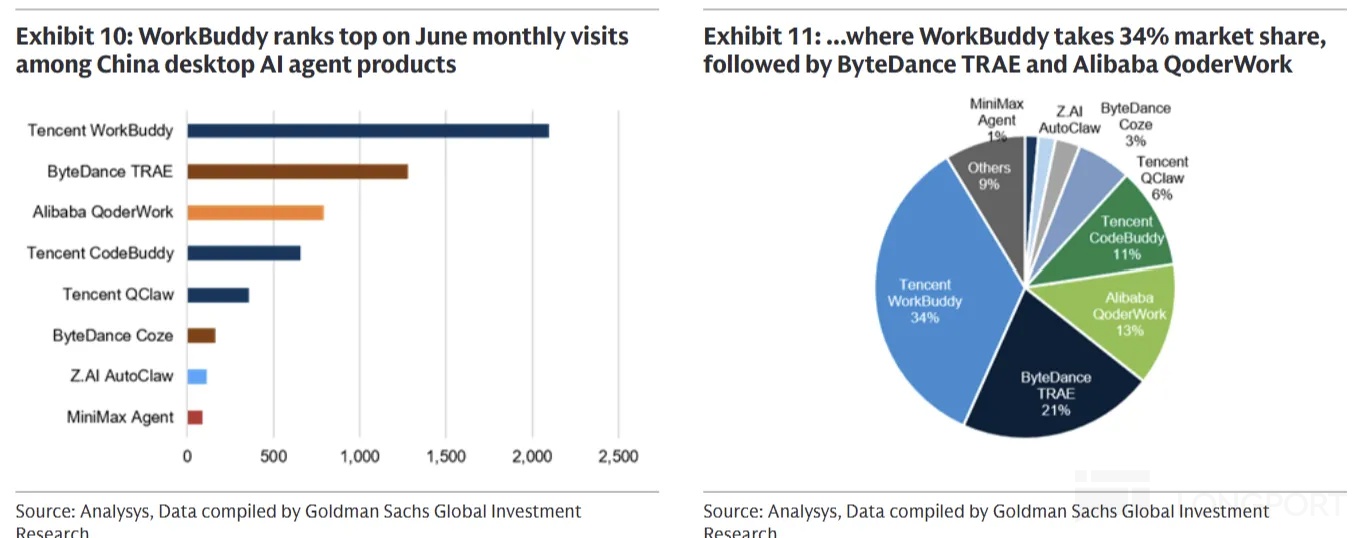
In Q2 Tencent focused acquisition on productivity use cases; Workbuddy has become the leading desktop AI agent by traffic. But the race isn’t over — ByteDance and Alibaba have stepped up, leveraging Feishu and DingTalk to raise penetration.
The AI chatbot war at the start of the year has spread to desktop workplace agents again. This implies Tencent’s marketing spend and compute costs for free retention will need to stay elevated for a while in H2.
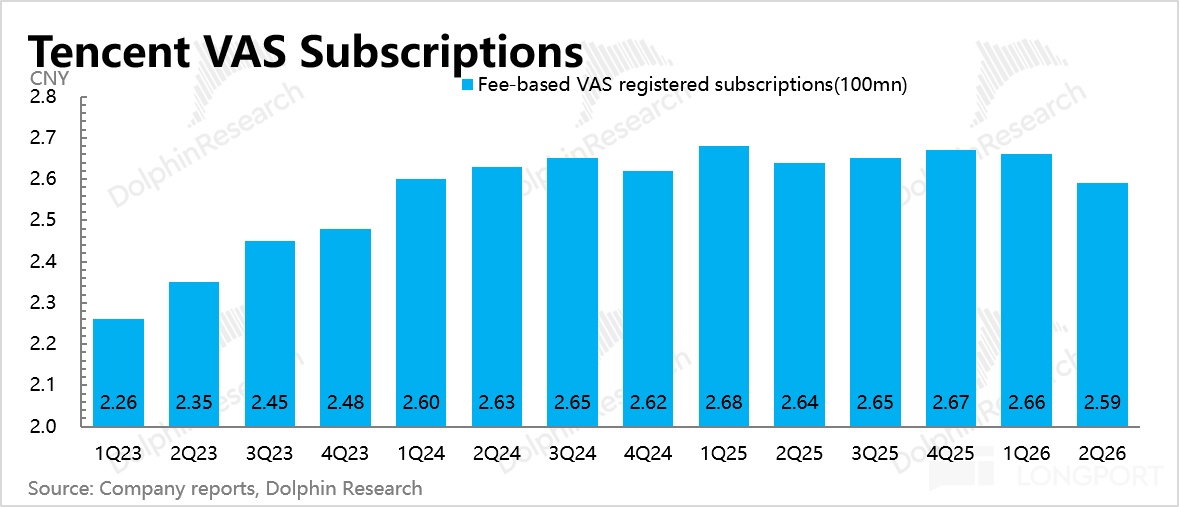
Value-added services paid users fell by another 7mn QoQ in Q2. The increase mainly came from consolidating ‘Ximalaya’ into Tencent Music, with legacy music likely flat and losses concentrated in Tencent Video.
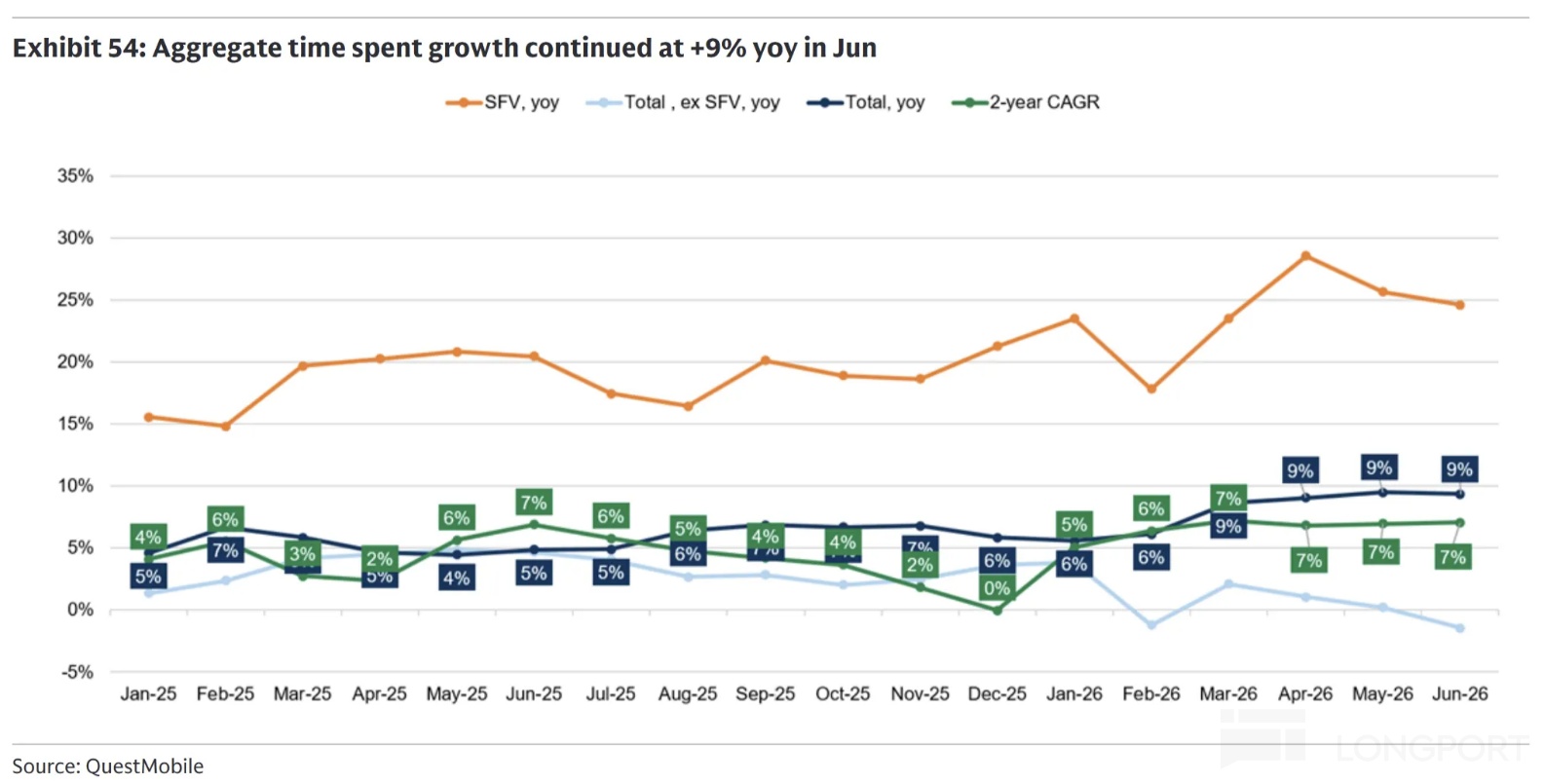
QM shows total internet time +9% YoY in Q2; excluding short video (+25% YoY), overall time fell, with long-form video the main share donor.
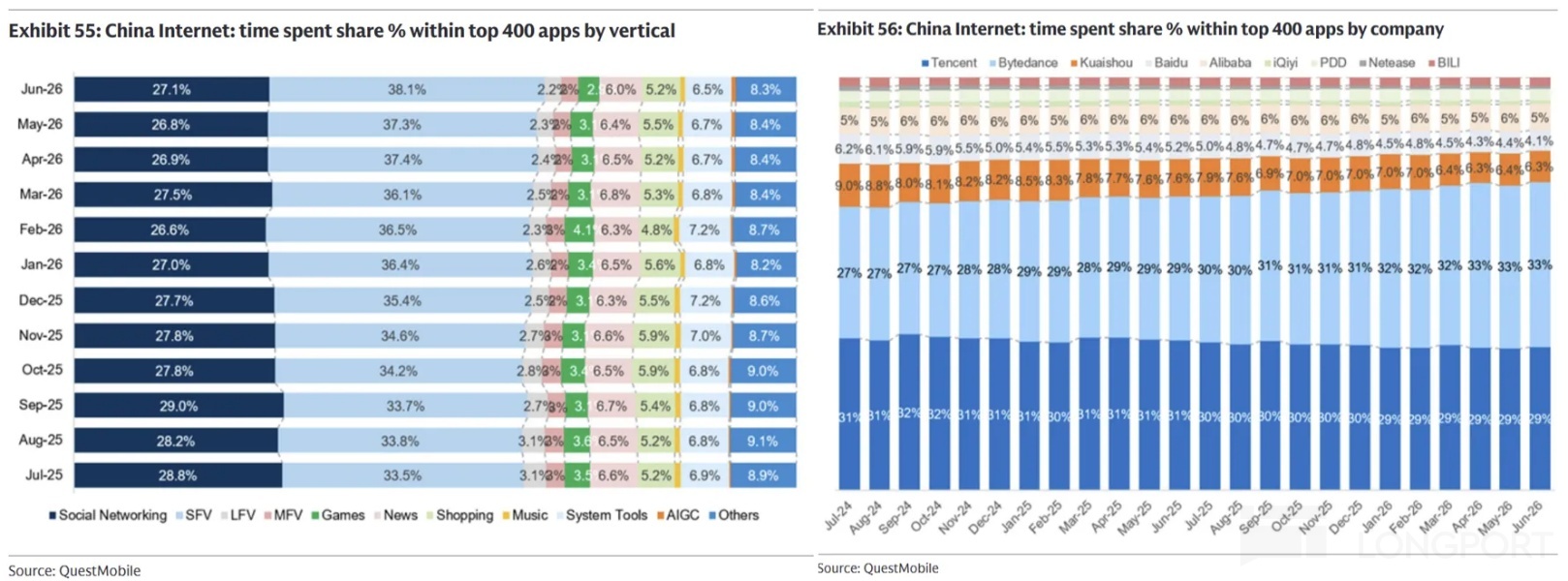
In the broader traffic landscape, Tencent’s ecosystem roughly held share. ByteDance’s ecosystem continues expanding off Douyin, short/serial dramas, comics, and Doubao.
II. Games: domestic beat, but H2 faces pressure
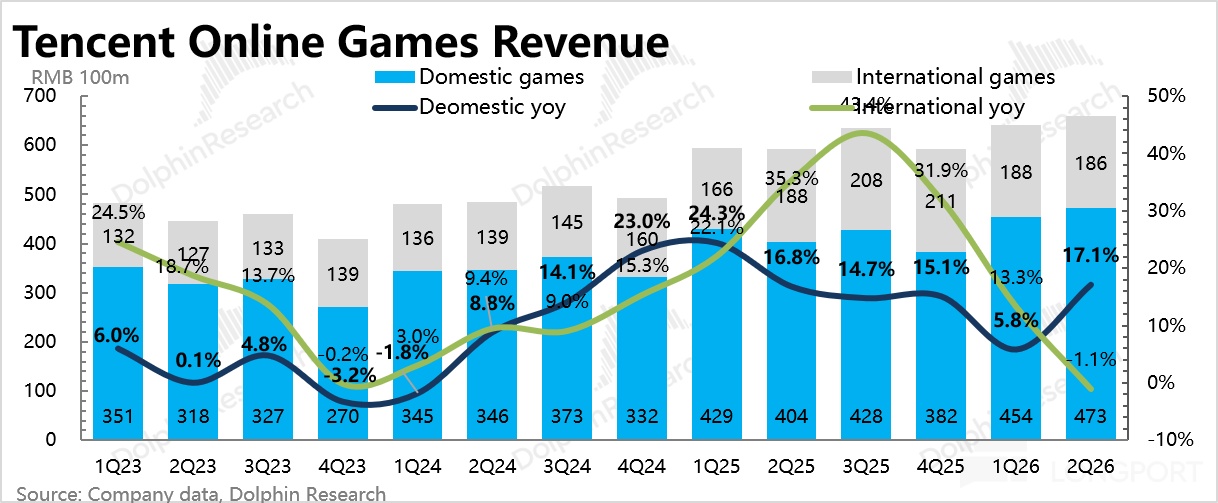
Online games revenue was RMB 65.9bn in Q2, +11% YoY. Domestic grew 17% on new title ‘Rock Kingdom’ and full-year uplift from ‘Delta Action’, while overseas fell 1% due to Supercell.
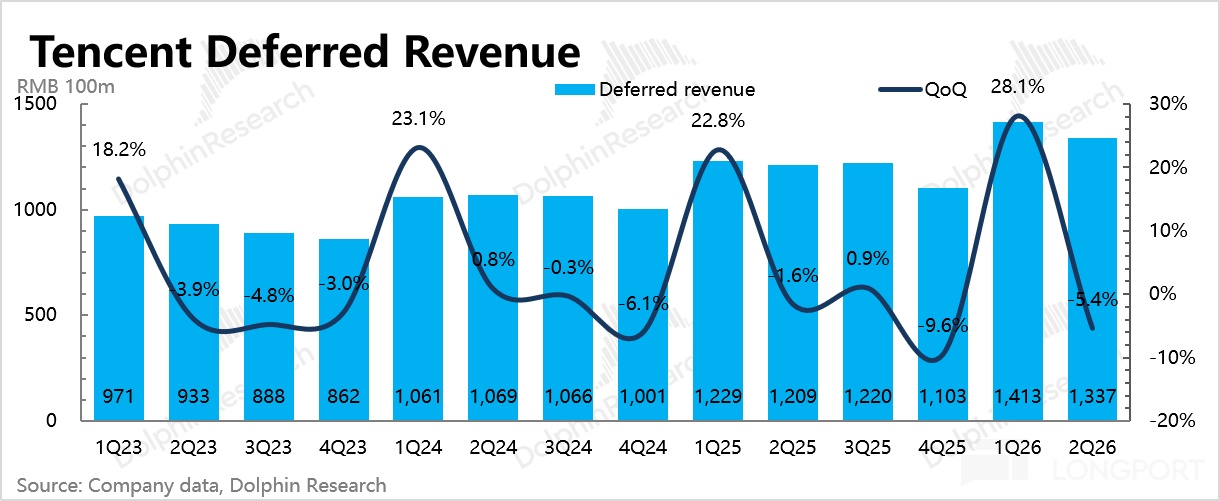
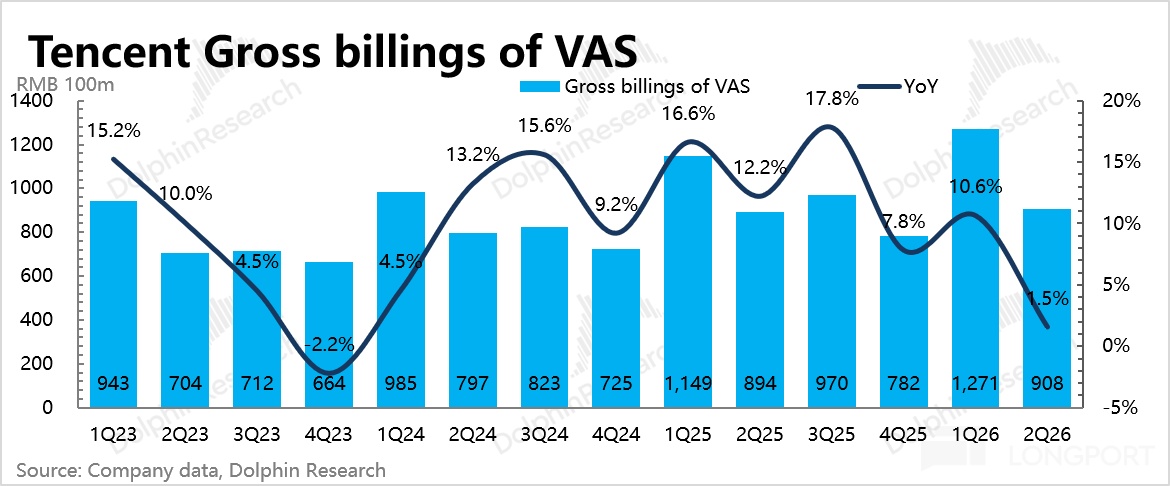
Deferred revenue was RMB 133.7bn at Q2-end, +11% YoY, with seasonal slowdown. Calculations point to VAS grossing up only ~2% YoY; besides a rapid decline in video and music/audio paid growth slowing to mid-single digits, game grossing likely decelerated notably vs. Q1’s double digits.
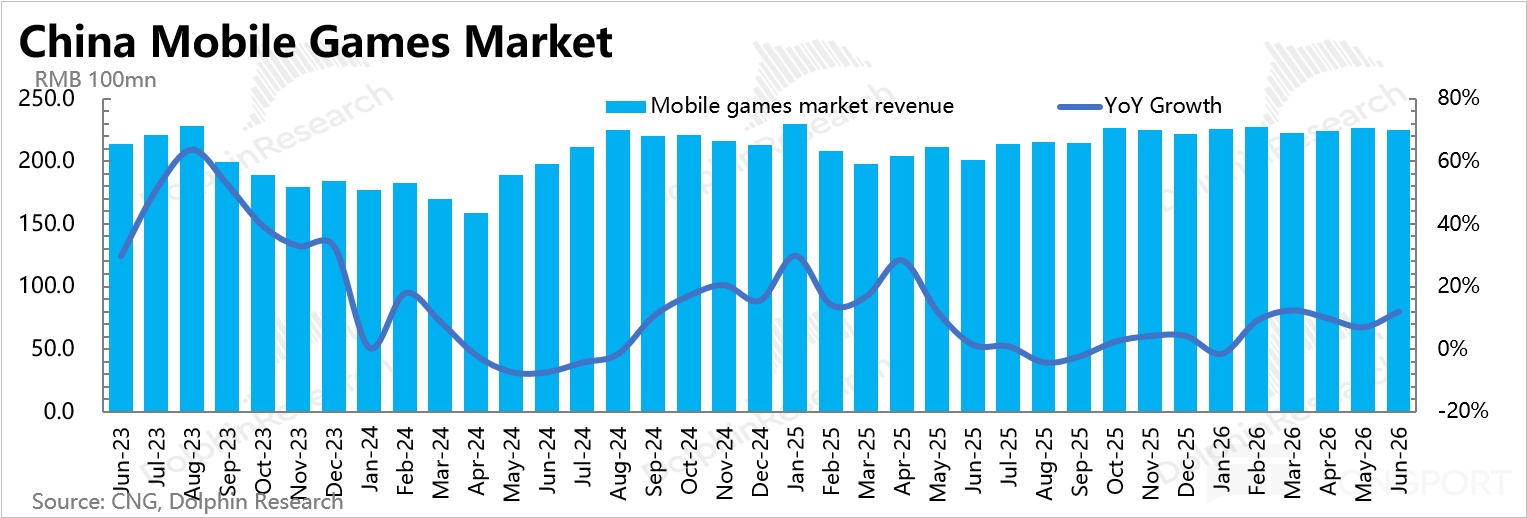
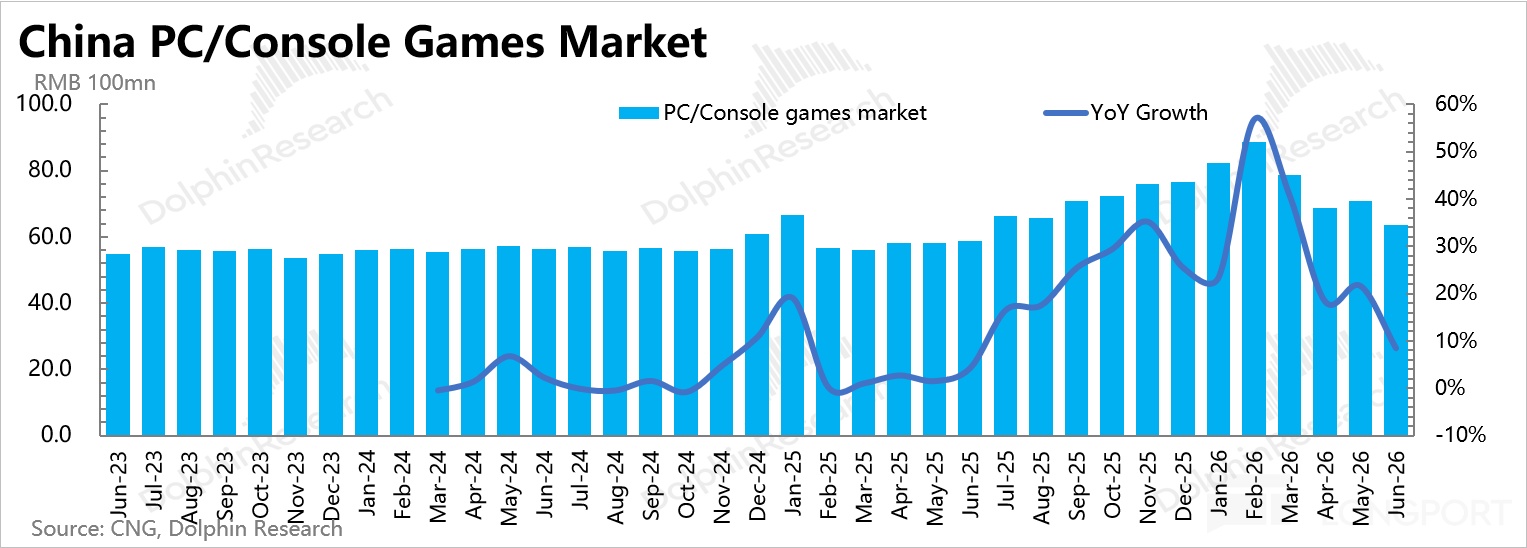
Industry-wise, Q2 was steady: mobile recovered off a low base, while PC/console softened after a strong base.
Checks indicate Jul grossing improved modestly as ‘Rock Kingdom’ adjusted ops, early mishaps faded, and summer season arrived, lifting domestic grossing. But with a weaker H2 pipeline lacking heavyweight launches, optimism should be tempered.
III. Ads beat; the group’s adjustment lever
Despite weak consumption in Q2, Tencent ads rose 22%, above market expectations. The company cited AIM+ tools, recommendation model improvements lifting ROI and eCPM, and e-commerce season driving Video Accounts and WeChat Shops marketing.
IV. FinTech under pressure; cloud growth accelerates
FinTech & Biz Services grew ~8.6% YoY in Q2, with stable QoQ. Dolphin Research estimates payments at low single digits amid weak macro (industry growth <3%), while enterprise services including WeChat Shops commissions grew ~30%, a notable acceleration vs. ~20% in Q1.
With Workbuddy’s sustained momentum, cloud growth likely continues to accelerate in Q3.
V. AI spend begins to erode profits
Adj. net profit was RMB 68.4bn in Q2, +8.5% YoY. Core operating profit (= GP − OpEx), stripping out associates/JVs and miscellany, grew 6.4% YoY, below revenue growth of 11%, showing AI drag.
GPM edged up; AI spend showed up in OpEx — R&D +25% with salaries +8%, ex-salaries tech spend +112% YoY, accelerating from +61% in Q1. Sales expense also rose on Workbuddy/Yuanbao promotion; G&A fell slightly YoY on efficiency gains.
Q2 capex was RMB 52.8bn, with cash outflows of RMB 59.3bn. The company also disclosed compute prepayments of RMB 51.6bn (future capex), which dragged ex-prepayment FCF of RMB 37.6bn down to -RMB 13.8bn.
VI. Major shareholder selling and buybacks both rose QoQ
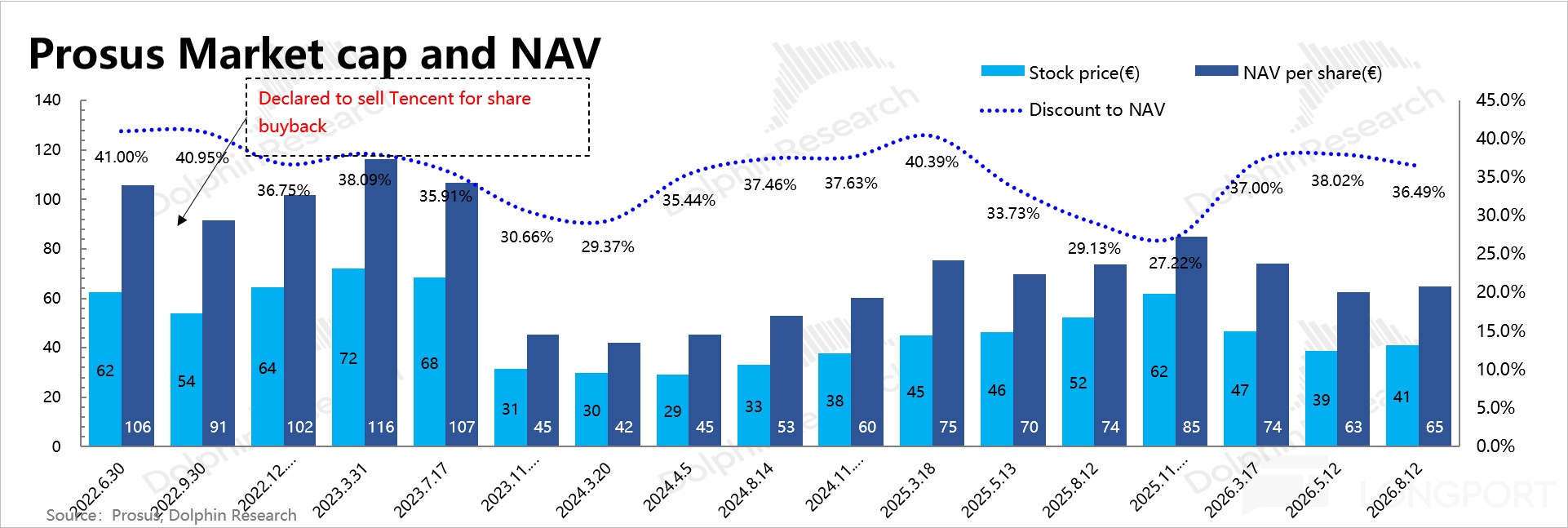
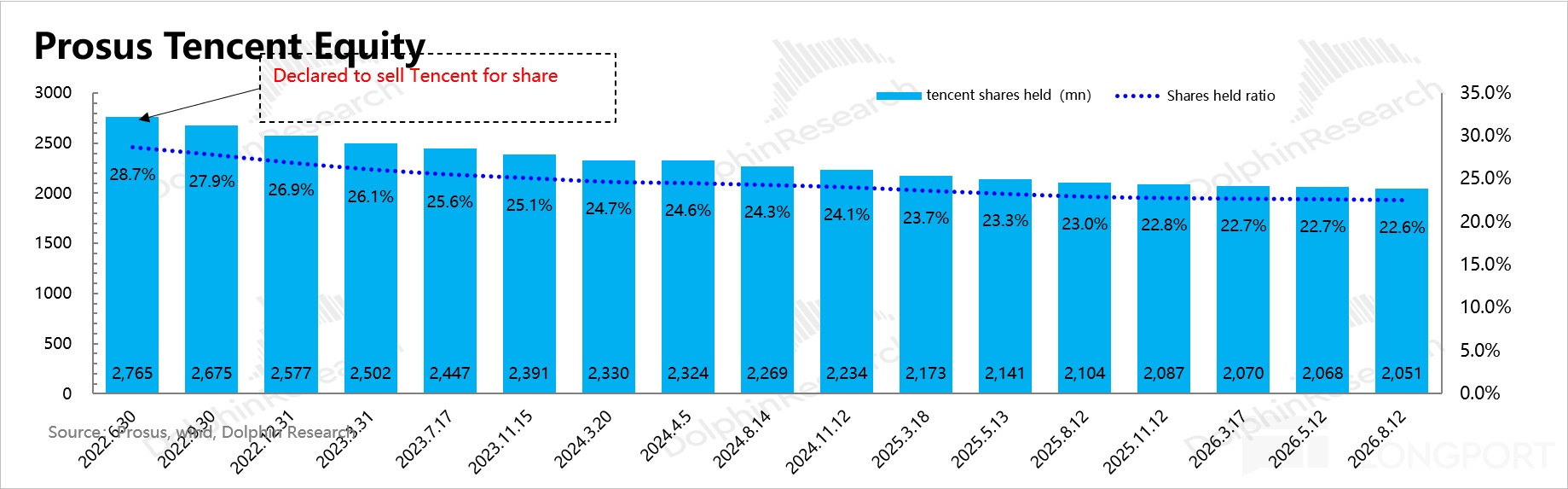
Briefly on buybacks and disposals. Over the last three months since the prior print, major shareholder selling rebounded as the quiet period ended, with avg. monthly disposals of 5.7mn shares.
As of yesterday, Prosus’s stake in Tencent fell to 22.58%, down 10bps vs. the prior-result date. Company buybacks totaled HKD 16.8bn in Q2, up QoQ; daily resumed pace post-quiet period was ~HKD 500mn, though total Q2 buyback days remained limited, so the aggregate was still lower YoY.
<End here>
Risk disclosure and statement:Dolphin Research Disclaimer and General Disclosure
