


"Not taking action is betraying the market"! The only way for the yen to maintain the results of intervention is through interest rate hikes
After the joint intervention by Japan and the United States, the rise of the yen could not be sustained, as the market bets that the Bank of Japan will raise interest rates faster and more significantly. Due to pressure from the United States and a shift in government attitude, the market's expectation for a rate hike in September has risen to 76%. The Bank of Japan faces pressure to fulfill hawkish expectations or risk further weakening of the yen, making the outcome of the policy meeting crucial
According to Zhitong Finance APP, after a rare joint intervention by Japan and the United States briefly pulled the yen back from a 40-year low about two weeks ago, market bets on the Bank of Japan raising interest rates more quickly and significantly have surged. Whether the yen can maintain the results of the intervention now hinges on next month's Bank of Japan policy meeting.
From late July to early August, coordinated interventions by Japan, the U.S. Treasury, and South Korea pushed the yen up about 5%, but the gains could not be sustained afterward. The yen rose from a 40-year low of 163.99 to 155.20 but has now fallen back above 159.
More noteworthy than the exchange rate movements is the sharp reassessment of interest rate expectations. The market believes the U.S. is pressuring Japan to take policy actions in line with the currency intervention, leading traders to price in an additional 25 basis points of rate hikes this year. According to Tokyo Tanshi, the market currently sees a 76% probability of a rate hike in September, up from just 24% on July 30.
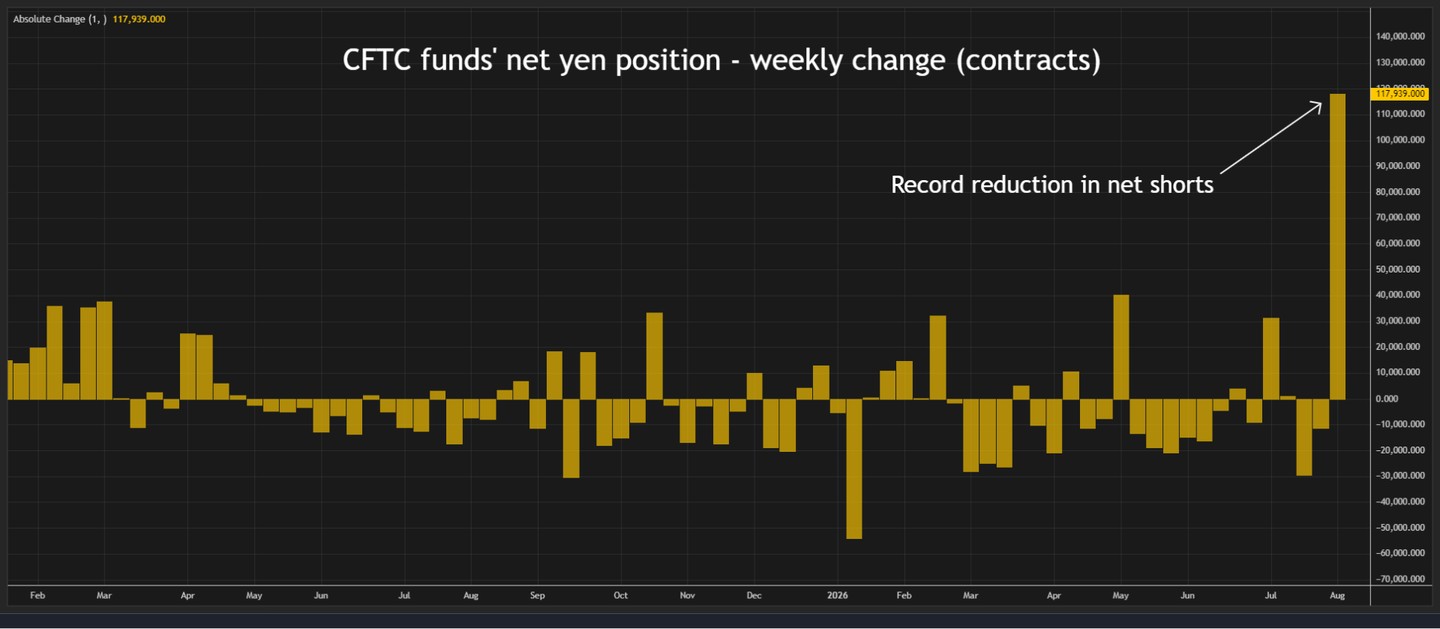
"We need to see a more hawkish stance from the Bank of Japan; the market is trying to price this in, but at the same time, we need the central bank to validate it," said Moh Siong Sim, a foreign exchange strategist at OCBC Bank in Singapore. "If the central bank fails to act, the yen will weaken again."
This puts immense pressure on the Bank of Japan: either to fulfill the hawkish expectations already priced in by the market or to watch the yen slide back toward decades-low levels.
Government Attitude Shifts, Bessent's Pressure Takes Effect
According to informed sources, the government of Prime Minister Fumio Kishida currently supports a recent interest rate hike by the Bank of Japan, with a possible window for action in September or October. The Bank of Japan's concerns about the yen's weakness driving up prices align with the government's goal of solidifying the recent effects of the U.S.-Japan joint intervention.
Although the Bank of Japan legally possesses monetary policy independence and the cabinet cannot force it to set specific interest rates, the government can influence the central bank's decisions by signaling its intentions. The Prime Minister's Office stated in an email: "We believe that specific monetary policy measures, including interest rate hikes, should be determined by the Bank of Japan." The statement also noted that the central bank should work closely with the government to achieve the 2% inflation target in a "stable manner." The Bank of Japan declined to comment.
U.S. Treasury Secretary Scott Bessent has been a key trigger for this repricing. He publicly urged Japan to follow up on "policy and fundamentals" after the joint intervention, which the market widely interprets as pressure on the Kishida government to tone down its dovish stance and allow the Bank of Japan to raise interest rates.
Takahide Kiuchi, an executive economist at Nomura Research Institute, stated: "As political pressure eases, the Bank of Japan may accelerate the pace of interest rate hikes."
It is reported that Kishida has previously been seen as cautious about raising rates too quickly, fearing it could stifle the economic rebound. Since taking office in October last year, the Bank of Japan has raised rates twice, but the benchmark rate remains only at 1%. If there is another rate hike in September or October, it would be the fastest tightening by the Bank of Japan within 12 months since the peak of the asset bubble in 1989 Joint Intervention and FIMA "Rocket Launcher" Support
The fundamental reason for the long-term depreciation of the yen is the widening interest rate differential between the U.S. and Japan. This year, the high market Sōma government has implemented large-scale stimulus measures, and the Bank of Japan has delayed interest rate hikes, further accelerating the decline. The record solo interventions by Japan from April to May failed to reverse the situation, and it was not until the U.S. Treasury joined in the joint buying of yen that the yen was pulled back from a 40-year low.
The Japanese Ministry of Finance has pledged to act decisively again after the joint yen-buying operation with the U.S. Treasury on July 30-31. This is the first such joint action since 1998.
Unlike previous interventions, this round has introduced new financing arrangements. Japan can borrow dollars through the Federal Reserve's FIMA repurchase tool, using its holdings of U.S. Treasury bonds as collateral, without having to directly sell U.S. bonds to raise intervention funds.
Masahiko Loo, a senior fixed income strategist at State Street Global Advisors, stated: "FIMA is less of a financing tool and more of a deterrent tool, serving as an almost 'rocket launcher'-like support, forcing the market to think twice before challenging policymakers' resolve."
Interest Rate Hikes as the "Only Cure," Central Bank Faces Validation Moment
However, beyond intervention, the Bank of Japan has become the key variable determining whether yen stability can be sustained.
Katsutoshi Inadome, a senior strategist at Sumitomo Mitsui Trust Asset Management, bluntly stated: "In the short term, the only cure for the weak yen is an interest rate hike by the Bank of Japan."
Mizuho Securities has brought forward its baseline scenario for the next interest rate hike to September, one reason being that the summary of opinions from the Bank of Japan in July unexpectedly leaned hawkish. Mizuho also raised its terminal rate forecast from 1.50% to 1.75%.
Internal signals from the central bank are also reinforcing this expectation. Kazuo Ueda hinted at a faster pace of interest rate hikes due to rising inflation risks during a press conference after holding steady on July 31; later that day, the U.S. and Japan coordinated to intervene in the foreign exchange market. According to informed sources, the government had conveyed to the central bank before the July meeting its support for Ueda to make hawkish remarks at the press conference.
The summary of opinions from the Bank of Japan's July meeting showed that one member stated that given the potential CPI inflation is close to 2%, "it can be considered that the pace of policy rate hikes will be faster than market expectations"; another member mentioned that monetary policy needs greater flexibility. Reports indicate that central bank officials still wish to assess economic and price developments before deciding on the timing of interest rate hikes, but have not ruled out the possibility of action in September.
Although interventions and expectations of interest rate hikes temporarily support the yen, the yen still faces structural headwinds. Strategists at Mitsubishi UFJ Morgan Stanley Securities pointed out that concerns about Japan's fiscal deficit and unfunded tax cuts still exist, which could put upward pressure on government bond yields and weaken the lasting effects of interventions.
This places pressure back on the Bank of Japan. Rinto Maruyama, a senior strategist for foreign exchange and interest rates at SMBC Nikko Securities, warned that bond yields and swap rates have already priced in a September action, and if the central bank delays again, it will be interpreted by the market as "a betrayal of the market."
Maruyama added: "Market participants will lose confidence in the Bank of Japan's ability to continue raising interest rates. In this case, the yen will fall, and long-term bond yields will rise due to heightened inflation concerns."
