


Are overseas losses peaking? Can DiDi's global ambition deliver?
Ride-hailing leader $ DiDi.US posted its Q2'26 results on the evening of Aug 13. Overall, the print was solid, with both GTV and adj. profit beating Bloomberg estimates. Domestically, growth was steady with a slight slowdown and margins broadly stable, while overseas continued to accelerate and losses showed signs of peaking.In other words, the overseas segment may be entering a fast lane toward breakeven. Details below:
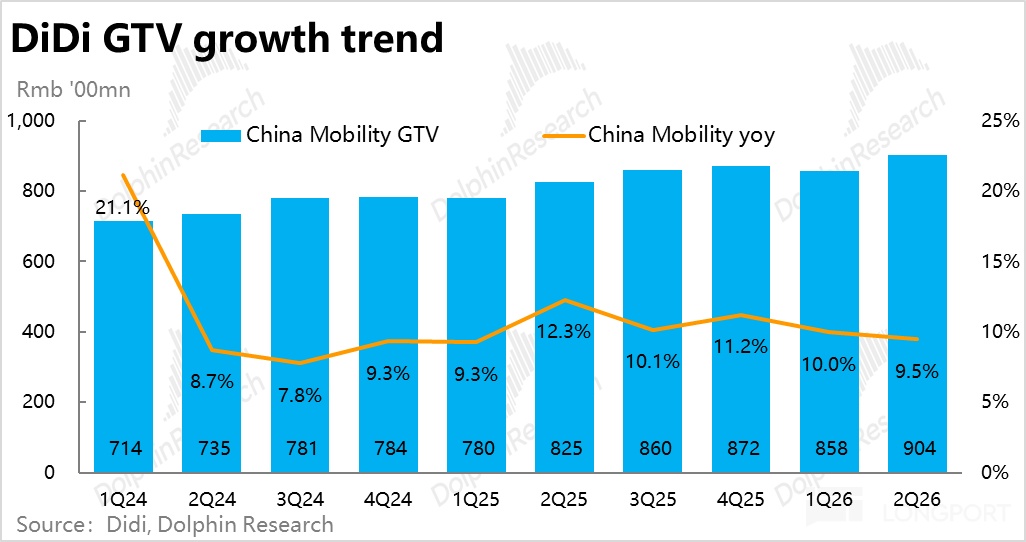
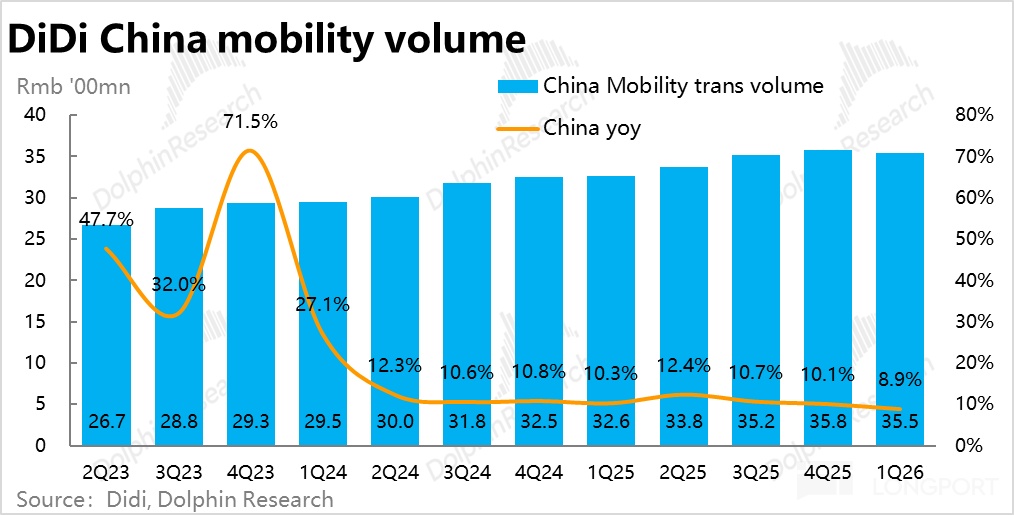
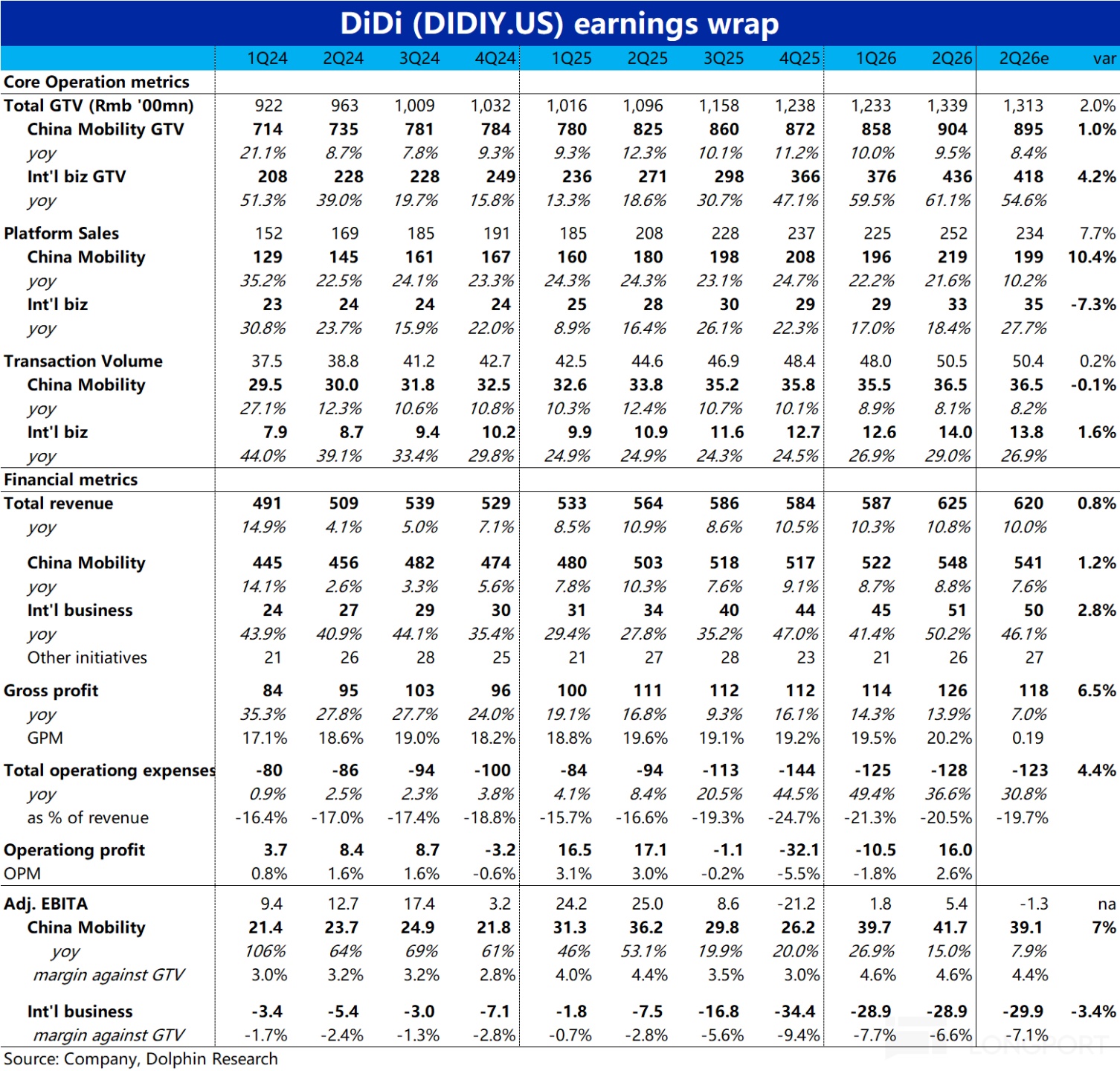
1) Domestic biz increasingly mature: This quarter, domestic GTV reached RMB 90.4 bn, up 9.5% YoY, broadly flat QoQ with a mild deceleration, and slightly above Bloomberg's 8.4%. By price-volume split, domestic trips rose 8.1% YoY, also slowing slightly QoQ, implying the remaining ~1.4% growth came from higher average ticket.
Overall, the domestic business is broadly stable and in the late-maturity phase where growth gradually eases off a higher base.
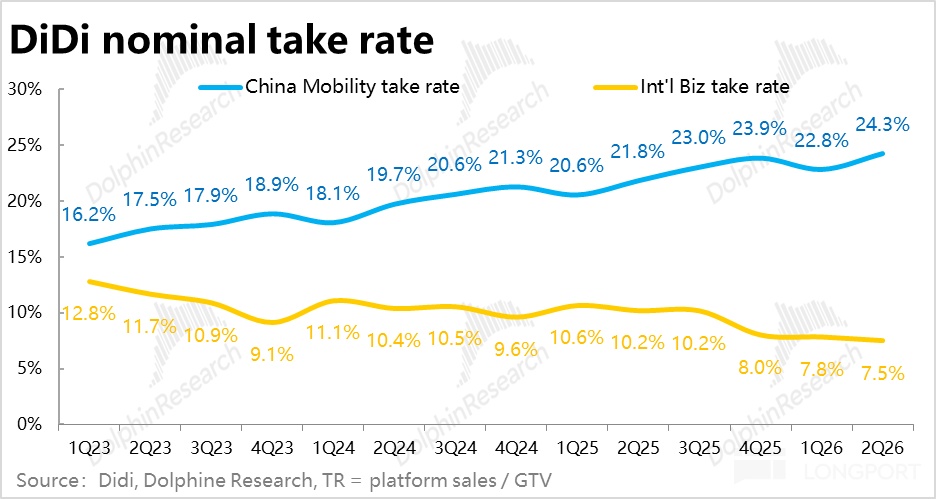
2) Domestic net take rate broadly stable: This quarter, domestic ride-hailing revenue (GTV net of taxes and passenger subsidies) was ~RMB 54.8 bn, up ~8.8% YoY, with QoQ growth up 0.1ppt and a narrower gap vs. GTV growth.Meanwhile, domestic platform sales (GTV net of driver payouts, taxes, etc.) rose 21.6% YoY, tracking the GTV trend with a slight slowdown (-0.6ppt), yet still growing much faster than GTV.
On a platform sales/GTV basis, the implied take rate was 24.3%, up 2.4ppt YoY with a broadly steady uplift.This suggests driver payout ratios have stabilized recently with no notable decline vs. last quarter. Consumer subsidies likely tightened QoQ.
Overall, the platform's net take rate retention appears broadly stable, which also explains the largely flat QoQ adj.EBITA margin discussed later.
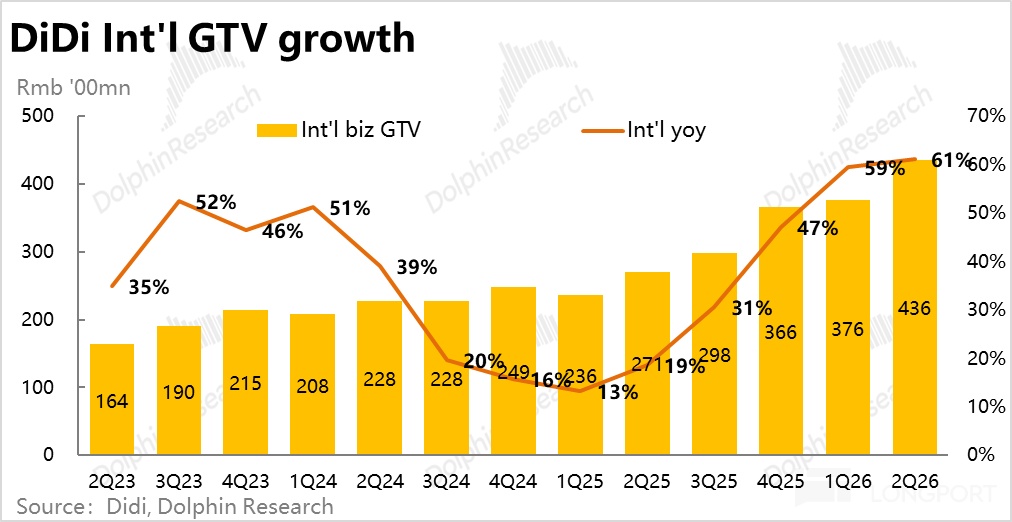
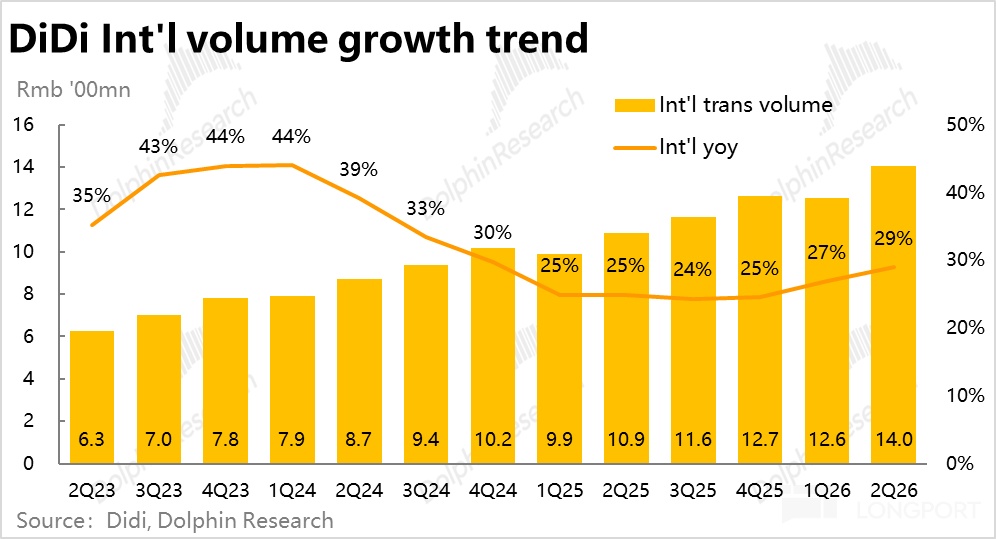
3) Overseas surging, still buying growth: This quarter, overseas GTV growth continued to accelerate to 61%, well above Bloomberg's ~55%. Ex-FX, growth was 53%, still ~4ppt faster than last quarter.While the pace of acceleration moderated (vs. +11ppt last quarter), given the rapidly rising base, overseas growth remains very strong.
Similarly, overseas orders rose 29% YoY, accelerating 2ppt QoQ. Average ticket reached RMB 31.1, up RMB 1.2 QoQ, suggesting food delivery in markets like Brazil performed well.
As before, due to partner shares and consumer subsidies, overseas platform sales grew only 18% YoY, up just 1ppt QoQ, far lagging GTV growth. In short, food delivery is still in a spend-to-scale phase.
On a platform sales/GTV basis, the overseas blended take rate was ~7.5%, and has declined for three consecutive quarters.
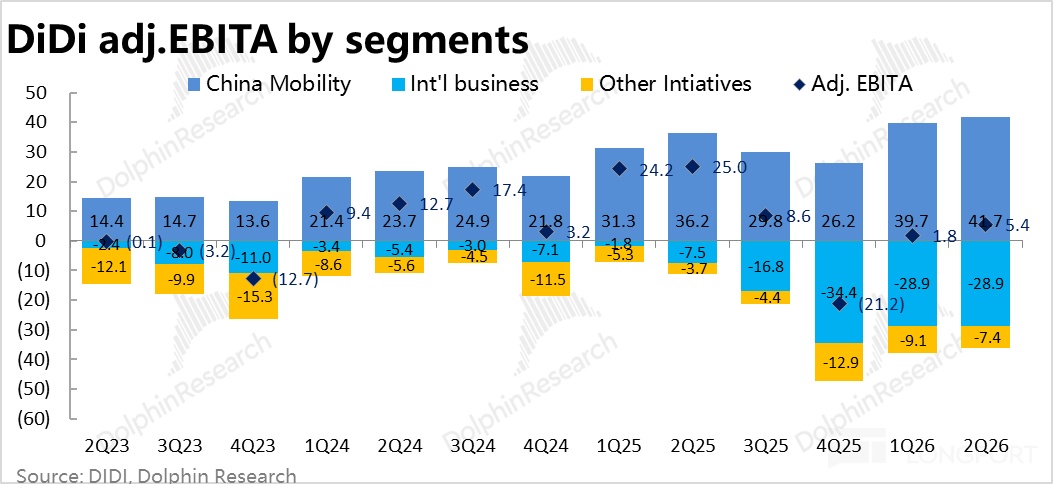
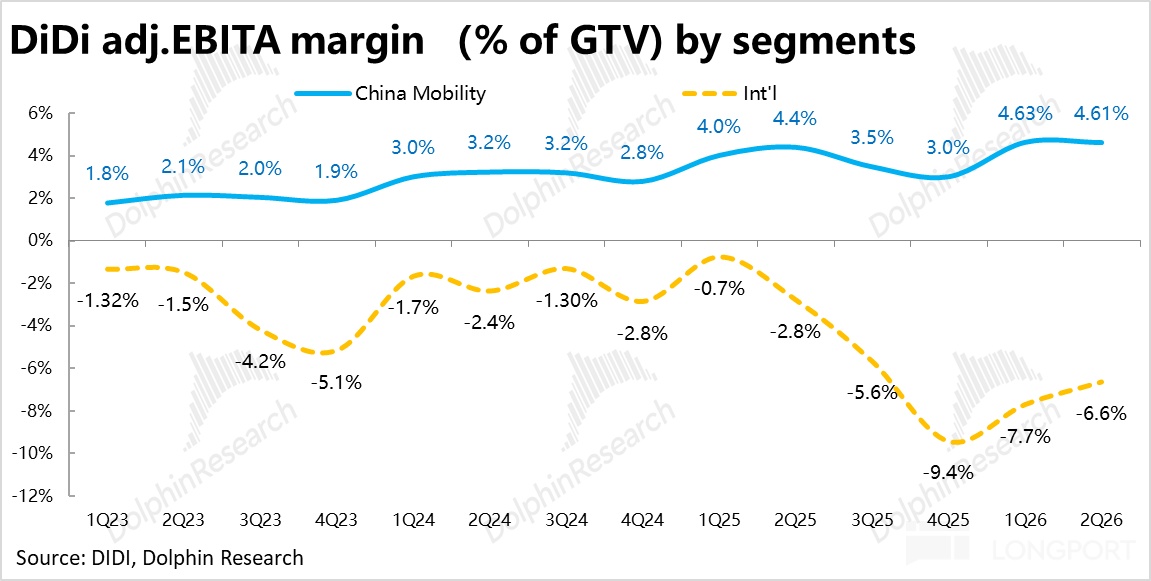
4) Profits improved materially, above expectations: With domestic monetization steady, on an adj.EBITA-to-GMV basis, margin was 4.6%, roughly flat QoQ. YoY, margin expanded ~0.2ppt, with profit of RMB 4.17 bn (+15% YoY), ahead of Bloomberg's RMB 3.9 bn.
Overseas loss was RMB 2.89 bn, almost unchanged QoQ. The segment is still scaling fast, but losses are no longer widening, i.e., loss margin fell from 7.7% to 6.6%.This suggests overseas losses may have peaked, a small beat as well.
Other businesses also narrowed losses, from RMB 910 mn to RMB 740 mn. With better-than-expected profitability across segments, company-wide adj.EBITA reached RMB 540 mn.The absolute profit remains small, but versus market expectations and last quarter's loss, the improvement is significant.
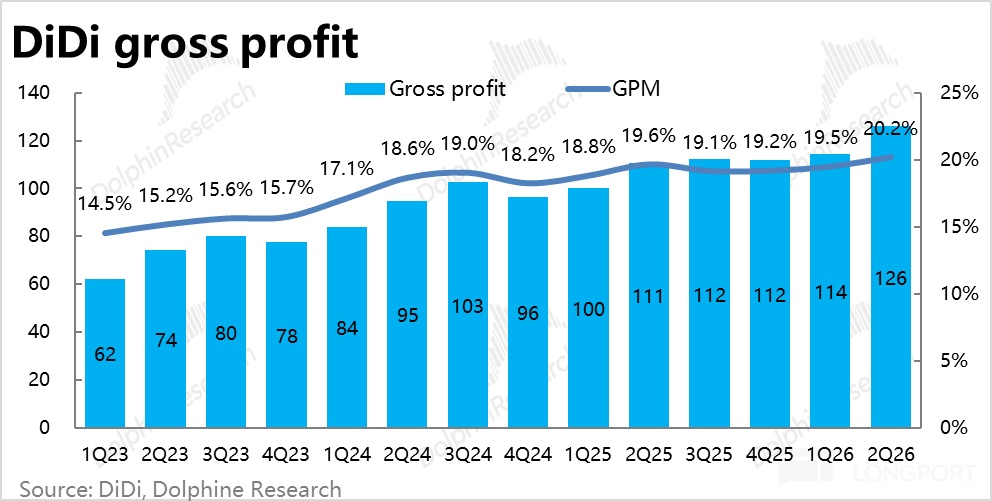
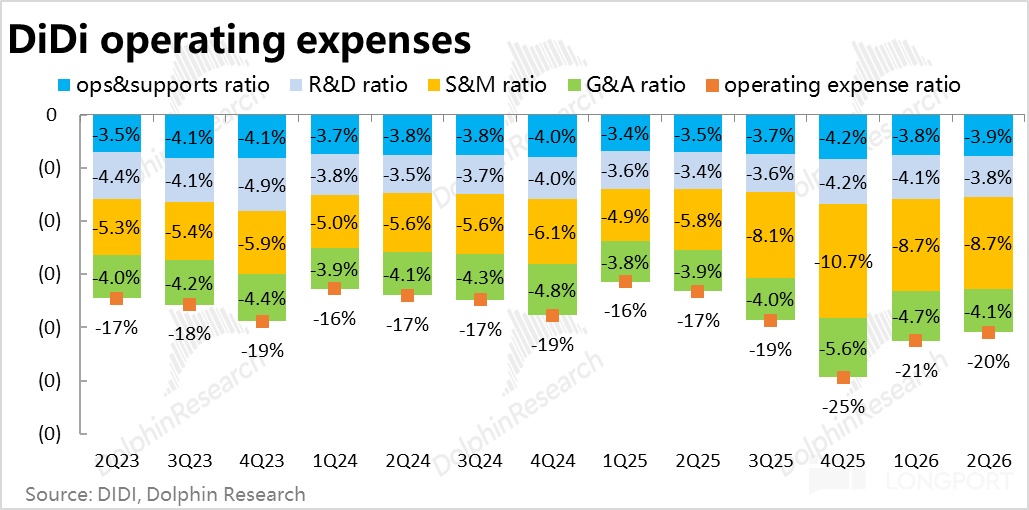
5) GP under some pressure, opex growth peaking: On costs and expenses, overall GPM was 20.2%, up ~0.5ppt YoY but with a narrower uplift vs. the prior two quarters (0.9ppt and 0.7ppt), reflecting the impact of overseas investment.Seasonally, Q2 is typically a GPM high, so GPM also rose meaningfully QoQ.
On expenses, total four opex lines rose 37% YoY. That is still high but down from 49% last quarter, indicating slower growth.
Most notably, marketing expense growth slowed from 96% YoY to 67%, with absolute spend up just a little over RMB 300 mn QoQ. This aligns with overseas losses peaking, implying overseas investment may also be near a peak in absolute terms.
Other expense lines grew around 20% YoY, slightly slower than last quarter.
6) Shareholder returns underwhelming: Per the company, over the two months from late May to late Jul, it repurchased nearly $86 mn of stock, plus about $195 mn during the quarter, equivalent to roughly 4% of current market cap on an annualized basis.Amid a weak share price, shareholder returns are not high.
To be fair, overseas investments require cash outlays, and net operating cash flow has been negative in recent quarters.
7) Key takeaways from the print
Dolphin Research view:
In summary, this was a good print in terms of marginal change and vs. expectations. The key positive is that despite losses in overseas and other businesses, the cash-generating domestic core continues to deliver steady profit growth.As overseas scale expands and operating and profit leverage kicks in, the drag on group profits should diminish.
The market narrative may shift from 'overseas burn drives near-zero group profit' to: domestic cash generation remains intact, while overseas, if it does not work, will not overly drag profits, and if it does, provides upside optionality.
Given the ~40% pullback in the stock, the print likely prompts some recovery.
On valuation, as overseas losses potentially peak, the market may shift from a consolidated profit approach back to SOTP. Domestic trends are stable, so we maintain our prior 2026 adj.EBITA forecast of ~RMB 15.5 bn.
Overseas losses are hard to pin down. H1 losses were near RMB 5.8 bn, and assuming a clear H2 narrowing puts full-year at RMB 9.0 bn, with other new businesses likely losing at least RMB 2.0 bn. On a consolidated basis, even after the large pullback, valuation support remains limited.
For 2026 domestic adj.EBITA of ~RMB 15.5 bn, less ~RMB 2.5 bn of SBC (with non-op income far exceeding taxes, we do not further deduct tax), the current market cap of ~RMB 120 bn implies ~9x. Unlike e-commerce, where competitive incentives anchor multiples at 8–10x, Didi's core moat and visibility are strong, so if overseas losses narrow meaningfully, domestic could re-rate toward 12x–15x.
<End>
Past Dolphin Research coverage on [Didi Global]:
Earnings reviews
Nov 28, 2025: Food-delivery war spared Didi, so why did it buckle?
Aug 28, 2025: No food-delivery boost, yet Didi held up?
Jun 5, 2025: The 'food-delivery war' did not hit, Didi quietly minted cash
Mar 19, 2025: Didi: domestically mature yet vigilant, overseas story told gradually?
Nov 29, 2024: Didi: domestically in 'lie-flat' mode, overseas not fast enough
Aug 23, 2024: Squeezing margins, can Didi find a late bloom?
Deep dives
Jul 1, 2021: RMB 70 bn Didi: worth it or not?
Jun 24, 2021: Unpacking Didi's mobility 'utopia' | Dolphin Research
Risk disclosure and statement: Dolphin Research disclaimer and general disclosure
