


"War Becomes Easier for Trump When US Stocks Are at Historic Highs," Goldman Sachs Trading Desk Warns: Beware of Geopolitical Risks
Rich Privorotsky, head of the Goldman Sachs Delta One trading desk, warned that when the S&P 500 is at historic highs and financial conditions are at their loosest in recent years, the market's constraint on policymakers weakens, effectively lowering the threshold for geopolitical conflict. With tensions escalating in the Middle East, the market remains largely unmoved, with the Cboe Volatility Index hovering around 14. This "desensitization" is the most dangerous signal, indicating that geopolitical tail risks are being systematically underestimated
While accommodative financial conditions support the market, they are also quietly reducing the political cost of initiating geopolitical conflicts.
In a report dated August 17, Rich Privorotsky, head of the Goldman Sachs Delta One trading desk, pointed out that when the S&P 500 is at historic highs and financial conditions are extremely loose, the market's constraint on policymakers actually declines significantly—"When markets are thriving, starting a war actually becomes easier."
This judgment points directly to the tail risk most easily overlooked by the current market. He explicitly warned that geopolitical tail risks should not be taken lightly, and the cost of extreme tail hedging instruments is currently at historic lows, providing investors with a window to establish protection at low cost.
Analysts believe that despite escalating tensions in the Middle East and attacks on ships, the market remains almost indifferent—the S&P 500 has returned to high levels, the Cboe Volatility Index remains around 14, and financial conditions are at their loosest in recent years. This "desensitization" itself may be the signal Privorotsky is most concerned about.
In terms of overall strategy, Privorotsky maintains a risk-on stance, recommending holding nominal assets, shorting bonds, buying cheap volatility protection, and favoring the financials, semiconductor capital expenditure, industrial, and cyclical sectors.
Geopolitical Risks Underestimated; High Market Levels Lower Conflict Threshold
This is the most cautionary part of Privorotsky's report.
His baseline assessment is that policymakers still exhibit economic rationality beneath their rhetoric as the midterm elections approach. However, he then proposes a deeper logic—"When markets are booming, the market's constraint on decision-makers weakens; when the S&P 500 is at historic highs and financial conditions are loose, starting a war actually becomes easier."
This means that precisely when the market is calmest and investors are most complacent, geopolitical risks may be systematically underestimated. The ultimate trajectory of the Middle East situation remains unclear. While oil inventories are at abnormally low levels and oil prices in the $80–$90 range may still be bearable, upside risks cannot be ignored.
Privorotsky's conclusion is: We cannot let our guard down regarding geopolitical risks. The good news is that extreme tail-risk hedging instruments are currently in a historically low price range, offering investors the opportunity to establish protection at very low cost.
His recommendation is: Maintain a risk-on stance, increase convexity exposure, avoid or short bonds, and simultaneously buy cheap protection, allowing trends to extend naturally.
Market Returns to Highs; July Deleveraging Largely Cleared
Privorotsky noted in his report that the widely recognized position unwinding and deleveraging process in July has now largely been completed. Current gross and net leverage levels in the market are healthier, with overall systemic leverage significantly decreased.
In terms of market performance, the S&P 500 has basically returned to its highs, with the Cboe Volatility Index maintaining a low level around 14, and financial conditions approaching recent extremes. With options expiration approaching this week, the market is near highs, and most covered call strike prices have been breached. However, current positioning levels remain below historical norms at similar price levels—this implies that investors may face pressure to engage in FOMO buying in September.
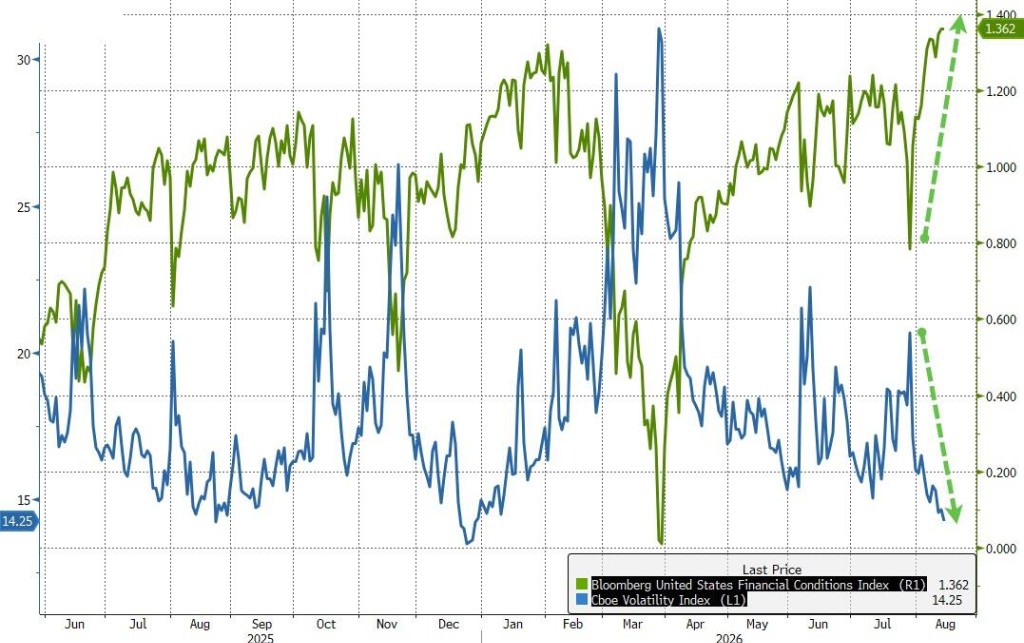
Privorotsky believes that upside tail risks remain cheap in the short term, with Euro Stoxx volatility in single digits and the Cboe Volatility Index hovering around 14. He recommends holding upside option exposure in the near term.
AI Remains a One-Way Trend, but Free Cash Flow Is the Ultimate Test
Regarding the artificial intelligence sector, Privorotsky's judgment is: The biggest beneficiary of AI is the broader market, not any single company. He believes the market is moving along a one-way track—the cost per unit of computing power continues to decline, and the practical value per dollar of output continues to rise. This trend will ultimately benefit almost all industries and companies, making most business models more profitable.
He specifically pointed out that the real winners may be those companies that capture AI dividends at the lowest cost, rather than those investing the most. Strong performance in the recent earnings season has alleviated some of the market's previous pessimistic expectations.
However, Privorotsky remains cautious about the prospects of hyperscale cloud computing providers, temporarily setting aside this controversy. He clearly stated that he still adheres to the "Cuba Gooding Jr. principle"—if free cash flow is not there, he will not buy.
Long-End Rates Quietly Under Pressure; Fed May Be Forced to Resume Rate Hikes
On the issue of interest rates, Privorotsky characterized it as the "only real crux" of the current market. He pointed out that the weakness in US long-end rates is not due to any specific policy decision but reflects structural supply pressures—against a backdrop of fiscal deficits of 6% to 7%, the issuance scale of US Treasuries and investment-grade bonds remains huge. The crowding-out effect is real, term premiums are rising, and real yields are at extremely high levels.
He also proposed a non-consensus view: If the Federal Reserve fails to achieve its inflation target over the long term, it will ultimately face the risk of damaged credibility. He noted that Hammack, Logan, and Kashkari had already voted in favor of rate hikes in July, and the continued rise in long-end rates may eventually force the Federal Open Market Committee to take action.
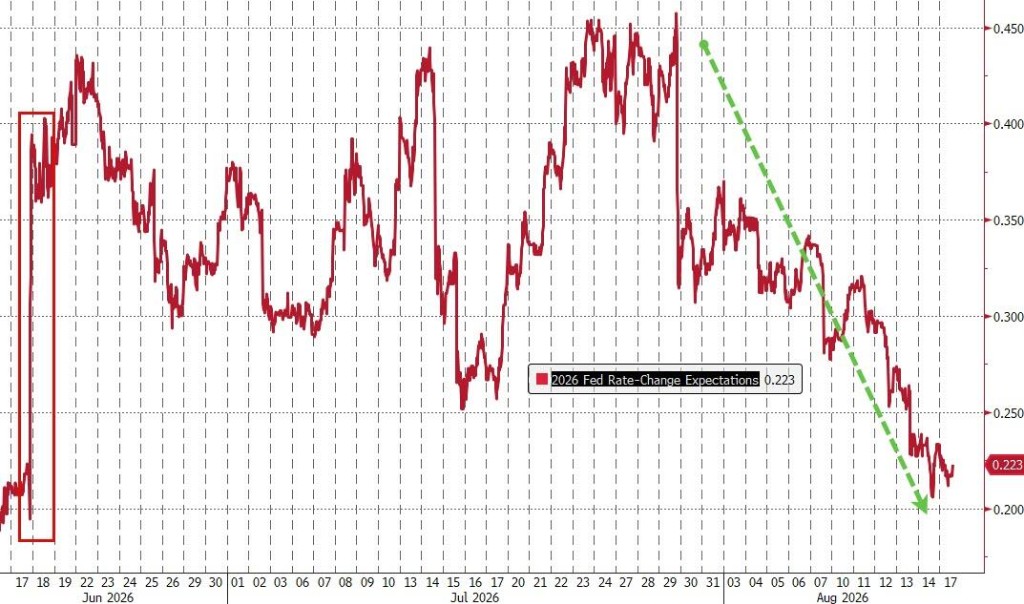
"Perhaps the Federal Reserve will eventually raise rates to restore credibility," he wrote. "The front end is anchored by policy, but the long end is not. A flattening curve might actually help."
In terms of overall strategy, Privorotsky recommends holding nominal assets—S&P 500, gold, and shorting bonds—and allocating cheap VIX call options or spread strategies within the portfolio. He favors financials, technology related to semiconductor capital expenditure, industrials, and broad cyclical sectors, while avoiding bond substitutes lacking pricing power, including consumer staples, telecommunications, and REITs. He also tends to pair these short positions with long positions in healthcare.
