


US HR Stocks Stage Strong Rally: AI Resume Flood Boosts Screening Value, Making Recruitment Firms More Valuable!
AI has not disrupted the US recruitment industry; instead, the flood of AI-generated resumes has increased the value of screening, creating new demand for HR firms. Recruitment stocks such as ManpowerGroup and Robert Half reported earnings that exceeded expectations, with share prices staging a strong rebound from their lows. AI has also become an efficiency tool for the industry, but valuations face pressure after the rally. The long-term trend will depend on the recovery of the US labor market and whether recruitment firms can truly benefit from AI
AI has not rapidly "ended" the recruitment industry as the market previously feared; instead, it may be creating new demand for human resources companies.
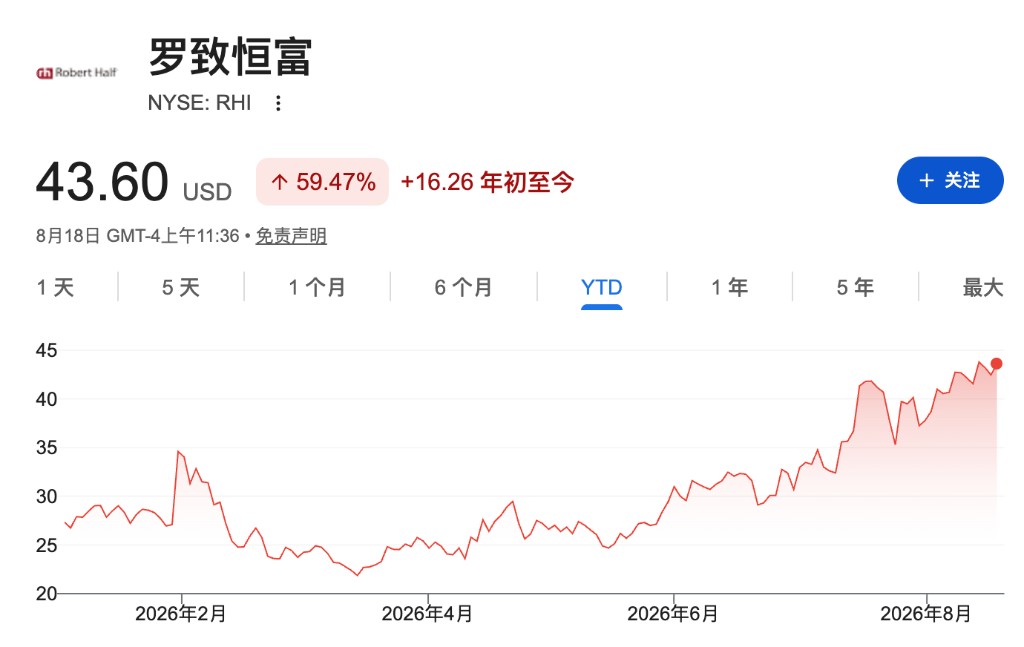
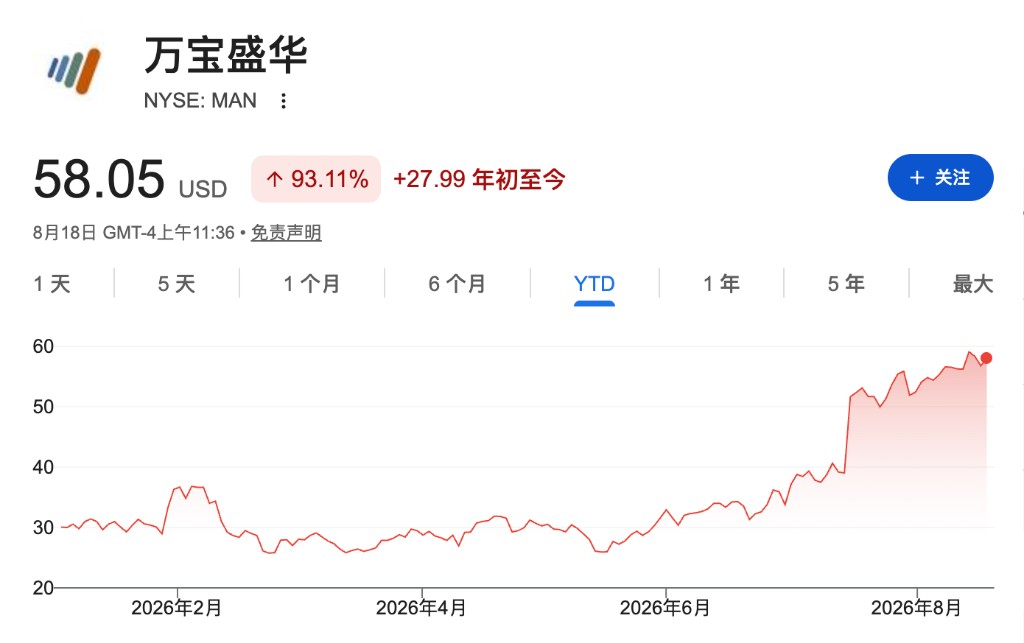
Year-to-date, the share prices of ManpowerGroup and Robert Half have rebounded approximately 94% and 120%, respectively, from their lows in February and March. These previous lows coincided with the "SaaS apocalypse" panic triggered by the rapid adoption of AI tools. As second-quarter earnings successively beat expectations and recruitment demand showed signs of improvement, the market began to reassess AI's impact on the recruitment industry.
This rally is not limited to these two companies. The index tracking professional services companies has risen 44% since April, ZipRecruiter is up nearly 183% from its March low, and Recruit Holdings' American Depositary Receipts (ADRs) have also risen about 170% from their lows.
AI Resume "Flood" Increases Screening Value
The market previously worried that generative AI could automatically screen resumes, write job descriptions, and even participate in interviews, ultimately undermining the value of recruitment firms.
However, reality may be moving in another direction.
As AI tools lower the barrier to applying for jobs, companies may no longer face a shortage of resumes, but rather an excess. With a surge of AI-generated job applications, identifying truly suitable candidates from a massive pool has become a new challenge.
Trevor Romeo, an analyst at William Blair, believes that the increase in AI-generated job applications may make companies more reliant on professional recruiters for resume screening and candidate identification. In other words, while AI lowers the cost of "applying," it may increase the value of "screening."
This implies that the relationship between AI and recruitment firms is not necessarily a simple substitution.
Earnings Speak First, Pessimistic AI Narrative Begins to Ease
Behind the rally in recruitment stocks, the most critical catalyst remains earnings performance.
ManpowerGroup recorded its best revenue performance in three years in the second quarter, and Robert Half also exceeded market expectations, sending positive signals about demand prospects. The improvement in earnings has led investors to believe that the recruitment industry may be experiencing a cyclical recovery.
Jeff Silber, an analyst at BMO Capital Markets, stated that earlier this year, amidst the "SaaS apocalypse" panic, the market "threw the baby out with the bathwater."
Joshua Chan, an analyst at UBS, also pointed out that real data is changing the previous pessimistic judgment regarding AI's disruption of the recruitment industry. Before ManpowerGroup released its earnings, he was reluctant to recommend recruitment stocks due to investor concerns about AI.
Manav Patnaik, an analyst at Barclays, believes that the latest results from both companies indicate that the recovery of the recruitment industry has "undoubtedly begun."
AI May Also Become an "Efficiency Tool" for Recruitment Firms
In addition to changes on the demand side, recruitment firms are also leveraging AI to improve efficiency.
Stuart Gordon, an analyst at Bloomberg Industry Research, noted that HR companies can use AI to improve productivity. ManpowerGroup has already applied AI to assist in the interview process, meaning AI is not just a competitor to traditional recruitment business but can also be a tool to reduce operating costs and improve matching efficiency.
Joshua Chan from UBS believes that as long as the recruitment industry continues to achieve growth, even if primarily driven by cyclical recovery, concerns about AI disruption may gradually fade over time.
In other words, the market's previous discussion of "will AI replace recruitment firms" is now shifting to another question: can recruitment firms leverage AI to transform themselves into more efficient organizations.
After the Strong Rally, the Real Test Is Just Beginning
Of course, the sharp rise in recruitment stocks does not mean risks have disappeared.
According to data compiled by Bloomberg, ManpowerGroup's share price is only 1.5% away from the average analyst target price, while Robert Half is already more than 20% above the average target price. After this round of rapid recovery, valuation pressure has re-emerged for some individual stocks.
The larger variable still stems from the US job market. US employers unexpectedly cut jobs in July, and employment data for the previous two months was revised downward, indicating that the actual state of the labor market may be weaker than previously expected.
Therefore, this rally in recruitment stocks looks more like a correction in market narrative: AI has not eliminated recruitment demand; instead, the proliferation of AI-generated content may have made "screening, judgment, and matching" more important.
However, whether this rally can evolve into a long-term trend ultimately depends on two variables: whether the US labor market can truly recover, and whether recruitment firms can prove they can benefit from the AI wave rather than being replaced by it.
