


August 19th Foreign Market Headlines: Trump claims no talks with Iran, Apple adjusts EU App Store fees, long-term sovereign bond yields rise to high levels in multiple countries
Trump claims he has not negotiated with Iran and hints at controlling the Strait of Hormuz, while the UAE is hit by missile attacks; US-Canada tariff negotiations enter the final stages, with the US downplaying expectations of reaching an agreement; Apple adjusts its App Store charging rules in the EU, easing the entry threshold for third-party app stores

Global financial media's main headlines of last night and this morning include:
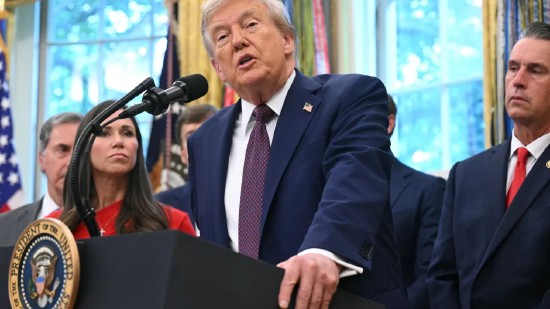
Trump claims no negotiations with Iran have been arranged, again hints at claiming the Strait of Hormuz as U.S. territory
U.S. President Trump stated on Tuesday that the U.S. has not engaged in any negotiations with Iran and has no plans to initiate new talks, but he continues to assert that the Strait of Hormuz is open and that mines have been cleared.
Trump's statement on Truth Social suddenly contradicts his earlier claims that active negotiations were taking place between the U.S. and Iran, despite Iran repeatedly stating that no such negotiations are ongoing.
Later on Tuesday, the UAE Ministry of Defense announced that its air defense systems detected two ballistic missiles launched from Iran towards the UAE. The Ministry stated that the first missile landed outside UAE territorial waters, while the second landed within.
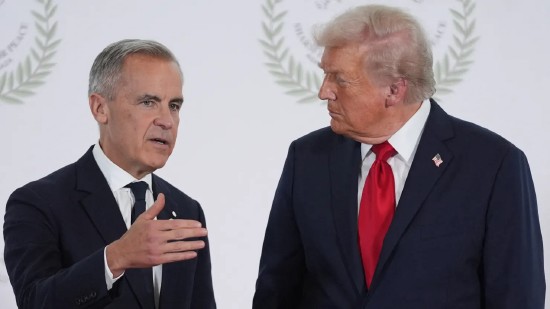
U.S.-Canada tariff negotiations enter final stages, Trump administration downplays expectations of an agreement
According to informed sources, the Trump administration is downplaying expectations that the U.S. and Canada will reach an agreement at the last minute to avoid new tariffs set to take effect on Wednesday.
Sources indicate that the U.S. side privately expressed that the likelihood of reaching an agreement on Tuesday is only 50-50 or even lower. The two countries need to reach an agreement before the midnight deadline, or the U.S. will impose a 50% tariff on Canadian goods worth billions of dollars.
It remains unclear whether these signals reflect the actual state of negotiations or are an attempt to increase bargaining power. Some insiders stated that Trump is scheduled to speak again with Canadian Prime Minister Mark Carney on Tuesday. The two also had a phone conversation on Monday. Trump is known for making new demands of trade partners at the last minute.

Apple fully adjusts EU App Store charging rules, relaxes entry barriers for third-party app stores Apple announced on Tuesday that it will simplify its app commission structure for the EU market to resolve differences with the European Commission over commercial terms. Under the new plan, Apple will eliminate the core technology fee based on installation volume and instead charge a uniform commission of 5% on the digital goods transaction value for apps distributed through channels outside the App Store or via the web. Apple has also adjusted the rates for alternative payment and in-app purchases and relaxed the conditions for developers to set up alternative app stores.
This move is Apple's latest attempt to align its App Store commercial terms with EU regulations, following years of back-and-forth with regulators over the complexity and fairness of the terms.

Anthropic's pre-IPO credit arrangement expected to exceed $10 billion as banks vie for IPO roles
According to insiders, the revolving credit arrangement for Anthropic PBC is expected to exceed the target size of approximately $10 billion.
The expanded revolving credit arrangement for Anthropic has attracted participation from multiple banks. Some banks hope to leverage this to enhance their chances of securing a more significant role in the company's IPO.
Discussions are still ongoing, and the company may ultimately decide to limit the revolving credit facility to the target size or even below the target level.
Anthropic has requested that the lead banks most actively involved in this credit arrangement each provide approximately $1.25 billion in loans, while the next tier of active banks is encouraged to provide around $1 billion in loans. Banks with lower participation levels have committed amounts of about $750 million or less.
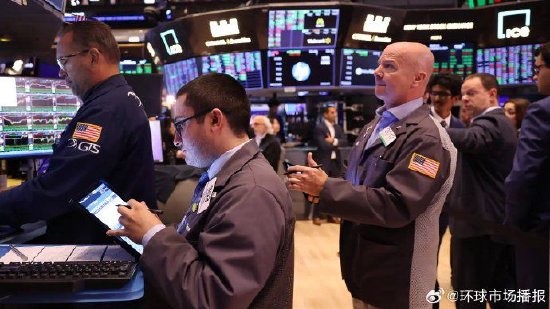
Bank of America survey: Fund managers' stock allocation rises to nearly five-year high, short positions nearly extinct
Michael Hartnett of Bank of America stated that global investors have further increased their stock holdings, with stock allocation reaching its highest level in nearly five years, leaving little room for pessimists in the market.
The Bank of America strategist team led by Hartnett wrote in their report that the latest industry survey shows that a net 56% of fund managers are overweight in stocks, the highest proportion since November 2021. Cash allocation has dropped to a "very low" 3.5%.
The report indicates that the market consensus is that the economy will not experience a significant "landing," the Federal Reserve will not raise interest rates, AI capital expenditures will not be cut, and the Democrats will not achieve a landslide victory in the midterm elections. They believe that the current positions still suggest that investors should retreat or rotate within risk assets rather than further increase their positions, reaffirming the recent view of shifting towards more defensive market sectors
Inflation deficits and AI financing hit simultaneously, long-term sovereign bond yields in multiple countries rise to over a decade high
From inflation to debt-driven artificial intelligence investment frenzy, long-term bonds are becoming the epicenter of various investor concerns, leading governments to incur higher financing costs.
The borrowing costs of global sovereign debt are soaring. This week, the yield on 30-year U.S. Treasury bonds reached its highest level since 2007, the yield on 30-year French government bonds set a new record since 2008, and German bond yields rose to 2011 levels. The yield on British government bonds is approaching 6%, while similar-term Japanese government bond yields are also nearing historical highs.
Although there are market-specific factors behind this trend, the structural forces driving the rise in yields are global in nature
