The government shutdown is looming, and the US stock market is turning downward. The S&P has experienced its worst monthly decline this year, while Chinese concept stocks have ended September with a stunning performance.

PCE data shows a slowdown in inflation, which is good news for the market. US stocks opened higher, but the risk of a government shutdown combined with hawkish comments from the top officials of the Federal Reserve caused a midday drop in the three major indices. Only the Nasdaq closed higher, while the S&P and Nasdaq both experienced their largest monthly and quarterly declines of the year. Chip stocks saw three consecutive gains, with Micron rising 4%. Nike's stock rose over 6% after its earnings report. Chinese concept stocks outperformed the market, with the Chinese concept index rising over 1% and XPeng Motors rising over 6%. After the release of the PCE inflation data, the two-year US Treasury yield hit a two-week low, and the ten-year US Treasury yield hit a daily low, ending an eight-day streak of reaching new highs since 2007. The US dollar index has been falling for several days but has still risen for 11 consecutive weeks, marking the longest winning streak in nearly nine years. Offshore renminbi rose above 7.29 for the first time in nearly two weeks. Gold has seen five consecutive declines, hitting a six-month low for three consecutive days and marking the largest weekly decline in nearly eight months. Crude oil has been falling in recent days but has still seen its largest quarterly gain in over a year.
Recent data has brought good news of a slower-than-expected slowdown in US inflation, but the danger of a US government shutdown is looming. Federal Reserve officials have taken a hawkish stance, and US stocks have failed to maintain their recent rebound, with major stock indices briefly turning negative.
The August MoM core PCE price index, a favored inflation indicator by the Federal Reserve, increased by 0.1%, lower than analysts' expectations and marking the slowest growth since the end of 2020. The MoM growth rate of service sector inflation, excluding housing and energy, also slowed to 0.1%.
Commentators say that the continued deceleration of inflation growth indicates that the Fed's aggressive rate hikes are taking effect. The current challenge is that the YoY growth rate of core PCE is still nearly twice the Fed's inflation target, which has led the Fed to not rule out the possibility of further rate hikes. The recent PCE data has at least reduced the likelihood of the Fed restarting rate hikes in the near future.
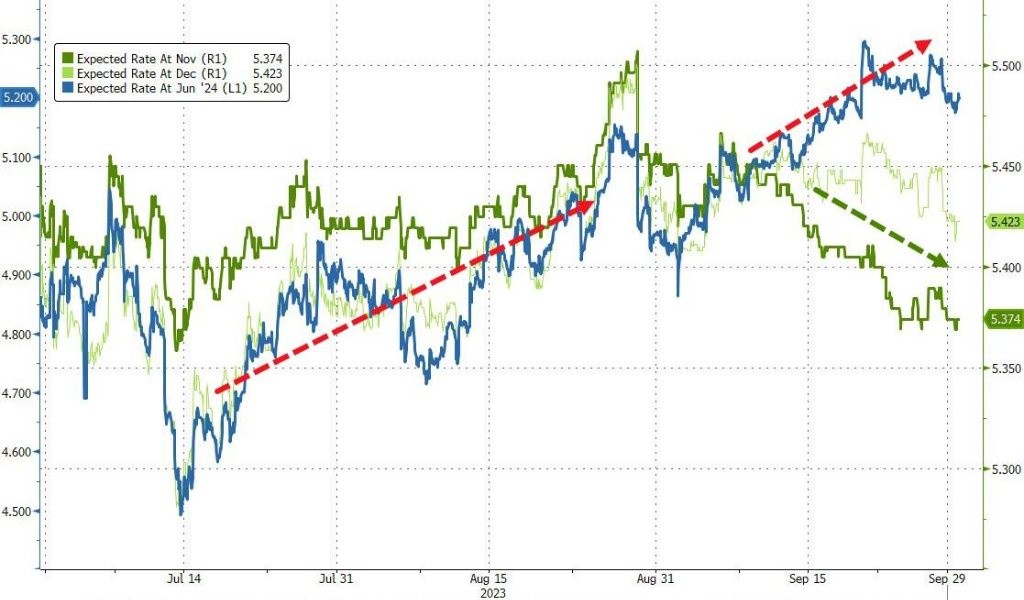
After the data was released, market expectations for a rate hike in November by the Fed cooled down. US bond prices continued to rebound, pushing yields lower. The yield on the 2-year US Treasury bond, which is more sensitive to interest rates, fell to a two-week low. US stocks opened higher. Chinese stocks listed in the US outperformed the broader market, following the upward trend of Hong Kong stocks, and are expected to end September and the third quarter on a positive note. On Friday, the Chinese Ministry of Foreign Affairs announced that Vice Foreign Minister Sun Weidong held consultations on Asia-Pacific affairs with US Assistant Secretary of State for East Asian and Pacific Affairs Kurt Campbell in Washington.
During the trading session, the US House of Representatives voted on a temporary funding bill to keep the government running until October 31. The proposal put forward by Republican leaders failed to pass due to opposition from hardliners within the party. This is the most recent failure to pass a spending bill within two days of a potential government shutdown, increasing the risk of a shutdown. John Williams, the third-ranking official at the Federal Reserve and president of the New York Fed, made hawkish comments, suggesting that rate hikes may have already been completed, but the Fed needs to maintain high interest rates until inflation reaches 2%.
Major US stock indices turned negative during the trading session, closing out September and the third quarter with losses. US bond prices also declined for the month and quarter. The yield on the benchmark 10-year US Treasury bond, known as the "anchor for global asset pricing," ended its eight-day streak of reaching new highs since 2007. The yield rose more than 40 basis points in September, marking the largest monthly increase in a year and highlighting the pressure on the Fed to maintain tightening and signal further rate hikes.
Throughout the third quarter, market expectations for rate hikes this year by the Fed remained largely unchanged, but expectations for rate cuts next year have noticeably cooled down.
The year-on-year growth rate of the September Eurozone CPI, released on Friday, slowed to 4.3% from 5.2% in August, the lowest growth rate since October 2021. The year-on-year growth rate of the core CPI in September also slowed from 5.3% to 4.5%, the largest month-on-month decline since August 2020. The news of the slowdown in Eurozone inflation helped boost European stocks and bond prices, but overall they fell in September and the third quarter.
In the foreign exchange market, while the US stock market continued to rebound, the US dollar index continued to fall from its ten-month high. However, it maintained its momentum of cumulative gains since late July this week, continuing to set a record for the longest consecutive weekly gains in nearly nine years. Although Japanese Finance Minister Taro Aso warned on Tuesday and Thursday that he would not rule out any options to combat excessive exchange rate volatility, the yen failed to hold onto its rebound on Thursday and approached the 11-month low set on Wednesday. The offshore yuan against the US dollar rose above 7.29 for the first time in nearly two weeks, but fell under pressure from the rebound in the US dollar.
In the commodity market, both gold and international crude oil fell during the trading session, failing to rebound. Gold hit a six-month low for several consecutive days under the pressure of a strong US dollar, and had its worst performance since early February this week, highlighting market expectations that the Federal Reserve's expectation of keeping interest rates high for longer will have an impact.
Despite a two-day decline, crude oil maintained its cumulative gains this week, benefiting from the US Energy Department's announcement on Wednesday that crude oil inventories at the main delivery location of Cushing hit a new low since July last year, raising concerns that crude oil at Cushing will fall below its minimum operating level and pushing oil prices sharply higher on Wednesday. Crude oil also rose in September and the third quarter, reflecting the impact of OPEC+ production cuts. Some analysts expect that the continued reduction in supply by the two major oil-producing countries in OPEC+, Saudi Arabia and Russia, will support a rebound in oil prices and once again challenge the $100 mark.
During the midday trading session, the three major US stock indexes initially fell together. The Dow Jones Industrial Average rose nearly 230 points, or nearly 0.7%, at the beginning of the session, and the Nasdaq Composite Index rose nearly 1.4% in early trading, while the S&P 500 Index rose nearly 0.8%, but then fell back overall. The Dow fell at the end of the morning session and fell nearly 260 points, or nearly 0.8%, at midday. The S&P also fell at midday, falling nearly 0.6% at one point, and the Nasdaq briefly fell nearly 0.2% after turning lower, but quickly rebounded.
In the end, only the Nasdaq closed higher among the three major indexes, up 0.14% at 13,219.32 points, continuing to move away from the low set on May 31 since Tuesday. The Dow fell 158.84 points, or 0.47%, to 33,507.50 points, giving back the gains from Thursday's rebound and setting a new closing low since June 1, which was set on Wednesday. The S&P, which had risen for two consecutive days, fell 0.27% to 4,288.05 points, approaching the low set on June 7 since Tuesday. The Nasdaq 100 index, which is dominated by technology stocks, rose nearly 0.09%, continuing to move away from the low point since June 9th, which was set on Tuesday, and both the Nasdaq and the Nasdaq Composite have risen for three consecutive days. The small-cap Russell 2000 index, which is dominated by value stocks, fell 0.51% after rising for two consecutive days, failing to continue to move away from the low point since May 31st, which was set on Tuesday.
The S&P 500 index fell 0.74% this week, marking its fourth consecutive weekly decline; the Dow Jones Industrial Average fell 1.34%, marking its second consecutive weekly decline and its fifth weekly decline in the past seven weeks; the Nasdaq Composite index rose slightly by 0.06%, and the Nasdaq 100 index rose by 0.1%, barely stopping its three-week decline; the Russell 2000 index, which had fallen for three consecutive weeks, rose by 0.48%.

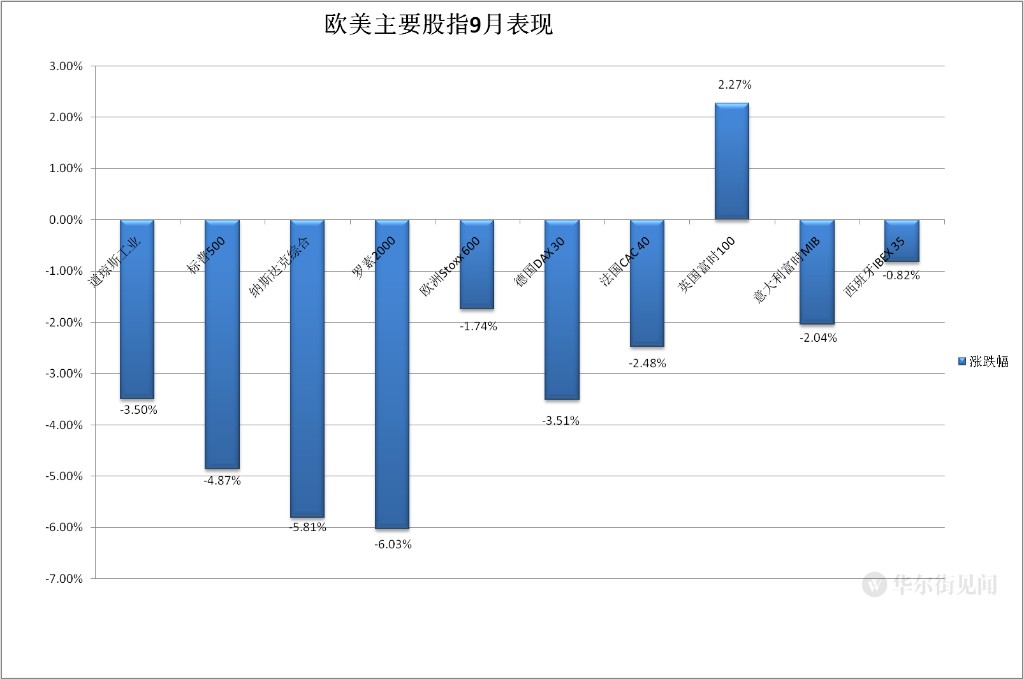
The major stock indices have fallen in September and the third quarter. The S&P 500 index fell 4.87%, the Nasdaq fell 5.81%, the Nasdaq 100 fell 5.07%, all experiencing a decline after five consecutive months of gains; the Russell 2000 fell 6.03%, marking a decline for two consecutive months, and all four indices experienced the largest monthly decline since December last year; the Dow Jones Industrial Average fell 3.5%, marking a decline for two consecutive months.

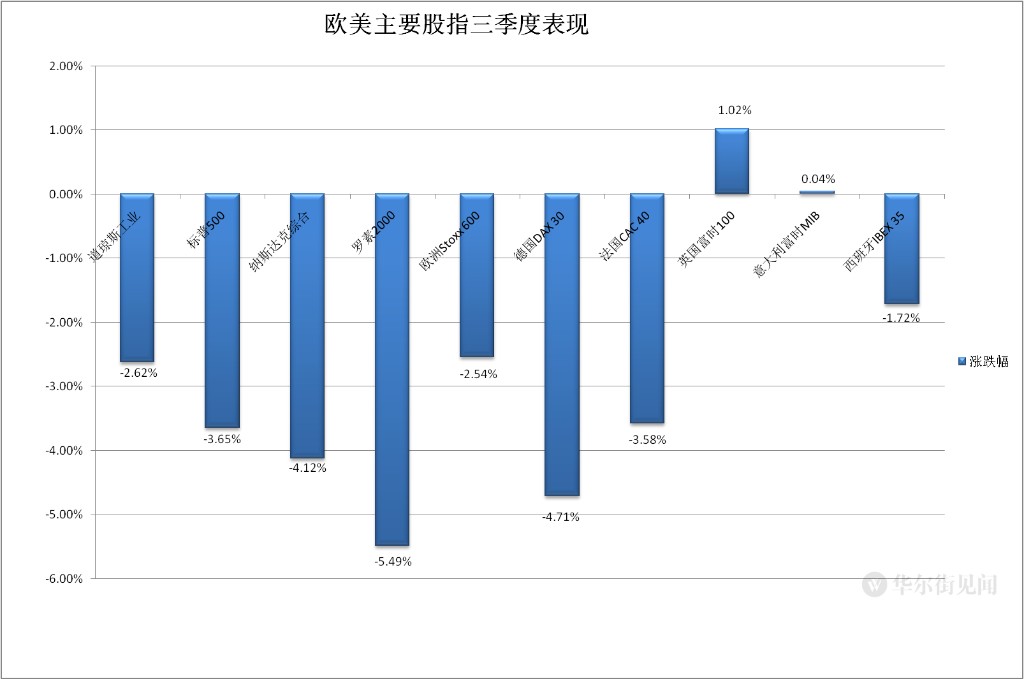
In the third quarter, the S&P 500 index fell 3.65%, the Dow Jones Industrial Average fell 2.62%, the Nasdaq 100 fell 3.06%, and the Russell 2000 fell 5.49%, all ending their three-quarter winning streaks. The Nasdaq fell 4.12% after two consecutive quarters of gains. Both the S&P 500 and the Nasdaq experienced their largest quarterly decline since the third quarter of last year.

Among the major sectors of the S&P 500, only four sectors rose on Friday. Non-essential consumer goods, which include Tesla, rose by over 0.5%, IT stocks in the real estate and chip sectors, which are sensitive to interest rates, rose by nearly 0.4%, and utilities rose by 0.2%. Among the seven sectors that fell, energy, dragged down by repeated declines in crude oil, fell by nearly 2%, while the other sectors fell by less than 1%. Financials fell by nearly 0.9%, healthcare fell by nearly 0.8%, communication services, including Meta and Google, fell by over 0.7%, and materials fell by over 0.2%, with the smallest decline.
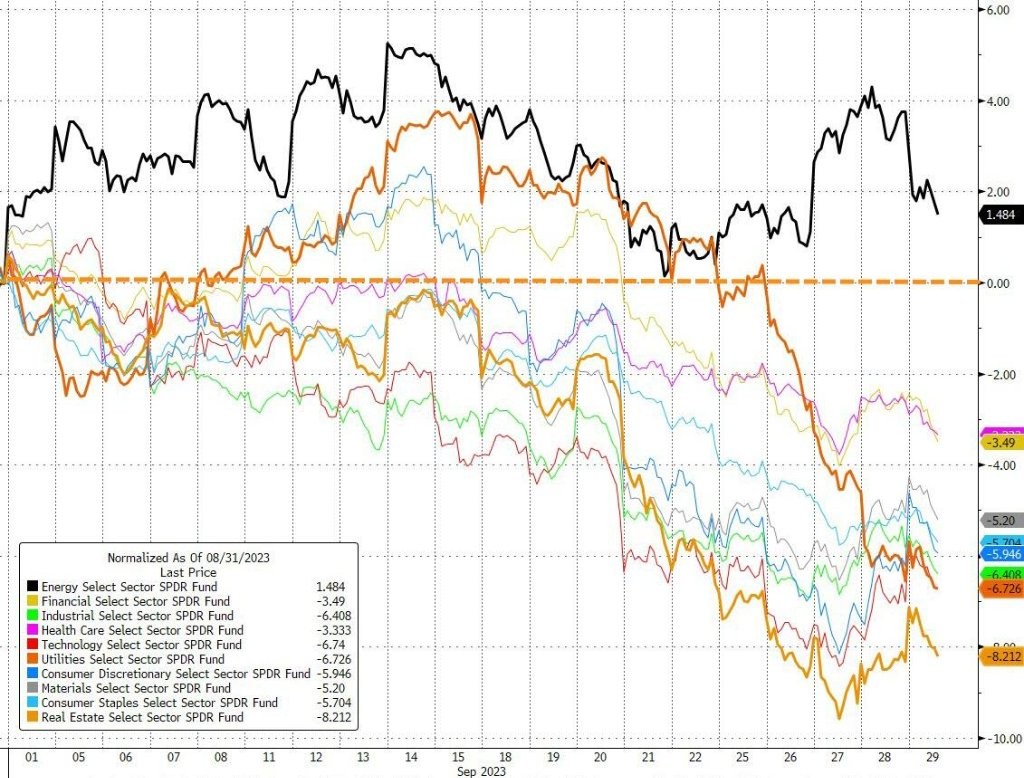
Apart from energy, which rose by over 1%, and materials, which rose by nearly 0.2%, all other sectors fell this week. Utilities fell by 7%, leading the decline by a wide margin, followed by non-essential consumer goods, which fell by over 2%, and financials, healthcare, and real estate, which all fell by over 1%. In September, only the energy sector, which rose by over 2%, had a cumulative increase, while the top ten sectors all fell by over 3%, with real estate falling by 7.8%, IT falling by nearly 7%, industrial falling by over 6%, and non-essential consumer goods falling by 6%.
US Stock Sector ETF Performance in September
In the third quarter, only two sectors saw cumulative gains. Energy performed the best, rising over 11%, while communication services rose 2.8%. Utilities fell by about 10%, leading the decline, followed by real estate, which fell over 9%. Consumer staples and IT both fell nearly 6%, while materials and industrials fell over 5%. Non-essential consumer goods fell 5%, and finance had the smallest decline, falling over 1%.
US Stock Sector ETF Performance in the Third Quarter
Leading technology stocks rose across the board in early trading, but some turned negative during the session. Tesla, which was reiterated as a buy by Canaccord Genuity and maintained a neutral rating by Citigroup, rose over 2% in early trading and closed up nearly 1.6%. It has risen for two consecutive days to a high since September 21, with a cumulative increase of nearly 2.2% this week. This comes after a sharp drop of nearly 11% last week, with declines of over 3% and 4% in September and the third quarter, respectively.
Among the six major FAANMG technology stocks, Amazon closed up 0.9%, rebounding for the first time after falling 4% on the day it was sued by the US government for e-commerce monopoly, temporarily leaving the low point since June 9 set on Wednesday. Microsoft closed up nearly 0.7%, rising for three consecutive days after falling to a low point since May 17 on Tuesday. Apple turned negative in midday trading but closed up 0.3%, continuing to move away from the low point since May 4 that was set after two consecutive days of decline on Wednesday. Netflix, which fell for three consecutive days and set a low point since May 25 for two consecutive days, turned negative in midday trading but closed up 0.3%. Meta, the parent company of Facebook, which rose over 2% in early trading, turned negative in midday trading and closed down 1.2%, falling back after rebounding over 2% on Thursday. Alphabet, the parent company of Google, which rose over 1% in early trading, turned negative at the end of the morning session and closed down 1.1%, falling from the high point since September 20 set for two consecutive days.
Most of these technology stocks fell this week, with Apple falling over 2%, Amazon falling over 1%, Netflix falling nearly 0.6%, Microsoft falling 0.4%, and Alphabet and Meta rising nearly 0.5% and 0.4%, respectively. In September, except for Meta, which rose over 1%, all of them fell. Netflix fell nearly 13%, Apple fell nearly 9%, Amazon fell nearly 8%, Alphabet fell nearly 4%, and Microsoft fell over 3%. In the third quarter, Netflix fell over 14%, Apple fell nearly 12%, Microsoft fell over 7%, Amazon fell over 2%, while Alphabet rose over 9% and Meta rose 4.6%.
Chip stocks rose for three consecutive days, outperforming the market on the third day. The Philadelphia Semiconductor Index and the Semiconductor Industry ETF SOXX both rose over 1% in early trading and closed up about 0.4%, rising for three consecutive days and setting a high point since September 19 for two consecutive days. They rose over 2% and 1.6% this week, and fell over 6% and 7% in September, and 6.5% and 6.6% in the third quarter, respectively. In individual stocks, Micron Technology rose 4.4% on Thursday after falling more than 4% against market expectations for quarterly loss guidance. Nvidia rose more than 2% in early trading after being reiterated as a buy by Citigroup, with expectations of stock price growth and increased profits and sales driven by the Blackwell B100 GPU iteration. Intel rose more than 1%, while AMD saw a slight increase. Arm, which fell more than 15% in its first full week of trading, fell about 3.6% in early trading and rebounded after two consecutive declines on Thursday, ending the week with a cumulative increase of 4.3%.
Concept stocks related to AI continued to rise for three consecutive days, with C3.ai (AI) rising more than 1%, SoundHound.ai (SOUN) rising more than 6%, BigBear.ai (BBAI) rising nearly 6%, Palantir (PLTR) rising more than 1%, and Adobe (ADBE) rising about 1%.
Popular Chinese concept stocks continued to rise for three consecutive days, outperforming the broader market on Friday. The Nasdaq Golden Dragon China Index (HXC) rose more than 2% in early trading and closed up 1.2%, reaching a high since September 18 and accumulating a 0.3% increase for the week. In September, it fell 5.5% and rose 1.6% in the third quarter. Among individual stocks, XPeng Motors rose 6.6%, Li Auto rose more than 3%, Pinduoduo rose more than 2%, JD.com rose about 2%, and Alibaba, Baidu, NetEase, NIO, Tencent Music, and Bilibili all rose more than 1%.
Banking stocks rebounded for two consecutive days. The overall banking industry index, KBW Bank Index (BKX), rose more than 0.1%, continuing to move away from the low point since June 1 on Wednesday. It fell nearly 0.3% for the week, nearly 4% in September, and more than 2% in the third quarter. The KBW Nasdaq Regional Banking Index (KRX), which hit a low point since July 6 on Wednesday, rose 1%, and the SPDR S&P Regional Banking ETF (KRE) rose nearly 1.2%. Both rose nearly 1.5% for the week, but fell about 5.7% and 6.3% in September, respectively, and rose 1.4% and 2.3% in the third quarter.
Among key individual stocks, General Motors (GM) and Ford (F) both fell more than 1% in early trading after reports that the strike in the US automotive industry would escalate and more factories of General Motors, Ford, and Stellantis would join the strike. However, most of the losses were erased, and they fell again by more than 1% at midday, closing down about 0.6% and 1.1%, respectively.
Among the stocks that announced their earnings reports, Nike (NKE) rose about 6.7% after the market closed on Thursday, as its first-quarter net profit far exceeded expectations and gross margin was higher than expected. It performed the best among the Dow components on Friday. Carnival Cruise Line (CCL) fell about 5% after reporting third-quarter earnings per share and revenue that exceeded expectations, but with a fourth-quarter loss per share median higher than expected.
In stocks with significant volatility, Blue Apron (APRN), a semi-finished net vegetable e-commerce company, rose 134.5% after announcing an agreement to be acquired by Wonder Group at a premium of 137% over Thursday's closing price. Media reports that after considering the appointment of former Cigna executive Tim Wentworth as CEO, Walgreens, the pharmacy giant, rose 6.4%. Corcept Therapeutics, a pharmaceutical company facing ongoing litigation from Teva Pharmaceutical and attempting to revoke the patent for its Cushing's syndrome drug Korlym, fell 17.4%.
In European stocks, the pan-European stock index rebounded after five consecutive days of decline. The STOXX Europe 600 index continued to recover from its closing low since March 28. Major European stock indexes collectively rose for the second consecutive day.
In individual stocks, Deutsche Bank surged 11.1% after announcing a policy revision to provide at least 70% profit return to investors, leading the STOXX 600 components. Adidas, benefiting from Nike's positive earnings report, rose 6.2%. Among various sectors, real estate, which is sensitive to interest rates, led the gains with a 2.7% increase, while the technology sector rose over 1%.
The STOXX 600 index and national stock indexes have fallen for two consecutive weeks. In September, the STOXX 600 index and multiple national stock indexes have fallen for two consecutive months, while the UK stock market has outperformed, rising over 2% after a decline in August.
The STOXX 600 index fell by approximately 2.5% in the third quarter, marking the largest quarterly decline in a year. Multiple national stock indexes also fell after three consecutive quarters of gains, while Italian stocks continued to rise for four quarters. UK stocks rebounded after a decline in the second quarter.
The two-year US Treasury yield hit a two-week low, while the ten-year yield ended its streak of reaching new highs since 2007, rising in September and the third quarter.
After the release of Eurozone CPI, European government bond prices rose on Friday, leading to a decline in yields. At the end of the bond market session, the yield on the UK 10-year benchmark government bond closed at 4.43%, down 5 basis points intraday. The yield on the 2-year UK bond closed at 4.87%, down 3 basis points intraday. The yield on the 10-year German benchmark government bond closed at 2.84%, down 9 basis points intraday. The yield on the 2-year German bond closed at 3.19%, down 8 basis points intraday.
European bond prices fell and yields rose this week, in September, and in the third quarter. The yield on the UK 10-year bond, which rebounded significantly after a decline of approximately 11 basis points last week, rose by 19 basis points. The yield on the 10-year German bond rose by approximately 10 basis points, rising for four consecutive weeks. The yield on the UK 10-year bond rose by 8 basis points, rising for two consecutive months, and by 5 basis points in the third quarter. The yield on 10-year German bonds has risen by 38 basis points, marking the fourth consecutive monthly increase and a 45 basis point increase for the third quarter, both of which have seen two consecutive quarterly increases.
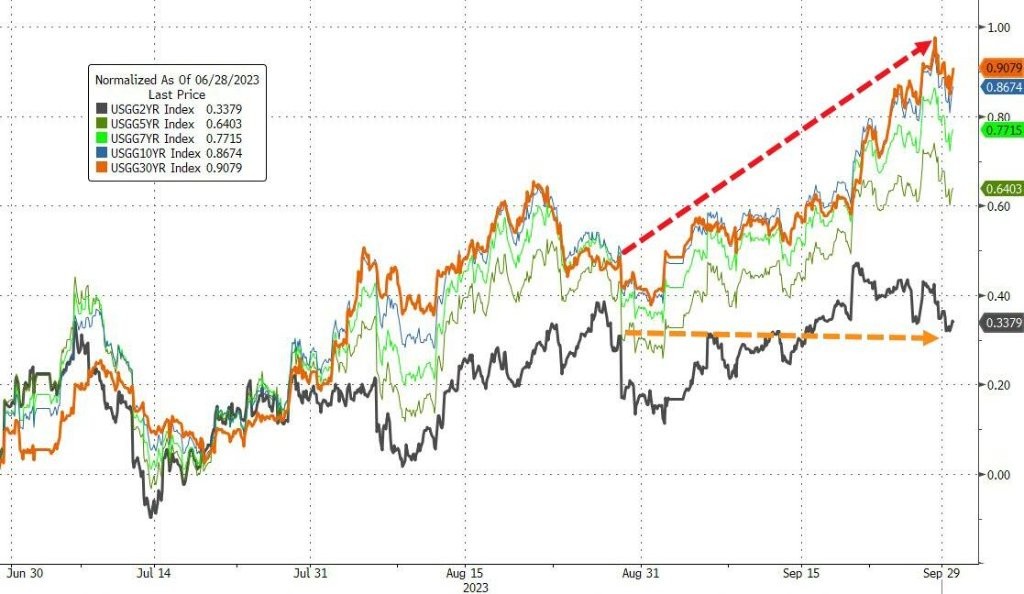
Following the release of the US PCE data, the decline in US Treasury yields has widened, hitting a daily low. However, yields have accumulated increases for both September and the third quarter.
The benchmark 10-year US Treasury yield approached 4.60% before the European stock market opened, hitting a daily high. After the European stock market opened, yields overall continued to decline. Following the release of the PCE data, yields accelerated their decline. In early trading, US stocks fell below 4.51%, dropping by about 7 basis points during the day. This marks a decrease of approximately 18 basis points from the high of 4.69% reached in October 2007, ending the trend of continuously hitting highs since then. On the first day of this week, yields failed to reach a new high in nearly 16 years. At midday, the decline narrowed, with yields at around 4.57% in the bond market. The decrease during the day was less than 1 basis point, marking a consecutive two-day decline after three consecutive increases. Yields have increased by approximately 14 basis points this week, marking four consecutive weeks of increases. This is the eighth week of increases in the past ten weeks. Yields in September increased by approximately 46 basis points, marking the largest monthly increase in a year and five consecutive months of increases. For the third quarter, yields increased by approximately 73 basis points, marking two consecutive quarters of increases and the eighth quarter of increases in the past nine quarters.
The overall trend for US bond yields in September was an increase, with short-term yields experiencing a slight decline this week.
The 2-year US Treasury yield, which is more sensitive to interest rate prospects, approached 5.08% in the Asian market, hitting a daily high. After the European stock market opened, yields overall declined. Prior to the release of the PCE data, US stocks fell below 5.02% in pre-market trading, hitting a low since September 15th. The decline from the daily high was more than 6 basis points, moving away from the high of nearly 5.20% reached last Thursday, which was the highest in seventeen years since 2006. At the end of the bond market, yields were around 5.04%, decreasing by nearly 2 basis points during the day and declining for two consecutive days. This week, yields have decreased by approximately 7 basis points, marking a decline after two consecutive weeks of increases. This is the third week of decline in the past eight weeks. Yields in September increased by approximately 18 basis points, rebounding after two consecutive months of decline. For the third quarter, yields increased by approximately 14 basis points, marking two consecutive quarters of increases.
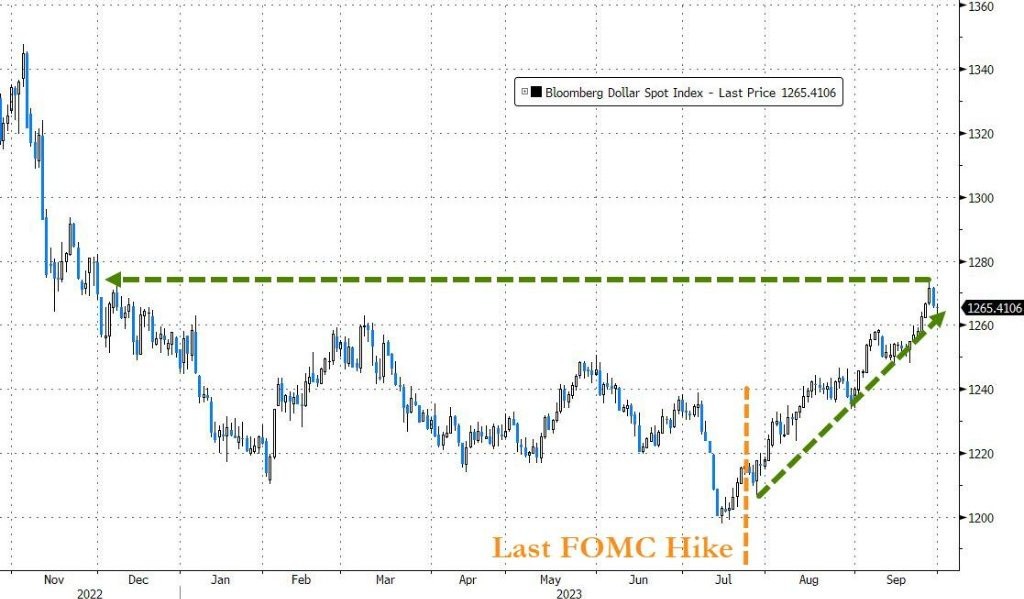
The US dollar index, which tracks the exchange rate of the US dollar against six major currencies including the euro, initially approached a turnaround above 106.20 in the Asian market, but the decline continued to widen. In the Asian market, it fell below 106.00, and in the early European stock market, it fell below 105.70, hitting a daily low. The decline during the day exceeded 0.5%, but gradually narrowed. In early US trading, it rose above 106.00, and at midday, it briefly rose above 106.20, experiencing a short-term turnaround. However, it is still far from the intraday high reached on November 30th last year, when it rose above 106.80, marking the longest consecutive increase in nearly nine years for the US dollar index. By the close of trading on Friday, the US dollar index was below 106.20, falling less than 0.1% during the day. It has risen nearly 0.6% this week, nearly 2.5% in September, and nearly 3.2% in the third quarter. The Bloomberg Dollar Spot Index, which tracks the US dollar against ten other currencies, fell slightly and failed to approach the ten-month high set in late November last year, after both the US dollar index and the Bloomberg Dollar Spot Index had risen for six consecutive days and then fallen for two consecutive days. It has risen by about 0.6% this week, more than 2% in September, and nearly 2.7% in the third quarter.
The US dollar index has risen for 11 consecutive weeks this week, setting a record for the longest consecutive weekly gain in nearly nine years since 2014. The Bloomberg Dollar Spot Index has risen for two consecutive weeks. The US dollar index has achieved its best monthly performance in four months since May, and both the US dollar index and the Bloomberg Dollar Spot Index have risen for two consecutive months and two consecutive quarters, achieving the largest quarterly increase since the third quarter of last year.
In terms of non-US currencies, the Japanese yen rebounded after the Japanese finance minister warned against speculative exchange rate fluctuations, and the USD/JPY rose to 149.50 in the Asian session, approaching the high near 149.70 set for three consecutive days since October last year. The European stock market fell before the European stock market opened, and the European stock market fell below 148.60 to refresh the daily low, and then continued to rise. The US stock market rose during the session, and by the close of the US stock market, it was slightly below 149.40, with a slight increase during the day. The EUR/USD rose above 1.0610 in the European stock market, with an increase of more than 0.5% during the day. With the rebound of the US dollar, it fell slightly during the US stock market, and by the close of the US stock market, it rose less than 0.2%, staying around 1.0570, still far from the nearly nine-month low of 1.0490 set on Wednesday. The GBP/USD rose above 1.2270 in the European stock market, and by the close of the US stock market, it hovered around 1.2200, with a slight increase during the day, still a distance from the half-year low of 1.2110 set for five consecutive days.
Offshore renminbi (CNH) against the US dollar rose for most of the time on Friday and held above the 7.30 level throughout the day. It fell several times during the session, falling to 7.2988 to refresh the daily low in the early Asian session, and rose to 7.2811 in the early European stock market, refreshing the intraday high since September 18. It rose 137 points during the day and fell during the US stock market. At 4:59 am Beijing time on September 30, the offshore renminbi against the US dollar was reported at 7.2954 yuan, a decrease of 6 points from the New York closing on Thursday, falling back after rebounding on Thursday. It has risen 36 points this week, rebounding after falling last week, and the fourth consecutive week of gains in the past six weeks. It has fallen 199 points in September, falling for two consecutive months and the seventh month in the past eight months. It has fallen 277 points in the third quarter, falling for two consecutive quarters.
High-risk cryptocurrencies followed the decline in the US stock market on Friday. Bitcoin (BTC) rose above $27,200 in the early European stock market, approaching the high since September 19 when it rose above $27,300. It fell below $26,800 during the US stock market, a decrease of more than $500 or about 2% from the high of the day. By the close of the US stock market, it was slightly below $27,000. In the past 24 hours, there has been a decrease of less than 1%, while in the past seven days, there has been an increase of over 1%.

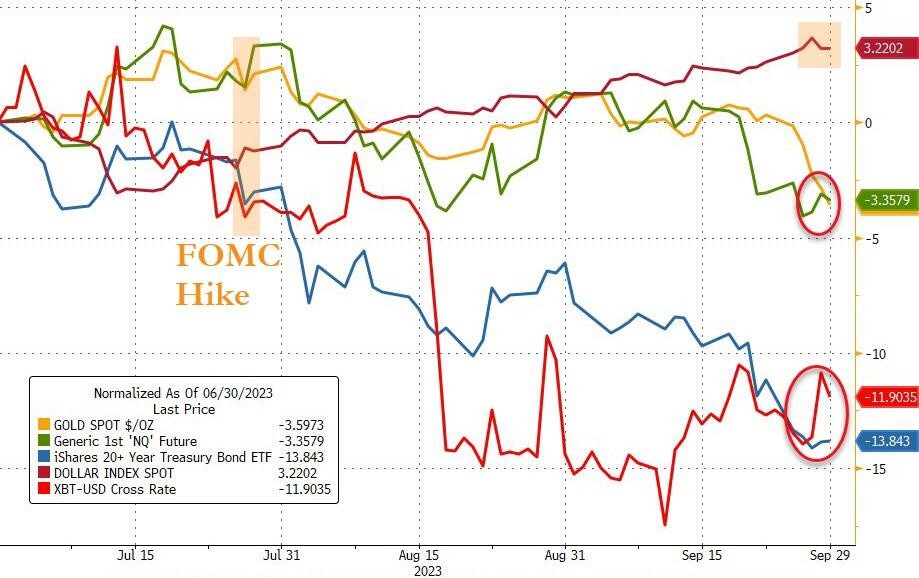
In the third quarter, US stocks, US bonds, gold, and Bitcoin all fell, with the US dollar performing the best.
Crude oil has been falling for consecutive days but still achieved the highest quarterly increase in over a year. Brent crude oil ended four consecutive quarters of decline.
International crude oil futures rebounded unsuccessfully on Friday and fell for two consecutive days. When US stocks hit a new daily high before the market opened, US WTI crude oil rose to $93.1, an increase of 1.5% during the day. Brent crude oil for December rose to $94.13, an increase of 1.1% during the day. However, US stocks turned downward after the market opened and continued to decline. When the midday market hit a new daily low, US oil fell to $90.35, a decrease of nearly 1.5% during the day, and Brent crude oil fell to $91.96, a decrease of 1.2% during the day.
WTI November crude oil futures fell by $0.92, a decrease of 1.00%, to $90.79 per barrel, continuing to fall from the closing high since August 29 last year, which was refreshed on Wednesday. Brent November crude oil futures, which expired on Friday, fell by $0.07, a decrease of 0.07%, to $95.31 per barrel. The main contract, Brent December crude oil futures, fell by $0.9, a decrease of 0.97%, to $92.2 per barrel. Both continued to fall from the closing high since November last year, which was refreshed on Wednesday.
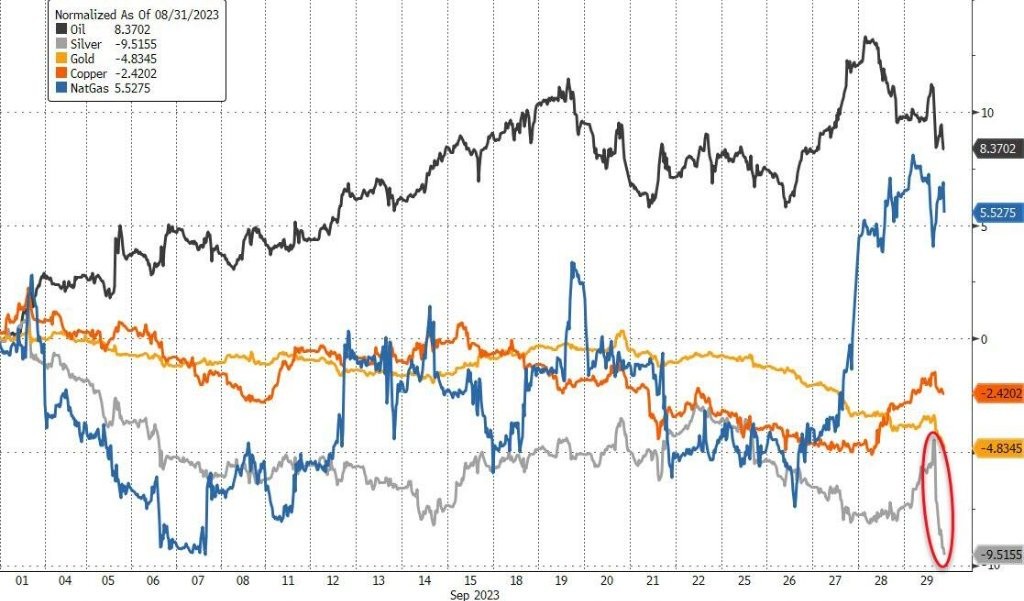
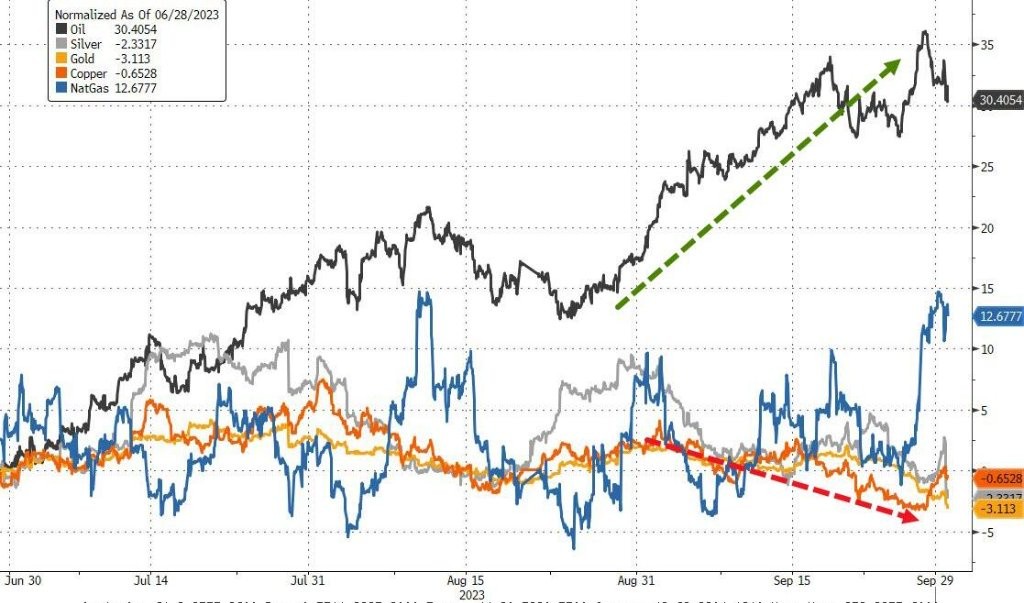
US oil contracts for the current month rose by about 0.8% this week, and Brent crude oil rose by 2.2%. After a three-week consecutive increase last week, US oil rose by 8.6% in September, and Brent crude oil rose by 9.7%. Both achieved a quarterly increase of 28.5% and 27.3% respectively in the third quarter, marking the largest quarterly increase in over a year since the first quarter of last year. US oil ended two consecutive quarters of decline, while Brent crude oil ended four consecutive quarters of decline, setting a record for the longest consecutive decline.
European natural gas contracts for November fell for four consecutive days after a high and then a fall on Thursday. After two consecutive weeks of increase, it fell this week and fell in September, marking the fourth consecutive quarter of decline. UK natural gas futures fell by 3.97% to 105.4 pence per therm, falling for four consecutive days and falling by nearly 6.1% this week. It fell by 6.5% in September and over 19% in the third quarter. Dutch natural gas futures fell by 2.85% to 41.859 euros per megawatt-hour, falling for four consecutive days and falling by 5.5% this week. It fell by nearly 8.1% in September and about 17.8% in the third quarter.
US gasoline and natural gas futures both fell. NYMEX November gasoline futures fell by 2.7% to $2.3995 per gallon, falling for two consecutive days and hitting a nearly five-month low since May 5. It fell by over 4% this week and fell for two consecutive weeks. It fell by nearly 12% in September and fell for two consecutive months. It fell by 5.7% in the third quarter and fell for two consecutive quarters. NYMEX November natural gas futures fell by 0.54% to $2.929 per million British thermal units, falling from the high since September 19 that was refreshed for two consecutive days. It rose by 1.7% this week and rose by 5.8% in September. It rose for two consecutive months and rose by 4.7% in the third quarter, rising for three consecutive quarters.
September Trends in Gold, Silver, Copper, Oil, and US Natural Gas
London Metal Exchange (LME) experienced mixed movements on Friday. Leading the gains, LME aluminum rose over 3%, approaching $2,350 for the first time since early May. LME copper and LME zinc also saw consecutive gains for two days, with LME zinc hitting a four-month high and LME copper reaching a one-week high. However, LME tin fell over 5%, marking its third consecutive day of decline and hitting a five-month low. LME nickel also fell for two days, reaching its lowest level since October 2021, while LME lead retreated, approaching its five-week low set on Wednesday.
The performance of base metals varied this week. LME aluminum rose by 4.8%, LME zinc rose by 3.4% after three consecutive weeks of gains, and LME copper rose by nearly 0.6% after a slight decline last week. On the other hand, LME tin fell by 5.8%, and LME lead fell by nearly 2%, both retracing their gains from the past two weeks. LME nickel fell by 3.7% for the fourth consecutive week.
In September, most base metals experienced declines. LME nickel fell by nearly 8%, LME tin fell by nearly 6%, and LME copper fell by nearly 2%, all declining for two consecutive months. LME lead, which had risen for three months, fell by over 2%. However, LME zinc surged by nearly 9%, erasing the previous month's decline and LME aluminum, which had fallen in August, rose by over 6%.
In the third quarter, the performance of base metals varied. LME tin and LME nickel fell by nearly 11% and 9% respectively, declining for three and two consecutive quarters. LME copper fell by nearly 0.6% for two consecutive quarters. On the other hand, LME zinc rose by nearly 11% and LME aluminum rose by over 9%, both rebounding after a decline in the second quarter. LME lead, which had fallen for two quarters, rose by over 3%.
COMEX December gold futures failed to rebound successfully. It reached a daily high of $1,896.7 before the US stock market opened on Friday, initially rising by nearly 1%. However, it continued to decline as the US stock market turned negative, hitting a daily low of $1,862.3 during midday trading, down nearly 0.9% for the day.
Ultimately, COMEX December gold futures closed down by 0.67% at $1,866.10 per ounce. This marked the third consecutive day of closing at a new six-month low since falling below $1,900 on Wednesday. Gold futures have declined for five consecutive days.
During this period, the front-month gold contract fell by nearly 3.4%, marking the largest weekly decline since the week of February 3rd. It has declined by approximately 4% in September, the largest monthly decline in seven months since February. Gold futures have declined for two consecutive months and have fallen by approximately 3.2% in the third quarter after two consecutive quarters of gains.