


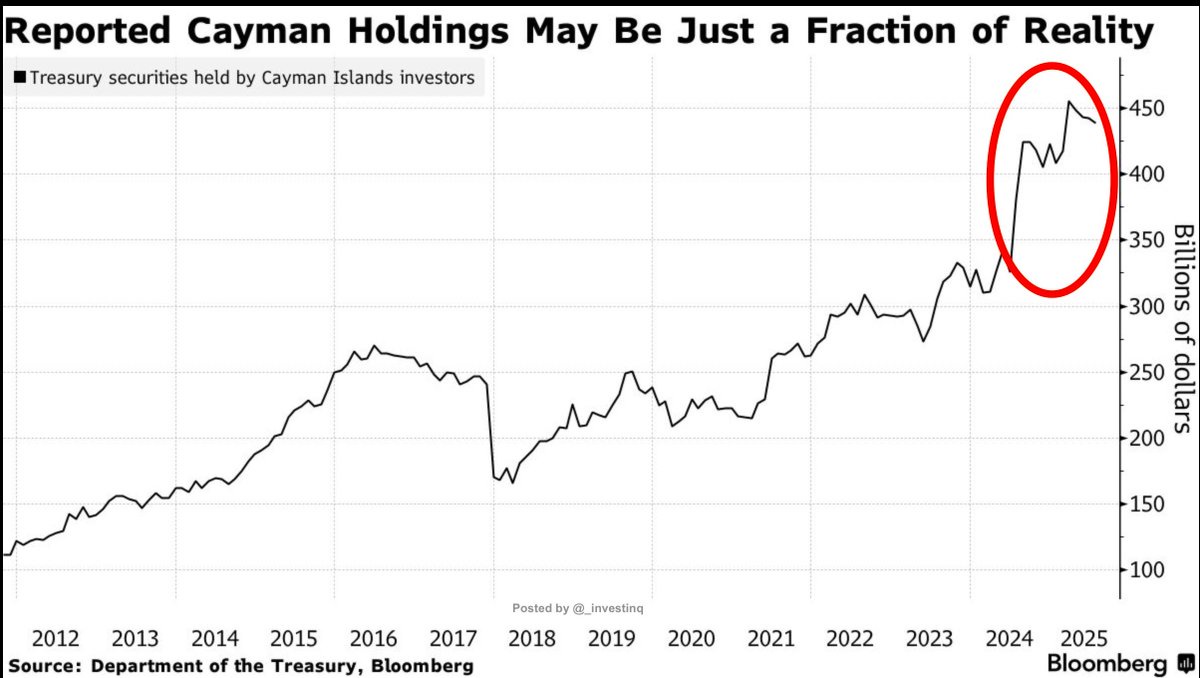
The Federal Reserve recently found that hedge funds in the Cayman Islands likely hold about $1.85 trillion worth of U.S. government bonds, known as Treasuries. That’s over four times more than what the U.S. Treasury Department thought they had. The reason for the mismatch comes from a complex trading strategy called the basis trade.
Here’s how it works: hedge funds buy real Treasury bonds and bet against Treasury futures at the same time. They do this because sometimes the prices between the two don’t perfectly match, and they can make money when those prices move back in line. To afford all those bonds, they borrow cash through the repo market basically a short-term loan system where they use their Treasuries as collateral.But there’s a catch. When those Treasuries get passed around or rehypothecated (meaning reused as collateral by other institutions), it becomes hard to tell who actually owns them. So in official data, a lot of those bonds disappear from view. That’s why it looked like hedge funds had only $423 billion when in reality, they had around $1.85 trillion.This matters because if a big market shock happens and all these funds try to unwind their trades at once, it could cause major chaos in the Treasury market. Prices could swing wildly, funding could dry up, and borrowing costs could spike. It also makes life harder for the Federal Reserve, since it doesn’t have a clear picture of how much risk and leverage are out there, so it’s flying partly blind when managing interest rates and liquidity.Source: StockMarket.News
The copyright of this article belongs to the original author/organization.
The views expressed herein are solely those of the author and do not reflect the stance of the platform. The content is intended for investment reference purposes only and shall not be considered as investment advice. Please contact us if you have any questions or suggestions regarding the content services provided by the platform.
