



AI leader Robin Li throws three 'bombs'

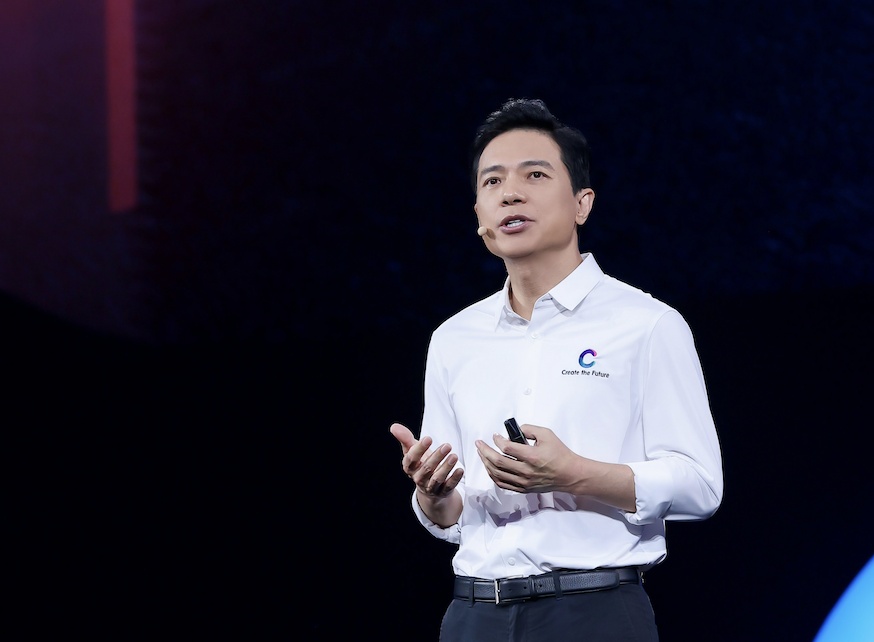
The AI industry is witnessing a groundbreaking moment, and once again, Baidu is leading the way.
On April 16, Robin Li, founder, chairman, and CEO of Baidu, introduced three major development tools during his keynote speech at the Create 2024 Baidu AI Developer Conference: AgentBuilder, AppBuilder, and ModelBuilder, which support developers in packaging and using them right out of the box.
What exactly are they?
"First is the intelligent agent development tool, AgentBuilder. Intelligent agents may become the closest and most mainstream way for everyone to use large models in the future. Based on powerful foundational models, intelligent agents can be mass-produced and applied in various scenarios."
AppBuilder is "currently the most user-friendly tool for developing AI-native applications. On AppBuilder, Baidu has pre-packaged and pre-configured various components and frameworks needed for developing AI-native applications, significantly lowering the development barrier. In as few as three steps, developers can use natural language to create an AI-native application and easily publish and integrate it into various business environments."
ModelBuilder, a tool for customizing models of various sizes, is more suitable for professional developers. "It can tailor models of any size according to developers' needs and further fine-tune them for specific scenarios to achieve better results."
The launch of these three AI tools truly marks the beginning of an era where 'everyone can be a developer.'
1. The real value of large models lies in application
Imagine: What would it be like if you could create an AI assistant to help solve your problems and offer advice? Now imagine: Your parents and children could also create their own AI assistants to help them with their issues and provide suggestions.
What would that be like?
In fact, such scenarios aren't far off. At the Create 2024 Baidu AI Developer Conference, Robin Li turned this vision into reality.
This means that, empowered by the foundational large model series and the three AI development tools, natural language will become the new universal programming language in the future. As long as you can speak, you can become a developer and change the world with your creativity.
This highlights one fact: The true value of large models lies in their applications.
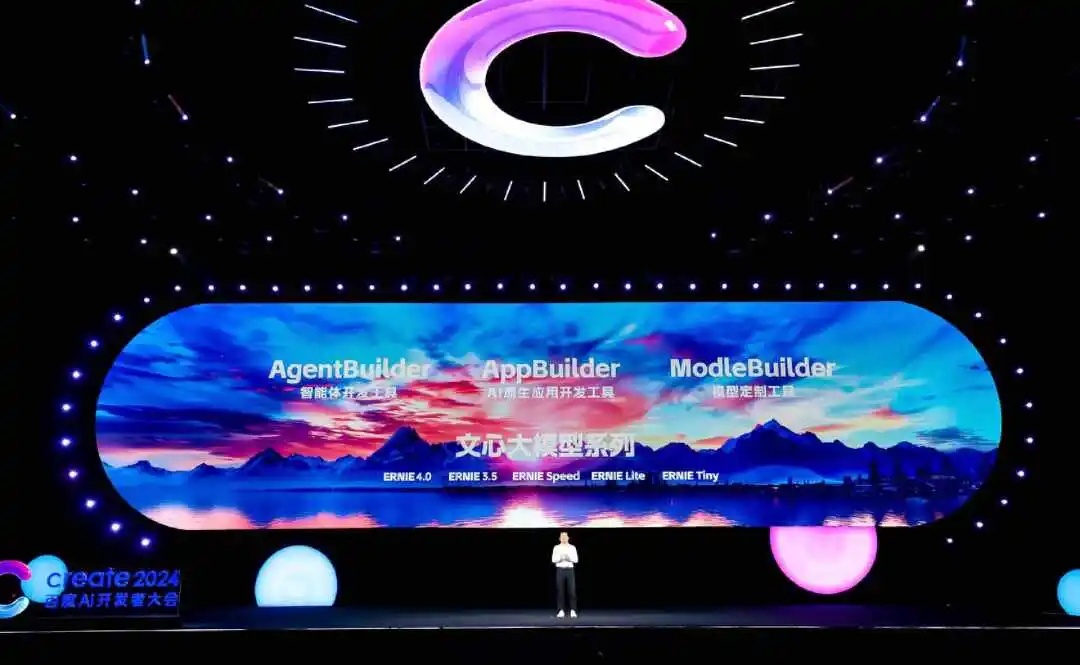
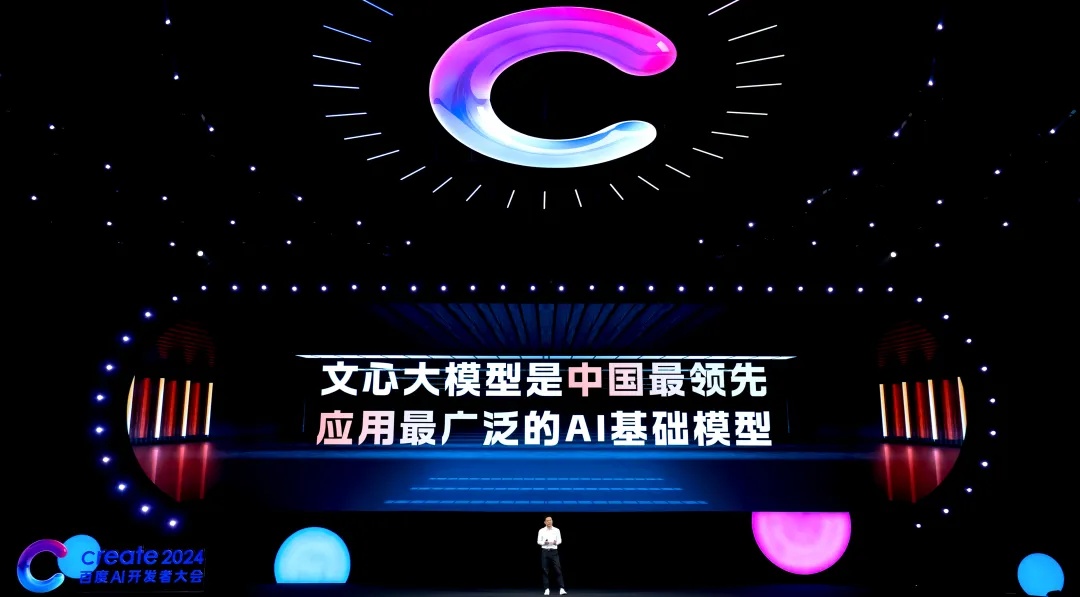
▲Image: Robin Li introduces the three development tools at the conference
Robin Li has repeatedly emphasized in public that large language models themselves do not directly create value; it is the AI applications developed based on these models that meet real market demands.
As early as the beginning of 2023, during the launch of ERNIE Bot, Robin Li pointed out the potential of applications: "In the era of large models, the biggest opportunity lies not in foundational services or industry services, but precisely in applications."
At the Baidu World Conference in October 2023, Robin Li, under the theme 'Hands-On Guide to Building AI-Native Applications,' showcased Baidu's revamped AI-native applications, such as search, Ruiliu, Wenku, and maps, demonstrating Baidu's understanding of AI-native applications and hoping to 'inspire everyone to create even more stunning AI-native applications.'
In January 2024, during an interview on CCTV's 'Dialogue,' when asked about his top priority for 2024, Robin Li said: "In 2024, my biggest goal is to empower everyone with programming skills." He noted that the profession of 'programmer' may no longer exist in the future because, as long as you can speak, everyone will have the ability to program. "In the future, there will only be two programming languages left: one called English and the other called Chinese."
At this year's Create conference, Robin Li reiterated: "Natural language will become the new universal programming language. As long as you can speak, you can become a developer and change the world with your creativity."
Now, these predictions are becoming reality.
2. Can everyone really become a developer?
To be honest, the slogan 'Everyone can be a developer' has been around for years, but I’ve never been optimistic about this vision. After all, for years, many have hoped that everyone could become a developer by learning to code.
From a human nature perspective, this approach is clearly unrealistic.
But Baidu makes me believe it’s possible. Why?
Because it flips the script: It enables everyone to become a developer without learning to code. As we know, programming languages have evolved from 01 to assembly, to C, and now to Rust, all moving toward making it easier for humans to understand.
In other words, programming languages are striving to become more like human natural language. Thus, we can say that the ultimate form of programming languages is human natural language. This leads us to the following logic: Because everyone knows natural language, everyone can program, and thus everyone can be a developer.
Before the advent of AI agents, such scenarios existed only in science fiction. But Baidu has brought this fantasy into reality ahead of time.
Isn’t this chatbot interesting?
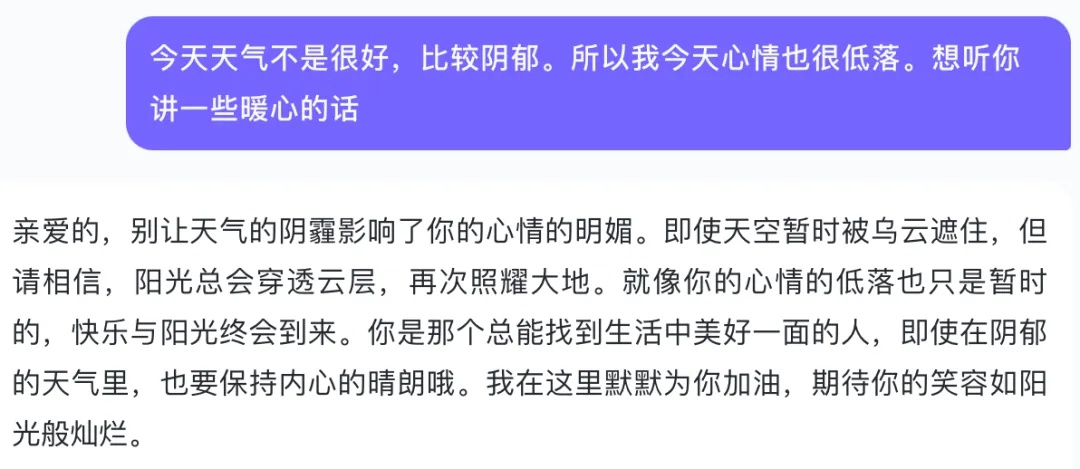
I created it in just a few minutes. Of course, I’m not a programmer, but that didn’t stop me from developing an AI chatbot like a real developer. I can keep it for myself or publish it online to comfort more souls like mine who are going through tough times.
Some readers might ask: Is it hard to develop such a bot?
The honest answer: It’s incredibly simple.
I just need to provide some instructions and requirements, and the rest is handled by AgentBuilder. As Baidu’s AI agent creation tool for the public, AgentBuilder allows you to easily create customized AI assistants just like I did.
For example, you can create a lunch recommender, a schedule assistant, a programming developer, a financial analyst, or even an emotional companion—the possibilities are endless.
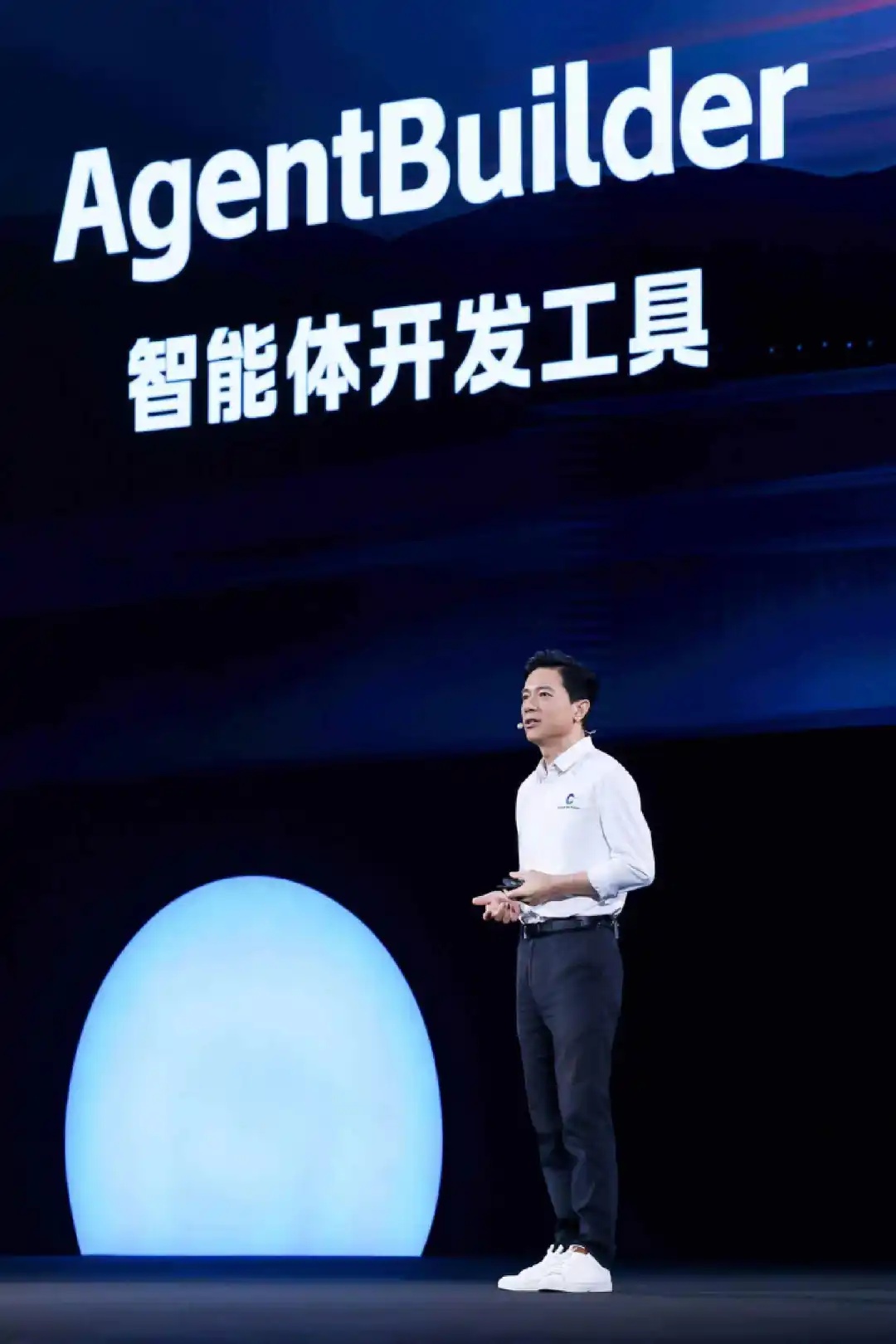
▲Image: Robin Li at the conference
At the conference, Baidu upgraded the ERNIE Agent Platform. According to Robin Li, over 30,000 agents have been created so far, with more than 50,000 developers and 10,000 enterprises joining. "Our goal is to enable every individual and organization to become an agent developer and build the most comprehensive agent ecosystem in China," he said.
He also emphasized: "Today, every business and every customer can have their own dedicated agent on Baidu. The entire process requires no programming—just simple prompts and a few steps to optimize—and you can quickly generate an agent that acts as a 24/7 gold-standard salesperson."
During the conference, Robin Li demonstrated three agent cases: Singapore Tourism Board, EIC Education, and Sophia. EIC Education used Baidu’s AgentBuilder to create a dedicated agent. In its first week, it successfully distributed 1.55 million interactions, engaged with users 58,000 times, saw a direct increase in lead conversion, a significant reduction in effective lead acquisition costs, and a substantial improvement in operational efficiency.
It’s clear that AI agents can not only enhance work efficiency and provide personalized services but also offer intelligent decision-making support, improve user experience, and even monetize traffic. Beyond this, Baidu provides developers with distribution paths within its ecosystem, enabling a seamless 'development + distribution + operation + monetization' process.
3. The revolutionary value of large models is already evident
At the conference, Robin Li also revealed a staggering statistic:
"ERNIE Bot was first launched on March 16 last year, and today marks one year and one month since then. Our user base has surpassed 200 million, with daily API calls exceeding 200 million. We now serve 85,000 enterprises, and over 190,000 AI-native applications have been developed on the Qianfan platform."
Robin Li also released the tool version of ERNIE 4.0 at the conference. In his view, with the most powerful foundational model, ERNIE 4.0, it’s possible to tailor smaller models for various scenarios based on needs, balancing performance, response speed, and inference costs, while also supporting fine-tuning and post-pretraining.
"Models derived from dimensionality reduction perform significantly better than those fine-tuned directly from open-source models of the same size. For the same performance, the cost is noticeably lower." "In the past, people thought open-source was cheap, but in the context of large models, open-source is actually the most expensive. So open-source models will increasingly fall behind."
It’s no exaggeration to say that foundational models + the three AI development tools will bring about productivity transformations that cannot be ignored.
▲Image: Latest data on ERNIE Bot
Taking Baidu itself as an example, Baidu AI has been applied across search, live streaming, e-commerce, smart mini-programs, smart displays, smart speakers, and autonomous driving. Since the launch of new AI features in Baidu Wenku, cumulative AI users have exceeded 100 million, with over 800 million feature uses. For Baidu’s new search, 70% of daily search queries are now answered in the first result, with over 50 million new queries added daily. As Baidu’s first AI-native application, the ERNIE Bot app has become a daily companion for many users.
At the ecosystem level, Baidu continues to establish partnerships with governments, enterprises, developers, schools, and social organizations.
In May last year, Baidu launched the 'ERNIE Cup' startup competition to help entrepreneurs and developers create AI-native applications. In the first 'ERNIE Cup,' Baidu provided tens of millions in funding to 15 winning teams, along with ongoing technical, team, and resource support.
At this year’s Create conference, Robin Li announced the launch of the second 'ERNIE Cup,' which will expand project selection, set up sub-venues, and introduce a 'Special Grand Prize' for the first time. Outstanding projects may receive up to 50 million RMB in cash and resources.
Looking ahead, multimodal large models are an inevitable path to AGI, and Baidu’s efforts in this area are evident. Among these, the visual large model’s biggest application is in autonomous driving, which will reshape intelligent transportation.
Based on over 100 million kilometers of complex urban road test data in China, Baidu has trained the Apollo visual perception model. It possesses four core capabilities: detection, tracking, understanding, and mapping. This gives Baidu a smarter, more adaptable, and safer autonomous driving solution.
After this year’s Lunar New Year, Baidu’s Apollo Go achieved its first cross-river milestone, extending services from the north bank of the Yangtze River to the south bank in Wuhan. In some areas of Wuhan, Apollo Go now operates 24/7, with plans to deploy 1,000 autonomous vehicles in the city by year-end.
Baidu Maps has also pioneered the application of visual perception models in mapping. Today, the world’s largest lane-level map data covers 360 cities across China.
The ultimate goal of Baidu’s relentless focus on AI-native applications is to bring Chinese people into a smarter world sooner.
This will all come to pass.
Author|An Yu
Editor|Zhang Wen
Operations|Chen Jiahui
Produced by|LingTai LT (ID: LingTai_LT)
The copyright of this article belongs to the original author/organization.
The views expressed herein are solely those of the author and do not reflect the stance of the platform. The content is intended for investment reference purposes only and shall not be considered as investment advice. Please contact us if you have any questions or suggestions regarding the content services provided by the platform.
