


 Likes Received
 Posts
PostsSudden drop! Global lithography giant lost 196.8 billion overnight

Global lithography giant ASML's performance is also struggling!
On April 17, lithography giant ASML released its Q1 2024 financial report. The report shows that the company's Q1 revenue was 5.29 billion euros, down 22% year-on-year and 27% quarter-on-quarter; net profit was 1.224 billion euros, down 40% quarter-on-quarter.
After the release of this declining financial report, ASML's stock price fell sharply. By the close of the day, ASML's stock price had dropped 7.09%, with its market value evaporating over 27.2 billion USD, approximately 196.8 billion CNY.

As is well known, ASML is one of the most important giants in the global semiconductor industry chain, and its EUV lithography equipment is hailed as the crown jewel of modern industry. As a core equipment manufacturer in the semiconductor industry, ASML holds an irreplaceable position in the chip industry.
It is reported that the EUV lithography equipment required for the most advanced chips produced by global chip companies all comes from ASML. Therefore, its performance decline has a certain negative impact on the entire industry.
Additionally, ASML's new orders in Q1 2024 amounted to 3.61 billion euros, far below the market expectation of 5.1 billion euros. In Q4 2023, ASML's order value was 9.19 billion euros, setting a new record. This data means that ASML's Q1 order value dropped by more than two-thirds.
Some analysts believe that ASML's latest financial results are not the numbers many investors hoped for or expected. After the explosive growth in Q4 last year, due to its irregularity, Q1 order value was expected to decline, but the drop was worse than anticipated and could be a potential warning sign.
ASML CEO Peter Wennink previously stated in a declaration, "Our outlook for the full year of 2024 remains unchanged, with the second half expected to be stronger than the first half, consistent with the industry's ongoing recovery from the downturn."
Notably, ASML has previously indicated that due to export restrictions and other factors, its sales in China this year are expected to be impacted by 10% to 15%.
The King of Lithography
As the most critical link in the semiconductor industry, lithography machines are vital to the entire chip industry. However, the earliest inventor of lithography machines was not ASML but David Mann Company, a subsidiary of American Geophysical Company.
In 1961, David Mann Company developed the "Model 971 Lithography Machine." Since this device effectively solved industry challenges, it was immediately snapped up by companies like IBM, Texas Instruments, and Philips upon its release. The company achieved great success with this product, and thus, the lithography machine industry emerged as an independent sector.
The significant role and successful commercialization of lithography machines quickly caused a major stir in the industry, prompting many tech companies to eagerly develop their own lithography machines.
In late 1962, a delegation from Philips' physics lab visited Bell Labs. During the visit, Bell researchers showcased their semiconductor chips. Impressed by the chips' exquisite craftsmanship, Philips' lab director Piet Heijman brought one back to Europe for detailed study. Soon after, a newly hired employee, Fritz Klostermann, was transferred to the lab's photochemistry research group and tasked with developing a lithography machine for Philips.
In 1963, Philips purchased a Model 1080 lithography machine from David Mann Company at a high price, with Klostermann participating in its assembly as a technical service provider. Through in-depth understanding and relentless research, Klostermann was finally granted permission in 1966 to develop a lithography machine independently.
Surprisingly, within just a year, Klostermann created a prototype of a repeat-exposure lithography machine. Unfortunately, this achievement did not garner attention from Philips' lab leadership.
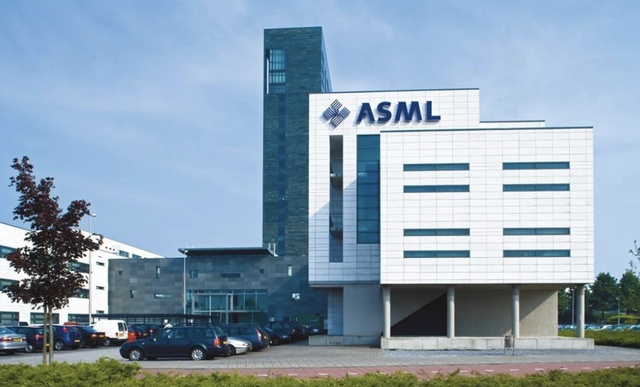
It wasn't until the 1980s, when Philips faced financial difficulties and sought to sell non-core businesses to survive, that its lithography business was put up for sale.
At the time, an obscure company—Advanced Semiconductor Materials International (ASM)—noticed this technology. ASM's founder, Arthur del Prado, wanted to acquire the business but was rejected by Philips.
In 1983, Philips' financial woes worsened, and its lithography business was on the brink of collapse. By chance, Philips' Science and Industry Division technical director George de Kruijf came across an article about ASM in a newspaper. Since ASM was already listed on NASDAQ and had grown significantly, he reported the company's situation to Philips' leadership, leading to the subsequent story.
Ultimately, after negotiations, Philips and del Prado each invested 2.1 million USD to establish a new company named Advanced Semiconductor Materials Lithography, the predecessor of ASML, with each party holding a 50% stake.
Due to poor timing, the company's operations did not take off immediately. With the semiconductor industry dominated by Japan and companies like Nikon and Canon already established globally, the joint venture faced tough challenges.
To "break through," del Prado recruited Smit, a master's graduate in magnetofluid dynamics and a Ph.D. in astrophysics. It was this brilliant individual who changed ASML's fate.
In 1985, Smit led the team in developing the more precise PAS2400 lithography machine. Thanks to this device, ASML's fortunes finally turned around in 1986. Ironically, despite ASML's product gaining market traction, Smit's aggressive approach and massive upfront investments left the joint venture in dire financial straits, even dragging down both parent companies.
Eventually, Smit left the company regretfully, and ASM was brought down by ASML. To avoid bankruptcy, del Prado withdrew his investment, with Philips taking over his shares and debts. Perhaps ASML's resilience was extraordinary—just as it faced bankruptcy, the newly founded TSMC placed a large order for 17 new PAS2500 machines, saving ASML from collapse.
In 1991, ASML's new product, the PAS5500, won over IBM, then the world's largest semiconductor manufacturer. With IBM's endorsement, ASML soared ahead, eventually becoming the global lithography giant it is today.
ASML's "Departure"
Earlier this year, global lithography giant ASML planned to relocate from the Netherlands or expand significantly overseas. Upon hearing the news, the Dutch government immediately sprang into action.
The Dutch government promptly formed the "Beethoven Plan" task force, led by Prime Minister Mark Rutte, to prevent ASML's departure.
Against the backdrop of the global chip industry's explosive growth, ASML's potential relocation or overseas expansion would be a massive blow to the Netherlands. Thus, retaining ASML became one of the Dutch government's top priorities.
So, why did this globally renowned lithography giant suddenly consider leaving the Netherlands?
In fact, ASML is not the only company with such intentions. In recent years, several major companies, such as Shell and Unilever, have left the Netherlands due to tax policy issues.
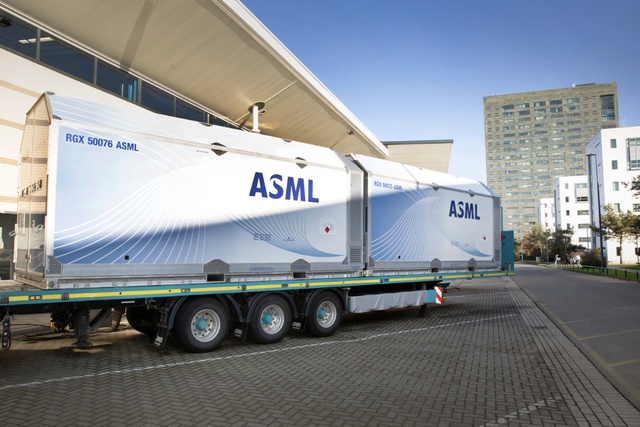
Additionally, potential anti-immigration policies in November 2023 were a significant factor in ASML's decision. It is reported that about 40% of ASML's 23,000 employees in the Netherlands are non-Dutch, with international students staying in the Netherlands being a primary source of labor for the company.
If such policies were implemented, they would significantly increase ASML's labor costs.
To ensure ASML does not relocate, the Dutch government is willing to spend heavily, offering 2.5 billion euros to retain the company. ASML's global president, Peter Wennink, has stated, "The consequences of restricting labor migration are enormous. We need these people for innovation. If we can't recruit enough talent in the Netherlands, we will move to places where we can grow."
Since 2023, the explosive growth of the AI industry and its deeper applications have greatly boosted the chip sector. Against this backdrop, NVIDIA has risen to become the world's largest chip company, while ASML, as a critical link in the global chip supply chain, has naturally benefited.
In terms of stock performance, statistics show that ASML's stock price surged over 70% from October last year to early March this year. Kanjian Finance believes that despite ASML's Q1 performance decline and weaker-than-expected Q2 outlook, its competitive advantages in the global chip market remain strong, and its irreplaceability ensures a bright future with continued expansion.
The copyright of this article belongs to the original author/organization.
The views expressed herein are solely those of the author and do not reflect the stance of the platform. The content is intended for investment reference purposes only and shall not be considered as investment advice. Please contact us if you have any questions or suggestions regarding the content services provided by the platform.
