



Kingsoft Cloud's losses exceeded 2 billion yuan. Can it rely on Xiaomi to turn the tables?


In a market dominated by giants like Alibaba Cloud, Tencent Cloud, and Huawei Cloud, Kingsoft Cloud finds itself in an awkward position.
As a key player in China's cloud computing industry, Kingsoft Cloud has long been held in high regard by the industry and is seen as the player with the most potential to carve out a third growth path. Its deep services in gaming, video, and finance have shaped its unique market positioning.
However, the recent financial results of Kingsoft Cloud Holdings Limited, which Lei Jun had high hopes for, revealed that after a revenue decline in 2022, the situation did not improve in 2023, with losses exceeding 2 billion yuan again.
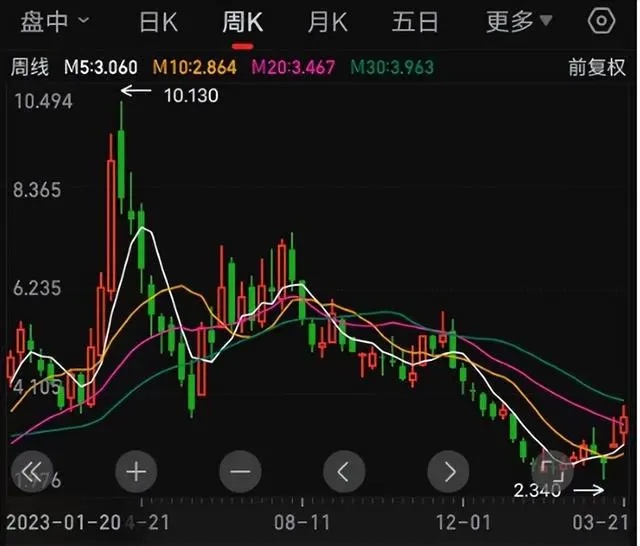
Meanwhile, major cloud providers have begun slashing prices for core cloud products, with Tencent Cloud cutting prices by up to 40% on some product lines, leaving Kingsoft Cloud grappling with whether to follow suit. In the capital markets, Kingsoft Cloud's stock price has plummeted more than 95% from its peak, leaving many investors with heavy losses.
Where does Kingsoft Cloud go from here?
01. The Unspoken Struggles of Startup Cloud Providers
In recent years, Kingsoft Cloud's financial performance has drawn widespread attention, especially in a cloud computing market perceived as rapidly growing. Yet, Kingsoft Cloud's results have gone against the market trend, with declining revenue standing out starkly.
Public data shows that Kingsoft Cloud's total revenue in 2023 was 7.047 billion yuan, down 13.85% from 8.180 billion yuan in 2022. This decline not only continued the negative growth trend that began in 2022 (when it fell 9.72% compared to 2021) but also deepened market concerns about its competitiveness.
Kingsoft Cloud's peak moment came in 2020.
In 2020, Kingsoft Cloud went public on the U.S. stock market at $17 per share. On its first trading day, its stock price surged over 20%, and by 2021, it had soared to over $74 per share, with a market cap exceeding $17.6 billion.
As capital market enthusiasm for cloud computing waned, Kingsoft Cloud's revenue began to decline, and its stock price collapsed, causing heavy losses for investors, including Lei Jun.
As a third-party startup cloud provider, Kingsoft Cloud faces relentless pressure from multiple tiers: first, cloud providers incubated by tech giants like Alibaba Cloud, Tencent Cloud, Baidu Cloud, and Huawei Cloud; second, telecom-backed cloud providers like China Telecom's eCloud, China Unicom Cloud, and China Mobile Cloud.
In the third tier, traditional hardware and software vendors like Yonyou Cloud, Kingdee Cloud, and Inspur Cloud have entered the cloud services market leveraging their past hardware strengths, but their overall success has been limited, and their market presence remains weak.
Kingsoft Cloud sits awkwardly in the startup third-party independent cloud provider tier, alongside peers like QingCloud and UCloud. These providers are highly innovative but struggle under the weight of powerful competitors, facing urgent survival crises.
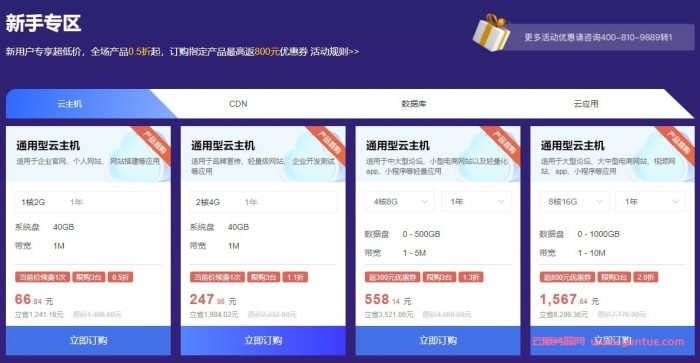
In April last year, Alibaba Cloud initiated the largest price cuts in the market, slashing prices for core products by 15%-50%, with storage products seeing up to 50% reductions. Soon after, Tencent Cloud, eCloud, and other major cloud service providers followed suit, with eCloud even advertising discounts as low as 10% on its homepage.
The cloud computing market is currently in an upward phase, with sustained revenue growth seen as the cornerstone of corporate development.
Yet, Kingsoft Cloud's two consecutive years of declining revenue highlight the challenges it faces in the market. Against fierce competition from Alibaba Cloud, Tencent Cloud, Huawei Cloud, and other tiered giants, Kingsoft Cloud appears powerless.
In reality, while China's cloud computing market continues to grow, it faces certain developmental hurdles. After the initial rush to adopt cloud services, most enterprises that have completed their cloud migration are now questioning whether future revenues can cover costs.
This has led to giants struggling with growth stagnation, while third-party startup cloud providers with the weakest foundations face even tougher times. The market downturn has hit them first.
In contrast, other major players can rely on their own businesses to support their cloud divisions, while startup cloud providers can only watch as data center investments running into tens of billions remain out of reach.
What does the future hold for "Kingsoft Clouds"?
02. Kingsoft Cloud's "De-Xiaomi-fication" and AI Push
For cloud providers like Kingsoft Cloud, urgent and effective measures are needed.
First, in terms of cost control, Kingsoft Cloud made significant progress in 2023, reducing operating costs by 20.05% year-on-year to 6.197 billion yuan. This improvement had a notable impact on gross margins, which surged 97.67% to 850 million yuan.
This cost control helped mitigate the negative effects of declining revenue and laid the groundwork for future profitability. Notably, reductions in sales and administrative expenses outpaced the revenue decline, indicating that the company's strategic adjustments are yielding initial results.
Additionally, Kingsoft Cloud is actively pursuing transformation.
In recent years, with the rise of ChatGPT, cloud service providers worldwide have accelerated their AI initiatives. For example, Baidu Cloud has enhanced its products under the "Cloud-Intelligence Integration" strategy, while Alibaba Cloud has integrated its Tongyi Qianwen AI model, sparking a fierce competition.
Kingsoft Cloud is no exception. In 2023, it released three generative AI model images.
The three models are ChatGLM-6B, Stable Diffusion, and Alpaca-Lora, all offered for free. Customers only pay for the GPU cloud servers they select, enabling them to quickly set up generative AI model fine-tuning or inference environments to meet productivity needs across various fields.
Among them, ChatGLM-6B has performed exceptionally well and is most likely to be widely adopted across industries.
Reportedly, ChatGLM-6B is an entry-level bilingual (Chinese-English) open-source model with 6.2 billion parameters, released by Tsinghua University. Trained on vast datasets, ChatGLM excels in Chinese and English Q&A and dialogue.
Moreover, ChatGLM-6B was trained on 1T tokens of balanced Chinese and English data, meaning it offers superior Chinese dialogue capabilities compared to foreign models, making it more suitable for domestic enterprises and developers exploring practical applications.
However, for Kingsoft Cloud, training models of similar scale in the future will be challenging. Notably, Kingsoft Cloud's large-model products did not even make it into global growth consultancy Frost & Sullivan's "2024 China Large Model Capability Evaluation".
Developing large models requires substantial funding. Initially, training a new large model could cost 200-300 million yuan.
Now, with rising computing power costs, training a new large model can cost up to 500 million yuan.
Given Kingsoft Cloud's cash and equivalents of 2.255 billion yuan at the end of 2023, doubling down on AI model development would likely widen its losses further.
From its shareholder structure and customer base, Xiaomi has invested multiple times in Kingsoft Cloud, holding a 12.3% stake. Xiaomi is also a major customer. From 2019 to 2021, related-party transactions with Xiaomi accounted for 14.4%, 10.0%, and 8.3% of Kingsoft Cloud's revenue, respectively. Xiaomi's founder, chairman, and CEO, Lei Jun, is also the chairman of Kingsoft Cloud's board.
"At the group level, betting on the next decade is Kingsoft Cloud," Lei Jun once said in a June 2013 interview.
Now, a decade later, Kingsoft Cloud has not delivered much excitement for Lei Jun. Since the start of this year, as Kingsoft Cloud pivoted to the B2B market, its "de-Xiaomi-fication" has become increasingly apparent.
In its early days, Xiaomi contributed over 80% of Kingsoft Cloud's revenue. Now, that figure is declining yearly—signaling Kingsoft Cloud's shift away from Xiaomi and toward the broader enterprise market.
As Xiaomi Group VP Cui Baoqiu put it: Kingsoft Cloud and Xiaomi are like bunkmates. Xiaomi's internet business has already benefited greatly from big data and will continue on a data-driven, AI-empowered path.
Kingsoft Cloud plays a vital role in Xiaomi's ecosystem, but so far, the most notable area where Xiaomi has empowered Kingsoft Cloud is smart home technology.
In this context, for Kingsoft Cloud, focusing on the C-end might offer better revenue potential than continuing AI model development.
References:
Stock Price Plummets Over 95%, Kingsoft Cloud Struggles to Break Through with AI Bet — Startup Frontline
Kingsoft Cloud Q4 Revenue Hits 1.722 Billion Yuan, Innovation Drives Growth in Scale and Profitability — 36Kr Share
The Shrinking "Kingsoft Clouds": The Collective Dilemma of Independent Third-Party Cloud Providers — Odd-Even Insights
The copyright of this article belongs to the original author/organization.
The views expressed herein are solely those of the author and do not reflect the stance of the platform. The content is intended for investment reference purposes only and shall not be considered as investment advice. Please contact us if you have any questions or suggestions regarding the content services provided by the platform.
