


The non-compete agreement that Silicon Valley doesn't allow to sign, big tech companies have twisted the scripture.


@新熵 Original
Author 丨 Wang Siyuan Editor 丨 Yi Ye
During the rapid development of the internet, non-compete agreements became a "standard" for companies to protect their trade secrets. Now that the internet industry has stabilized, non-compete agreements have become an unspoken rule between big tech companies and employees. Although workers are "trapped in layers of schemes," they tacitly accept their existence.
Not long ago, a decision by the U.S. Federal Trade Commission (FTC) brought non-compete agreements back into the public spotlight.
It is reported that the FTC has decided to completely ban all employees (including senior executives) from signing new non-compete agreements. For existing agreements, those for senior executives will remain valid, while agreements for other employees will no longer be enforceable after the effective date.
Non-compete agreements, which have existed in the U.S. for nearly a century, have officially become history, serving as a bellwether for domestic tech giants.
In recent years, some employers have increasingly applied non-compete agreements across all industries and positions, making them a standard part of onboarding. Even worse, non-compete agreements have gradually trickled down, becoming a net that traps many workers from freely changing jobs.

Not long ago, several former Pinduoduo employees took to social media, claiming they were sued by the company for allegedly abusing non-compete agreements, with demands for compensation ranging from hundreds of thousands to millions of yuan.
One former employee stated that she graduated and joined the company in July 2022 with a monthly salary of around 10,000 yuan. When she resigned in March 2023, she was asked to sign a non-compete agreement. Pinduoduo imposed a 9-month non-compete period on her, paying 14,000 yuan in compensation over 5 months. However, she joined another internet company during the non-compete period and was eventually sued for 260,000 yuan.
Another former employee, who worked at Pinduoduo for 4 years and 5 months and received equity incentives, was sued for violating the non-compete agreement after joining a new company, with demands to return nearly 4.5 million yuan in stock gains. Yet another former employee claimed that in 2022, as a fresh graduate, he was required to sign a non-compete agreement upon becoming a full-time employee at Pinduoduo, with the implication that refusal would prevent his formal employment.
According to Caixin, almost all Pinduoduo employees are required to sign non-compete agreement clauses after joining, and those subject to the agreement are asked to sign a "Non-Compete Notice" upon resignation.
Additionally, other internet giants like Baidu and ByteDance, as well as the booming new energy vehicle industry, have seen multiple cases of large companies successfully suing employees under non-compete agreements.
In reality, non-compete agreements may seem like "a willing buyer and a willing seller," but many employees often find themselves forced to sign them.
Many mid- and low-level employees believe they are neither senior executives nor technical experts, nor do they handle trade secrets. The information they access is publicly available and lacks confidentiality value. Moreover, their new roles often differ from their previous jobs, making the agreements seem unjustified.
However, self-identified employees from NetEase and Meituan have 爆料 on Maimai that companies force them to sign non-compete agreements at critical junctures, with rules like "no stock without signing" or "no resignation proof without signing."
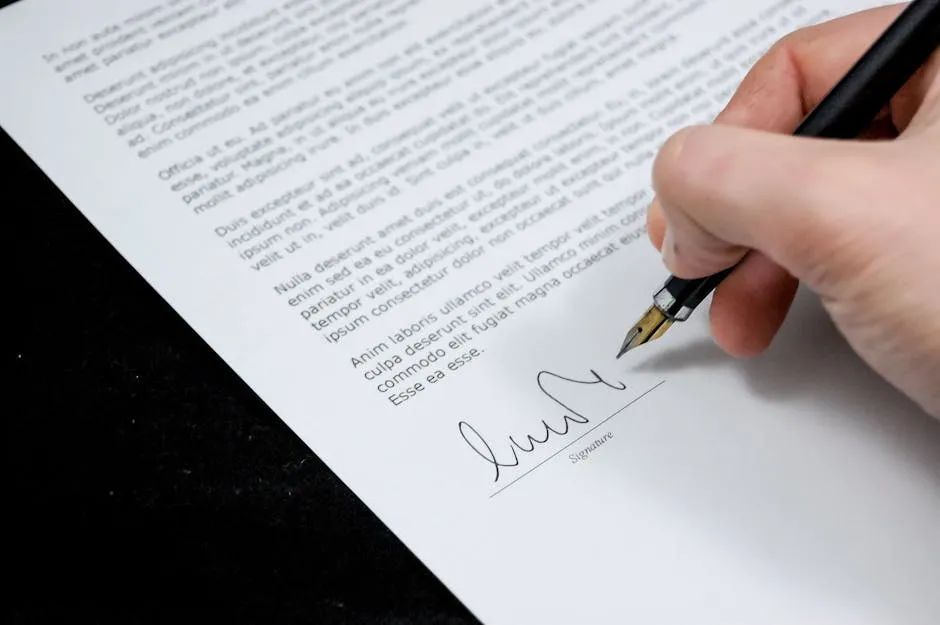
While sparing no effort to retain talent is understandable, extending non-compete agreements to ordinary employees or even the entire workforce risks turning them from a legitimate means of protecting trade secrets into shackles that bind workers.
From the evolution of non-compete agreements in China, three major issues have emerged in practice: First, the excessive expansion of non-compete scopes severely restricts workers' employment freedom. Second, the imbalance between compensation and restrictions harms workers' rights. Third, the unequal bargaining power during agreement signing often leaves workers with little room for negotiation.
Of course, outright banning non-compete agreements in the short term is unrealistic. However, these issues prompt reflection on how to balance corporate interests with workers' rights and whether reforms are needed to ensure fair and reasonable implementation of the current non-compete system.
The copyright of this article belongs to the original author/organization.
The views expressed herein are solely those of the author and do not reflect the stance of the platform. The content is intended for investment reference purposes only and shall not be considered as investment advice. Please contact us if you have any questions or suggestions regarding the content services provided by the platform.
