


How to make 8K TV? Samsung has provided some answers.

The scenery of the seasons does not wait, and the mulberry fields and blue seas change in an instant.
The imagery depicted in the poem can be said to be a true portrayal of the evolution of the television industry. Six or seven years ago, the mainstream technology was still 1080P, and 4K TVs were still labeled as "high-end." By 2024, 4K has become the entry-level standard for the TV industry, and 8K is becoming the new center of discussion.
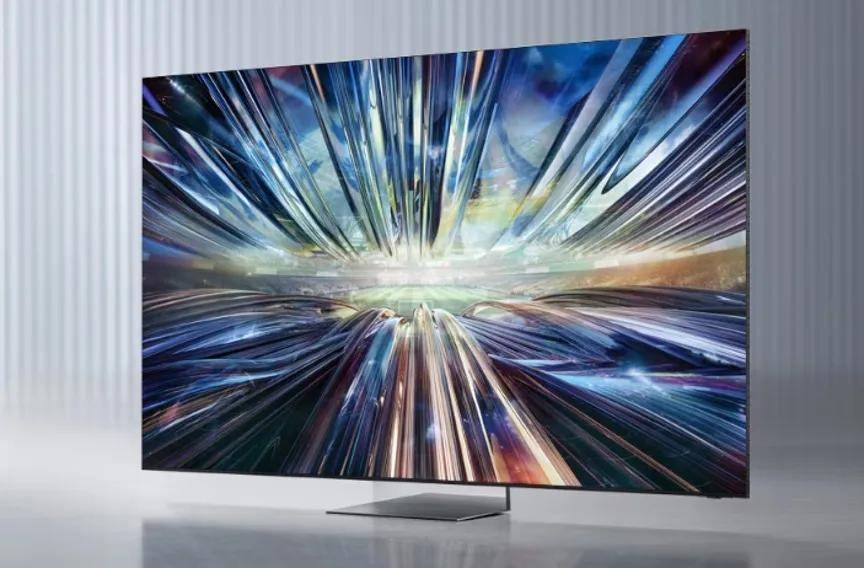
For example, at AWE 2024 a little over a month ago, Samsung officially launched the Neo QLED 8K QN900D, equipped with the new-generation NQ8 AI Gen3 chip. As the current "top-tier" in the 8K TV market, it has once again pushed audiovisual experiences to new heights.
Looking back at the evolution of the TV industry, Samsung, which entered the TV market in the 1970s, has experienced almost every industry leap. Especially in the promotion and popularization of 8K TVs, Samsung has played an indispensable role, repeatedly pointing the way for technological evolution.
01 A Leader and a Preacher
From the oral histories of ancient Greece to the hieroglyphs of ancient Egypt and the murals in the Mogao Caves of Dunhuang, vision and hearing have always been the primary ways humans perceive and understand the world.
This ingrained genetic drive has invisibly propelled the continuous evolution of display technology. From CRT technology born in the late 19th century to plasma and LCD technologies emerging in the 1960s, and the ongoing advancements in LED and OLED technologies, the pursuit of clarity has been relentless over the past century, giving rise to standard definition, high definition, 4K high definition, and 8K ultra-high definition, each reshaping visual experiences.
However, beyond the grand historical narrative, every innovation in display technology has undergone a "spiral ascent," with bold leaders and hesitant followers.
Rewinding to 2018, Samsung and Sharp successively launched 8K TVs for the consumer market. Amid the excitement over high resolution, there was no shortage of skepticism: TVs are heavily dependent on content, and with the lack of 8K content and home networks still stuck at 100Mbps bandwidth, what was the value of 8K TVs? Were they just flashy but impractical ornaments?
At that time, most brands chose a conservative strategy, while Samsung was one of the few players "obsessed" with 8K technology: after launching its first 8K TV in 2018, it consistently maintained the pace of 8K product development.
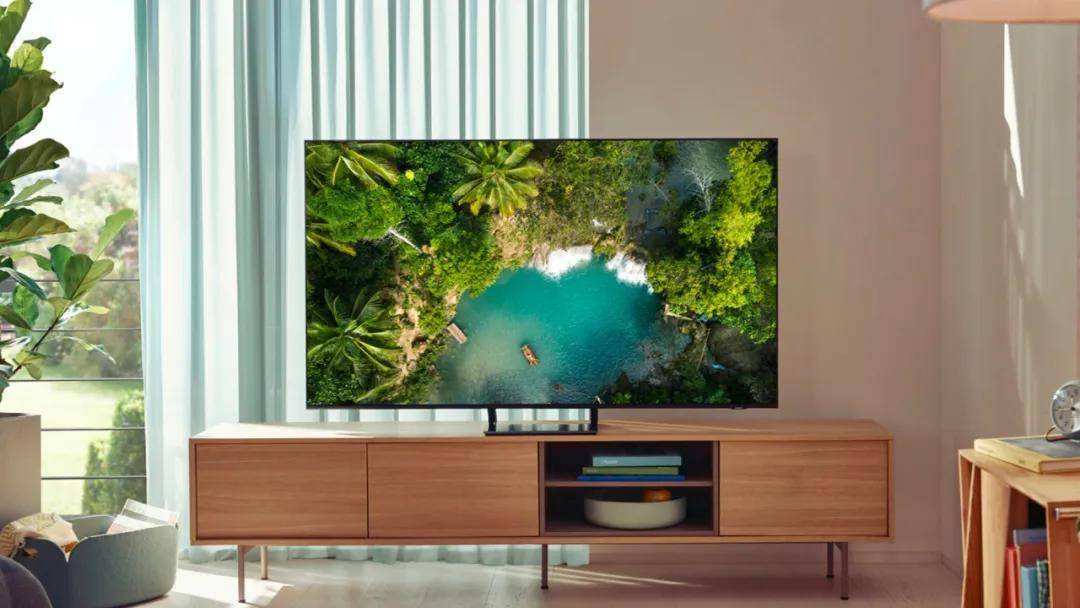
The turning point came in 2020. In the first quarter of that year, China's color TV market sold only 9.95 million units, a year-on-year decline of 20.1%, and the industry generally expected similar trends to continue in the medium to long term. Relying solely on a market recovery was too passive; brands needed to take the initiative. It was in 2020 that LG, Sony, TCL, Skyworth, Hisense, and others launched 8K products, marking the true beginning of the competition around 8K TVs.
The "fierce competition" in 8K TVs, however, did not rewrite the established market landscape. Take 2022, the peak year for 8K TV momentum, as an example: TrendForce's 2022 global color TV market report showed that Samsung accounted for 70% of global 8K TV shipments. Despite the increasing variety of 8K TVs available to consumers, most users still voted for Samsung.
Beyond its role as a "leader" in products, Samsung has also been a steadfast "preacher" in market education.
As early as 2019, Samsung partnered with other leading brands to establish the 8K Association and collaborated with the China Electronic Chamber of Commerce and the China Electronics Standardization Institute to launch the "8K Ultra HD Display Certification Technical Specification," continuously enhancing Samsung's brand strength in the 8K TV space.
Correspondingly, the Ministry of Industry and Information Technology released the "Ultra HD Video Industry Development Action Plan" that same year, outlining a "4K first, 8K second" development strategy, prompting platforms like iQiyi and Bilibili to launch 8K sections and attracting more content creators to participate.
Innovation in the TV industry has never happened overnight. It is the "strong push" from brands like Samsung that has given content platforms and creators hope for the popularity of 8K TVs, gradually forming a flywheel effect driven by both hardware and content, turning the "story" of 8K TVs into reality.
02 Without Technological Innovation, It's All a Castle in the Air
Every generational shift in the TV industry has been accompanied by a market reshuffle, with some brands seeing rising sales and others fading into obscurity.
From the user's perspective, however, the criteria for a "good TV" have never changed: whether it's 4K or 8K, picture quality remains the top priority. Samsung, with over 50 years in the TV industry, understands this deeply.
On the eve of CES 2021, while mainstream brands were announcing their 8K products, Samsung unveiled a new TV screen technology—Neo QLED. Unlike QLED, Neo QLED uses Mini LED as the backlight source, combined with Samsung's proprietary Quantum Dot Matrix Technology Pro.

Unlike traditional LED's "large light beads," Mini LED backlight beads are only 1/40th the size. For panels of the same size, where there might have been dozens of light beads before, now there can be thousands, tens of thousands, or even more, resulting in better brightness and effectively reducing the halo effect.
Building on the Mini LED backlight, Neo QLED incorporates Quantum Dot Matrix Technology Pro, enabling ultra-fine and precise control over densely arranged LED beads. For example, color can be adjusted at the pixel level, maximizing the retention of the light source's original brightness, thereby delivering better color performance, dynamic range, and contrast on the screen.
Among the factors that constitute picture quality, resolution represents only clarity. Screen response speed, brightness, and color have no less impact on visual experience than resolution. Although all claim to be 8K TVs, Samsung's Neo QLED 8K series, with its backlight control and image processing, delivers a more impactful experience, whether it's the fine texture of skin or the grandeur of natural landscapes, all rendered with lifelike fidelity.
According to AVC's statistics, in 2022, Mini LED TVs and 8K resolution TVs grew by 385.3% and 24.5% year-on-year, far exceeding the average growth rate of the TV market. If the victory in LCD technology laid the foundation for Samsung's 18-year market dominance, Neo QLED will further solidify Samsung's competitive barriers in the high-end market, profoundly illustrating the 红利效应 of innovation.
The aforementioned Neo QLED 8K QN900D not only inherits the technological advantages of the screen but is also an all-around performer in picture quality, sound quality, and gaming, redefining the user experience standards for 8K TVs.
03 AI for All, Illuminating New Audiovisual Experiences
When every brand claims to have 8K products, the uniqueness of the technology itself is fading. How to create differentiated experiences? Samsung's answer is AI. Samsung has taken the lead in proposing the "AI for All" strategy, not only integrating AI technology into products but also using AI to drive experience upgrades.
Taking the Neo QLED 8K QN900D as an example, the value of AI is being fully unleashed, "illuminating" new audiovisual experiences on the 8K screen with AI empowerment.
First, in terms of computing power.
As is well known, the faster the NPU, the more powerful the computing capability, and the more neural networks, the stronger the deep learning ability. The Neo QLED 8K QN900D is equipped with the new-generation NQ8 AI Gen3 chip, with NPU speed twice that of the previous generation and neural networks increased from 64 to 512, cleverly overcoming the limitations of edge-side computing power.
Then, in terms of algorithms.
To draw an analogy, computing power is like electricity, and algorithms are like engines. Only by matching computing power with excellent algorithms can 澎湃的动能 be unleashed. Unlike some manufacturers' optimizations for single scenarios, the Neo QLED 8K QN900D can mimic the human brain's cognitive way of processing content, including picture quality, sound effects, applications, energy consumption, and more, comprehensively 重构 the TV user experience.
Take picture quality as an example: the 8K AI Image Enhancement Pro function can intelligently optimize resolution, contrast, texture, and color, upscaling low-resolution content to near-8K ultra-high-definition levels; AI Dynamic Enhancement Pro can automatically detect motion content, applying generated motion models through deep learning, such as 清晰真实地还原足球赛事的运动画面; AI 3D Depth Enhancement Pro uses 超强 AI computing power to precisely control Mini LED backlight zones,感知人眼习惯聚焦的内容, making images more 立体逼真。
In terms of sound quality, Intelligent Sound Control AVA Pro can detect content noise and environmental noise, using AI dialogue enhancement technology to separate 杂音 and enhance the volume and quality of dialogue audio. It can also enhance sound quality, analyze audio details, and 定位 background, accompaniment, and vocals, fully 还原 the creator's intent and the 层次感 of sound, providing an immersive experience.
To summarize: the Samsung Neo QLED 8K QN900D is no longer a traditional "TV" but an intelligent entity that actively provides services, automatically conserving energy based on the environment,推送 personalized content based on user preferences, and matching the best sound and picture quality based on content type... leaving complex problems to AI and perfect experiences to users, thereby continuously 刷新 the new heights of audiovisual experiences and 重塑 the new value of large screens.
04 Final Thoughts
In a world where screens are everywhere, what is the differentiated value of TVs?
Samsung's approach offers valuable lessons.
Technologically, TV innovation is far from hitting its ceiling, as evidenced by 8K, Mini LED, quantum dots, and AI, which are also the best ways to inject new vitality into the industry. In terms of experience, as the "oldest" screen in the home, TVs 承载 family joy. Innovation is not about aimless flights of fancy but about returning to the original value of TVs and creating 与时俱进的 audiovisual experiences.
Only by understanding this can 8K TVs truly move beyond 简单的 "pixel competition."
The copyright of this article belongs to the original author/organization.
The views expressed herein are solely those of the author and do not reflect the stance of the platform. The content is intended for investment reference purposes only and shall not be considered as investment advice. Please contact us if you have any questions or suggestions regarding the content services provided by the platform.
