


The restaurant business is difficult to globalize. In China, only a handful of brands like McDonald's, Starbucks, KFC, and Pizza Hut have managed to establish a firm foothold. $Shake Shack(SHAK.US), which started from a food truck in New York and expanded globally, what's its secret?
1. Internationalization: Market presence in 18 countries
Shake Shack has successfully entered 18 countries, including not only traditional European and American markets but also Asian countries like China, Japan, South Korea, and Thailand. This strategy showcases Shake Shack's global vision and deep understanding of diverse cultural markets.
2. Localization: Full integration from menu to store design
In China, Shake Shack's localization strategy has been particularly successful. The opening menu at its Shanghai Xintiandi restaurant featured a special Shanghai-inspired shake—"Pink Yu Garden," while the Beijing Sanlitun restaurant introduced a traditional Beijing candied hawthorn-flavored shake and "Three Chestnut Sanlitun" ice cream. These creative offerings not only attracted local consumers but also demonstrated Shake Shack's respect for and integration with local culture.
3. Chef's local experience
To better integrate into the Chinese market, the chef at Shake Shack's Shanghai Xintiandi store ate 12 Shanghai-style meals over five days before the company decided to enter Shanghai. This deep dive into local culinary culture not only earned Shake Shack a good reputation but also inspired its localized menu innovations.
4. Localization of food trucks and store design
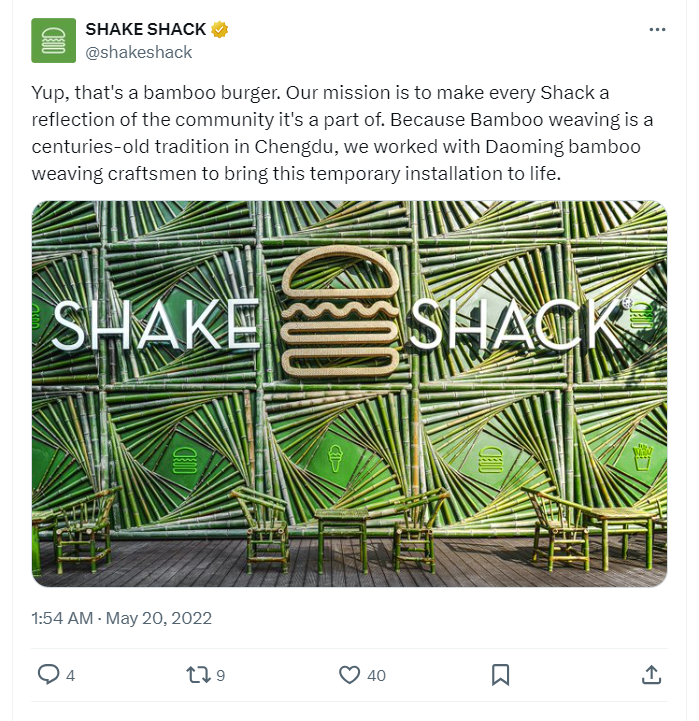
Shake Shack doesn't just localize its food; its store designs and merchandise also emphasize cultural integration. For example, the Chengdu restaurant's design resembles a traditional teahouse and features Chengdu-limited edition mahjong sets. This meticulous localization strategy has helped Shake Shack gain consumer recognition in different markets.
5. Comparative analysis: Five Guys' journey in China.
In stark contrast to Shake Shack, Five Guys—another premium burger brand from New York that emphasizes fresh, never-frozen ingredients—has barely localized despite entering China long ago. As a result, Five Guys still has only a handful of stores in China. This comparison further highlights Shake Shack's advantage in localization strategy.

The copyright of this article belongs to the original author/organization.
The views expressed herein are solely those of the author and do not reflect the stance of the platform. The content is intended for investment reference purposes only and shall not be considered as investment advice. Please contact us if you have any questions or suggestions regarding the content services provided by the platform.
