


With cumulative losses of approximately $1.8 billion over four years and its market value dropping to the billions, can WuXi AppTec's largest shareholder also "not hold on anymore"?

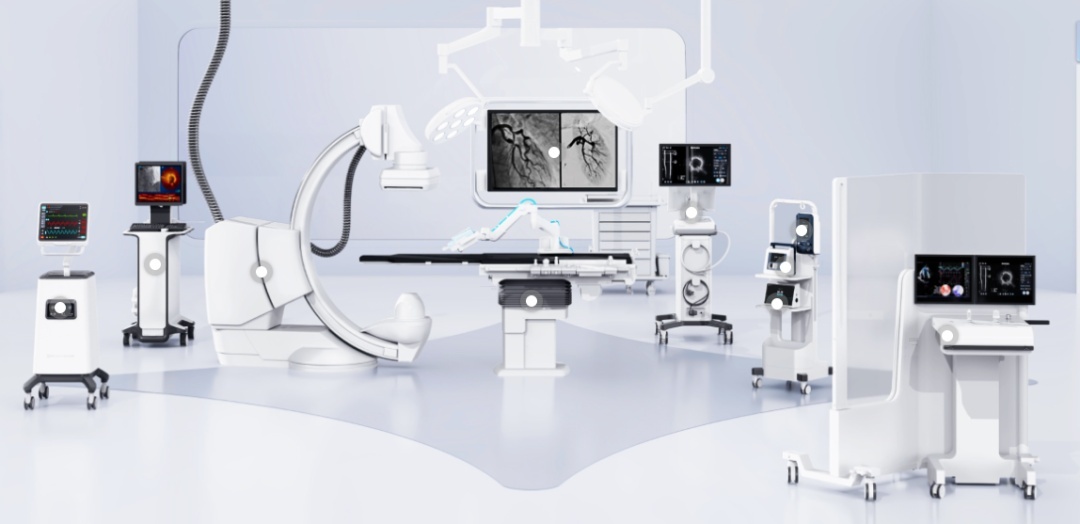
MicroPort Medical, which has been losing money for years and faced major shareholder 减持, is now "tightening its belt."
Source|Pharmaceutical Research Society
All good things must come to an end. After twenty years of collaboration, MicroPort Medical and its largest shareholder, Otsuka Holdings Co., seem to have reached a "parting of ways."
Recently, Bloomberg reported that Otsuka Holdings is considering selling its shares in MicroPort Medical. Following this news, MicroPort's stock prices fluctuated. On October 21, MicroPort's stocks rose in early trading, with MicroPort Robotics up 7.77%, MicroPort Medical up 6.41%, and MicroPort NeuroTech up 3.7%.
According to insiders, potential buyers have shown preliminary interest in MicroPort Medical's shares, and Otsuka Holdings is working with advisors to evaluate the shares, which has positively impacted the stock market.
Looking back, MicroPort Medical and Otsuka Holdings have had a close relationship. In 2004, Otsuka Holdings injected $18 million into MicroPort Medical, which was only three years old and struggling financially at the time, acquiring a 40% stake. As of June 30, 2024, Otsuka Holdings holds a 20.87% stake, remaining the largest shareholder.
Now, with Otsuka Holdings potentially "letting go," what factors have led to this?
1. The Decline of the "Chinese Medtronic"
In fact, it’s not uncommon for MicroPort Medical to face 减持 from major shareholders.
In May, Zhangjiang Hi-Tech 减持 20 million shares of MicroPort Medical at an average price of HK$6.7 per share, totaling HK$134 million. In September, Hillhouse Capital 减持 55 million shares... This suggests that MicroPort Medical’s current operational performance is unsatisfactory to shareholders.
Financial reports paint a clearer picture. From 2020 to 2023, MicroPort Medical reported revenues of $649 million, $779 million, $841 million, and $951 million, respectively, but net losses of $223 million, $351 million, $588 million, and $648 million, accumulating a total loss of approximately $1.8 billion.
In 2024, the company’s performance improved slightly but remained in the red. The financial report shows that for the six months ending June 30, 2024, MicroPort Medical’s revenue grew by about 17.0% (excluding currency effects), with adjusted net losses narrowing by 63.1% year-over-year.
Overall, MicroPort Medical’s recent development has been far from optimistic, and the 光环 of being a leading medical device company has dimmed.
It’s worth noting that at the 2020 shareholders’ meeting, MicroPort Medical’s chairman, Chang Zhaohua, claimed that the company had the potential to reach a trillion-dollar market cap.
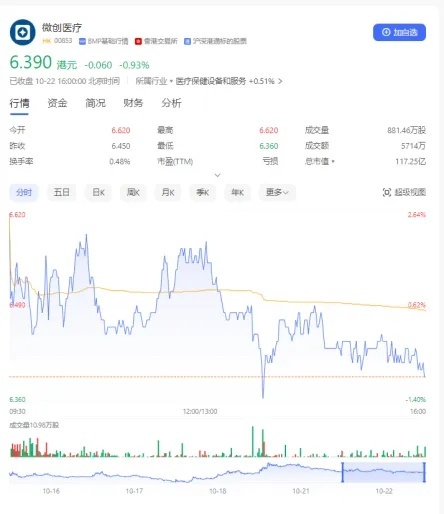
As time passed, the company’s operational challenges persisted, eroding investor confidence. As of the close on October 22, MicroPort Medical’s market cap had shrunk to HK$11.725 billion. The 对比 between then and now is striking.
However, it’s curious that MicroPort Medical, once regarded as the "Chinese Medtronic" for its strong technical capabilities, has diversified businesses including cardiovascular intervention, orthopedic devices, rhythm management, large artery and peripheral vascular intervention, neurointervention, heart valves, surgical robots, and surgical instruments.
Given this, why has MicroPort Medical struggled to turn a profit?
2. Why Can’t the Losses Stop?
MicroPort Medical’s current predicament is the result of both internal and external factors.
Internally, the company has "spread itself too thin."
While its diversified 业务布局 makes for a compelling story, given the vast potential of these sectors, the reality is more complicated.
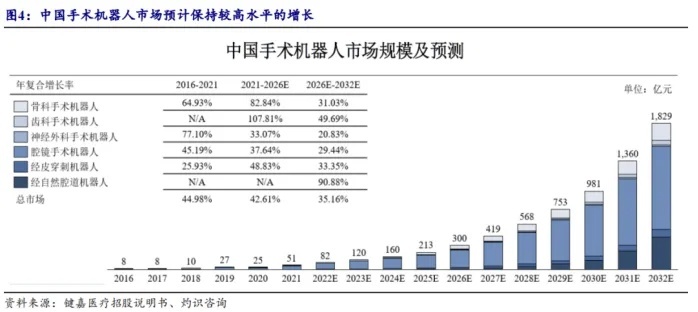
Take surgical robots as an example. According to Frost & Sullivan, China’s surgical robot market was worth approximately RMB 5.1 billion in 2021 and is projected to reach RMB 30 billion by 2026 and RMB 182.9 billion by 2032, with a CAGR of 42.61% from 2021 to 2026.
In recent years, China’s medical robot industry has also attracted significant capital. According to IT 桔子 and CIC data, there were 44 投融资 deals in the medical robot sector in 2023, with disclosed funding totaling RMB 7.762 billion.
MicroPort Medical is clearly riding the wave, but it’s not just focusing on one trend. The company has expanded into over a dozen fields, including cardiology, orthopedics, neurology, medical robotics, and medical aesthetics, and has successfully spun off several listed companies, such as 心脉医疗,心通医疗, MicroPort Robotics, MicroPort NeuroTech, and MicroPort EP.
However, the sectors MicroPort Medical has entered are not "quick wins"—they require long development cycles and substantial funding. With multiple businesses advancing simultaneously, the company’s operational burden is undoubtedly heavy.
According to financial reports, from 2020 to the first half of 2024, MicroPort Medical invested over $1.402 billion (approximately RMB 10.14 billion) in R&D, with R&D expenses accounting for nearly or over 30% of revenue, peaking at 49.9% in 2022. This makes MicroPort Medical the company with the highest R&D expenditure ratio among the world’s top 100 medical device firms.
Given that many of its businesses are still in the growth phase, it’s unclear when MicroPort Medical will truly enter its harvest period.
Externally, as a leader in the medical device industry, MicroPort Medical’s development is heavily influenced by centralized procurement policies.
In recent years, MicroPort Medical’s products included in centralized procurement include cardiac stents, pacemakers, electrophysiology consumables, orthopedic joints, and neurointerventional coil 栓塞 systems. From a corporate perspective, centralized procurement can boost market share and brand influence, but the flip side is that price reductions can squeeze profit margins.
For example, after the cardiac stent centralized procurement in 2020, MicroPort Medical’s cardiovascular intervention revenue dropped 44.6% to $144 million, with an operating loss of $160 million.
Amid these growth challenges, MicroPort Medical urgently needs 转型。
3. Tightening the Belt
MicroPort Medical has set goals for its future development.
At the 2024 shareholders’ meeting, the company stated, "In 2024, our target revenue is approximately RMB 10 billion, with a projected loss of RMB 2 billion. We aim to break even in 2025 and then increase profits by RMB 1-2 billion annually. With a 20% net margin, we target RMB 50 billion in revenue and RMB 10 billion in profit, growing at 20-30% per year. If we fall short, we will cut staff and strictly control R&D. Until profits reach RMB 10 billion, we will cap R&D spending at around RMB 2 billion."
Currently, MicroPort Medical has already begun wielding the "cost-cutting axe."
On one hand, it’s slashing R&D costs. According to the financial report, in the first half of 2024, R&D expenses dropped 38.6% year-over-year to $115 million. On the other hand, it’s reducing headcount. According to 药融云, in 2023, MicroPort NeuroTech laid off 495 employees, an 85% reduction—the highest among its subsidiaries. MicroPort Robotics’ workforce also shrank from about 1,200 in 2022 to 646 in 2023.
Additionally, in August, MicroPort Medical sold its original headquarters in Zhangjiang Science City, Newton Road, Shanghai.
These measures reflect MicroPort Medical’s efforts to "tighten its belt," and they’ve yielded some results, such as narrowing losses in the first half of the year.
However, it’s worth questioning whether 大幅 slashing R&D 投入 will have unintended consequences.
After all, MicroPort Medical’s rise as a leader in high-value medical 耗材 was built on its R&D 基因. Former CTO Luo Qiyi once said, "From the beginning, MicroPort has been clear about its long-term vision. As long as we can survive, we want to invest 有限 profits into 无限 R&D. Innovation is our lifeline."
Now, by prioritizing profitability over R&D, MicroPort Medical risks compromising its product development capabilities in an increasingly competitive 医疗器械 landscape.
Thus, the question remains: How can MicroPort Medical balance 领先 R&D 实力 with profitability? The company still needs to find the optimal solution.
The copyright of this article belongs to the original author/organization.
The views expressed herein are solely those of the author and do not reflect the stance of the platform. The content is intended for investment reference purposes only and shall not be considered as investment advice. Please contact us if you have any questions or suggestions regarding the content services provided by the platform.
