走马财经
2024.10.31 03:08

Nongfu Spring research record

portai
I'm PortAI, I can summarize articles.

On October 19th, I had the opportunity to conduct an on-site investigation at Nongfu Spring's water source in Huangshan, Anhui. I gathered firsthand information and observations about the company, along with some personal reflections. Today, I’m documenting these findings both as a reference for my future tracking and as a resource for friends who follow Nongfu Spring.

1. During the tour, we were accompanied by Manager Li, an early participant in the Huangshan factory project and a local of Huangshan. Previously working in the automotive industry elsewhere, she returned to her hometown three years ago when Nongfu Spring launched the Huangshan water source project, becoming one of the first two participants. According to her, nearly 300 employees at the factory were mostly recruited by her. We jokingly referred to Manager Li as one of the "founding team members" of the Huangshan factory.

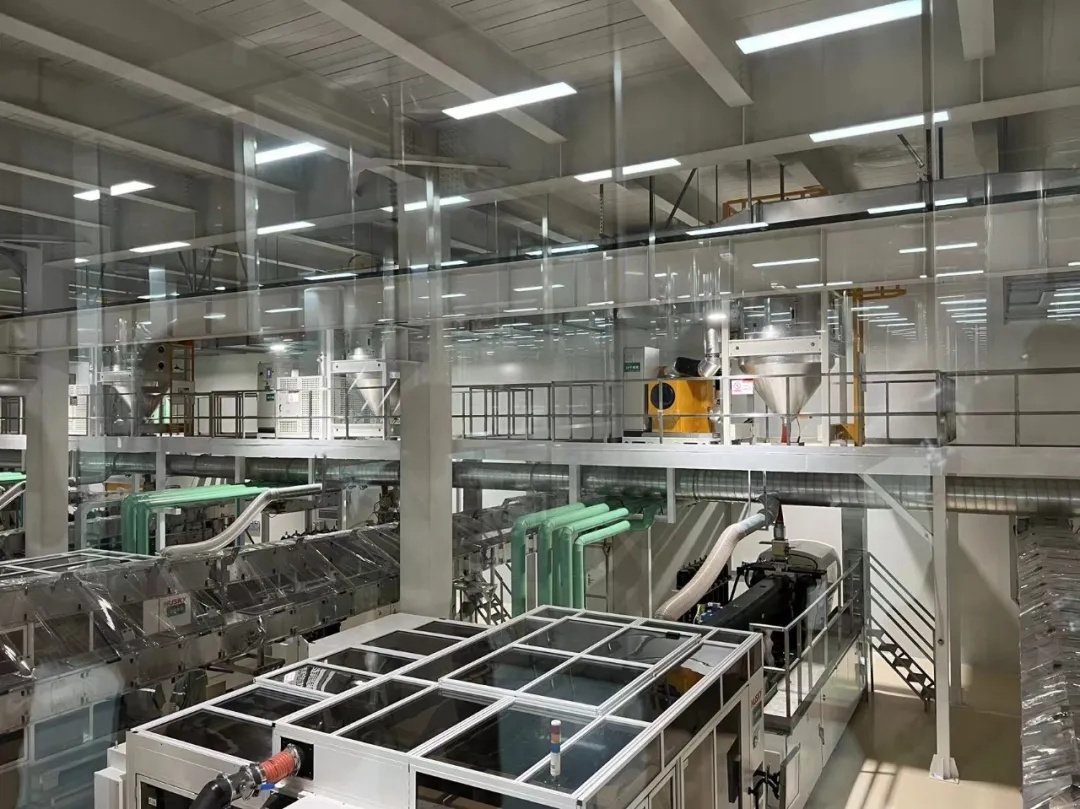
The Huangshan factory has six production lines, five of which have already been debugged. All lines will officially commence operations in early December.


According to the plan, the Huangshan factory will have a daily production capacity of 90,000 tons. Assuming each bottle of water weighs 500 grams (actually about 550 grams, excluding bottled water), 90,000 tons translates to 180 million bottles. Factoring in beverages and bottled water, the daily production capacity for bottled water alone is estimated at around 50 million bottles. Including beverages and bottled water, the total daily packaging capacity exceeds 100 million bottles. Such high-intensity production with only 300-500 employees would be unimaginable without highly automated technology.

The Huangshan factory’s automated production lines currently follow two paths: one employs technology from Germany’s KHS (Krones), achieving astonishingly efficient unmanned production from filling, sterilization, labeling, packaging, to palletizing. The other uses domestic equipment, though the main components are still imported from Germany.


KHS is the leader in plastic packaging technology, holding nearly 80% of the global market share in this niche.

Nongfu Spring is a key project introduced to Huangshan City. Once fully operational, the company will generate approximately 180 million yuan in annual tax revenue for the region and create 300-500 high-quality direct jobs. Including upstream and downstream industries, the number could reach thousands.

Many are curious about the factory employees’ income. It’s reported that Nongfu Spring’s Huangshan factory offers salaries above the local average.

2. Nongfu Spring currently has 12 developed water sources: Qiandao Lake in Zhejiang, Wanlv Lake in Guangdong, Danjiangkou in Hubei, Tianshan Manas in Xinjiang, Mount Emei in Sichuan, Mount Taibai in Shaanxi, Changbai Mountain in Jilin, Wuling Mountain in Guizhou, Greater Khingan Range in Heilongjiang, Wuyi Mountain in Fujian, Damingshan in Guangxi, and Wuling Mountain in Hebei.


There are also four water sources under development.


Nongfu Spring adheres to building factories near water sources, acting as "nature’s porter." Thus, continuously developing and maintaining water sources is its core work.


Some water sources, like Changbai Mountain in Jilin, have even become shared resources for the entire industry. However, high-quality water sources are limited and increasingly located in remote areas like the northeast, northwest, and southwest. Direct development and factory construction near water sources, coupled with transportation costs, make it difficult to maintain profitability without sufficient scale advantages and pricing power. This is good news for leading companies like Nongfu Spring.


3. We specifically visited the Huangshan water source for an on-site inspection. The water source is located on a secluded side of Huangshan’s Bright Summit, surrounded by fences for protection. The image below shows the water outlet, where pipes connect directly to the factory over 30 kilometers away. As a key project for Huangshan, the municipal government has provided policy support to Nongfu Spring.

The next day, while taking a taxi to tour Huangshan, the driver told me that after the factory’s launch, bottled water had been widely distributed to local government departments for trial use.


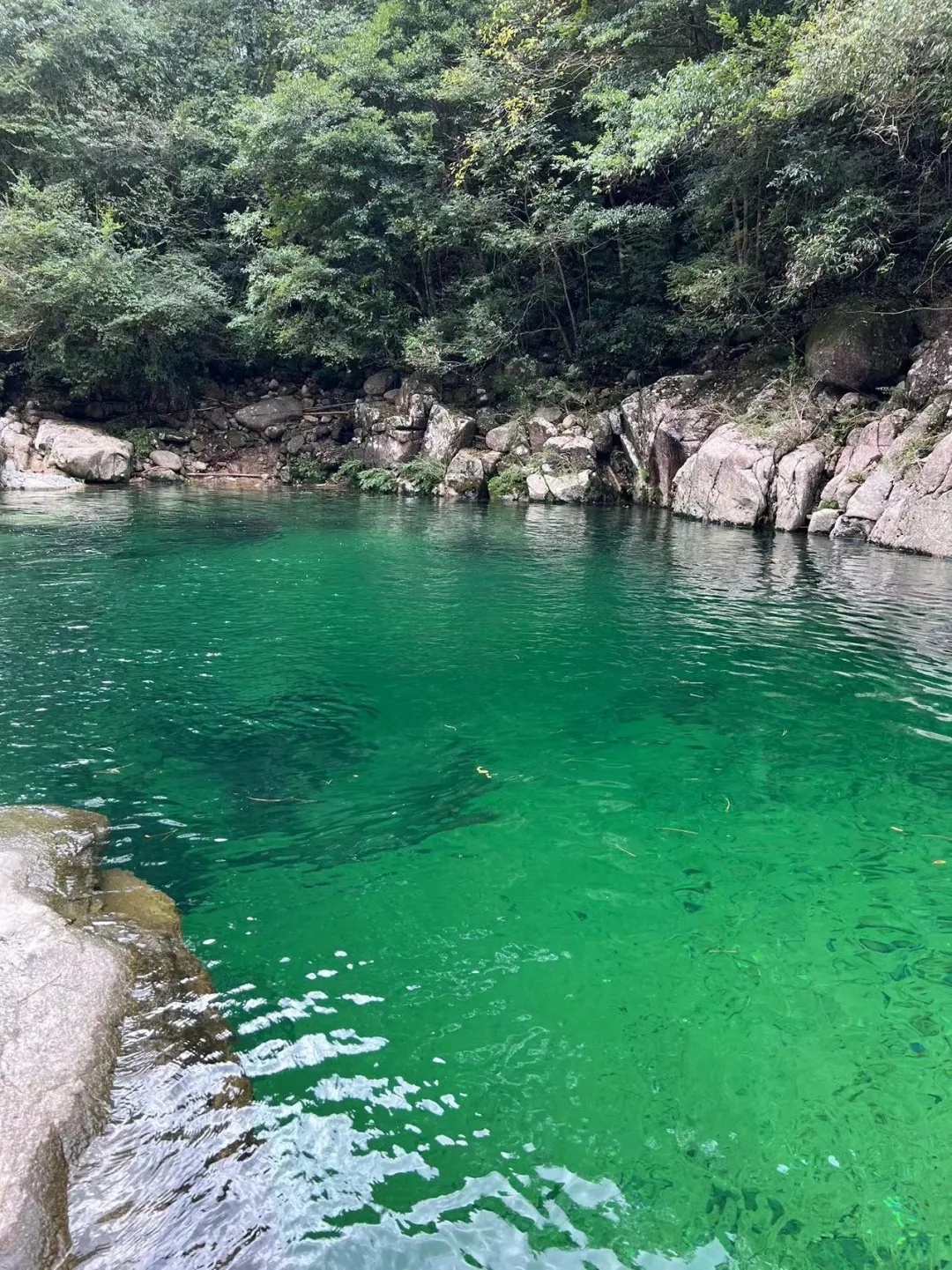
The mountain is lush with trees, serene and secluded. The water flows down the valley, winding through natural rock formations without any sediment, making it crystal clear. It’s said that some tourists from Jiangsu, Zhejiang, and Shanghai bring large water containers to fill and take home for brewing tea.


Some people drank it on the spot, finding it refreshing and sweet. I also filled a small Nongfu Spring bottle to bring back, as I didn’t dare carry too much for the next day’s hike.

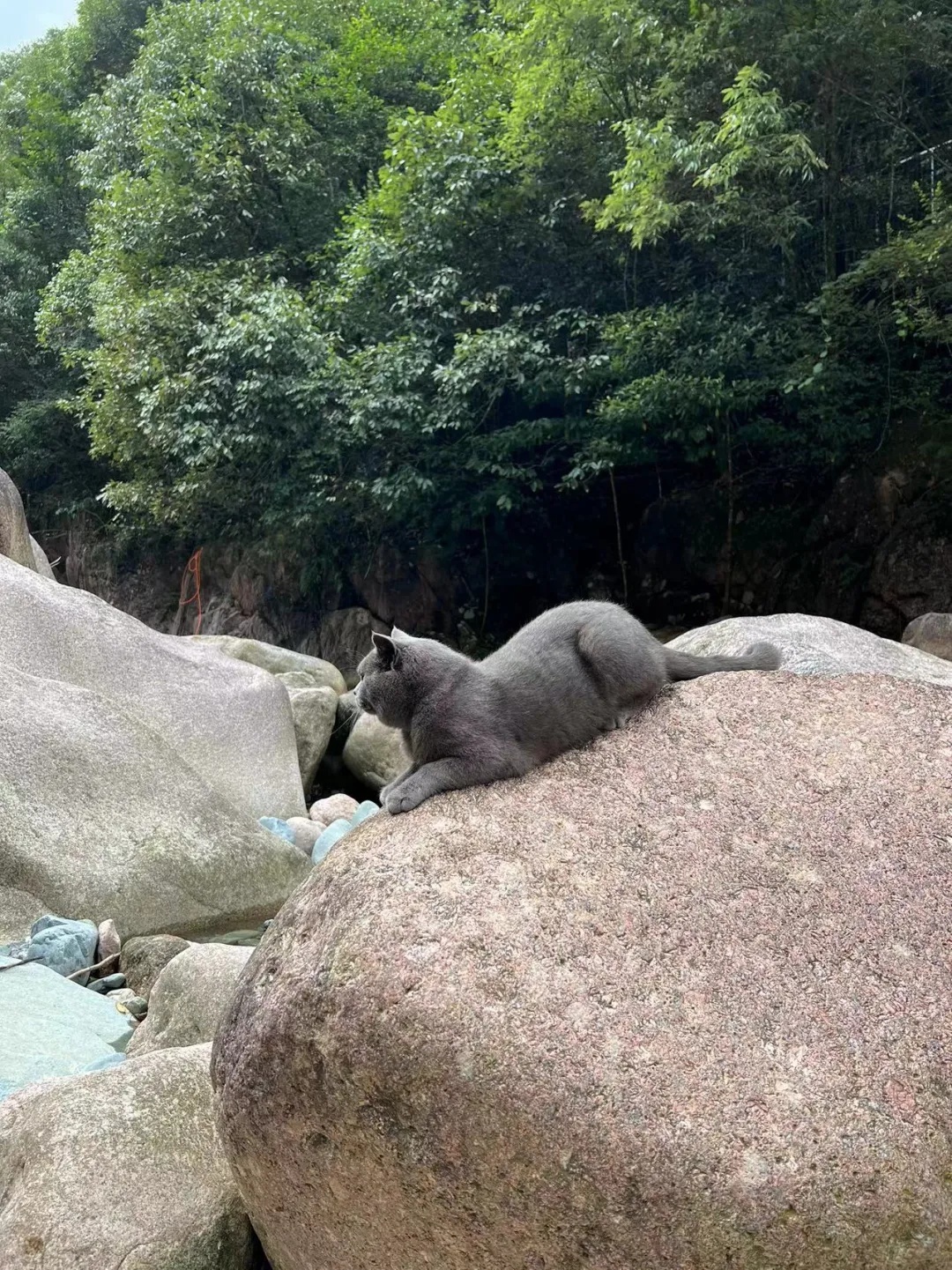
4. Near the water source, there’s a villa likely offering eco-friendly dining and lodging. The owner keeps a cat with remarkable intelligence.


Without being called, the cat followed us on its own. The winding water path required us to step lightly on rocks, and the cat, as if skilled in "light-footed kung fu," trailed closely all the way to the "Bitan Abyss" at the water outlet. Along the way, it playfully rolled around, likely hoping for food. Unfortunately, no one had brought cat treats or dried fish, leaving the cat to encounter what might have been its first group of "heartless" humans.

5. Many may not realize how severely the public opinion crisis earlier this year impacted Nongfu Spring, especially its bottled water—the main target of the backlash.

Staff at the headquarters revealed that Nongfu Spring’s bottled water sales saw market share drop to levels from six or seven years ago within two months.

This directly led to the launch of the green-bottled Nongfu.

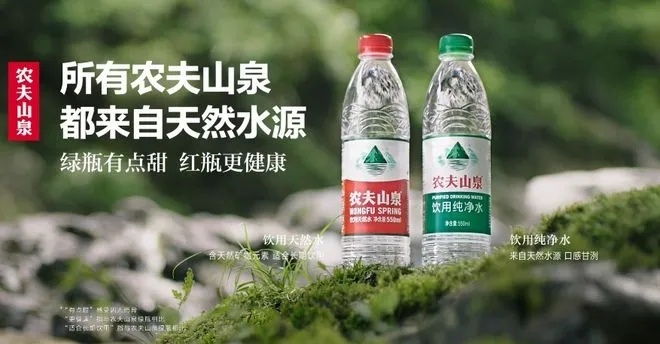
6. The green-bottled Nongfu is purified water, sourced from the same locations as the red-bottled natural water but processed differently. Specifically, purified water removes all minerals through distillation, while natural water retains some beneficial minerals through specialized processes. Nongfu Spring’s latest advertisement features both bottles side by side, with the slogan: "Red is healthier, green is sweeter."

This ad has sparked much discussion, seemingly favoring the red bottle. However, the green bottle has quickly gained market share since its release.

Data shows that in developed markets like Europe, the U.S., Japan, and South Korea, natural and mineral water account for about 60% of bottled water consumption, while purified water makes up around 40%. In China, natural and mineral water currently represent only 25%, indicating significant room for structural growth.

Logically, when a company dominates a rapidly growing segment, the best strategy is to expand further in that segment rather than entering a declining (albeit larger) market for incremental gains.


However, given China’s macroeconomic and consumer trends, along with this year’s sudden public opinion crisis, entering the purified water market might have been a necessary but somewhat hesitant move.


7. In developed markets, the trend in bottled water and beverages is toward higher shares for natural water, mineral water, premium teas, and fruit drinks. Normally, China’s market would follow this trend, as health becomes a premium factor with rising disposable incomes.


Thus, even if the overall beverage market is maturing—though some reports predict China’s market will maintain an 8% growth rate over the next decade—structured growth driven by upgrades will continue to fuel Nongfu’s mainstream products. Nongfu’s bottled water targets the 2-yuan-and-above price range, while its teas and fruit drinks aim for 5-yuan-and-above, positioning them to benefit from this upward trend.

8. Since 2020, Nongfu Spring’s dividends and dividend yield have risen annually, from HKD 0.20 per share in 2020 to HKD 0.825 in 2023. If the 2024 dividend reaches HKD 0.88, the current stock price of HKD 29.5 would imply a 3% yield. The yields for 2020–2023 were 0.37%, 1.07%, 1.73%, and 1.83%, respectively.


Since its IPO, Nongfu Spring’s P/E ratio has remained high at around 40x. After this year’s sharp decline, it now stands at about 24x. From 2019, its EPS CAGR was 23%; from 2021, it was 24%, suggesting its earnings (at least) are relatively immune to macroeconomic fluctuations.


Of course, this year’s public opinion crisis has hurt its 2024 earnings. But if recovery is assumed, maintaining a long-term EPS compound growth of around 20% seems reasonable, supported by the beverage market’s slow expansion and structural upgrades.

At 24x P/E, with mid-term earnings growth of ~20% and a ~3% dividend yield, the current valuation appears fair. Upside or downside will depend on quarterly performance.


9. Nongfu Spring is often compared to Coca-Cola. Personally, I believe Coca-Cola’s stability is superior due to its higher long-term monopolistic advantage in its segment—a barrier with no real challengers, shared only with PepsiCo, where Coca-Cola leads.


Nongfu Spring’s monopolistic attributes fall short of Coca-Cola’s.


Monopoly isn’t absolute but a spectrum. On a 0–100 scale, Nongfu scores ~30, Coca-Cola ~60, and Tencent ~90 in social media.

Originally a FMCG player, Nongfu lacked monopolistic traits. But its brand recognition, water-source model, and exclusive distributors enhance its monopolistic edge.


At production sites, Nongfu gains first-mover and scale advantages by securing premium water sources—though these aren’t fully monopolistic, as competitors can follow. In distribution, Nongfu embeds sales staff with dealers, sharing their costs to ensure exclusivity (dealers sell only Nongfu beverages).

These efforts collectively create "monopoly-like" scarcity, a key pricing strategy, alongside technology and R&D.

10. At scale, companies reflect their founders’ values.


Zhong Shanshan’s vision is ahead of its time, enabling him to spot natural water’s blue ocean amid the purified water red ocean.

Similarly, when the market was flooded with 2.5–3.5 yuan teas, he successfully launched Dongfang Ye (Oriental Leaf) at 5 yuan, maintaining his decade-long foresight.

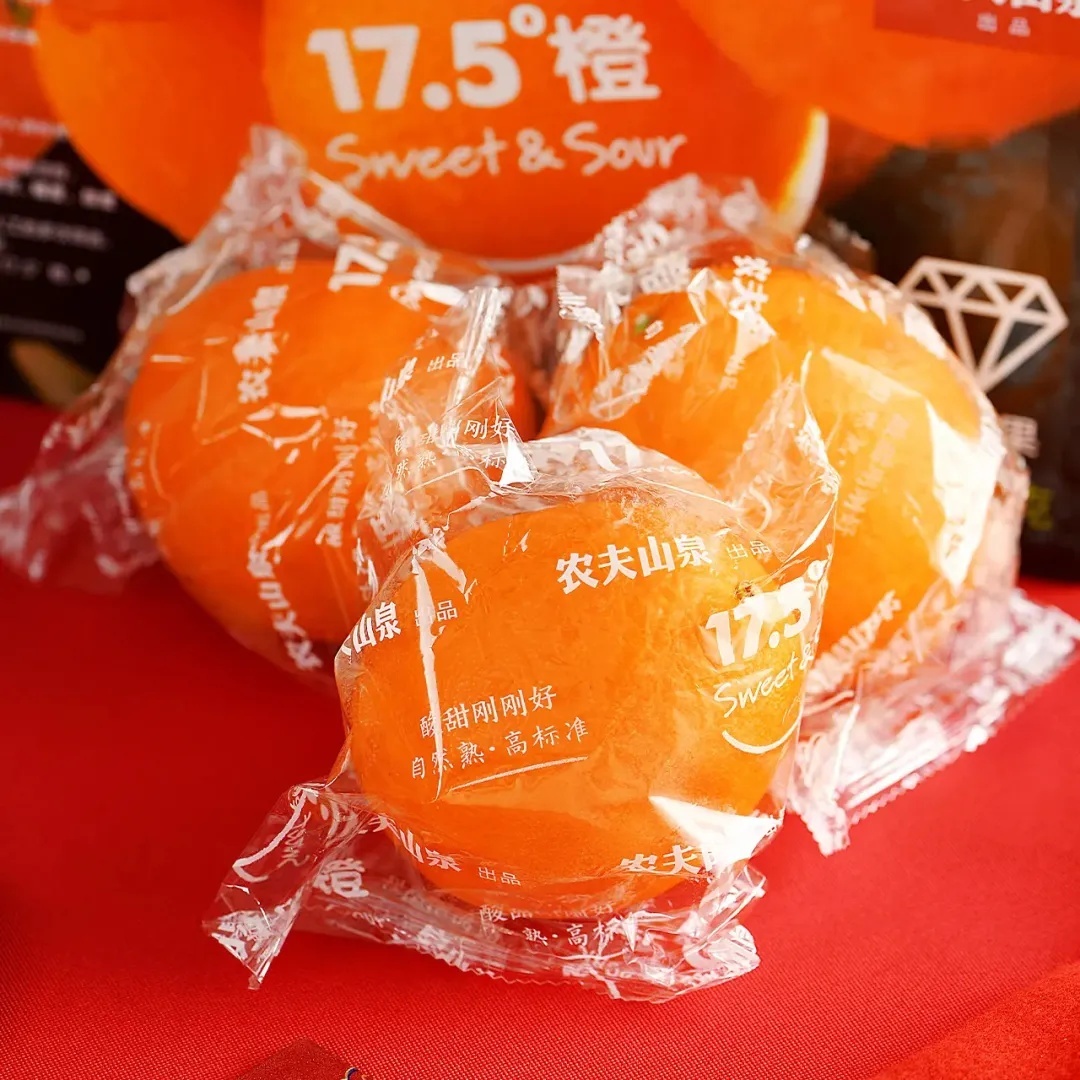
Now, Nongfu is developing agricultural products like oranges and rice, aligning with Zhong’s natural/healthy ethos, though these lines remain loss-making.


Overall, Nongfu Spring is a strategically steadfast company with clear domestic advantages. Barring black swans, its certainty is high—a key reason for its premium valuation (alongside concentrated founder ownership).


Currently, its valuation is reasonable, pricing in both short-term discounts and long-term growth. A drop below 20x P/E would be enticing—on September 16th, its all-time low of HKD 23.55 implied a 20x P/E.

For now, I’ll monitor Nongfu’s quarterly performance. Timing matters, so let’s wait and see. $NONGFU SPRING(09633.HK)

The copyright of this article belongs to the original author/organization.

The views expressed herein are solely those of the author and do not reflect the stance of the platform. The content is intended for investment reference purposes only and shall not be considered as investment advice. Please contact us if you have any questions or suggestions regarding the content services provided by the platform.