Southeast Asian auto market | Singapore and Malaysia in October: BYD's emerging rise, XPeng expands

Produced by ZhiNeng Tech
October: A Review of the Automotive Markets in Malaysia and Singapore
● In Malaysia,Perodua continues to consolidate its market position, while Proton and Toyota show signs of decline. Emerging brands like Jaecoo and BYD are gaining momentum.
● In Singapore,the market is growing rapidly overall, with BYD's share rising significantly, even becoming the second-best-selling brand of the year. An in-depth analysis of brand shares, model performance, and new players in these markets reveals that regional markets are undergoing a new wave of structural changes.
01
Brand Performance in Malaysia and Singapore:
Market Dynamics and Trends
● Malaysia Market Data: Perodua Dominates, New Players Emerge
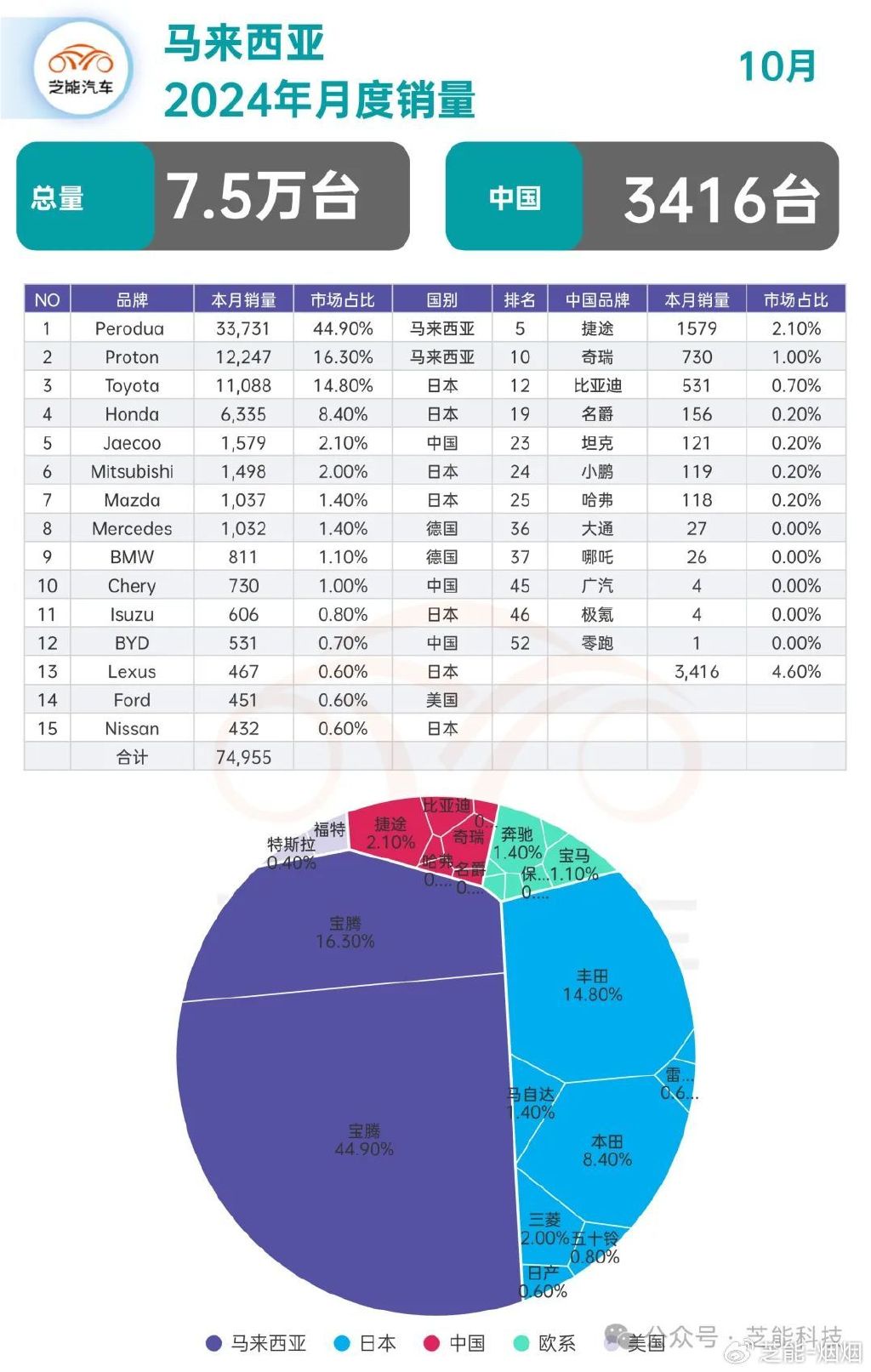
In October, Malaysia registered a total of 75,044 new light vehicles, showing a clear rebound month-on-month.
◎ Perodua: Market share rebounded from 38.8% in September to 44.9%, remaining the market leader despite a slight drop from August.
◎ Proton: Dropped to 16.3%, showing significant pressure, ranking second.
◎ Toyota: With a 14.8% share, it continues to rank third, but the gap with competitors is widening.
◎ Honda: Fell to 8.4%, showing a downward trend.
Among emerging brands:
◎ Jetour stabilized at No. 5 with a 2.1% share, performing well.
◎ Chery dropped to No. 10.
◎ BYD rose two spots to No. 12.
◎ MG and XPeng surged to No. 19 and No. 24, respectively.
◎ Haval also entered the top 25 at No. 25.
● Singapore Market Data: Rapid Growth, BYD Shines
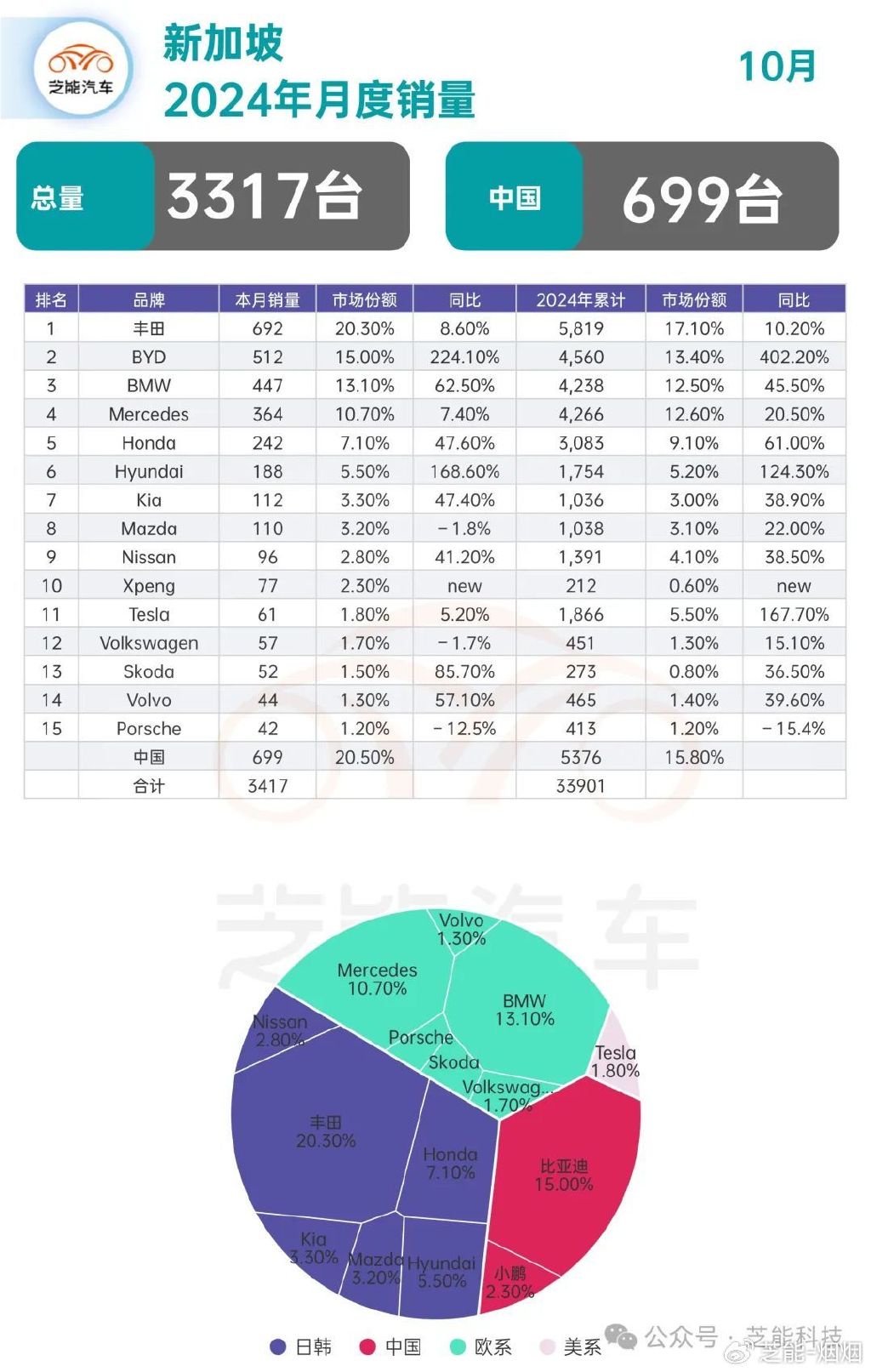
Singapore's market, though small, saw significant growth. In October, new car sales reached 3,407 units, up 44.9% year-on-year, with cumulative sales hitting 33,974 units, up 48.3% year-on-year.
◎ Toyota: Despite a modest 8.6% year-on-year growth, it leads with a 20.3% market share.
◎ BYD: Particularly impressive, with a 224.1% year-on-year growth, securing second place with a 15% share.
◎ BMW: Grew 62.5% year-on-year, rising to fifth place, surpassing Mercedes-Benz(+7.4%).
◎ Hyundai: Surged 168.6% year-on-year, ranking sixth.
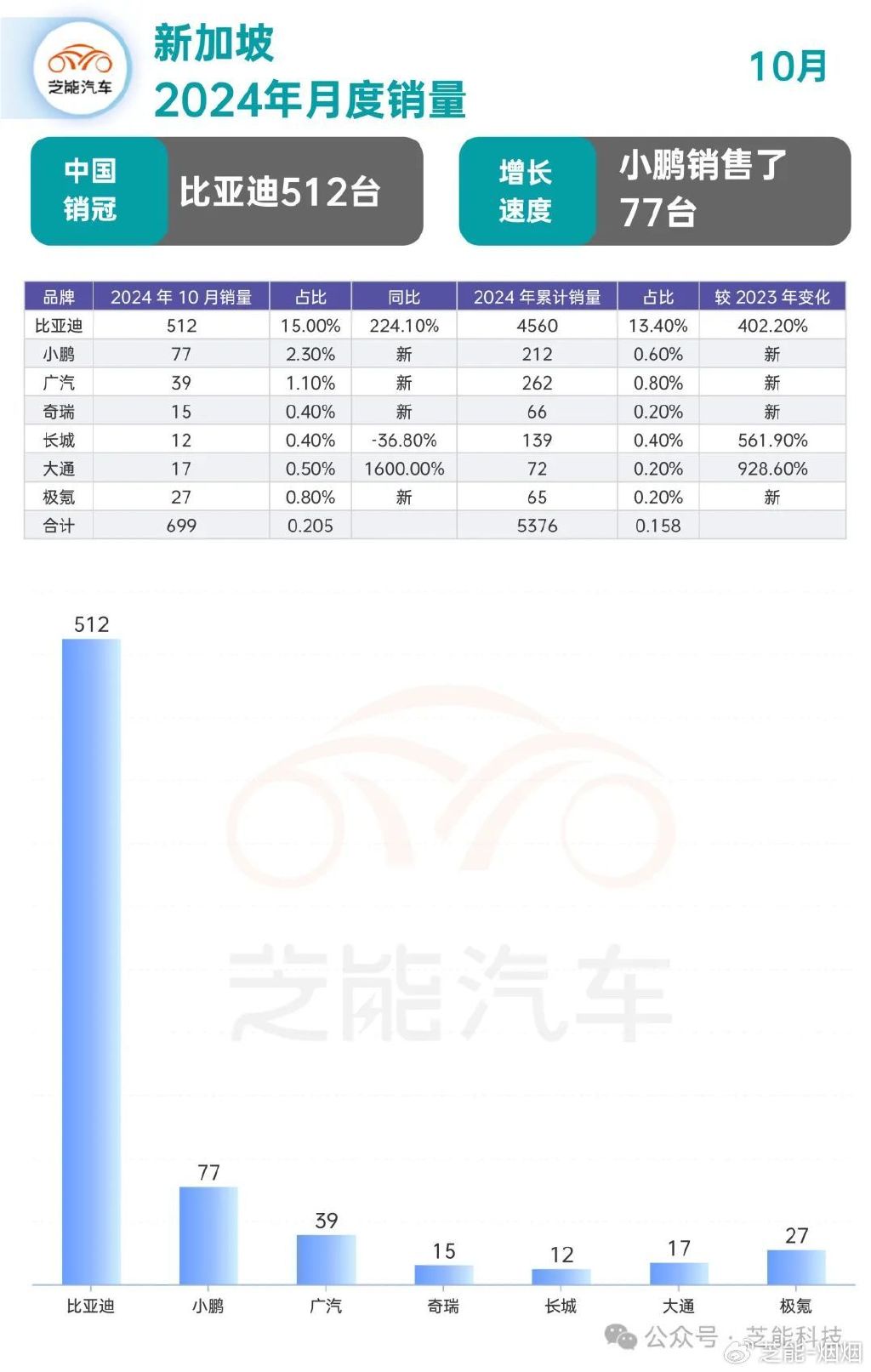
◎ XPeng: Entered the market just three months ago and made its debut in the top 10 with a 2.3% share in October.
02
Core Model Analysis:
Traditional Best-Sellers and New Players
● Malaysia Model Rankings:Perodua dominates the Malaysian market, with its product line being the highlight.
◎ Perodua Bezza: Continues to lead as the market's top choice.
◎ Perodua Axia, Myvi, Alza, Ativa: Occupy four of the top five spots, showcasing Perodua's deep understanding of market demand.
◎ Proton Saga: Dropped to fourth place but remains Proton's core pillar.
◎ Toyota Vios and Hilux: As representatives of international brands, they maintain steady positions.
◎ Jaecoo J7: Performed well at No. 11, setting an example for emerging brands entering the market.
Driven by the new energy trend, Singapore's model rankings lean more toward electric vehicles and luxury brands.
◎ BYD: With its sustained efforts in Singapore, it has become a mainstay in the new energy market, firmly holding second place in sales.
◎ Toyota: Facing pressure from new energy, its classic models remain competitive.
◎ BMW and Hyundai: Strong growth in new energy models has boosted sales, with Hyundai's IONIQ series being particularly popular.
● Key Takeaways from October Data:
◎ In Malaysia, Perodua and Proton have solidified the dominance of local brands, but international brands like Toyota and Honda are gradually losing market share.
◎ In Singapore, Toyota remains strong, but the rise of new energy brands poses significant pressure. The breakthroughs of BYD, XPeng, and ZEEKR in Singapore signal the accelerated arrival of the new energy era.
This trend may spread across Southeast Asia in the coming years. The success of Jetour in Malaysia and XPeng in Singapore demonstrates that emerging brands can quickly establish themselves even in markets dominated by traditional players, provided they meet user needs.
Summary
Southeast Asia's automotive market is entering a rapid transformation phase. How to respond to the impact of new energy and emerging brands will be the core challenge for future development. For emerging brands, sustained product innovation and market promotion will determine their long-term success.
—ZhiNeng Auto
The copyright of this article belongs to the original author/organization.
The views expressed herein are solely those of the author and do not reflect the stance of the platform. The content is intended for investment reference purposes only and shall not be considered as investment advice. Please contact us if you have any questions or suggestions regarding the content services provided by the platform.