


Maikeaote IPO: Nearly 18 years since its establishment, yet commercialization has not started. When will the "world's first" R&D marathon end?

After completing the D-round financing of over 200 million yuan, MicuRx has also launched an assault on the Hong Kong Stock Exchange. The company has now submitted its prospectus, aiming for a listing on the Hong Kong Main Board.
MicuRx, fully named Shaanxi MicuRx Pharmaceutical Technology Co., Ltd., was established in 2007. It is a platform-based biotechnology company dedicated to accelerating the innovation and development of next-generation bispecific/multispecific peptide drugs globally.
In terms of product development, the company has always advocated "not following incremental innovation," hoping to establish a unique competitive advantage. However, the difficulty is evident—after nearly 18 years of operation, none of its products have achieved commercialization.
So, what is MicuRx's competitiveness? Has it chosen the right path?
At the Forefront of Innovation: MicuRx's FIC Ambition
What are peptide drugs?
According to MicuRx's prospectus, peptide drugs are the product of accelerated innovation in the pharmaceutical field. These drugs consist of amino acids in specific sequences, with molecular weights typically ranging from 500 to 5,000 Daltons. They can act as agonists (mimetics) or antagonists of endogenous peptides or proteins, exerting therapeutic effects through high-affinity and high-specificity binding to biological targets while significantly reducing off-target toxicity.
Currently, the clinical applications of peptide drugs have expanded from endocrinology and metabolism to cardiovascular diseases, oncology, immunomodulation, and other fields. Well-known GLP-1 drugs fall into this category, not only precise blood sugar regulation but also multiple systemic effects such as weight loss and cardiovascular protection.
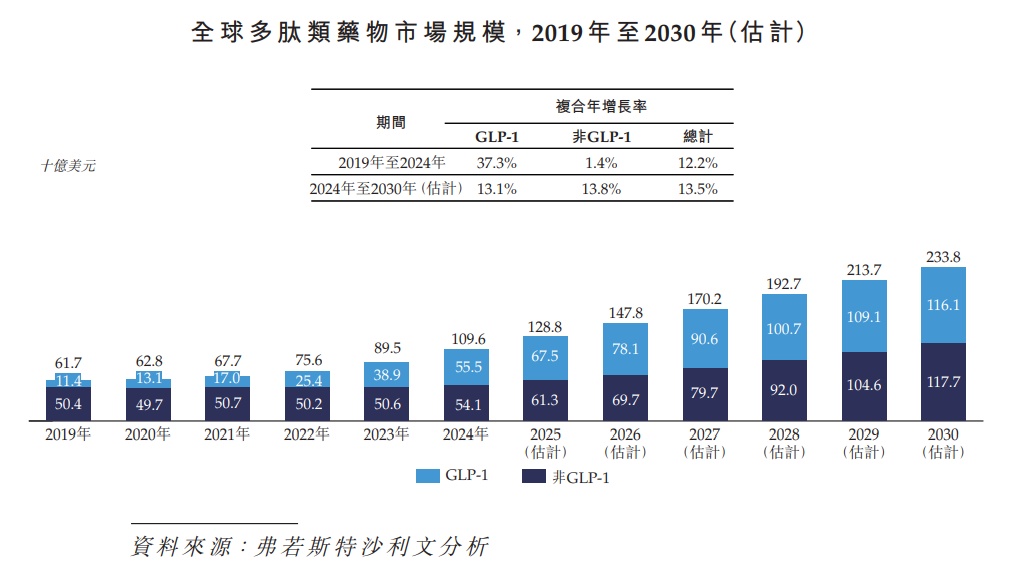
Moreover, in recent years, the market size of peptide drugs has continued to grow, increasing from $61.7 billion in 2019 to $109.6 billion in 2024. It is estimated to further rise to $233.8 billion by 2030, with a compound annual growth rate of 13.5%.
It is not hard to see that MicuRx is at the forefront of innovation and is overcoming product development barriers through its technology platforms. The prospectus shows that MicuRx has established a synergistic innovation-driven drug discovery system supported by four core technology platforms: bispecific/multispecific peptides and peptide-based macromolecular technology, computer-aided peptide design, oral peptide delivery, and druggability evaluation. These platforms collectively cover the entire R&D process from basic research, drug discovery, and drug development to new drug application submissions, serving as the foundation to drive the efficient development of the company's differentiated peptide pipeline.
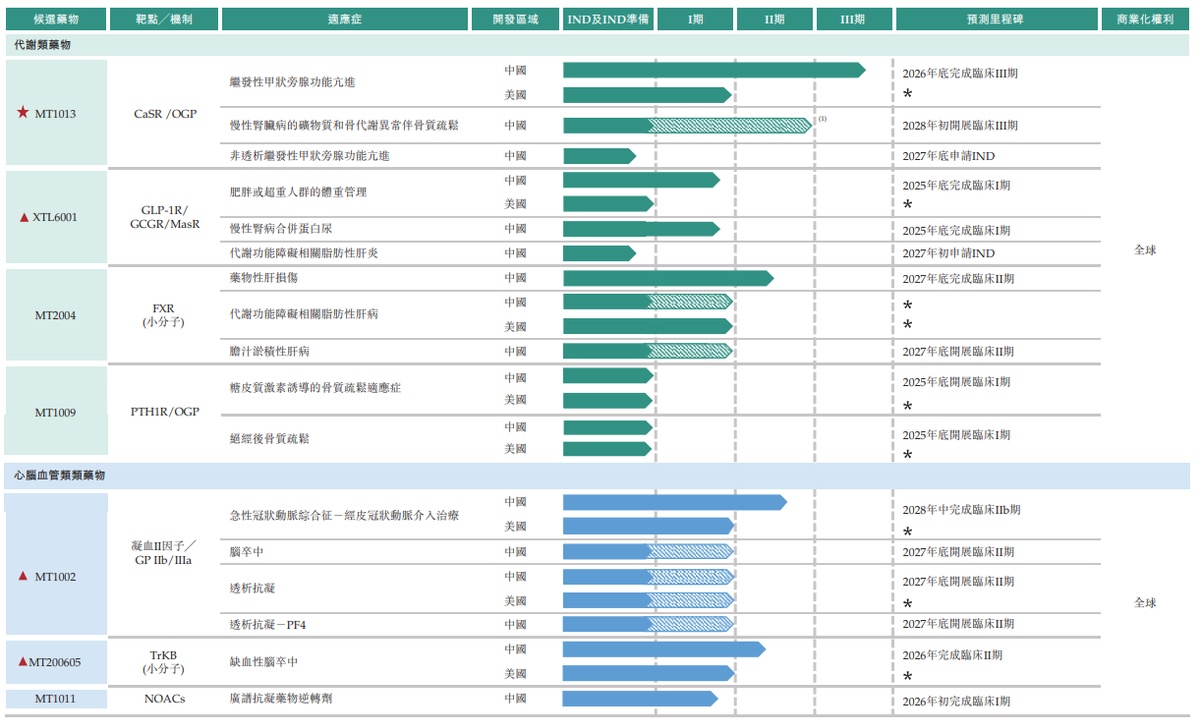
Therefore, MicuRx's current product portfolio is quite diverse, including several First-in-class (FIC) candidates.
For example, the core product MT1013 is the world's first dual-target peptide agonist for secondary hyperparathyroidism (SHPT), with potential applications in chronic kidney disease-mineral and bone disorder (CKD-MBD) with osteoporosis and non-dialysis SHPT.
The key product XTL6001 is the world's first and only GLP-1R/GCGR/MasR triple-target peptide agonist approved for clinical trials in both China and the U.S., representing a global first in the GLP-1 drug class. It has potential applications in chronic weight management for obese or overweight individuals, as well as treating chronic kidney disease with proteinuria and metabolic dysfunction-associated steatohepatitis.
Another key product, MT1002, is the world's first dual-target peptide antagonist for coagulation factor II and GPIIb/IIIa, addressing clinical needs in anticoagulation and antithrombosis, including ACS-PCI (percutaneous coronary intervention, a primary treatment for coronary heart disease), stroke, renal dialysis anticoagulation, and HD-PF4 (heparin-dependent platelet factor 4, an immune-mediated mechanism involved in HIT pathogenesis).
Under the premise of "embracing innovation," MicuRx does not shy away from its ambitions. The prospectus mentions that being a "globally leading innovative peptide drug company and a market leader in China's peptide drug industry" is one of its competitive advantages. But how substantial is this claim?
Commercialization Still Far Away: Stocking Up on 'Ammunition' First
In terms of product portfolio, MicuRx has clearly identified vast application prospects, focusing on high-demand therapeutic areas such as metabolic and cardiovascular diseases.
The prospectus notes that metabolic diseases are among the most significant global healthcare challenges. From 2019 to 2024, the number of chronic kidney disease patients worldwide increased from 905.2 million to 1.0655 billion, with projections of 1.2897 billion by 2030 and 1.5051 billion by 2035. Additionally, about 1.2 million people die directly from chronic kidney disease annually, with mortality rates 3 to 5 times higher in elderly patients (65+).
The demand for weight loss is even more evident. According to Frost & Sullivan, the global overweight and obese population grew from 2.1977 billion in 2019 to 2.6125 billion in 2024, with estimates of 3.0706 billion by 2030 and 3.4772 billion by 2035.
In this context, MicuRx's pursuit of global first-in-class status indeed positions it to stand out and capture significant market growth. However, many pharmaceutical companies have also recognized the potential of peptide drugs.
As of the latest practicable date, the prospectus shows that globally, there are 5 CaSR (calcium-sensing receptor) agonist candidates for SHPT, 13 triple-target GLP1R peptide candidates for overweight and obesity, and 9 PCI (percutaneous coronary intervention) candidates in clinical stages. While MicuRx's products have taken a differentiated path, commercialization will still take time.
For example, MT1013, a CaSR agonist, completed Phase II clinical trials for SHPT in May 2025 and has entered Phase III trials using cinacalcet as a positive control, with commercialization expected in early 2028.
Additionally, the competitive barriers for peptide drugs are not only reflected in technological leadership, product scarcity, and commercialization speed but also impose high requirements on large-scale production and cost control for new entrants.
MicuRx's prospectus states, "Scaling peptide production from gram-level in labs to hundreds of kilograms or even tons commercially involves an extremely complex CMC (Chemistry, Manufacturing, and Controls) process. Large-scale solid-phase or liquid-phase synthesis and high-performance liquid chromatography (HPLC) purification are recognized technical bottlenecks, with stringent requirements for impurity profiling. Core technical talent and high-end equipment (e.g., large-scale purification media) remain scarce resources. More importantly, due to expensive starting materials and numerous process steps, the cost of goods sold (COGS) for peptides is much higher than for small-molecule drugs."
At this stage, as all products are investigational, MicuRx has not established any commercial-scale production facilities, outsourcing API and drug production to reputable third-party CDMOs.
In the long run, supply chain dominance may become a key focus of industry competition. Whether in product development or supply chain construction, MicuRx likely faces tough battles ahead.
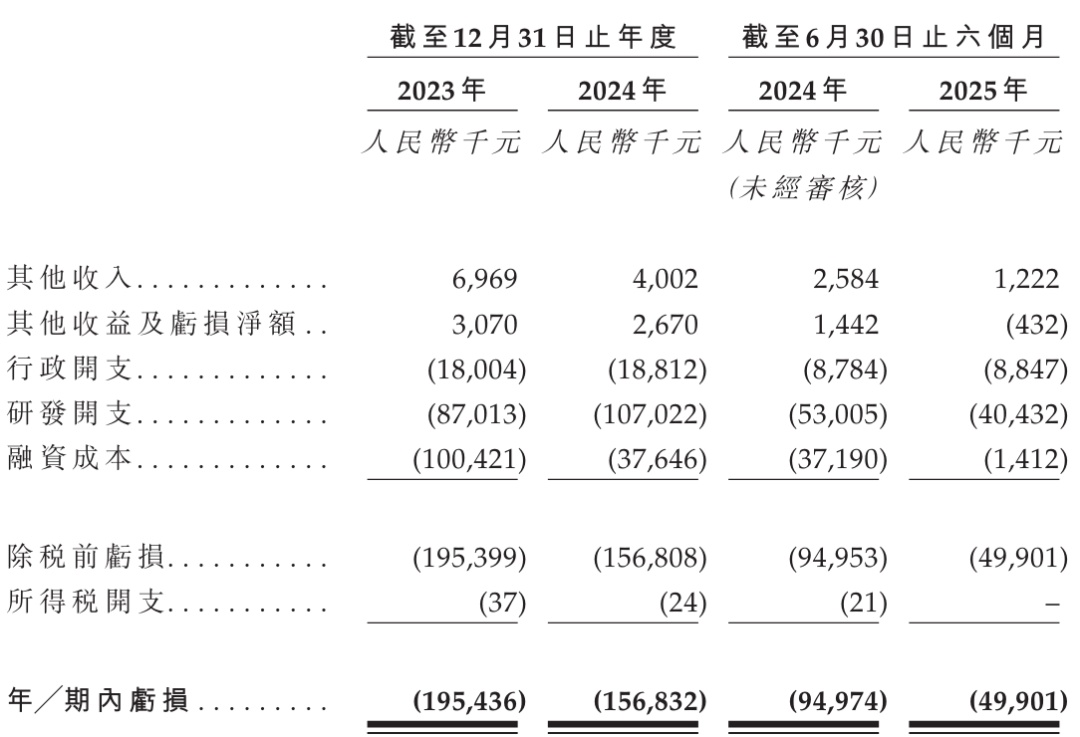
Meanwhile, the company is also facing financial challenges. The prospectus shows that MicuRx reported losses of 195 million yuan, 157 million yuan, and 49.9 million yuan in 2023, 2024, and the first half of 2025, respectively. As of June 30, 2025, the company held only 107 million yuan in cash and cash equivalents.
For innovative pharmaceutical companies, financing remains an essential path forward.
Source: Pharmaceutical Research Society
The copyright of this article belongs to the original author/organization.
The views expressed herein are solely those of the author and do not reflect the stance of the platform. The content is intended for investment reference purposes only and shall not be considered as investment advice. Please contact us if you have any questions or suggestions regarding the content services provided by the platform.
