


[HK IPO Subscription] Analysis of Minglue Tech's subscription and IPO analysis with Cambridge Technology and Bama Tea IPO analysis

Company Name: $MININGLAMP-W(02718.HK) (02718.HK, hereinafter referred to as the "Company")
Sponsor: CICC
Green Shoe: CICC
Cornerstone Investors: 44.9%
Subscription Period: October 23 - October 28
Listing Date: November 3
Main Business: Data intelligence application software provider
1. Sponsor, Green Shoe, Cornerstone Investors
CICC is the sole sponsor and also provides the green shoe.
The cornerstone investors account for 44.9%, which is not a low proportion, with a total of 7 investors.
The most notable is Tencent, which accounts for 5.3% of the cornerstone investors. Tencent is also the current largest shareholder of the company, with three subsidiaries involved since Series C (foreshadowing), holding 27% of the shares. In comparison, the company's actual controller, Wu Minghui, holds only 10.57% of the shares but has 54% of the voting rights.
There are two other institutional investors, Jingtai Holdings and GFH Financial Group, while the rest are individual investors or investment companies under individual investors.
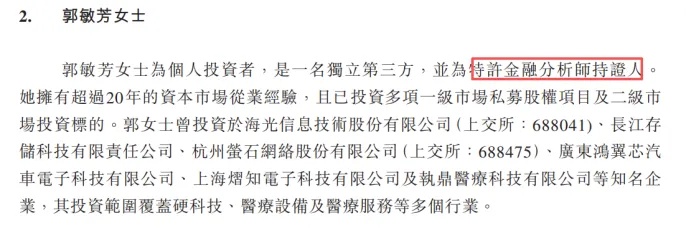
Among them, the largest cornerstone investor, Guo Minfang, accounts for a significant 15.3% and is also a CFA, haha.
IPO Rating: ★★★★
2. Margin Situation
Too lazy to screenshot, but on the first day of the IPO, everyone's money was still locked in the "Four Little Dragons," so the company's margin was understandably low, only slightly over 10 times.
Mechanism B, 10%, 18,000 lots
IPO Rating: ★★★
3. Valuation Review and Fundamental Analysis
The company's adjusted net profit decreased from a loss of RMB 1.1 billion in 2022 to a loss of RMB 45.11 million in 2024, and turned a profit of RMB 24.87 million in the first half of 2025.
On the surface, the company significantly reduced losses and turned a profit, but in reality, business development has stagnated. From 2022 to the first half of this year, the company's revenue fluctuated between RMB 1.2-1.5 billion, and gross margins fluctuated between 50%-52%, with no significant growth.
The main reason for the turnaround was the reduction in three expenses. In 2022, the three expenses accounted for 127.1% of revenue, while in the first half of 2025, they accounted for 53.2%. The company achieved profitability by tightening its belt. Among them, R&D expenses dropped significantly from RMB 750 million in 2022 to RMB 350 million in 2024, and continued to decline year-on-year in the first half of 2025, mainly due to the company abandoning the development of industry solutions and organizational function businesses.
Interestingly, the abandoned industry solutions business, although accounting for a small proportion (less than 10%), was the only business with continuously growing revenue, while the heavily invested organizational function business failed to commercialize, resulting in wasted money.
The company stated that after abandoning these two businesses, its strategic focus will shift to marketing intelligence and operational intelligence. Let's take a look at the development of these businesses.
First, as the only business with a gross margin above the overall gross margin, marketing intelligence has seen continuously declining revenue and a shrinking business share. Second, operational intelligence experienced a surge in 2023, with revenue nearly doubling, but scale effects failed, and gross margins decreased instead of increasing, only gradually rising after subsequent adjustments.
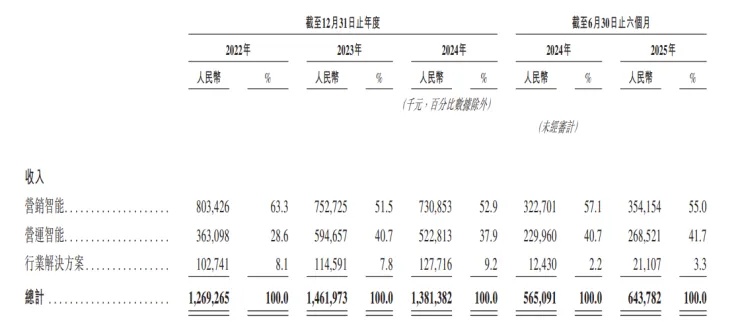
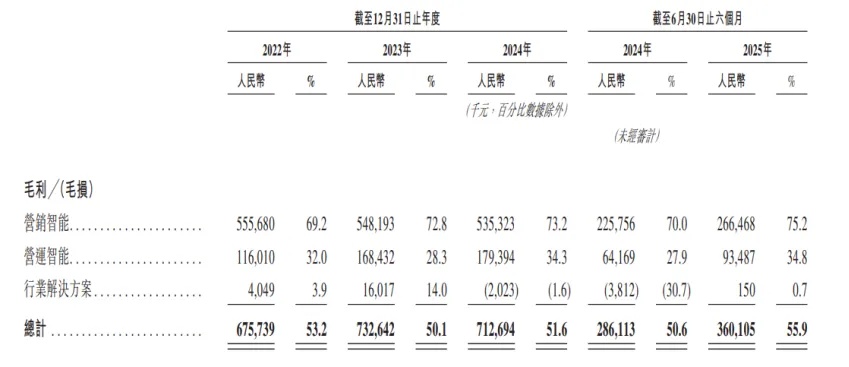
Overall, the company's revenue growth curve and business and gross margin structure do not resemble a stable, high-speed, and healthy enterprise. There are many contradictions, such as the strategic abandonment of the growing industry solutions business, the continuous shrinkage of the profit-pillar marketing intelligence business, the surge in operational intelligence revenue in 2023 accompanied by declining gross margins, and the subsequent revenue decline with rising gross margins, giving an overall impression of chaos.
The company itself admits to "facing fierce competition in all aspects." According to Frost & Sullivan's report, the company ranked first in the industry in 2024 with revenue of only RMB 1.3 billion, but its market share was only 3.8%, indicating a highly fragmented industry.
Additionally, the company's already stagnant performance has another questionable aspect: related-party transactions.
Based on the top five customers, we found that from 2022 to the present, the largest customer every year has been Customer F. Taking 2023 (when operational intelligence revenue surged by RMB 300 million) as an example, Customer F contributed RMB 356.6 million in revenue.
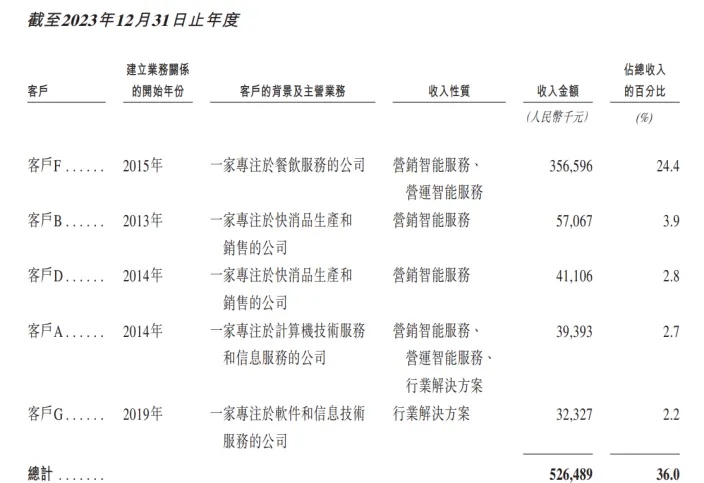
In the related-party transactions section of the prospectus, we see that a company called Huansheng is a related party of the company, contributing RMB 356.6 million in revenue in 2023.
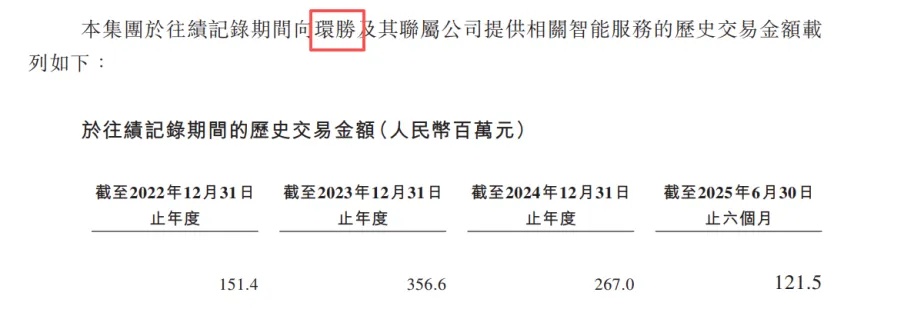
Due to space limitations, only 2023 data is listed here. If you're interested, you can check the prospectus. The revenue contributed by Customer F each year perfectly matches that of the related party Huansheng, confirming that Customer F is indeed Huansheng.
From 2022 to 2024, the company's year-on-year revenue increased by RMB 200 million and decreased by RMB 80 million, almost exactly matching the revenue changes from the related party Huansheng! In other words, excluding this related party, the company's revenue has basically shown no growth.
Was this intentional or accidental?

Although the company turned a profit in 2025, its operating cash flow remains negative, indicating a self-sustaining capability.
Generally, we focus more on adjusted net profit because it excludes income or losses unrelated to the main business, such as changes in the valuation of redeemable preferred shares and listing expenses. However, this company is interesting: if you look at adjusted net profit, the company reduced losses, but if you look at the original net profit, the company's net profit was as high as RMB 1.64 billion in 2022, but it lost RMB 200 million in the first half of 2025.
This situation arose because the company's valuation has been continuously declining, trapping a group of primary market investors (including Tencent).
In November 2020, the company completed a Series E2 financing of USD 130 million, with a valuation of approximately USD 2.92 billion. By the end of November 2023, the Series F1 financing valuation had dropped to only about USD 540 million, a decline of over 80%. (Tencent participated in the Series C financing with a pre-money valuation between USD 500 million and USD 1.6 billion.)
The most abstract part is the Series F3 financing two months later, where the valuation doubled in just two months to a staggering USD 1.67 billion! Who participated in this round? Apart from two of Tencent's three subsidiaries, there was Mine Mine International under the actual controller, Mr. Wu—all insiders. The only external institution was Jinhanwang, though it's unclear whether they were duped or had some undisclosed agreement.
Nine months later, the company filed for an IPO, stepping on its own feet to drive up its valuation. How the USD 1.67 billion valuation came about is obvious to anyone with eyes.
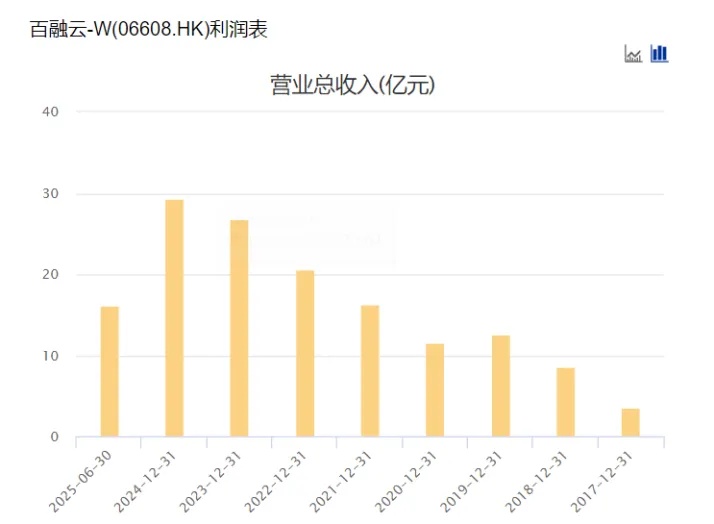
Since we're talking about valuation, let's take a closer look. The company has just turned a profit, so let's calculate the price-to-sales ratio.
The company's price-to-sales ratio is 13.9, while that of Bairong Yun is only 1.4 times, and the latter is a company with stable revenue growth and consistent profitability.
IPO Rating: ★
Conclusion:
The company relies on [missing text], but it is indeed impressive that it managed to trap the "Invincible in Nanshan" (Tencent).
The IPO is meant to unlock the trapped positions, but with "management" of market capitalization and revenue before the IPO, will there be a main force within the one-year lock-up period after listing?
It most likely falls into the category of holding your nose and subscribing.
IPO Rating: ★★~★★★
The copyright of this article belongs to the original author/organization.
The views expressed herein are solely those of the author and do not reflect the stance of the platform. The content is intended for investment reference purposes only and shall not be considered as investment advice. Please contact us if you have any questions or suggestions regarding the content services provided by the platform.
