


Salesforce: AI Agent 'Delayed', Has the SaaS Leader Become a Value Stock?
SaaS leader $Salesforce(CRM.US), announced its Q3 FY2026 financial results (ending October 31) after the U.S. stock market closed on December 4. The quarterly performance was not satisfactory, with most key indicators falling short of market expectations. The relative consolation is that leading indicators (cRPO and new orders) show a slight improvement trend on a low base. The highlight is the company's guidance for significant improvement in growth next quarter, mainly due to the consolidation impact of acquiring Informatica. Specifically:
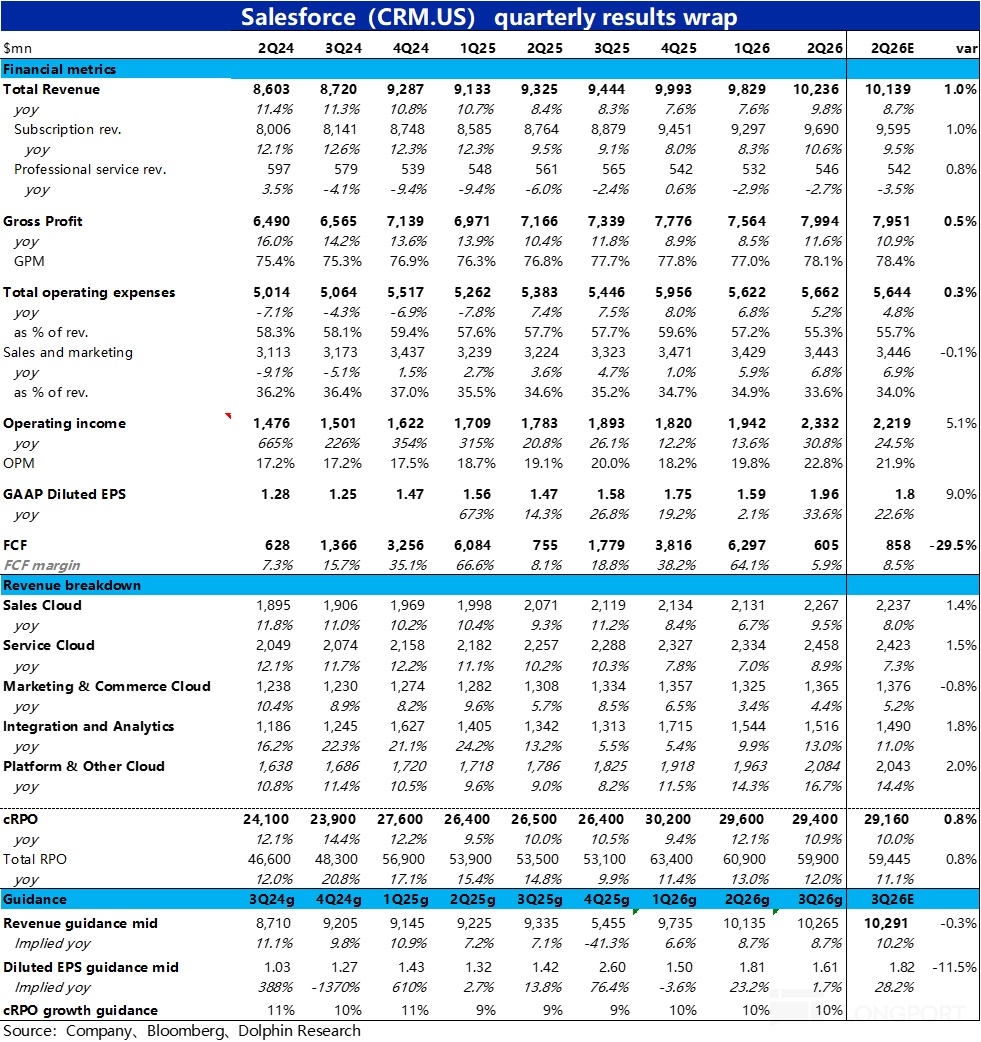
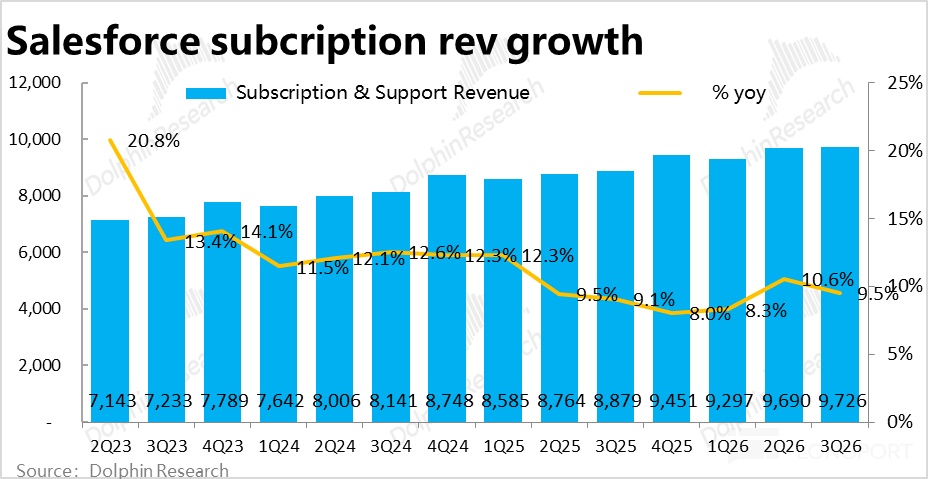
1. Overall revenue growth continues to slow, but AI business remains relatively strong: Core business—subscription revenue this quarter was approximately $9.73 billion, up 9.5% year-on-year, slowing by 1.1 percentage points compared to the previous quarter, slightly below market expectations.
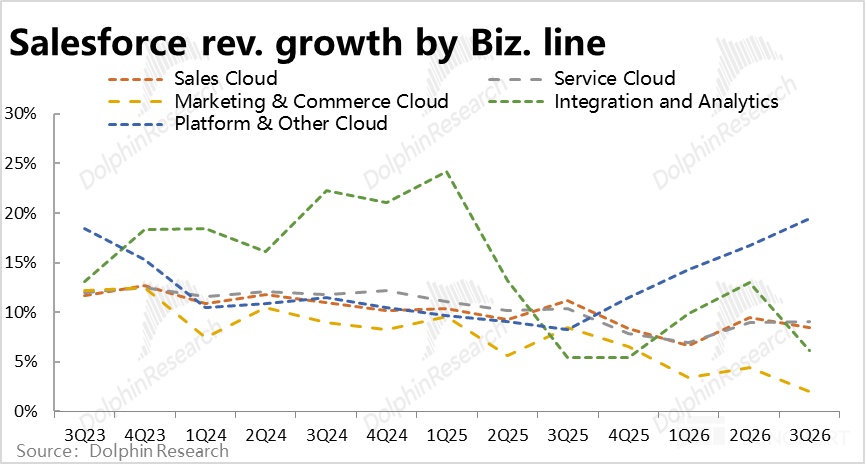
Looking at the segmented business lines, traditional business growth continues to slow, while services and platform clouds related to AI Agent perform well.
Among them, the customer service cloud, where AI Agent is most commonly applied, saw a 9% year-on-year revenue growth, with a slight increase of 0.1 percentage points quarter-on-quarter. Although there is no significant acceleration, it is considered good compared to other slowing business lines.
Meanwhile, the platform cloud, which serves as the foundation for Agentforce services, showed stronger growth, with revenue increasing by 19.5% this quarter, marking five consecutive quarters of accelerated growth (from about 8% to nearly 20%). Although there was no significant single-quarter explosion, the cumulative effect still reflects a certain role of AI Agent in driving growth.
2. Leading indicators are more resilient: Compared to the overall slowing revenue growth, leading indicators such as cRPO and new contracts show relatively more resilience.
Among them, the nominal year-on-year growth rate of cRPO (short-term unfulfilled balance) this quarter was 11.4%, accelerating by 0.5 percentage points compared to the previous quarter. The new contract amount (new billings) this quarter was $87 million, up 14% year-on-year.
However, quarter-on-quarter, this quarter's cRPO balance of $29.4 billion remained completely flat compared to the previous quarter. Similarly, this quarter's new contracts slightly decreased compared to last quarter's $89.9 million.
Therefore, the rise in cRPO and new contract growth rates is more due to the low base of the same period last year, and it cannot be considered a significant improvement. However, compared to the continued slowing revenue growth, it at least indicates some improvement next quarter.
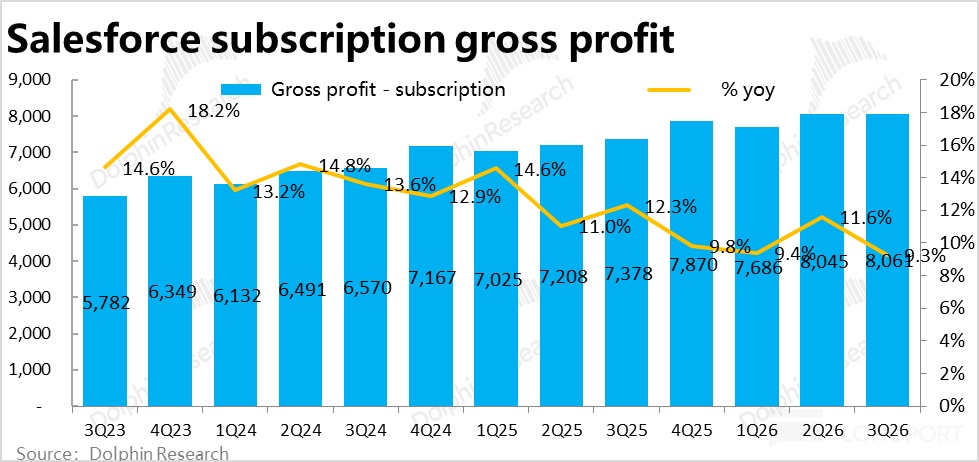
3. Under AI investment, has the trend of gross margin expansion ended? Due to the generally lower gross margins of AI business, the gross margin of subscription business this quarter was 82.9%, which has started to decline both year-on-year and quarter-on-quarter, ending the trend of continuous gross margin increase since FY21. Even though the company implemented a general price increase for its products in August, it still couldn't completely offset this impact.
Additionally, the professional services business saw a slight increase in gross loss rate to -10.7%. Both businesses' gross margins declined, but due to the structural increase in the proportion of higher-margin subscription business, the company's overall gross margin still saw a slight year-on-year increase, but it has declined quarter-on-quarter.
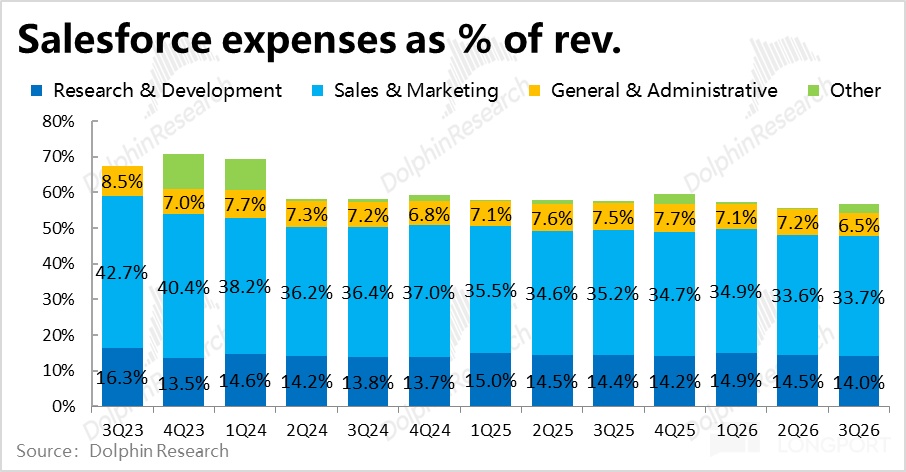
4. Cost control remains excellent: Salesforce this quarter's total operating expenses were $5.82 billion, up 6.8% year-on-year, slightly accelerating compared to the previous quarter, but slightly below market expectations. Among them, marketing and R&D expenses only grew by single-digit percentages year-on-year, and management expenses even declined by about 6% year-on-year. It is evident that the company's expense input did not significantly increase due to the development of new businesses like Agentforce.
Actually, looking at the above three expenses alone, they only grew by 3.1% year-on-year, as $260 million in restructuring expenses were confirmed (likely due to the acquisition of Informatica), weakening the contribution of cost control.
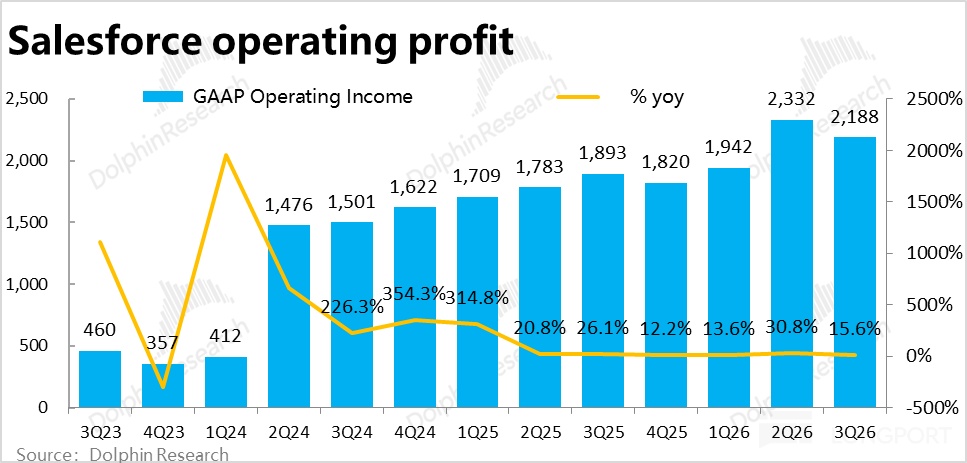
5. Profit growth remains good, but there are signs of weakening margins: Due to the year-on-year increase in gross margin and effective cost control, this quarter's GAAP operating profit margin reached 21.3%, still increasing by 1.3 percentage points year-on-year. Operating profit growth this quarter was still 15.6% year-on-year, and profit growth is still considered good.
However, in terms of marginal trends, as gross margin starts to decline quarter-on-quarter, the increase in operating profit margin has significantly narrowed from 4 percentage points last quarter, and there is still a weakening trend in marginal terms, with actual profit slightly below sell-side expectations.
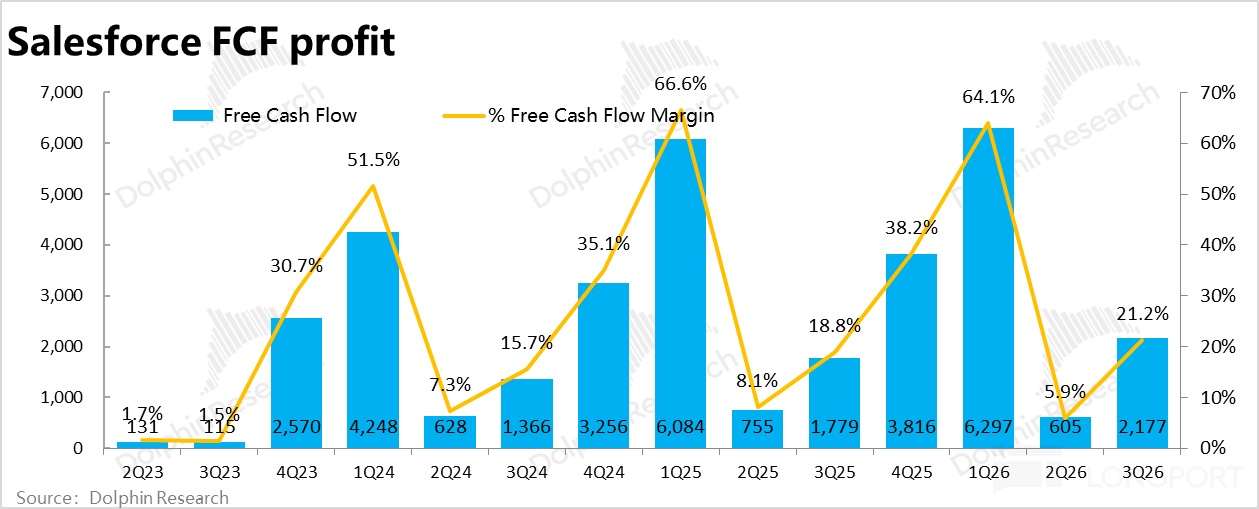
Excluding non-cash expenses (such as stock-based compensation, amortization and depreciation due to acquisitions), the company focuses more on free cash flow, which was $2.18 billion this quarter, roughly the same as operating profit, with a cash flow profit margin of 21%, also slightly below market expectations of 22%.
6. Shareholder returns rise as expected: As promised at the previous Dreamforce conference, shareholder returns in the second half of the fiscal year will significantly increase. This quarter, the company returned a total of $4.2 billion to shareholders through buybacks and dividends, equivalent to about 1.8% of the company's current market value, which is indeed quite substantial.
Dolphin Research's View:
As seen from the above, Salesforce's performance this quarter is clearly not good. It generally fell short of market expectations (except for cost control). In terms of trends, revenue growth continues to slow, and gross margin is also starting to weaken marginally. Although cost control remains excellent, maintaining profit growth is still considered good, but the decline in gross margin due to AI investment is narrowing the lead of profit growth over revenue growth.
Looking at this quarter's performance alone, it can be said that it reinforces the market's perception of the company's biggest problem—growth fatigue, with no acceleration trend in sight.
It can only be said that fortunately, the performance reflected this quarter is already past, and future prospects and outlook are always more important. Although leading indicators like cPRO and new order contracts are not very strong, they at least indicate that future revenue growth will stabilize and rebound. Structurally, although traditional business is "getting worse," platform cloud and service cloud related to AI do indeed perform relatively better, maintaining the vision that AI Agent may accelerate the company's growth again.
Specifically, looking at future guidance and outlook:
1) In terms of short-term outlook, the company guides next quarter's revenue growth to increase to 11%~12%, cPRO growth to increase to 15%, both showing significant acceleration compared to this quarter, indeed suggesting a bottoming rebound in growth.
However, looking more specifically, the improvement in growth is mainly due to the consolidation impact of acquiring Informatica, contributing 3 percentage points and 4 percentage points to revenue and cPRO growth respectively. Excluding this impact, revenue and cPRO have not accelerated much compared to this quarter, so the guidance implicitly indicates that the growth of the company's original business will stabilize, not slow down further, but there is no substantial acceleration seen yet.
The real highlight in the guidance is that the company raised its full-year free cash flow growth expectation for FY26 to 13%~14% year-on-year. Calculating based on the guidance midpoint, it means next quarter's free cash flow could exceed $5 billion, growing by 32% year-on-year, significantly higher than this quarter's growth and above the current market expectation of $4.8 billion. (There may also be consolidation impact, but the company has not disclosed the extent of the impact).
Overall, next quarter's growth can roughly stabilize, while profit will see significant improvement.
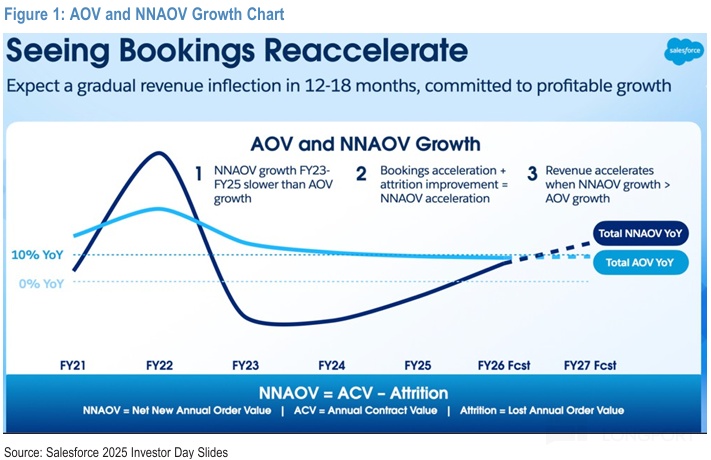
2) Additionally, at the Dreamforce conference in October, the company also provided two key long-term outlooks. Firstly, as seen in the chart below, the company disclosed NNAOV (Net-new Annual Order Value, referring to the net contract amount added in the year after excluding lost old contracts), which has gradually improved after negative growth in FY23~25 and currently shows a trend of breaking through 10% growth. As a leading indicator, the company expects this to translate into revenue growth acceleration within the next 12~18 months.
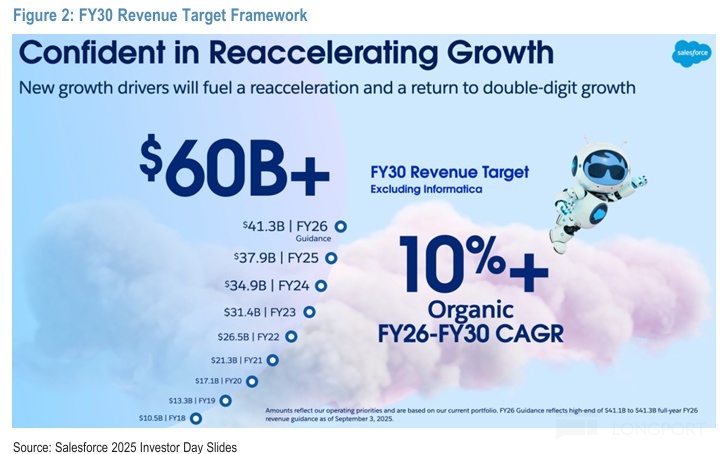
From a longer-term perspective, the company has set a target of achieving $60 billion in revenue by FY30 (excluding the impact of consolidating Informatica), implying a compound annual growth rate of around 10% for FY26~30. Although there is no significant acceleration compared to the current rate, it at least counters market concerns that the company's future growth will continue to slow, ultimately possibly only slightly higher than the mid-single-digit GDP growth rate.
At the same time, the company also expects the adjusted operating profit margin to reach around 40% by FY30, an increase of about 5 percentage points compared to the expected level in FY26. According to this guidance, the corresponding GAAP post-tax operating profit for FY30 would be around $18 billion. If given a mature steady-state 15x PE, the corresponding market value would be approximately $270 billion, about 20% higher than the current market value. From this perspective, the space is not large.
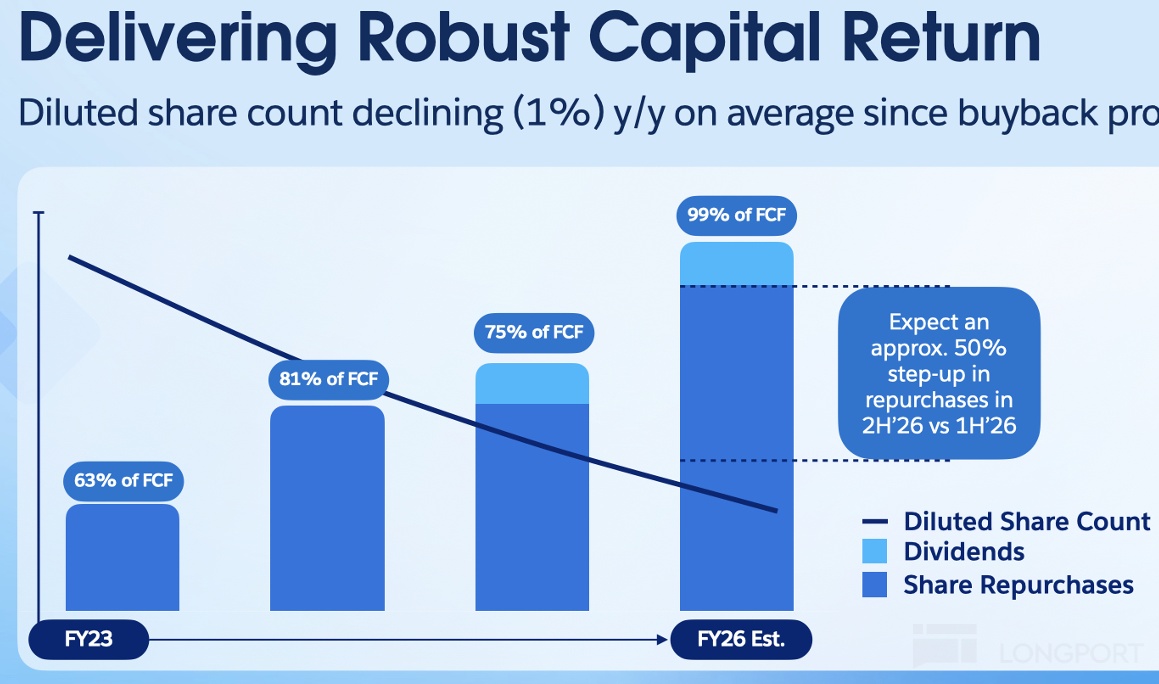
Additionally, as mentioned earlier, the company announced that in the second half of the fiscal year, it will increase shareholder returns, planning to return almost all free cash flow to shareholders through buybacks or dividends in FY26. Based on a total buyback amount of approximately $14 billion for FY26, it corresponds to about 6.3% of the current market value.
3) Finally, in terms of valuation and investment judgment, from a long-term perspective based on the above FY30 guidance, it implies the company's share price could reach over $280, but given the time span of FY26~30, a 20% return over 4 years is clearly not high enough. It largely depends on whether the company can continue to maintain high direct shareholder returns after FY26. If it can achieve an annual shareholder return of about 5%, a total return of 40% over 4 years would still be a mature value stock.
And the upward or downward fluctuations mainly depend on the actual situation of AI Agent and the company's revenue acceleration. On one hand, although the company has given a vision of maintaining 10% revenue growth over the next 4 years, the market has not yet seen enough evidence/signals to confirm and "buy-in" that future growth will significantly accelerate.
On the other hand, the above performance guidance and valuation have not fully considered the explosive growth demand and revenue that AI Agent may bring. Therefore, Dolphin Research's overall view is that before the AI Agent story materializes, Salesforce is basically a value stock with support on the downside but limited upside, mainly looking at shareholder returns. The real upward breakthrough in stock price still depends on the progress of AI Agent. Currently, it is still in a state of steady advancement, bringing some incremental growth, but there are no signs of explosion yet, so we can only maintain expectations.
Below is a detailed interpretation of this quarter's financial report:
I. Brief Introduction to Salesforce's Business & Revenue
Salesforce is the pioneer of the SaaS concept, or software-as-a-service, in the CRM industry (Client Relationship Management) in the U.S. and globally. The biggest feature of this model is the adoption of cloud services instead of localized deployment; subscription-based payment instead of buyout payment.
Therefore, Salesforce's business and revenue structure mainly consist of two categories: ① Over 95% of revenue is subscription-based income from various types of SaaS services; ② The remaining approximately 5% is composed of expert service income such as project consulting and product training.
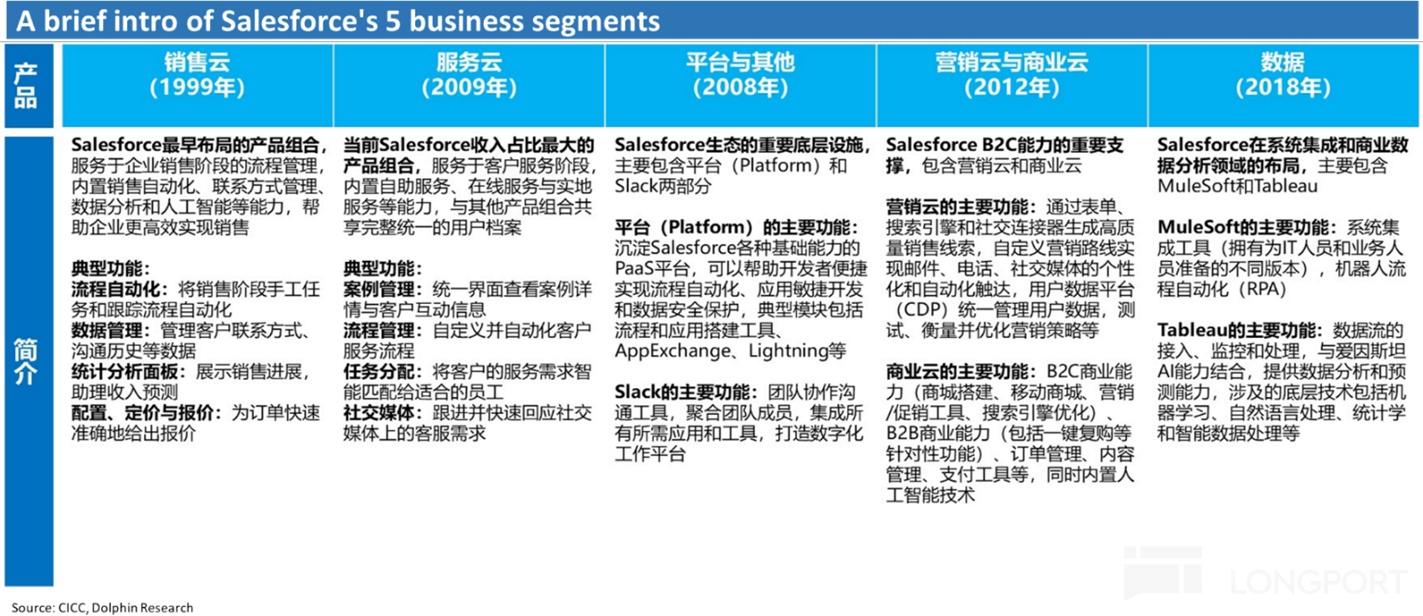
Looking further, the dominant subscription-based income is composed of five major types of SaaS services, and the revenue scale of each major segment is roughly equivalent, including:
① Sales Cloud: The core CRM business and the company's earliest business, mainly various process management tools for the enterprise sales stage, such as customer contact, quotation, and signing functions.
② Service Cloud: Another core business of the company, mainly including various functions related to customer service, such as customer information management and online customer service.
③ Marketing & Commerce Cloud: Marketing Cloud refers to the systematic marketing functions through various channels such as search, social media, and email; Commerce Cloud mainly refers to the virtual mall construction, order management, payment, and other functions required for e-commerce.
④ Integration & Analytics: Salesforce's internal database services and business analysis tools, mainly composed of MuleSoft and Tableau.
⑤ Platform & others: The infrastructure and services on which Salesforce's other SaaS services rely, similar to PaaS (Platform-as-a-service). It also includes team collaboration SaaS services like Slack, similar to Microsoft Teams.
II. Traditional Business Continues to Weaken, Agentforce-related Business Performs Well
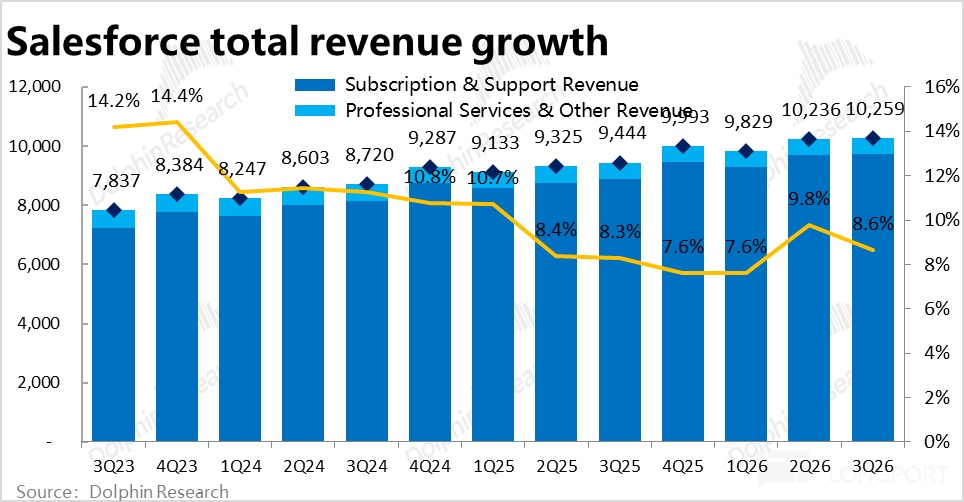
On the growth side, this quarter's Salesforce's core business—subscription revenue was approximately $9.73 billion, up 9.5% year-on-year, slowing by 1.1 percentage points compared to the previous quarter, slightly below market expectations. From the rearview mirror perspective, growth remains quite weak, not only showing no signs of acceleration but further slowing.
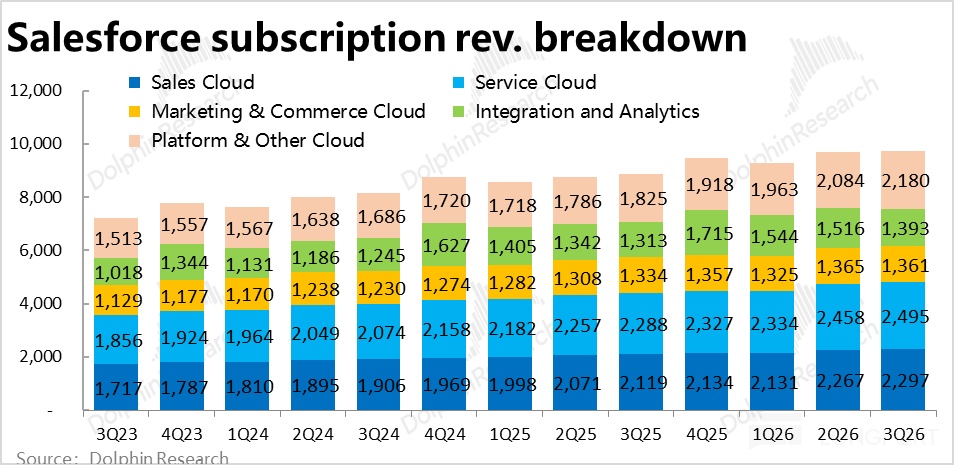
However, looking at the segmented business lines, traditional business growth continues to slow, while services and platform clouds related to AI Agent perform well:
1) In traditional business, the growth of Commerce & Marketing Cloud remains the weakest, with only a 2% year-on-year increase, slowing by 2 percentage points. The most fundamental Sales Cloud grew by 8.4%, also slowing by about 1 percentage point. The growth of analytics business (Integration & Analytics) was 6%, slowing significantly.
3) Meanwhile, the customer service cloud, where AI Agent is most widely applied, and the platform cloud, which serves as the foundation for all Agentforce services, performed well. Among them, Service Cloud grew by 9%, with a slight increase of 0.1 percentage points quarter-on-quarter, although not strong, it is considered good compared to the slowdown in other business lines.
The performance of Platform Cloud was even stronger, with revenue growth of 19.5% this quarter, marking five consecutive quarters of acceleration (from about 8% to nearly 20%). Although the acceleration in revenue for each single quarter is not very high (not explosive), the cumulative acceleration still reflects a certain role of AI Agent in driving growth.
This quarter's professional services revenue was approximately $530 million, with the year-on-year decline expanding to 5.7%, continuing to weaken. Overall, Salesforce's total revenue was approximately $10.26 billion, up 8.6% year-on-year, with a growth rate of 8% after excluding favorable exchange rate effects, continuing to slow and slightly below market expectations.
II. Compared to Weakening Revenue, Leading Indicators are Relatively More Resilient
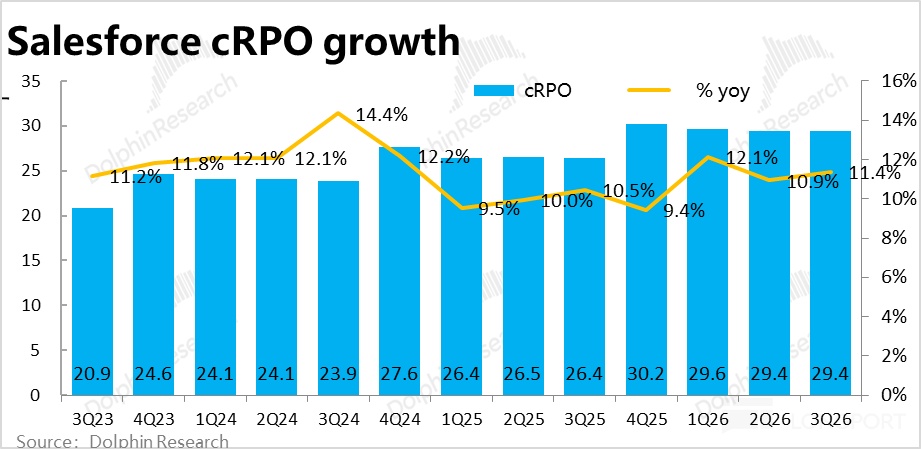
Compared to the overall weakening revenue this quarter, the growth of leading indicators reflecting future growth prospects is relatively better, but still not strong. Among them, the nominal year-on-year growth rate of cRPO (short-term unfulfilled balance) this quarter was 11.4%, accelerating by 0.5 percentage points compared to the previous quarter. However, the cRPO balance of $29.4 billion is completely flat compared to the previous quarter.
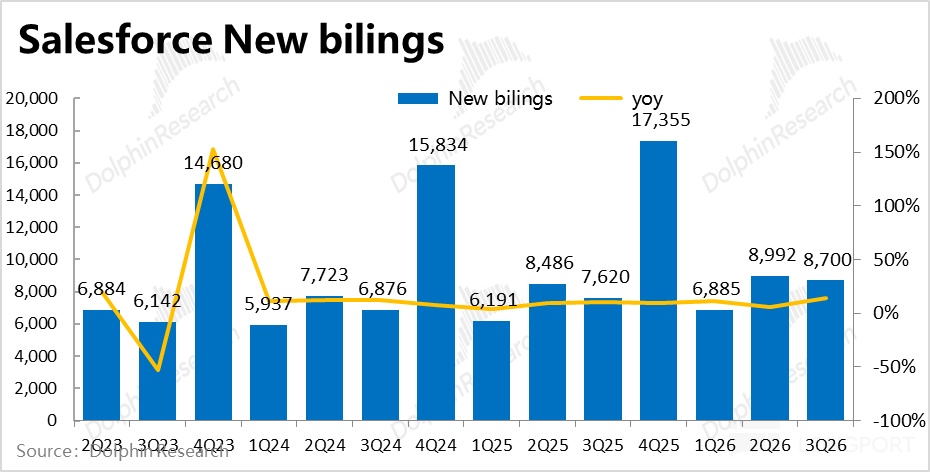
Similarly, this quarter's new contract amount (new billings) was $87 million, up 14% year-on-year, with a significant increase in growth rate. But it is still slightly lower than last quarter's $89.9 million.
Therefore, overall, the rise in cRPO and new contract growth rates is more due to the low base of the same period last year, and it cannot be considered a significant improvement, but compared to the continued slowing revenue growth, it still appears better.
III. Due to AI Investment, the Nearly 5-Year Trend of Gross Margin Increase is Ending?
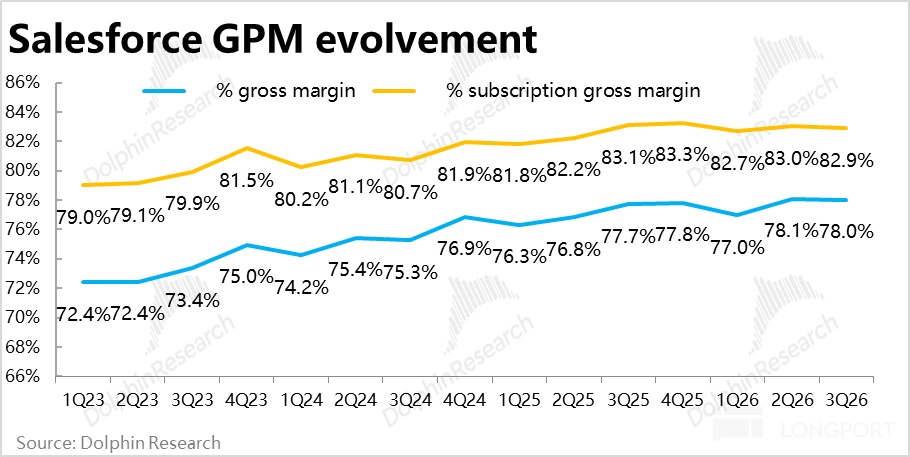
In terms of gross margin, the core subscription business's gross margin this quarter was 82.9%, which has started to decline both year-on-year and quarter-on-quarter, ending the trend of continuous gross margin increase since FY21. Although the company implemented a general price increase for its products in August, it still couldn't stop the decline in gross margin. This is mainly due to the impact of higher-cost AI services and related investments.
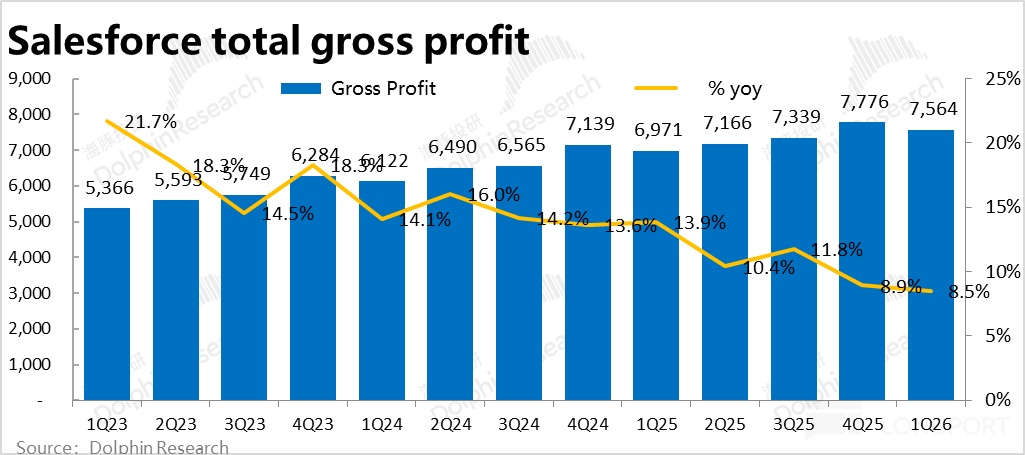
At the same time, the professional services business saw a slight increase in gross loss rate to -10.7%, due to the deterioration of gross margins in both subscription and service businesses this quarter, but partially offset by the structural increase in the proportion of higher-margin subscription business, resulting in the company's overall gross margin of 78% this quarter. Year-on-year, it is still rising, but quarter-on-quarter, it has declined.
Due to the expansion effect of gross margin basically dissipating, the company's overall gross profit this quarter was approximately $8 billion, with a year-on-year growth of only 9.1%.
IV. Cost Control Remains Very Limited
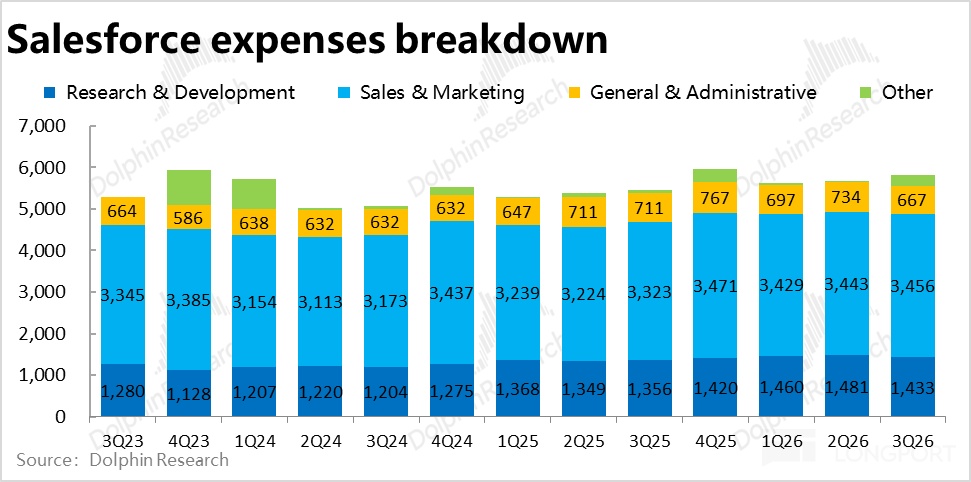
In terms of expenses, Salesforce this quarter's total operating expenses were $5.82 billion, up 6.8% year-on-year, slightly accelerating compared to the previous quarter but slightly below market expectations, also lower than revenue and gross profit growth rates. In other words, expense input did not significantly increase due to the development of new businesses like Agentforce, still relying on cost control (expense rate decreased by 1 percentage point year-on-year) to offset the impact of weakening gross margin.
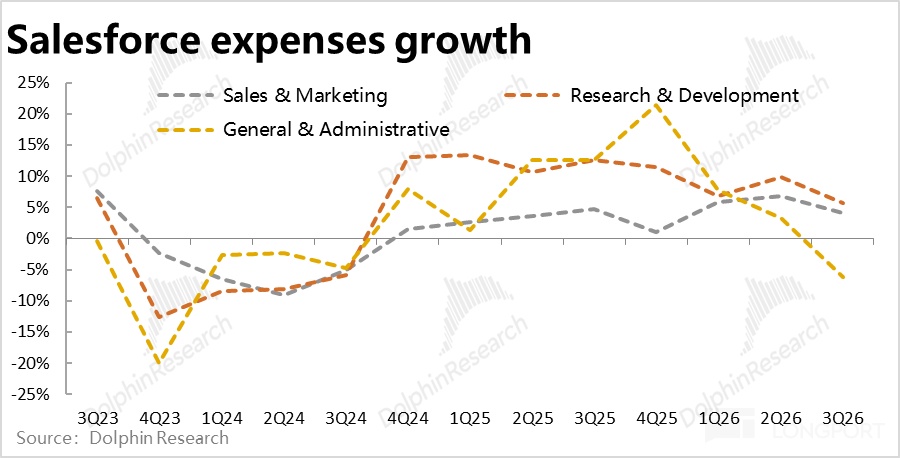
Specifically, the largest proportion of marketing expenses was $3.46 billion, up 4% year-on-year; R&D expenses grew by 5.7% year-on-year, while management expenses even decreased by 6.2% year-on-year. The year-on-year growth rates of various expense items have significantly declined compared to the previous quarter.
If only looking at the above three expenses, they actually only grew by 3.1% year-on-year, but this quarter confirmed $260 million in restructuring expenses (likely due to the acquisition of Informatica), resulting in the cost control effect not being as strong.
V. Profit Still Leads Revenue, but the Lead Margin is Narrowing
In terms of profit performance, due to the year-on-year increase in gross margin and effective cost control, this quarter's GAAP operating profit margin reached 21.3%, still increasing by 1.3 percentage points year-on-year. Therefore, operating profit growth this quarter was still 15.6% year-on-year, compared to the near single-digit revenue growth, profit growth is still considered good.
However, in terms of marginal trends, as gross margin has started to decline quarter-on-quarter, the increase in operating profit margin has significantly narrowed from 4 percentage points last quarter. The final GAAP operating profit was $2.19 billion, slightly below sell-side expectations.
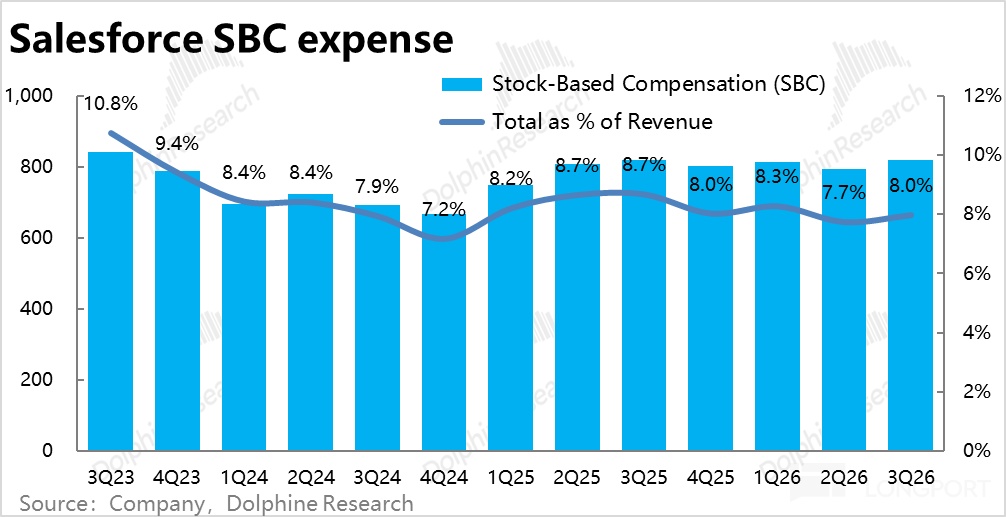
Excluding non-cash expenses (such as stock-based compensation, amortization and depreciation due to acquisitions), the company focuses more on free cash flow, which was $2.18 billion this quarter, roughly the same as operating profit, with a cash flow profit margin of 21%, also slightly below market expectations of 22%.
<End of Text>
Past Dolphin Research on【Salesforce】:
Financial Report Commentary:
September 4, 2025 Financial Report Commentary《Salesforce: Is AI a "Savior" or a "Death Knell"?》
September 4, 2025 Minutes《Salesforce (Minutes): AI is an Assistant, Not a Killer, SMEs are the New Growth Direction》
May 29, 2025 Financial Report Commentary《Salesforce: Is the AI Agent Dream Still "Unattainable"?》
May 29, 2025 Financial Report Minutes《Salesforce: Strong SME Demand, Continue to Focus on Agentforce》
February 27, 2025 Financial Report Commentary《Salesforce: Do Intelligent Agents Need to Spend Money First to Make Money Later?》
February 27, 2025 Minutes《Salesforce (Minutes): The "Holy Trinity" of Applications, Data, and Intelligent Agents》
In-depth Analysis:
January 15, 2025 First Coverage Second Article《Salesforce: Can the Old SaaS "Sprout New Growth"? 》
January 7, 2025 First Coverage Second Article《Will "Artificial Intelligence" Really Replace "Humans"? How Much Can Salesforce Benefit?》
Risk Disclosure and Statement of This Article:Dolphin Research Disclaimer and General Disclosure
The copyright of this article belongs to the original author/organization.
The views expressed herein are solely those of the author and do not reflect the stance of the platform. The content is intended for investment reference purposes only and shall not be considered as investment advice. Please contact us if you have any questions or suggestions regarding the content services provided by the platform.
