


When Tesla starts 'running', will humanoid robots become the main theme for the New Year?

The U.S. stock market rally on December 3 appeared to be a sudden surge in small-cap sentiment on the surface, but in essence, it marked the first time "walking AI" was brought to the table by both the White House and Wall Street.
On one side is policy. Politico revealed that after completing a round of AI action plans, the Trump administration has shifted its focus to robotics. Commerce Secretary Howard Lutnick has recently been frequently meeting with robotics company CEOs, described by insiders as going "all in" on the industry. They are considering signing an executive order specifically targeting the robotics industry in 2026, working with the Department of Transportation's robotics task force to comprehensively promote the return of robotics to manufacturing and counter China's advantages.
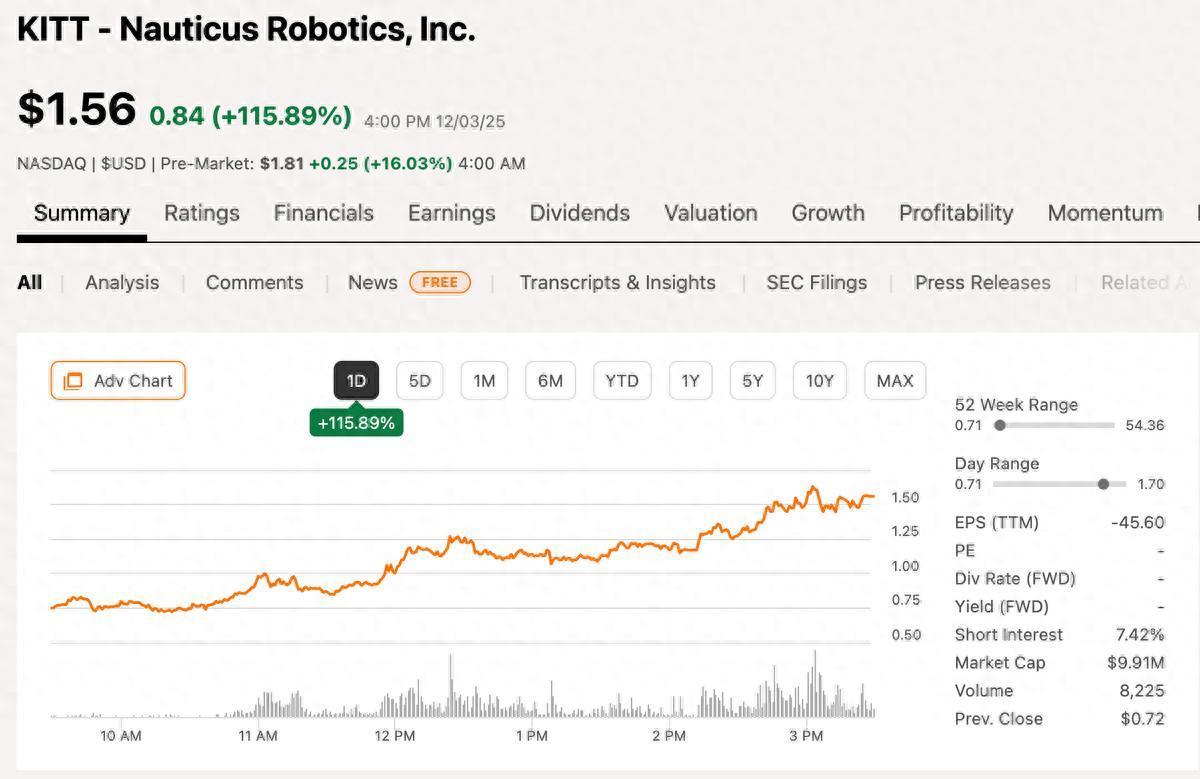
On the other side is the market. Small-cap stocks like Nauticus Robotics, originally focused on underwater robotics, surged 60-70% in a single day—even doubling intraday—around the news of the "White House's big move on robotics," simply because their names included "Robotics." Even the 扫地机 veteran iRobot was lifted by capital. This classic case of "misjudged themes + name-driven rally" essentially reflects capital repricing risk appetite for the entire robotics direction.
The real one to watch is still Tesla. In early December, Tesla's official account posted a video on X showing Optimus jogging in the lab, with the robot running steadily in the background alongside a wall of mass-produced, neatly plugged-in Optimus units. The caption read: "Just set a new record in the lab."
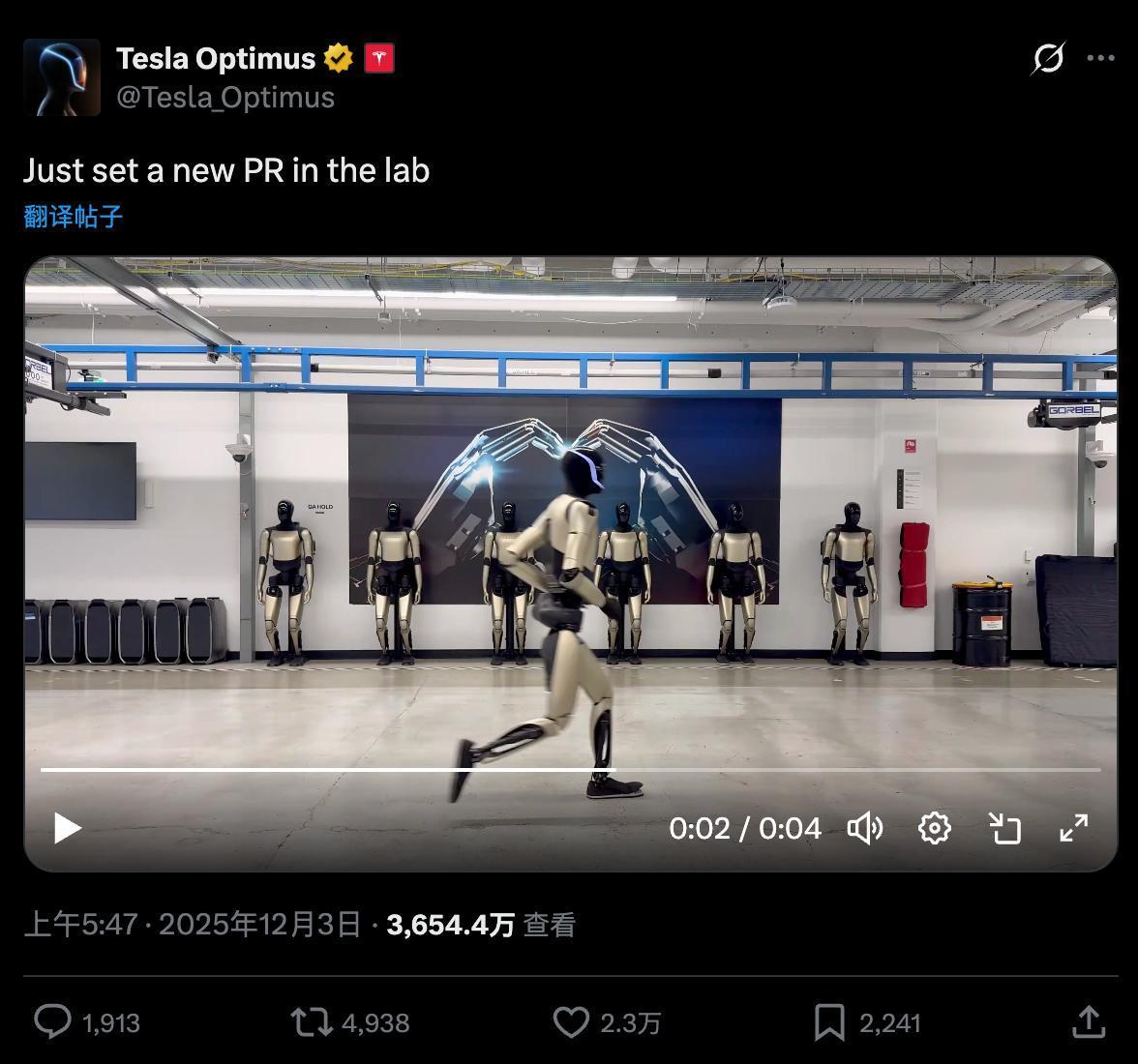
Many institutions are viewing this video alongside Wall Street's valuation expectations for "embodied AI": This is no longer a PPT-level demo but an engineering progress bar inching closer to commercialization.
For traders, this moment feels reminiscent of Musk's first FSD livestream: You may not believe his "ultimate vision," but it's hard to ignore the enormous option value here. Combined with the White House considering an executive order as a backstop, humanoid robots in the U.S. have essentially been elevated to a "strategic direction."
U.S.-China Embodied AI: Policy, Valuation, and Bubbles Take Off Together
If you only look at U.S. stocks, this rally might seem like Trump giving robotics a boost for votes. The real backdrop is that the U.S. and China are already locked in a long-term battle over "embodied AI."
Domestically, China is pushing forward on both "industry + policy" fronts. Since 2024, the Ministry of Industry and Information Technology (MIIT) and the National Development and Reform Commission (NDRC) have named "embodied AI and humanoid robots" in government work reports, with 各地 holding conferences and building demonstration zones. According to a 2025 Humanoid Robots and Embodied AI Industry Research Report jointly cited by the Shenzhen NDRC and TF Securities, China's embodied AI market is expected to reach 5.295 billion yuan in 2025, with the humanoid robot market at around 8.239 billion yuan, accounting for ~50% of the global market, and the core supply chain is largely domestic.
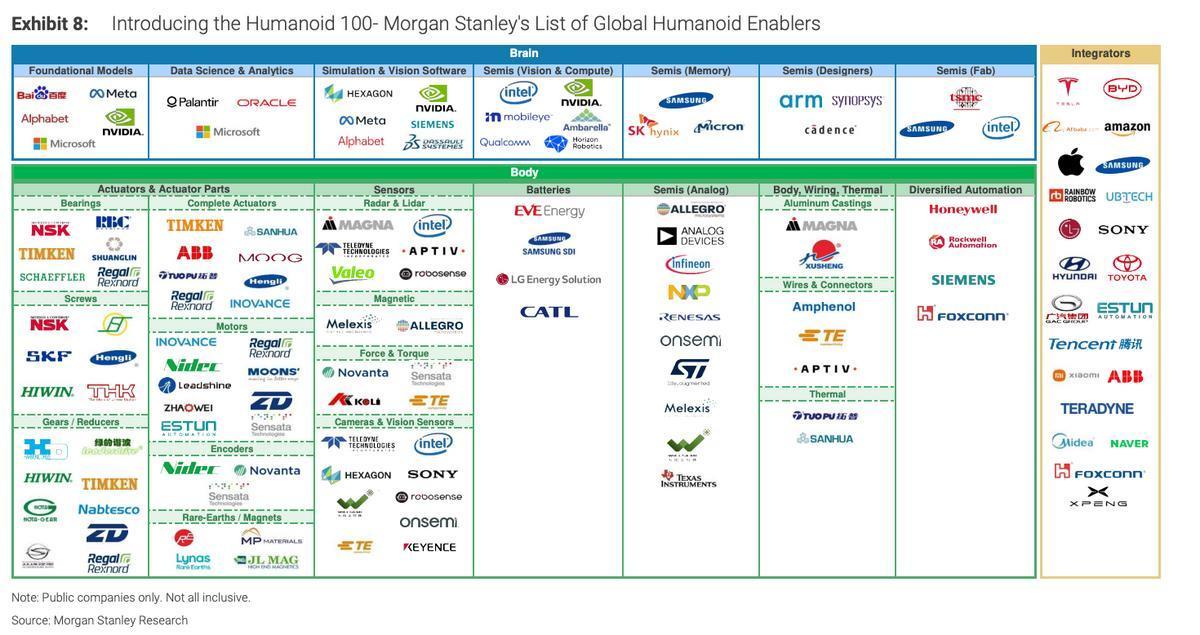
Morgan Stanley's Humanoid 100 also concluded: Chinese companies have already captured 63% of the global humanoid robot supply chain share, with absolute advantages in 本体 and key components.
The U.S., meanwhile, is charging ahead with "capital + tech giants." Morgan Stanley's May report, Humanoids: A $5 Trillion Market, made an eye-popping prediction: By 2050, the humanoid robot-related market (including supply chains and services) could reach $5 trillion, with over 1 billion units in circulation, 90% of which will operate in industrial and commercial scenarios. China alone may account for 300 million units.
This is no longer a niche sector but is being treated as the "second auto industry."
Interestingly, while China is pushing full throttle domestically, it has also begun publicly warning of bubble risks. Late last month, the NDRC noted in a press conference that the number of humanoid robot companies has exceeded 150, with high homogenization, and warned against a "robot bubble." Another media report stated that China's goal this year is to produce over 10,000 humanoid robots, more than half the global total, while also cautioning that high investment and low differentiation could squeeze out 真正做研发的公司。
China has "filled the table" on the supply side, while the U.S. is "flipping the table to repricing" on the demand side.
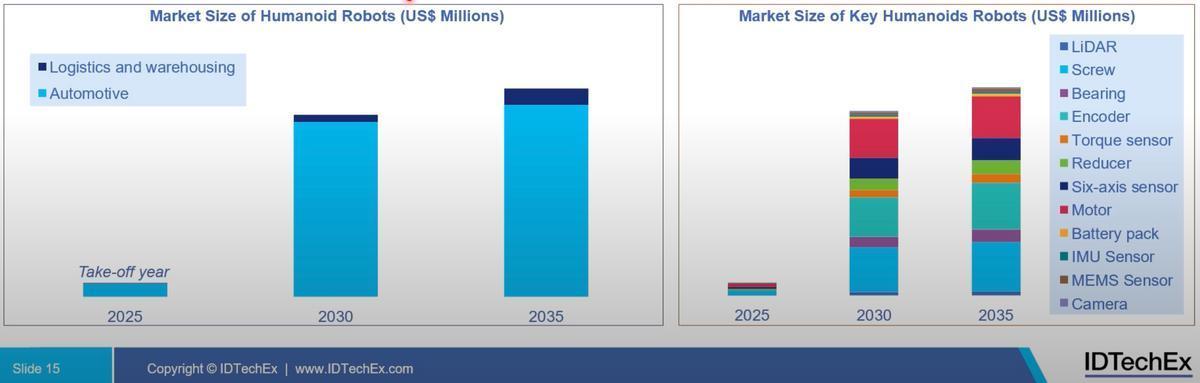
IDTechEx estimates the humanoid robot market at $30 billion by 2035—how aggressive 后续 valuations are remains questionable, but the direction is almost undisputed: This is one of the next decade's super-tracks.
The U.S.-China back-and-forth has essentially pushed humanoid robots from "sci-fi" into a 主线 that demands serious study: On one side is China's supply-chain 优势 and concentrated 产业链; on the other is U.S. demand-side pricing power and valuation 话语权。
From U.S. Stocks to A-Shares: Three Threads in Humanoid Robotics
If we elevate this rally from an "incremental 热点" to an "industry trend," U.S. and A-shares actually occupy different positions in the value chain. U.S.本体端 is responsible for opening industry expectations, while A-share supply chains provide scalable foundational capabilities, ultimately forming three clear 主线逻辑。
The first thread lies in U.S.本体端。
Tesla is undoubtedly the current global leader with the most advanced engineering progress. Its investment in Optimum robots has moved from 演示级别 to 重复验证阶段. The appearance of multiple robots testing simultaneously in labs and 预留产线 at its factory in Texas suggests it aims to truly integrate robots into its manufacturing system.
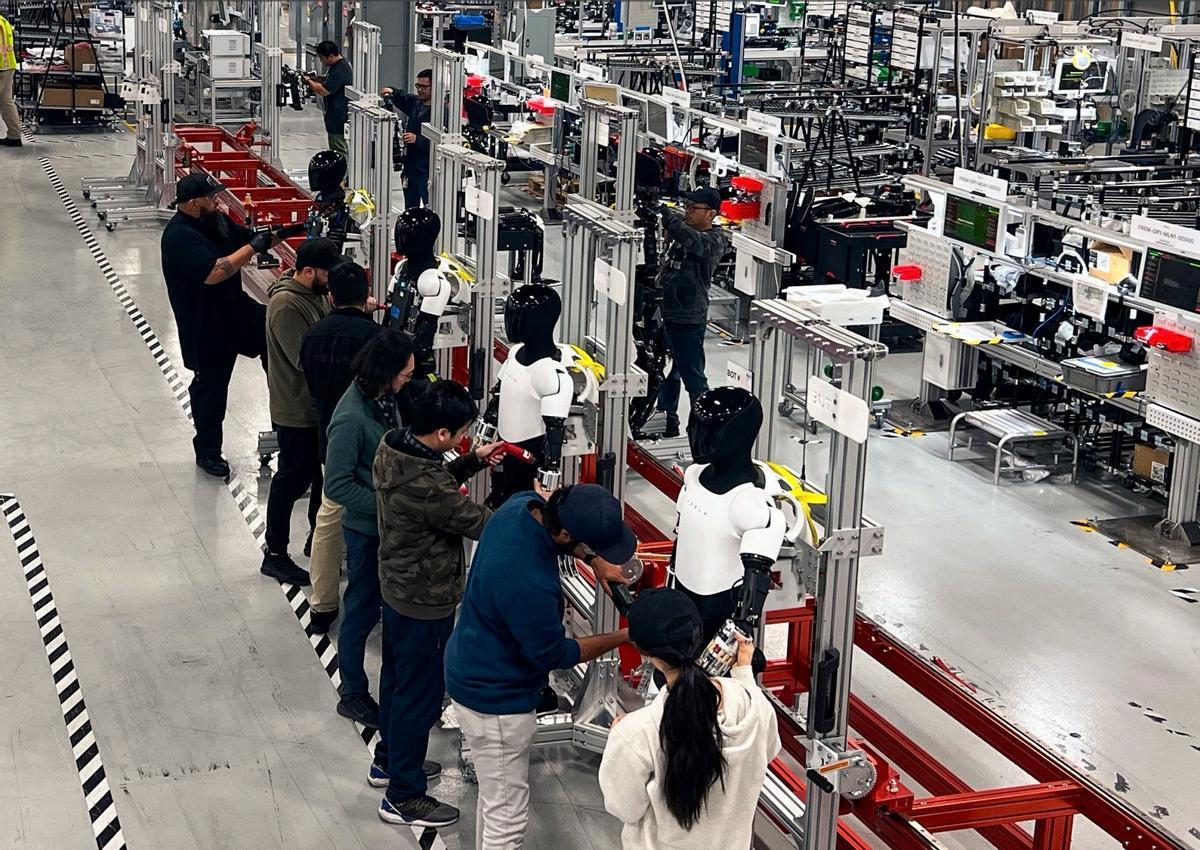
Musk has repeatedly emphasized that Optimus could become one of Tesla's most important businesses long-term, giving "embodied AI" its first 跨车、AI、机器人三重故事的综合估值空间。
Companies 围绕特斯拉, spanning motion models, vision models, inference acceleration, and edge computing, are also categorized by Morgan Stanley in Humanoid 100 as part of the "robot brain (Brain)," including Nvidia, AMD, Sony, Google, and Infineon.
They don’t directly build robots but serve as infrastructure in the "AI 迁移到物理世界" process. U.S.本体端 and 算力端 together form the first industry thread, with 相对最高的确定性。
The second thread is the U.S. market's "sentiment amplifier."
Nauticus Robotics and iRobot are the most 典型 cases of this wave. After the White House hinted at a possible 2026 robotics executive order, the market reacted swiftly to small-caps, with "Robotics"-named companies often becoming liquidity outlets. Such firms share traits like high valuation elasticity and concentrated liquidity, making them 更容易被事件驱动和主题情绪推着走。
From an industry perspective, they aren’t necessarily in high-barrier segments but become "theme indicators" when sector attention rises. For gauging broader sentiment, these 标的 offer "market temperature," not the 产业趋势 itself, carrying relatively higher risks—more opportunistic than strategic.
The third thread is A-shares' corresponding supply chains, structural components, and equity participation systems.
China's role in the humanoid robot 产业链 centers on the "Body" segment: actuators, harmonic reducers, roller screws, servo motors, structural parts, and sensing modules.
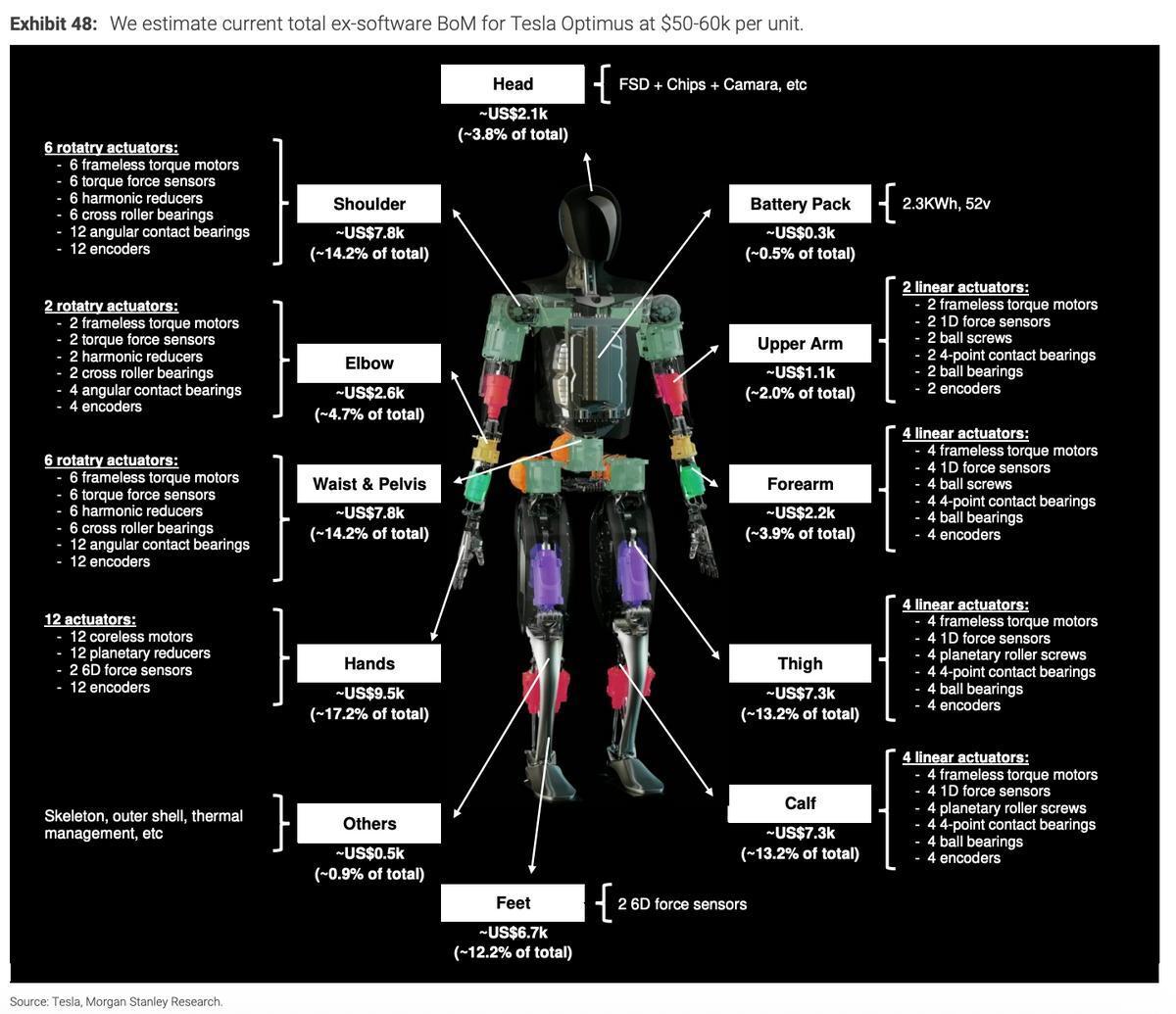
Morgan Stanley data notes that China has the world's highest midstream concentration in the value chain,天然 positioning A-shares as the 兑现端 during the robot 量产 cycle.
Among these, the most frequently mentioned path is Tesla 供应链企业. For example, Sanhua Intelligent Control, leveraging its long-term expertise in thermal management and electromechanical components, has begun extending into actuators. Goldman Sachs research indicates that Sanhua's assembly base in Thailand is widely seen as one of the earliest companies with scalable capabilities in the future global robot supply chain.
Others like Top Group, Zhongding, Harmonic Drive, and Shuanghuan Transmission are also 布局 in core components like joint actuators, lightweight structures, harmonic reducers, and roller screws.
These 标的 share traits: inherent manufacturing capabilities, extending product lines into humanoid robot core components, tightly linking their industry positions to global 量产节奏。
Meanwhile, on the 本体 front, domestic capital event 线索 are emerging. Leaders like Unitree Robotics and Leju Robotics have completed 科创板上市辅导, becoming top candidates for "humanoid robot first stock." Once they enter the IPO phase,上下游合作方、参股关系链、供应链企业 often gain heightened market attention.
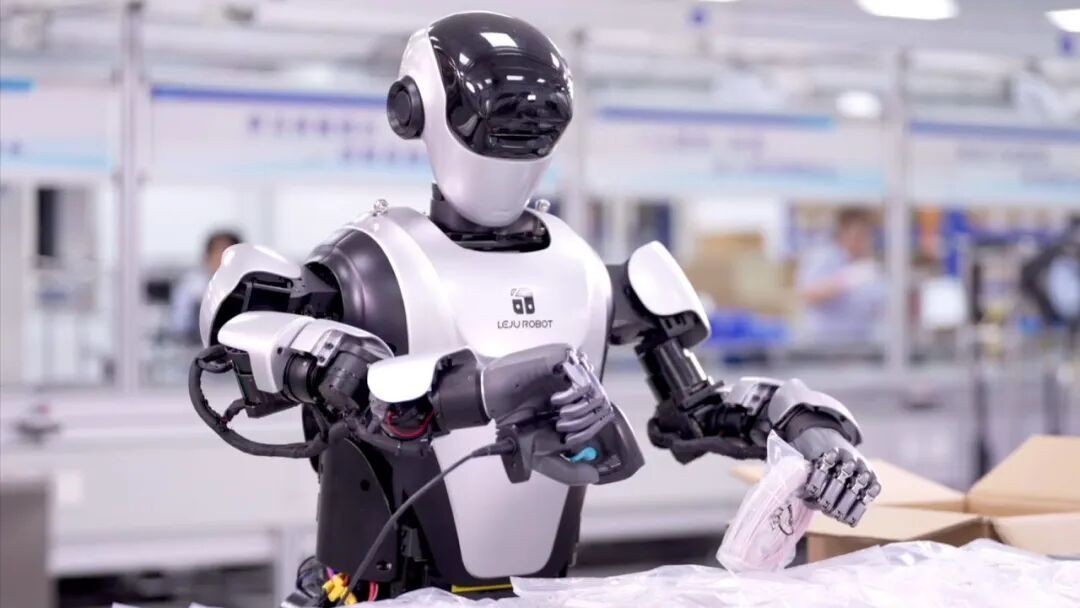
For instance, Leju's 股权结构 involves multiple listed companies—Dongfang Precision, Zhaofeng, Gongjin, Micro-Tech, CITIC Securities, even Kweichow Moutai—at various 间接或直接参股 levels. When its IPO 辅导备案 was announced, Dongfang Precision's stock nearly hit the limit-up that day.
Future market catalysts will focus on 海外龙头端的新工程进度 (e.g., Tesla's new-phase tests, Figure's factory collaborations) or domestic 本体企业 entering IPO 新阶段—often the 窗口 for 两端信息共振 and 集中提升的行业关注度。
Humanoid robots aren’t a single-company story but a long-term, structured theme of "本体推进—算力迭代—供应链扩容," with every 产业链环节 pushing these machines from labs into factories.
$Tesla(TSLA.US) $NVIDIA(NVDA.US)
The copyright of this article belongs to the original author/organization.
The views expressed herein are solely those of the author and do not reflect the stance of the platform. The content is intended for investment reference purposes only and shall not be considered as investment advice. Please contact us if you have any questions or suggestions regarding the content services provided by the platform.
