


 Rate Of Return
⚡🚀 Jensen Huang endorses Tesla's robot roadmap: The inflection point of embodied intelligence may come earlier than expected

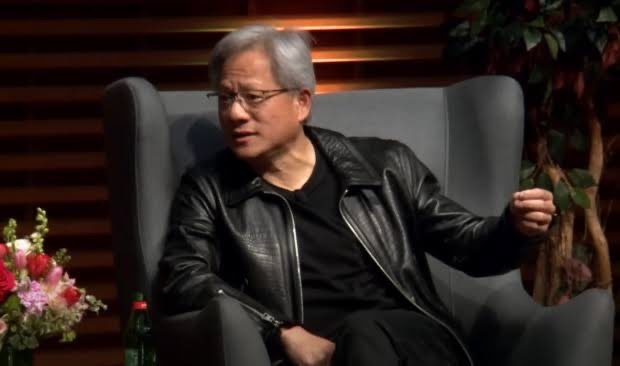
$NVIDIA(NVDA.US) CEO Jensen Huang rarely highly praised Tesla's robotics progress in public and explicitly stated that he is "very excited about the robots Musk is building."
This means two super technology curves—computing power and embodied intelligence (Robotics)—are experiencing unprecedented resonance.
1️⃣ Why did Jensen Huang proactively discuss "Musk's robots"?
Huang's judgments always represent industry trends. He rarely publicly endorses competitors' hardware products.
This exception reveals three key logics:
• Humanoid robots are now seen as the most concrete form of next-gen AI
• Tesla's data scale + end-to-end AI capability is currently the only path to close the loop from "walking→working"
• NVIDIA's computing power ecosystem needs a sufficiently large real-world demand catalyst, and robots are exactly that catalyst
In other words: Optimus' commercialization timeline has entered NVIDIA's strategic vision.
2️⃣ Why will robots become a shared growth curve for NVIDIA and Tesla?
Robotics is an industry highly dependent on the following key capabilities:
• Vision AI
• Motion Planning
• Real-time Inference
• Large-scale Training
All of these are NVIDIA's strengths.
Meanwhile, Tesla possesses:
• The world's largest real-world vision dataset
• Complete end-to-end control models
• A production system capable of manufacturing AI products at scale
These two aren't competitors but complementary players in the supply chain.
3️⃣ Tesla in Jensen Huang's eyes: Not a carmaker, but a "mobile intelligence company"
When discussing robots, what he sees isn't "Optimus' movement capability" but:
A company that can form an "end-to-end closed loop" from AI training → robot execution → real-world feedback
Very few companies can achieve this, and Tesla is the one most capable of extending this curve.
For NVIDIA, this means:
Training scale will multiply due to embodied intelligence
Inference demand will shift from data centers to every robot terminal
The stronger Tesla's robots, the deeper NVIDIA's computing power commercialization
4️⃣ Why will the robotics market become the next big narrative?
Because it has three characteristics:
• Huge TAM (labor automation is the foundation of GDP)
• Clear technological inflection point (end-to-end models becoming mainstream)
• Scalable deployment (robots will be mass-produced like cars)
When Huang publicly expresses "very excited," this is an industry leader telling the market:
We are approaching the large-scale implementation window for embodied intelligence.
5️⃣ How will the collaboration trajectory between Tesla and NVIDIA evolve?
From an external perspective, this path will likely develop into:
Computing power: NVIDIA
Training: Tesla AI system
Execution: Optimus
The value chain extension is clear and massive, while competition will weaken as demand scales up.
Now the question:
When both NVIDIA and Tesla point to the largest single industry of the next decade—robotics—which end's value do you think will be repriced first by the market? Computing power? Models? Or the execution end itself?
📬 Focus on structural inflection points in tech companies, tracking the actual implementation pace of $Tesla(TSLA.US), AI, and next-gen smart hardware. If you're looking for the next industrial repricing moment, stay tuned for updates.
#Tesla #NVIDIA #JensenHuang #Optimus #AI #Robotics #ElonMusk #TechStocks
The copyright of this article belongs to the original author/organization.
The views expressed herein are solely those of the author and do not reflect the stance of the platform. The content is intended for investment reference purposes only and shall not be considered as investment advice. Please contact us if you have any questions or suggestions regarding the content services provided by the platform.
