


 Posts
PostsYoung people's first 'slot machine': They unpack Pokémon cards in live streams

At 10 PM Beijing time, it's the peak hour of the day with the heaviest traffic.
At this moment, most lights in Tokyo's office buildings have just been turned off, and exhausted office workers squeeze onto the Yamanote Line for their commute home; on the other side of the planet, Wall Street traders are holding their first cups of coffee, waiting for the opening bell of the U.S. stock market.
But in countless livestream rooms across China's internet, the nightlife of the younger generation is just beginning.
"Boss, wish me luck!"
Before the words even fade, the host slams a small metal bell on the table. A crisp "ding—" rings out—short, sharp, and the most effective stimulant in the livestream room. It signals the start of a new round of "hunting," forcing everyone's attention to focus on the hands in that instant.
The host pulls a card pack from the box, grips the top edge, shakes the cards to the bottom, then deftly picks up scissors to cut open the plastic wrapper. At that moment, the barrage of messages in the bottom-left corner of the livestream floods like a waterfall: "Hit a big one!" "Double high!" "Five more hands!"
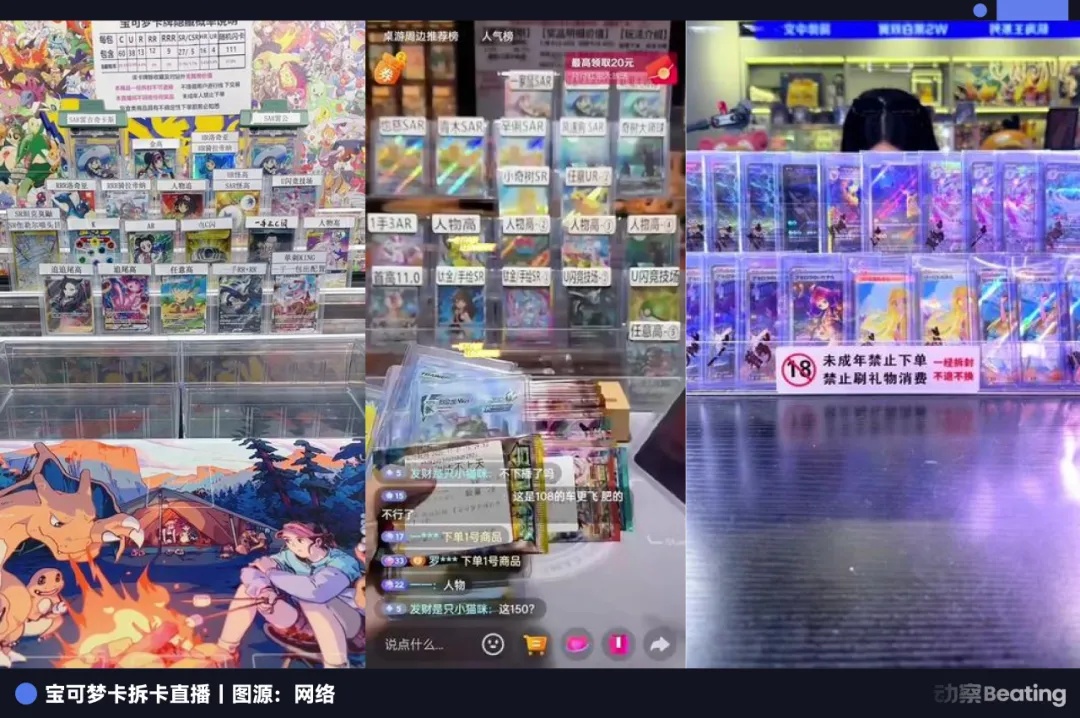
There's no lukewarm product pitching here, only the high-stakes game of emotional gambling. In this "midnight casino," the bets aren't on baccarat or slot machines—they're on Pikachu, Gengar, and Charizard. What's being sold isn't just pieces of paper with cartoon prints but an ultra-low-barrier form of happiness, an outlet for the younger generation to release their nighttime stress.
Industry estimates suggest that China's livestream e-commerce market surged to 5.8 trillion yuan in 2024. Beneath this colossal denominator, card-unboxing livestreams are becoming the most aggressively growing segment, with searches for "card unboxing" on Douyin alone skyrocketing by 390.68% in a year.
Yet behind the excitement often lies brutality. Data from March 2025 shows that due to cutthroat competition, some card-unboxing livestreams are experiencing their darkest hour, with monthly losses reaching 680,000 yuan. But this hasn't deterred newcomers, as here, risk is seen as the necessary price of admission.
Every minute of flowing capital is reshaping perceptions of "niche hobbies." Faced with massive wealth effects, no one wants to leave the table.

Is This Consumption or Venture Capital?
If there's one ultimate business model in the commercial world, it's "packaging uncertainty for sale." Livestream hosts have mastered this, first peddling the primal thrill of "small bets for big wins."
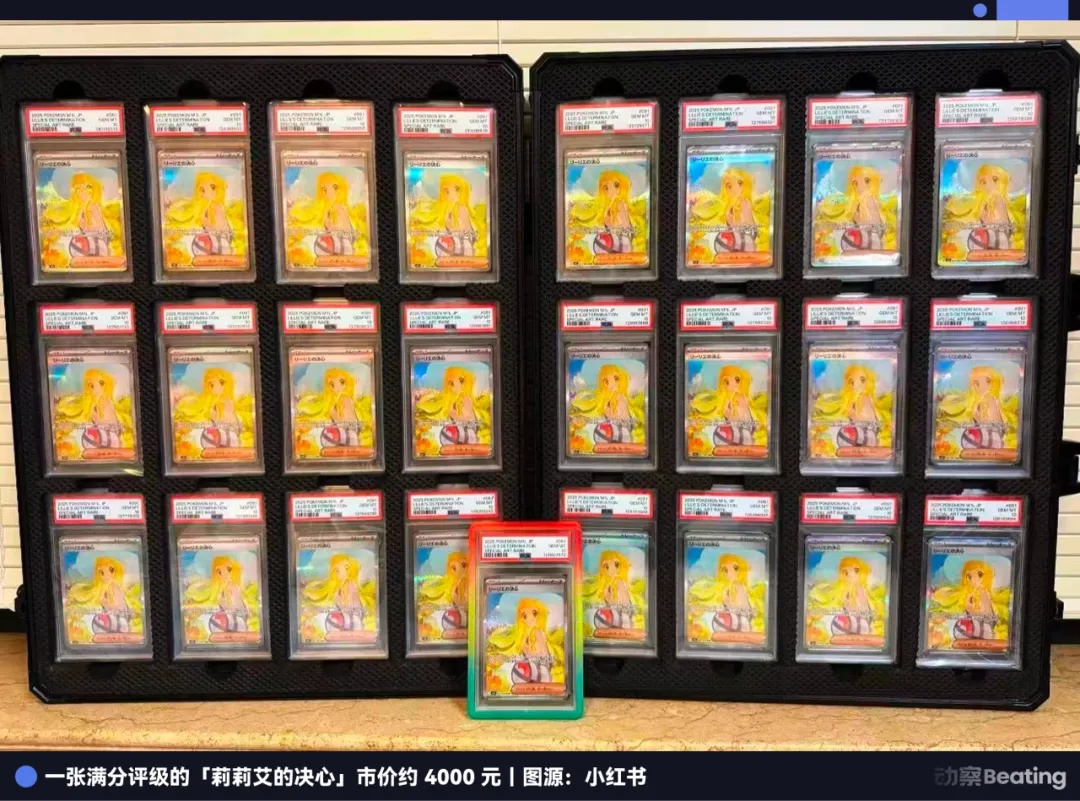
The most basic format is the "mixed pool," where hosts shuffle packs from different Pokémon card series together. Since each box has a fixed ratio of rare cards, both hosts and viewers know exactly how many rarities are in the pool. For just tens of yuan, buyers might score a "Lillie's Resolve" card worth thousands on the secondary market.
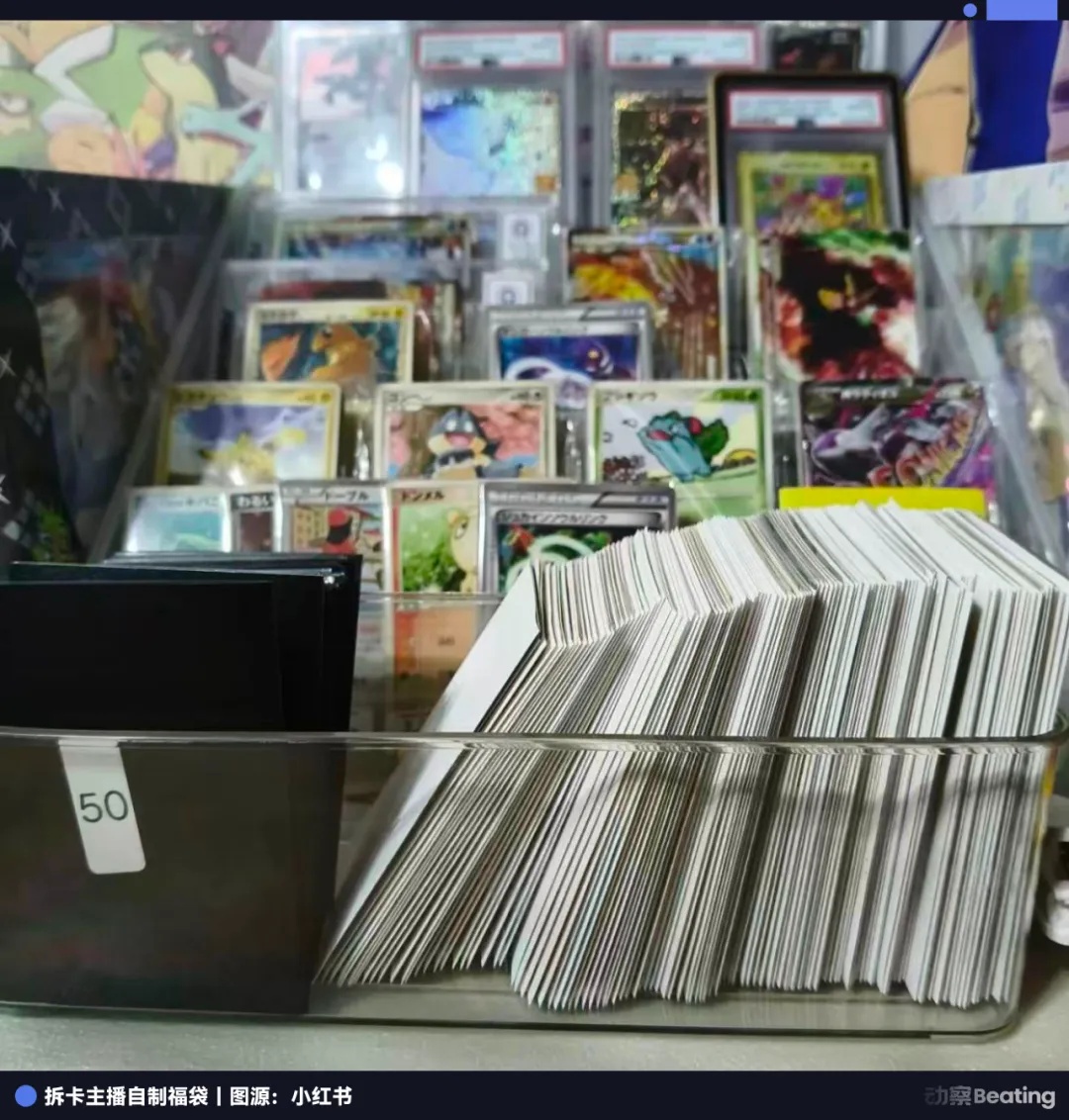
Running parallel is a more covert, shrewder business—"lucky bags" or "mystery packs."
Hosts repackage bulk unsold common cards with a few pricier "high-value" hits, numbering them for buyers to draw. Commercially, this is textbook "inventory assetization." For sellers, it's the perfect channel to clear dead stock, transforming illiquid leftovers into highly liquid gambling tools through probability packaging. For buyers, it's an irresistible gamble where a few dozen yuan might turn a bicycle into a motorcycle.
This quintessential probability retail means buyers aren't purchasing cards at checkout—they're buying the chance that "maybe I'm next."
Why do young people balk at thousand-yuan stocks but find hundred-yuan card packs cheap?
In their mental accounting, the former belongs to serious investing requiring deliberation, while the latter gets classified as "entertainment spending" or "low-stakes experimentation." This psychological categorization subconsciously disarms their risk defenses.
Yet for some, this "slot machine" grinds away more than sleep.
Xiao Ban (pseudonym) entered a card-unboxing livestream for the first time two weeks ago, spent 500 yuan on pulls, found it fun, then raised his Huabei credit limit to 20,000 yuan. By month's end, his bill showed an extra 9,000+ yuan—all 1 AM or 2 AM purchases.
That day, he hung up on his mom's call about mortgage payments and deleted the livestream app. Minutes later, his regular host went live as usual. The bell rang, viewer counts climbed again, and someone typed: "Hot streak today, bosses—go all in."
Individual exits don't interrupt the carnival. To keep remaining players betting and mask the brutality, commerce evolved a premium product—"security."
In advanced "pull-till-hit" games, the logic subtly inverts. Buyers pay far above pack value for a host's promise: "Keep opening until a high-rarity card appears."
This is essentially insurance. In probability's ocean, they buy certainty. If the first pack "headshots" (hits rare), it's massive ROI; if it takes dozens, hosts shout: "Boss scored—this is like free boxes!" This coupon-clipper euphoria instantly spikes buyer satisfaction.
For enhanced experience, "guaranteed X pulls" (e.g., 5) emerged. Even if the jackpot comes first, hosts keep opening free packs to fulfill the quota. These extra pulls psychologically satisfy greed for the unboxing process itself.
When rarity finally appears, youths often blurt: "This is my born-and-raised Pikachu."
Behind this jest lies behavioral economics' "endowment effect." To them, secondary-market singles are just goods, but personally pulled cards—imbued with anticipation and process—gain unique narrative value.
This psychology transforms mass-printed paper into emotion-premium collectibles. To endlessly feed this demand, a cross-border industrial chain now operates at full throttle.

Card "Cosmetic Surgery" and Time Arbitrage
If livestreams are the flashy frontstage, the 狂欢's backbone is a 精密且疯狂的供应链。
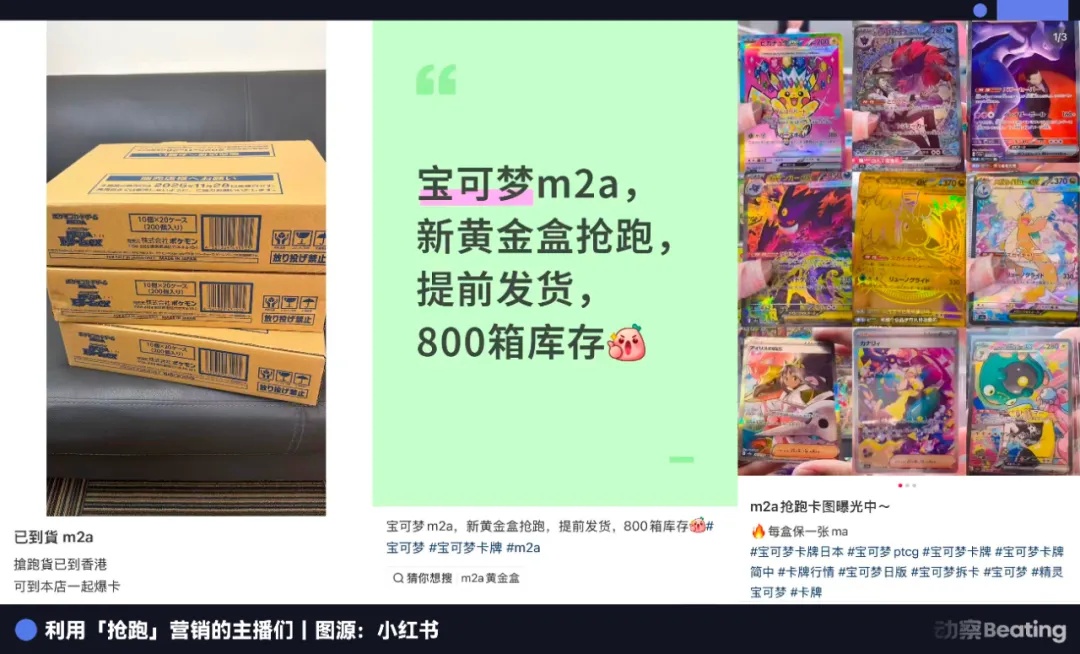
Take the recent "M2A Super Evolution Dream ex" launch as a glimpse into this madness. Presale, hordes of Chinese hosts flew to Japan, queuing overnight in Akihabara or tapping shadow channels to sweep stock.
They weren't chasing cards but staggering "time premiums."
During the 48-hour "early access" window, Japanese ¥1,000 (~¥100) boxes sold for ¥1,000+ in Chinese streams. Buyers rushed to be the first unboxers 全网. When general release flooded supply, prices crashed to ~¥700.
This ¥300 gap is information arbitrage. Hosts profit by being "one step faster."
But this is child's play. What truly vaults paper from "toy" to "hard asset" is grading.
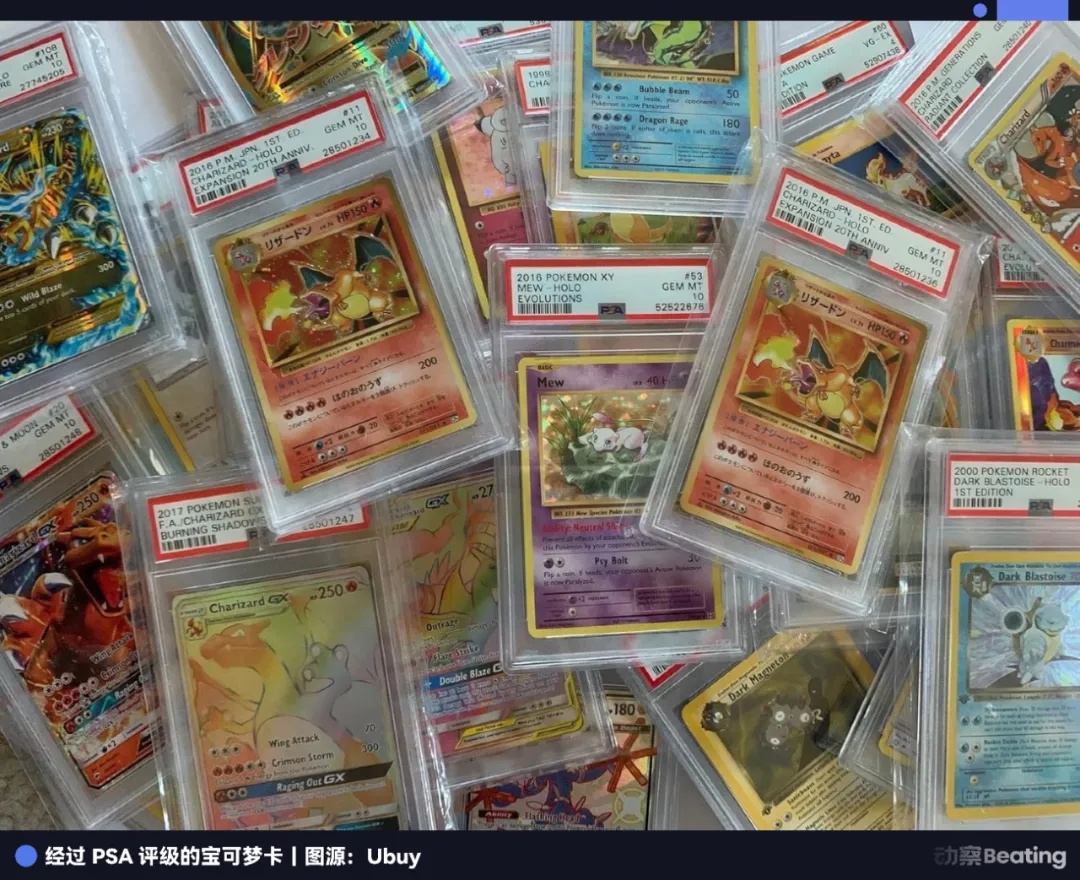
Unopened packs or raw cards are the "1.5 级市场." To 增值, players must reach the "holy land"—PSA and other 权威评级机构. Though PSA has Shanghai/HK drop-offs forwarding to US/JP centers, China's vast market birthed countless agents offering "proxy grading," creating assembly lines from streams to 评级公司。
More fascinating is the 衍生出的"card cosmetic surgery" industry.
Chasing PSA 10 (perfect), specialists emerged—not middlemen but technicians. Pre-submission, they microscope cards for invisible flaws, then 修复 with special solutions/tools.
Like pre-sale home staging. A raw rare worth hundreds can spike to thousands/millions as PSA 10.
Graders hold the Midas touch 标准, while every 供应链环节榨取 value from paper. This 疯狂 supply boom exists because demand 承载力 is staggering.

Gen Z's "Alternative Asset" Awakening
Only time hardens bubbles.
Macro data reveals this 狂欢's 底色: China's collectible card market was ¥700M in 2017—¥30B by 2024.
42x in 7 years. In an era of single-digit growth for tech giants, cards charted a near-vertical 阳线. This 爆发 isn't 偶然—it's Gen Z spending power clashing with IP 文化沉淀。
By 2026, Pokémon turns 30. Its investment circle (with K-line charts) believes in "anniversary cycles"—2016 (20th) and 2021 (25th) saw 稀缺性-driven price surges from global IP hype.
Here, youths think like veteran fund managers, advising: "Be time's friend."
One host shared the "Kanazawa Pikachu" case. This Japanese Pokémon Center 纪念 card initially sold for hundreds due to oversupply. As unopened stocks naturally depleted, prices quietly hit thousands.
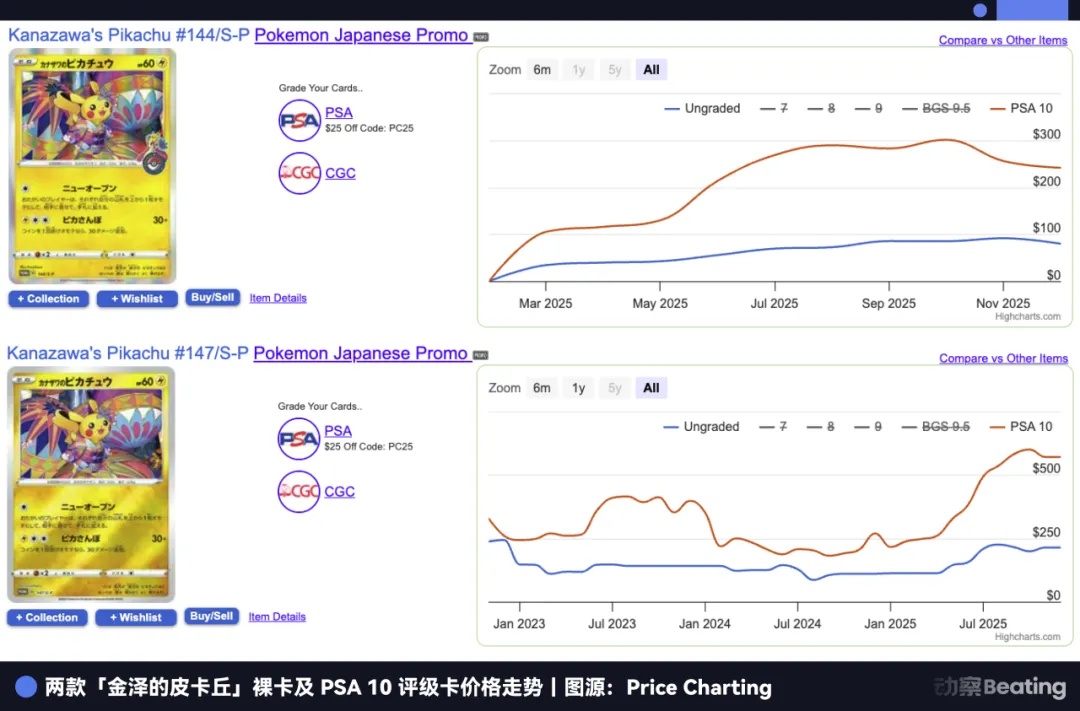
Visible appreciation beats any finance class. It shows that with the right 标的, time becomes leverage.
But strip the "investment" veneer, and reality emerges.
Per RockFlow & Soul's 2024 Gen Z Investment Report, 41.84% of 18-24-year-olds earn 0-2% annual returns—barely beating inflation. Traditional paths (savings, funds) underperform, driving them toward familiar passions.
Finance is too high-barrier; livestream cards offer low-stakes entry. It's 消费 + "what if it moons" speculation—perfect for today's youth.
Yet as cards financialize, physical limits emerge.

Trust Black Boxes vs. Code Contracts
Rough shipping damages card edges; slow 物流 kills post-unboxing highs. Worst is the unprovable "RNG black box"—how do you know hosts' mystery packs contain prizes?
In uncertain markets, "trust" is the ultimate luxury.
This is Web3's entry point.
That black box opened 链上's door. Now, Web3 experiments 搬 "unboxing" on-chain.
Take Hong Kong's Renaiss: it locks physical cards in warehouses, mints 对应 "Pokémon NFT" with immutable on-chain RNG. Players "open" digitally; the contract distributes rarities, letting them claim 物理 or trade RWA-backed PSA-graded assets instantly.
All RNG is 公开可查, eliminating 作弊. More crucially, winners get digital ownership 锚定 real cards—no shipping delays.
"Code is law" replaces 人格担保; frictionless 数字权证 replaces 物流. Here, Pokémon cards shed paper, becoming pure, liquid, global 金融标的。
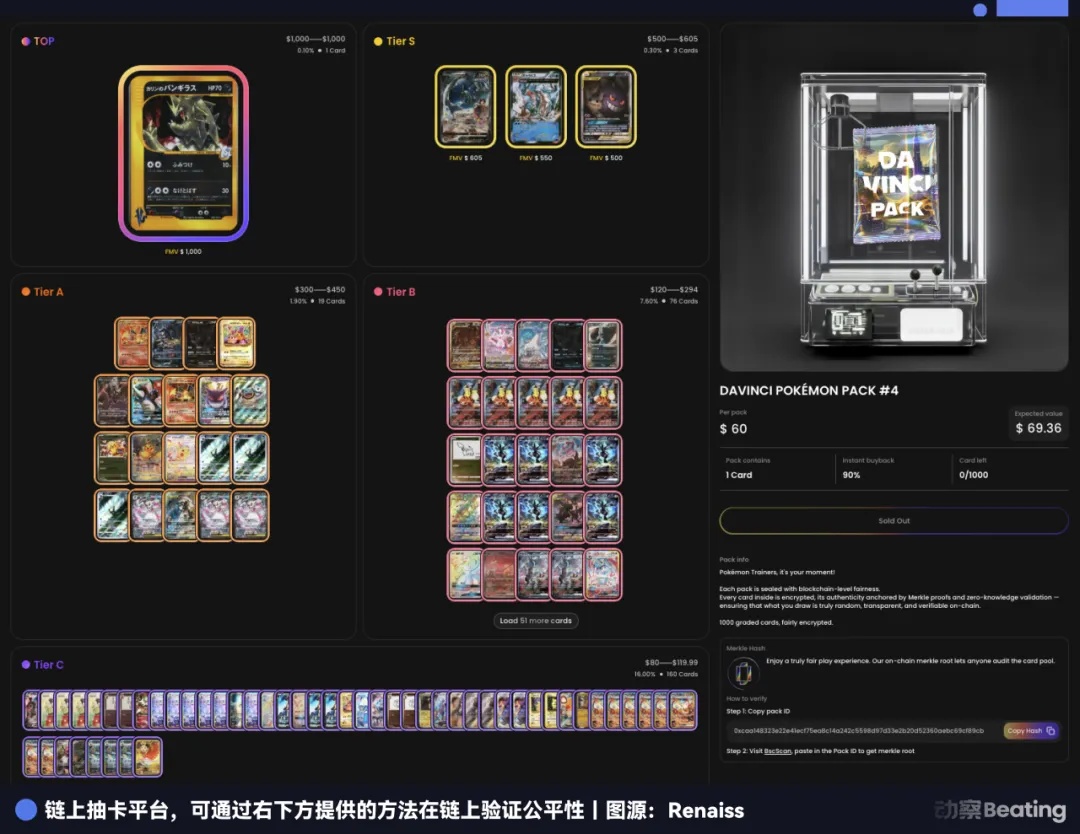
Though 链上 TCG trades at $630M (8% of global), this 8% points to commerce's future:物理实体 isn't value's sole 载体—digital 确权 is. Of course,现实世界 still treats this as niche, navigating legal/监管 gaps.
Meanwhile, meme finance 解构一切. Some 囤积 Kabuto/Snorlax cards,发行代币 via 锁仓制造稀缺—echoing MicroStrategy's Bitcoin playbook.

This Generation's "Tulip"
Commerce history shows humanity's 载体 obsession never changes.
1980s Changchun mania for clivia flowers, 2000s coal tycoons' Tibetan mastiffs, 2007's pu'er tea bubble—every era has its "tulip."
Tonight, that sealed pack sells possibility for pocket change. It won't change fates, but that heartbeat when tearing 包装 is real—as is believing "next one's the jackpot."
In uncertain times, accessible joy is the truest necessity.
The copyright of this article belongs to the original author/organization.
The views expressed herein are solely those of the author and do not reflect the stance of the platform. The content is intended for investment reference purposes only and shall not be considered as investment advice. Please contact us if you have any questions or suggestions regarding the content services provided by the platform.
