



During the flu season, Olin Biotech, betting on more dangerous 'super bacteria', initiates the leap of the A+H platform

This winter, influenza viruses have become active again, with long queues forming at respiratory clinics in major hospitals and a surge in sales of antiviral drugs and public health prevention demands.
Catalyzed by this seasonal demand, the vaccine market has once again become a hot topic among investors. From flu vaccines to broad-spectrum anti-infection vaccines, the "vaccine shield" remains a necessity. At the same time, the capital market has also set its sights on this wave of "epidemic prevention + innovation" investment opportunities.
Against this backdrop, China's tetanus vaccine leader, Olin Biotech, has recently submitted an application to the Hong Kong Stock Exchange for an H-share listing, aiming to establish a "dual-platform" layout with A-shares and H-shares.
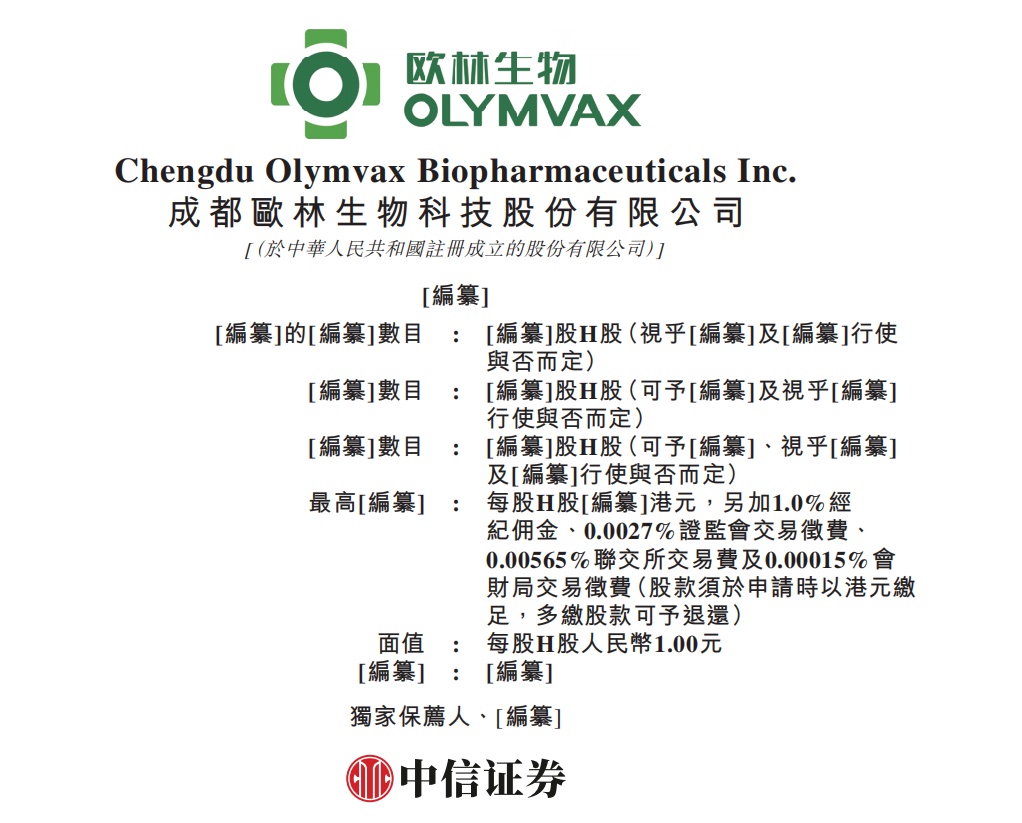
This listing marks Olin Biotech's renewed entry into the international capital market and represents a significant bet in its transformation and strategic upgrade within the vaccine industry. On one hand, the company maintains stable cash flow from its tetanus vaccine business, while on the other, it bets on future growth from "superbug vaccines + adult/flu vaccines."
Building on Traditional Tetanus Vaccines
Olin Biotech did not start with "high-end" innovative pipelines but instead focused on the tetanus vaccine, a basic yet clinically essential field. It wasn't until 2017 that its self-developed tetanus vaccine was approved, making it the first private vaccine company in China to commercialize an "adsorbed tetanus vaccine."
After 16 years of development, Olin Biotech has become China's tetanus vaccine leader, with several major product lines on the market: adsorbed tetanus vaccine, Hib conjugate vaccine, and AC conjugate vaccine. Its financial performance has repeatedly hit new highs.
According to the company's financial report, revenue for the first three quarters of 2025 increased by 31.11% year-on-year to approximately 507 million yuan, equivalent to 86% of last year's total revenue. Net profit attributable to shareholders surged over 10 times to about 47.48 million yuan, while adjusted net profit turned from loss to profit.
This reflects the strong sales growth of its core vaccines, primarily the tetanus vaccine and the newly launched AC conjugate vaccine, which provide stable and expanding revenue streams.
For a vaccine company that previously faced declining profits and cash flow pressure, this stability is crucial. A steady core business and improved cash flow provide the necessary foundation for large-scale R&D investments.
However, the recovery in profit margins still carries some fragility.
Olin Biotech maintains high gross margins. According to its prospectus, gross margins remained at 92%–94% from 2022 to 2024, a leading level even in the global vaccine/biopharmaceutical industry, indicating strong production and pricing capabilities.
Meanwhile, the company's expense ratio improved in the first three quarters of 2025, with a significant reduction in administrative expenses contributing to the profit surge.
That said, this structural recovery is partly due to "core business stability + cost-cutting." Olin's revenue heavily relies on tetanus vaccines and a few other products. If sales slow or competition intensifies, profit stability could be at risk. For example, Hib conjugate vaccine sales dipped slightly in the first three quarters due to declining birth rates.
Creating a "Second Growth Curve" in Superbug Vaccines
Likely due to these risks, while stabilizing its core business, Olin Biotech is shifting its focus to two promising but less competitive areas: anti-resistant bacteria and adult/flu vaccines.
Its most notable pipeline candidate is the recombinant Staphylococcus aureus vaccine (rFSAV), targeting a drug-resistant "high-priority" bacteria listed by the WHO.
Staphylococcus aureus is a major cause of hospital-acquired infections and post-surgical complications. In May, Olin announced that all 6,000 participants in its Phase III clinical trial for the vaccine had been enrolled, with follow-up data collection underway.
If approved, this vaccine would fill a global gap in preventing drug-resistant infections, especially post-surgical infections. Market expectations suggest data disclosure in 2026 and mass production by 2027.
Compared to antibiotics, vaccines offer stronger prevention, lower resistance risks, and greater public health safety—key reasons for global interest in "superbug vaccines."
Olin is also developing candidate vaccines for pathogens like Helicobacter pylori, Pseudomonas aeruginosa, Acinetobacter baumannii, and Group A Streptococcus, all classified as global 1.1 innovative vaccine projects. Its oral recombinant H. pylori vaccine has already received approval for Phase I trials in Australia.
This reflects Olin's ambition to transition from a "traditional vaccine manufacturer" to an "innovative biopharmaceutical company," positioning itself as a key player in superbug vaccines in China and globally.
The company claims to have the most comprehensive pipeline in China's "superbug" vaccine sector.
Why "Superbugs + Adult/Flu Vaccines + Capital Internationalization" Is the New Consensus
Globally, antibiotic misuse and drug-resistant bacteria are worsening, with superbugs posing severe public health threats. Vaccines, which prevent infections at the source, are more sustainable than antibiotics and align with future healthcare policies. This has drawn significant attention internationally and domestically.
Meanwhile, aging populations and rising awareness have made adult vaccines, flu vaccines, and combination vaccines new growth drivers in China. With traditional pediatric vaccines nearing saturation, companies must innovate to sustain growth.
Financially, as the vaccine industry enters a phase of diversification, heavy R&D investment, and global expansion, A-share fundraising alone can no longer support biopharma firms' capital-intensive, long-cycle needs. Backed by policy support, H-share listings are becoming the preferred path for Chinese vaccine and biotech innovators.
In November alone, 15 Chinese healthcare firms filed for Hong Kong listings, continuing October's trend. These include Olin Biotech, premium healthcare provider United Family Healthcare, and subsidiaries of 3SBio and Kexin Biotech.
Olin's strategy aligns with this trend: securing stable cash flow from traditional vaccines while betting on superbug and adult vaccines, leveraging international capital for long-term innovation.
Specifically, its dual listing serves several strategic purposes:
First, vaccine R&D, especially for innovative vaccines, is lengthy, costly, and capital-intensive. A Hong Kong listing provides access to global investors, funding future projects like superbug vaccine production and flu vaccine development.
Second, it prepares for globalization. As a Hong Kong-listed firm, Olin can boost its profile, facilitate overseas partnerships, and pave the way for exporting "superbug vaccines."
Additionally, it enhances valuation and liquidity. An A+H structure improves overall valuation, attracts investors, and increases share liquidity, supporting long-term strategies.
However, the market remains cautious. Analysts note that despite improved performance, issues like high receivables, unstable cash flow, and product concentration persist.
As of Q3 2025, Olin's receivables have significantly increased, with longer turnover cycles, potentially straining working capital. Slow collections or rising bad debts could harm cash flow.
In short, while the dual listing offers Olin a chance to "recover and advance," transforming from a basic vaccine maker to a global innovator requires sustained success in R&D, market expansion, financial management, and international collaboration.
If pipeline progress remains smooth, exponential growth may follow. But clinical failures, competition, or funding shortages could pose serious challenges.
The copyright of this article belongs to the original author/organization.
The views expressed herein are solely those of the author and do not reflect the stance of the platform. The content is intended for investment reference purposes only and shall not be considered as investment advice. Please contact us if you have any questions or suggestions regarding the content services provided by the platform.
