



Shedding historical burdens and partnering with Leapmotor, how did Zhenglixinneng become China Merchants Bank's 'preferred target'?

At a time when the power battery industry is being torn apart by overcapacity, price wars, and shrinking profits, the newly listed stock Zhenli New Energy has been listed as the top pick for Hong Kong stocks by China Merchants Bank against the trend. This is not a tribute to its scale, but a recognition of its ability to travel light and win with efficiency.
Zhenli New Energy's story is both a re-examination of the historical burdens of giants like CATL and BYD and a collision with the narrative of the entire lithium battery industry. While others are competing for expansion, it is competing for efficiency; while others are burdened by the complexity of vehicle models, it is rebuilding the profit curve through standardization.
Now, what the market needs to judge is not what it has achieved today, but whether it can amplify the efficiency dividend into long-term competitiveness at the industry's turning point.
Why has Zhenli New Energy, traveling light, become the top pick?
As a typical heavy-asset industry, power batteries have seen giants like CATL and BYD build barriers through accelerated expansion over the past decade, but they have also borne heavy depreciation pressures.
When price wars began to erode industry profits, the more companies expanded production and the heavier the depreciation, the greater the pressure to maintain product profitability. The uniqueness of Zhenli New Energy lies here. As a newly listed stock in the Hong Kong market, Zhenli New Energy has not experienced the historical burden left by the "Great Leap Forward-style expansion" of the past.
Its capacity construction is more aligned with the current demand rhythm, and its depreciation pressure is much lower than that of the giants, significantly reducing unit costs; concentrated SKUs make production line switching costs lower, and a flat organizational structure shortens decision-making chains, allowing management to drive efficiency improvements with faster response speeds.

Image source: Leapmotor's official Weibo
Especially when facing another hidden killer in the power battery industry—complexity—many giants are burdened by the diversity of vehicle models. The more models and the higher the customization, the exponentially higher the difficulty of production line switching and management.
New players are forced into low-end melees by price wars, and to grab customers, they can only keep adding configurations and lowering prices, creating a vicious cycle of complexity and low profits.
Zhenli New Energy has chosen two "unique" capability paths: "Three Synergies"—standardized battery cells, differentiated electrochemical systems, and platform-based battery packs; and "Three Immediate Manufacturing"—manufacturing as quality inspection, logistics as workstations, and workstations as manufacturing.
This approach has led to significant progress in indicators such as yield improvement, material utilization, and process efficiency in manufacturing.
According to industry tracking data, Zhenli New Energy's gross margin reached 17.9% in the first half of 2025, already close to BYD (18%). Although there is still a gap with CATL (22.41%), it is already in a leading position among medium-sized power battery companies, second only to the industry leaders.
Moreover, after achieving standardized battery cell sizes, meeting the range requirements of different vehicle models only requires adjusting the chemical system, significantly reducing complexity.
In essence, this is about finding a balance between complexity and efficiency, rather than blindly adapting or accepting orders. This system has also allowed Zhenli New Energy to not only form advantages in production but also achieve "fast, stable, and accurate" delivery, which is highly attractive to the current automotive supply chain.
Especially in an industry currently focused on scale, Zhenli New Energy's choice to balance efficiency and complexity is the underlying logic behind its selection as China Merchants Bank's top pick.
Binding with Leapmotor, penetrating traditional automakers, Zhenli New Energy accelerates
If Zhenli New Energy's efficiency model explains its current profitability, then its customer structure changes will determine the growth trajectory for the next two to three years. Currently, one of the biggest misjudgments by the capital market about Zhenli New Energy may be underestimating the growth resonance between it and Leapmotor.
For power battery companies, the sales elasticity of automakers is always realized first in the battery sector. As long as vehicle sales rise, battery shipments, capacity utilization, and gross margins will improve simultaneously.
Leapmotor is currently in a booming sales period, delivering 173,852 new vehicles in Q3 2025, doubling overall deliveries and increasing revenue by over 97%. With its overseas sales rapidly expanding, cooperation with Stellantis driving global vehicle models, and the increasing proportion of mid-to-high-end models, Leapmotor's growth has a more certain amplification effect.
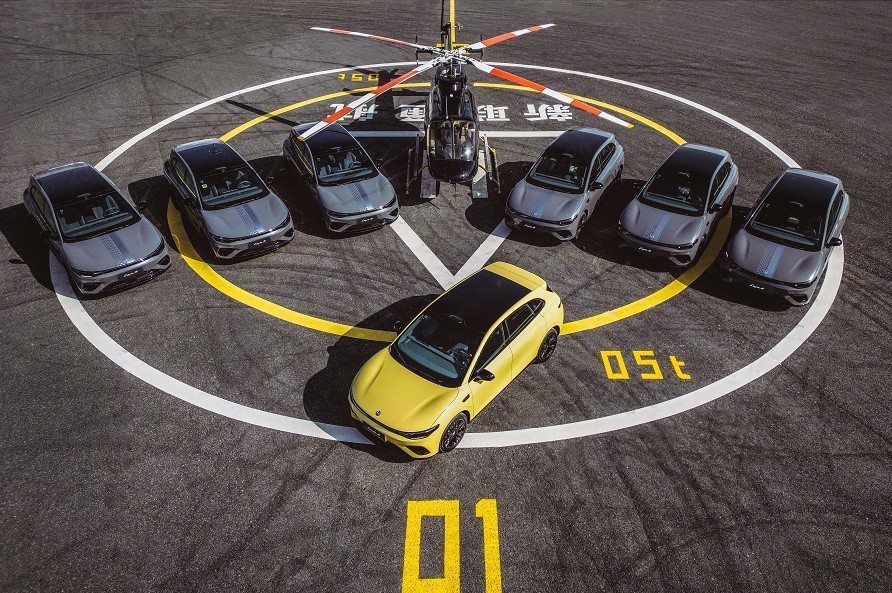
Image source: Leapmotor's official Weibo
As its core battery supplier, Zhenli New Energy naturally stands on the rising segment of this growth curve, and its performance elasticity is actually reflected faster than on the vehicle side.
Of course, this binding is not without risks. For any medium-sized power battery company, growth driven by a single customer is often fragile.
After all, over-reliance on a single customer means significant cyclical risks. Once automaker sales fluctuate, strategies shift, or vehicle model rhythms adjust, the capacity utilization of the battery sector will immediately come under pressure.
And once a customer is caught in a price war or actively engages in downgrading competition, upstream suppliers are often forced to synchronize price cuts, rapidly narrowing profit margins; even when industry demand shifts, single binding can lead to inventory accumulation and sudden stops in procurement rhythms, exposing cash flow to sudden risks.
For this reason, Zhenli New Energy has begun to accelerate its penetration of traditional automaker supply chains. In recent years, Zhenli New Energy has successfully passed the cyclicality, stability, and consistency verification of traditional automakers and has successfully entered the supply chains of traditional automakers such as GAC Toyota, Volkswagen, and SAIC.
For Zhenli New Energy, this means: first, the customer structure has shifted from single to diversified, significantly improving risk resistance; second, the profit margin range has been opened, with gross and net profits having higher ceilings.
In this way, Zhenli New Energy can both capture incremental growth in the new energy vehicle track and stabilize its foundation with traditional automakers. What the capital market values is precisely this asymmetric opportunity. Although Zhenli New Energy's current market share is only 2%, its customer structure has entered a composite stage, meaning future growth elasticity may far exceed the scale suggested by market share.
In the industry, there are few battery companies that can simultaneously cover the incremental growth of new energy vehicles and the profit bands of traditional automakers. Zhenli New Energy has already become one of the few structural players on this path.
Beyond the growth story, the unavoidable stress test for Zhenli New Energy
While the market focuses on its growth elasticity, Zhenli New Energy is also facing an unavoidable stress test.
As any medium-sized power battery company seeking growth must face three types of tests: raw material cycles, industry consolidation, and the uncertainty of cross-industry innovation.
First is cyclical risk, which is also one of Zhenli New Energy's core risks. Currently, its business structure is still highly dependent on power batteries, and the profit fluctuations of power batteries are largely directly affected by upstream key materials (such as lithium carbonate and lithium hydroxide).
Taking lithium carbonate as an example, the average price fluctuations over the past four years have been significant. Data from Jinzheng Research shows that in 2022, it increased by 278.41% compared to 2021, and then prices began to decline, with year-on-year declines of 2023-2024 increasing to 47.85% and 65.01%, respectively.
Every rise and fall of lithium carbonate and lithium hydroxide will have a lagged impact on gross margins. Without the ability to lock in prices, negotiate production rights, or bind long-term agreements, small and medium-sized manufacturers are often forced to react passively to fluctuations.
A more realistic obstacle comes from the industry landscape. In recent years, competition in the power battery industry has accelerated toward the top, with CATL, BYD, and LG Energy Solution firmly ranking among the top three globally, collectively occupying over 65% of the market share.
In this highly concentrated ecosystem, technology, supply chains, scale, and brands form strong coupling, and the survival space for medium-sized players is being compressed narrower and narrower. From customer binding to platform development, from large-scale procurement to global delivery systems, small and medium-sized enterprises no longer have a simple path to catch up.
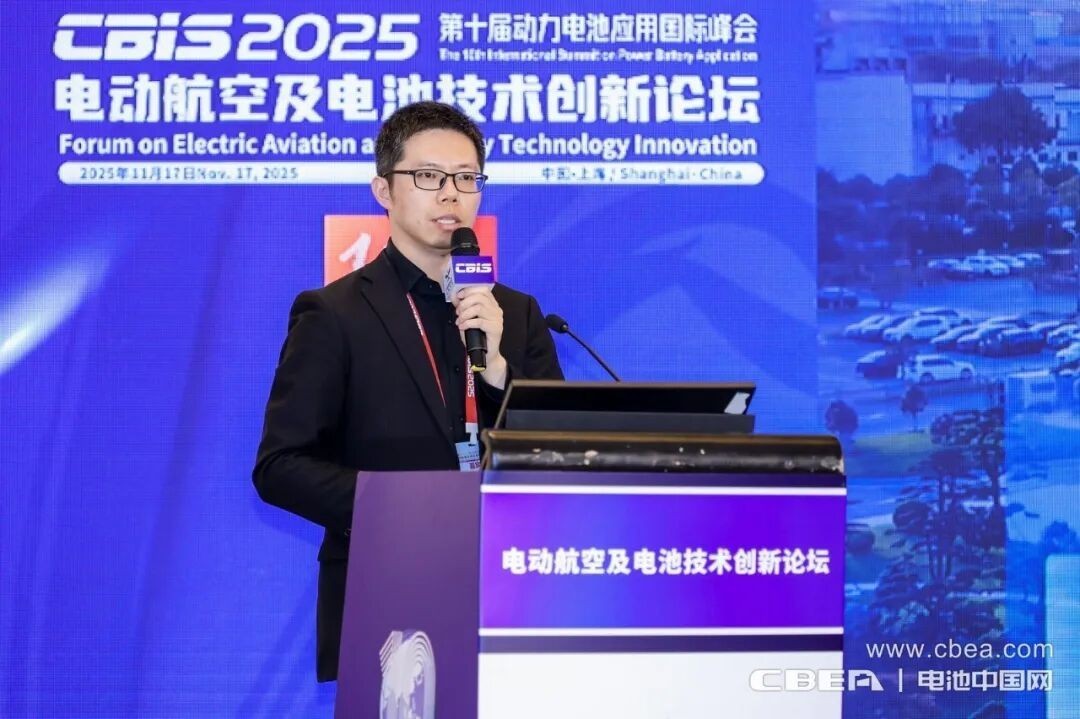
Zhenli New Energy's Chief Product Officer Yu Zhexun delivering a keynote speech (Image source: Battery China)
Zhenli New Energy is also aware of this situation. Therefore, it has chosen to bet on the direction of aviation batteries for low-altitude aircraft (including eVTOLs and unmanned vehicles).
Compared to automotive-grade batteries, aviation batteries require higher standards in energy density, safety redundancy, peak power, and energy replenishment efficiency. As the saying goes, "Automotive-grade is the peak, aviation-grade is just the starting point," which reflects the current industry reality.
Clearly, this will not be an easy business transformation but rather a survival-style breakout by medium-sized battery manufacturers after the industry has become highly consolidated. On one hand, the automotive-grade market is firmly locked by the top players, and even if medium-sized players achieve extreme efficiency, it is difficult to change their fate in the scale war.
On the other hand, the cyclical fluctuations of the automotive industry are gradually intensifying, and the profit ceiling of the power battery business is becoming within reach and yet difficult to break through. Zhenli New Energy's anxiety lies in the fact that if it does not find the next growth curve in advance, it may passively bleed when the next round of price wars arrives.
For this reason, aviation batteries may become Zhenli New Energy's next-stage technological springboard or a black hole that devours resources.
For the capital market, this kind of "high potential + high uncertainty" business expansion is not a bad thing but will instead bring valuation logic into a new discussion range. If automotive-grade business determines Zhenli New Energy's current value, then aviation batteries will determine whether it can achieve a second layer of pricing in the future.
The valuation of power battery companies often depends on three curves: the scale curve, the technology curve, and the customer structure curve. Scale determines the bottom valuation range, technology determines the ceiling, and customer structure determines volatility.
Now, although Zhenli New Energy's market share is not high, its efficiency model is stable, its customer portfolio is diversified, and the technological imagination brought by its extension into aviation batteries has made the attention it receives in the capital market no longer the typical pricing method for battery factories but rather the composite pricing logic of "automotive-grade + aviation-grade."
For investors, this possibility itself is the beginning of the story.
Conclusion
The reason Zhenli New Energy was listed as a "top pick" by China Merchants Bank is not that it has become a giant, but because it has demonstrated rare "composite capabilities" during the window period when the giant landscape has not yet solidified. This gives its growth both a foundation and imagination, as well as a long-term breakthrough.
But what really determines Zhenli New Energy's future is not whether it can replicate CATL or outperform BYD, but whether, in an industry surrounded by big players, with fluctuating demand and rapidly diverging technologies, it can maintain its advantages and move forward steadily.$ZENERGY(03677.HK)
Author: Sang Yu
Source: Hong Kong Stock Research Society
The copyright of this article belongs to the original author/organization.
The views expressed herein are solely those of the author and do not reflect the stance of the platform. The content is intended for investment reference purposes only and shall not be considered as investment advice. Please contact us if you have any questions or suggestions regarding the content services provided by the platform.
