



What is the impact of H200's release on Hong Kong tech stocks?

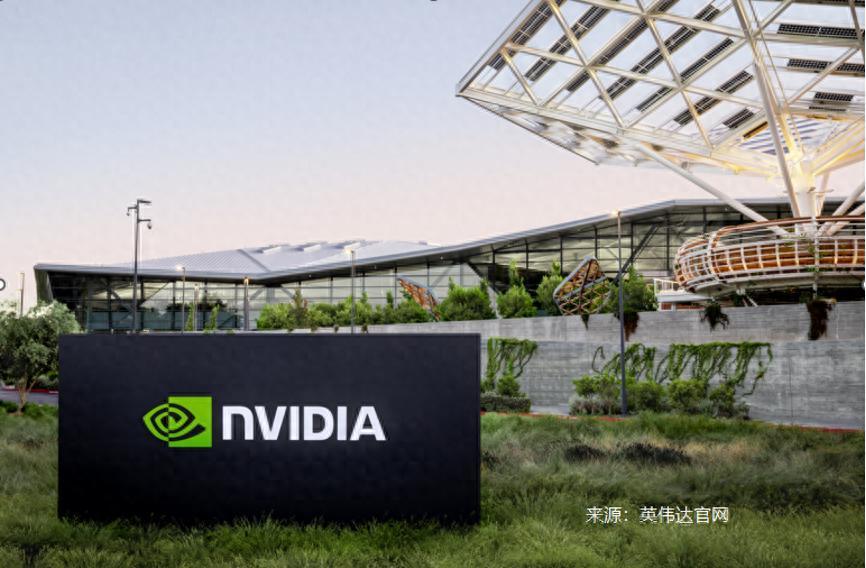
On the evening of December 8, 2025, Donald Trump posted on his social media platform "Truth Social," pressing the "reset button" on the ongoing U.S.-China AI chip trade standoff—allowing $NVIDIA(NVDA.US) to export H200 AI chips to China, but requiring the company to remit 25% of its sales revenue to the U.S. government, up from the previously claimed 15%. More advanced Blackwell and Rubin architecture chips remain restricted, and this policy also applies to other AI chip companies like AMD (AMD.US) and Intel (INTC.US).
This move is expected to end NVIDIA's predicament of seeing its AI chip market share in Greater China plummet to zero, while also triggering a chain reaction in the Hong Kong and A-share tech sectors. From domestic substitution core targets like $SMIC(00981.HK) and $Cambricon(688256.SH) to computing power demand heavyweights like $TENCENT(00700.HK), and self-developed chip players like Baidu's (09888.HK) Kunlun Chip and Alibaba's (09988.HK) Pingtouge, all are being drawn into the restructuring of this computing power chessboard.
H200's "Performance Breakthrough": Not Top-Tier but Could Reshape Market Supply and Demand
The H200 is NVIDIA's "second-strongest" AI chip before the launch of its next-generation Blackwell architecture chips, with computing power far exceeding the "China-specific" H20 previously allowed for sale in China. However, compared to NVIDIA's current most advanced Blackwell Ultra architecture chips like the GB300, the H200 still lags significantly in both AI training and inference performance.
Nevertheless, while the H200 cannot match Blackwell's top-tier computing power, it can fill the high-end computing gap in China and may alleviate the computing power anxiety of domestic tech giants in the short term.
For NVIDIA, AMD, and Intel, this is undoubtedly positive news, as it allows them to re-enter the fastest-growing market in Greater China.
Mixed Performance for Domestic Substitution Concept Stocks
U.S. restrictions on chip supply have spurred China to accelerate its self-replacement process in the AI computing chip sector. In fact, some domestic chips already have the capability to compete with the H200 and have achieved breakthroughs in certain scenarios.
For example, Huawei's Ascend 910B and other chips have become key substitutes. According to domestic media reports, ByteDance has ordered 100,000 Ascend 910B chips from Huawei to train AI models, while Huawei's Ascend 910C has emerged as a strong competitor to the H200. Additionally, Moore Thread's (688795.SH) MTT S80 GPU, Cambricon's (688256.SH) Siyuan 590 chip, Alibaba's "Pingtouge" Hanguang 800, and Baidu's Kunlun Chip P800 series may also compete with the H200.
Interestingly, despite the drag from the H200's return, A-share domestic substitution chip concepts still rose sharply, with Cambricon up 1.28%, while Moore Thread, the "first domestic GPU stock" newly listed on the STAR Market, surged 5.73% after announcing the upcoming launch of a new GPU architecture. In Hong Kong, Alibaba and Baidu fell 1.63% and 3.50%, respectively.
Among semiconductor foundry stocks, SMIC (00981.HK) and Huahong Semiconductor (01347.HK) both reported declines, with H-shares down 4.11% and 5.41%, respectively.
However, the valuation logic for these foundry stocks may need to be viewed from two angles.
Previously, U.S. restrictions on advanced processes had driven SMIC's capacity expansion and accelerated technological breakthroughs in mature processes, boosting its stock price. But the H200's return means that domestic tech companies' high-end computing power needs can be met through imports, potentially reducing the urgency for domestic chip foundries. Notably, the H200 GPU uses TSMC's 4N process (a 3nm node), while SMIC, constrained by technical limitations like U.S. export controls on EUV lithography machines, can only match 7nm processes with its most advanced N+2 technology, with gaps in yield and cost, making it difficult to support large-scale production of domestic high-end AI chips.
In the long run, however, SMIC may leverage its mature process moat and advanced packaging to meet the foundry needs of domestic AI chip companies. For example, the Xiyun C600 series from Muxi (688802.SH), soon to be listed on the STAR Market, has computing power between NVIDIA's A100 and H100 and relies on SMIC's mature processes. The H200's return may force domestic chip companies to accelerate differentiated layouts, increase capital investment, and focus on low-power scenarios and edge computing, potentially bringing incremental orders to SMIC's mature processes.
Additionally, SMIC's technological 积累 in advanced packaging could help domestic chips achieve computing power "stacking" through Chiplet technology, enabling them to compete with the H200 in specific scenarios, which may become a key logic for its valuation recovery.
End Users' "Computing Power Relief" and Self-Reliance
For end users like Tencent and ByteDance, the H200's return is a "timely rain" to alleviate computing power anxiety and a "crossroads" for strategic choices.
As one of China's largest computing power demanders, Tencent's management has repeatedly stated in earnings calls that the company has sufficient GPU inventory to meet model training needs for the foreseeable future, emphasizing that it has many non-Western options for inference chips and can significantly improve existing computing efficiency through software optimization. This indicates that leading cloud providers, after enduring prolonged supply chain uncertainty, have built considerable risk resilience through advance stockpiling, software optimization, and diversified supplier layouts. For them, the H200's arrival is an additional option rather than a lifeline. Meanwhile, domestic regulators' security reviews of imported chips are a policy variable that giants must consider when making purchases.
At this sensitive industry moment, Baidu's plan to spin off its AI chip company Kunlun Chip for a Hong Kong listing has drawn significant interest. Baidu officially responded that the plan is under evaluation and not yet finalized. Kunlun Chip has already mass-produced two generations of products, supporting not only Baidu's own business but also winning a billion-yuan procurement project from China Mobile (00941.HK), with clients spanning finance, power grids, automotive, and hundreds of other institutions. The spin-off push can be seen as a capital move to capture high valuations while the domestic substitution narrative remains strong, as well as reflecting Baidu's strategic intent to strengthen its chip business independently and compete more broadly in the market.
Alibaba, through "Pingtouge," has built vertical integration capabilities from chips to cloud services. Its chip performance has been officially documented and applied in national-level data center projects. For Alibaba, the H200's sales license is more of a supplement to its cloud service capabilities, while its internal large-model training and core ecosystem's computing foundation are expected to continue leaning toward self-developed Pingtouge chips to consolidate technological autonomy and cost advantages.
Conclusion
In this trade 博弈 over advanced AI chips, there are no absolute winners or losers, only constantly adjusting tactics and repositioned players.
In the short term, the H200's return indeed opens the door for NVIDIA and others to re-enter the Chinese market and provides a valuable "computing power buffer" for end users like Tencent and ByteDance. However, it 更像 a sobering 剂, puncturing the market's 单一幻想 about domestic substitution paths.
More importantly, the "supply cut" pressure of recent years has profoundly reshaped the ecosystem and mindset of China's AI computing power industry. Players like Huawei's Ascend, Alibaba's Pingtouge, and Baidu's Kunlun Chip are poised to grow from alternatives into competitive market players in specific scenarios. The H200's arrival will not reverse the development wave of domestic chips driven by national security, cost optimization, and ecosystem autonomy. Instead, it may, through more direct market competition, force domestic technology stacks to mature faster in software ecosystems, energy efficiency, and differentiated scenarios. China's computing power chessboard is shifting from "substitution" under pressure to "choice" and "parallel" based on strength.
Looking ahead, this battle over cutting-edge computing power will enter a more complex and layered 常态。 The most 顶级 scientific research and frontier model training may still chase the world's latest chips, but in 海量 industry scenarios, inference applications, and areas 关乎 infrastructure security, self-sufficient domestic computing foundations will take deeper root. Companies that can balance technological resilience,商业 insight, and ecosystem integration capabilities will become the navigators of the new era.
At this opportune moment, the highly anticipated "Top 100 Hong Kong Stocks"榜单 is about to be unveiled. This 评选 will 深入 examine the comprehensive strength and long-term value of 众多 tech leaders, including SMIC, Tencent, Alibaba, and Baidu, as they navigate cyclical fluctuations, geopolitical 博弈, and 坚持 innovation breakthroughs. Who can strike a balance between technological autonomy and global collaboration? Who can solidify the 基石 of the future amid the computing power 重构 tide? Stay tuned for the release of the "Top 100 Hong Kong Stocks"榜单 to 洞察 the core forces and value benchmarks shaping the future of Hong Kong's capital market.
Author: Wu Yan
The copyright of this article belongs to the original author/organization.
The views expressed herein are solely those of the author and do not reflect the stance of the platform. The content is intended for investment reference purposes only and shall not be considered as investment advice. Please contact us if you have any questions or suggestions regarding the content services provided by the platform.
