


First H then A, soaring nearly 150% on the first day! Does Biocytogen's 'Thousand Mice Ten Thousand Antibodies' rare narrative attract enough attention?

Recently, there has been a surge of pharmaceutical IPOs at the Hong Kong Stock Exchange, while the A-share pharmaceutical sector appears relatively quiet. Even though the fifth set of the STAR Market has been relaunched, the atmosphere for pharmaceutical companies rushing to IPO doesn't seem particularly strong.
However, when pharmaceutical stars make their debut, investment enthusiasm can still be easily ignited.
Today, Biocytogen Pharmaceuticals (Beijing) Co., Ltd. (hereinafter referred to as "Biocytogen") listed on the STAR Market, "stirring up a pool of spring water." It is reported that Biocytogen's issue price was RMB 26.68 per share, with an opening price of RMB 58 per share, a 117% increase from the issue price. By the close, Biocytogen's A-share price was RMB 65.8 per share, up 146.63%, with a market capitalization reaching RMB 29.406 billion.
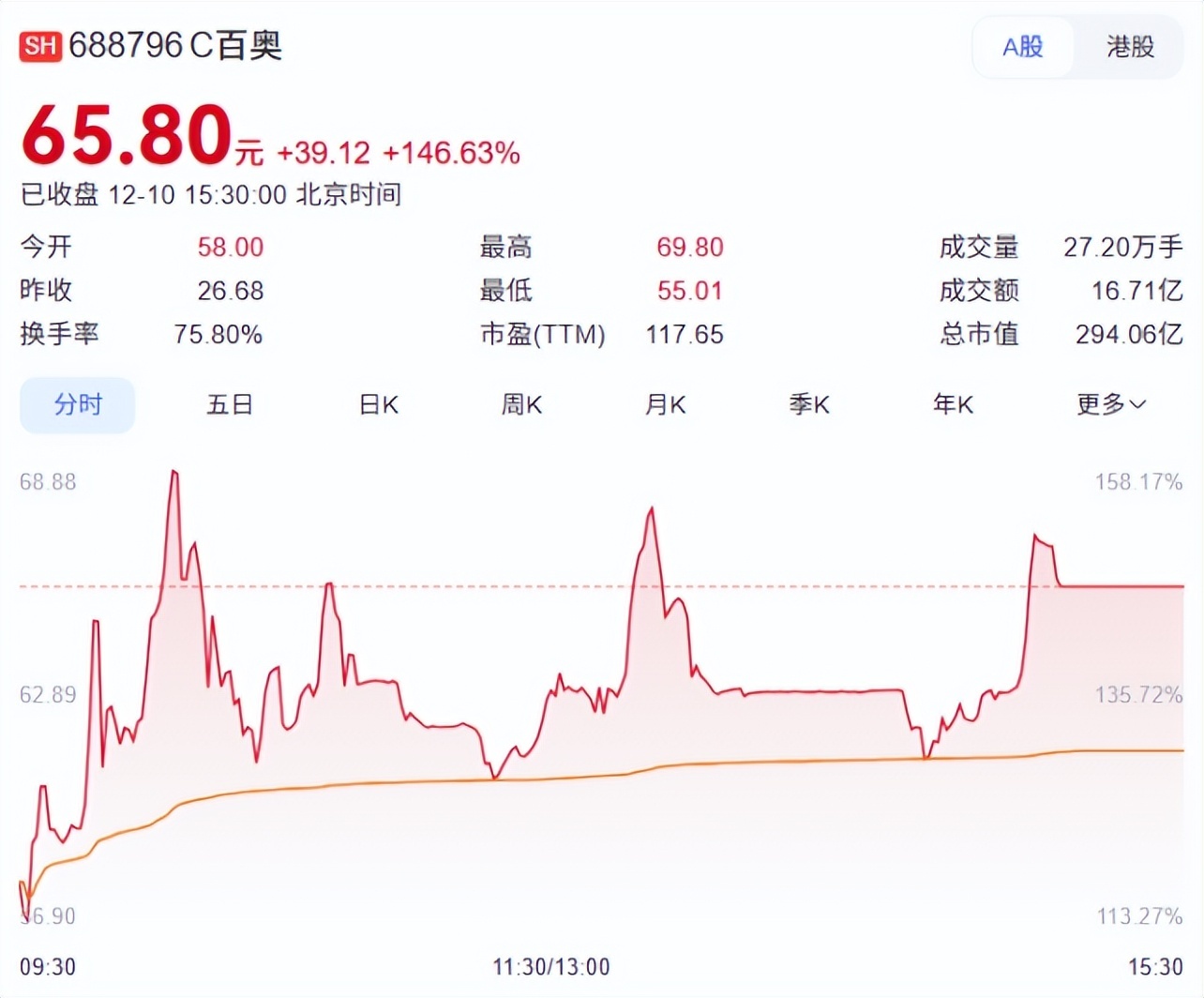
It is worth noting that Biocytogen had already listed on the Hong Kong Stock Exchange in September 2022, hailed as the "first gene-editing stock." and now its successful bell-ringing on the A-share market has clearly deepened its capital market layout. The "H-share first, then A-share" path is also a relatively rare listing route.
At the same time, the STAR Market has finally gathered the "Big Three of Chinese Model Animals" (Shanghai Model Organisms, GemPharmatech, and Biocytogen), marking a milestone moment.
At this juncture, by delving into the prospectus, the investment market may have further confirmed that Biocytogen is a rare CRO transformation case.
Business "Metamorphosis" Cycle: Has Loss Become a Thing of the Past?
As one of the first companies to enter the gene-editing field in China, Biocytogen has driven a significant self-"metamorphosis" over more than a decade—from a biotech company providing single gene-editing services to a CRO and biotech enterprise integrating four platforms: gene-edited model animal preparation, model animal breeding and supply, preclinical pharmacodynamic evaluation, and antibody drug discovery. It has established a one-stop R&D service system for antibody drugs, spanning drug discovery, fully human antibody development, in vivo and in vitro pharmacodynamic evaluation, and clinical trials.
More crucially, during the window for A-share listing, the company achieved a historic breakthrough in performance, further boosting investor confidence.
According to the prospectus, from 2022 to 2024, Biocytogen's operating revenues were RMB 534 million, RMB 717 million, and RMB 980 million, respectively, with net profits of -RMB 602 million, -RMB 383 million, and RMB 33.5369 million.
In the first half of 2025, the company's revenue reached RMB 621 million, a year-on-year increase of 51.5%, with net profit reaching RMB 47.9988 million, exceeding the full-year level of the previous year. Operating cash flow turned positive, demonstrating strong self-sustaining capabilities.
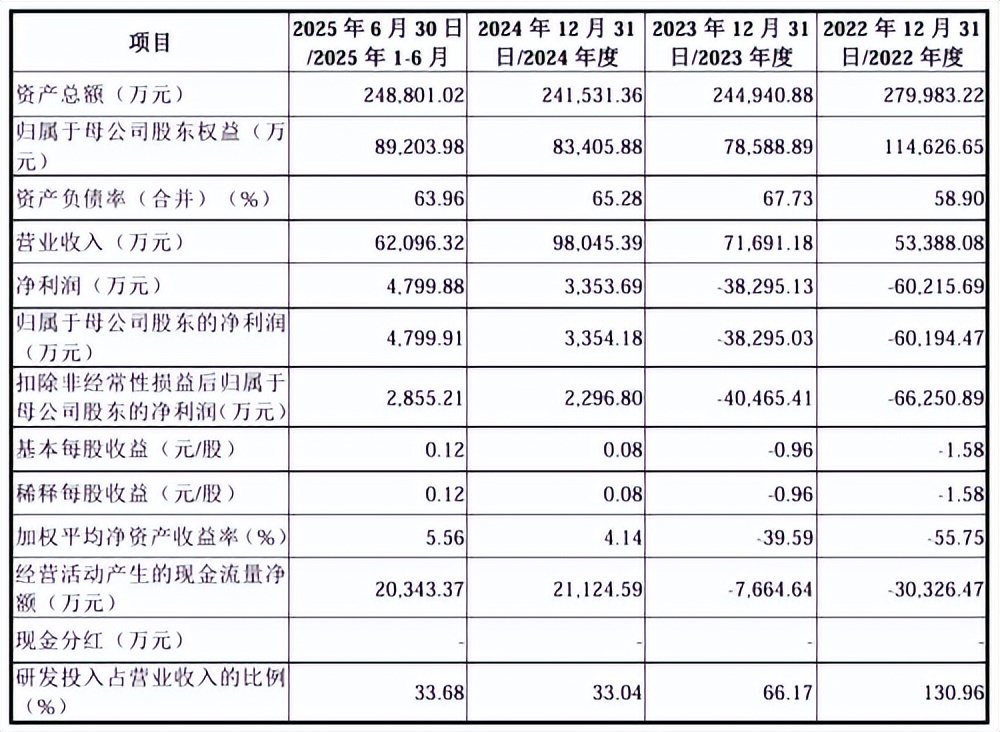
Clearly, marked by "bidding farewell to losses," 2024 was a pivotal turning point for Biocytogen. Prior to this, the reasons for Biocytogen's "revenue growth without profit growth" were also evident.
On one hand, based on its technology platform, developing innovative businesses and fostering customer collaborations, Biocytogen's methodology for expanding revenue has long been effective. Looking at the business structure, Biocytogen currently has four core segments, with model animal sales being the main driver of revenue growth, followed closely by antibody development, which is gaining increasing weight.
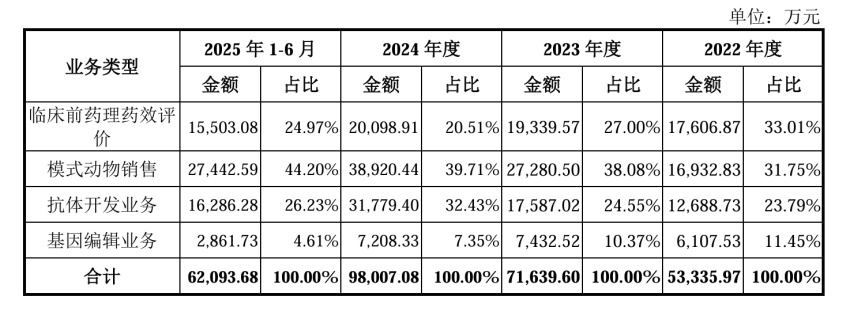
According to Biocytogen, the antibody development business relies on its self-developed RenMice series of fully human antibody technology platforms for early drug discovery and development, forming an "antibody sequence shelf" targeting over a thousand targets for customers to choose from.
The RenMice mentioned here is a fully human antibody/TCR mouse platform developed by Biocytogen using a leading large-fragment genome in situ replacement strategy, with fully independent intellectual property rights. It includes RenMab, RenLite, RenNano, RenTCR, and RenTCR-mimic, used for the development of monoclonal antibodies, bispecific antibodies/bispecific ADCs, nanobodies, TCR drugs, and TCR-like antibodies, respectively.
Building on this, in recent years, Biocytogen has vigorously implemented the "Thousand Mice Ten Thousand Antibodies" program, conducting large-scale screening, validation, and development of antibody drugs for over 1,000 potential drug targets (covering disease areas such as tumors, autoimmune diseases, inflammation, and metabolism). It has transferred, licensed, or co-developed promising antibody molecules, receiving upfront payments, milestone payments, and post-approval sales royalties from partners at various stages.
As of the signing date of the prospectus, Biocytogen has collaborated with dozens of well-known domestic and international biotech or pharmaceutical R&D companies, including Merck KGaA, Gilead Sciences, Johnson & Johnson, BeiGene, Hansoh Pharma, Chia Tai Tianqing Pharmaceutical, China Resources Biopharmaceutical, Innovent Biologics, RemeGen, and Shanghai Institute of Biological Products, on the licensing/transfer of drug molecules discovered through the "Thousand Mice Ten Thousand Antibodies" program or the licensing of the RenMice platform. The "snowball" effect on revenue is becoming increasingly evident.
On the other hand, emerging R&D projects involve large investments and long development cycles, increasing profitability pressure. The prospectus shows that from 2022 to 2024 and the first half of 2025, Biocytogen's R&D expenditures as a percentage of operating revenue were 130.96%, 66.17%, 33.04%, and 33.68%, respectively, impacting profit performance.
However, it can also be seen that these ratios are trending downward, to some extent freeing up profit space. Specifically, as RenMice is gradually completed and the "Thousand Mice Ten Thousand Antibodies" program accelerates, the scale of the antibody molecule library available for sale expands, leading to rapid revenue growth in Biocytogen's antibody development business and a significant narrowing of losses in this segment.
Additionally, other businesses continue to contribute. As of June 30, 2025, Biocytogen has independently developed over 4,300 innovative animal and cell models, completed more than 6,350 drug evaluation projects for approximately 950 global partners, and assisted some partners in successfully completing IND applications, solidifying the foundation for the simultaneous growth of the company's revenue and profit scale.
But then again, why is Biocytogen so determined to focus on antibody development? What exactly is the profit potential of this track?
Pushing "Thousand Mice Ten Thousand Antibodies": Not Just a Pure "Water Seller"?
The blueprint for "Thousand Mice Ten Thousand Antibodies" stems from demand.
In the pharmaceutical R&D field, existing clinical-stage pipelines and commercialized drugs cover highly concentrated targets, leading to fierce homogeneous competition. At the same time, there remains a vast unmet technical gap in the market.
Data from Frost & Sullivan shows that since the approval of the first monoclonal antibody drug in 1986, as of June 30, 2025, China's NMPA, the U.S. FDA, and the EU's EMA have approved over 200 monoclonal antibodies, involving more than 70 drug targets. However, there are over 1,000 potential drug targets in the human body, most of which remain to be further developed.
Pharmaceutical R&D has no end, and the motivation for companies to break the deadlock and carve out differentiated paths is clearly strong.
However, for researchers and new drug development companies, drug development remains challenging, with understanding the MOA (mechanism of action) of potential drug targets being costly and risky. In terms of process, traditional MOA-based R&D involves target evaluation and validation, antibody screening and preparation, lead compound screening and optimization, candidate compound screening and determination, in vivo and in vitro pharmacodynamic studies, CMC, safety evaluation, and clinical trials. How to improve efficiency has become a major issue.
Such pain points and demands naturally create opportunities for the development of the "water seller" industry.
In the prospectus, Biocytogen admits that it perceives intense competition in global early-stage drug R&D and urgently needs innovative R&D models to improve efficiency.
Against this backdrop, the company launched the "Thousand Mice Ten Thousand Antibodies" program in March 2020, aiming to use the RenMab and RenLite mouse platforms to generate target knockout (Target KO) mice for over 1,000 potential drug targets in humans for drug discovery. After immunizing each Target KO mouse, hundreds of antibody molecules targeting different epitopes of the target are obtained, forming a rich library of high-quality antibody molecules that can meet diverse R&D needs of partners, significantly accelerating the discovery and development of antibody drug candidates and saving time and costs in new drug R&D.
In this regard, we can simply understand that Biocytogen is operating a well-stocked "antibody supermarket," which also marks the beginning of a new round of "metamorphosis" for the company.
According to the prospectus, for pipeline products such as YH001, YH002, YH003, YH005, YH008, YH011, and YH013, Biocytogen has reached external transfer/licensing/co-development agreements with commercial partners including Syncromune, RemeGen, MicroCore Biomed, and Kintor Pharmaceutical, with six already in clinical trials.
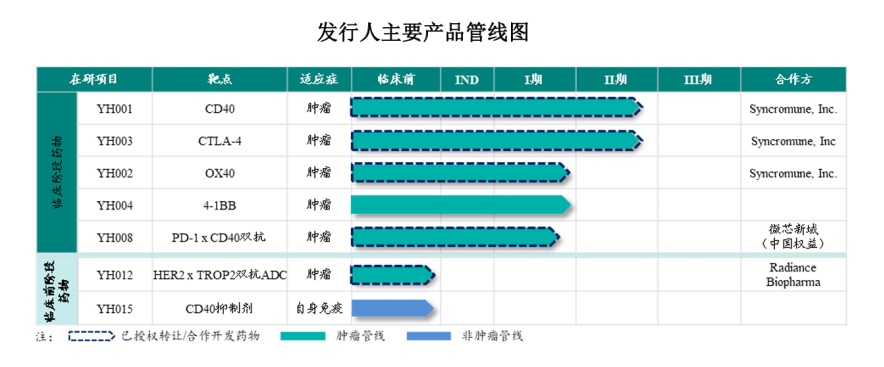
It is evident that Biocytogen is no longer a pure "water seller" but has acquired certain Biotech characteristics. The parallel development of "CRO + Biotech" is visibly challenging but could be a key solution to breaking industry competition. After all, such a model is rare, whether in the CRO service sector or among biotech companies.
It is worth mentioning that the model animal sales and antibody development businesses, which Biocytogen has focused on, are also the segments with the highest gross margins. Among them, the antibody development business has the highest gross margin, reaching 80%-90%, followed by model animal sales at about 70%-80%.
With traditional businesses stabilizing and innovative businesses taking off, Biocytogen may be getting closer to its next profit cycle.
Source: Pharmaceutical Research Society
The copyright of this article belongs to the original author/organization.
The views expressed herein are solely those of the author and do not reflect the stance of the platform. The content is intended for investment reference purposes only and shall not be considered as investment advice. Please contact us if you have any questions or suggestions regarding the content services provided by the platform.
