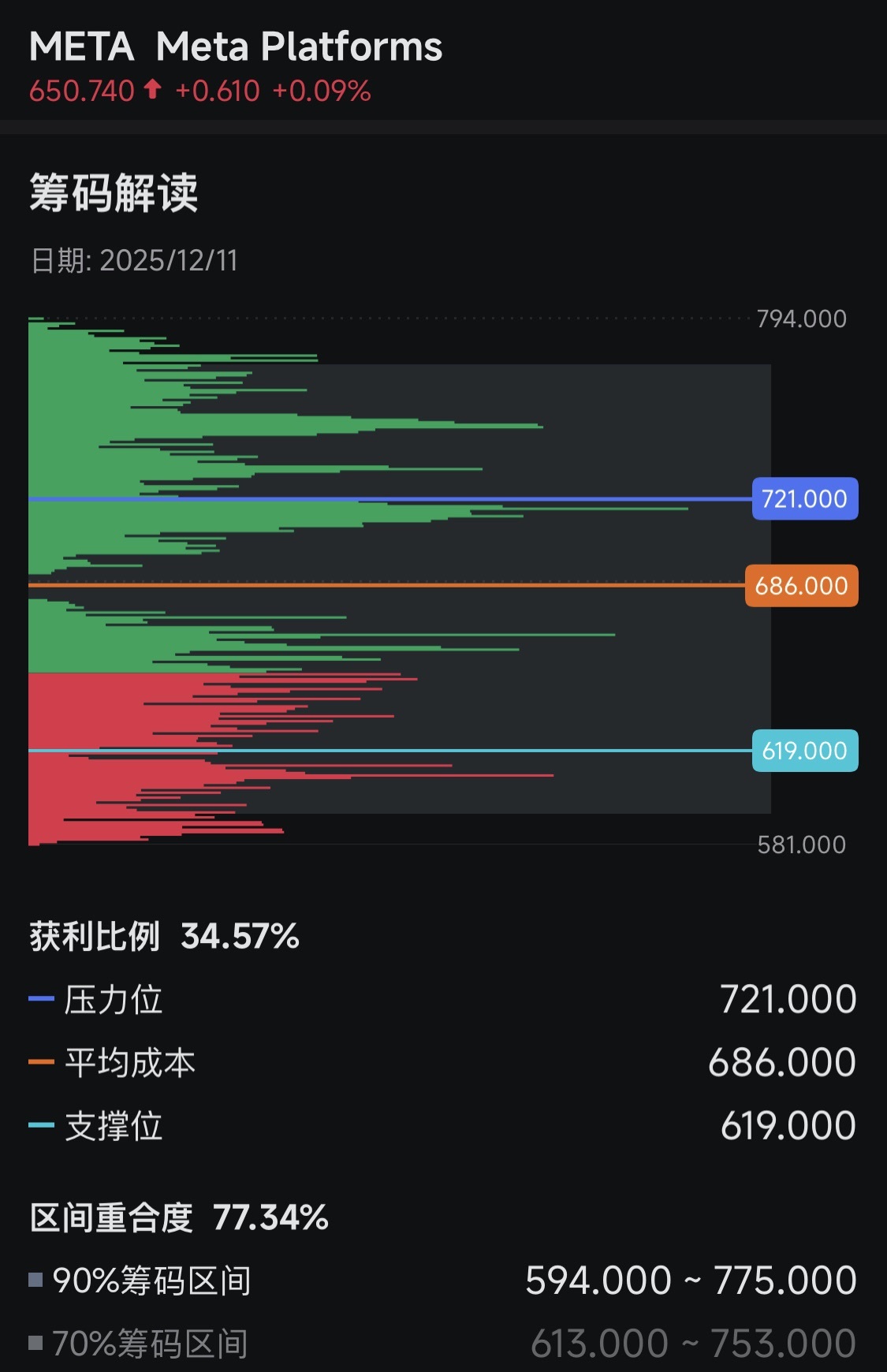
[81/100] Chip game: Judging the strength of long and short positions

"Chip game" mainly refers to analyzing the holding costs (chip distribution) in different price ranges in the market to judge the strength of bulls and bears, resistance/support levels, and the behavior of major players, thereby inferring possible price trends.

1. What exactly are chips?
In A-shares, the so-called "chips" refer to the holding costs of investors who bought stocks at different price ranges.
The chip distribution chart shows: at which prices, the most people bought.
It can answer three key questions:
- Who is making money, who is losing money? (Bull-bear mentality)
- Where is the major player accumulating chips? (Major player's cost)
- How much resistance and support are there above and below the stock price? (Key price levels)
2. The core logic of the chip game
You can imagine the price as a battlefield and the chips as soldiers on both sides:
- Chip concentration zone = Cost zone of a large number of buyers = Main battlefield
- When the stock price rebounds upward and hits the concentration zone, many trapped people will want to sell → Resistance level
- When the stock price falls back to the concentration zone, many low-price holders are unwilling to sell → Support level
Many reversals in stock prices occur in chip concentration zones.
3. The most common chip game patterns (very practical)
1. Single-peak concentration (single-peak cost)
- Retail investors' costs are concentrated, usually indicating a high degree of control by major players.
- If the stock price breaks through and stabilizes above the single peak → High possibility of a strong rise
- If the stock price falls below the single peak → Trend weakens
2. Double peaks (bull-bear divergence)
Two concentration peaks represent two factions:
- Upper chips = Trapped positions
- Lower chips = Low-position funds
It is easy to encounter resistance when rising near the peak, often resulting in fluctuations.
3. Chips continuously moving downward (bear control)
Indicates that funds are continuously losing money and cutting losses,
The trend is weak, avoid it if possible.
4. Chips continuously moving upward (strong accumulation)
Everyone's costs are continuously increasing, indicating:
- Major players are continuously pushing up the stock price
- Bears have little power
Common in the early stages of big bull stocks.
4. How to practically apply the chip game? (A three-step method for you)
① Find the chip peak (cost zone)
Determine whether these chips are support or resistance.
② Observe the direction of chip movement
- Upward → Major players are strong
- Downward → Major players are weak
- Squeeze → Precursor to an outbreak
③ Observe the relationship between the stock price and chips
- Stock price breaks through the chip peak and stabilizes → Bullish
- Stock price falls below the chip peak → Beware of trend reversal
- Stock price is between two chip peaks → High probability of fluctuations
5. A simple example to help you understand
Assume a stock's chips are concentrated at 10 yuan:
- Now the stock price rises from 8 yuan to 10 yuan: → Trapped people will sell to break even, high resistance
- The stock price breaks through to 11 yuan and falls back to 10 yuan without breaking: → Original resistance becomes support → Easier to rise later
This is the classic logic of the chip game.
The copyright of this article belongs to the original author/organization.
The views expressed herein are solely those of the author and do not reflect the stance of the platform. The content is intended for investment reference purposes only and shall not be considered as investment advice. Please contact us if you have any questions or suggestions regarding the content services provided by the platform.