


 Posts
PostsJPMorgan turns against Wall Street: hoarding silver, positioning for gold, shorting the US dollar's credit

JPMorgan Chase, the most loyal "gatekeeper" of the old dollar order, is now personally tearing down the walls it once swore to defend.
According to market rumors, by the end of November 2025, JPMorgan Chase will relocate its core precious metals trading team to Singapore. If the geographical move is merely superficial, its essence is an open defection from the Western gold-power system.
Looking back over the past half-century, Wall Street has been responsible for constructing a vast illusion of credit with the dollar, while London, as the "heart" of Wall Street's gold-power empire across the Atlantic, has maintained the dignity of pricing with its deeply buried vaults. The two complement each other, weaving an absolute control network over precious metals for the Western world. And JPMorgan Chase was supposed to be the last and strongest line of defense.
Subtle clues stretch far and wide. Amid the official silence on the rumors, JPMorgan Chase has completed a stunning asset shuffle—approximately 169 million ounces of silver were quietly reclassified from "deliverable" to "non-deliverable" in COMEX vaults. Roughly converted based on public data from the Silver Institute, this amounts to nearly 10% of the global annual supply, effectively locked on paper.
In the brutal game of commerce, scale itself is the most resolute stance. To many, the stockpiled 5,000+ tons of silver resembles chips prepared in advance by JPMorgan Chase to seize pricing power in the next cycle.
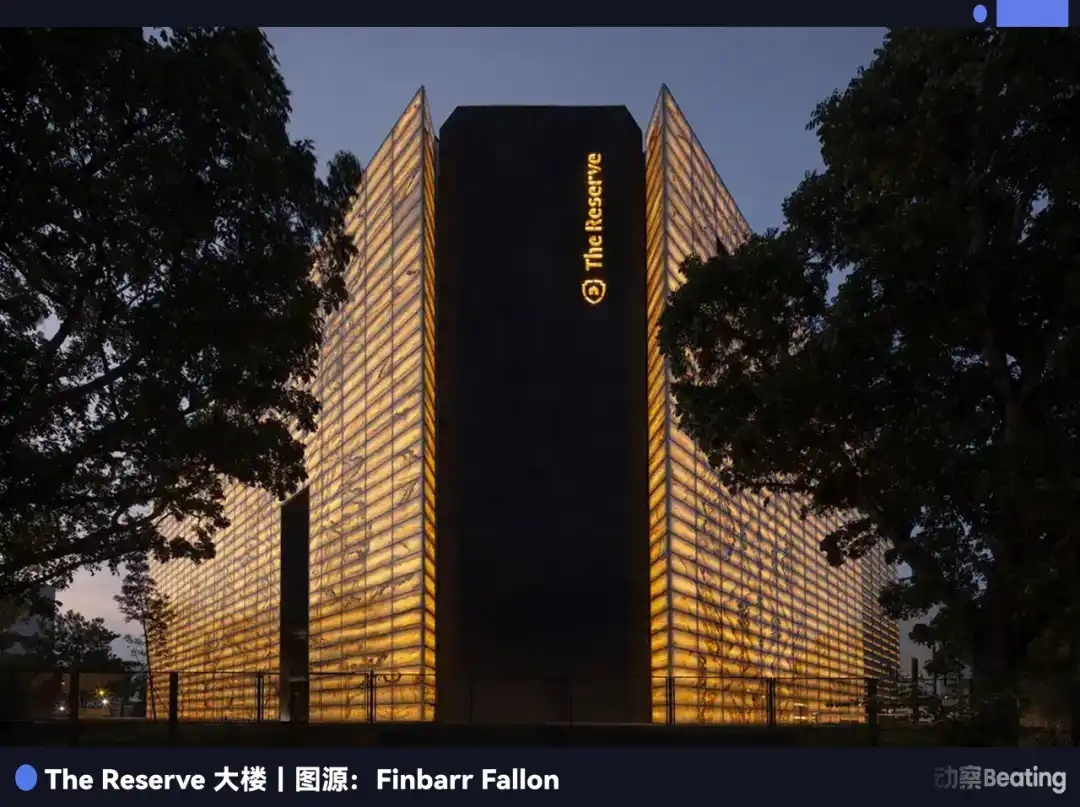
Meanwhile, thousands of kilometers away, Singapore's largest private vault, The Reserve, has timely launched its second-phase expansion, pushing total capacity to a staggering 15,500 tons. This infrastructure upgrade, planned five years ago, has given Singapore the confidence to absorb the massive wealth flowing out of the West.
JPMorgan Chase is locking down physical liquidity in the West to create panic with one hand, while building a safe harbor in the East to reap dividends with the other.
What drove this giant to defect is the undeniable fragility of the London market. At the Bank of England, gold delivery times have stretched from days to weeks, while silver lease rates once soared to a historic high of 30%. To those familiar with this market, this signals one thing: everyone is scrambling for inventory, and physical assets in vaults are running thin.
The shrewdest dealers are often the vultures most sensitive to the scent of death.
In this bitter winter, JPMorgan Chase has demonstrated the instincts of a top player. Its departure marks the impending end of the half-century-long "paper gold" game that turned stones into gold. When the tide recedes, only those holding tangible physical chips will secure passage to the next three decades.
The End of Alchemy
The root of all trouble was planted half a century ago.
In 1971, when President Nixon severed the dollar's umbilical cord to gold, he effectively pulled the last anchor of the global financial system. From that moment, gold was demoted from a rigidly redeemable currency to a financial asset redefined by Wall Street.
Over the next half-century, bankers in London and New York invented a sophisticated form of "financial alchemy." Since gold was no longer money, they could create endless "contracts" representing gold out of thin air, much like printing money.
This is the vast derivatives empire built by the LBMA (London Bullion Market Association) and COMEX (Commodity Exchange Inc.). In this empire, leverage is king. For every bar of gold sleeping in vaults, 100 delivery notes circulate in the market. And on the silver table, the game is even crazier.
This system of "paper wealth" operated for half a century solely on a fragile gentleman's agreement: most investors were only in it for price fluctuations and would never attempt to claim that heavy metal.
However, the designers of this game overlooked a "gray rhino" charging into the room—silver.
Unlike gold, which is buried deep as eternal wealth, silver plays the role of a "consumable" in modern industry. It is the veins of photovoltaic panels and the nerves of electric vehicles. According to the Silver Institute, the global silver market has been in structural deficit for five consecutive years, with industrial demand accounting for nearly 60% of total demand.
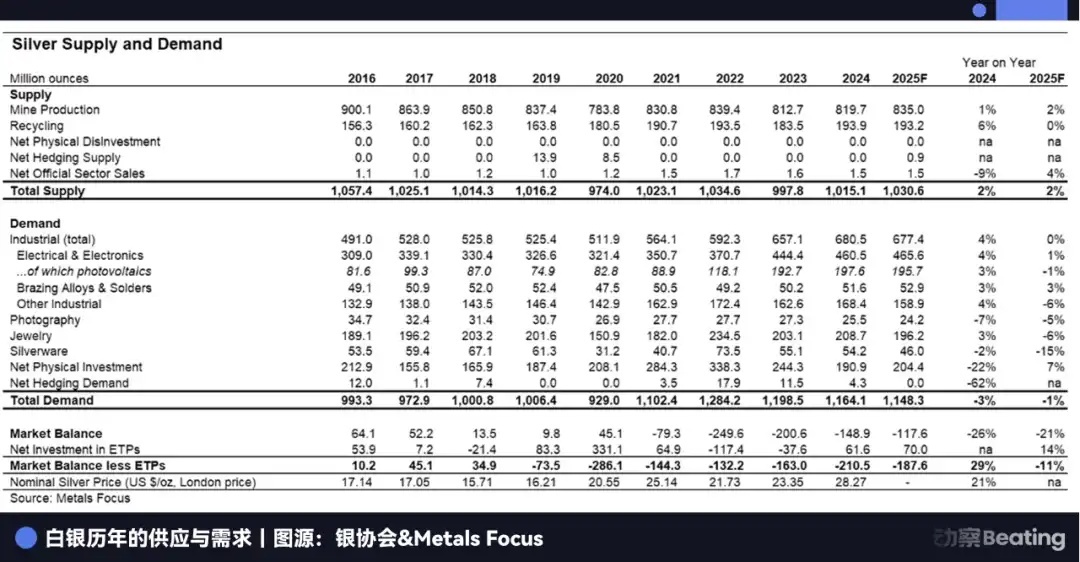
Wall Street can type out infinite dollars on keyboards but cannot conjure an ounce of conductive silver out of thin air.
When physical inventories are devoured by the real economy, the billions of contracts on paper become rootless trees. By the winter of 2025, this thin veil was finally pierced.
The first red flag was price anomalies. In normal futures logic, forward prices are usually higher than spot prices, known as "contango." But in London and New York, extreme "backwardation" emerged. If you want to buy a six-month silver contract, it's smooth sailing; but if you want to take silver bars home now, you'll face not only hefty premiums but also weeks of waiting.
Long queues formed outside the Bank of England's vaults, COMEX's silver inventories fell below safety thresholds, and the ratio of open contracts to physical stocks once surged to 244%. The market finally grasped the terrifying reality: physical and paper contracts are splitting into two parallel universes. The former belongs to those with factories and vaults; the latter, to speculators still dreaming the old dream.
If silver shortages are due to industrial beasts devouring supply, gold's outflow stems from a national-level "run." Central banks, once the staunchest dollar holders, now lead the queue.
Despite gold prices hitting historic highs in 2025, slowing some central banks' tactical buying, strategically, "buying" remains the only move. The World Gold Council (WGC) reports that in the first 10 months of 2025, global central banks net purchased 254 tons of gold.
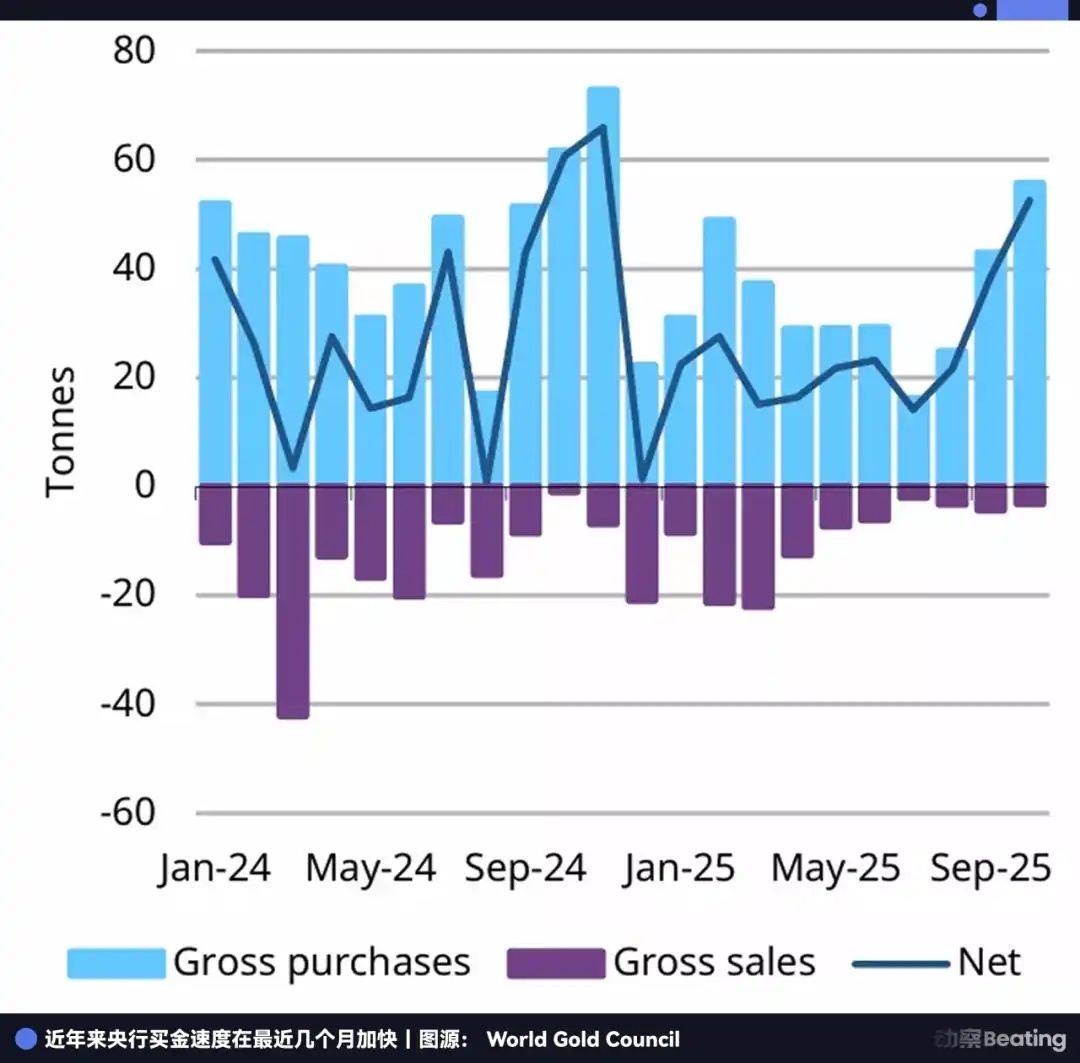
Let’s look at the buyers.
Poland, after a five-month pause, suddenly returned to the market in October, scooping up 16 tons in a single month, pushing gold reserves to 26% of total reserves. Brazil added for two straight months, climbing to 161 tons. China, since resuming purchases in November 2024, has appeared on the buyers' list for 13 consecutive months.
These nations are trading precious foreign exchange for heavy gold bars shipped home. In the past, they trusted U.S. Treasuries as "risk-free assets"; now, they scramble for gold as the only shelter against "dollar credit risk."
While mainstream Western economists still argue that the paper gold system provides efficient liquidity and the current crisis is temporary logistics, the truth is undeniable: paper can't cover fire, and now it can't cover gold either.
When leverage reaches 100:1, and that single "1" is being hauled home by central banks, the remaining "99" paper contracts face unprecedented liquidity mismatches.
London is trapped in a classic short squeeze—industrial giants fight for silver to keep production running, while central banks lock down gold as national strategic reserves. When all counterparties demand physical delivery, pricing models built on credit collapse. Those who hold the physical assets define the price.
And JPMorgan Chase, the "master magician" once best at playing paper contracts, saw this future earlier than anyone.
Rather than becoming a martyr to the old order, it chose to be a partner in the new. This repeat offender, fined $920 million for market manipulation over eight years, isn't leaving out of conscience but as a precise bet on global wealth flows for the next 30 years.
It’s betting on the collapse of the "paper contract" market. Even if it doesn’t implode immediately, the infinitely amplified leverage will inevitably be slashed, round after round. The only real safety lies in the tangible metal in the vault.
Defecting from Wall Street
If the paper gold and silver system is likened to a glitzy casino, JPMorgan Chase has been not just the bouncer maintaining order but also the dealer most skilled at cheating over the past decade.
In September 2020, to settle U.S. Department of Justice charges of precious metals market manipulation, JPMorgan paid a record $920 million. In the thousands of pages of investigation documents disclosed, its traders were described as masters of "spoofing."
Their signature tactic was cunning: traders would flash thousands of sell orders to fake an impending crash, inducing panic selling by retail investors and algorithms, then cancel the orders and gorge on bloodied chips at the bottom.
Statistics show Michael Nowak, JPMorgan’s former global head of precious metals, and his team artificially triggered tens of thousands of instant crashes and spikes in gold and silver prices over eight years.
Back then, this was dismissed as typical Wall Street greed. But five years later, with the 169-million-ounce silver inventory puzzle on the table, a darker interpretation is circulating.
Some now see those "trades" as more than just high-frequency profit-taking. It resembled a slow, deliberate accumulation—suppressing prices on paper while quietly hoarding physical assets.
The old order’s guardian has become its most dangerous gravedigger.
Once the biggest short in paper silver and the ceiling on gold and silver prices, JPMorgan has overnight become the biggest long after swapping paper for physical chips.
Market gossip abounds, with rumors that JPMorgan itself drove silver’s recent surge from $30 to $60. While unproven, it underscores one thing: in many minds, it’s no longer the paper-shorting puppeteer but the largest physical asset bull.
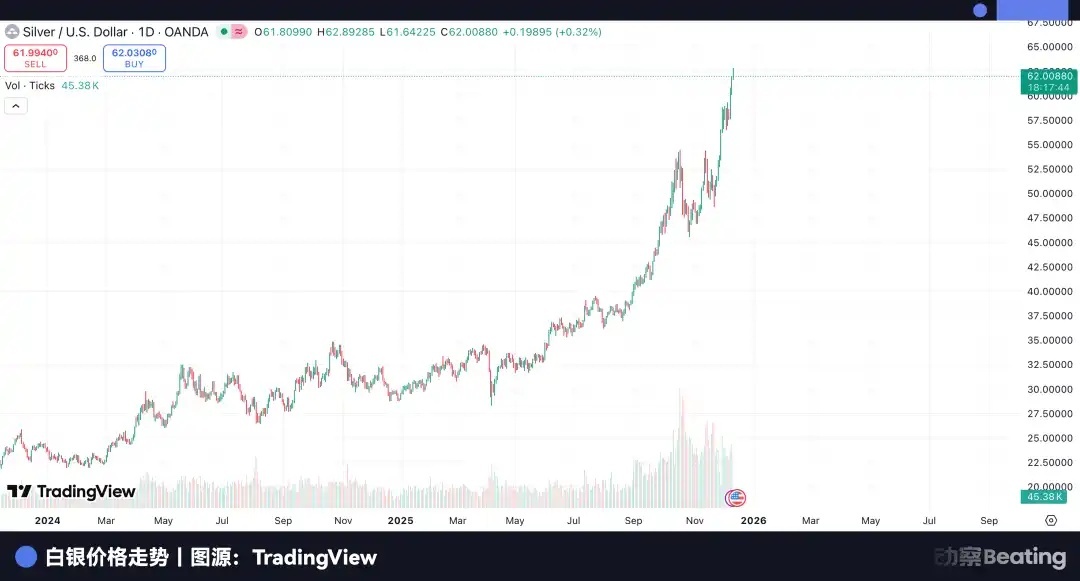
If this narrative holds, we’re witnessing the most brilliant and ruthless mutiny in business history.
JPMorgan knows better than anyone that U.S. regulators are tightening the screws, and the paper contract game—costing not just money but possibly lives—is over.
This explains its Singapore infatuation.
In the U.S., every trade risks AI surveillance flags; in Singapore, in private vaults beyond any central bank, gold and silver are entirely depoliticized. There’s no long-arm jurisdiction, only absolute property protection.
JPMorgan isn’t alone in this breakout.
As rumors swirled, Wall Street’s elite reached a silent consensus. Though not physically relocating, giants have pivoted in lockstep—Goldman Sachs aggressively targets $4,900 gold for 2026; Bank of America shouts $5,000.
In the paper-gold era, such targets seemed fantastical. But viewed through the lens of physical—central bank buying, vault drawdowns—the numbers start to make sense.
Smart money is quietly repositioning—less gold shorting, more physical exposure. U.S. bonds may not be dumped entirely, but gold, silver, and other tangibles are being stuffed into portfolios. JPMorgan moved fastest and hardest because it wants not just to survive but to win. It won’t sink with the paper-gold empire; it’ll take its algorithms, capital, and tech where there’s both gold and a future.
The problem is, that place already has an owner.
As JPMorgan’s private jet lands at Singapore’s Changi Airport, looking north, it’ll find a far larger rival has long built walls.
Tides of Change
While London traders fret over paper gold’s liquidity drought, Shanghai’s Huangpu River banks host a physical gold behemoth that long completed its primitive accumulation.
Its name: the Shanghai Gold Exchange (SGE).
In the Western-dominated financial landscape, the SGE is an outright anomaly. Rejecting London and New York’s credit-contract virtual games, it has clung to one near-fanatic rule since birth: physical delivery.
These four words are a steel nail hammered into the paper-gold game’s Achilles' heel.
On COMEX, gold is often just flickering digits, with most contracts closed pre-expiry. In Shanghai, the rules are "full transaction" and "centralized clearing." Every trade must have real bars in vaults. This not only infinite leverage but also makes "shorting gold" extremely hard—you must borrow real gold to sell it.
In 2024, the SGE reported shocking numbers: annual gold trading volume hit 62,300 tons, up 49.9% from 2023; turnover soared to 34.65 trillion yuan, an 87% jump.
With COMEX’s physical delivery rate below 0.1%, the SGE is now the world’s largest physical gold reservoir, relentlessly absorbing global stock.
If gold inflows are national strategy, silver is Chinese industry’s "physiological craving."
Wall Street speculators can bet on paper, but as the world’s largest solar and new-energy manufacturer, China’s factories need real silver to operate. This rigid demand makes China the ultimate precious metals black hole, devouring Western inventories.
The "West-to-East gold shift" is busy and covert.
Take a gold bar’s journey. In Switzerland’s Ticino, top refiners (Valcambi, PAMP) work around the clock on a special "blood swap": melting 400-oz London bars into 1-kg, 99.99% pure "Shanghai gold" bars.

This isn’t just physical reshaping but monetary redefinition.
Once stamped "Shanghai gold," these bars can’t return to London—remelting and recertification costs are prohibitive.
Gold flowing east is like rivers to sea—no return. The tides surge endlessly.
On global airport tarmacs, Brink’s, Loomis, and Malca-Amit armored trucks are the migration’s movers, filling Shanghai’s vaults with recast bars—the new order’s physical foundation.
Control the physical, control the narrative. This is the strategic vision behind SGE chief Yu Wenjian’s push for a "Shanghai gold" benchmark.
For decades, global gold pricing was locked to London’s 3 p.m. fix—the dollar’s will. But Shanghai is severing this logic.
It’s the highest-dimensional hedge. As China, Russia, the Middle East, and others form a "de-dollarization" stealth alliance, they need a new lingua franca. Not the yuan or ruble, but gold.
Shanghai is this language’s translation hub, telling the world: if the dollar’s untrustworthy, trust the gold in your vault; if paper contracts may default, trust Shanghai’s cash-on-delivery rules.
For JPMorgan, this is both threat and unignorable opportunity.
Westward, it can’t return—only dried-up liquidity and tightening regulation await. Eastward, it faces Shanghai’s colossus. It can’t conquer Shanghai—those rules aren’t Wall Street’s, those walls are too thick.
The Final Buffer
If Shanghai is the East’s physical asset empire’s "heart," Singapore is the "frontline" in this East-West showdown. More than a geographic hub, it’s the West’s last line of defense against the East’s rise.
Singapore is spending insanely to become the 21st-century "Switzerland."
Le Freeport, by Changi Airport’s runways, best reveals its ambition. This free port with independent judicial status is a perfect "black box" physically and legally. Here, gold moves free of bureaucracy—from plane to vault, all in a closed, tax-free, ultra-private loop.
Meanwhile, the super-vault The Reserve, ready since 2024, spans 180,000 sq ft with 15,500-ton capacity. Its selling point isn’t just meter-thick concrete walls but a Singapore government perk—zero GST on investment-grade precious metals (IPM).
For market makers like JPMorgan, this is irresistible.
But if it were just taxes and vaults, Dubai or Zurich would do. Singapore’s pick hides deeper geopolitical calculus.
Moving core ops from New York to Shanghai would be "defection"—suicide in today’s geopolitical climate. They need a pivot—a safe haven touching the East’s physical market while feeling politically safe.
Singapore is that pivot.
It guards the Malacca Strait, linking London’s dollar liquidity to Shanghai and India’s physical demand.
More than a haven, it’s the ultimate transit hub between split worlds. JPMorgan aims to build a sun-never-sets trading loop: London fixes, New York hedges, Singapore hoards.
But JPMorgan’s plan has flaws. In Asia’s pricing-power battle, it can’t avoid one rival—Hong Kong.
Many think Hong Kong fell behind, but the opposite’s true. Hong Kong holds a card Singapore can’t copy: it’s the yuan’s only offshore channel.
Via the "Gold Connect," the Chinese Gold & Silver Exchange Society (CGSE) links directly to the SGE. Hong Kong-traded gold enters China’s delivery system directly. For capital embracing China, Hong Kong isn’t "offshore" but "onshore" extended.
JPMorgan bets on Singapore’s "dollar + physical" hybrid, building a new offshore center on the old order’s ruins. HSBC, Standard Chartered, etc., double down on Hong Kong, betting on "yuan + physical."
JPMorgan thinks it found a neutral haven, but in geopolitics’ meat grinder, there’s no true "middle." Singapore’s prosperity stems from the East’s spillover. This seemingly independent yacht is locked in the East’s gravity.
As Shanghai’s pull grows, as yuan-priced gold expands, as China’s industry devours physical silver, Singapore may cease to be neutral. JPMorgan will face another fateful choice.
Cycle Reset
JPMorgan rumors may get an official explanation, but that’s irrelevant. In business, sharp capital senses tectonic shifts first.
This quake’s epicenter isn’t Singapore but deep in the monetary system.
For 50 years, we lived in a dollar-credit "paper contract" world—an era built on debt, promises, and infinite-liquidity illusions. We thought prosperity could last as long as printers ran.
Now, the wind has shifted utterly.
As central banks ship gold home at any cost, as industrial giants scramble for the last silver ounce, we see an ancient order’s return.
The world is slowly but surely shifting from ethereal credit to tangible assets. In this new system, gold measures credit; silver, industrial capacity. One is safety’s baseline; the other, industry’s limit.
In this long migration, London and New York aren’t the only destinations; the East isn’t just factories. New rules are written; new power centers form.
The era of Western bankers defining gold and silver’s value is dying. Gold and silver stay silent but answer all questions of our time.
The copyright of this article belongs to the original author/organization.
The views expressed herein are solely those of the author and do not reflect the stance of the platform. The content is intended for investment reference purposes only and shall not be considered as investment advice. Please contact us if you have any questions or suggestions regarding the content services provided by the platform.
