Junshi Biosciences brings the first chemotherapy-free TIL therapy to the Hong Kong stock market: payment gate opens, but clinical trials are the real test

As the year draws to a close, the biopharmaceutical IPO frenzy in the Hong Kong stock market remains highly volatile.
According to KPMG's latest report, the number of Hong Kong IPOs is expected to reach 100 in 2025, with fundraising amounting to HKD 272.1 billion, reclaiming the top global spot for the first time since 2019, with the biopharmaceutical sector playing a pivotal role.
From Baiji Pharmaceutical's bumper harvest on its Hong Kong debut, to the approval of AI drug pioneer Insilico Medicine's listing, to the spin-off of Shijiazhuang Yiling Pharmaceutical's Shijiazhuang Yiling Innovation, Yifang Biotech and Zai Lab on the STAR Market, and Shenzhen Salubris Pharmaceuticals on the A-share main board announcing Hong Kong listing plans, the entire biotech sector continues to surge.
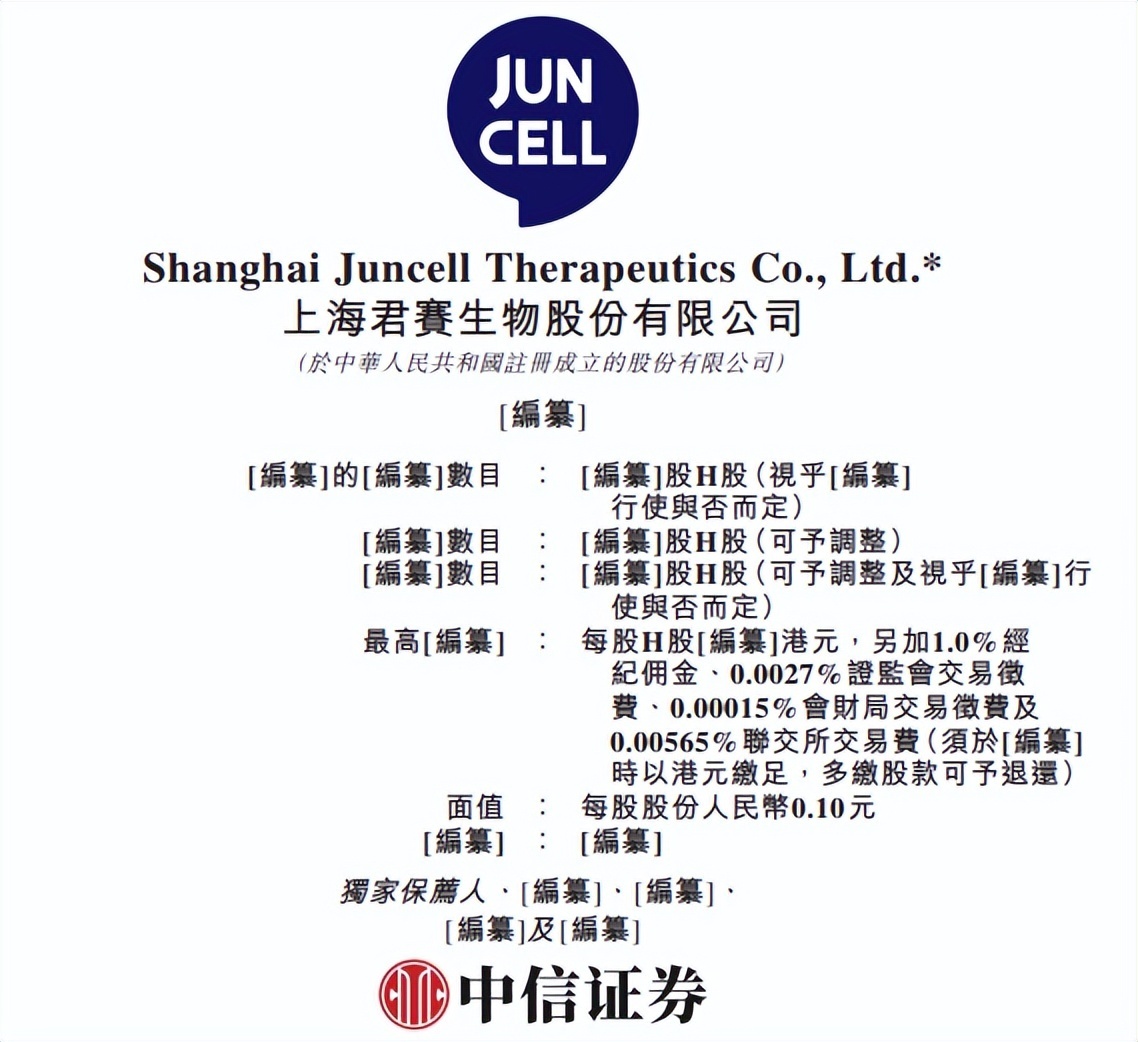
On December 10, Shanghai Junshi Biosciences officially submitted its prospectus to the Hong Kong Stock Exchange, becoming another unprofitable biotech company to sprint for a listing under Chapter 18A rules this year.
This pharmaceutical company, founded just over six years ago but already holding the world's first TIL therapy that does not require high-intensity lymphodepleting chemotherapy, has completed seven rounds of financing, with its valuation soaring from RMB 92.5 million in 2020 to RMB 2.137 billion after the C round, a 22-fold increase.
At the same time, the National Healthcare Security Administration and the Ministry of Human Resources and Social Security officially released the 2025 National Reimbursement Drug List and China's first edition of the "Commercial Health Insurance Innovative Drug List" on December 7, opening up new payment channels for high-value innovative drugs.
The first edition of the commercial insurance innovative drug list includes 19 drugs, five of which are domestic CAR-T therapies. Does this mean that TIL products, which also belong to cell therapies, will see a dawn in payment in the future?
Betting on the Most Challenging Solid Tumors: GC203 Approved, GC101 One Step Away
Solid tumors have long been considered a "no-go zone" for cell therapy. Unlike hematologic tumors, the complexity of the solid tumor microenvironment, tumor heterogeneity, and immunosuppressive mechanisms make it difficult for therapies like CAR-T to break through.
Junshi Biosciences has chosen a more challenging but highly promising path: tumor-infiltrating lymphocyte (TIL) therapy.
According to Frost & Sullivan, Junshi's core product GC101 is the world's first TIL therapy that does not require high-intensity lymphodepleting chemotherapy or IL-2 administration, and is expected to become China's first approved TIL product. This differentiated design directly addresses two major pain points in the clinical application of traditional TIL therapies.
Traditional TIL therapy requires patients to receive high-intensity lymphodepleting chemotherapy before cell reinfusion to clear lymphocytes in the body and "make room" for the reinfused TIL cells. However, this process carries significant toxic side effects and has patient population limitations.
The uniqueness of GC101 lies in its clinical trial design, which eliminates the need for traditional lymphodepleting pretreatment, lowering the treatment threshold and risks.
The specific R&D approach is reflected in its dual-platform strategy: the DeepTIL™ platform focuses on the expansion and activation of natural TIL cells, while the NovaGMP™ platform is used for single-gene modification to enhance cell function.
Building on GC101, Junshi has developed the world's first non-viral vector genetically modified TIL cell therapy, GC203. This key product overexpresses the company's proprietary membrane-bound, self-aggregating IL-7, aiming to enhance the in vivo adaptability of TIL cells and empower them to mobilize endogenous immune cell activity.
The prospectus shows that GC101's Phase II clinical trial for melanoma is underway, with a Biologics License Application (BLA) expected to be submitted in 2026; the clinical pipeline for non-small cell lung cancer is currently in Phase Ib.
GC203 has been approved for IND and can be used to treat advanced pancreatic cancer, advanced gynecological tumors, and other solid tumors that have failed standard treatments. These two pipelines are the hardcore confidence behind Junshi's listing application.
From a pipeline perspective, Junshi's strategy is justified: focusing on tumor types with high incidence and unmet needs, including high-incidence tumors like lung cancer, breast cancer, head and neck cancer, and colorectal cancer, as well as refractory tumors like glioblastoma, pancreatic cancer, ovarian cancer, and melanoma.
According to publicly available clinical trial registration information, its R&D has covered different stages from early to late, and from adjuvant to later-line therapies.
However, technological breakthroughs in solid tumor cell therapy are not easy, as reflected in Junshi's R&D expenditure data: in 2023, 2024, and the first half of 2025, the company's R&D expenses were RMB 57.62 million, RMB 90.99 million, and RMB 52.8 million, respectively, showing a year-on-year growth trend.
Even so, such R&D investment is still not particularly substantial in the broader biotech field. From a liquidity perspective, this is already a gesture of sincerity from Junshi.
As of the end of June, it held only RMB 63.63 million in cash and cash equivalents. The reality is that the company needs new capital injections to fund R&D and build a commercial loop.
Domestic Innovative Drug Payment Opens, TIL Therapy at the Forefront?
On a more optimistic note, Junshi's listing application coincides with a clear recovery in Hong Kong's biotech sector.
Since November, two innovative drug IPOs, Baiji Pharmaceutical-B and Wangshan Wangshui-B, have seen first-day gains of over 130%, injecting a strong boost into the market. According to incomplete statistics, nine domestic pharmaceutical companies have planned or achieved "A+H" listings this year, including industry leaders like Hengrui Pharmaceuticals, Beta Pharma, Sinovac Biotech, and Mindray Medical.
Behind this wave of listings is China's biopharmaceutical industry entering a new phase of "Innovation 2.0: Refinement." Clarivate data shows that in the first eight months of this year, China's outbound licensing deals in biopharma exceeded $50 billion, surpassing the total for all of 2024 ahead of schedule.
The diversification of transaction models and the breakthrough rise of emerging biotechnologies are becoming the two core engines driving the global leap in China's biopharmaceutical capabilities.
With the trend set, cell and gene therapy, as a cutting-edge field, has naturally attracted capital attention. Junshi's TIL therapy field is at a critical juncture moving from technical validation to commercialization.
The widening gap between its performance curve and valuation trajectory directly reflects market recognition of its potential: from RMB 92.5 million after the Pre-A round in 2020 to RMB 2.137 billion after the C round in 2025, a 22-fold increase in five years. Investors include professional institutions like Yuanhe Origin Capital, Kaitai Capital, and Furong Investment.
However, during this period, Junshi has yet to generate product sales revenue. The prospectus shows that in 2023, 2024, and the first half of 2025, revenues were RMB 6.81 million, RMB 3.37 million, and RMB 6.83 million, respectively, sourced from non-operational areas like government grants and interest income.
Corresponding losses were RMB 94.39 million, RMB 163 million, and RMB 97.58 million. This financial profile aligns with the development stage of biotech companies: before drug approval, continuous R&D investment leads to expanding losses.
However, what has invigorated the market is that on the eve of Junshi's listing application, the innovative drug payment system underwent a major reform. On December 7, the first edition of the "Commercial Health Insurance Innovative Drug List" was officially released, to take effect from January 1, 2026.
This list includes five domestic CAR-T therapies, offering new solutions to the challenges of paying for cell therapy products. Although the first edition does not include TIL products, its establishment sends a clear signal that high-value innovative drugs are entering a new payment era driven by "basic medical insurance + commercial health insurance."
Guojin Securities analysis suggests that the commercial insurance innovative drug list is a key innovation in building a multi-level healthcare security system, aimed at opening new payment channels for innovative drugs with high clinical value but beyond the "basic coverage" scope of basic medical insurance.
This provides long-term benefits for cell therapy companies like Junshi. With the payment bottleneck breaking, the market penetration of high-value innovative drugs is expected to rise significantly.
In line with the broader direction, Junshi's prospectus outlines the primary uses of the raised funds, including advancing the clinical development of TIL product pipelines; continuously upgrading and iterating technology platforms; and procuring and upgrading manufacturing bases and facilities.
Given the personalized nature of TIL therapy, the standardization and scaling of production processes will be key to reducing costs and improving accessibility in the future. Industry data shows that China's R&D in cell and gene therapy is advancing rapidly. As of August 2025, there are over 2,000 active cell therapy R&D projects globally, with China's share increasing yearly. In particular, TIL therapy is seen as a promising direction in solid tumors.
Meanwhile, the internationalization of China's innovative drugs is also accelerating. In May, Pfizer's collaboration agreement with 3SBio became an industry benchmark, with Pfizer securing global development, production, and commercialization rights for the latter's self-developed PD-1/VEGF bispecific antibody SSGJ-707, in a deal worth $6.2 billion.
This "strategy as asset" collaboration model provides Chinese biopharma companies with diversified value realization paths. For companies like Junshi focused on cutting-edge technologies, future development paths may not be limited to independent commercialization, with technology licensing and co-development also becoming key options.
Conclusion
From a broader perspective, Junshi's IPO process is also a small window into China's biopharmaceutical innovation ecosystem. In the "Innovation 2.0" era, can a biotech company focused on cutting-edge technologies but still unprofitable navigate the full path from R&D to commercialization amid dual opportunities in capital markets and payment reforms?
The answer may lie in the still uncertain Phase II clinical data for melanoma, in GC101's BLA application timeline, and in the increasingly mature valuation system of Hong Kong's Chapter 18A.
The copyright of this article belongs to the original author/organization.
The views expressed herein are solely those of the author and do not reflect the stance of the platform. The content is intended for investment reference purposes only and shall not be considered as investment advice. Please contact us if you have any questions or suggestions regarding the content services provided by the platform.