


 Likes Received
 Posts
Posts[HK IPO] Analysis of CIDI Smart Drive's subscription: The previous two 18C companies surged, what about this one?

Currently, there are six new stocks in the IPO process, and all the funds for IPO subscriptions are in conflict
Every year around mid-year and year-end, the Hong Kong Stock Exchange, in order to boost performance, presents this phenomenon of clustered listings, which is an unwritten convention
Let’s first talk about the first mining truck stock, Xidi Zhijia$CIDI(03881.HK)
1. What does the company do?
Xidi Zhijia is an innovative supplier founded in 2017, specializing in intelligent driving products and solutions for commercial vehicles. Its core business focuses on three areas: autonomous driving trucks in closed environments (such as mines and logistics parks), V2X vehicle-road coordination solutions, and intelligent perception systems.
According to a report by CIC, based on product sales revenue in 2024, Xidi Zhijia has become China's largest provider of autonomous driving solutions for commercial vehicles, with a market share of 16.8%, and ranks third in the autonomous mining truck solutions segment.
Brother Cai’s sharp analysis:
From the above, we can see that Xidi operates in the autonomous driving field for mining trucks. Does this perspective remind you of WeRide and Pony.ai, which listed in Hong Kong last month?
However, Brother Cai wants to say, autonomous driving in mining areas is not at all on the same level as Robotaxi
①Robotaxi targets a trillion-dollar mobility market, while the mining truck market is projected to be only 39.6 billion yuan by 2030
②L4 autonomous driving for passenger vehicles has a data network effect, while mining trucks are “tool-like” products in closed environments, inherently limiting valuation premiums
2. Company prospects analysis:
The Chinese autonomous mining truck solutions market exhibits a highly concentrated competitive landscape.
In 2024, the top five market players accounted for about 97% of the market share, indicating extremely high industry concentration. Xidi Zhijia’s main competitors include TAGE Idriver, Zhongke Huituo (incubated by the Chinese Academy of Sciences), and Huaneng Ruichi (jointly with XCMG, Huaneng, and Huawei). By 2024 revenue, Xidi Zhijia ranks third in the autonomous mining truck solutions market.
So, does this industry have entry barriers, and are they high or low?
Brother Cai’s sharp analysis:
Brother Cai believes that if other companies can easily enter the market, it indicates that the industry’s barriers are low. If the barriers were high, could other players enter and exit so freely?
Autonomous driving in mining areas appears to have scenario barriers, but in reality, they are non-existent.
The reason is: Mining operations are highly standardized, and technical solutions are easy to replicate. Meanwhile, giants like Huawei, XCMG, and Sany have entered the market with capital and channel advantages. For example, Huawei’s open-pit mining solution has already announced commercial-scale deployment, directly squeezing Xidi’s survival space.
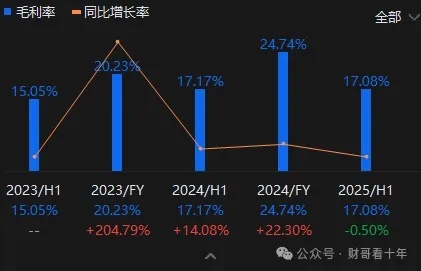
Even more ironically, Xidi hasn’t even solved hardware autonomy: Core chips rely on third parties, and cameras are outsourced. This “assembly plant” model means that once price wars start, Xidi’s gross margin (already down from 24.7% to 17.1%) will face further pressure.
3. How is the company’s quality?
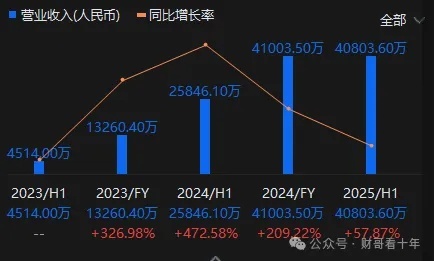
The company’s revenue grew sharply from 31.056 million yuan in 2022 to 410 million yuan in 2024, with a three-year compound annual growth rate (CAGR) of 263.1%, showing exponential growth. In the first half of 2025, revenue reached 408 million yuan, up 57.9% year-on-year.
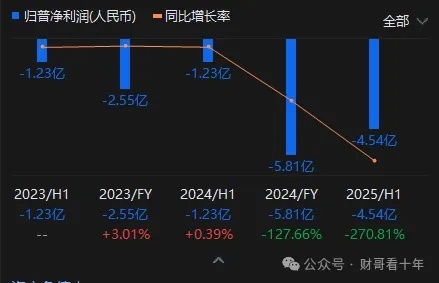
In terms of profit, the company remains in a continuous loss state, but the widening losses are mainly due to large non-cash employee stock incentive expenses. Excluding this factor, the company’s adjusted net loss in 2024 was 127 million yuan, and the adjusted net loss in the first half of 2025 was 111 million yuan. Although the loss narrowed relatively, the company has yet to achieve profitability.
Brother Cai’s sharp analysis:
Xidi Zhijia’s revenue CAGR from 2022-2024 was as high as 263%, but in the first half of 2025, the year-on-year growth rate plummeted to 57.9%. This “cliff-like slowdown” exposes the fatal flaw in its business model:
Over-reliance on the mining truck business in closed environments (accounting for 92% of revenue), while this market itself is limited in size and has a penetration rate of only 7%.
The deeper issue is that, to secure orders, the company has resorted to a “price-cutting for market share” strategy.
In 2025, the average price of mining trucks dropped from 2.5 million yuan to 2.1 million yuan, and the company provided financing guarantees to major clients like Customer K, ultimately leading to bad debt provisions of 70.6 million yuan.
It’s somewhat like “losing money to make noise,” essentially because of insufficient technological barriers, forcing the company to rely on price wars to maintain market share—slowing growth is inevitable, it just came faster than expected.
4. How is the company’s financial health?
As a high-growth tech company, Xidi Zhijia’s operating cash flow is closely tied to its expansion strategy and R&D investments. From 2022 to 2024, the company’s operating cash flow was consistently negative, with a cumulative net outflow exceeding 500 million yuan. As of the end of 2024, cash and equivalents stood at 306 million yuan, but current liabilities reached 382 million yuan, indicating clear debt pressure!
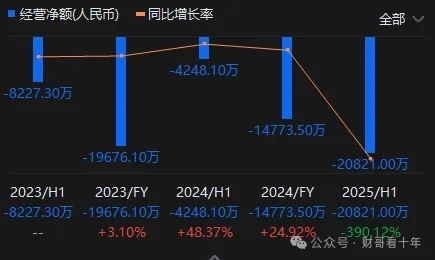
Brother Cai’s sharp analysis:
This “insolvent” financial situation means that the IPO fundraising is not for development but rather a lifeline forced by survival needs.
If the IPO fails, the company not only faces investor withdrawals but may also trigger a chain collapse due to debt issues. The root cause of negative cash flow is difficulty in collections: Accounts receivable turnover days increased from 86 to 122 days, with mining clients delaying payments becoming the norm.
5. Cornerstone investors: What’s the institutional sentiment?
Xidi Zhijia’s IPO has introduced five cornerstone investors, including Hunan Xiangjiang Zhicheng Industrial Investment Fund, Nanning Zhijia No.1 Ruiyue Equity Investment Partnership, Qianhai Kaiyuan Qunwei QDII Single Asset Management Plan, and ICBC Credit Suisse Asset Management (International) Co., Ltd. The cornerstone investors have collectively committed approximately 546 million HKD, accounting for about 38.39% of the global offering shares at the issue price of 263.00 HKD.
Brother Cai’s sharp analysis:
Among the cornerstone investors, Xiangjiang Zhicheng, ICBC Credit Suisse, etc., are all domestic institutions, accounting for 38.39% of the subscription. The cornerstone lineup is essentially a “friendship cameo” model, with no long-term international capital participation.
International long-term capital isn’t buying, reflecting concerns about the company’s profit model; Xidi’s cornerstone lineup can only be described as “barely passable,” indicating a lack of confidence among professional investors in its prospects.
Xidi Zhijia analysis summary:
1. Xidi operates in autonomous driving for mining areas, which is completely different from WeRide and Pony.ai’s Robotaxi. Robotaxi targets a trillion-dollar mobility market with network effects, offering vast valuation potential; while mining trucks are just tools in closed environments, with a total market size of only a few hundred billion by 2030, inherently capping valuations.
2. More troublingly, the industry has low entry barriers. Mining operations are standardized, and technical solutions are easy to replicate. Giants like Huawei and XCMG have already entered with capital and channel advantages. Xidi itself relies on outsourced hardware, resembling an “assembly plant.” If price wars break out, its already declining gross margin will only worsen.
3. The high-growth story is fading. Revenue growth plunged from 263% to 57.9%, primarily due to over-reliance on the narrow mining truck segment, forcing the company to cut prices to secure orders and even provide financing guarantees to clients, resulting in massive bad debts. This “losing money to make noise” precisely reflects its shallow technological moat.
4. Continuous negative cash flow, with insufficient liquidity to cover current liabilities. This IPO fundraising is purely a “lifeline.” If the listing fails, the VAM agreement could trigger withdrawals, potentially leading to a collapse.
5. The cornerstone investor lineup also reveals weakness—all domestic institutions, no long-term international capital willing to buy in. This “friendship cameo” support precisely reflects the professional market’s lack of confidence in its true prospects.
However, Xidi Zhijia is a Chapter 18C company. The previous two Chapter 18C companies, DeepBlue and Yunji, both surged. So, does this mean Chapter 18C IPOs have a high success rate?
On this point, Brother Cai will share his thoughts—not necessarily correct, just for reference:
DeepBlue and Yunji mainly rode the high market sentiment for IPOs at the time. We also went all-in on DeepBlue and Yunji back then.
But starting with Yunji, Chapter 18C IPOs began showing problems.
Yunji’s grey market and first-day performance fell short of expectations, and post-listing, it even fell below the inclusion threshold, hitting a low of 10X yuan.
The reason Yunji later rebounded from 10X yuan to 190 yuan and retained its inclusion qualification was due to strong market manipulation.
In other words, for current Chapter 18C companies, if fundamentals are weak, they rely on strong market manipulation to compensate.
Brother Cai has close ties to institutions and received firsthand information that Yunji was definitely going to be included!
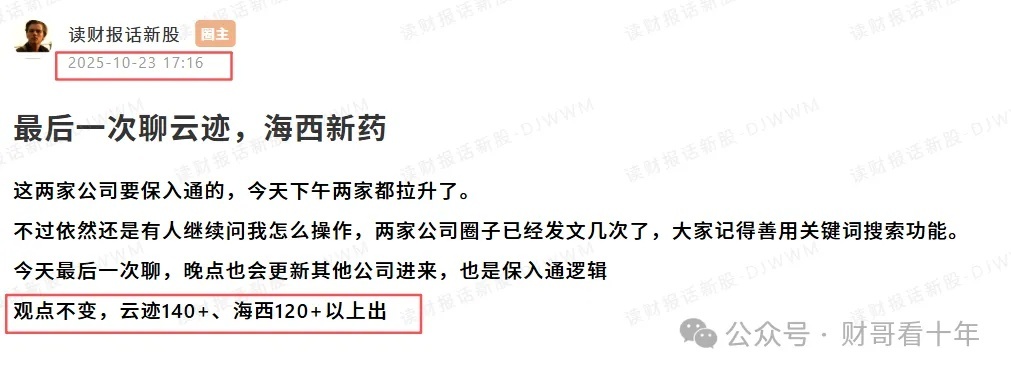
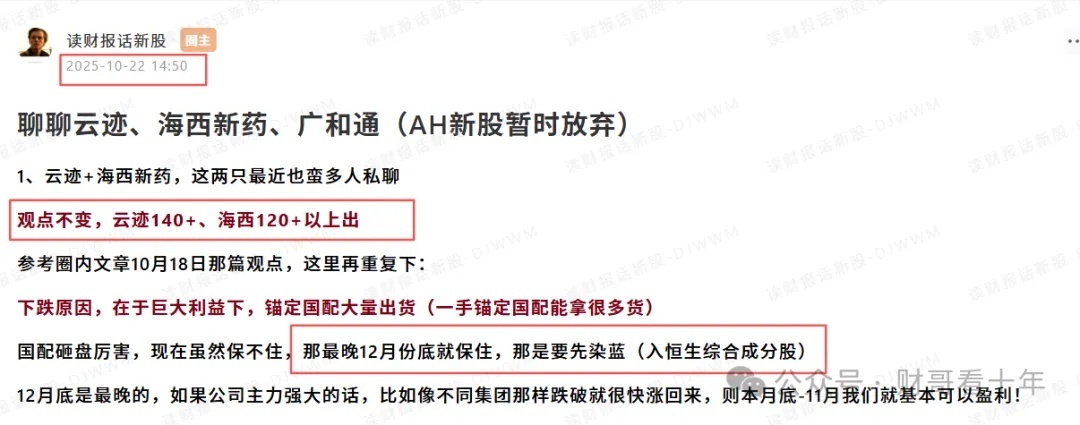
Thus, Brother Cai started buying at 130 yuan, and many members of the community continued buying at 10X yuan, only selling after Yunji rose above 140 yuan.

So, for Chapter 18C companies, the underlying logic is whether there is strong, coordinated speculative capital—in other words, whether there is strong market manipulation.
Therefore, we must avoid linear extrapolation. Don’t assume that because DeepBlue and Yunji rose, Xidi Zhijia will follow suit. This linear thinking is dangerous.
Thus, whether Xidi is worth subscribing to depends on whether there is strong market manipulation. Of course, without any insider information,you can observe the public margin financing data. If it’s lukewarm or too cold, it’s risky.
All six IPOs are competing for funds. After analyzing each IPO on the public account, we’ll discuss how to allocate funds for this wave of IPOs based on subscription analysis and certainty!
During periods of intensive IPO issuance, how to allocate funds across different targets is a topic that requires comprehensive judgment based on individual circumstances. We recommend rational analysis, independent decision-making, and risk control.
Disclaimer
This content is purely free and for public sharing, reflecting personal thoughts and opinions, and does not constitute any investment advice. All investment gains and risks belong to the investors themselves. The market carries risks; invest with caution.
$GUOXIA TECH(02655.HK) $HASHKEY HLDGS(03887.HK) $ZHIHUI MINING(02546.HK)
The copyright of this article belongs to the original author/organization.
The views expressed herein are solely those of the author and do not reflect the stance of the platform. The content is intended for investment reference purposes only and shall not be considered as investment advice. Please contact us if you have any questions or suggestions regarding the content services provided by the platform.
