



When will Fidelidade IPO? It has become a must-answer question for Fosun.

Introduction: Fosun's deleveraging and asset restructuring focus is shifting from peripheral, non-core assets to truly strategic ballast.
On the path of "deleveraging and increasing profits," $FOSUN INTL(00656.HK) still has one card left to play.
As early as January 2024, insiders revealed that Fosun's Portuguese insurer Fidelidade might launch an IPO in 2025. Now, there are only two weeks left until the rumored time window.
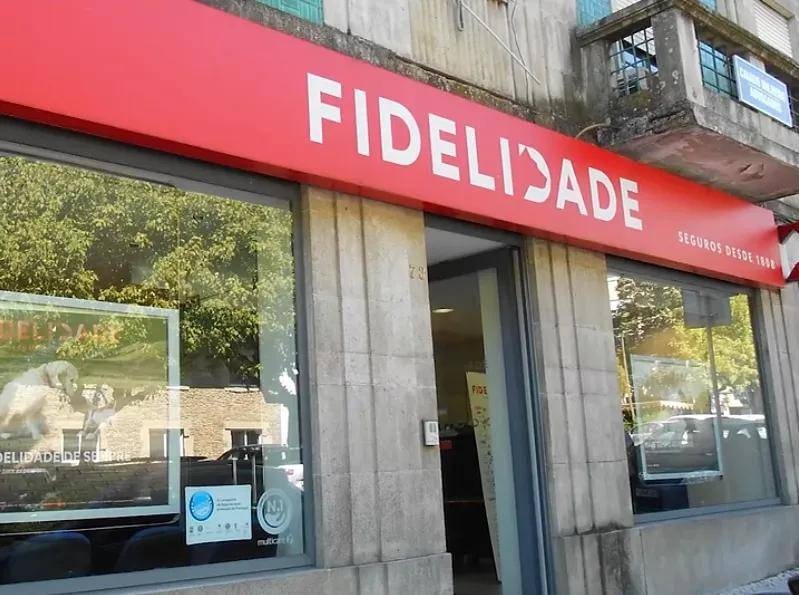
Judging from disclosed information, Fidelidade's exploration of an IPO or minority stake sale is not without basis. Discussions about this had already entered the public view in early 2024, with the market generally seeing it as a natural move in Fosun's new phase of international expansion.
But running parallel to this directional judgment is another, more pragmatic thread.
Fosun Group's debt burden has been under pressure in recent years. Its consolidated interest-bearing debt stood at RMB 210 billion at the end of 2024, while its mid-2025 financial report showed total liabilities of RMB 538.353 billion.
On May 30, 2023, S&P affirmed Fosun International's long-term issuer and issue credit rating at "BB-" and revised the outlook from negative to stable. It subsequently reaffirmed the "BB-" rating with a stable outlook on May 30, 2024, and again on September 2, 2025, while also assigning a "BB-" long-term issue rating to Fosun's proposed USD-denominated senior unsecured notes.
A fairly priced equity offering could provide much-needed liquidity, improve key financial metrics, and create room for the group's overall credit profile and future financing.
Fidelidade's uniqueness lies not in its "pre-IPO" status per se, but in being the asset most capable of effectively hedging against the group's financial pressures.
Of course, any asset tasked with this role must have a value foundation recognized by the market.
Among Fosun's current assets, core platforms like Fosun Pharma and Yuyuan have long been listed, with their values repeatedly priced by the secondary market. In contrast, Fidelidade's scale, profitability, and cash flow attributes remain largely "submerged."
Fidelidade represents one of Fosun's earliest and most successful overseas acquisitions. With over 200 years of history, it holds absolute market leadership in the Iberian Peninsula and boasts an international business network. Fosun's April 2024 disclosure of Fidelidade's 2023 financials showed net profit of €236 million, insurance contract revenue of €3.429 billion, and total assets of €20.282 billion.
Its strong performance stems partly from fundamental shifts in Europe's interest rate environment. In recent years, the ECB ended its prolonged zero/negative interest rate policy, entering a tightening cycle with deposit rates firmly in positive territory above 2%.
On the asset side, new capital and reinvestment of maturing assets can now be allocated to fixed-income instruments with significantly higher yields.
Take Fidelidade's core market: 10-year Portuguese government bond yields have climbed to around 3%, providing insurers' investment portfolios with a richer return base.
Meanwhile, the liability side—especially long-duration life insurance—remains relatively rigid. Cost structures are largely locked in by legacy policies issued in the low-rate environment with minimal guaranteed rates.
The asymmetry between rising returns on newly invested assets and stable legacy liability costs directly expands the interest spread that insurers rely on.
Sources close to Fosun describe Fidelidade as operating quite well, "living comfortably," largely due to its favorable position in the macro cycle and structural improvements in the industry's profit logic.
With the IPO process now officially on the table, this step is seen as shifting Fosun's deleveraging and restructuring focus from peripheral assets to true ballast.
This assessment stems first from Fidelidade's cash flow attributes as an insurer.
The insurance business naturally enjoys a "float" advantage—before claims are paid, substantial premiums accumulate on the balance sheet at relatively low cost, forming a sustained, stable funding source. For any holding group, such cash flow serves as both an operational buffer and a foundation for cross-cycle asset allocation.
During Fosun's early global expansion emulating the "Buffett model," this financial liquidity fueled its worldwide acquisitions. Now, as the group strategically retrenches to focus on core businesses, this robust cash flow becomes key to maintaining financial stability and weathering liquidity risks.
Deeper value lies in strategic synergies. Since acquiring Fidelidade in 2014, Fosun hasn't treated it as an isolated overseas asset but gradually integrated it into an "insurance + health" industrial structure.
Fidelidade's controlling stake in Portuguese private healthcare group Luz Saúde creates a closed loop between insurance payers and medical providers. This model has real foundations in Europe and aligns closely with Fosun's core "Health, Happiness, Wealth" business pillars.
Precisely because of its uncapitalized value potential, stable low-cost cash flow, high-quality assets, and clear synergies, Fidelidade has become Fosun's most critical and effective card in its current "slimming and strengthening" phase.
An IPO or partial stake sale could provide Fosun with a one-time capital infusion to significantly reduce debt and improve financial indicators and credit expectations. Meanwhile, maintaining control would allow this "cash cow" to continue supporting the group long-term rather than being fully divested.
But markets don't evaluate assets in isolation.
Previously, Luz Saúde's planned April 2024 IPO was paused due to recent market instability" and Middle East tensions preventing "proper valuation." This shows that regardless of asset quality, listing windows remain subject to macro conditions, market sentiment, and valuation expectations.
At Fidelidade's IPO juncture, delays or route adjustments don't necessarily signal strategic wavering. The true test lies in balancing market conditions, valuation, and financial objectives.
The copyright of this article belongs to the original author/organization.
The views expressed herein are solely those of the author and do not reflect the stance of the platform. The content is intended for investment reference purposes only and shall not be considered as investment advice. Please contact us if you have any questions or suggestions regarding the content services provided by the platform.
