


Earnings night is approaching, how Micron Technology (MU) bulls use options to "attack on the upside, defend against overvaluation"

Important Notice:
This article is for reference only and does not constitute investment advice. Options trading is a high-risk financial derivative that may result in the loss of all principal. Investors should fully understand the risks of options trading and make independent investment decisions based on their financial situation, investment objectives, and risk tolerance. Do not blindly follow others' trades.
The data and analysis in this article are from public sources and third-party research institutions. Due to the timeliness of data sources and rapid changes in market conditions, we cannot guarantee the absolute accuracy or completeness of the information at any point in time. Historical data and analysis do not represent future performance, and actual investment results may differ significantly from expectations.
Micron Technology (MU) — The Only U.S. Memory Chip Manufacturer, a Core Beneficiary of the AI Era
After U.S. market close on December 17 (early morning Hong Kong time on December 18), Micron Technology will release its FY2026Q1 earnings report.
Micron Technology is one of the world's top three memory chip manufacturers (alongside Samsung and SK Hynix) and the only memory chip producer in the U.S., with a market cap of approximately $260 billion.
Core Products:
DRAM (Dynamic RAM): Accounts for 79% of revenue, used in computers, servers, and smartphones. HBM (High Bandwidth Memory): Specialized for AI chips, a key component for AI accelerators like Nvidia and AMD. NAND Flash: Used in SSDs.
As a beneficiary of the AI era, Micron is one of only three global HBM suppliers (with a market share of about 21%).
According to TrendForce's October 2025 "Global DRAM Market Report," DRAM prices are expected to rise by 18-25% in Q4, further driving revenue growth.
FY2025Q4 HBM revenue approached $2 billion, with data center business accounting for 56% of annual revenue.
FY2025 revenue was $37.4 billion (+49% YoY), with the stock price up 167% YTD (from $85 to $235).
FY2025Q4 Earnings Report:
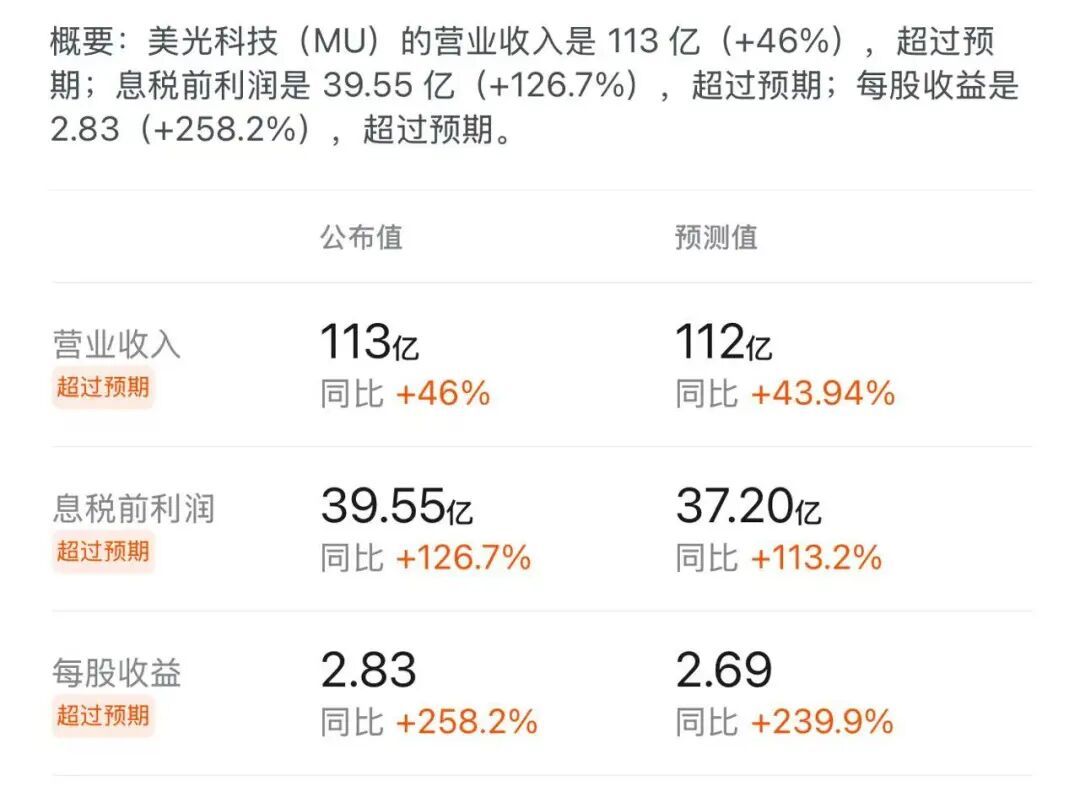
Micron Technology FY2026Q1 Earnings Preview

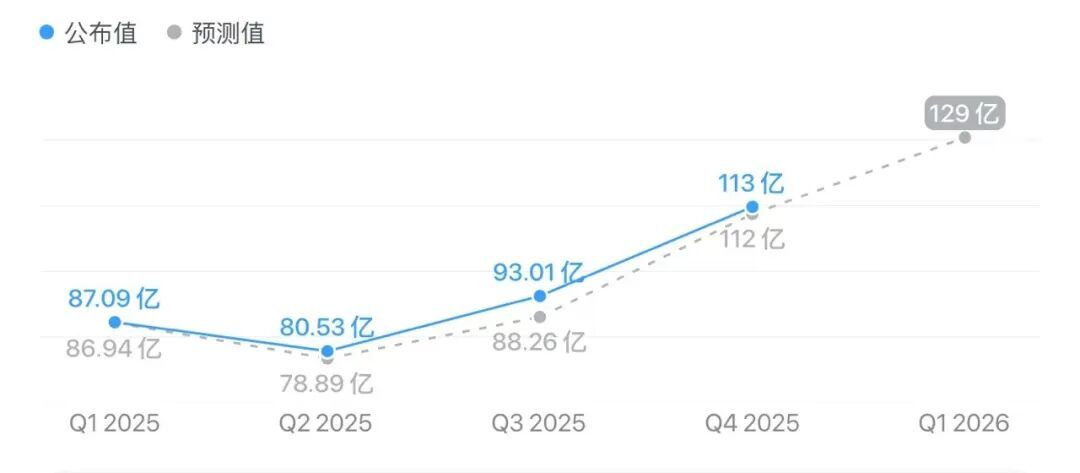
Revenue Forecast (Gray Line) vs. Actual (Blue Line):
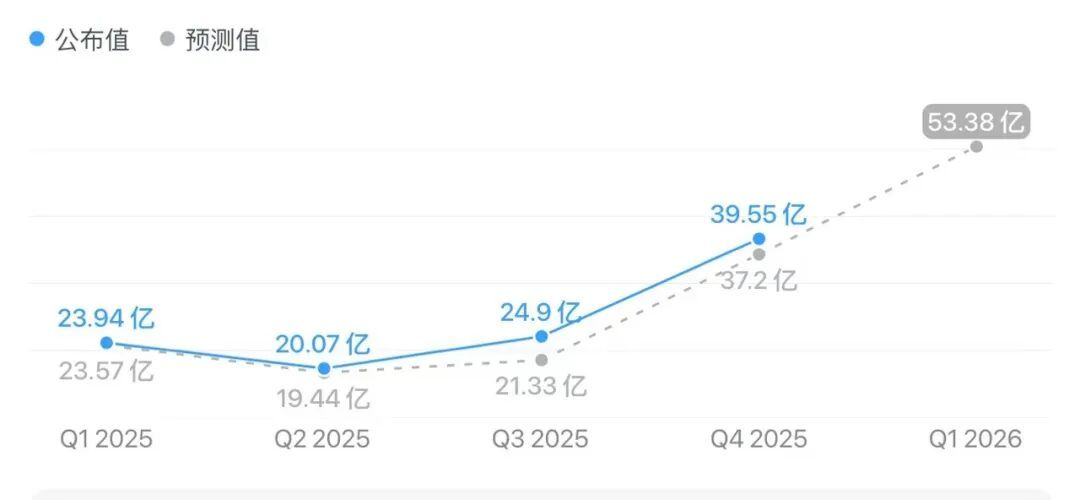
Pre-Tax Profit Forecast (Gray Line) vs. Actual (Blue Line):
Current Valuation: P/E ~31x, above the industry average of 20-25x, but relatively reasonable given the company's high growth (FY2026 EPS growth expected to exceed 100%).
Options Market Expectations: Based on ATM Straddle pricing in the options chain and the Black-Scholes model, the implied post-earnings volatility is ~10%. Historical data cited by Nasdaq and OptionSlam show an average volatility of 5.7% over the past 12 quarters, suggesting potential "quick profit" opportunities in this high-volatility environment.
Risk Warning: The stock is up 167% YTD; any earnings miss could trigger a sharp pullback.
Institutional Forecasts Lean Optimistic
Most institutional forecasts are optimistic, such as:
·Citi Analyst: FY2026 Q1 revenue of $14 billion (vs. FY2025 Q4 $11.3 billion).
·Morgan Stanley: Price target of $338, EPS may beat expectations.
·Wolfe Research: Price target of $300, upgraded to "Outperform."
However, some analysts express concerns about weak consumer demand (PCs, smartphones, autos), as seen in the December 2024 earnings crash. The company is actively exiting low-margin consumer markets to focus on high-margin AI/data center markets.
Overall, earnings are likely to beat expectations, but downside risks remain:
HBM demand surge and DRAM price hikes are tailwinds.
Beat expectations in 7 of the past 9 quarters (78% win rate), but this is historical and not guaranteed to repeat. Valuations are high (P/E ~31 vs. semiconductor industry average of 20-25). FY2026Q2 guidance misses could trigger a sell-off. Recall December 2024: earnings beat but stock still fell 13%.
Options Strategy: Bull Call Spread
Again, options are high-risk, high-reward instruments. Investors should conduct independent research before trading options. Do not blindly follow others.
Strategy 1: Cautiously Bullish - Bull Call Spread
Structure: Buy ATM Call (strike = current stock price), sell OTM Call with the same expiry (strike = price you believe the stock won't exceed).
Payoff diagram:
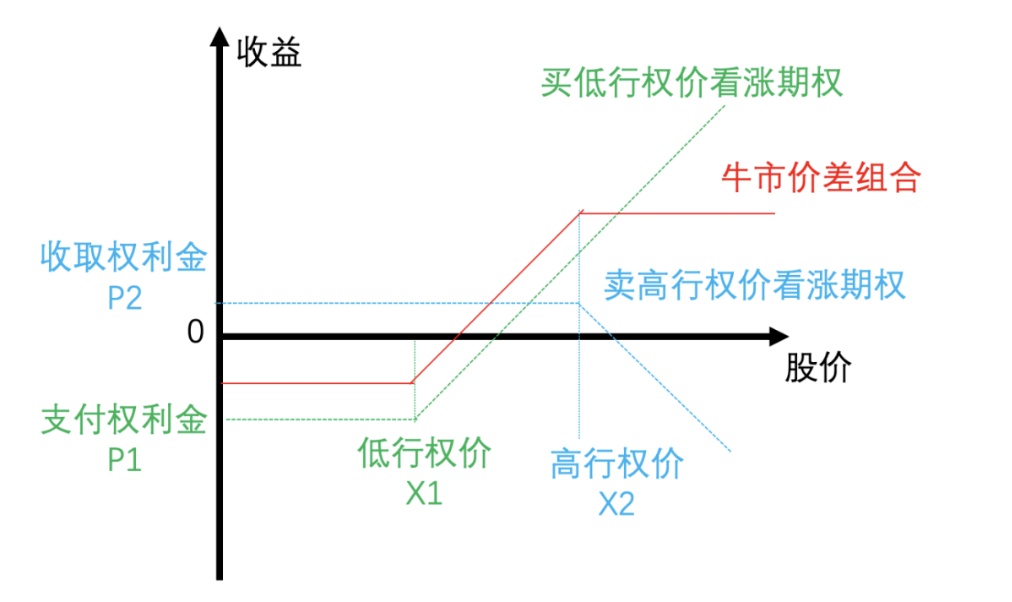
Initial net debit (P1 - P2).
Breakeven = Lower strike + net debit per share
Max Profit = (Higher strike - Lower strike) * 100 - net debit
Max Loss = Net Debit = P1 - P2
Advantages of Bull Call Spread vs. Buying Calls:
1. Lower cost (and max loss) due to premium received from selling the OTM Call, making it more cost-effective in high-volatility environments.
2. Easier to profit with higher returns than buying calls alone if the stock stays below the sold Call's strike (compare red and green lines above).
Risks:
Selling Calls requires higher margin; ensure sufficient account funds.
If the stock rises above the sold Call's strike, you may be assigned (obligated to sell 100 shares per contract). Plan to close early if you don't want assignment!! (Liquidity dries up near expiry, making exits harder.)
Bull Call Spread Example:
Assume stock price = $100/share.
Conservative (target 5% gain to $105):
Buy 1 ATM $100 Call ($3 premium), sell 1 OTM $105 Call ($2 premium).
Net debit = ($3 - $2) * 100 = $100.
Breakeven = $100 + $1 = $101.
Max profit = ($105 - $100) * 100 - $100 = $400.
Max loss = $100.
Aggressive (target 10% gain to $110):
Buy 1 ATM $100 Call ($3), sell 1 OTM $110 Call ($1).
Net debit = ($3 - $1) * 100 = $200.
Breakeven = $100 + $2 = $102.
Max profit = ($110 - $100) * 100 - $200 = $800.
Max loss = $200.
Exit Timing (Reference Only):
Beware of post-earnings IV Crush eroding profits. Implied volatility (IV) typically drops sharply after earnings, reducing option values even if the stock moves favorably. Consider taking profits early unless you expect continued upside.
For more on Bull Call Spreads, see:
Don't Want to Buy Calls? Try This "Discounted" Bullish Strategy - Bull Call Spread (Issue 9)
Aggressive Traders: Consider Buying Calls
Compared to Bull Call Spreads, buying calls has higher premium costs (and max loss) but uncapped upside if the stock surges.
More vulnerable to IV Crush: Close soon after earnings.
Risk Disclosure: Options trading is high-risk and may result in total loss of capital. Investors should carefully assess whether such investments are suitable based on their experience, objectives, financial situation, and other relevant factors.
Interested readers can find past articles in the "Options Strategy" section, which shares research insights on investments and options.
The copyright of this article belongs to the original author/organization.
The views expressed herein are solely those of the author and do not reflect the stance of the platform. The content is intended for investment reference purposes only and shall not be considered as investment advice. Please contact us if you have any questions or suggestions regarding the content services provided by the platform.
