


Meitu: Can Vertical SaaS Survive the AI Wave?
Meitu’s history reads like a saga of a niche internet player constantly reinventing itself. It started with beauty and photo editing, dabbled in smartphones, chased crypto, and tried short video. After three years of drift and a depressed share price, the company finally rediscovered its core in 2022 as AI tailwinds revived what it does best — tools.
But this is no longer the old point-and-shoot editing era. On the consumer side, Meitu builds on Meitu Xiuxiu’s 200mn traffic base, while on the enterprise side it pushes light productivity via Meitu Design Studio and Kaipai. At the same time, it has stepped up its overseas expansion.
Yet SaaS apps face an unprecedented wave of aggregation risk. The question is whether general-purpose models and agentic workflows will compress the room for vertical software. With sentiment wavering, Dolphin Research takes a fresh look at Meitu’s investability and answers six questions below:
- How did the company get started?
- What does the product lineup look like?
- How competitive are its segments?
- How large is the growth runway?
- Will frontier models eat Meitu’s lunch?
- Valuation and investment case
1) Building an ecosystem is hard; back to software tools
Meitu’s trajectory has been bumpy. It began as a tool for beauty and photo editing, then leveraged traffic to expand into smartphones and was among the earliest short-video platforms, forming a small vertical ecosystem around capture-and-edit use cases.
Survival in a vertical ecosystem requires withstanding repeated assaults from tech giants. As beauty editing became a must-have feature in mobile software, competition intensified sharply. From 2018, Meitu entered a three-year period of ecosystem breakdown and strategic drift, only to regain its ‘tools’ focus in 2022 and unleash AI-enabled advantages built up over many years.
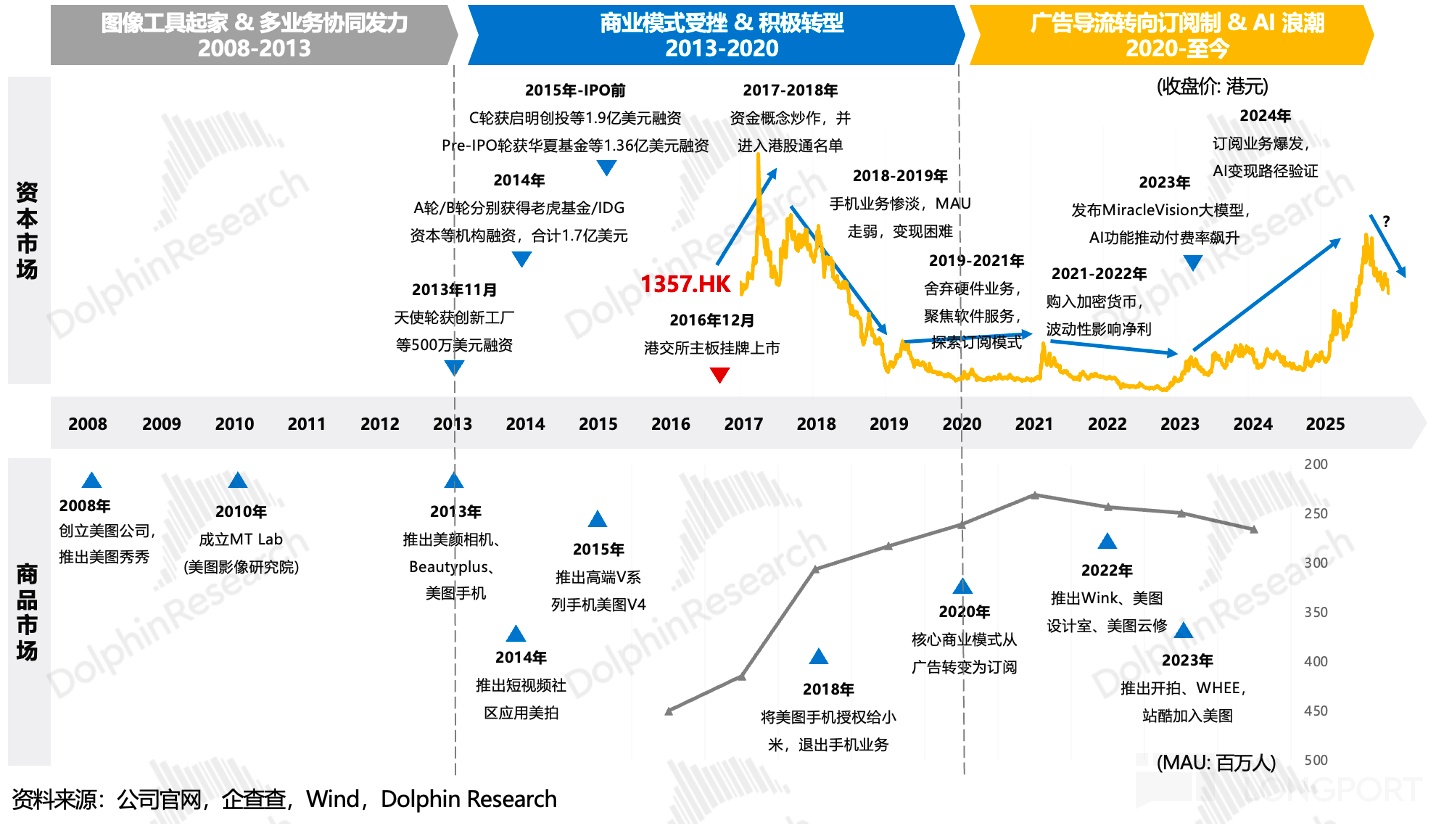
1) 2008–2013: Market entry via tools. Meitu launched the PC version of Meitu Xiuxiu in 2008 and quickly captured the photo-editing market with simplicity and ease of use. The 2011 mobile launch rode the smartphone boom, driving explosive user growth.Starting 2013, it began overseas expansion and broadened the product suite, rolling out BeautyCam, Meipai and more.
2) 2013–2020: Failed ecosystem expansion. Between 2013 and 2016, Meitu pursued diversification that naturally attracted capital, extending into smartphones, short video, e-commerce and beauty SaaS. Before listing, it completed four funding rounds totaling about $500mn.It listed in Dec 2016 in Hong Kong, once topping HKD 60bn in market cap. However, in 2018–2019, expansion led to heavy losses: smartphones kept bleeding, short video faced fierce rivals, e-commerce monetized poorly, and the stock slumped, forcing painful restructuring in 2019 — licensing the phone brand to Xiaomi, shutting Meipai, shrinking e-commerce, and refocusing on imaging tools.
3) 2020–present: AI as a catalyst for renewal. Meitu entered a phase of AI enablement and value reset, deeply embedding AI into products and launching a series of AIGC tools. MAU re-entered an uptrend, reaching ~266mn by end-2024.On the consumer side it upgraded Meitu Xiuxiu and BeautyCam with smarter features; on the enterprise side it launched Meitu Design Studio and Kaipai as light productivity apps. The biz model also shifted — C-side monetizes via subscriptions, B-side via design SaaS for enterprises — making Meitu one of the vertical apps actually benefiting from AI.
2) Tech edge powers an app factory
Today Meitu looks like an app factory. Across image/text and video generation/editing, a dozen-plus apps cover consumer lifestyle scenarios and B-side productivity use cases.Given space limits, Dolphin Research highlights the flagship products most watched by the market to frame the competitive landscape.
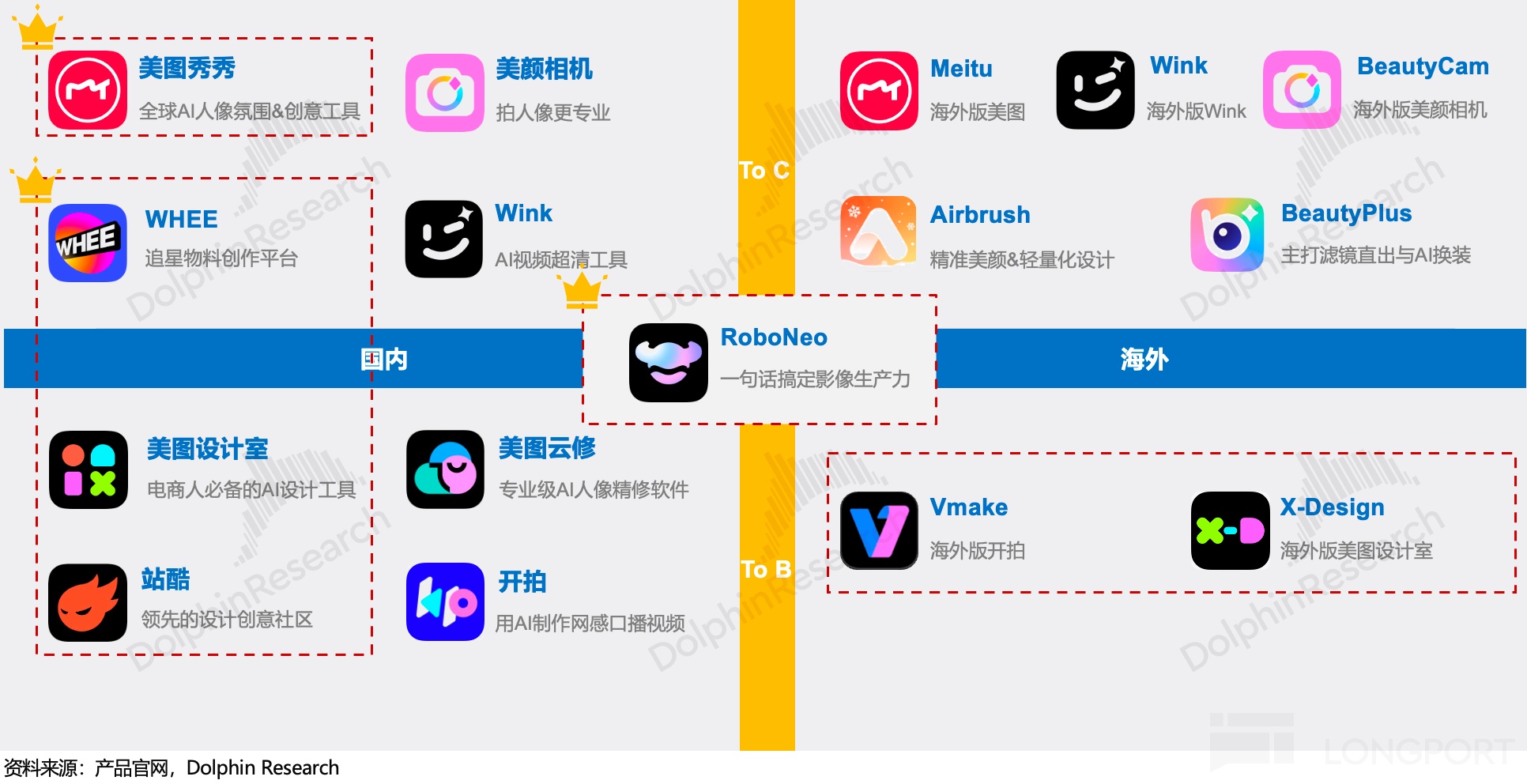
1. Meitu Xiuxiu: the consumer traffic gateway
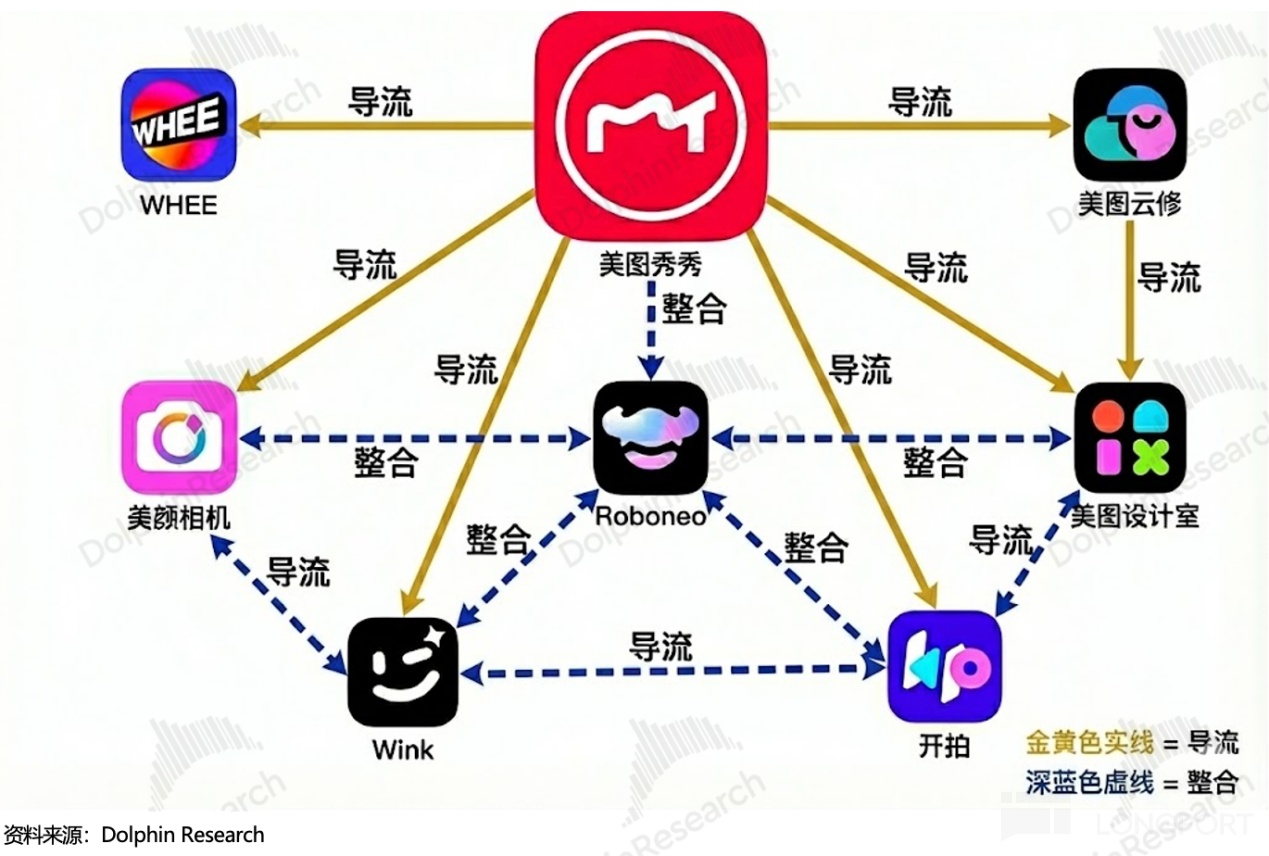
Meitu Xiuxiu is the long-standing photo-editing staple and the largest traffic asset. Beyond classic editing, it now incorporates video, capture, agentic and design features.From a product-architecture view, Xiuxiu retains high-frequency core image-beautification features, while offering only ‘lite’ versions for video (Wink), portrait (BeautyCam) and design (Meitu Design Studio).
This avoids erasing the distinctiveness of sibling apps and prevents traffic over-fragmentation that could destabilize the ecosystem’s base. It also nudges users with advanced needs into the specialized apps in the suite, reducing internal cannibalization and routing traffic from general needs to pro tools.
Under such a matrix, user lifecycles can extend. A single AI feature going viral on social, like AI snowfall, can onboard new users, while the diversified suite captures varied needs and converts one-off ‘traffic’ into retained ‘users’ — without losing a unified entry label that anchors mindshare and stickiness.
2. Meitu Design Studio: dual-end productivity with ecosystem synergy
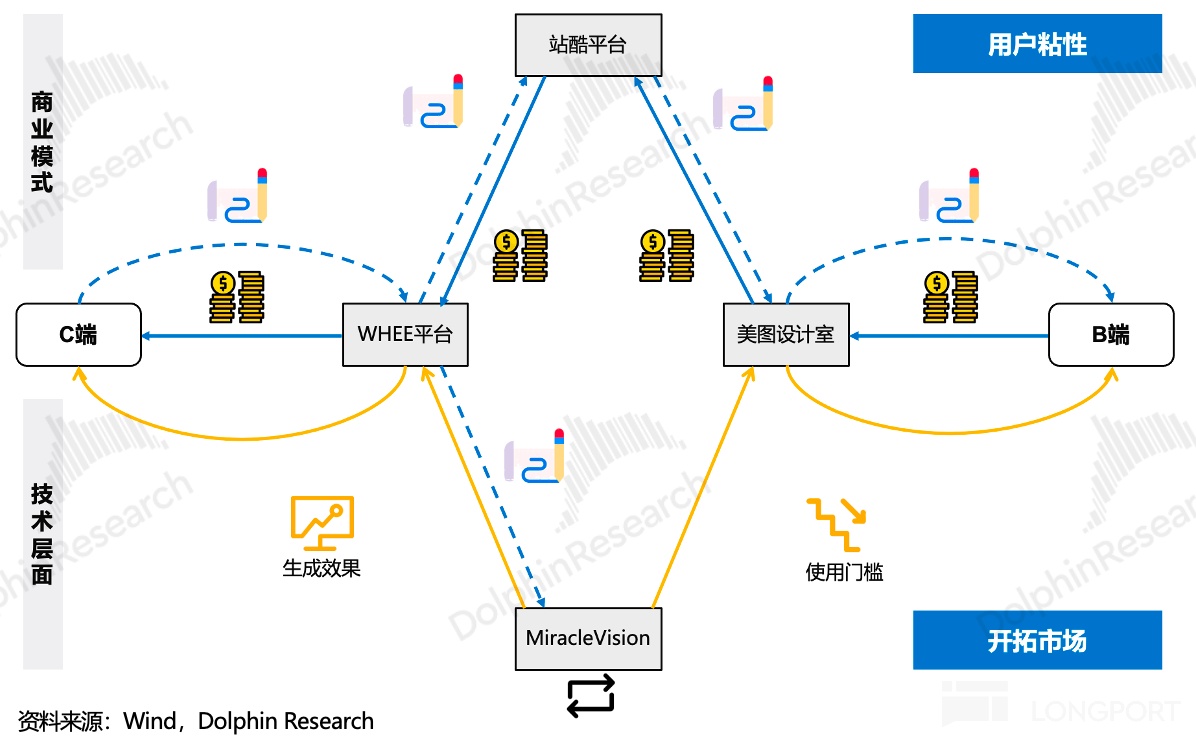
The B-side targets enterprises via Meitu Design Studio, WHEE and ZCOOL. Meitu Design Studio serves SME e-commerce sellers and content creators, focusing on verticals like e-commerce.WHEE skews toward pros — designers, illustrators and art hobbyists — adding AI such as text-to-image, image-to-image and image/text-to-video atop core editing.
ZCOOL acts as a ‘database’ acquired in 2024. Its 17mn-designer community funnels pro users and social proof to WHEE and supplies assets for secondary creation, while the 400mn+ licensed ZCOOL Hailo library can become an optional paid add-on for Meitu Design Studio users.
In ecosystem synergy, creators using WHEE and other Meitu imaging apps can upload premium content to ZCOOL Hailo to monetize, while Design Studio users can purchase those assets for commercial design. This links producers and demand through WHEE (production) — ZCOOL (asset platform) — Meitu Design Studio (demand).
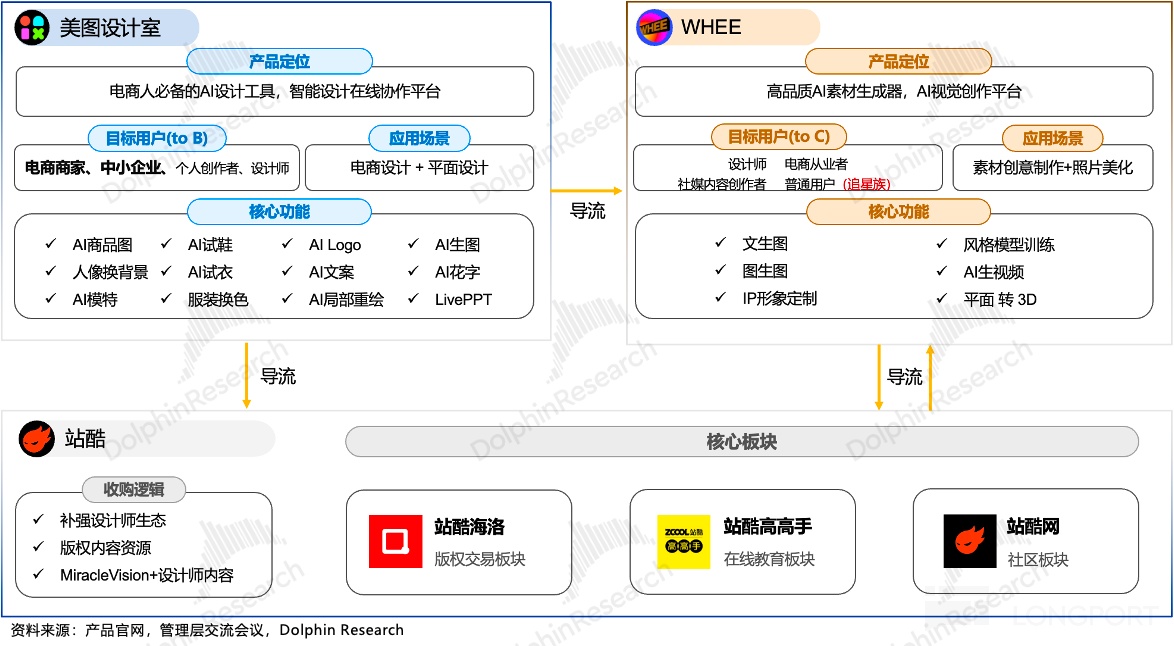
The data and feedback generated across these three platforms feed Meitu’s Miracle Vision model for training and expert reinforcement. This continuously improves generation quality and understanding, lowering skill requirements and user friction.For Meitu, that cuts CAC and reinforces a positive flywheel.
3. AI-integrated tool — RoboNeo: lowering barriers as an agent + model distributor
Most products above simply added AI to existing workflows. The market’s Q2 bull case centered on RoboNeo, launched in Jul 2025, delivered as both app and web but already integrated into Meitu Design Studio, Meitu Xiuxiu and Kaipai, and positioned as a flagship AI agent product.
RoboNeo is a native AI agent. Via prompts, users can complete image editing, video creation, graphic design and website building, all with simple conversational commands, effectively ‘one sentence to finish imaging productivity.’
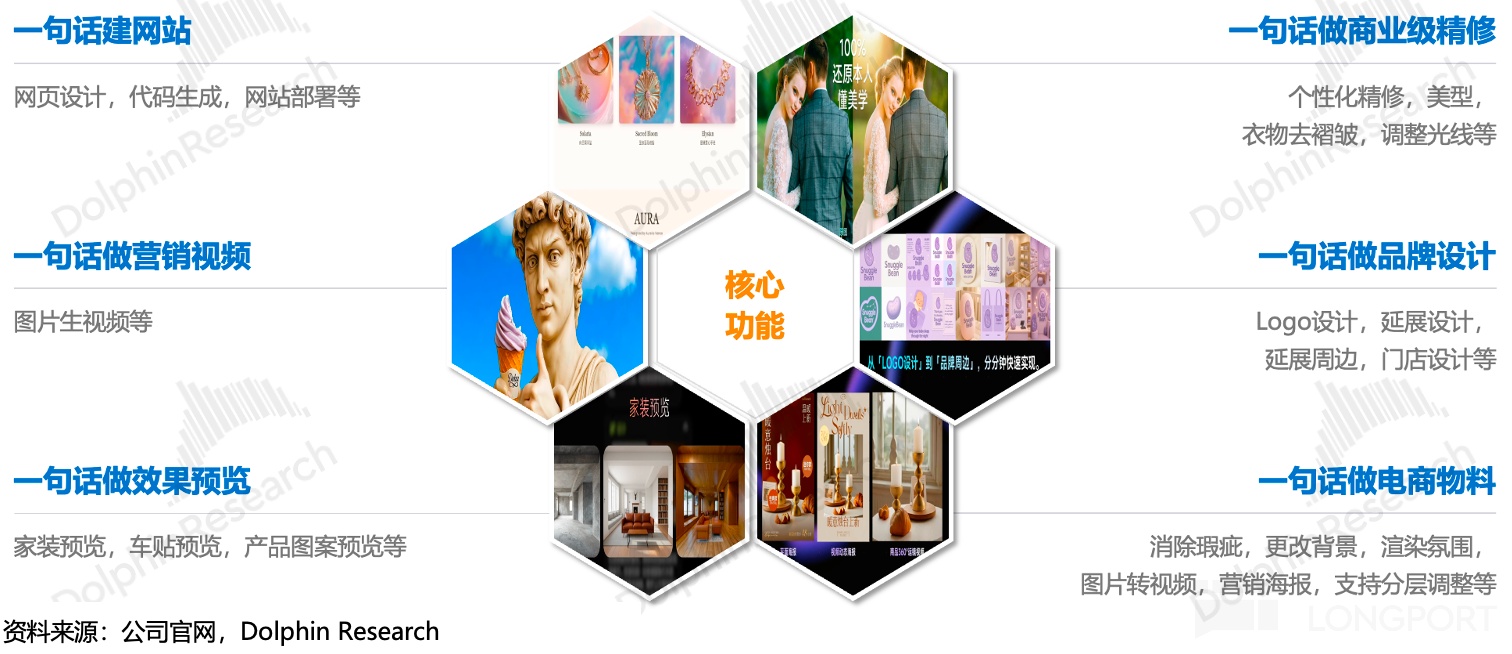
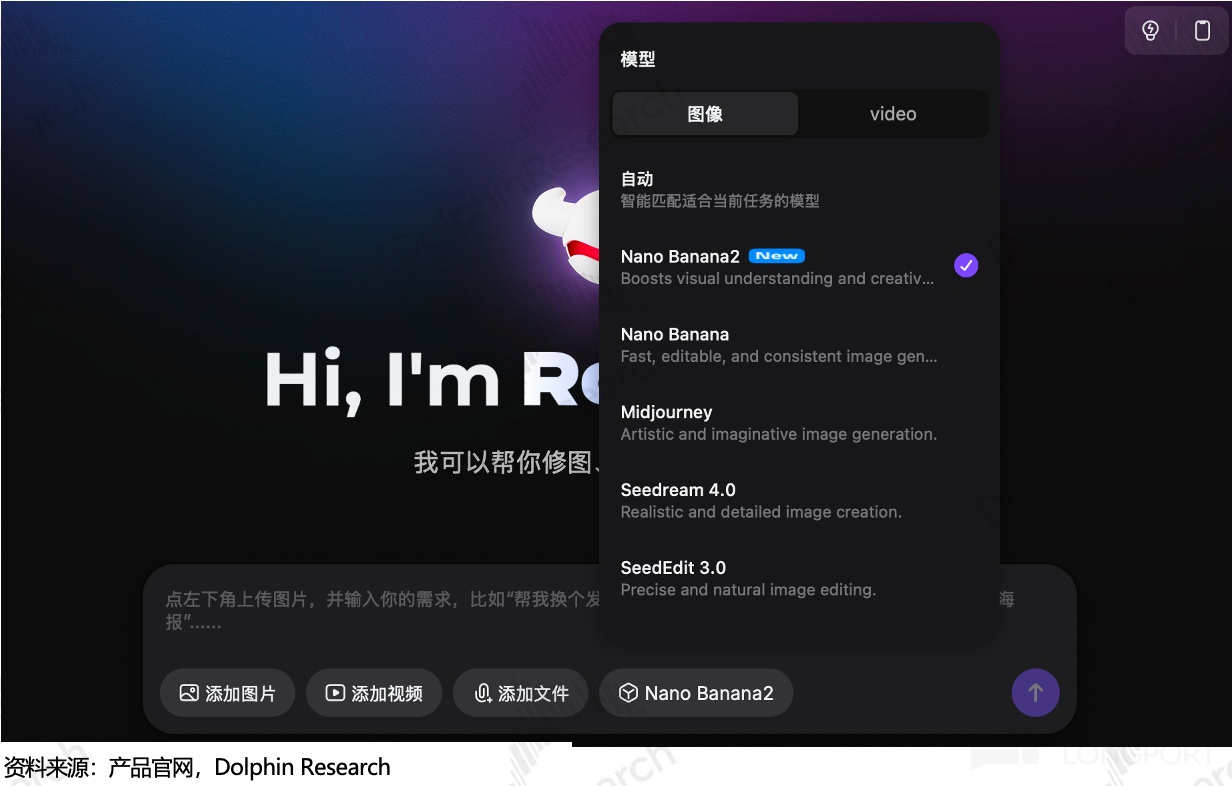
Through standardized interfaces, RoboNeo integrates multiple third-party base models such as Nano Banana pro and connects Meitu’s own Miracle Vision vision model, functioning like a distributor for image models overall.With many model vendors in the market, a unified entry has value. Performance hinges on integrators’ tuning expertise and their speed in shipping features to reach and retain users early.
Functionally, RoboNeo overlaps heavily with Design Studio, Xiuxiu and WHEE, triggering concerns about internal substitution. Management argues RoboNeo is not meant to cannibalize the stock base but to solve the ‘last-mile’ gap in AI production by rebuilding workflows.The key is combining ‘AI generation + manual refinement’: the agent drafts first, then users tweak at the layer level or jump to traditional apps for fine-tuning, turning potential conflict into complementarity.
That is the vision, but current data look less rosy.
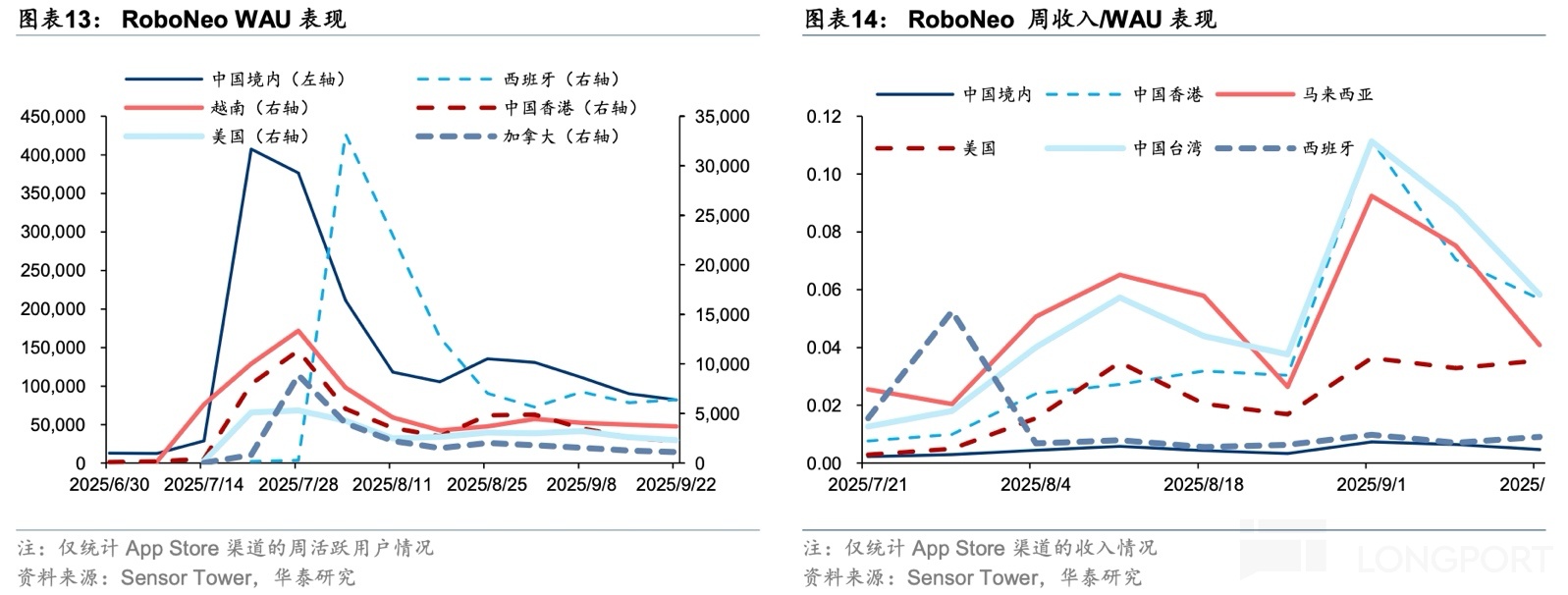
- RoboNeo’s WAU surged on launch in Jul, but retention disappointed. In mainland China, less than a month in, the consumer user base fell 75%, and the Aug debut of Google’s Nano Banana further dimmed its prospects.
- Monetization varies across markets, tied to willingness to pay and competition. Mainland China lacks broad Nano Banana competition but has lower propensity to pay and many similar peers, so monetization trends mirror weak user trends, whereas overseas — notably Taiwan and Hong Kong — localized ops drove stronger elasticity.
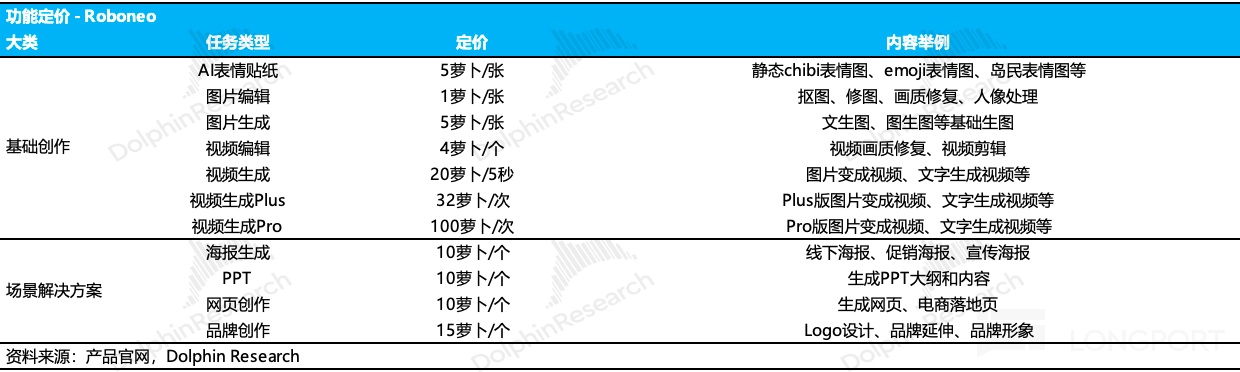
Pricing and benefits also limit RoboNeo’s standalone monetization. Existing B-side subscribers have entrenched workflows in traditional products and can call agent features with in-app credits without a separate RoboNeo fee.C-side users often rely on free compute early and lack incentives to continue paying, and tiering today lacks clear differentiation to drive conversion.
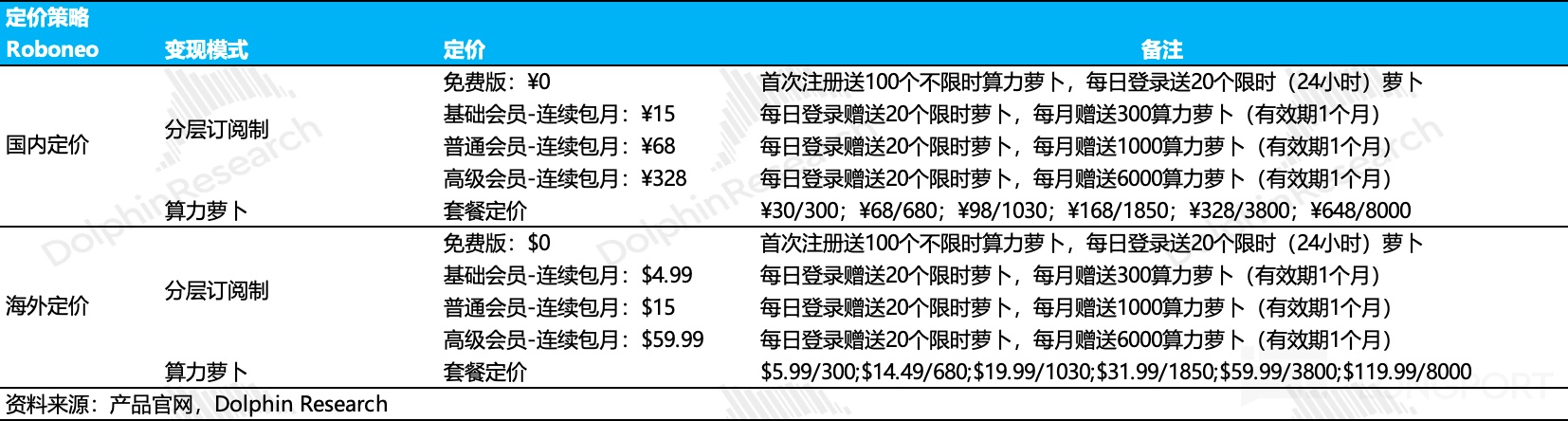
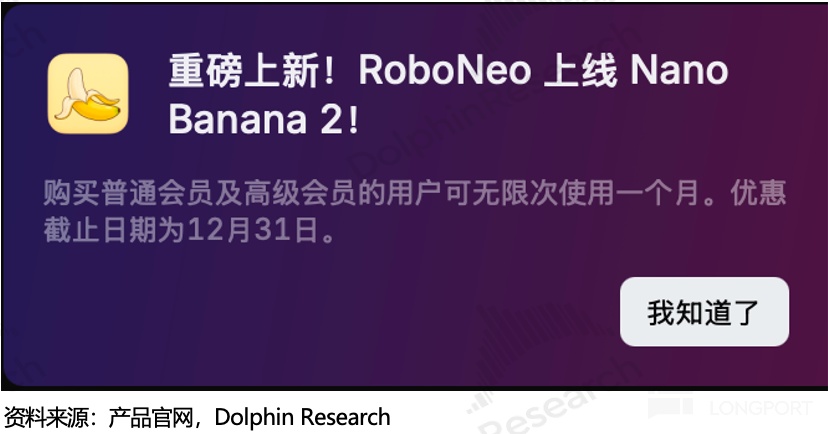
In Dolphin Research’s view, near-term paywalls will hinge on access to top models that users cannot freely choose once features are folded into other apps. This appeals to pros who care most about output quality.Take Nano Banana pro: the official price is high and compute-limited ($29.99/month), while RoboNeo’s overseas base plan at $15 offers unlimited use at roughly half the official price.
That may compress GPM, but such spending can be necessary early in the product cycle. Over time, RoboNeo likely fuses deeper into the suite with two paths to monetization: a) a paid entitlement that lifts subscription penetration, or b) a lever in premium tiers to raise ARPPU.
3) Vertical vs. general models: not a foregone conclusion
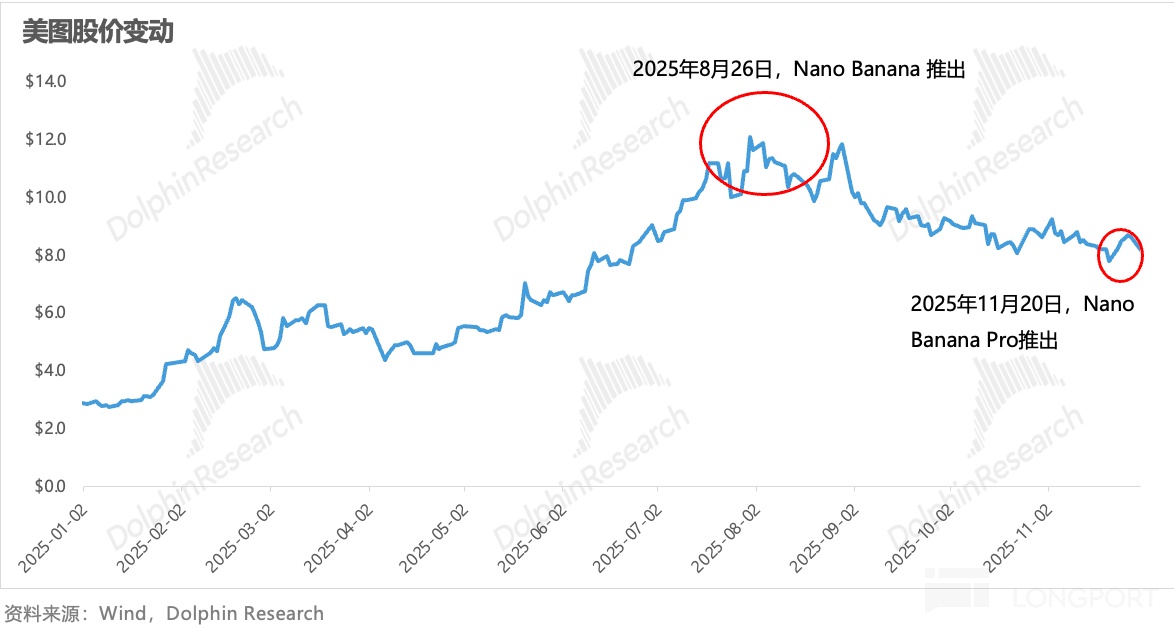
Recent stock action reflects anxiety over Meitu’s outlook. Dolphin Research sees two main concerns: on product, especially rising uncertainty in overseas B-side growth, and on technology, self-proving against substitution by general models.Even without blue-sky assumptions on overseas productivity, Meitu’s sizable traffic base — Meitu Xiuxiu’s stable 200mn MAU — provides resilience against both peers and foundation models.
As a rare vertical app with some first-mover advantage in China, Meitu combines product-development strength with a culture of relentless iteration born of competitive pressure. It is a useful case study in how a smaller platform adapts and scales in the AI era.This section focuses on product-side competition; the next will examine defensibility against large models.
Like peers, Meitu is in a proof phase. The launch of Nano Banana and its updates hit sentiment, and the stock fell 14% and then 5%, trading weakly for nearly four months.
1. China consumer: a stable equilibrium
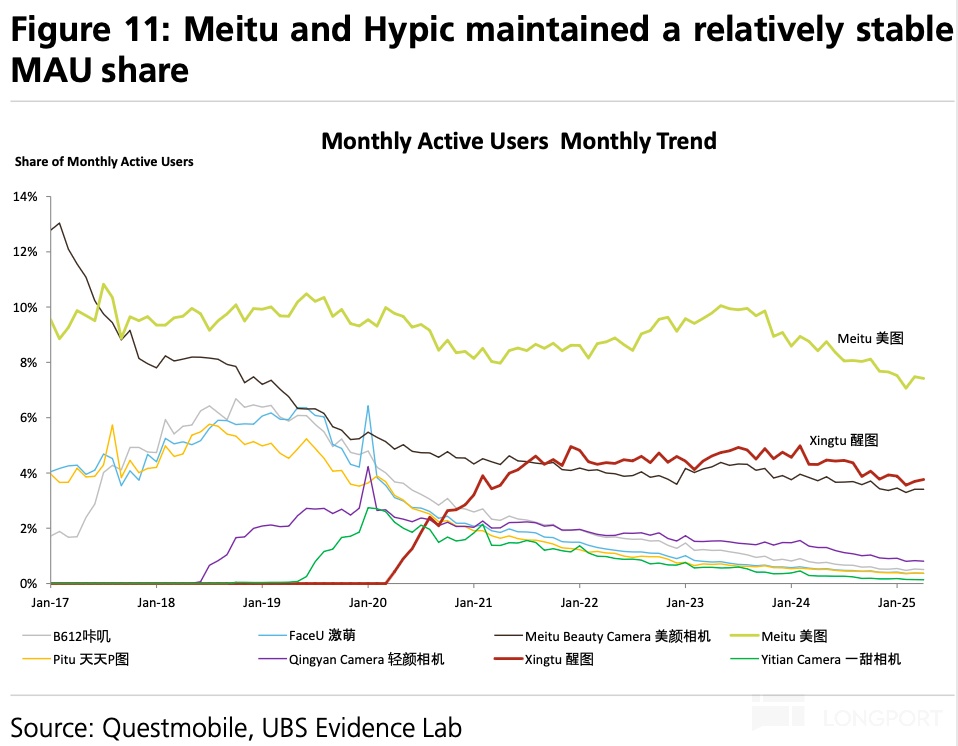
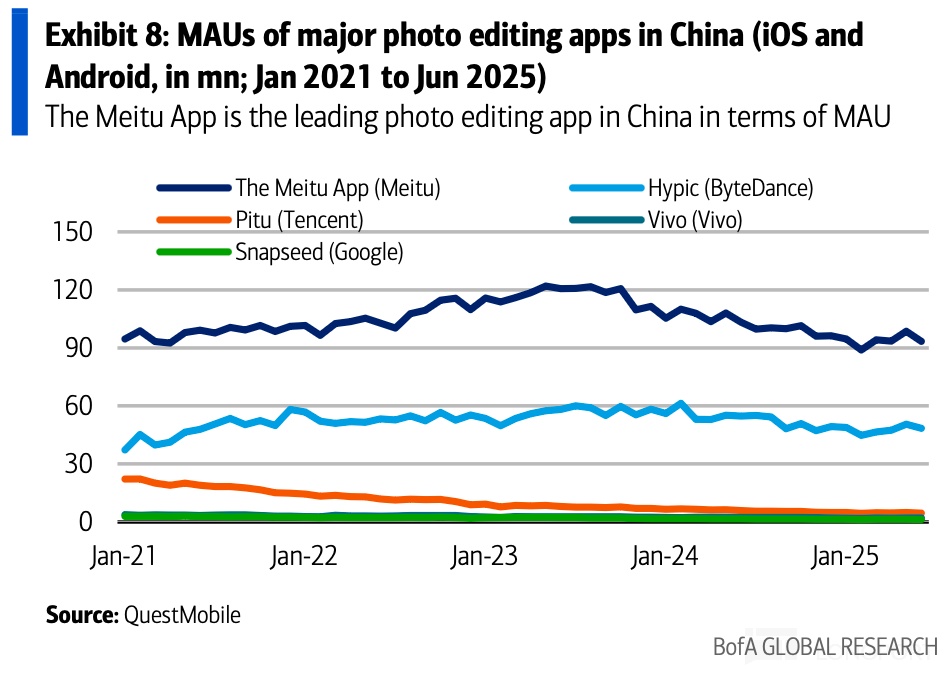
Meitu leads both photo editing (Meitu Xiuxiu) and real-time beautification (BeautyCam), and 200mn+ users — roughly 70% of total MAU — are its core asset. As the ecosystem’s traffic entry, Xiuxiu’s MAU is about 2x the biggest rival, ByteDance’s Xingtu.More users mean richer behavioral data, accelerating iteration.
BeautyCam, focused on ‘real-time beautification,’ serves those who want high-quality photos and video without post-editing. It covers selfies, video calls and short-video creation for young female users.Its MAU exceeds the sum of other peers in this vertical by a wide margin.
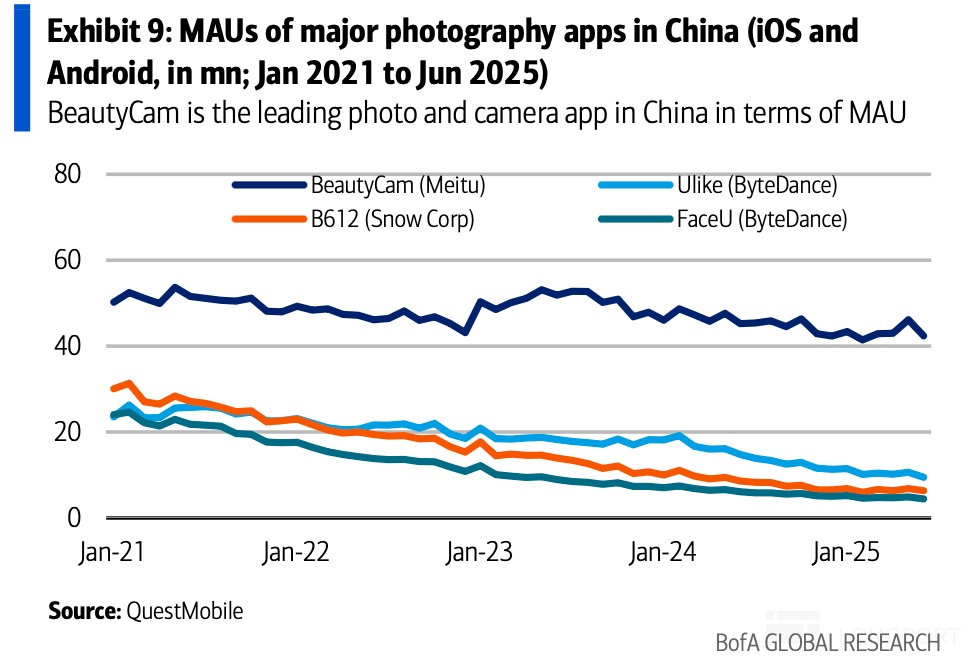
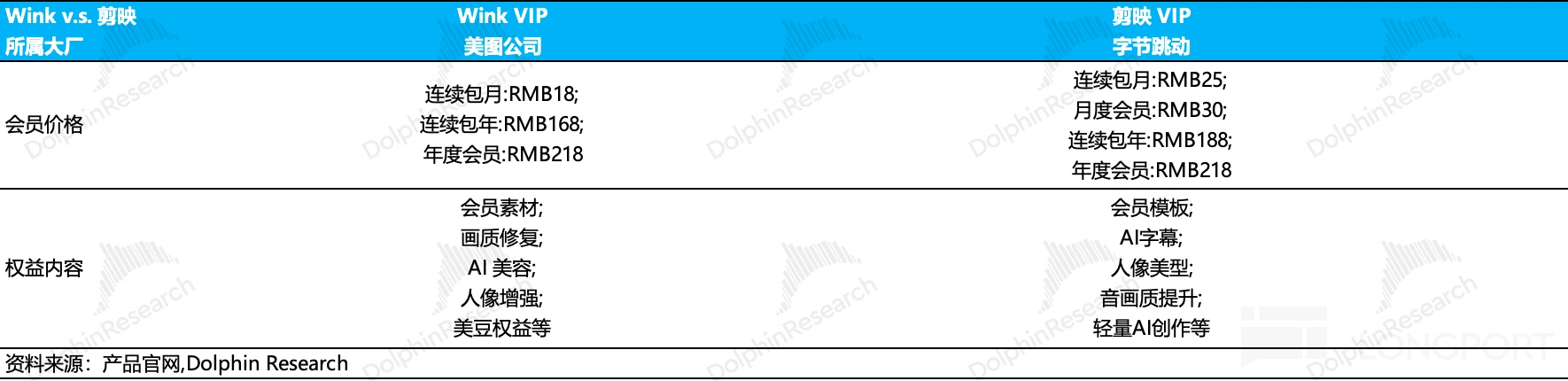
Overall, China’s consumer imaging market looks mature. With the breadth of Xiuxiu and the depth of BeautyCam, Meitu leads in key micro-verticals by user scale.Wink targets AI-based video upscaling and portrait beautification for C-side users, extending Meitu’s portrait expertise into video.
By share, it ranks No. 2 in China’s video tools (≈10% vs. >60% for Jianying). The overlap with Jianying is limited and complementary.Wink’s edge lies in AI restoration, super-resolution and video-grade portrait beautification, addressing low-quality footage and beauty needs, and coexisting in a non-exclusive mobile-tool ecosystem.
2. Overseas consumer: early user base plus localization lifts competitiveness
Despite >200mn users at home and strength in photo beautification, a weaker domestic pay environment pushed Meitu to go abroad. It built separate, localized apps for different markets.Thanks to early planning, Meitu’s AI photo apps established a solid base, with market share steady around 50% over the past two years.
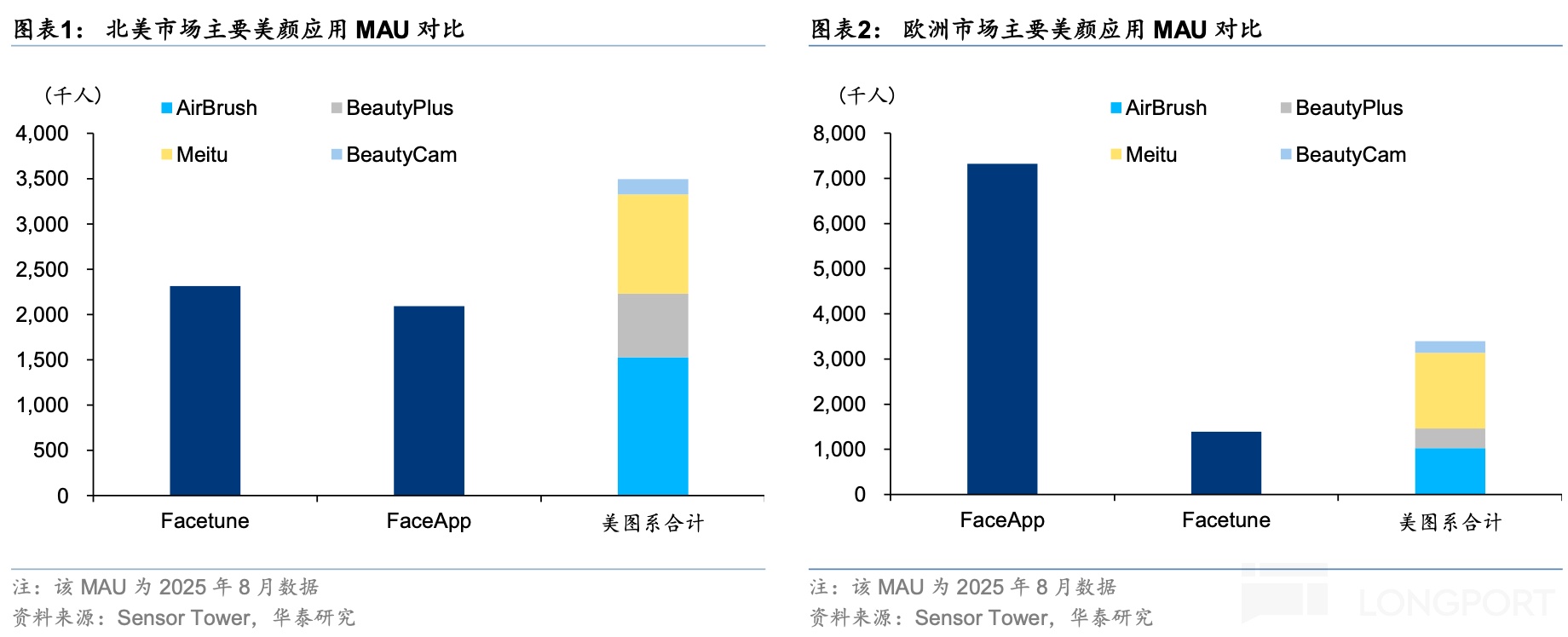
As of Aug 2025 per Sensor Tower, Meitu’s North America MAU reached 3.5mn, surpassing peers to rank No. 1. In Europe, it trails only FaceApp and is well ahead of Facetune.
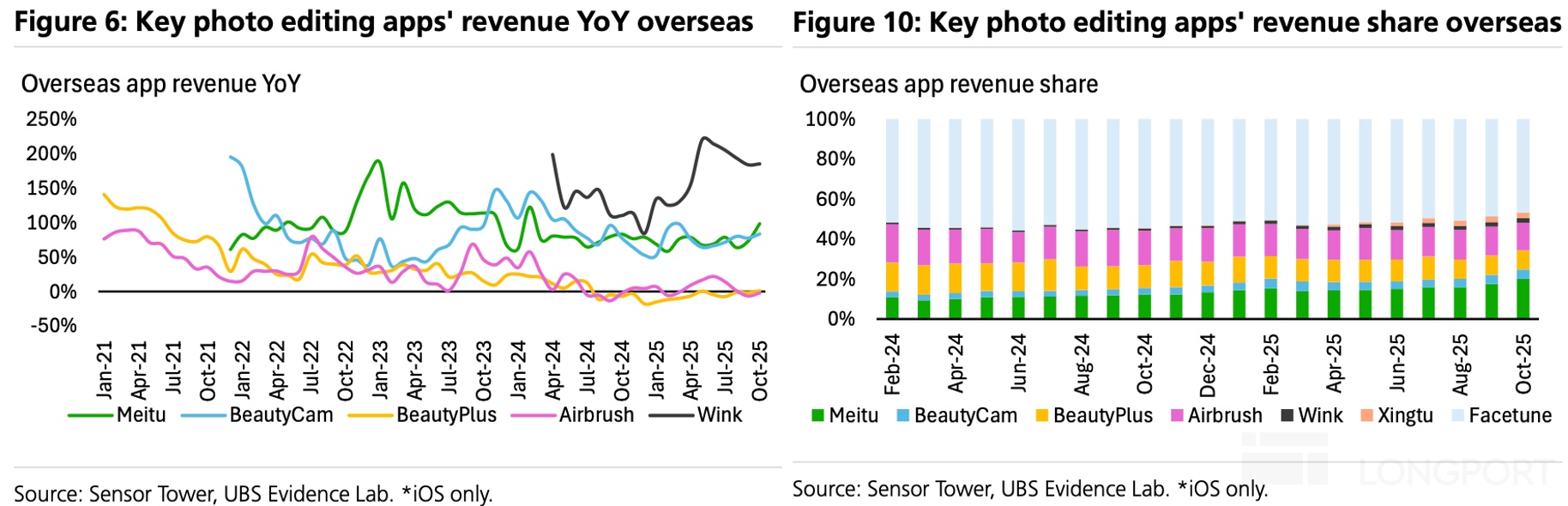
UBS’s Oct tracker shows overseas growth with Meitu and BeautyCam revenue up 98% and 83% YoY, while BeautyPlus and AirBrush, off higher bases, were stable at +1% and -2%. Monetization remains solid.In video, Wink revenue rose 185% YoY and has maintained triple-digit growth across all reported periods.
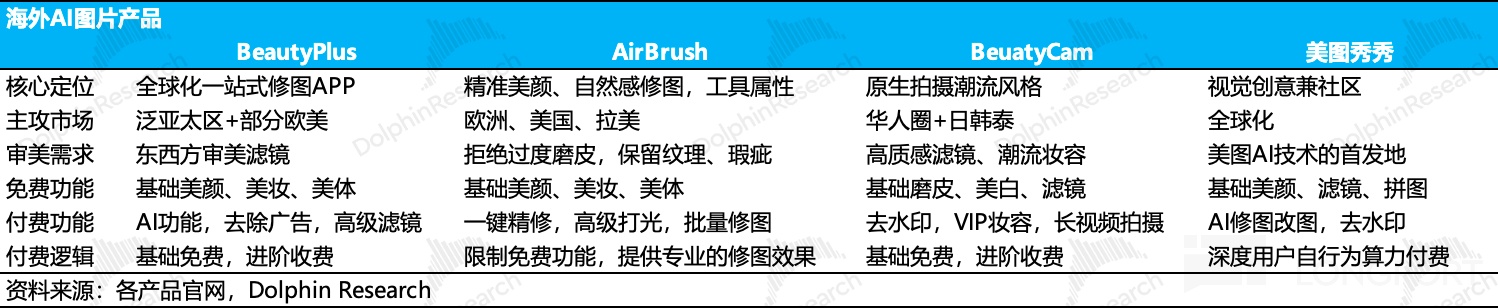
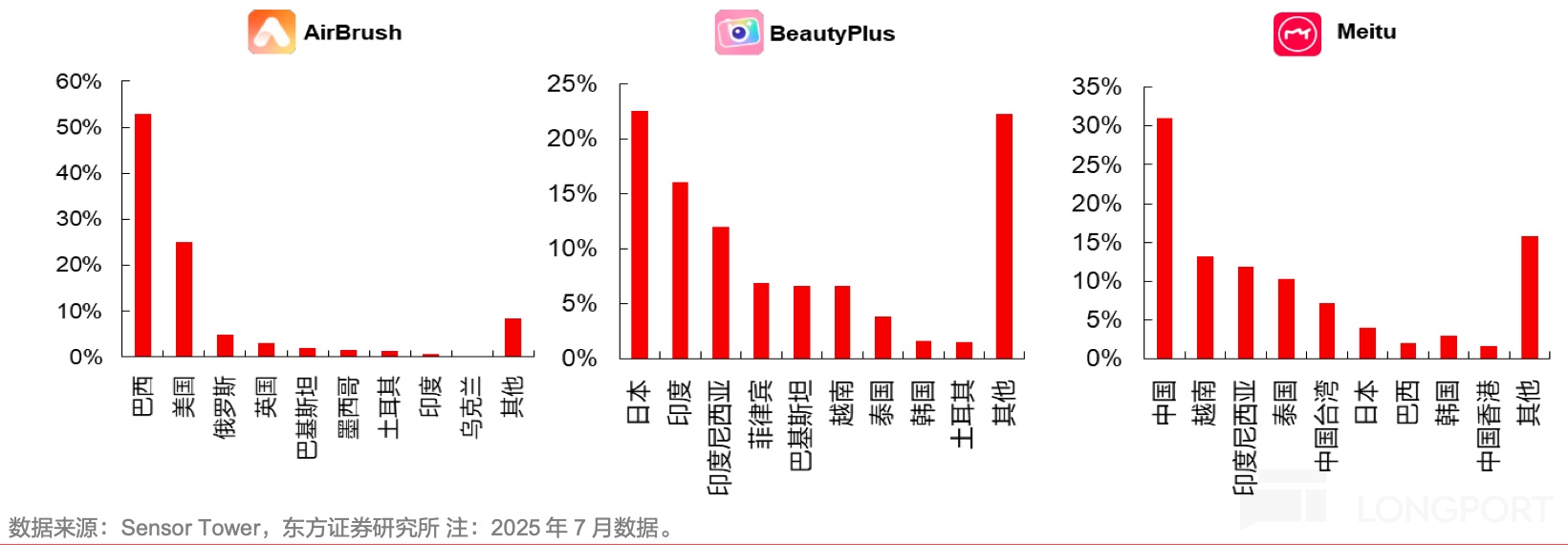
To address diverse aesthetics, Meitu differentiates by culture clusters. AirBrush targets the West with ‘natural look’ and pro tooling, BeautyPlus covers broader APAC with a full feature set and ad-free/premium upsell, while BeautyCam serves East Asia’s trend-driven users with native capture for social fads.
3. China enterprise: anchored in e-commerce workflows
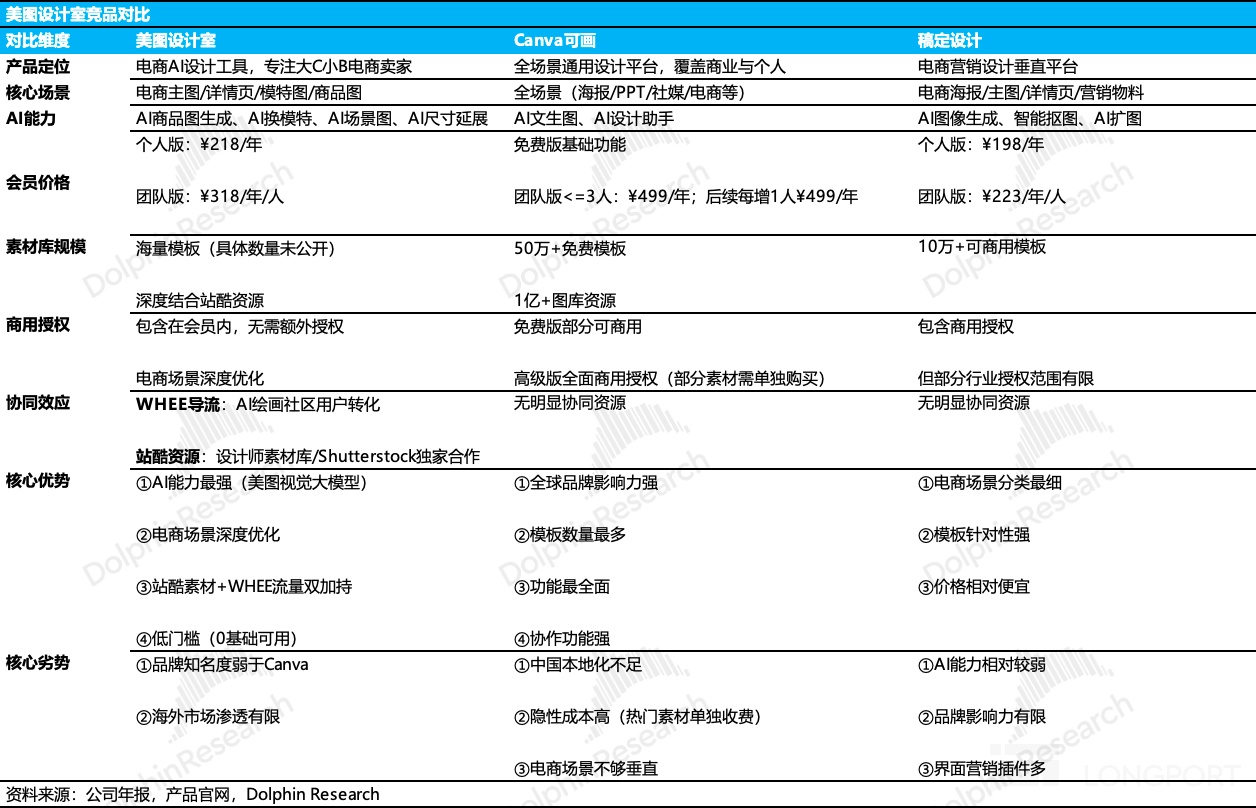
As noted, Meitu Design Studio monetizes B-side with ‘ZCOOL + WHEE’ synergy. Versus Canva’s generalist positioning, it focuses on large C/small B e-commerce sellers and wins on ROI via cost-effective pricing and massive local content.Against peers like Gaoding Design, Meitu’s gaps are mainly in base vision models and exclusive licensed assets.
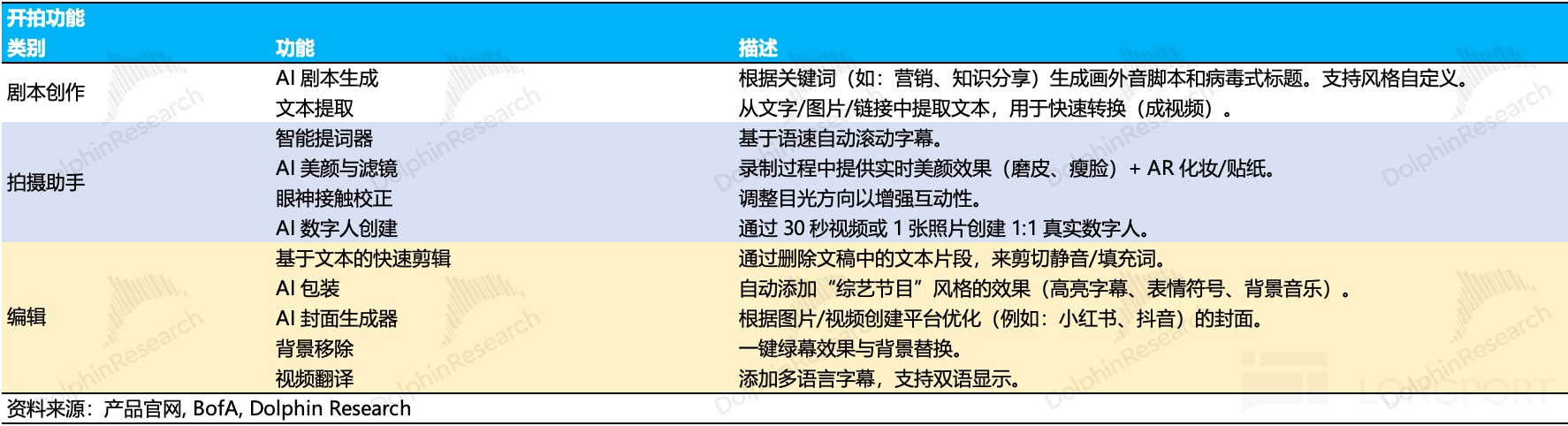
Kaipai addresses a high-frequency need in B-side — AI talking-head video for commerce — automating scripts, teleprompter and smart editing to lower creation barriers. It is No. 1 by user scale in this sub-vertical.The full toolchain — Design Studio (asset creation) + Meitu Cloud Retouching (batch refinement) + Kaipai (video commerce) — covers e-commerce production from static to video.
4. Overseas enterprise: outlook still uncertain
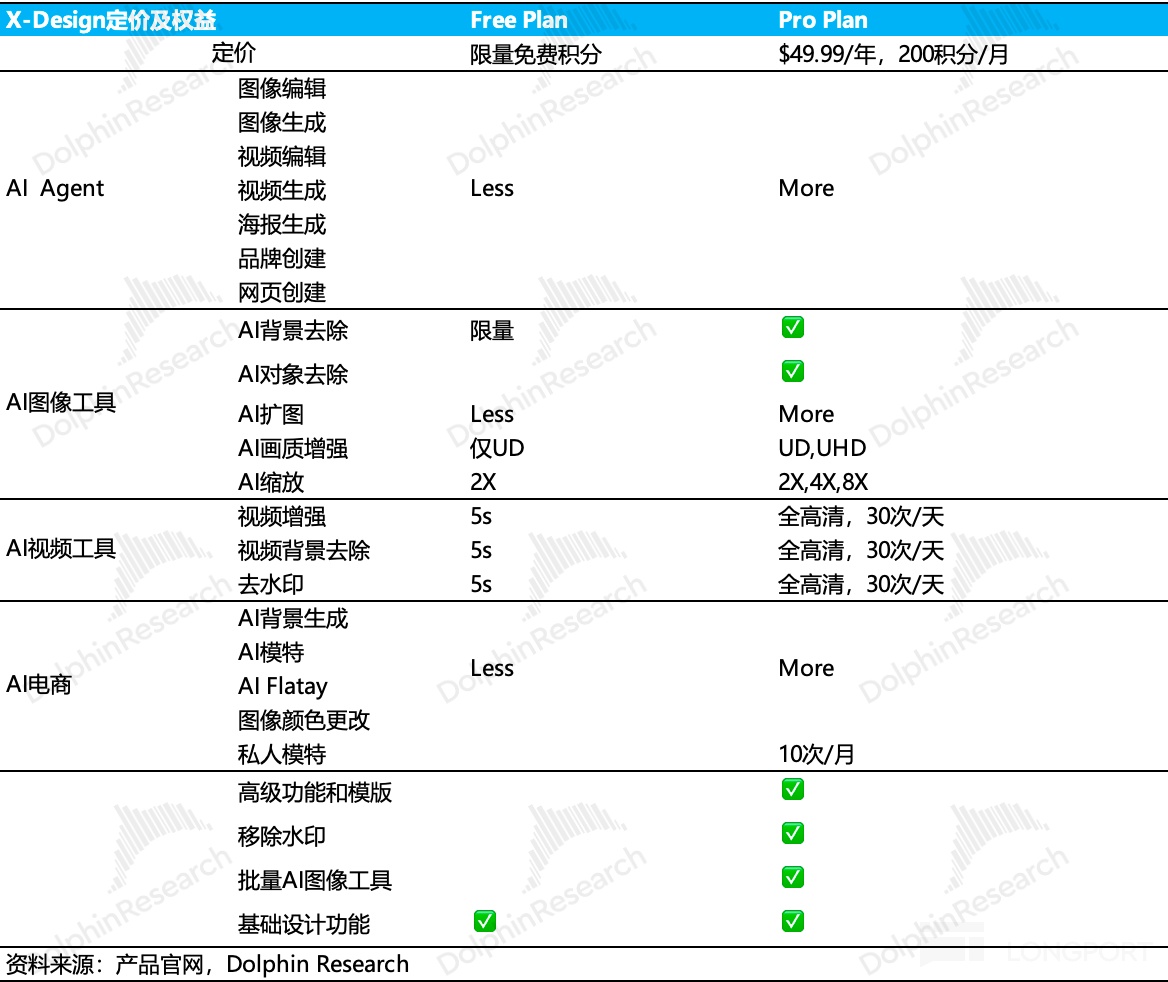
Vmake has pivoted to AI talking-head video and editing, lowering barriers for creators and SMEs. X-Design is the overseas version of Meitu Design Studio, focused on e-commerce visuals with AI product images and model generation to boost efficiency.These two are the key pillars for overseas B-side monetization.
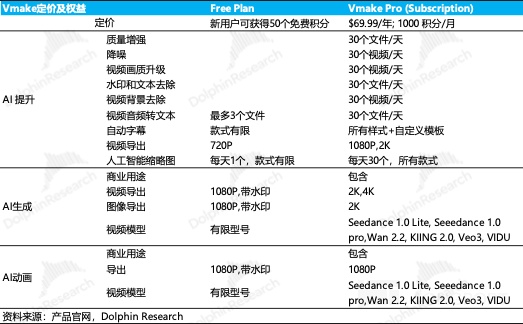
On pricing and entitlements, Vmake is essentially paywalled. The free tier is capped at 720p, watermarked and non-commercial, cannot call high-end video models like Veo 3, and locks many features.This aggressive gating fits its productivity focus for web-first users, risking churn among price-sensitive users but attracting target users if the experience delivers.
By contrast, X-Design uses low-friction acquisition with a more open free tier. As a late entrant, it needs scale in a market where peers like Photoroom and Pixelcut have 10mn+ MAUs.Instead of a hard wall, it limits commercial-grade quality, full templates and batch features to set thresholds.
Vmake MAU has surpassed 2mn, with overseas scale larger than domestic, validating product-market fit. On revenue, if we apply an 8% pay rate (Meitu’s productivity average) conservatively, annualized revenue could reach $11.2mn; at a 14% penetration benchmarked to Kaipai at home, it could approach $20mn even with zero user growth.
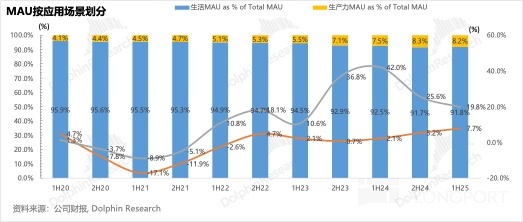
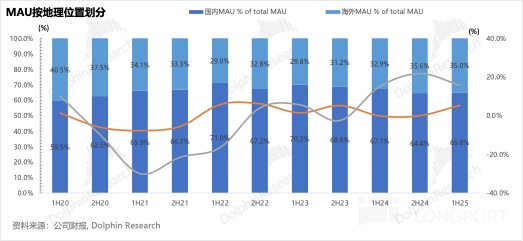
Strategically, management prioritizes ‘productivity’ and ‘overseas.’ But MAU signals show potential fatigue in both segments. Productivity MAU share rose from 4.1% in 1H20 to 8.3% in 2H24, then slipped to 8.2% in 1H25, with YoY growth decelerating from a 42.0% peak to 19.8%.Overseas MAU growth, off a high base, slowed from 21.7% in 2H24 to 15.7% in 1H25, still double-digit but with both growth and share converging.
Dolphin Research sees overseas B-side as the key to valuation optionality, yet the logic looks questioned by weak visibility. Vmake’s pivot is gaining traction, but X-Design faces a pincer.
On product, strategies are highly homogenous, with leading peers adopting ‘model container’ approaches that dilute Meitu’s base-tech differentiation. On models, rapid iteration and in-product integration by general models compress the space for latecomers. With just 3mn+ total users and slowing growth/penetration, the market is reassessing the overseas premium.
The next note will focus on Meitu’s long-term investment case — whether it can resist model-level encroachment and how we view valuation. Stay tuned.
<End of text>
Risk disclosure and statement:Dolphin Research Disclaimer and General Disclosure
The copyright of this article belongs to the original author/organization.
The views expressed herein are solely those of the author and do not reflect the stance of the platform. The content is intended for investment reference purposes only and shall not be considered as investment advice. Please contact us if you have any questions or suggestions regarding the content services provided by the platform.
