



There is no myth in used cars, Uxin finally emerged from the trough in the third quarter

In the genealogy of Chinese internet companies, Uxin is a company that has gone through many ups and downs.
It caught up with the most tumultuous era of the used car e-commerce industry but was the first to hit the profitability ceiling during the most frenzied phase of capital. It tried heavy-asset strategies earlier than its peers but was consequently labeled as "overly heavy model, wrong path." For a long time, Uxin's presence in the capital market was reduced to a single curve: whether losses would continue to expand.
But the Q3 2025 financial report has, for the first time, cracked this singular narrative. Transaction volume grew 125.7% YoY, retail transaction volume grew 133.5% YoY, and revenue grew 76.9% YoY. These numbers were not short-term spikes in a single metric but appeared collectively in the same quarter. They all point to one question: Is this the real inflection point for Uxin?
However, the real discussion is not about "whether performance has improved" but a more substantial judgment—whether the used car business, which is seemingly low-margin, operation-heavy, and slow-turnover, has finally validated a sustainable retail path.
Not a rebound in transaction volume, but a self-consistent business model
The financial report shows that Uxin Group's Q3 2025 revenue was 879 million yuan (~$123 million), up 76.86% YoY from 497 million yuan.
The most striking change in Q3 was undoubtedly the sharp increase in transaction volume. Total transactions reached 15,904 units, up 37% QoQ and more than double YoY. Retail transactions accounted for 14,020 units, almost dictating the company's overall growth direction for the quarter.
But more important than "selling more" is "what is being sold."
In recent years, growth in the used car e-commerce sector has relied on two approaches: either low-price-facilitated matching transactions or wholesale-oriented scale stacking. The common features of these models are fast growth, low barriers, and thin profits, making them highly susceptible to macroeconomic fluctuations and intensified competition.
Uxin's growth structure is now changing. In Q3, retail vehicle sales revenue reached hundreds of millions, further increasing its share of total revenue and becoming the main driver. This means Uxin is transitioning from a "transaction platform" to a "retailer" role—not just facilitating transactions but taking responsibility for vehicle pricing, inventory, delivery, and after-sales service.
This transformation comes at a significant cost. Uxin's continued heavy-asset investments mean rising inventory risks, capital occupation, and operational complexity, almost going against the consensus of "light internet models." Yet, this very aspect is now beginning to show differentiated value.
The change in gross margin is the most direct signal. In Q3, Uxin's overall gross margin rebounded to 7.5%, up 2.3 percentage points QoQ. This is a critical milestone in the used car industry, indicating that scale expansion is starting to dilute costs rather than being swallowed by them.
More importantly, this is not achieved at the expense of efficiency. Uxin's disclosed inventory turnover cycle remained stable at around 30 days, which is healthy for a self-operated retail model. In other words, cars are selling faster instead of sitting in warehouses waiting for the next promotion.
Overall, Uxin is not relying on short-term subsidies for scale but is validating whether the "warehouse supermarket + nationwide online retail" operational model can achieve self-closure.
This also explains why losses narrowed significantly despite the sharp growth in transaction volume and revenue. In Q3, Uxin's operating loss was 36.5 million yuan, and net loss was 60.7 million yuan, both improving YoY.
For a company long questioned for "the bigger the scale, the deeper the losses," this combination itself is a signal.
Heavy assets are not the original sin, but Uxin is still walking on the edge
At this stage, what Uxin is doing is essentially forcing the "highly non-standard" used car business into the track of retail industrialization.
This means it must simultaneously solve three things: stable supply, standardized pricing, and a replicable delivery system. Each of these is magnified under a heavy-asset model.
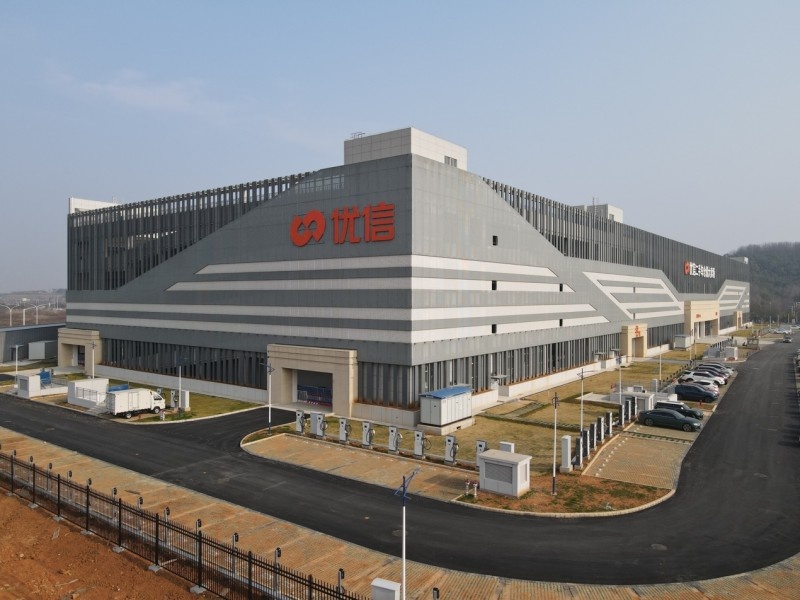
From an expansion perspective, Uxin has clearly chosen to move forward. Its newly opened supermarkets in Wuhan and Zhengzhou are ramping up quickly, while the Jinan supermarket is in trial operation. It has also partnered with local authorities in Tianjin, Guangzhou, Yinchuan, etc., to advance new warehouse supermarket construction.
This deep integration with local authorities alleviates land, policy, and initial cost pressures to some extent but also brings stronger execution and management challenges.
What the capital market truly cares about is not the number of supermarkets but whether this model can maintain efficiency without collapsing during expansion.
Short-term guidance is quite positive. The company expects Q4 retail transactions to reach 18,500–19,000 units, with total revenue of 1.15–1.18 billion yuan. Full-year retail transactions are expected to exceed 50,000 units, with annual revenue surpassing 3.2 billion yuan.
If this pace materializes, it means Uxin is moving past the scale validation phase and entering a stage closer to profitability—but uncertainties remain.
On one hand, sales and marketing expenses still account for a significant proportion, and whether scale expansion can sustainably reduce marginal costs remains to be seen. On the other hand, used car retail is inherently a slow business, with far higher requirements for asset returns and cash flow management than platform matching models.
The deeper issue lies in the industry itself. China's used car market has long been "large but fragmented," with high trust costs and low circulation efficiency—precisely the soil for heavy-asset models. But does this also mean it is destined to lack the high-profit myths of the internet era?
From this perspective, what Uxin is trying is not to "run faster" but to run more steadily. It seems to be doing something counterintuitive: trading a heavier model for longer-term certainty.
This path is not sexy but may be closer to reality.
For the capital market, Uxin's real test is not next quarter's growth rate but whether transaction scale, gross margin, and narrowing losses can form stable resonance in the coming cycles. If this resonance holds, the company may no longer just "survive" but begin to have the foundation for revaluation.
The used car industry has never had myths, but at least for now, Uxin is proving one thing: heavy assets are not the original sin; the real risk is giving up too early without validating the model.
The copyright of this article belongs to the original author/organization.
The views expressed herein are solely those of the author and do not reflect the stance of the platform. The content is intended for investment reference purposes only and shall not be considered as investment advice. Please contact us if you have any questions or suggestions regarding the content services provided by the platform.
