


 Rate Of Return
🚀📈 If you want to truly understand SpaceX, there's one question that must be answered first:

Do you really believe Elon Musk is serious about sending humans to Mars, or do you think "Mars colonization" is just a convenient narrative?
This is the starting point for all judgments.
If you choose to believe, then SpaceX's seemingly "scattered" moves over the past few years are actually highly consistent.
It's not just about Starship, not just about rocket reusability, and not just about frequent test launches.
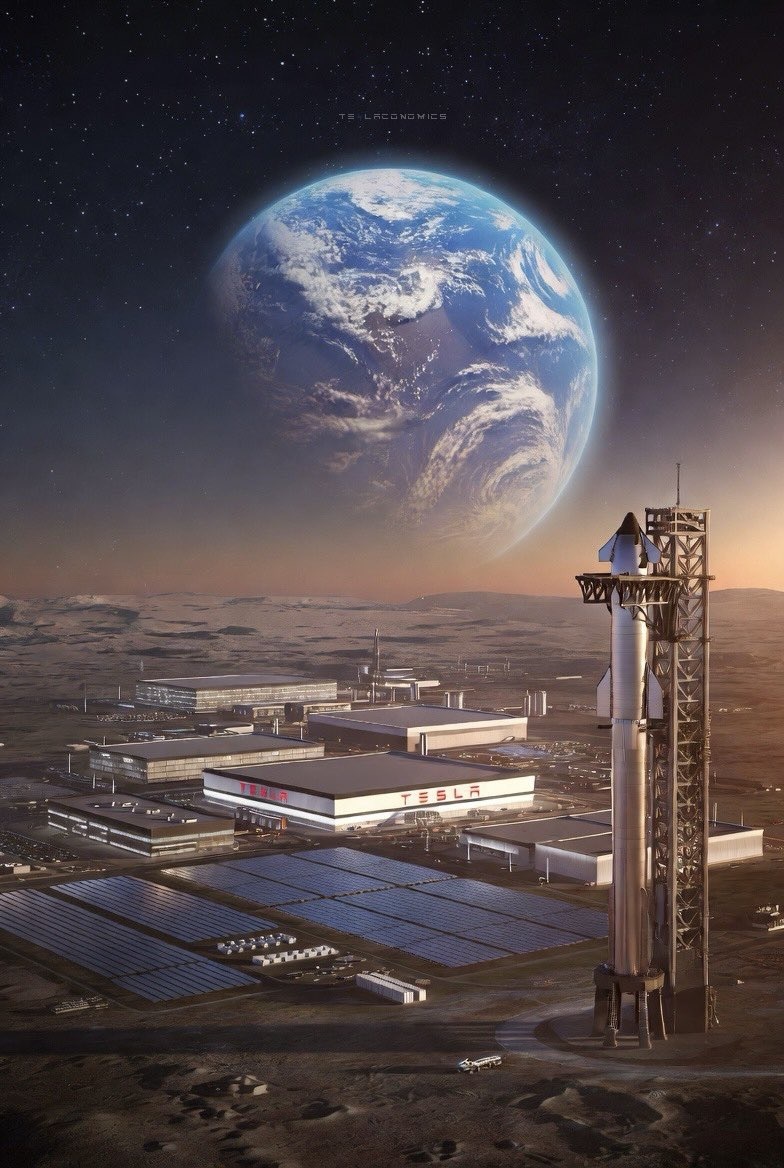
Including what many have underestimated—space data centers, orbital computing power, and the commercial demand for extreme launch frequency—all fundamentally point to the same goal:
Not to achieve a perfect launch, but to build a system that must "keep launching."
Mars colonization was never an engineering problem; it's a systems problem.
You can't achieve interplanetary civilization migration with one or two successes. It requires a commercially self-sustaining loop.
And AI is becoming the most important "demand generator" in this loop.
When outsiders see space data centers as a way to "alleviate AI computing bottlenecks," that's just the first layer.
Deeper down:
If Starship is to achieve ultra-high-frequency launches, it must have non-military, non-one-off mission demand.
AI and computing power perfectly fill this gap.
This is also why you'll notice:
Almost all of SpaceX's decisions serve "scalable launches," not "single-mission peak performance."
Next comes the real market divergence.
If SpaceX goes public next year as the largest IPO in history, it will simultaneously possess two rare traits:
• Extremely high technical barriers
• Extremely high market consensus
In capital markets, this combination often signals a dangerous question—
👉 Will it "peak at IPO"?
Because when everyone already believes in a long-term vision,
the valuation anchor can easily be pulled far into the future.
At that point, what truly determines returns is no longer "whether the story holds,"
but:
• Whether commercialization can keep pace
• Whether cash flow can sustain long-term investment
• Whether the market has underestimated execution friction and uncertainty
So the question isn't whether SpaceX is great.
It's:
👉 When a company that "almost no one doubts the direction of" goes public, where does the risk actually come from?
Which judgment do you lean toward?
Is this a system-level company destined to outlast cycles,
or a super stock with overly aligned consensus that needs time to digest expectations?
📬 Continuously dissecting the long-term systemic logic, commercial loops, and market pricing divergences behind tech companies—focusing on those "seemingly certain but where the real test is just beginning" moments.
The copyright of this article belongs to the original author/organization.
The views expressed herein are solely those of the author and do not reflect the stance of the platform. The content is intended for investment reference purposes only and shall not be considered as investment advice. Please contact us if you have any questions or suggestions regarding the content services provided by the platform.
