


Mingming Is Busy: From 10k stores to 10k SKUs — opportunity or trap?
In the previous piece 'Dolphin Research: How did the 'PDD of snacks' come to be?', we unpacked the 'PDD-style' dark horse in snacks — MingMing Hen Mang — its biz. model and the core engine that keeps it running: a highly digitalized supply chain.
After the buzz, the key questions remain: how much growth runway is left for this dark horse. And once it lists, can it become the investors' darling in the near term?
Let's cut to the chase. This piece dives into MingMing Hen Mang's growth potential and IPO value.
Details below:
- How to assess future growth?
For an offline chain driven by store openings, growth boils down to two levers: white space for new stores and per-store GMV. We analyze them in turn.
1) Land grab phase is largely over
Before sizing the store-opening space, we first review how competition evolved in bulk-discount snacks. In short, there were two phases.
Phase 1.0: Apprentices follow the master; each rules a local hill (2017–2021). As the pioneer of the hard-discount snack model — factory-direct sourcing, cash settlement, ultra-low prices with high turns — MingMing Hen Mang validated the model in Changsha in 2017.Entrepreneurs with supply-chain access across China soon copied the playbook. Many me-too regional brands emerged, including LingShi YouMing in Sichuan, Zhao YiMing Snacks in Jiangxi, and Hao Xiang Lai in Jiangsu, with highly similar storefront colors, decor, shelf layouts, and even background DJ shouts. But constrained by capital and supply chains, most expanded within their own provinces and quietly minted cash.
Phase 2.0: From price wars to consolidation, a duopoly forms. After 2021, capital poured in and brands pushed into new provinces under deeper digitalization and intelligence.To seize territory quickly — much like tea drinks — chains launched large-scale price wars and subsidized franchisees. By 2023, the war peaked, with avg. net margins dropping from ~2% to below 1%, pushing smaller players into losses.
To avoid a race to the bottom, from 2023 the sector accelerated consolidation. Loss-making small brands either banded together into regional champions or got absorbed by giants, while the rest exited under pressure.In Sep-23, Wancheng Group rebranded four snack banners — Lu XiaoChan, Hao Xiang Lai, Lai You Pin, and Ya Di Ya Di — into a unified Hao Xiang Lai. In Nov-23, industry No.1 MingMing Hen Mang and No.3 Zhao YiMing Snacks merged into MingMing Hen Mang. These two landmark deals marked a rapid shift from a free-for-all to a duopoly.
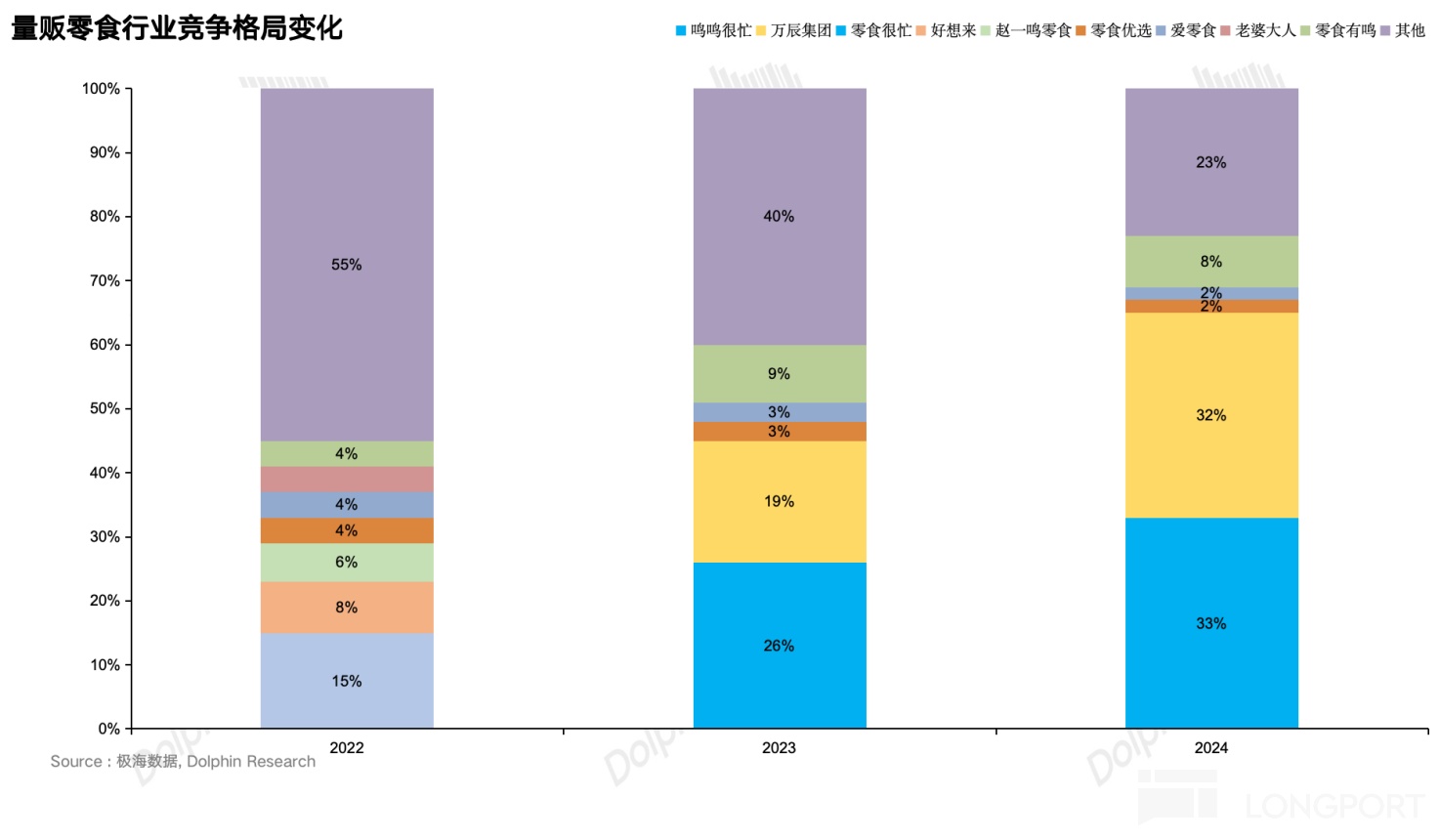
In 2024, the price war eased, but both MingMing Hen Mang and Wancheng continued heavy subsidies to franchisees on the back of scale, speeding up openings and locking prime locations in white-space markets. As shown below, industry CR2 jumped from sub-10% in 2021 to above 65% by 2024.
Put together, consolidation in bulk snacks moved faster than in most retail formats. On the surface, razor-thin margins made smaller brands unable to withstand capital-backed giants in price wars.At a deeper level, the models are highly homogenized, turning competition into an efficiency race. This inherently creates a strong 'Matthew effect' and a 'survivor-wins-all' path.

Geographically, MingMing Hen Mang expanded from Hunan across Central China into Southwest and South. Wancheng grew out of Jiangsu/Anhui, anchored in East China, then pushed into North, Northeast, and Northwest.This has formed a 'south–MingMing, north–Wancheng' competitive map.
Each dominates share in its home regions, with near-total control of regional supply chains and consumer mindshare.
Based on fieldwork, rapid store densification in recent years lengthened franchisee payback periods. Coupled with both giants cutting subsidies from 2025, Dolphin Research believes the hyper-growth opening phase is over. The focus shifts to per-store ops efficiency and sustainability of store profitability.
Using a top-down lens, we estimate MingMing Hen Mang's remaining opening space.As a flow-driven biz., population density is the key anchor for site selection and expansion. Hunan, the cradle of the format, leads by a wide margin on depth and density of coverage, with ~75 stores per 1 mn people.
Fieldwork suggests core cities like Changsha and Zhuzhou already have multiple stores by leading brands within a few hundred meters along the same main streets, diverting traffic from older stores by 30–40%. Under profit pressure, brands added categories to lift ticket sizes and visit frequency.All signs point to Hunan being highly saturated.
We therefore use Hunan's density as the ceiling and apply regional penetration assumptions. In a base case, we assume store density in Central China, East & South, North, and Northeast & Northwest reaches 90%, 70%, 50%, and 30% of Hunan, implying a mid-term total of ~60k stores. In a bull case, the same regions reach 95%, 80%, 60%, and 40%, implying up to ~70k stores.
Given a stable duopoly, MingMing Hen Mang + Wancheng already command ~80% combined share (MingMing 45%, Wancheng 35%). If share further concentrates, MingMing's share at 50% implies 30k–35k stores, a 50–70% lift vs. today.
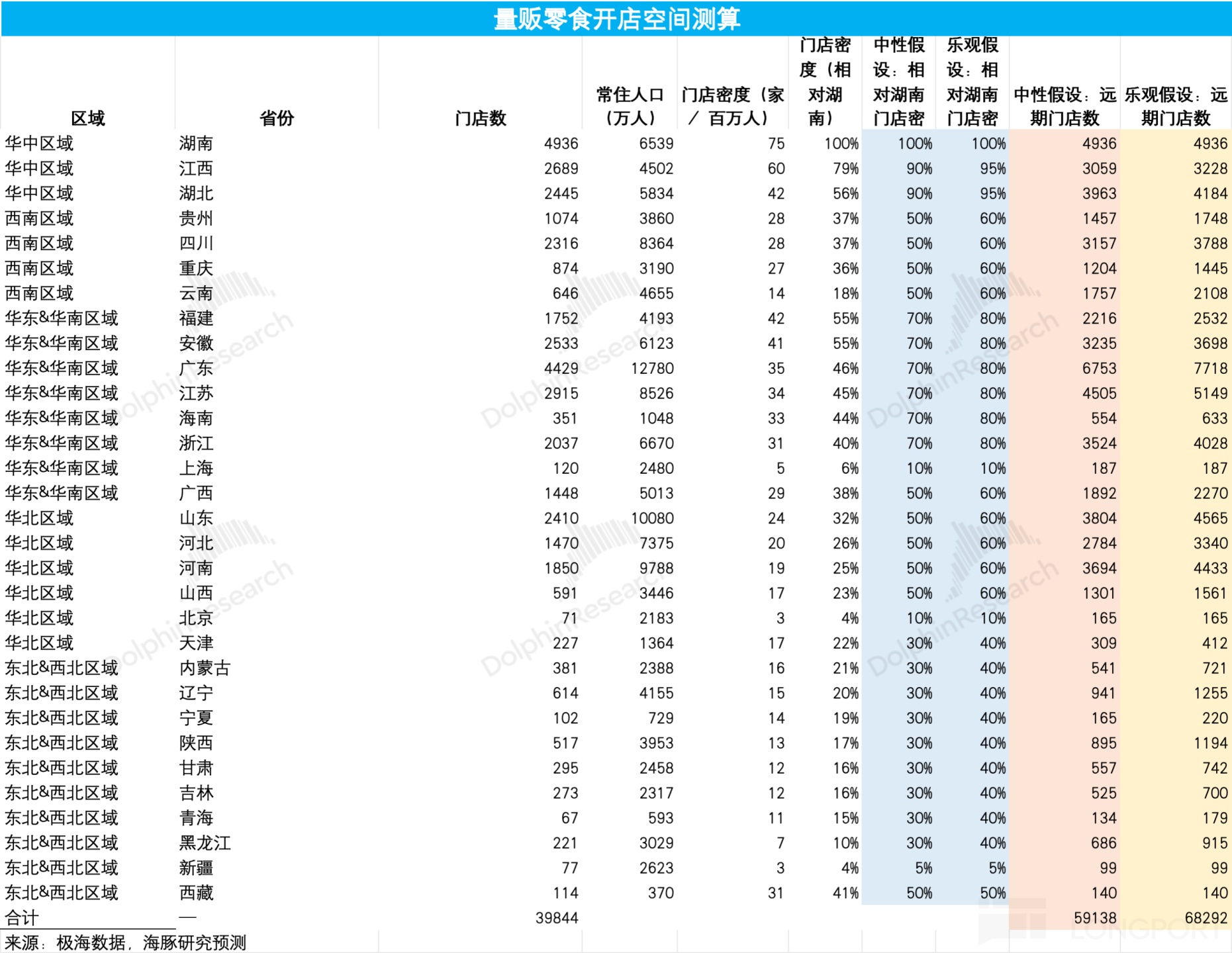
Note: if the discount supermarket model proves out, broader customer coverage could raise the effective cap on store count. We discuss this next.
2) Can discount supermarkets become the 'second growth curve'?
With rapid expansion and densification, same-store sales turned slightly negative in H1-2025, per fieldwork. To build a second growth curve, the company is pivoting to a 'snacks+' full-category discount supermarket.
In Feb-2025, MingMing Hen Mang rolled out a dual-brand strategy: 'MingMing Hen Mang' stays focused on bulk snacks, while 'Zhao YiMing Snacks' transitions into a save-money supermarket. So far, Zhao YiMing has opened ~3,000 such stores, adding ~400 SKUs in general merch, personal care, stationery/toys, bakery, and chilled/frozen.
The model is still in deep test-and-tune mode in sample markets, not yet scaled widely. But expectations are high, so Dolphin Research shares its take.
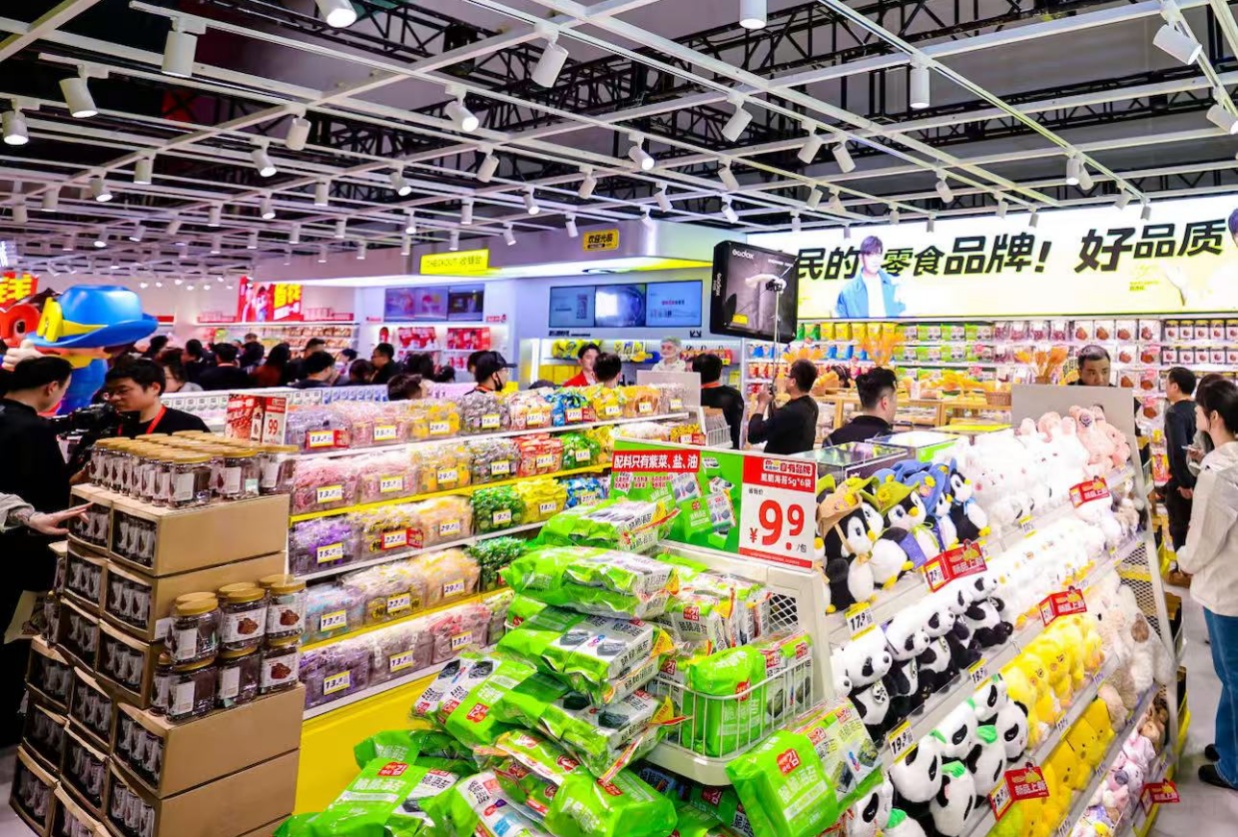
First, bulk snack chains have already secured prime community locations in lower-tier markets and scaled to tens of thousands of stores, naturally reaching high-frequency, essential demand. Upgrading to a save-money supermarket reuses existing traffic and confers a built-in edge.In our view, moving from snacks to discount supermarkets is the logical path to break the single-category ceiling and drive long-term same-store growth. But execution is non-trivial, with key challenges below.
- Cross-category supply-chain integration is hard:
Snacks are simple (ambient, standardized, easy to ship), requiring less in warehousing/logistics, with management focused on fast SKU iteration and quick turns.Once new categories are added, each demands different supply-chain capabilities, making it hard to run everything on one system, risking loss of cost advantage and forced category retrenchment if capabilities lag.

- Balancing turns and margin:
At the store P&L level, the task is to lift sales per sqm and profit more than the added inputs.But purchase cycles vary: high-frequency, fast-turn goods tend to carry lower GPM and higher management costs, while low-frequency, slow-turn goods may have higher GPM and simpler ops but drag sales per sqm if turns suffer.

Source: Zheshang Securities
These inherent differences mean expansion is not a simple stack of categories. Without top-down planning (supply-chain fit and category mix), outcomes could be either thin margins or bloated inventory that hurts turns and erodes the snack core.Only through trial-and-error, pruning SKUs, and building the right product matrix by category traits can overall store productivity improve.
Per fieldwork, the supermarket format lifts GMV per store by ~20–25% from larger size and broader assortment, with blended GPM rising from ~18–22% in snacks to ~22–24%.
But at the unit-economics level, higher rent, staffing, and upfront capex, plus slower sell-through in non-snack categories, reduce sales per sqm. Payback stretches from a bit over 2 years to 3+ years.
3) Store ops become far more complex: New categories bring differing storage needs (e.g., fresh at 0–4℃ cold chain; grains/oils need anti-moisture heavy shelves; short-shelf-life requires expiry alerts). Turnover logic and acceptable shrink differ materially (snack loss rate <3% vs. fresh needing ≤5%). Also, store size expands from 80–150㎡ to 200–300㎡ and staffing from 2–3 to 4–6, raising ops difficulty.
Maintaining prior labor productivity gets much harder. Staff who once only needed snack merchandising and simple weighing now must handle fresh prep/reheat, shrink control, and promo rotation. Any gap can dent sales per sqm.
Bottom line, the pivot is commercially logical but the complexity rises exponentially as the object of management shifts from single, stable, ambient snacks to a broad, dynamic, perishable matrix. Success rests on proving an attractive, subsidy-light profit model, which remains uncertain today.
3) A surer path: mine user needs and raise private-label mix
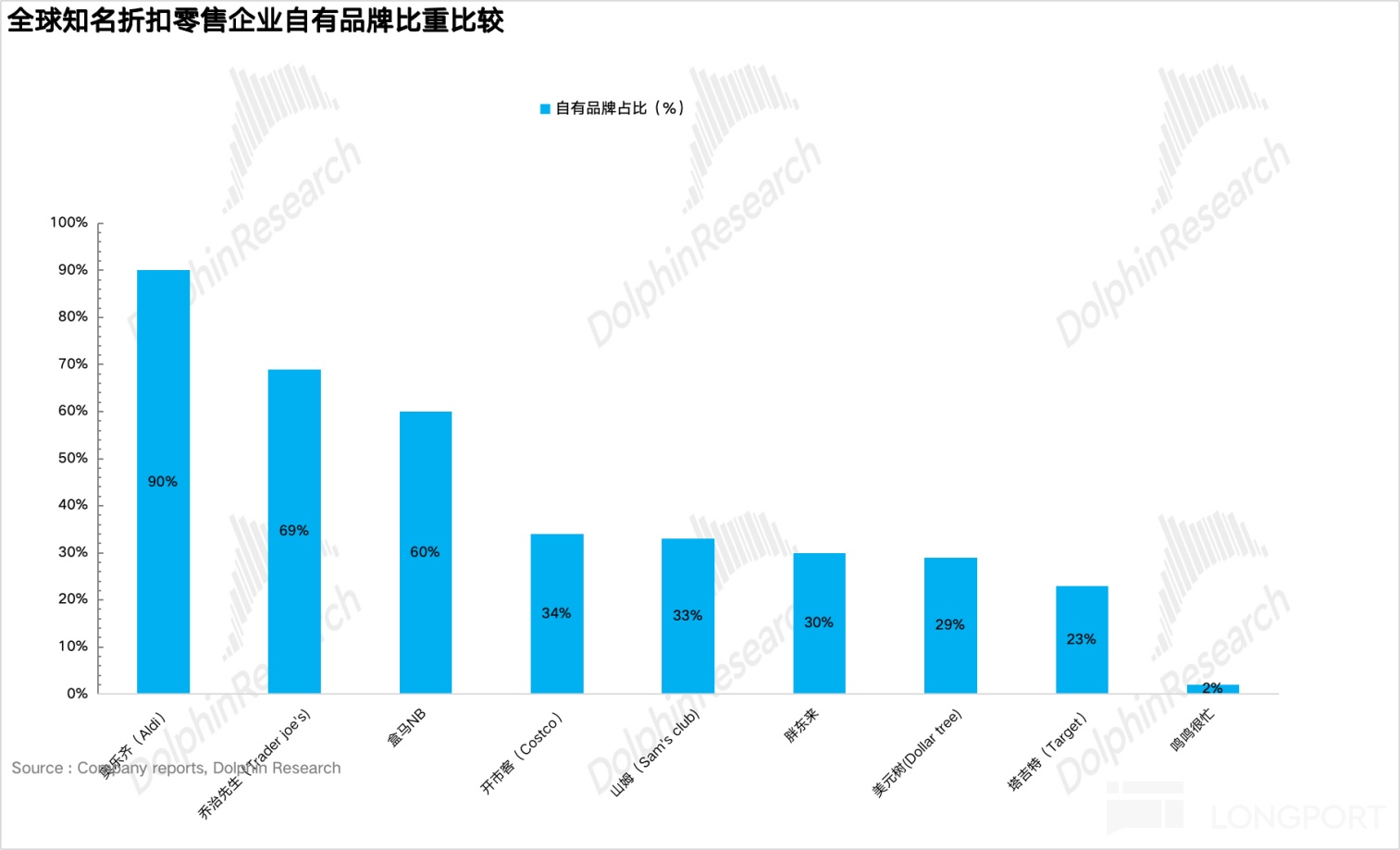
Compared with the uncertainties in discount supermarkets, leveraging supply-chain strengths plus massive consumer data to lift private-label penetration is a clearer route to improve profitability for both the company and franchisees.Global discount retail practice shows that focusing on specific categories/segments to drive efficiency is common, and a key lever is higher private-label mix.
As shown below, leading discount retailers at home and abroad typically run 20%+ private label. By linking directly to suppliers and removing brand premiums, costs are reduced at the source, boosting profitability.Take ALDI as the hard-discount pioneer: since entering China in 2019, as its local supply chain scaled, private label rose from ~30% to near 90% by 2024, with GPM improving from sub-20% to ~24%.
More importantly, private label addresses product homogeneity in retail. Built off data and deep consumer insight, exclusive items better fit demand — think Costco's rotisserie chicken — creating 'must-buy memory points' and stickier loyalty.
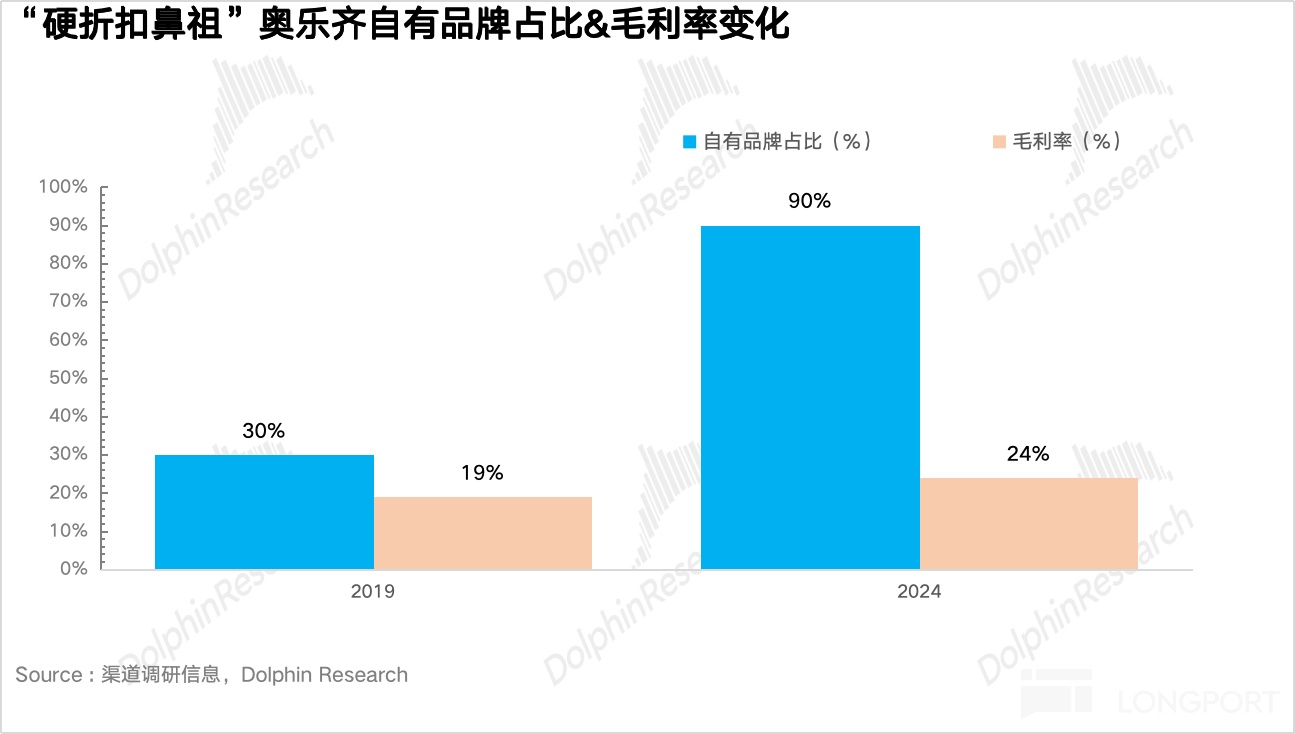
Per the prospectus, membership reached 120 mn by 2025 with annual repurchase >75%, creating a major data asset. For MingMing Hen Mang, developing targeted products by consumer tier and use-case to solve real pain points is a natural next step.
In early 2025, the firm unveiled three private-label lines at its Save-Money Conference: the Red Label focuses on high-frequency essentials for price-sensitive young families and students, sharpening value-for-money. Pricing is generally 20–30% below popular peers to build a 'price slayer' image and baseline trust.
The Gold Label targets quality-upgrade demand from middle-income families, pricing at or slightly above market averages but delivering outsized quality gains to strengthen value-for-quality (with GPM >20%).
Sub-brands will address specific niches and verticals with 'tailored solutions'. The first wave is planned for Q3–Q4 2025, focusing on healthy light meals, functional foods, and premium bakery.
Overall, private label is still in the 0-to-1 phase. But among 30+ items launched, several (e.g., Red Label sugar-free oolong tea, Gold Label thumb-sized air-dried beef) have already become hits with high repeat purchases.
Dolphin Research believes that by steadily raising private-label mix from its deep consumer data, the company can convert low-price traffic into sticky repeat demand and turn price advantage into profit advantage, forming a positive loop: private label → differentiation → higher GPM → better service → higher repeat.
- How to assess investment value?
Before valuation, we project the mid-term store-opening cadence and per-store revenue under our opening-space framework.With 'Zhao YiMing Snacks' pivoting to supermarkets, ~3,000 sample stores were added quickly in 2025, keeping the opening pace fast.
From 2026, a critical breakeven test looms. We expect the company to prioritize optimizing the existing base and proving unit economics for the supermarket format.Thus, we assume store openings slow materially from 2026, averaging ~2,000–3,000 per year, focused on densifying northern and southwest whitespaces and store re-models.
Under these assumptions, store count reaches ~30k by 2029, near our base-case lower bound.
On per-store GMV, volume and price drivers split as follows. As the company reduces loss-leader exposure, some price-sensitive users may churn, with orders per store easing from 452/day to 404/day.
On ticket, the supermarket pivot adds higher-ticket categories, lifting AOV from RMB 34.4 to ~RMB 38. The take rate rises modestly from 70.8% to 72.3% on higher private-label mix. Based on these, we project 2025–2029 revenue as below, with a CAGR of ~10.7%.
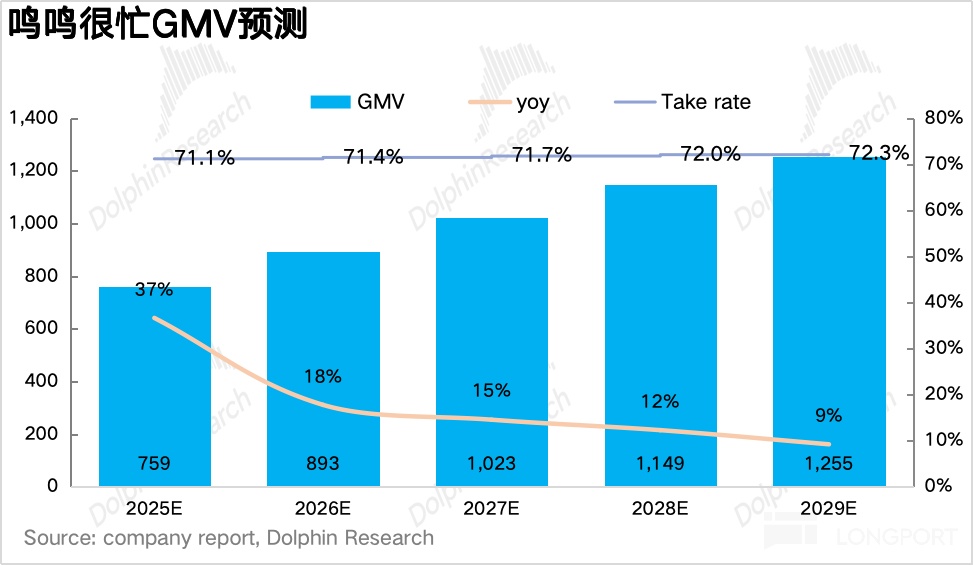
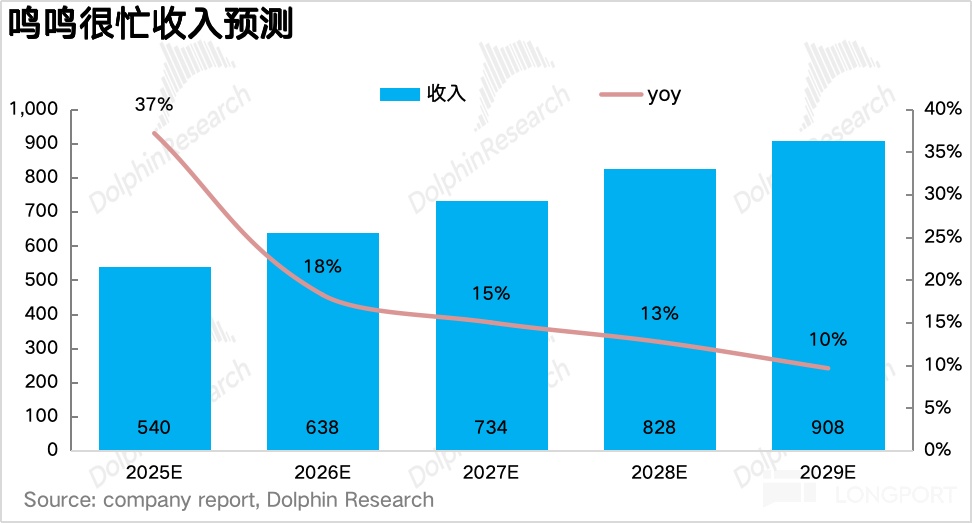
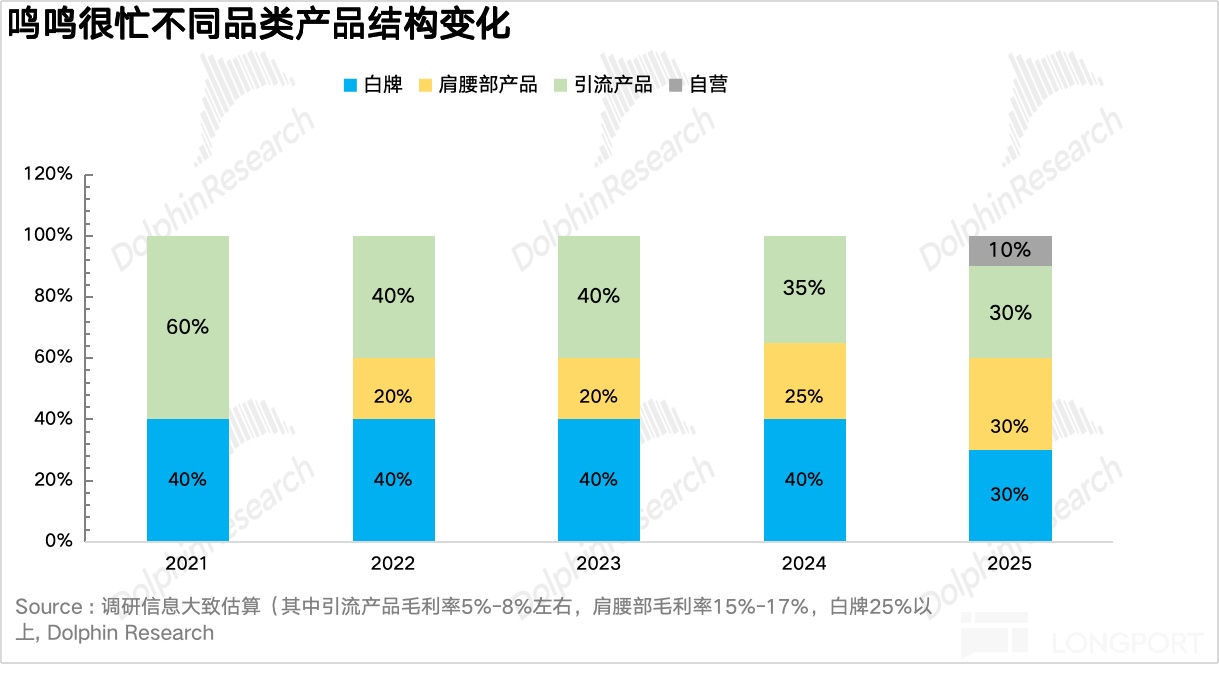
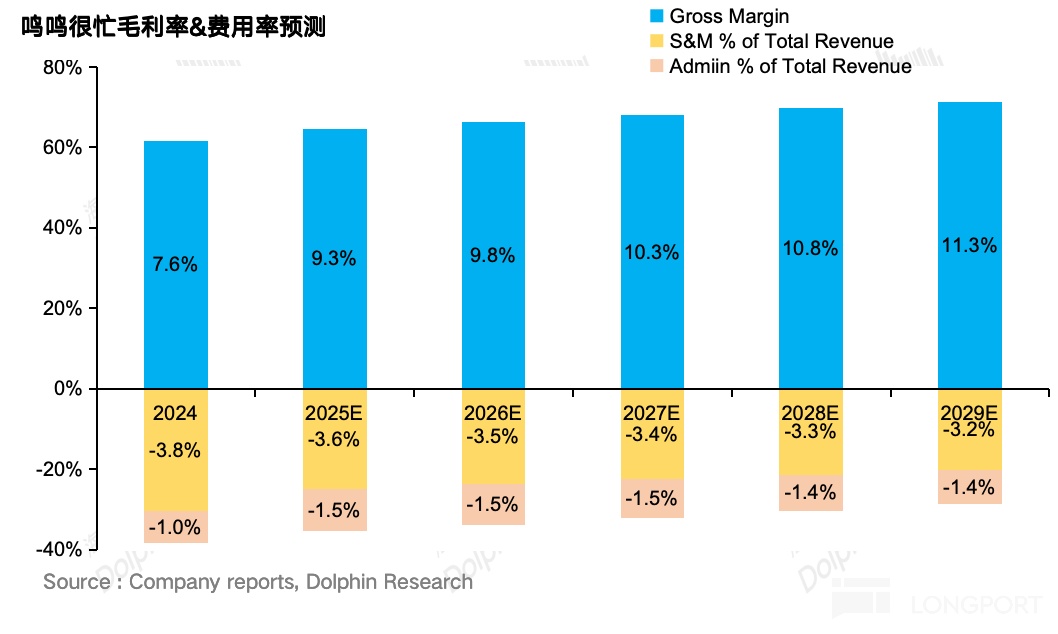
On GPM, two forces help: more scale boosts upstream bargaining power, and the product mix shifts toward more profitable shoulder/waist SKUs, white-label, and self-operated items.We therefore assume GPM rises from ~9.3% in 2025 to ~11.3%.
On opex, heavy franchise subsidies during the price war inflated selling expense ratio. From 2025, both giants cut subsidies, and with scale, we assume selling ratio falls from ~3.8% to ~3.2%.
On G&A, the supermarket pivot requires pro hiring and supply-chain/digital integration, lifting G&A from ~1.0% to ~1.4% in 2025–2026, then easing from 2027 as integration wraps up. See details in the chart.
Net-net, profit rises from RMB 1.65 bn in 2025 to RMB 4.04 bn in 2029, a ~24% CAGR.

On relative valuation, as a growth name with profits more than doubling in 2025, we anchor PE at the stable-growth phase using peer mature multiples.Assuming store count reaches our lower bound (~30k) by 2029 without adding upside from a fully scaled supermarket pivot, growth beyond 2029 hinges on same-store gains. We treat 2029 as the entry to stable growth.
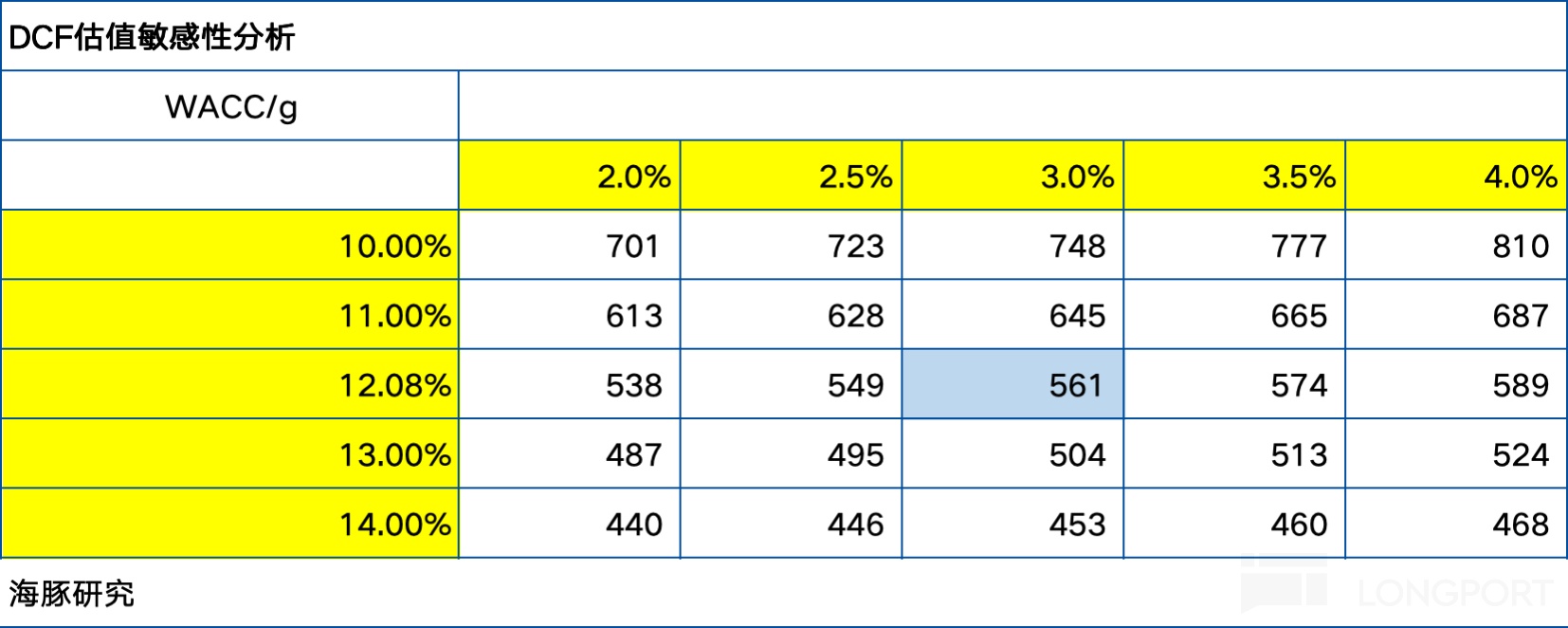
With 2029 profit growth at ~17%, we apply 20x PE for 2029 (mature chain dining runs 15–20x; we use the upper end given category leadership and a stable structure). Discounting back at WACC = 9.6% from our DCF yields a 2025 PE-implied equity value of ~HKD 56.8 bn.
On absolute valuation, using WACC = 12% and a 3% terminal growth, our base-case DCF yields ~HKD 56.1 bn, broadly corroborating the PE approach.
Note: if the full-category supermarket model proves and scales nationwide, upside is clearly larger. But given the execution hurdles above, we embed limited success premium at this stage.
Takeaways:
The growth arc here follows the classic chain playbook: scale expansion → moat building → value realization. Early 'cash-burn' subsidies fortified the supply chain and the franchise system, density created regional 'monopoly', and profits are realized via efficiency gains and model upgrades.
The weakness: retail channel shifts are always about efficiency iteration, where each new format disrupts the prior one. Compared with developed markets, China's stratified demand, faster innovation, and intense competition mean ' evergreen formats' rarely exist. From rotating fads in tea drinks to coffee format battles and cuisine cycles in dining, short bursts are easy; sustained growth is hard.
Franchise-led rapid expansion is not new in chains. MingMing Hen Mang did the same by sharing economics with franchisees and simplifying ops to mobilize capital and sites, breaking out quickly at scale.The real breakpoint comes after brand heat fades, traffic tops, and novelty wears off. Whether a company can decouple from new-store dependence and drive long-term, stable same-store growth by deep-mining existing users is the core test of durability.
Thus, long-term competition in chains has moved beyond 'replicable store models' into 'deeply mineable user value'. Dolphin Research believes the brands that endure are those that escape the scale-expansion trap and concentrate core capabilities on data-driven insight, private-domain user building, and continuous product iteration. Only by turning shopping from 'occasional choice' into 'habitual reliance' and same-store growth from 'traffic-driven' into 'value-driven' can a retailer avoid being displaced and build truly defensible, long-term moats.
<End>
The copyright of this article belongs to the original author/organization.
The views expressed herein are solely those of the author and do not reflect the stance of the platform. The content is intended for investment reference purposes only and shall not be considered as investment advice. Please contact us if you have any questions or suggestions regarding the content services provided by the platform.
