


Sanhua: In the AI robotics era, do cross-industry incumbents laugh last?
In our previous note, we reviewed the business trajectory of $SANHUA(02050.HK) $Sanhua(002050.SZ) and what it makes. We found two core pillars today: legacy refrigeration (mainly HVAC) and auto thermal mgmt., especially for NEVs. Beyond autos, demand for thermal mgmt. is expanding into other end-markets, which we see as a key growth driver ahead.
Meanwhile, the company positions humanoid robots as its third major business. What is Sanhua actually building in humanoids, and where are its strengths? This report addresses these questions.
一、热管理市场的扩容——重点看数据中心
A key point for the thermal mgmt. track is that downstream use-cases keep widening. We first summarize two basics for major non-auto verticals: (1) Why is demand rising? (2) What is the competitive landscape, and what has Sanhua done?
(一)数据中心的热管理
Data center thermal mgmt. ensures server cooling for stable, efficient and reliable ops. As rack power density climbs, cooling requirements rise, while tighter PUE targets push a shift from air cooling to liquid cooling, raising system value content. This underpins a structural upgrade in DC cooling.
1、那么先来讲讲 PUE(Power Usage Effectiveness)——理解液冷的重要性
PUE measures DC energy efficiency: total facility energy (IT + non-IT) divided by IT energy. The closer to 1, the greener the DC, so lowering PUE hinges on cutting non-IT energy. In the US, the federal DCOI recommends new builds below 1.4 PUE, while hyperscalers like AWS, Google, Meta and Microsoft often target 1.1 or even sub-1.05 due to power cost and efficiency. China, under dual-carbon goals, tightened PUE caps: from 2025, new DCs must be ≤1.25, with further tightening likely.
Liquid cooling enables lower PUE. Cooling accounts for roughly 30% of total facility energy among non-IT loads, making sub-1.3 PUE difficult with air cooling. Using liquid cooling, thanks to superior heat transfer, can bring PUE below 1.25. More advanced approaches such as microchannel or immersion can push PUE even lower.
2、再来说说液冷——理解热管理价值量的提升
Liquid cooling differs from air cooling by using a liquid coolant as the heat-transfer medium, contacting components directly or indirectly. Liquids have far higher specific heat and thermal conductivity than air, delivering better efficiency at lower energy use. As North American compute centers standardize on liquid cooling, performance requirements keep rising with new chip architectures, not just for energy but due to sharply higher thermal loads.
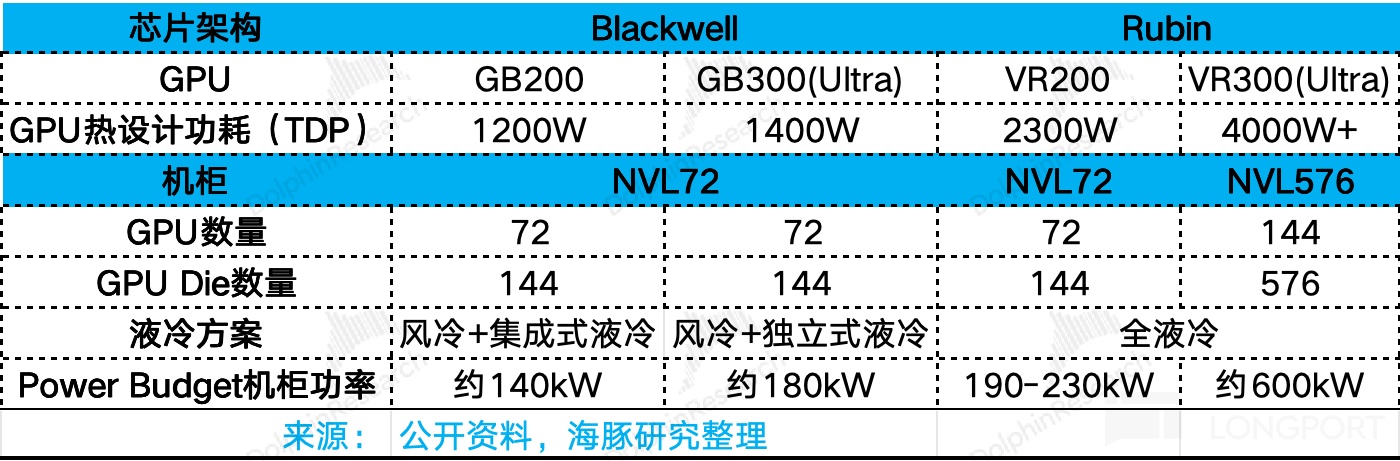
With Moore's Law slowing, performance gains via node shrink have hit limits, forcing architectural and algorithmic changes while power density still climbs. Higher power density implies much tougher thermal mgmt. For example, NVIDIA currently uses single-phase cold plates but, as system power exceeds traditional single-phase limits, could move to microchannel liquid cold plates (MLCP) after 2027.
此微通道非彼微通道。 Mature MLCP today replaces conventional cold plates with microchannel plates, tightly coupling dense micron-scale channels to the chip surface to expand contact area and improve heat flux. Thermal capacity per unit area is much higher than with traditional plates, albeit at higher cost, yet even this may be insufficient. NVIDIA may adopt silicon microchannels without cold plates, letting coolant/refrigerant flow through silicon directly, potentially tripling heat removal vs. conventional plates, though likely at higher cost.
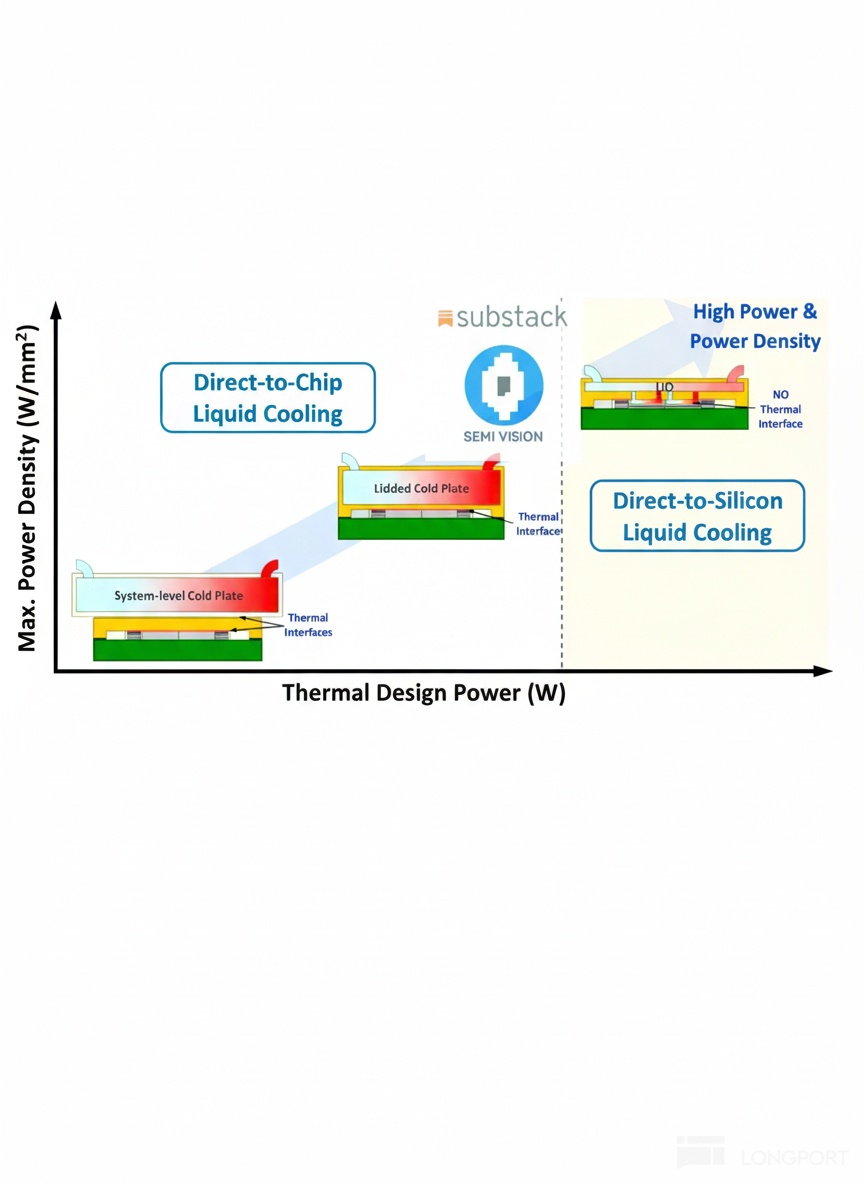
Source: IEEE, Dolphin Research
That said, the market recently questioned the value uplift from liquid cooling. NVIDIA's GB200 NVL72 used an integrated single-phase plate, and GB300 shifted to discrete plates per GPU, while post-CES 2026 rumors after Jensen Huang's keynote suggest the Rubin architecture may revert to a GB200-style big plate and even remove chillers, which looks like a 'spec cut' in thermal mgmt. With no official confirmation, we will not speculate on details. The core logic remains: aggregate thermal demand rises with higher rack power, so even if certain cost-down choices compress unit ASP, total value still inflates. Rubin is also likely to transition from partial to full-liquid cooling, reinforcing the upgrade path.
3、当然,本篇报告重点不在于探讨技术路线,我们来看看产业链的竞争格局是怎样的
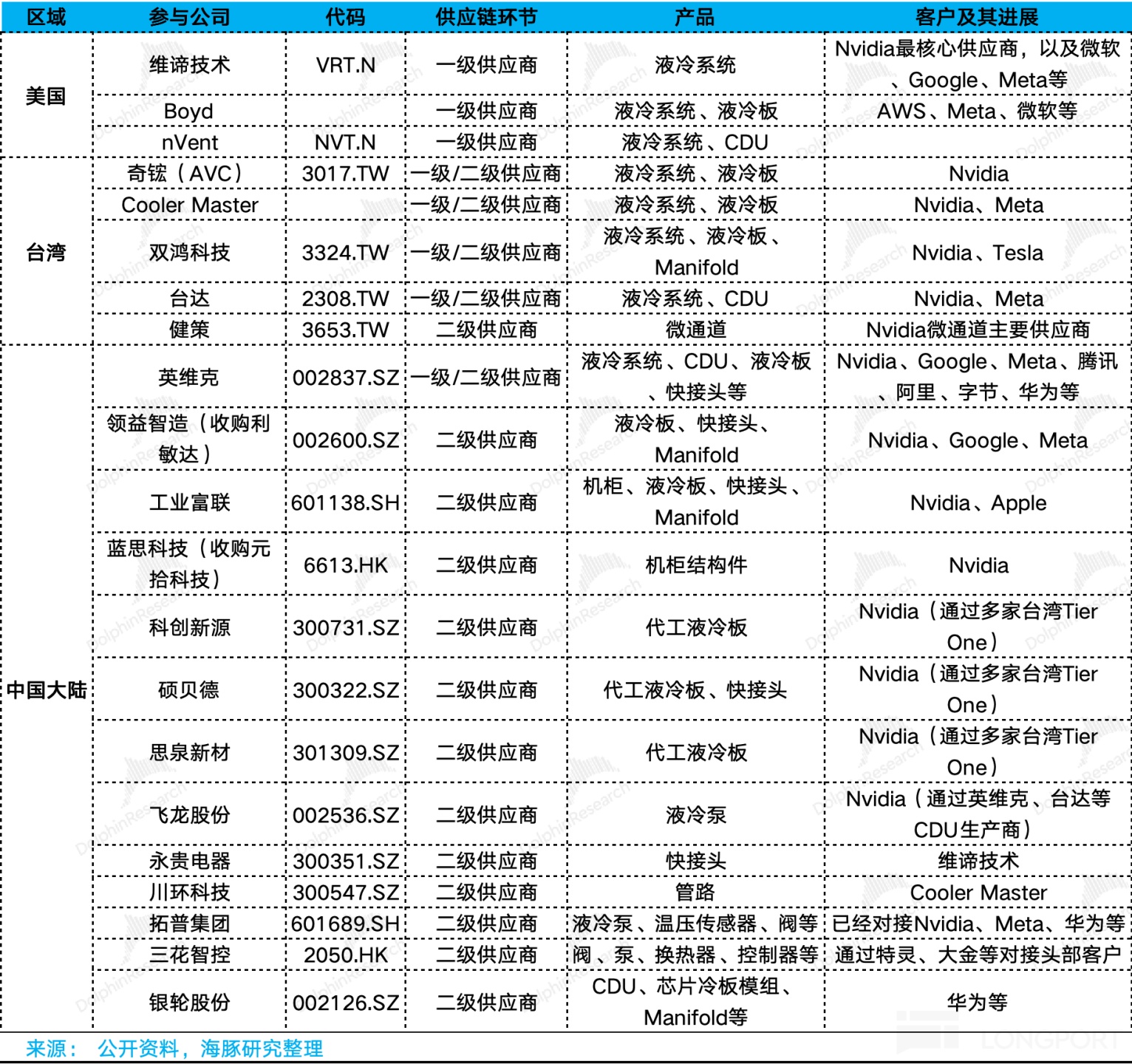
Key players in DC thermal mgmt. cluster in the US, Taiwan and Mainland China. Tier-1s are mainly US and Taiwan firms, while most Mainland players, aside from a few like Inovance Tech's peer Invt or Inovance-like peers in other fields—here specifically Invt is not correct—note: in DC cooling, Envicool is among the few entering Tier-1—focus on components and contract mfg. In liquid cooling, Vertiv in the US is a core system-level supplier.
4、三花目前又做了哪些?
On products, given shared fundamentals with auto thermal mgmt., Sanhua supplies pumps, valves and heat exchangers for DC liquid cooling, as well as microchannel cold plates. On route-to-market, it sells via Tier-1/2s such as Trane and Daikin, indirectly reaching overseas hyperscalers. In 2024, DC liquid-cooling revenue exceeded RMB 1 bn.
In short, Sanhua has achieved meaningful revenue, but remains primarily a component supplier with limited direct access to hyperscalers.
5、市场空间的测算
As noted, NVIDIA is moving toward full-liquid solutions. On the ASIC side, DC cooling is also shifting to liquid, e.g., Google's 7th-gen in-house AI chip (TPU V7) is expected to be fully liquid-cooled. This points to rapid market expansion.
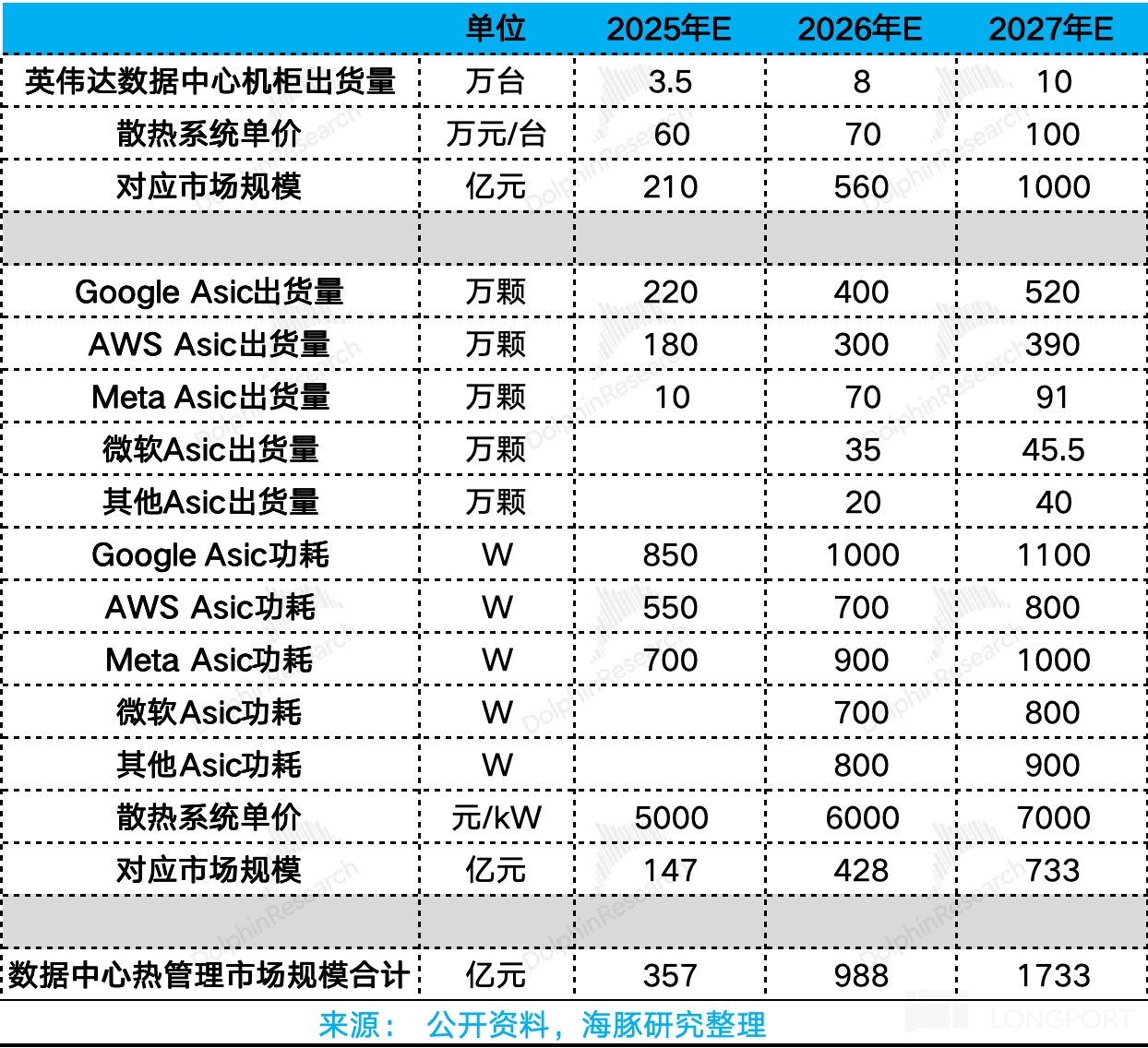
The DC thermal mgmt. TAM could approach that of NEV thermal mgmt. by 2027. Upside is material as liquid cooling penetrates.
(二)储能的热管理
Renewables, especially solar, have highly uneven intraday output, requiring electrochemical storage to time-shift energy. With global renewable additions surging over the past two years, the storage market has grown rapidly. Thermally, batteries in storage mirror NEVs, but at much larger system capacity and with significant heat during operation, making needs akin to data centers.
1、基于储能系统的升级迭代,储能系统同样对温控(即储能的热管理)有越来越高的要求,于是行业同样也在经历由 ‘风冷’ 到 ‘液冷’ 的变革。
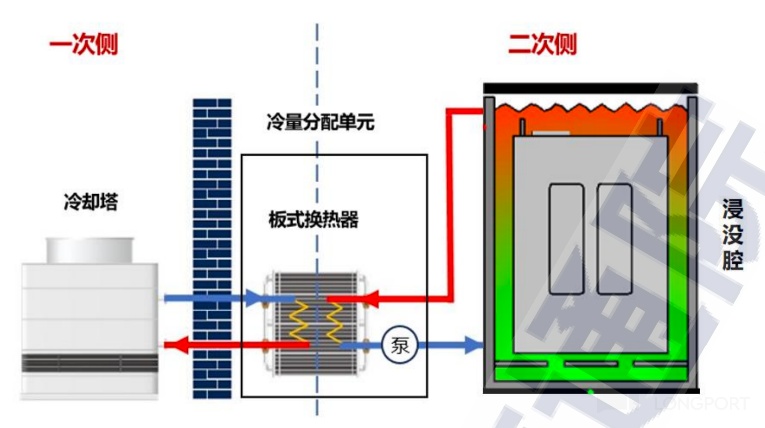
Air cooling remains mainstream, but large-scale projects are adopting cold-plate liquid cooling. A smaller subset in grid-scale and C&I/user-side storage is piloting immersion cooling. Penetration should rise with system scaling and safety requirements.
图:浸没式液冷系统的原理示意
Source: CAICT, Dolphin Research
2、储能温控的行业竞争格局怎样?
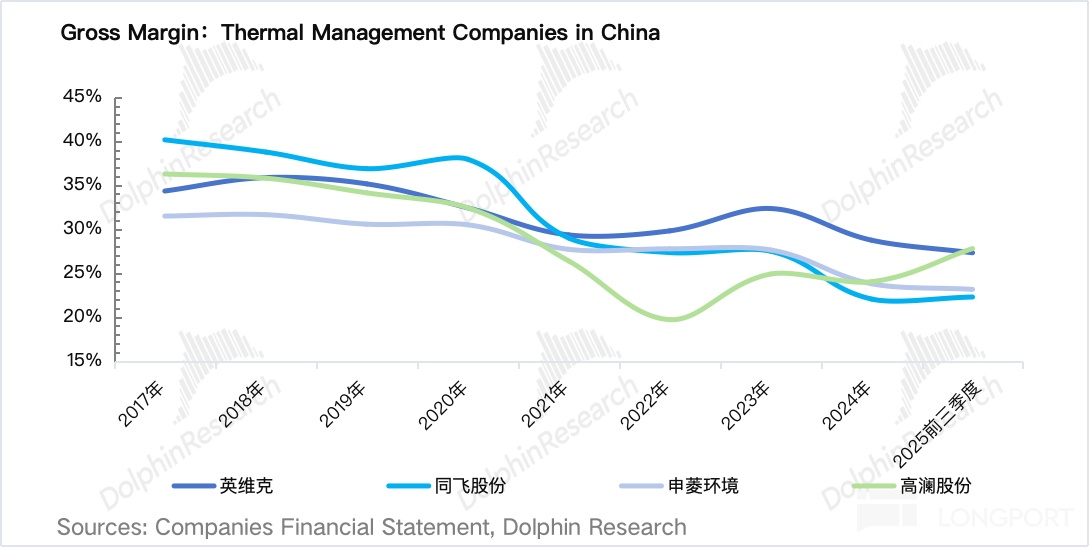
Unlike compute, global storage integrators are predominantly Chinese, with Tesla as a notable exception. In storage thermal mgmt., leading players are also Mainland firms, including Envicool, Tongfei, Gaolan and Shenling. Sanhua tried to enter system integration but exited due to intense price competition, and now focuses on component supply with a portfolio similar to other thermal tracks.
Profitability at top domestic thermal players has generally trended down, reflecting competition, though some recovery emerged in 2025 as downstream demand improved. Margin trajectories diverge by positioning and mix.
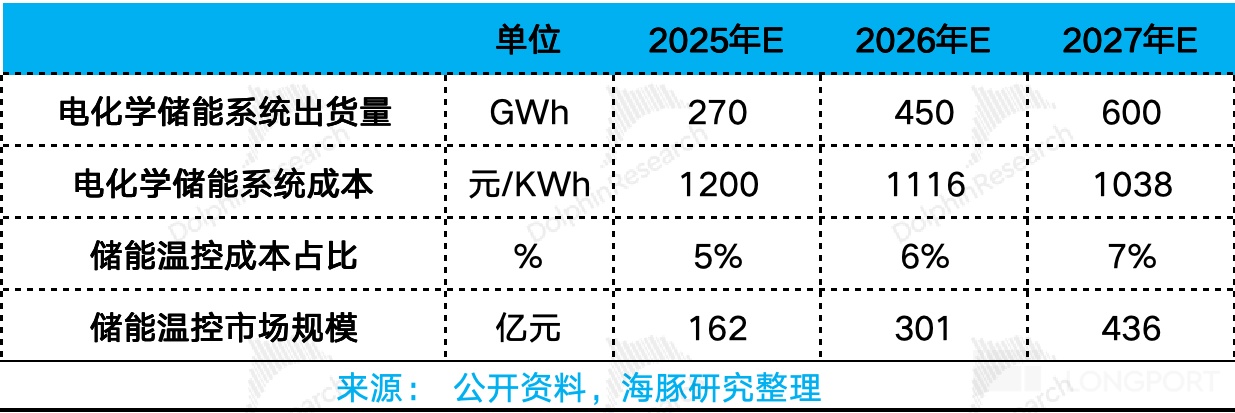
3、市场空间测算
(三)人形机器人的热管理
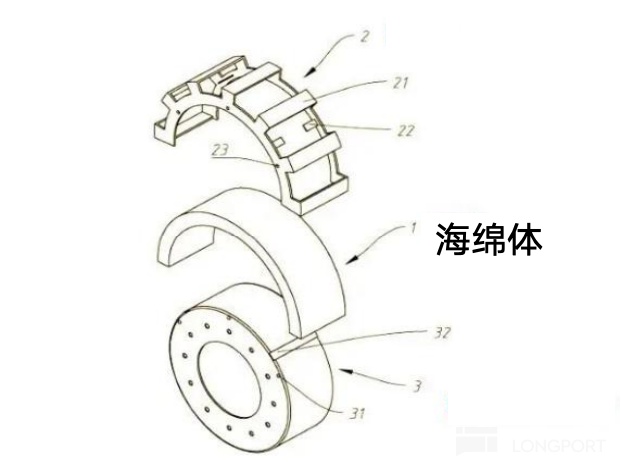
Humanoids also require robust thermal mgmt. to handle high power density and integration while balancing energy use. That said, Sanhua's humanoid focus today is electromechanical actuators rather than thermal systems, so we do not dive deeper here. Thermal concepts are being explored at the joint level by industry peers.
图:宇树科技的机器人关节液冷方案示意
Source: Unitree patent, Dolphin Research
(四)先做一个小结
First, demand. In both DCs and storage, thermal mgmt. demand is in a breakout phase. Second, Sanhua's positioning. It participates but mainly as a component supplier. Judging from disclosures, Sanhua's DC thermal layout looks less aggressive and less leading than its humanoid effort.
二、从新能源车热管理到人形机器人总成
What exactly is Sanhua doing in humanoids? We break it down below.
1、先看产品
Sanhua's core humanoid product is the electromechanical actuator, an integrated assembly of motor, reducer or ballscrew, sensors, encoders and controllers, executing specific motions under commands from the control stack. In simple terms, it is a joint of the humanoid robot. Actuators span body joints and dexterous hand joints, and Sanhua currently focuses on body joints.
2、再看产业链定位
The company positions itself as an assembly supplier rather than a pure component vendor, similar to its Tier-1 role in NEV thermal mgmt. This mirrors its collaboration model with top OEMs, now extended from autos into humanoids. It is also building component capabilities, including in-house ballscrews and co-developing harmonic reducers with Greelink Harmonic.
3、与客户的合作进展怎样?
Channel checks suggest Sanhua's rotary actuators have passed multiple rounds of validation with leading customers and entered small-batch shipments. Linear actuators are under development, with SOP/dedicated nomination in 2026 highly likely. Customer traction appears solid.
4、产能准备得怎样了?
The company views humanoids as the third growth engine after refrigeration and auto thermal mgmt., signaling strong conviction. On capacity, it announced in Jan 2024 a RMB 3.8 bn investment in Hangzhou for actuator and domain controller R&D and mfg. Overseas, its Thailand plant is ready for mass production, and it plans a JV in Mexico with Greelink Harmonic for reducer R&D and production.
In Oct 2025, the company formally established a dedicated robotics division. Capacity build is underway across regions.
三、那么问题来了,三花为什么有能力进入人形机器人产业链?——技术和工程化、客户基础、全球化生产,以及最重要的:平台化能力
Why can Sanhua expand from thermal mgmt. into humanoids? We see four pillars.
1、在热管理行业积累的能力
Technology commonality: From refrigeration to thermal mgmt. to humanoid actuators, success requires precision mfg., fluid control and motor drive expertise, which are Sanhua's strengths. Industrialization at scale: Commercialization hinges on scaled, cost-effective actuator mfg., a new product class where few have immediate mass-production know-how.
Sanhua has proven mass-production and cost control in refrigeration and autos, making it a preferred partner. From the robot OEM perspective, ensuring post-assembly compatibility across parts is non-trivial, and prior attempts by Tesla to insource assemblies were reportedly challenging, pushing a Tier-1 outsourcing model. Sanhua's proven assembly capability in NEVs fits this requirement.
2、与特斯拉的深度绑定
Sanhua has long been a core supplier to Tesla's auto business, building trust and stickiness. Tesla tends to maintain long-term relationships with stable core suppliers rather than frequent switching. This naturally positions Sanhua as a priority partner in robots.
3、全球化的产能布局能力
Global mfg. is critical given potential trade barriers once humanoids scale. Sanhua's overseas footprint demonstrates execution in global production, an important differentiator. This underpins resilience across supply chains.
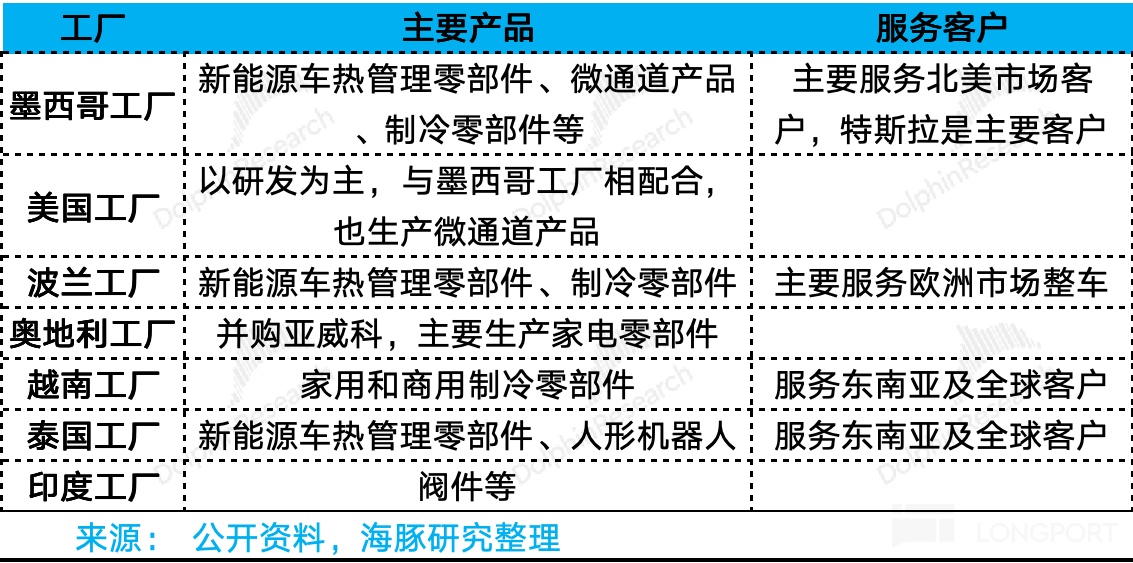
Source: Public filings, compiled by Dolphin Research
4、平台化能力
Firms tied to a single product cycle face finite lifespans, while platform-capable manufacturers can expand their moat by leveraging accumulated tech and resources. Sanhua has shown platform attributes to some extent. Beyond tech and mfg., we attribute this to management's strategic vision.
四、这里我们谈谈,同样都是星辰大海的市场,为什么三花在数据中心热管理领域的布局似乎不及机器人?
The immediate reason is the customer base. In humanoids, the clear leader is Tesla, with which Sanhua is deeply tied, easing entry. In DCs, NVIDIA is the dominant leader, and Sanhua lacks a relationship while NVIDIA runs a relatively closed supply chain, making entry difficult for outsiders. This asymmetry explains the differing pace.
But Sanhua still has opportunities in DC liquid cooling: On one hand, the ASIC camp led by Google forms a supply chain outside NVIDIA. Google's ecosystem is comparatively more open; qualified products with stability and safety can be adopted, offering an opening for capable firms like Sanhua. Meanwhile, domestic compute buildout is driving local DC liquid-cooling demand, where Sanhua has a home-market edge.
From an R&D and mfg. standpoint, Sanhua is not lacking. Some argue DC liquid cooling is a system-level product, unlike component mfg., but Sanhua has already demonstrated assembly/system capability in NEVs and humanoids. We view remaining barriers as more about time than feasibility.
The tougher hurdle may be domestic competitors. Several Mainland companies, including Envicool, have already established partnerships with NVIDIA, Google and others, and some are Sanhua's own customers. Breaking in against strong incumbents adds uncertainty to Sanhua's share capture.
五、价值怎么看?
Given multiple segments, we value Sanhua via SOTP: legacy refrigeration, autos and humanoids, with humanoids valued differently. Below are our assumptions.
1、传统制冷和新兴的热管理业务
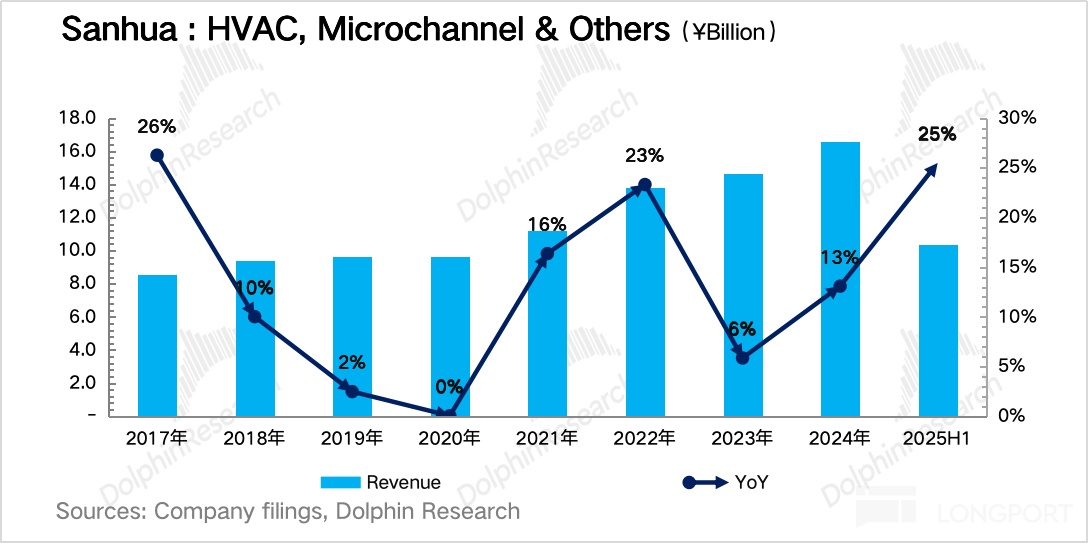
Legacy refrigeration is dominated by residential HVAC, a non-growth market likely to grow at low single digits p.a. over the next five years. Commercial HVAC should grow faster, and Sanhua is gaining share globally, implying faster growth than residential. DC and storage thermal components already contribute but are not separately disclosed; we include them in refrigeration for now.
Assume DC liquid-cooling revenue at RMB 1 bn in 2024, about 6% of refrigeration. If DC reaches 9% of refrigeration in 2025 and grows with the industry in 2026, it could add c.18% incremental growth to refrigeration that year. Net-net, legacy refrigeration grows slowly, but new sub-segments could lift segment growth to >10%.
We estimate 2025 refrigeration NP at ~RMB 2.5 bn. At 20x PE, this implies c.RMB 50 bn in equity value. This embeds DC upside as penetration rises.
2、汽车业务
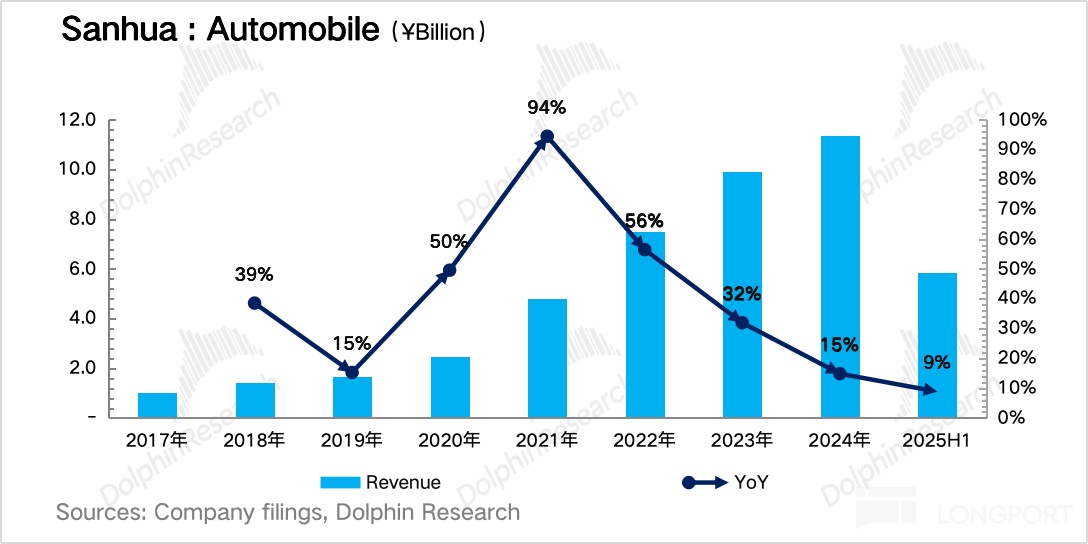
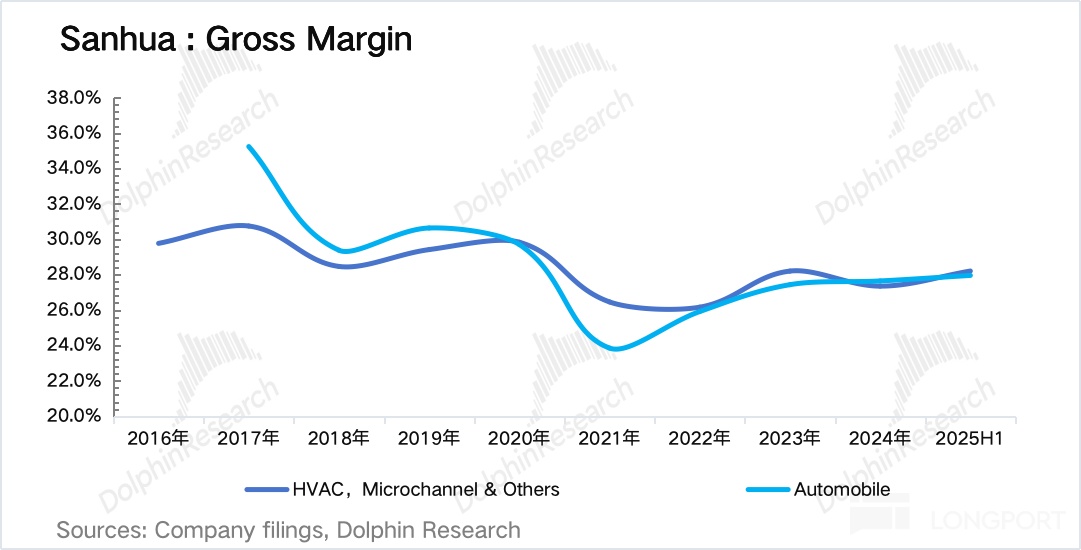
For auto thermal mgmt., we still see >20% industry CAGR into 2026. Sanhua's share can rise somewhat, though room is narrowing, but profitability should remain solid under a stable competitive setup. Notably, despite China NEV price wars since early 2023, the company's GPM has trended up.
We estimate 2025 auto NP at ~RMB 1.8 bn. Given growth characteristics, and despite Tesla sales underperforming in 2025, we assign 25x PE, implying c.RMB 45 bn in equity value. This reflects steady growth and margin resilience.
3、人形机器人业务
We present two optimistic scenarios. In the first, Tesla's Optimus reaches 1 mn units by 2030 as guided by Elon Musk; if Sanhua's actuator set sells at RMB 2,000 per unit with ~30 actuators per robot, value per robot is ~RMB 60,000. At 60% share and excluding other OEMs, Sanhua's revenue would be RMB 36 bn; at 15% NPM, NP would be RMB 5.4 bn, and at 50x 2030 PE, equity value would be ~RMB 270 bn; discounted at 12% WACC to today gives ~RMB 153.2 bn.
In another optimistic case, assuming Musk's US$10 tn humanoid revenue vision and 200 mn units by 2055 for Optimus, with RMB 30,000 per robot value for Sanhua, 40% share and 10% NPM, Sanhua NP would be RMB 240 bn. At 20x PE and 12% WACC discounting, PV would be ~RMB 160.2 bn, similar to the first scenario. These are scenario analyses, not base cases.
4、总结
Combining segments and taking the first optimistic humanoid case, our equity value target is ~RMB 248.2 bn (HKD ~274.8 bn). Under a bear case where humanoids fail to commercialize, our target is ~RMB 95 bn (HKD ~105.2 bn). Since the Jun 2025 HK listing, the A/H rally largely reflects a re-rating on humanoids.
A-shares now price in full humanoid optimism with limited upside and little downside cushion if Optimus disappoints. In HK, even with a 10% liquidity discount, there remains >40% upside to the most optimistic case, offering better risk-reward; for HK, focus on Optimus SOP progress into 2026. <End>
本文的风险披露与声明:海豚研究免责声明及一般披露
The copyright of this article belongs to the original author/organization.
The views expressed herein are solely those of the author and do not reflect the stance of the platform. The content is intended for investment reference purposes only and shall not be considered as investment advice. Please contact us if you have any questions or suggestions regarding the content services provided by the platform.
