


China ADRs: Rationale behind Tax Hike Scare?
China ADR internet names sold off again on tax rumors, triggering another bout of panic. The chatter is messy, so Dolphin Research walks through the big-picture logic.
Let's start with the government's four ledgers. They are as follows.
1) General public budget: essentially fiscal revenue. In other words, the government's ordinary income.
2) Government fund budget: a ring-fenced account, mainly land transfer proceeds. It is earmarked for specific uses.
3) State capital operations budget: effectively the government's shareholder ledger, funded by SOE dividends and profit remittances. In essence, it reflects the state's resource-allocation capacity.
4) Social security fund budget: primarily contributions to the five mandatory insurances paid by enterprises and institutions on behalf of employees. This is the core funding for social insurance.
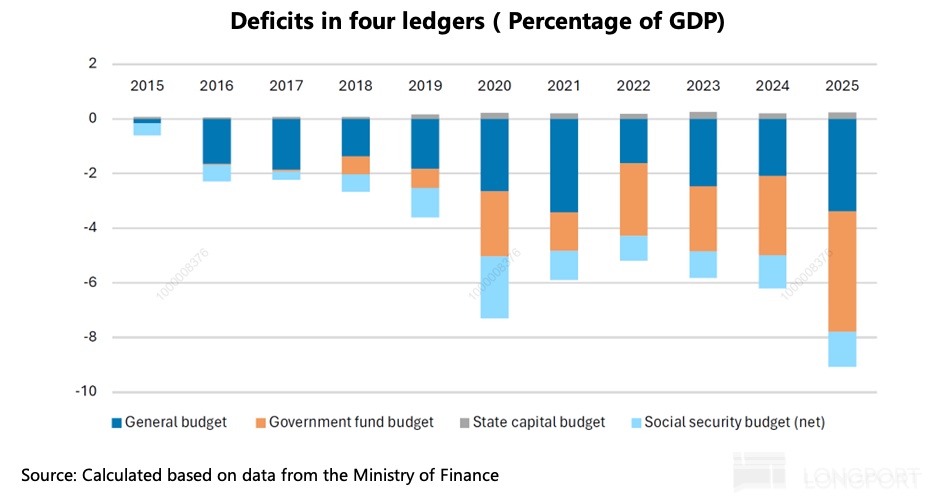
Since 2020, three of the four ledgers have been under heavy pressure, except state capital. Land transfer proceeds, in particular, have been very weak.
In fact, many policy moves since 2020 ultimately aim to balance the other three ledgers. This is the main thread linking recent actions.
a) State capital operations budget: price normalization for essential resources. Coming out of the pandemic, the state has mainly used this ledger by allowing pass-through pricing for resource sectors run by SOEs (power, coal, rail, etc.). The goal is to reduce losses at key public-service operators, such as China State Railway Group.
b) Social security fund: later retirement. In practice, this means extending the years of social insurance contributions.
c) General public budget: tax reform. As industries move from growth to maturity, subsidies are withdrawn and effective tax application is adjusted.
For example, starting Apr 1, 2026, as solar moves from maturity into oversupply, export VAT rebates were canceled for certain PV items. The VAT export rebate on batteries was cut from 9% to 6%, with a full phase-out by 2027.
Another example is the VAT Law effective in 2026, where the core idea is to keep headline rates unchanged but reshuffle category baskets. The structure shifts without changing statutory rates.
Legally, VAT remains at 6%, 9%, and 13%. The 6% tier covers services and value-added services; 9% covers basic services; 13% is more tied to self-operated goods sales.
However, in a notice in early Feb 2026, the Ministry of Finance and the tax authority changed which items fall into which basket while keeping rates unchanged. Some categories previously at 6% were reclassified into the 9% tier.
The read-through hitting internet today mainly stems from VAT reclassification for the three telecom operators. This is the locus of concern.
Data, broadband access, SMS and similar services were moved from 'value-added telecom services' (6% VAT) to 'basic telecom services' (9%), the same tier as voice tariffs. This is a clear shift toward the basic-service basket.
By contrast, internet services riding on data and broadband were not adjusted. Rumors about higher corporate income tax, or raising game taxes to 30%+, are baseless and conflate different tax regimes.
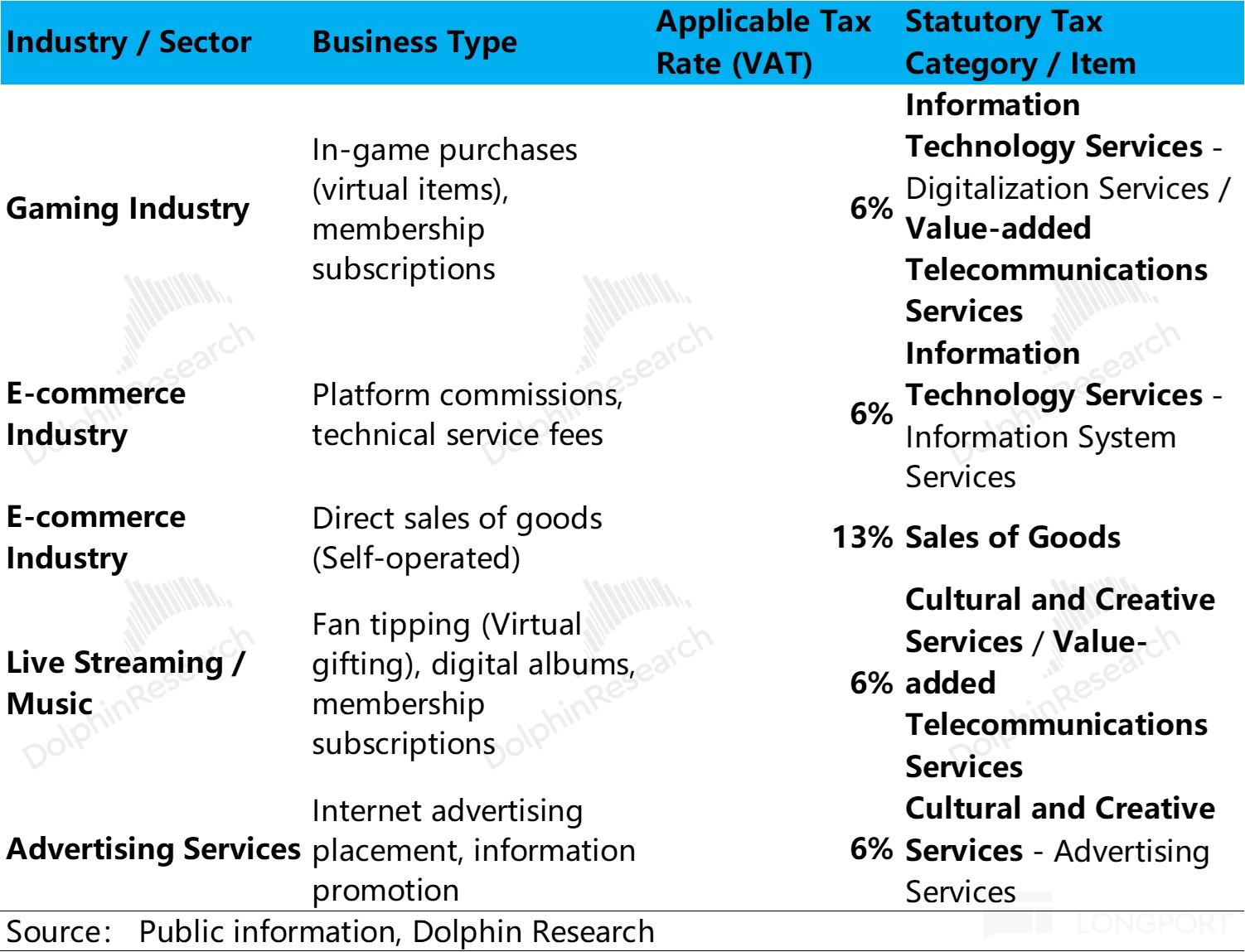
The real issue behind today's drop is the fear that the 6%→9% telecom reclassification could gradually extend to internet services. That is the crux of the sell-off.
The simple logic: once data and bandwidth are treated like 'utilities' (water, power, gas), internet services might soon be treated as basic utilities too. Investors worry about this read-across.
Behind this anxiety is a macro backdrop of widening gaps across the four ledgers during structural transition. From a fiscal perspective, policymakers must keep working within remaining levers to ease pressure.
As sectors mature, many may need to converge toward mature-industry tax levels. This adjustment could be gradual.
$TENCENT(00700.HK) $Alibaba(BABA.US) $Krne Csi China Internet(KWEB.US)
The copyright of this article belongs to the original author/organization.
The views expressed herein are solely those of the author and do not reflect the stance of the platform. The content is intended for investment reference purposes only and shall not be considered as investment advice. Please contact us if you have any questions or suggestions regarding the content services provided by the platform.
