


200bn Arms Race: AMZN Raises the Bar in AI
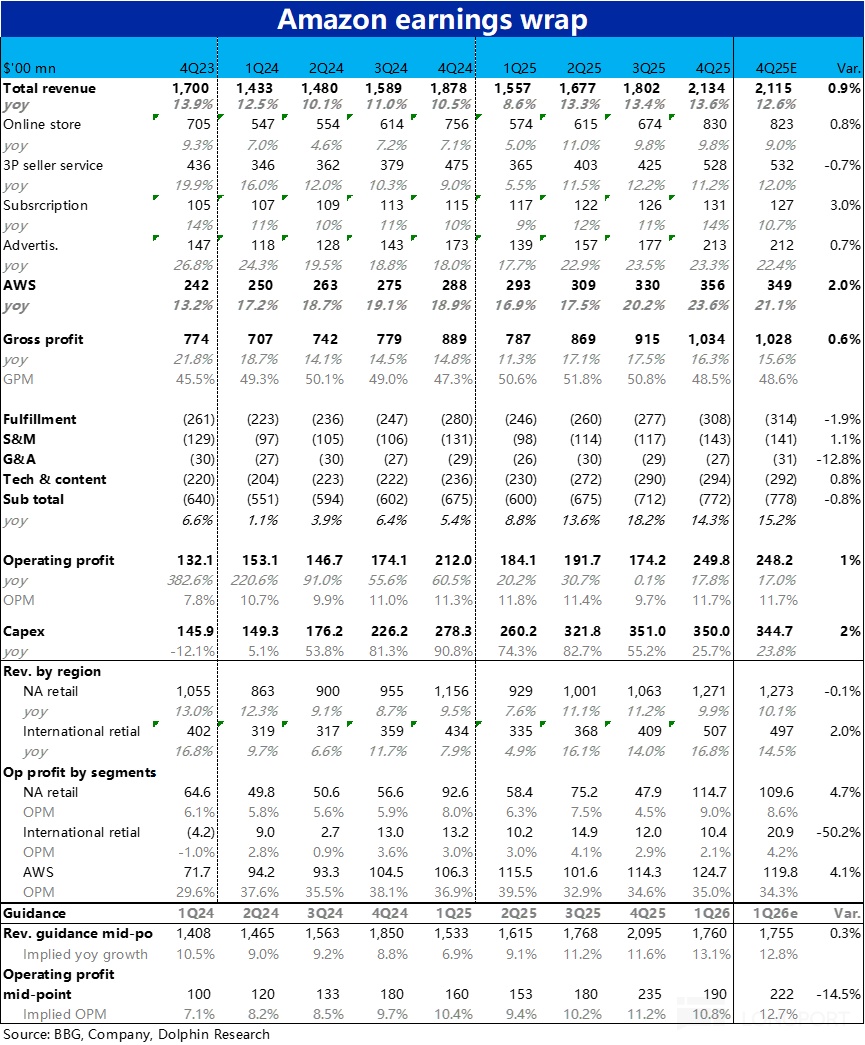
$Amazon(AMZN.US) released Q4 FY2025 results after the U.S. close on Feb 6 Beijing time. Overall, the quarter was solid with a few blemishes, as both total revenue and OP came in slightly above estimates.AWS growth re-accelerated as expected, yet the market reaction was familiar — a selloff despite decent prints. Details below:
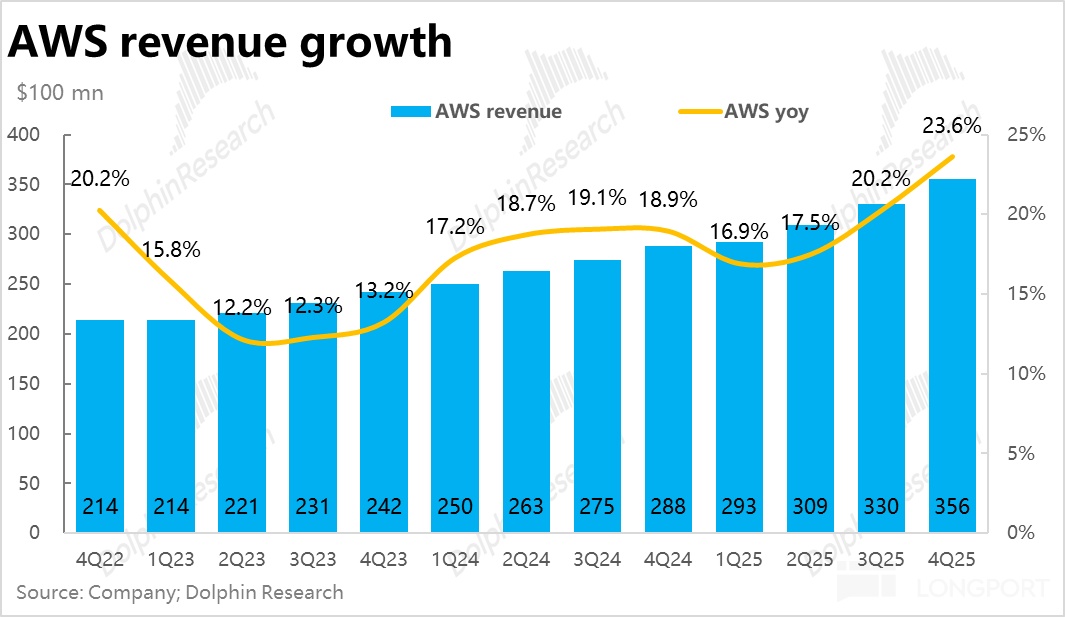
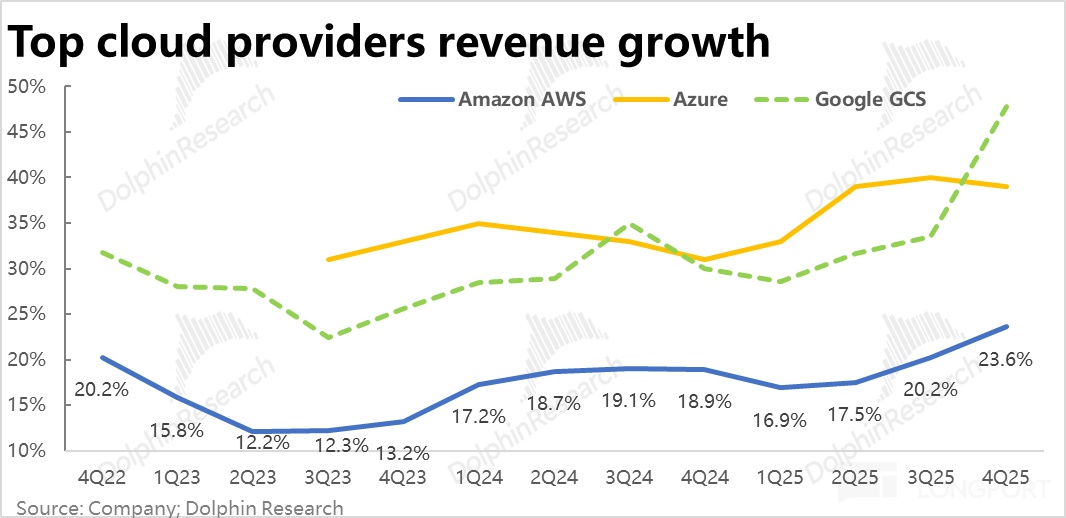
1) AWS re-accelerated as expected: AWS revenue grew 23.6% YoY this quarter (similar on a constant-FX basis), up another 3.4pct QoQ, lifting a cumulative 6.7pct since early year and delivering the long-awaited AWS re-acceleration.
That said, buy-side was well primed for the pickup in AWS. Unlike Bloomberg consensus at ~21%, buy-side expectations were closer to ~23%, leaving only a modest beat.
Across cloud peers, where AI stack strength is most directly reflected, Azure’s slowdown vs. AWS’s acceleration suggests Amazon’s AI gap with peers is indeed narrowing.
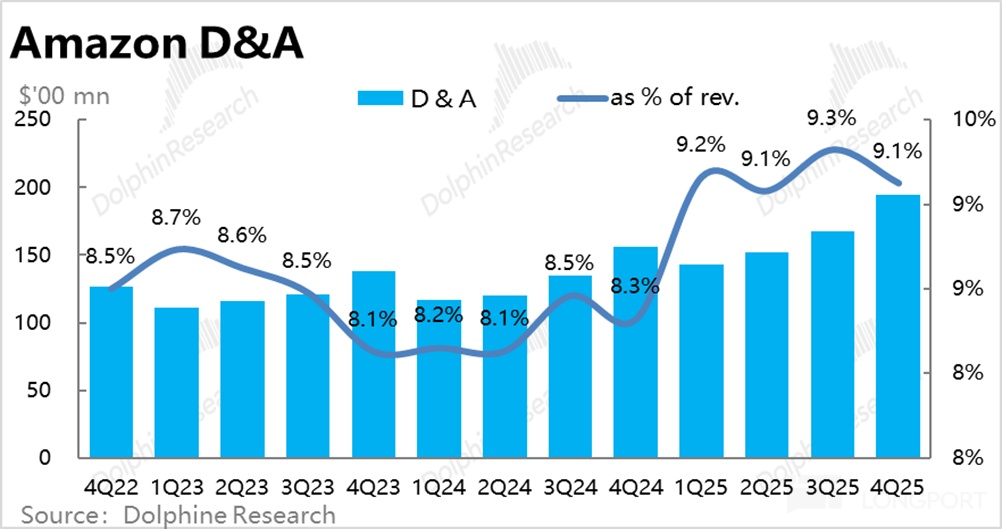
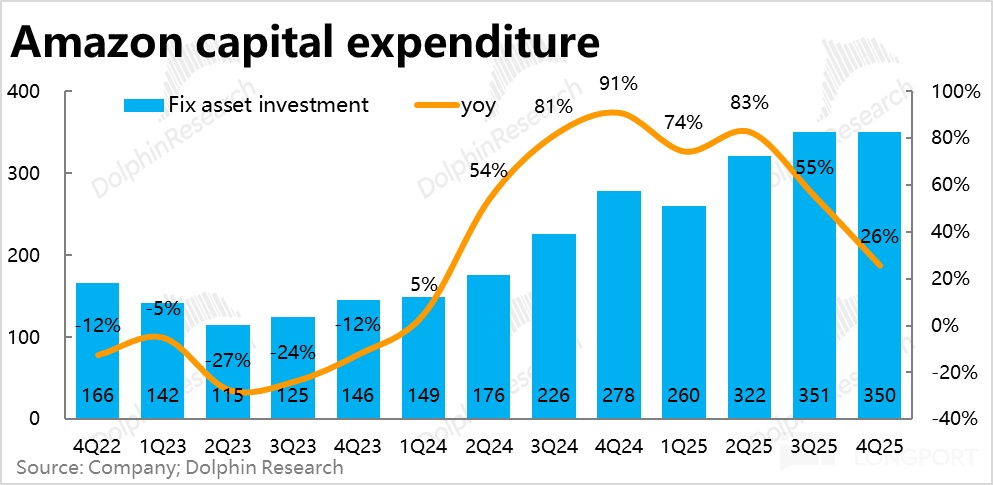
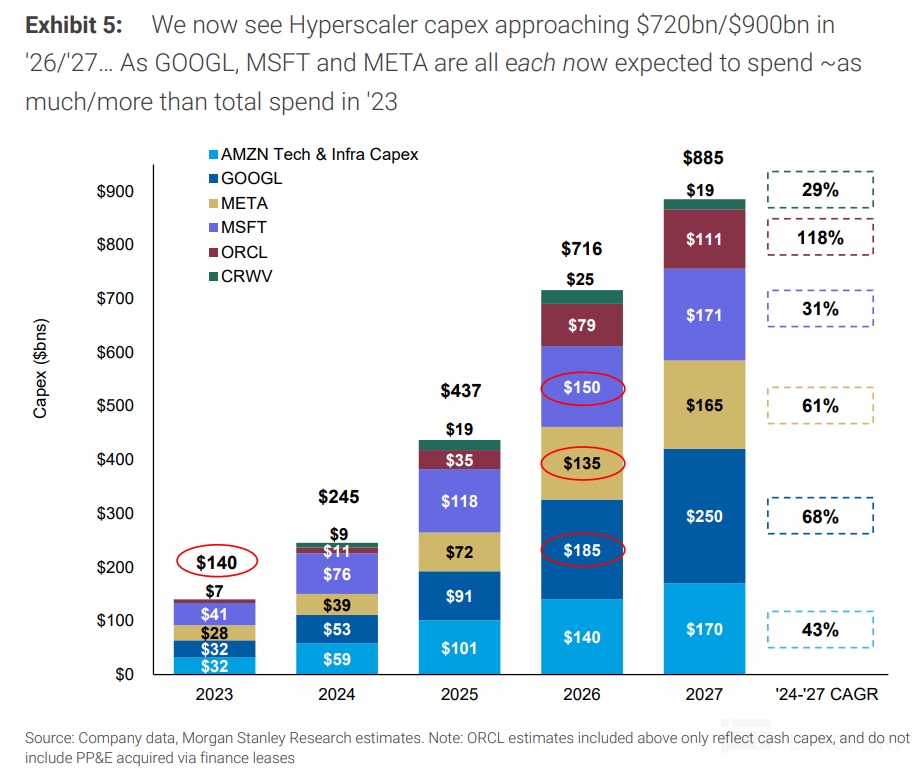
2) $200bn mega Capex: quarterly spend at $35bn was not further ramped vs. last quarter, easing by ~$1bn. D&A as a % of revenue also diluted by 0.2pct QoQ, aiding margin this quarter.
While quarterly Capex looked ‘reasonable’, the big concern is guidance — management guided FY2026 total Capex to $200bn, implying a 43% step-up vs. the current ~$35bn run-rate per quarter. This also far exceeds all other cloud giants’ Capex budgets (~$150–180bn).
At that scale, D&A as a % of revenue could rise another 2–3pct next year, putting more visible pressure on margins. In today’s market that has swung from loving to loathing high Capex, that is not welcome.
3) Cash getting tight: FY2025 operating cash inflow was ~$139.5bn, which at +15% in FY2026 would be ~$160bn. Against a $200bn Capex plan, that is insufficient if fully spent.External financing thus becomes necessary (cash on hand is < $90bn, and net cash is already limited), and the company raised nearly $15bn via bonds this quarter. More financing will likely follow.
4) Retail steady: The less-watched broader retail complex was relatively stable. Combined revenue grew 11.8% YoY, a touch softer than last quarter.
By region, North America retail grew 10% YoY, slowing 1.3pct QoQ. Given U.S. non-store retail growth did not worsen materially, AI may be starting to exert mild competitive pressure on Amazon’s e-com.
Intl retail nominal growth benefited from FX, reaching 17% this quarter. However, constant-FX growth was 11%, up only 1pct QoQ, also broadly stable.
5) Ads remained strong: Within broader retail, ads and subscriptions stood out this quarter.
Ad revenue grew 23.3% YoY, the fastest within retail adjacencies. Coupled with prior disclosures, ad ramp on Prime Video and other media assets was likely the key driver.
Subscription revenue growth improved from 11.5% last quarter to 14%, helped by the hit series Thursday Night Football (which likely also lifted media ads).
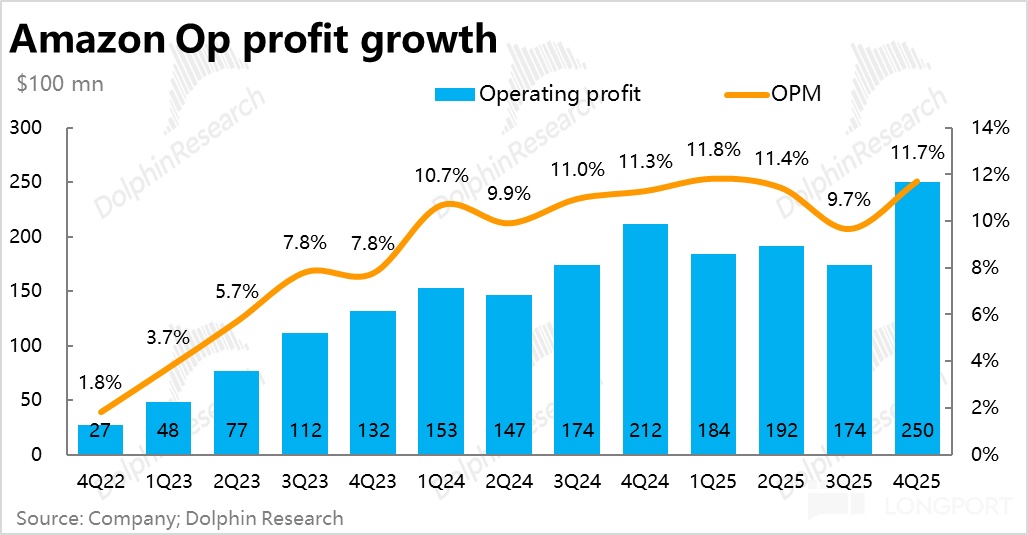
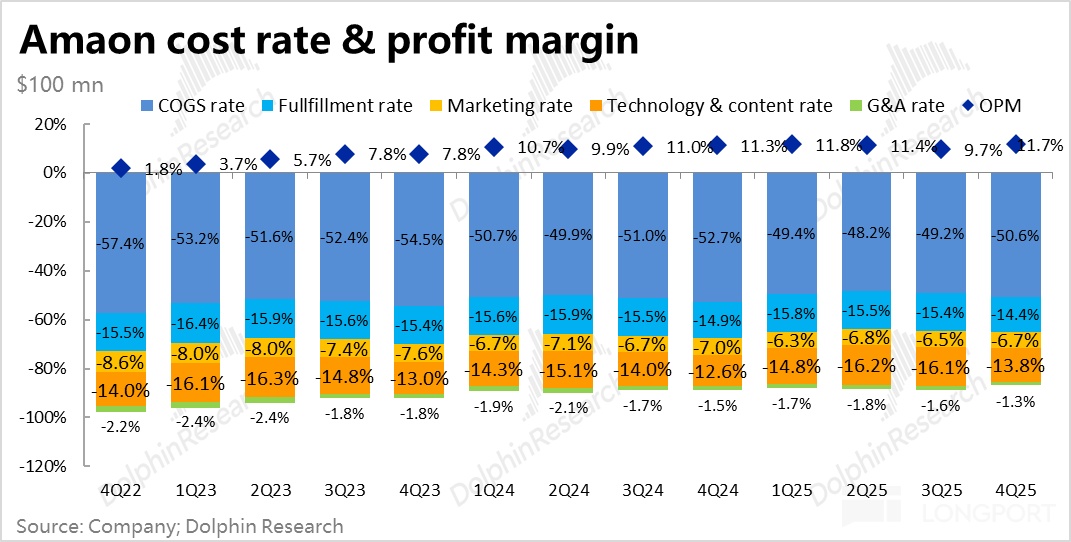
6) Margins up across the board, not bad at all: Profit was solid, with group OP at $25bn, up nearly 18% YoY, modestly beating expectations. OPM was 11.7%; despite heavy Capex, margins still expanded 0.4pct YoY.
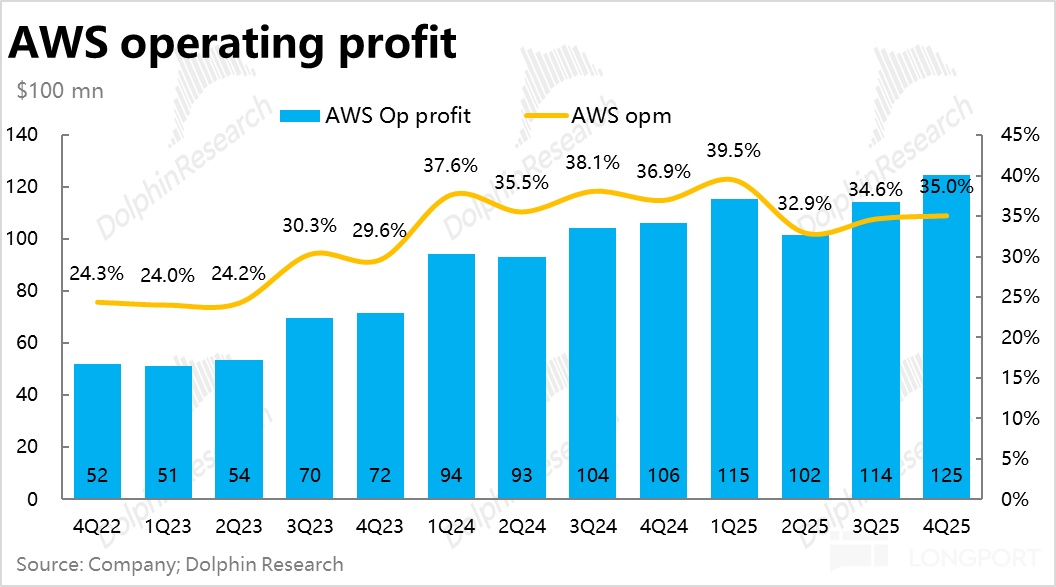
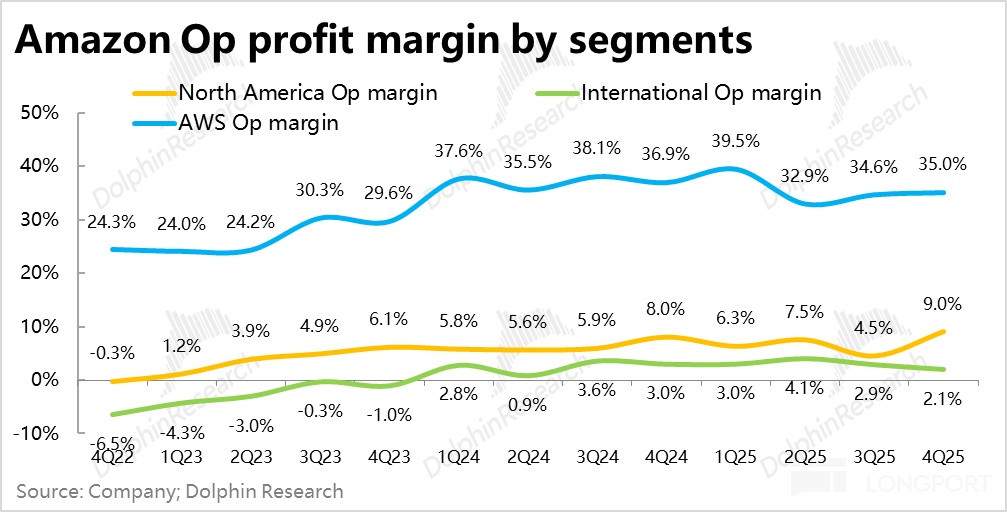
By segment, AWS OPM rose to 35%, up 0.4pct QoQ. As noted, lower D&A mix helped.North America OPM reached 9%, up 1pct YoY. Despite higher logistics spend (same-day delivery now in 2,300 U.S. towns), mix shift to high-GP lines such as ads and subs supported margins.
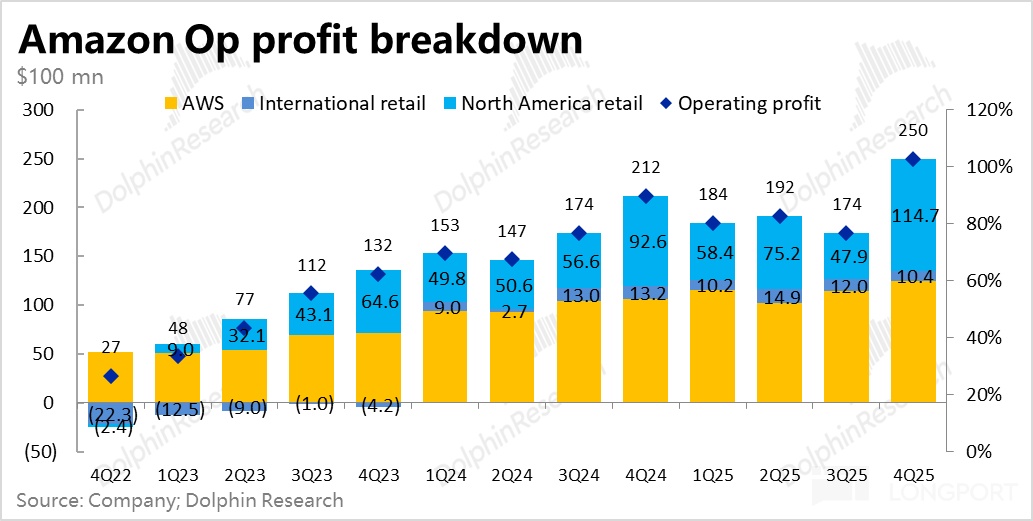
Intl retail OP was $1.04bn, implying 2.1% OPM, down 0.9pct YoY and seemingly a big miss vs. expectations, but management attributed it to one-offs; ex one-offs, margins were also up YoY (details on the call).
Dolphin Research view:
1) The print was fine; the issue lies in mega Capex and guidance
On the quarter alone, AMZN delivered: top-line re-accelerated, and group and segment margins improved despite elevated Capex, with slight beats vs. market expectations.
AWS — the key swing factor — re-accelerated by nearly 4pct QoQ as expected. While heavily anticipated, it still posted a small beat, and legacy retail was steady with improving margins.Purely on the quarter, there is little to fault.
The core concern is the outsized Capex guide. The market has moved past ‘the higher the Capex the better’ and is now focused on sustained heavy spend that loads up the balance sheet/business model, diluting ROI and margins while AI revenue/profit uplift remains uncertain, which degrades an otherwise strong asset-light model.
Guidance-wise, next-quarter OP is guided to $16.5–21.5bn, with the top end still below the ~$22bn Street. Midpoint implies OPM of 10.8%, down 1pct YoY, hinting mega Capex will weigh on profitability.
Revenue midpoint implies ~13.1% YoY, roughly in line with this quarter, so top-line momentum remains steady. More importantly, watch AWS revenue guidance on the call.
2) AI competitiveness is improving
Beyond the quarter, the key question is how Amazon’s AI competitiveness is evolving and how that shows up in AWS growth. AMZN has lagged within the Mag7 partly for this reason, but recent developments and this print suggest improvement.
In short, the prior weakness stemmed from AMZN’s lack of a top-tier, in-house frontier LLM, unlike Google’s deep AI stack and Microsoft’s early ‘tie-up’ with OpenAI.Recently, AMZN has taken several steps to narrow the gap, including:
1) Anthropic partnership: Mirroring Microsoft & OpenAI, Amazon and Anthropic (the No.2 independent AI lab) have forged multi-faceted ties.
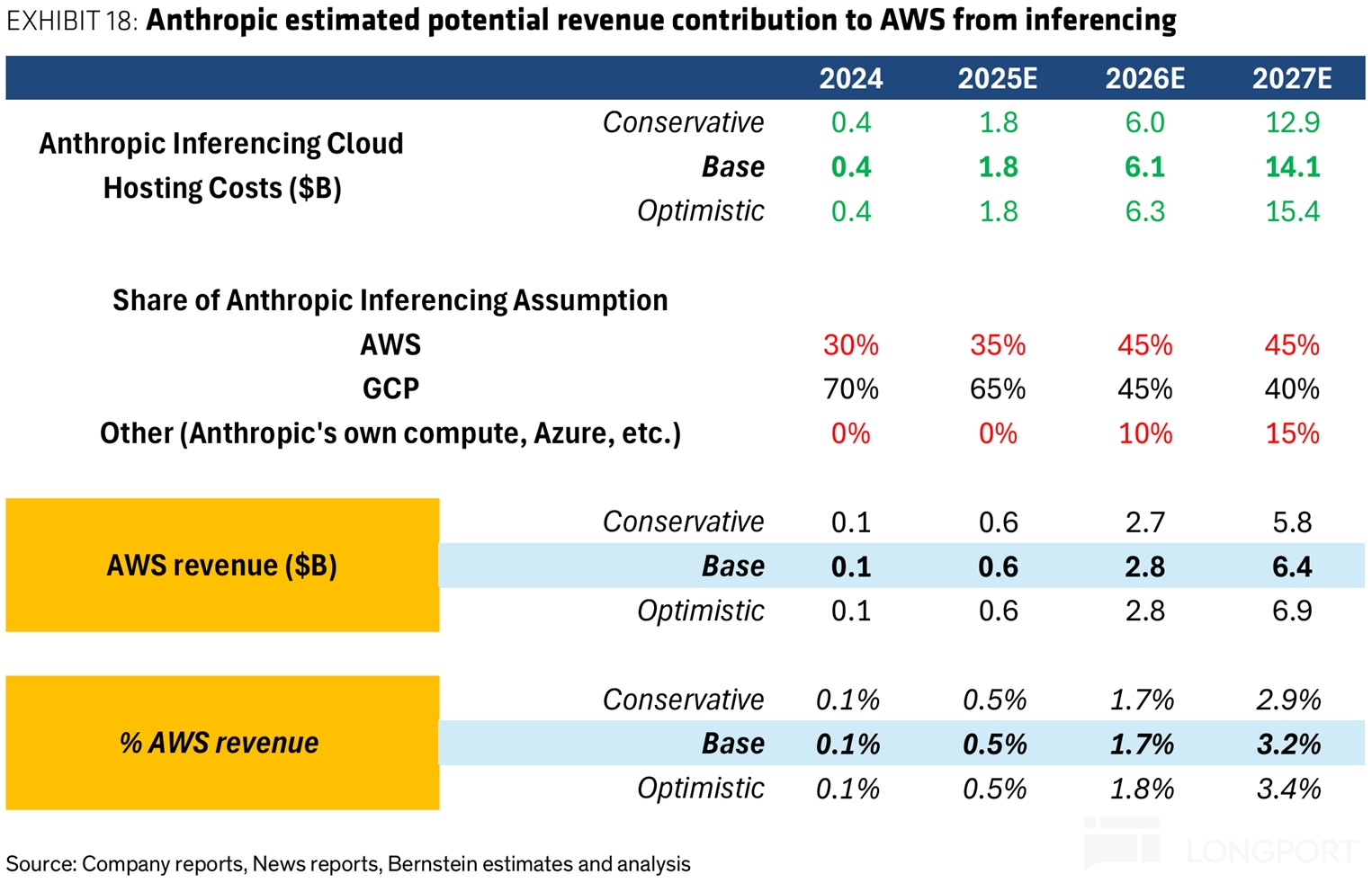
a) Anthropic uses Trainium and Inferentia extensively for training and inference. Project Rainier built for Anthropic could total 2.2GW capacity and, at full ramp, potentially bring AWS ~$14bn in annualized revenue.
b) AWS has priority rights to sell Anthropic models (e.g., Claude Opus/Sonnet) to its customers, including customization and fine-tuning services.
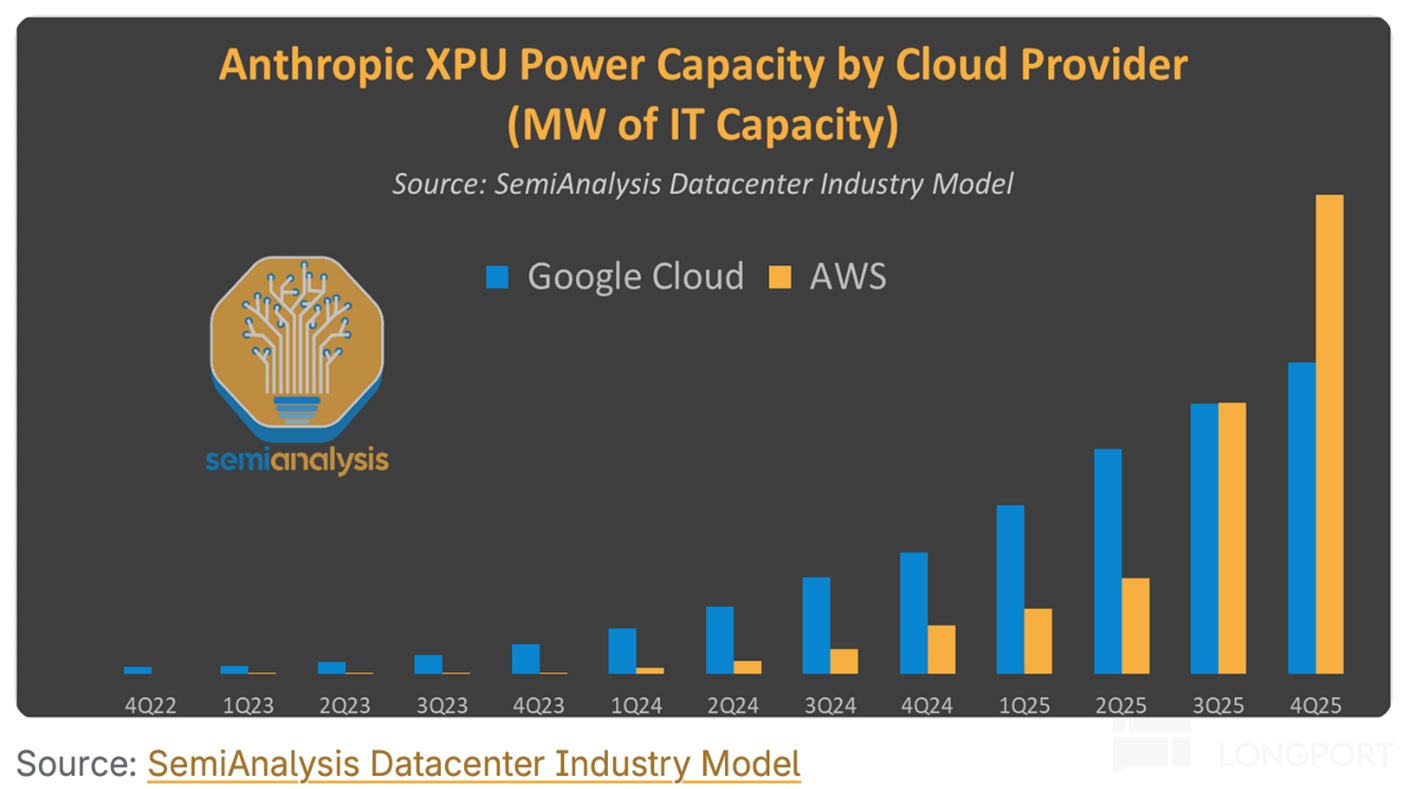
Why the limited near-term lift from Anthropic so far? Beyond Anthropic’s smaller scale vs. OAI, Semi Analysis reports Anthropic historically ran more on GCP and would shift large workloads to AWS only from 3Q25–4Q25.
Therefore, the contribution to AWS growth should become more visible ahead, with one broker estimating Anthropic’s share of AWS revenue rising from ~0.5% in 2025 to 3%+ in 2027.
b) OpenAI engagement: With Microsoft & OAI loosening exclusivity, Amazon and OAI have been ‘active’ in discussions to make OAI another external tech ally alongside Anthropic. OAI disclosed a 7-year, $38bn contract with AWS earlier (possibly a pilot).
There are rumors that in OAI’s new $100bn raise, Amazon may commit as much as $50bn for a deeper tie-up. Rumor also has it that OAI would dedicate engineers to co-develop Amazon’s AI products (e.g., Alexa), making it clear Amazon aims to rapidly backfill AI capabilities via partners.
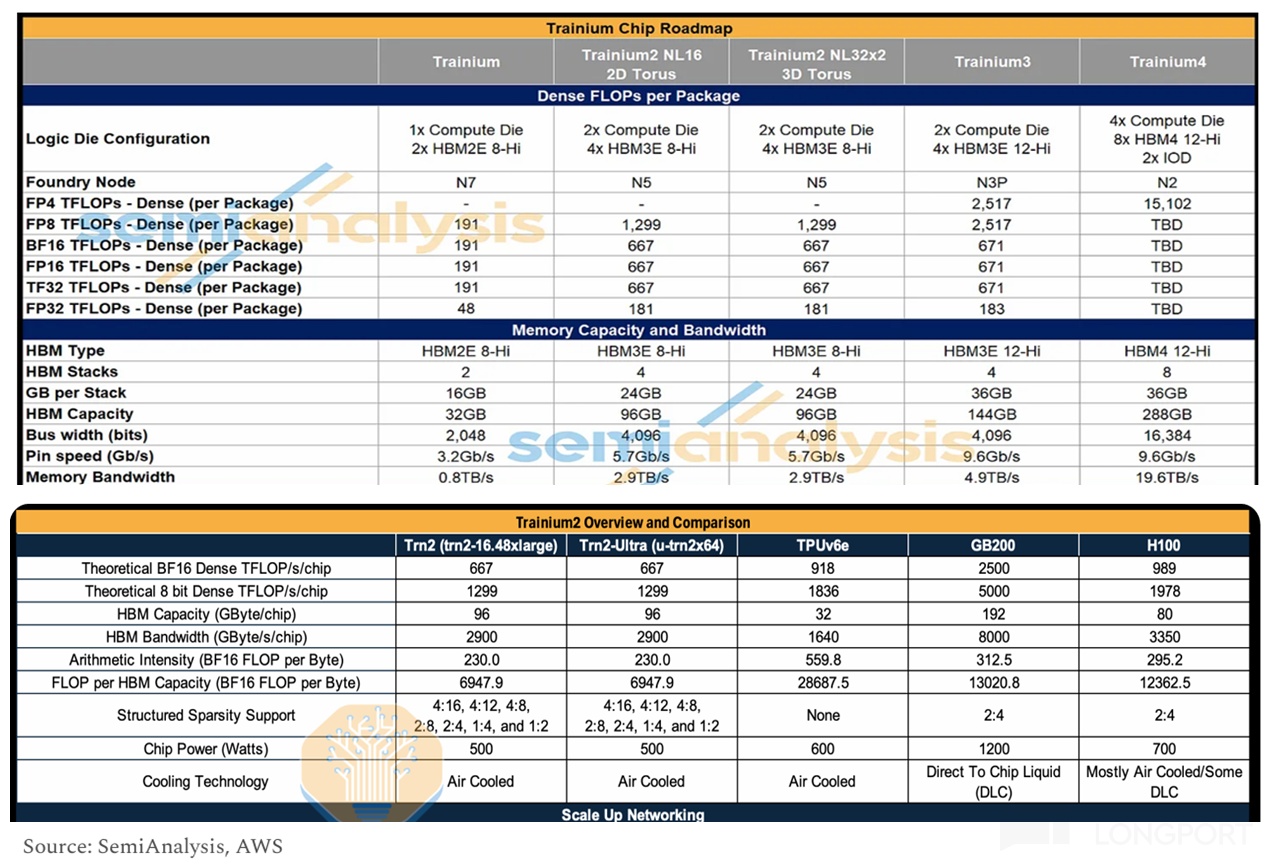
c) In-house chips: On hardware, the company launched third-gen Trainium with 2x prior performance, reaching ~127% of H100, and announced Gen4 plans (shipping around 2027), targeting 3x FP8 perf and 4x memory bandwidth vs. Gen3. If achieved, it would surpass NVIDIA’s GB200 performance (see table below).
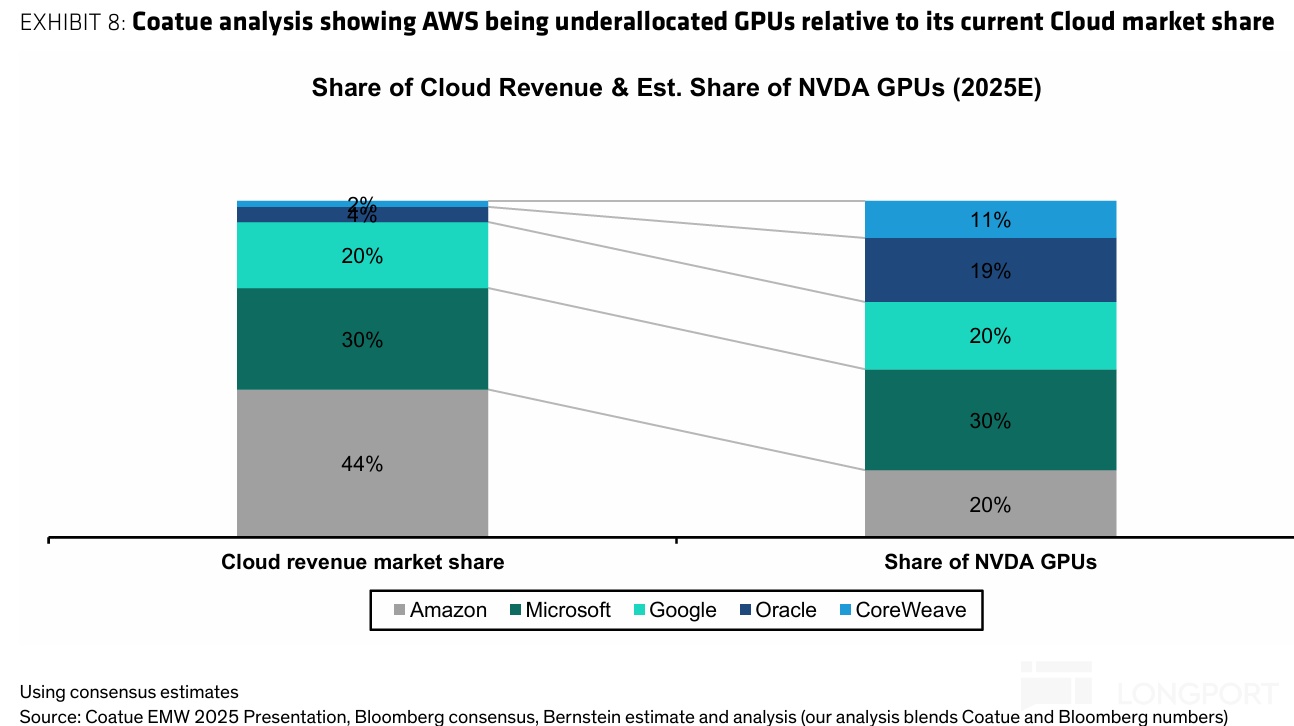
In-house silicon crucially alleviates AMZN’s access bottleneck to top-end NVIDIA GPUs, which has capped compute ramp. A Coatue estimate indicated AWS, the largest CSP (~44% share), secured only ~20% of NVIDIA GPUs, the biggest gap among top clouds.
The market now expects a majority of incremental AWS compute (e.g., Project Rainier) to be driven by in-house chips. One broker models a rough mix of in-house:NVIDIA GPU:CPU at 3:1:1. If so, the supply bottleneck eases and AWS compute can finally scale fast.
3) AWS growth outlook is bright — but at what cost?
With the software gap addressed via partnerships and GPU access eased by in-house chips, the market is very constructive on AWS growth.
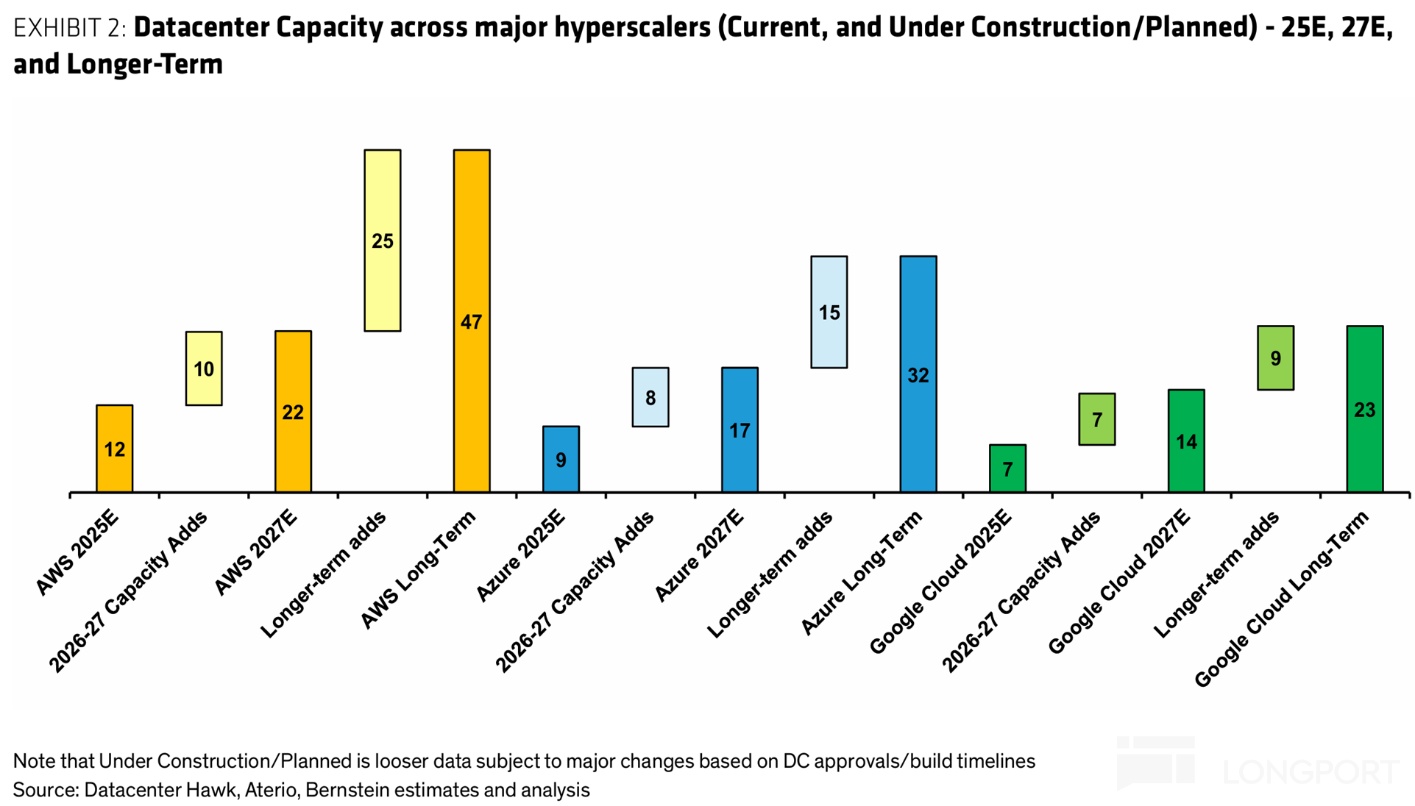
Per management disclosures, AWS will supply the most incremental compute over the next two years. Based on the ‘compute to double by 2027’ guide, AWS could add ~10GW over two years vs. ~7–8GW for Azure and GCP.
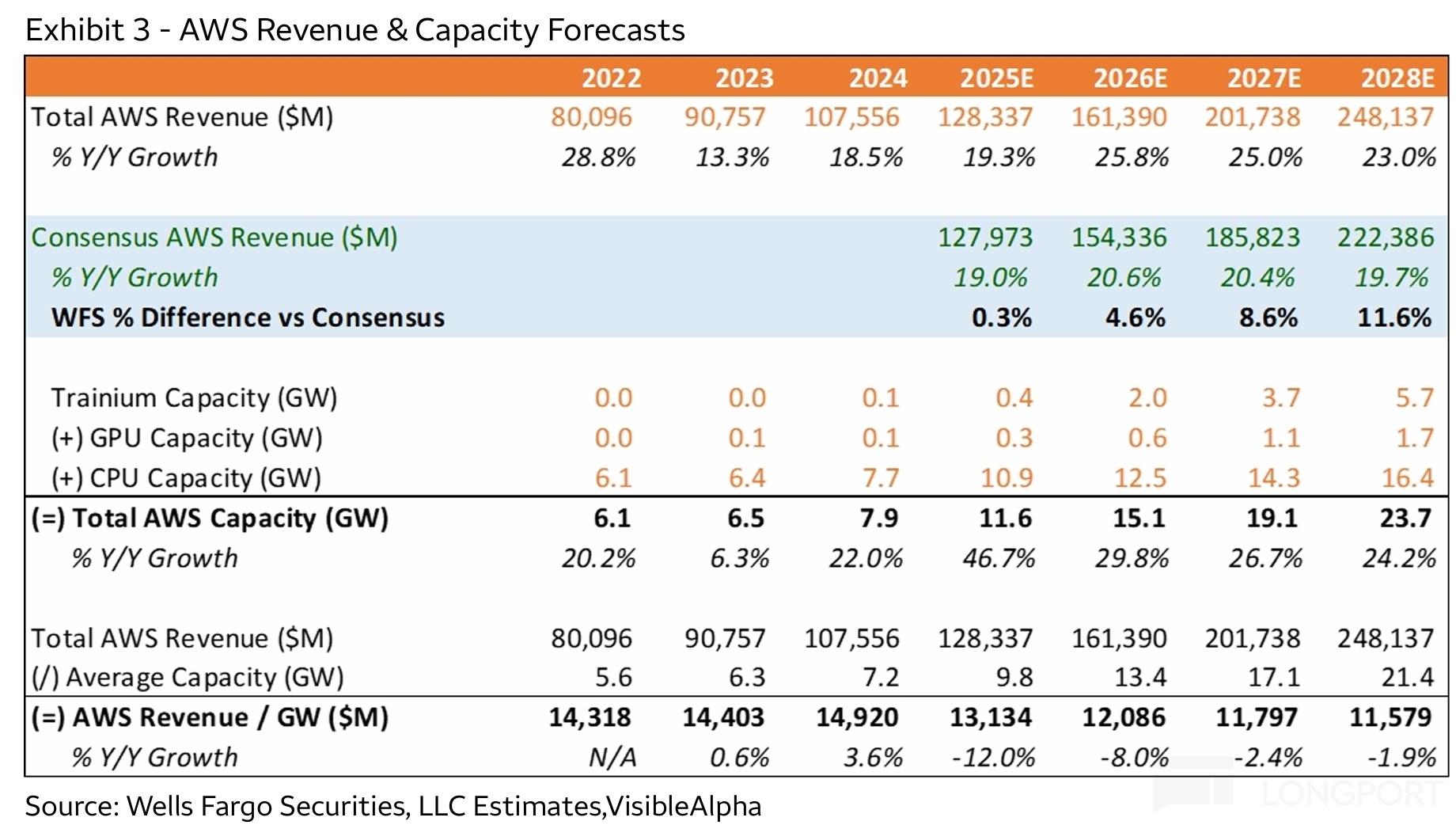
As capacity ramps, sell-side broadly expects AWS to exceed $200bn in annualized revenue at full utilization by end-2027 (vs. ~$129bn in 2025). Thus, 2026–2027 full-year AWS revenue growth is generally modeled at 25%+.
In short, consensus is bullish on AWS growth ahead. But being the largest net capacity adder also means the highest Capex in the sector, reigniting concerns about whether demand will fully match supply and whether heavier spend could weaken returns.
4) From a valuation lens, Street had raised profit forecasts on faster AWS. With the mega Capex and softer OP guide, we keep FY2026 NP at $90bn, implying ~23.5x FY2026 PE.
This is broadly in line with our Microsoft comp, an absolute level not low, but neutral to slightly below Mag7 and AMZN’s historical average. Ultimately it comes down to whether AI truly drives sufficient incremental demand and revenue for cloud providers and their downstream customers.
Detailed takeaways:
I. AWS: re-accelerating as expected, AI gap narrowing?
The single KPI that ‘trumps all’ — AWS revenue grew 23.6% YoY to $35.6bn (similar constant-FX), up another 3.4pct QoQ and 6.7pct since early year, delivering the re-acceleration the market had waited for.
The pickup was well telegraphed, despite Bloomberg at ~21%, buy-side was closer to ~23%. So the print, while strong, was not a major surprise.
Pre-earnings, we noted the acceleration was driven by easing compute supply bottlenecks (higher Capex and in-house silicon shipments) and contributions from marquee customers like Anthropic and OpenAI.
Versus Azure and GCP, Azure decelerated while AWS accelerated, indicating AMZN’s AI capabilities and business gap with peers have indeed narrowed.
Meanwhile, AWS OPM rose to 35%, up 0.4pct QoQ, with YoY compression narrowing and beating Bloomberg consensus of 34.3%. It appears less impacted by higher Capex and the lower margins typical of AI workloads.
So, growth re-accelerated as expected and margin deterioration was milder than feared — AWS was solid this quarter.
II. Capex to surge to $200bn — more margin pressure ahead?
Capex came in at $35bn, roughly flat QoQ (down ~$1bn). Still elevated but not further ramped, and with revenue growth, D&A as a % of revenue fell 0.2pct QoQ. We think this helped AWS margins this quarter.
The problem is management guided FY2026 Capex to $200bn, a 43% lift from the already-high ~$35bn per quarter. It also exceeds all other cloud peers’ budgets (~$150–180bn).
On that guide, D&A as a % of revenue likely rises another 2–3pct, pushing margins lower. With growing skepticism that clouds are overspending and diluting ROI, this is not good news.
III. Retail broadly steady; media drives growth
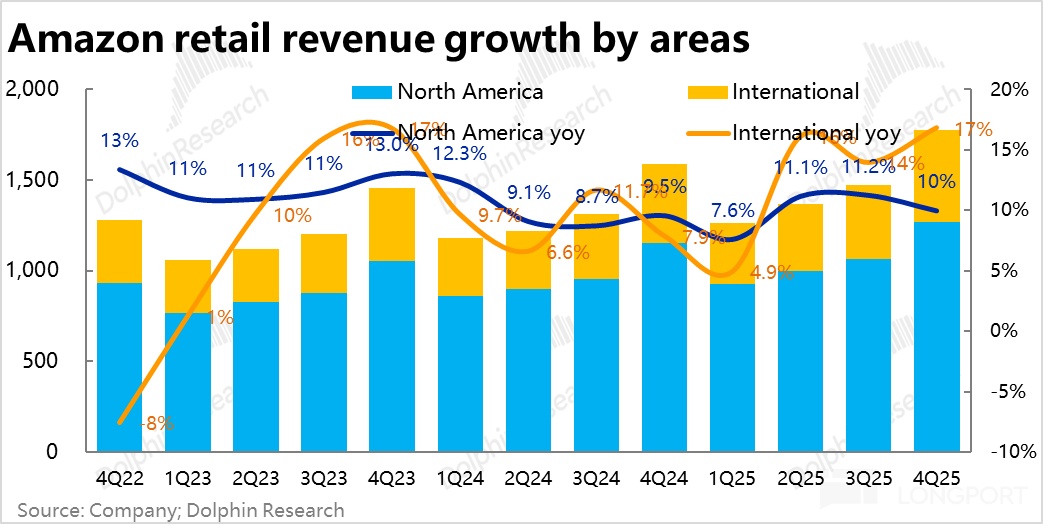
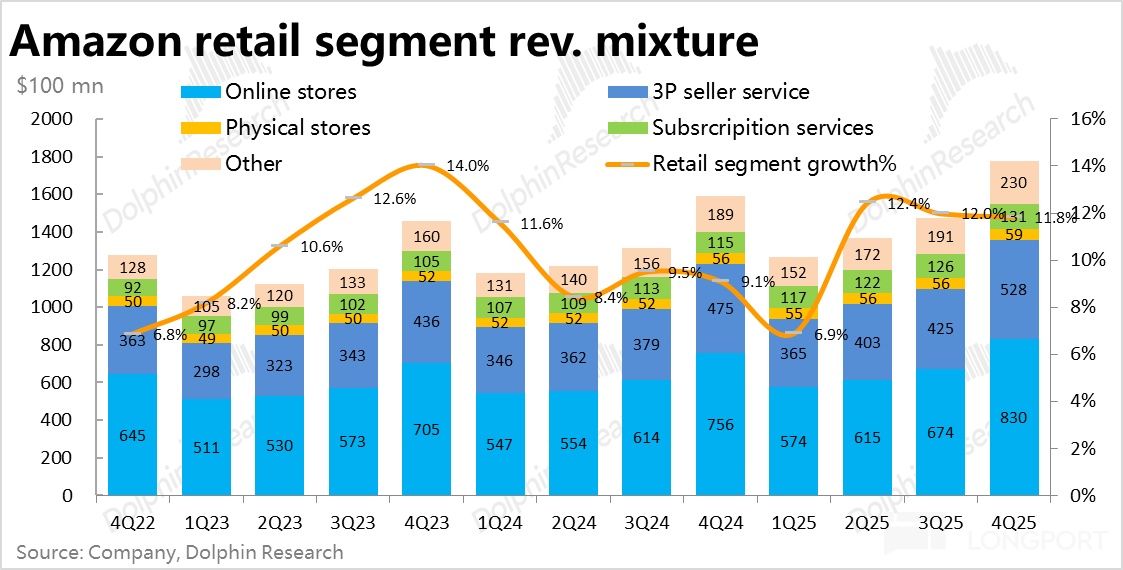
The broader retail complex remained relatively stable, with combined revenue at $177.8bn, +11.8% YoY, a slight deceleration vs. last quarter.
By region, NA retail grew 10% YoY, 1.3pct slower QoQ. U.S. non-store retail was steady at ~6–9% YoY in Sep–Nov vs. ~8% in 3Q, suggesting heightened AI-era competition may be starting to weigh on AMZN.
Intl retail nominal growth was 17% on FX tailwinds, but constant-FX was 11%, up just 1pct QoQ, not as strong as the headline suggests.
By line item, most sub-lines were broadly steady. Specifically:
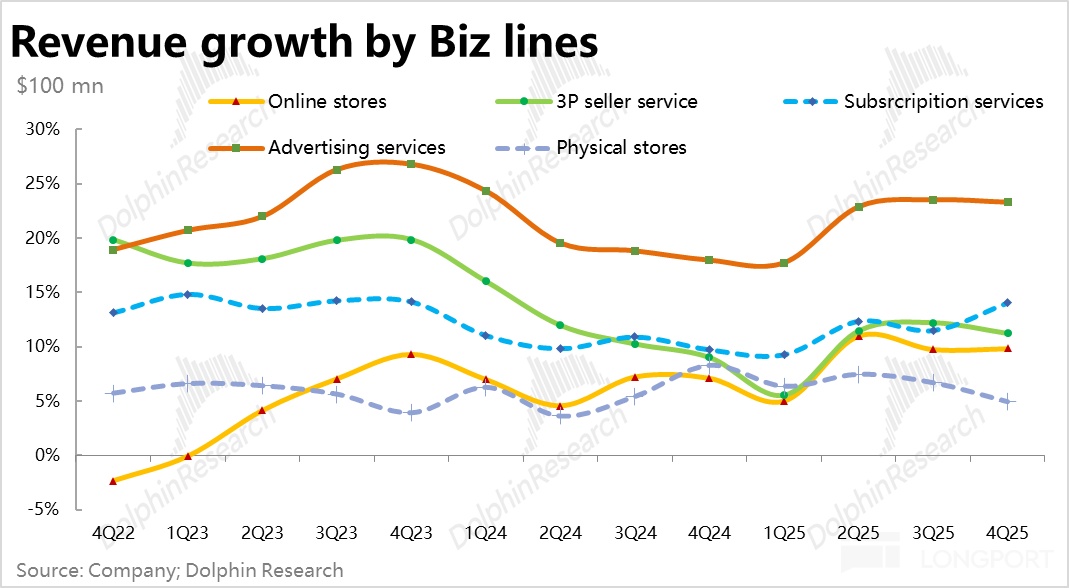
a) First-party retail, physical stores, and 3P seller services were flat to slightly softer QoQ.b) Ads remained strong at +23.3% YoY, the fastest among retail adjacencies. As noted, ad ramp on Prime Video and other media content was likely the main driver.
c) Subscriptions growth improved from 11.5% to 14%, supported by the hit Thursday Night Football and FX tailwinds.
IV. Solid profit; margins higher across the board
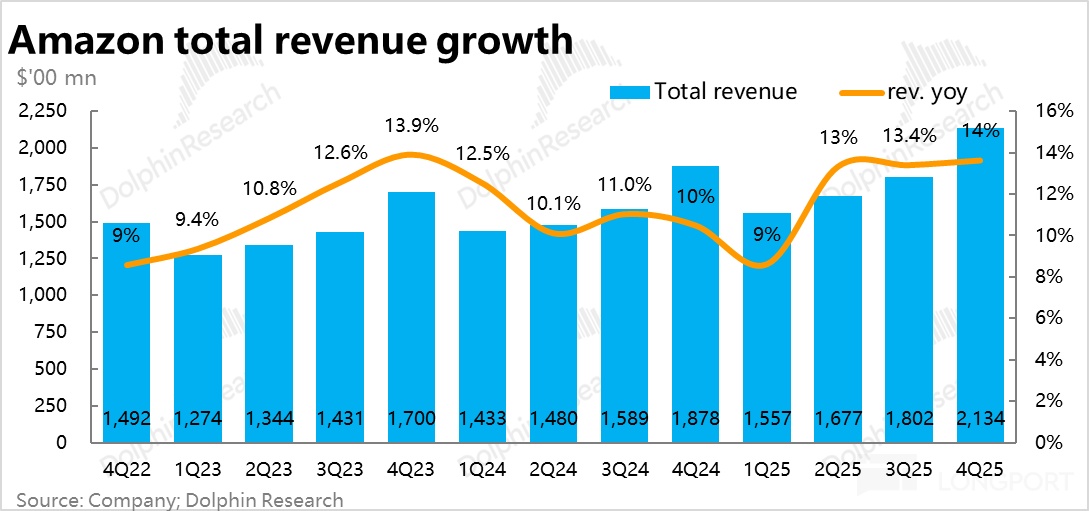
Across businesses, group revenue was $213.4bn, +13.6% YoY and slightly accelerated, modestly above estimates. Ex-FX, growth was ~12% and broadly flat QoQ.
OP was $25bn, up nearly 18% YoY, also modestly beating the Street. OPM was 11.7%; despite heavy Capex, margins expanded 0.4pct YoY.
By segment:
a) AWS margins rose QoQ, as noted.b) NA OPM reached 9%, up 1pct YoY. Despite higher logistics spend (same-day now in 2,300 U.S. towns), mix shift to ads and subs supported margins.
c) Intl retail OP was $1.04bn vs. ~$2.09bn expected, implying 2.1% OPM, down 0.9pct YoY. Management said this was due to one-offs; ex those, OPM improved YoY (see call for details).
V. GPM still expanding; R&D the only rapidly rising spend
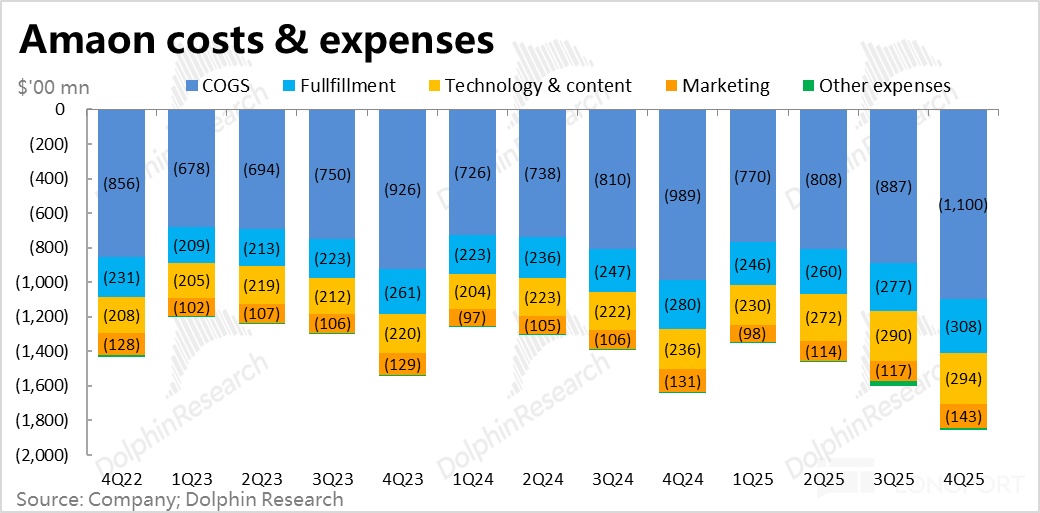
On cost/expense, GPM was 48.5%, up 1.2pct YoY, a narrower expansion vs. last quarter’s 1.8pct. Despite rising Capex, higher-mix high-GP lines and volume/ops optimization continued to lift GPM.
On opex, total operating expenses were $77.2bn, +14% YoY, slightly below the 15% Street. That said, this is a re-investment phase vs. the sub-10% run-rate of the past two years.
Ex-R&D, fulfillment and marketing grew only ~10% YoY, and G&A declined 6% YoY. R&D & content was the only rapidly rising line, +25% YoY.
That reflects AWS comp and R&D, certain equipment costs, and streaming content production recognized in this line, implying heavier investment in these businesses.
<End of text>
Dolphin Research prior work on Amazon:
Earnings recaps
Oct 30, 2025 call ‘Amazon (Trans): Compute Supply to Double Again by 2027’
Oct 30, 2025 recap ‘AWS Big Reversal — Has Amazon Finally Turned the Corner?’
Aug 1, 2025 recap ‘AWS Stalls, Retail Shows Cracks — Time for Amazon to Crouch Before It Leaps?’
Aug 1, 2025 call ‘Amazon (Trans): 2Q Capex Intensity a Good Proxy for 2H’
May 2, 2025 call ‘Amazon (Trans): AI Compute Still Bottlenecked’
May 2, 2025 recap ‘Heavy AI Spend, Tariff Noise — Is Amazon Back in a Crouch?’
Feb 7, 2025 recap ‘Amazon: All-In on Cloud — Is the Margin Harvest Over Again?’
Feb 7, 2025 call ‘Amazon (Trans): GPU Cloud Depreciation Accelerating — Absolute Positive for DS!’
Nov 1, 2024 recap ‘Amazon: Profit Pops Again, But Mega Capex Looms’
Nov 1, 2024 call ‘Amazon: Can Margins Keep Rising Amid Heavy Spend?’
Deep dives
Dec 18, 2024 ‘Amazon E-com Endgame: Retail Wrapper, Ad Soul?’
Risk disclosure and statement: Dolphin Research disclaimer and general disclosure
The copyright of this article belongs to the original author/organization.
The views expressed herein are solely those of the author and do not reflect the stance of the platform. The content is intended for investment reference purposes only and shall not be considered as investment advice. Please contact us if you have any questions or suggestions regarding the content services provided by the platform.
