



Innovative drug tide recedes, Bonasia heads to Hong Kong, a covert battle of 'efficiency-driven outsourcing' begins

While enthusiasm for innovative drugs has cooled in the primary market, the power structure of the pharmaceutical industry chain is quietly being reshuffled.
Over the past two years, financing for Chinese Biotech companies has significantly contracted, forcing many pipelines to be delayed or even cut. The R&D logic of "burning money to buy time" has become unsustainable. Pharmaceutical companies are beginning to calculate each clinical expenditure more cautiously, gradually outsourcing trial management, data statistics, and patient recruitment—tasks that were previously handled by in-house teams. Rather than building a large clinical team themselves, it's better to hand over complex processes to more professional and efficient service providers.
Thus, a seemingly low-profile track has instead stepped into the spotlight: CRO.
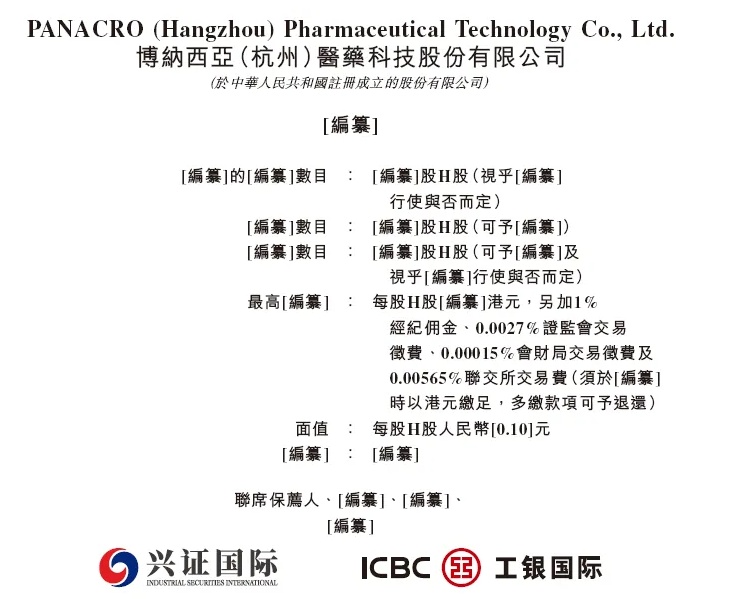
According to the prospectus, the Hangzhou-based clinical CRO company Bonasia recently submitted its listing application to the Hong Kong Stock Exchange. This company, established for over 20 years, focuses on "digital clinical research." Its 2024 revenue was approximately 340 million yuan, with gross profit margin rising to over 38%, appearing steady and restrained among a group of mid-sized CROs.
While giants like WuXi AppTec, Tigermed, and Pharmaron have long built scale barriers, how much room for survival does a regional CRO with a scale of only a few billion yuan have? Does it represent a sample of a new round of efficiency revolution, or a transitional role in the wave of industry consolidation?
Outsourcing Becomes a Necessity, Clinical CROs Begin to Gain Influence
The underlying logic of the innovative drug industry has never been about technological romance, but rather cost competition.
Bringing a new drug from IND to market often requires investments of hundreds of millions of yuan and a cycle of seven to eight years, accompanied by a very high failure rate. For Biotech companies with limited cash flow, any clinical delay or recruitment difficulty could mean a broken capital chain. While building an in-house team offers control, the enormous human resource costs and management complexity often significantly reduce efficiency.
Against this backdrop, "handing over capital-intensive segments to professional companies" has gradually become a consensus.
Global CRO industry data already illustrates the trend: In 2024, the global clinical CRO service market reached $59.2 billion, accounting for about 70% of the entire CRO market, and is expected to grow to $131.4 billion by 2034. More noteworthy is the Chinese market, where the clinical CRO scale reached approximately 46.1 billion yuan in the same year, with a compound annual growth rate of 12.4% over the next decade.
What does this mean? It means clinical outsourcing is not a cyclical opportunity, but a structural upgrade.
As the number of innovative drug pipelines in China continues to grow and the number of pharmaceutical companies increases rapidly, while the number of enterprises truly capable of large-scale clinical execution remains limited, the role of CROs naturally shifts from "auxiliary service providers" to "efficiency hubs." In many projects, whoever controls the clinical progress controls the R&D pace.
However, the other side of the industry is equally clear: the benefits are not evenly distributed. Early CROs relied more on "human wave tactics," competing for projects by piling up CRAs and monitors, resulting in low gross margins, complex management, and weak replicability.
As scale expands, this model becomes increasingly difficult to sustain. Leading companies have begun developing their own systems, integrating data flows, and deploying one-stop solutions to standardize and automate clinical trial processes.
Technologization has become the new watershed. Companies like WuXi AppTec and Tigermed are no longer just "labor outsourcing companies," but full-process platform service providers offering everything from drug discovery to clinical development and regulatory submission. For clients, this means less coordination cost and higher success rates; for small and medium-sized CROs, however, it means their space is being constantly squeezed.
The result is that the industry is moving towards polarization: on one end are comprehensive giants, and on the other are specialized, small but efficient players, with the middle ground gradually disappearing. Bonasia is precisely a sample emerging from this structural change.
Competing on Efficiency, Not Scale: Can Bonasia Breach the Giants' Defense?
If judged solely by scale, Bonasia is not prominent. From 2023 to 2024, the company's revenue remained in the 3-4 billion yuan range, far from the hundreds of billions typical of industry leaders. But examining the financial details reveals another path: gross margin increased from 33.5% to over 38%, with profits growing continuously, and profitability not inferior.
This is not a result achievable by the typical "human wave model." The company's answer is digitalization.
Unlike traditional clinical CROs that rely on manual management, Bonasia embeds data systems into the entire clinical research process: from trial initiation, patient recruitment, data collection to statistical analysis, it strives to replace manual operations with automated workflows to improve project turnover and execution accuracy.
Simultaneously, its FSP (Functional Service Provider) model reduces fixed costs by flexibly allocating human resources, allowing clients to "use personnel on demand."
The logic of this model is simple: not pursuing size, but speed and precision. While leading companies use platform integration to secure large projects, if mid-sized CROs continue to compete on scale, they will only fall into price wars. However, if they position themselves as "high-efficiency solution providers," they can instead command higher premiums in niche areas.
Bonasia's strategy confirms this. It focuses on high-barrier therapeutic areas like oncology and autoimmune diseases, deeply cultivating clinical-stage services rather than blindly extending to discovery or production ends. It resembles more of a "specialist doctor" than a "general hospital."
However, the story is not without concerns. Clinical CROs are essentially businesses highly dependent on client resources. Large pharmaceutical companies prefer to entrust core projects to leading service providers for one-stop solutions. Mid-sized enterprises often face the reality of insufficient bargaining power and limited project scale. Coupled with accelerated industry M&A integration, many small and medium players are eventually absorbed into giant systems, becoming part of their ecosystems.
This is also the real motivation behind Bonasia's choice to list in Hong Kong. Rather than passively waiting for consolidation, it's better to leverage capital to complete technological investment and capacity expansion first, seizing the niche track.
From this perspective, its IPO is more like a race against time. Whether it can build up its digital capabilities and professional barriers before giants fully cover the market will determine whether it becomes a "hidden champion" or is merged into a major platform.
But regardless of the outcome, Bonasia's emergence already illustrates a fact: China's CRO industry is entering a new phase.
In the past, competition was about human resource scale; today, it's about system efficiency. In the past, it was low-barrier outsourcing; today, it's high-barrier services. In the past, it was fragmented competition; today, it's a layered landscape.
The ebbing tide of innovative drugs has not cooled the pharmaceutical industry; it has merely redistributed value to those who can improve efficiency more effectively.
In this efficiency revolution, CROs are no longer just supporting roles but are increasingly approaching "infrastructure." And mid-sized players like Bonasia are standing at the crossroads of this transformation—both riding the industry's upward cycle and facing the reality of giant squeeze.
Their fate may be more worthy of market attention than the listing itself.
The copyright of this article belongs to the original author/organization.
The views expressed herein are solely those of the author and do not reflect the stance of the platform. The content is intended for investment reference purposes only and shall not be considered as investment advice. Please contact us if you have any questions or suggestions regarding the content services provided by the platform.
