


 Rate Of Return
<p>Bros, <span class="security-tag" type="security-tag" counter_id="ST/US/TSLA" name="Tesla Inc." trend="0" language="en">$Tesla(TSLA.US)</span> is still falling so much today! <span class="security-tag" type="security-tag" counter_id="ST/US/NVDA" name="NVIDIA Corporation" trend="0" language="en">$NVIDIA(NVDA.US)</span> missed the rally. All in all, <span class="security-tag" type="security-tag" counter_id="ST/US/QQQ" name="Invesco QQQ Trust" trend="0" language="en">$Invesco QQQ Trust(QQQ.US)</span> stabilized at 55, and <span class="security-tag" type="security-tag" counter_id="ST/US/SPY" name="SPDR S&P 500 ETF Trust" trend="0" language="en">$SPDR S&P 500 ETF Trust(SPY.US)</span> is going strong tonight. That's all.</p>

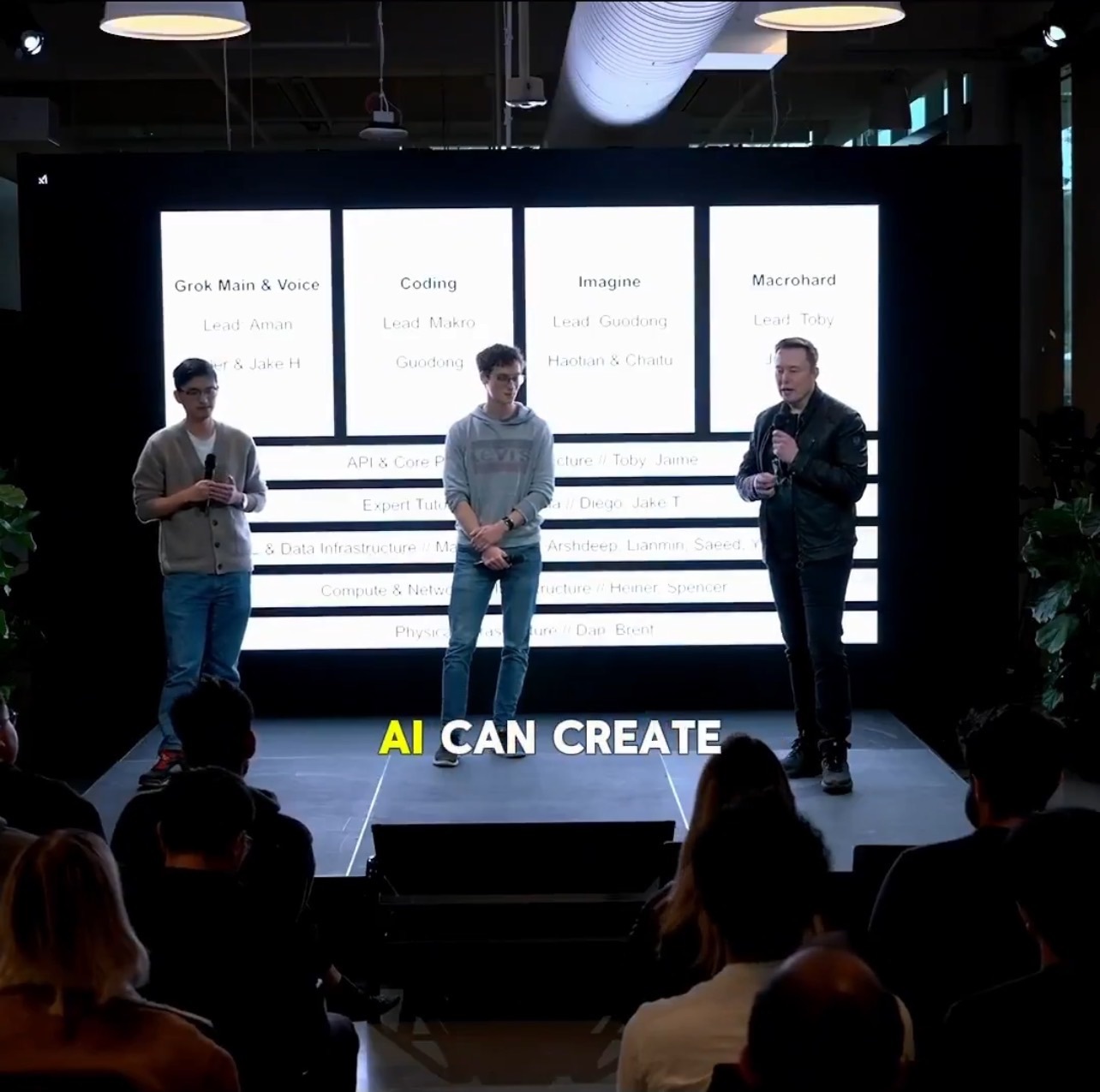
⚡🔥 Elon Musk predicts "code will be abandoned": In 2026, AI will directly generate binary files, ushering in a compilation-free era for software development?
If this comes true, many things programmers are learning today will become "transitional technologies."
Elon Musk's latest judgment is very radical:
By the end of 2026, artificial intelligence will completely bypass traditional coding processes and directly generate executable binary files.
What does this mean?
It means—
"Writing code" itself may no longer be the core of software development.
The current software process is:
Code → Compiler → Binary file → Execution
The future model might become:
Prompt → AI-generated optimized binary file → Execution
The intermediate "code" and "compiler" are compressed out.
If AI can directly generate binary files optimized for specific hardware, and with higher efficiency than existing compilers, then the traditional code abstraction layer becomes unnecessary.
This is not simple code autocompletion.
This is a reconstruction of software's underlying structure.
For the past few decades, we have been improving:
Higher-level languages
More powerful compilers
Better optimizers
And Musk's judgment is—
The next step is not to optimize "code," but to bypass it entirely.
This will bring three fundamental changes:
First, the barrier to software development will be completely reshaped.
You won't need to understand complex syntax, only clearly express the "goal."
Second, there will be a structural improvement in efficiency.
AI can generate highly optimized machine-level executable files tailored to specific hardware, rather than relying on general-purpose compilers.
Third, the role of software engineering will shift.
From "writing logic" to "defining problems and goals."
He says Grok Code will reach state-of-the-art levels within 2-3 months.
If this path holds, it's not a tool upgrade, but a paradigm shift.
The question is no longer:
"Will AI write code?"
But:
"Will the code intermediate layer disappear?"
This sounds radical, but looking back at history, every leap in computing architecture has compressed abstraction layers.
From assembly to high-level languages.
From on-premise deployment to the cloud.
From handwritten functions to automated frameworks.
Is it now "compilation's" turn?
If AI can truly directly generate more efficient binary files, then the entire value chain of software development will be rearranged.
Would you trust a model to directly generate executable files?
Or do you believe traditional code structure is still irreplaceable?
📬 I will continue to track the evolution of artificial intelligence and underlying technological structures, dissecting inflection point judgments that could truly reshape the industry.
Welcome to subscribe and join me in seeing the direction of the next paradigm leap ahead of time.
The copyright of this article belongs to the original author/organization.
The views expressed herein are solely those of the author and do not reflect the stance of the platform. The content is intended for investment reference purposes only and shall not be considered as investment advice. Please contact us if you have any questions or suggestions regarding the content services provided by the platform.
