


 Rocket Lab Gain Hunter
 NVO Option Return Rate
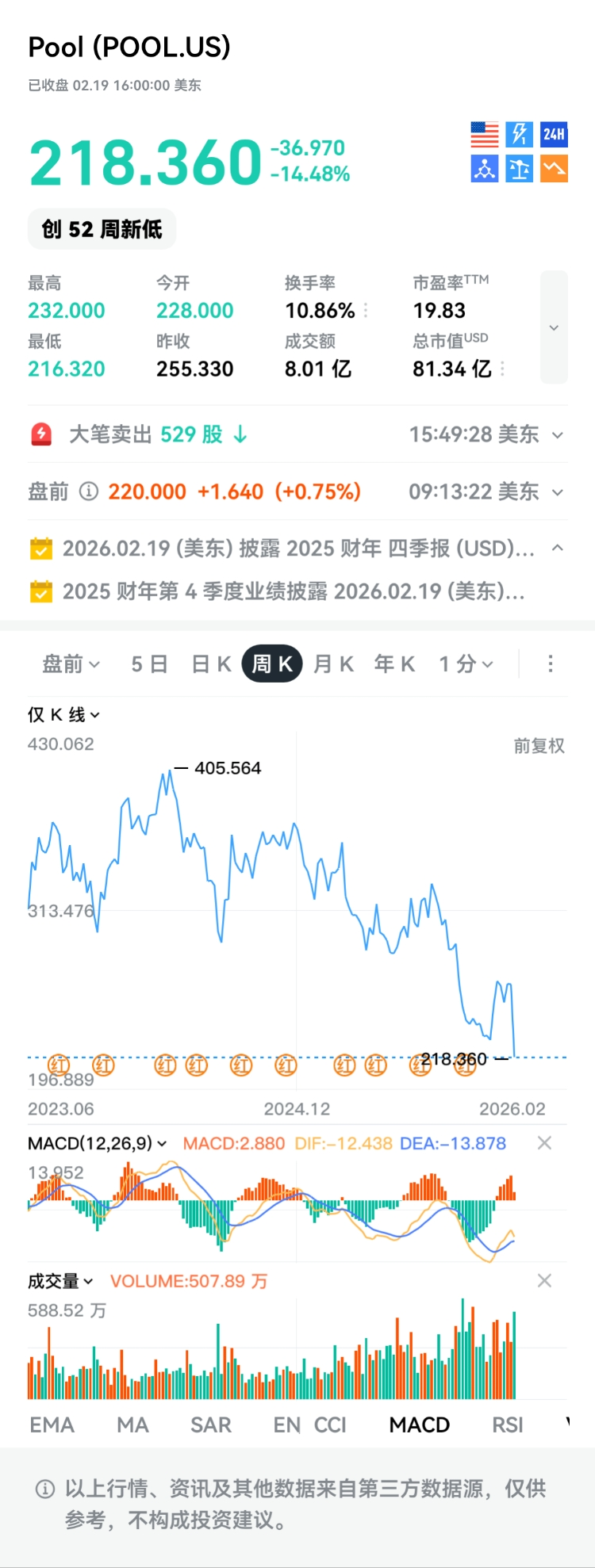
$Pool(POOL.US)The weakness of POOL is easier to understand against the backdrop of the increasingly "top-heavy" U.S. consumption structure: According to data from Moody's Analytics, the top 10% of earners in the U.S. now contribute about 49% of all consumer spending—the highest level since tracking began in 1989. Meanwhile, the consumption share of the bottom 80% has fallen to a record low of just 41%. Now, only 10-20% of Americans can be considered truly middle class, enjoying a consumption share that corresponds to their income tier and population size.
Since the U.S. is a consumption-driven economy, the U.S. economy is now heavily influenced by the spending power of the affluent class. It is estimated that the consumption of just the top 10% contributes about one-third of GDP. As for those in the bottom 80% by income, their spending growth over the past six years has barely kept pace with inflation—meaning their standard of living has essentially stagnated since the pandemic began. At the same time, the U.S. Gini coefficient is at a 60-year high, and the confidence gap between high-income and low-income groups has widened to its broadest level in over a decade.
If the upper-middle-class and affluent consumption represented by POOL is shrinking, cracks have already appeared elsewhere: A survey in the third quarter of 2025 found that 20% of affluent and high-net-worth individuals plan to reduce spending on designer fashion; Bank of America (BofA) card swipe data shows that U.S. luxury consumption has declined for 10 consecutive quarters.
Of course, compared to surface phenomena like swimming pools and luxury spending, the real source of impact on U.S. affluent spending is the stock market: the force supporting U.S. affluent consumption mainly comes from the "wealth effect" brought by the stock market—the top 20% of U.S. households by wealth
 Long Image
The copyright of this article belongs to the original author/organization.
The views expressed herein are solely those of the author and do not reflect the stance of the platform. The content is intended for investment reference purposes only and shall not be considered as investment advice. Please contact us if you have any questions or suggestions regarding the content services provided by the platform.
