


MNST: New product cycle ahead; another 'evolution' year?---
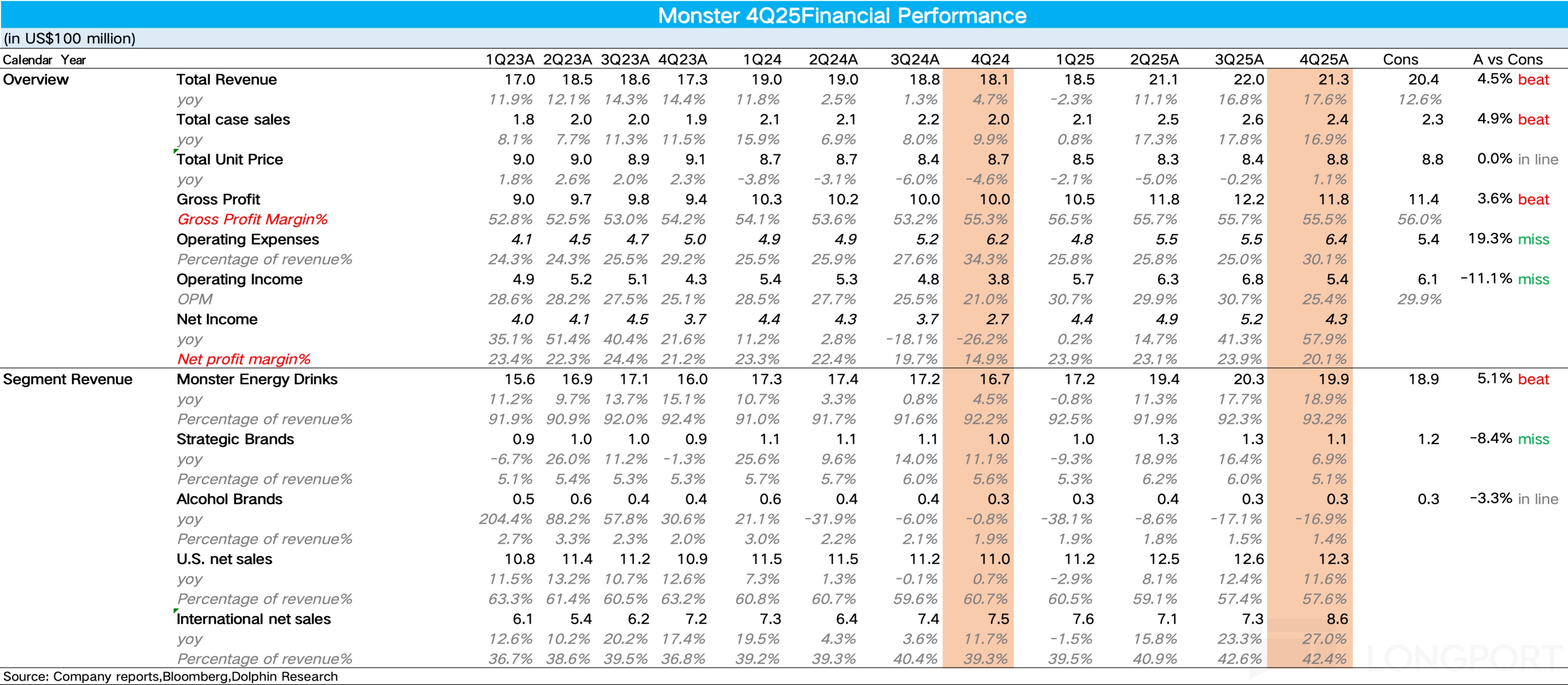
Energy drink leader Monster Beverage (MNST) posted Q4 2025 results (quarter ended Dec 2025) after the U.S. close on Feb 27, 2026 Beijing time. Overall, revenue beat elevated expectations with a strong print, while higher spend led to a slight miss at the profit line.$Monster Beverage(MNST.US)
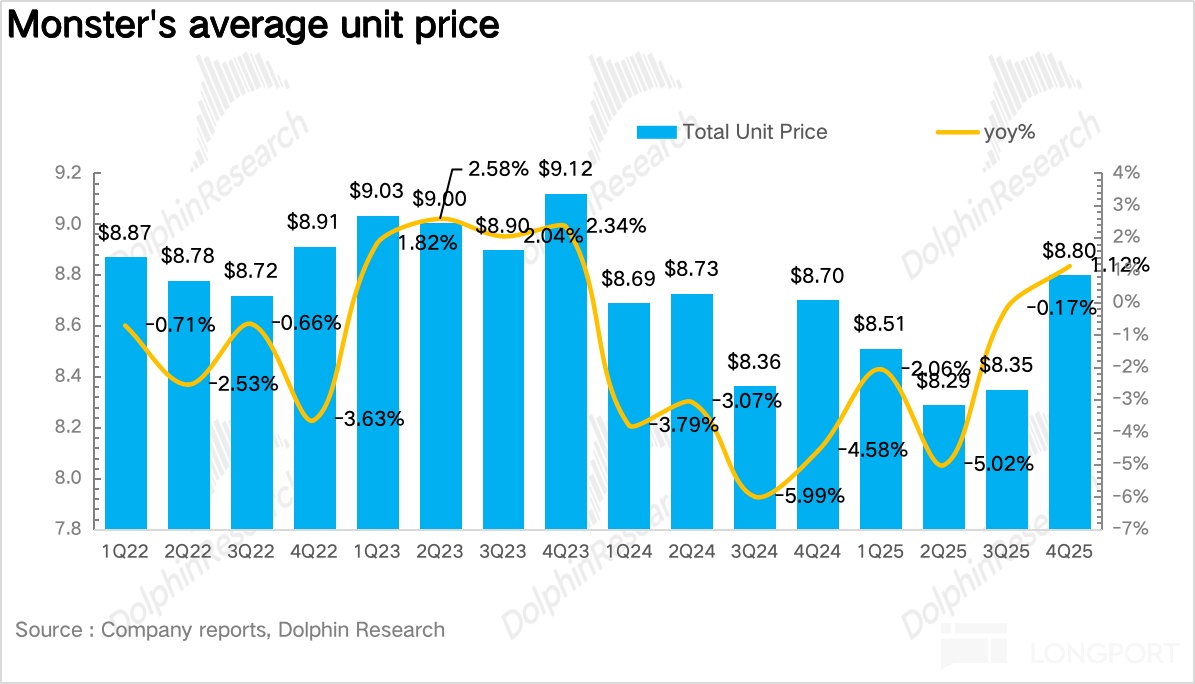
- Record quarterly revenue growth. Total revenue rose 17.6% YoY in Q4, accelerating vs. Q2–Q3. Volume grew 17% YoY, underscoring the clear payoff from the pivot toward healthier launches and heavier ops, with share in energy continuing to recover. On price/mix, Nov price hikes and a richer mix of premium SKUs turned ASP back to positive at +1.1% YoY.
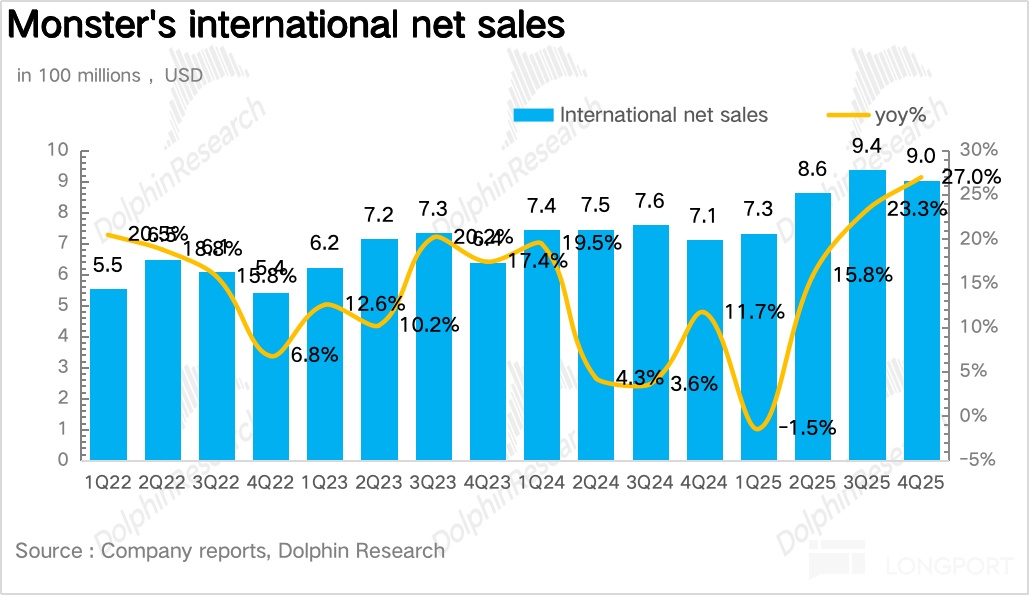
- Western Europe stayed hot. The U.S. domestic market sustained double‑digit growth. Intl revenue rose 27% YoY with sequential acceleration, led by Western Europe where rising category momentum and stronger Monster brand equity drove a standout +33% YoY. In emerging markets, broader distribution of value energy offerings continued to lift share.
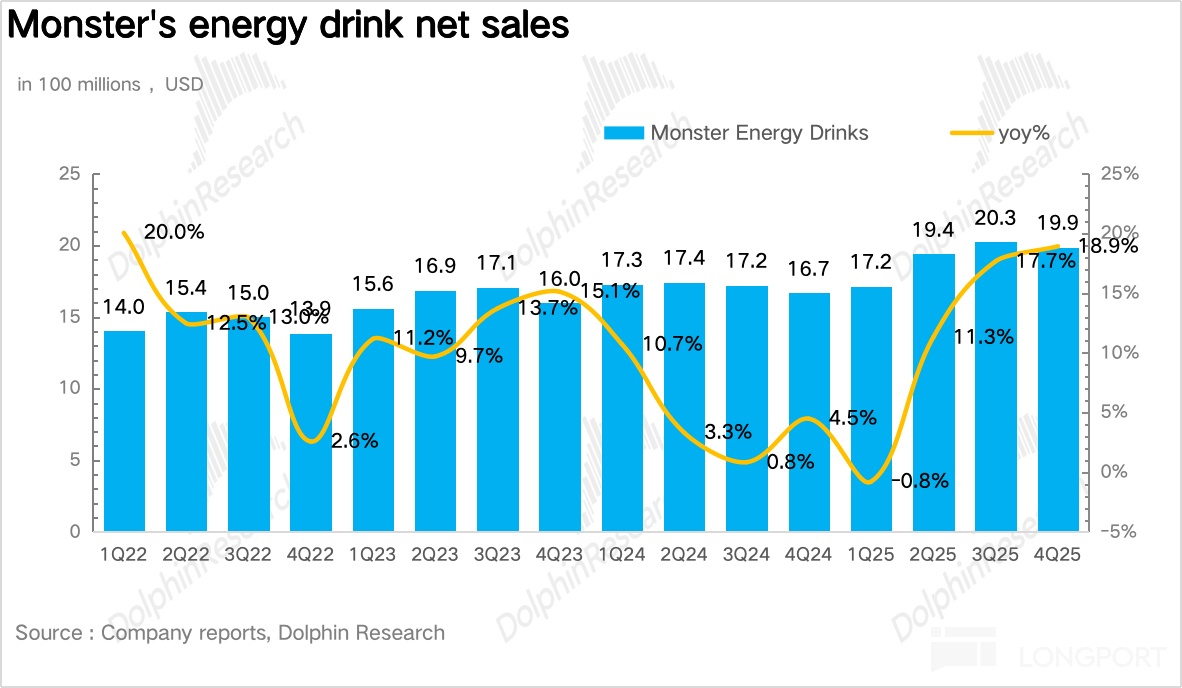
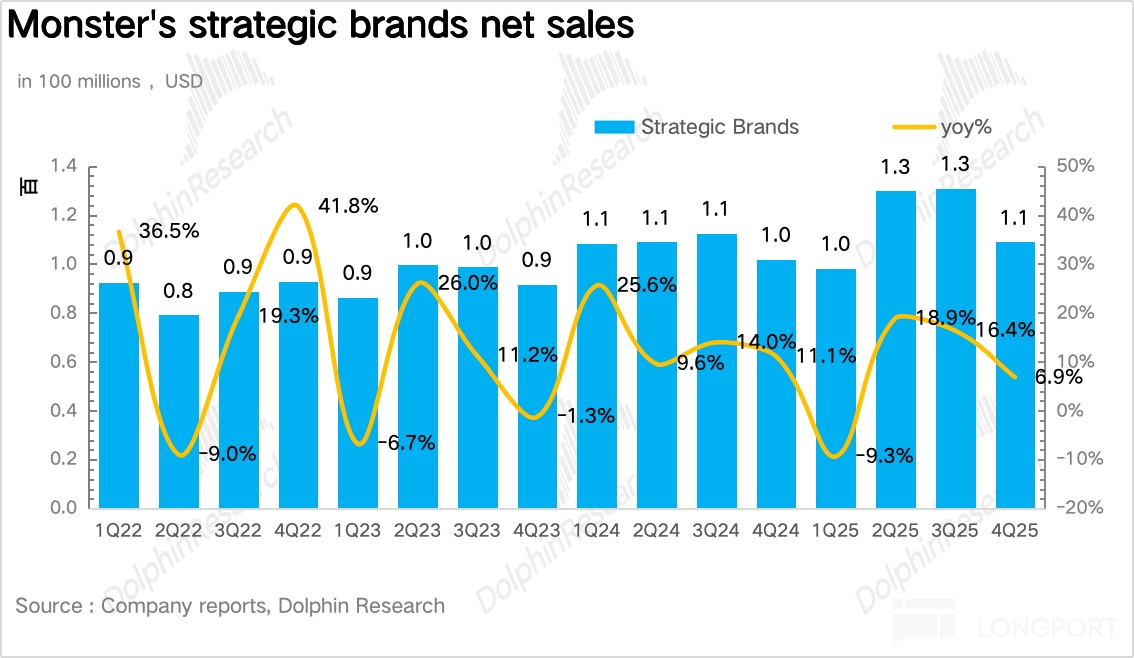
3) Core Monster brand leading the category. By brand, the core Monster franchise grew 18.9% YoY, outpacing the category, with sugar‑free Ultra as the growth engine. Flagship Ultra White grew 32%. Other strategic brands rose 6.9% YoY with slower sequential growth, likely as resources shifted toward the core. NOS/Full Throttle and other legacy high‑sugar SKUs are being squeezed by zero‑sugar alternatives. Alcohol declined 17%, reflecting a broad cooldown in hard seltzers.
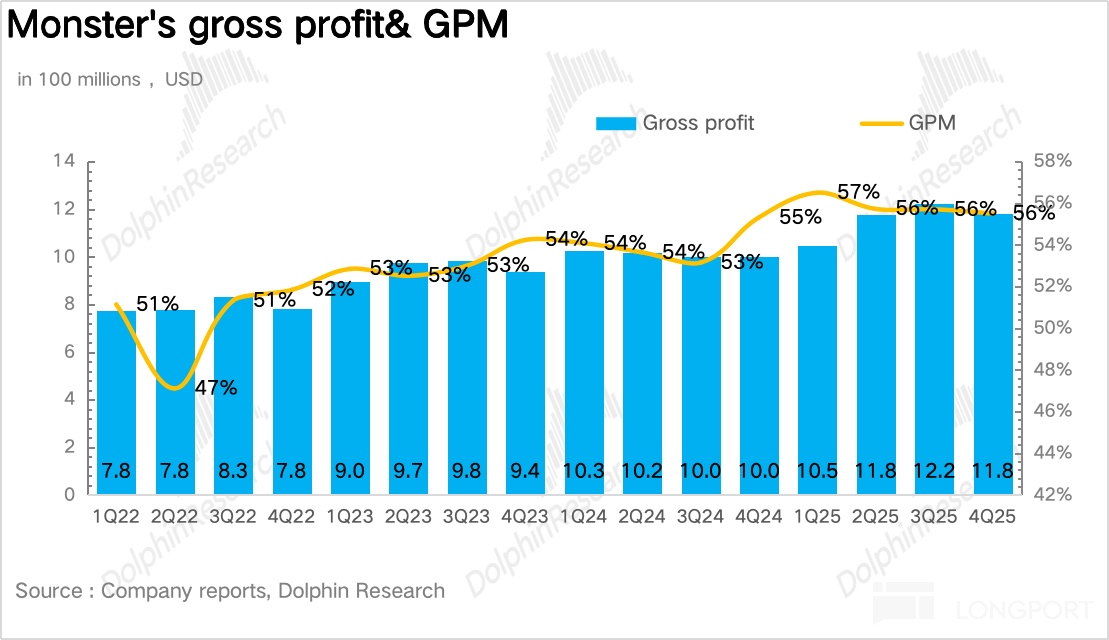
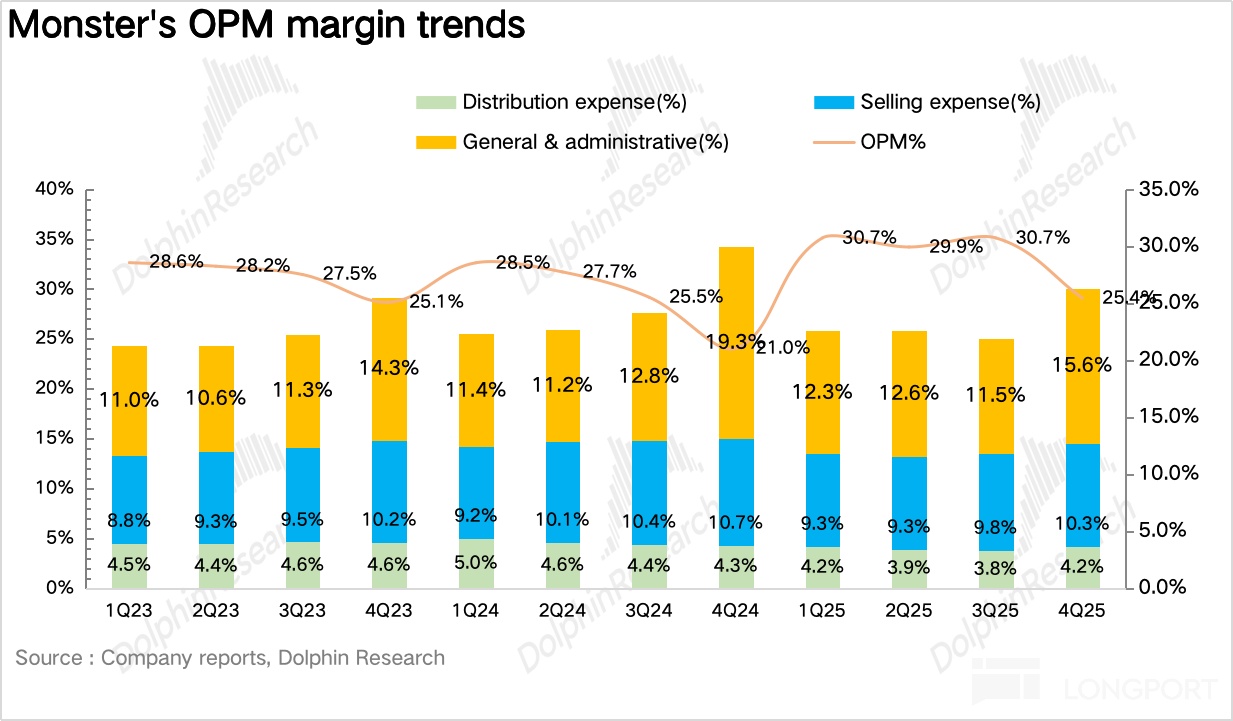
4) Profitability moved higher: Despite higher input costs such as aluminum cans, mix upgrades and modest price increases offset headwinds, keeping GPM broadly stable. On opex, stepped‑up sponsorships in Q4 plus new product support (e.g., Storm) drove a temporary spend uptick, leaving OP slightly below street estimates.
5) Key financials
Dolphin Research view:
Sell‑side houses track Nielsen monthly data and can see category and brand sell‑through. The data show both buyer penetration and purchase frequency continued to improve QoQ in Q4, with Monster’s household penetration in North America hitting a record 33%. As a result, the street went into the print with high expectations for Q4.
Reported metrics broadly matched the high‑frequency reads. Based on call commentary, excluding one‑off items on the expense line (professional services, incentive payouts), operating leverage is still improving, so we see the slight profit miss as reasonable.
The core thesis, detailed in Monster: evolution underway, is that Monster has re‑accelerated innovation and ops in health‑oriented SKUs. This is expanding incremental demand among women and fitness‑focused consumers.
Looking to 2026, a key signal is a major product innovation cycle at Monster:
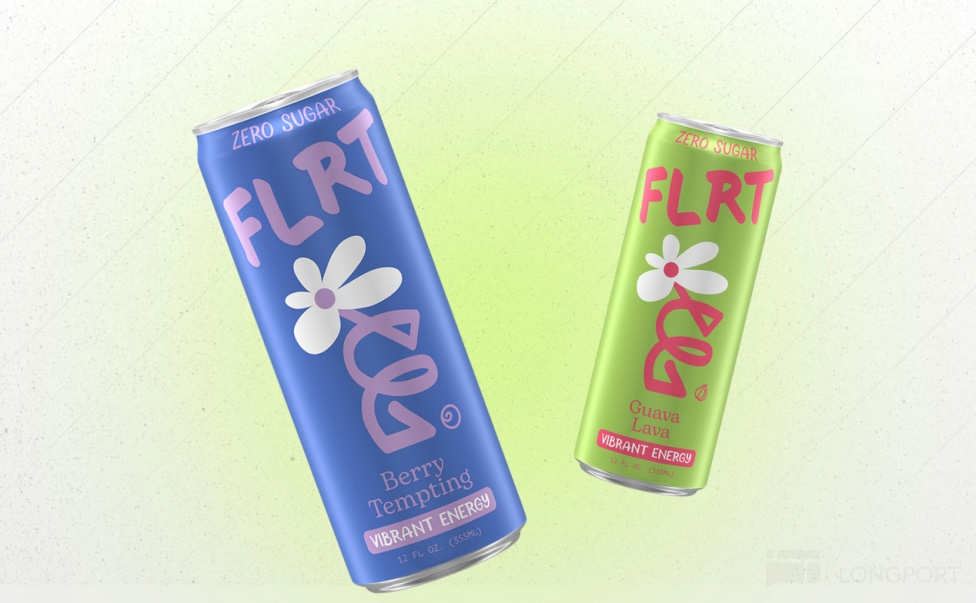
a) FLRT, the most disruptive new line targeting women’s energy, will roll out broadly in Mar 2026 after multiple H2 consumer blind tests. Formulas have been optimized (collagen, immune‑support ingredients) along with a slim can design. By innovation scope, FLRT is comparable to JAVA (coffee + energy, 2012) and Ultra (zero sugar, 2018), representing a big move in a major sub‑category.
In our view, entering the women’s energy lane is not only a precise strike at Alani Nu, but if executed well could further raise household penetration in Monster’s North America home market. Household channel penetration remains a core driver.
b) For intl markets, Monster’s strategic brand Storm will complete a full rebrand in 2026, with reformulated recipes (no artificial colors, zero sugar, low‑cal, natural ingredients, B‑vitamins). It will launch in Europe against Celsius, reinforcing Monster’s health positioning and helping defend share against Celsius in the healthy energy segment.
On valuation, after a ~20% rally since the Q3 print, our model implies ~37x for 2026. Versus our 20% EPS CAGR est. for 2026–2029, that screens elevated. Historically, during the 2012 and 2018 innovation cycles, peak multiple exceeded 40x. If FLRT and other launches scale smoothly, there is further upside potential.
I. Investment framework
Per Monster’s disclosures, revenue growth is split across four segments: the Monster Energy franchise, strategic brands, alcohol, and other. Specifically:
- Monster Energy franchise: The cornerstone and main revenue driver, contributing ~92% of sales, encompassing all beverages under the 'Monster' brand umbrella. Core series include Monster Energy (original), Monster Energy Ultra (zero‑sugar), Monster Rehab (non‑carbonated tea‑based energy), Monster Juiced (juice‑based energy), Java Monster (coffee + energy), and Muscle Monster (protein + energy).
(2) Strategic brands: Primarily brands acquired in the 2015 asset swap with Coca‑Cola, positioned as value or regional brands to complement the core. Key names include Predator (value energy for emerging markets), Relentless (Europe), Mother (Australia/New Zealand), and NOS, among others. This segment contributes ~5% of sales, growing slightly faster than the overall category.
(3) Alcohol: Monster’s newest arena via M&A and in‑house development. Currently small at ~2% of sales and still in incubation and internal restructuring.
(4) Other: Primarily B2B sales by subsidiary AFF (American Fruits & Flavors) of flavors and concentrates to third parties. Note that AFF produces all of Monster’s concentrates and holds the proprietary formulas, a key underpinning of the company’s high GPM.
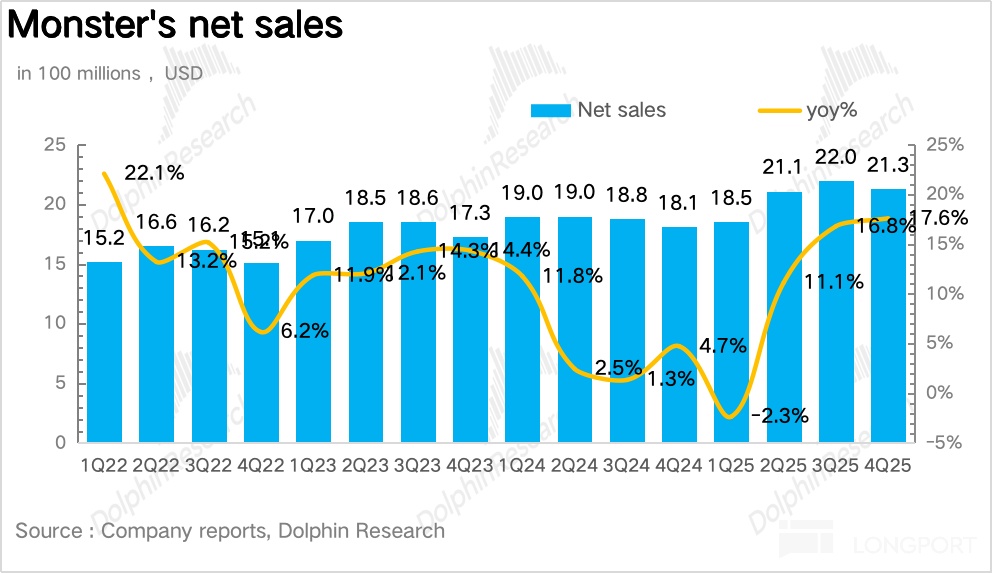
- Fastest quarterly revenue growth in three years
Q4 2025 revenue was $2.13bn, up 17.6% YoY and above consensus. Momentum has re‑accelerated for three straight quarters since Q2, effectively returning to pre‑2023 growth cadence.
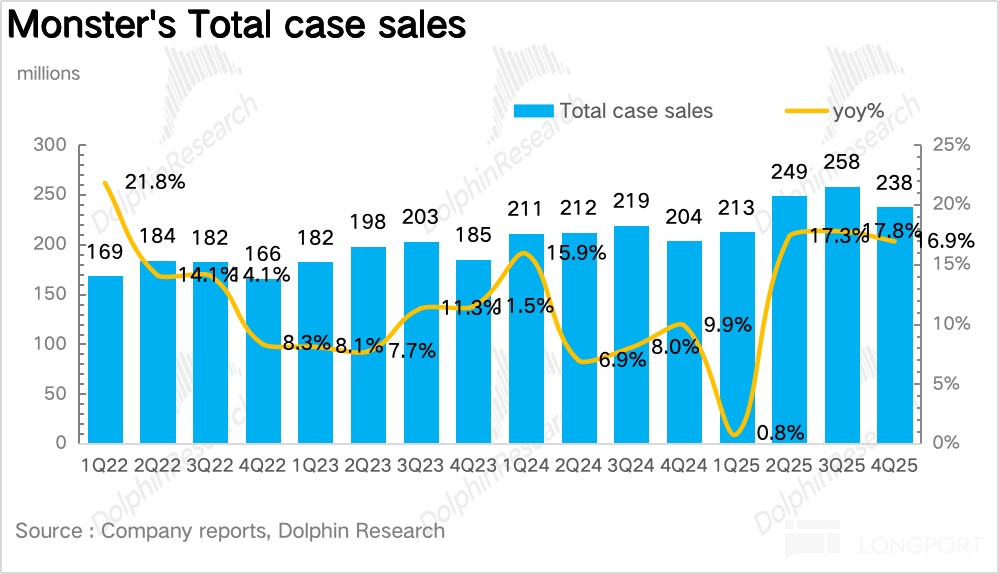
Volume: As the core driver, Q4 case volume reached 240mn, up 16.9% YoY, maintaining the rapid growth seen in Q3. While Q4 is seasonally soft, rising zero‑sugar penetration and a higher intl mix materially muted seasonality. Based on channel checks, Ultra’s share of the core Monster franchise has topped 40%, aided by new flavors (Blue Hawaiian, Vice Guava, Wild Passion).
In addition, the Lando Norris co‑branded SKU, launched in the U.S. in Oct, clearly attracted more younger consumers.
Price: Q4 ASP reached $8.8, +1.1% YoY, turning positive again. To address surging can costs from tariffs, Monster implemented targeted price hikes in North America starting in Nov across sizes and sub‑lines (Avg. +~5%) and reduced promotions. Meanwhile, a higher mix of zero‑sugar, collab, and health‑positioned premium SKUs helped offset lower ticket from a larger intl mix.
III. Intl mix rose further
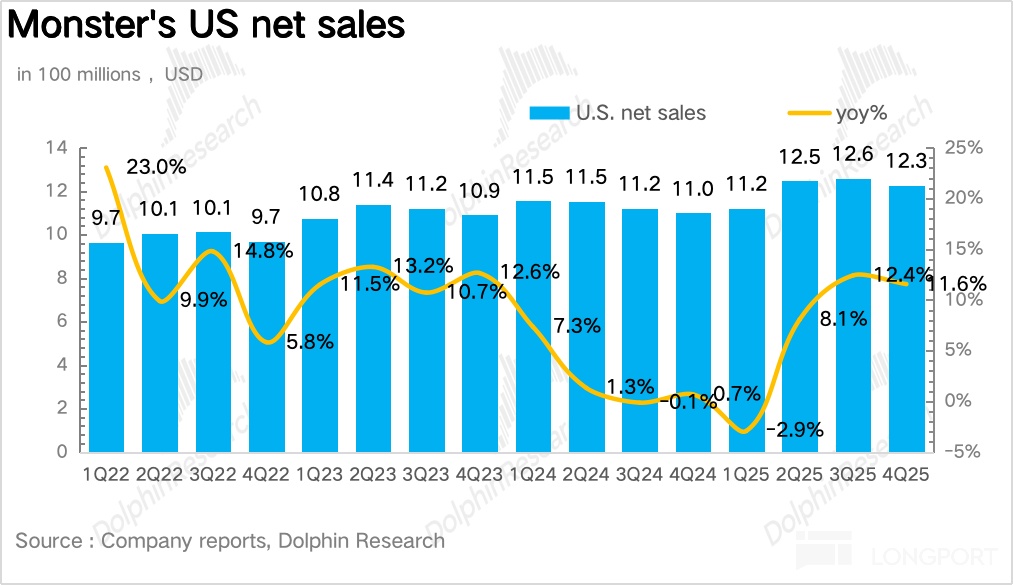
By region, North America delivered $1.23bn, +11.6% YoY. Monster’s North America share ticked up to ~35%, with drivers discussed above.
Intl revenue reached $860mn, +27% YoY, lifting mix to 42.6%. EMEA led on the back of the health‑oriented functional beverage boom. In APAC and LatAm, deeper Coca‑Cola distribution kept widening placement. Based on checks, intl numeric distribution rose from ~82% in Q3 to ~85%, with emphasis on European fuel stations and premium c‑stores in APAC.
IV. Core Monster brand leading the category.
By brand, the core Monster franchise delivered $1.99bn, +19% YoY, gaining 90bps to 93.2% of sales. Ultra’s iterative flavor innovation drew fashion‑ and fitness‑minded female consumers, cementing its role as the primary growth driver, now above 40% of the core.
Storm ran limited pilots in the U.K., Germany, and France in Q4, achieving a 32% repeat rate, setting up the 2026 broad rollout. Reign Total Body Fuel, focused on performance energy, reached 48% gym penetration in APAC/EMEA, +7ppt YoY.
Java (coffee + energy) and Rehab (tea‑based energy) also qualify as health‑tilted lines and likely grew faster than the overall franchise. However, their more niche occasions limit contribution to the total. Other strategic brands rose 6.9% YoY with slower sequential growth, likely due to resource reallocation to the core. NOS/Full Throttle and other high‑sugar lines remain under pressure from zero‑sugar offerings, while alcohol fell 17% amid a hard‑seltzer cooldown.
V. Temporary step‑up in spending
GPM: despite higher aluminum and other inputs, mix upgrades and modest price hikes offset cost inflation, keeping margins stable. Opex: heavier sponsorships in Q4 and launch support for Storm and other new products drove a temporary spend increase, resulting in OP slightly below market expectations.
<End>
The copyright of this article belongs to the original author/organization.
The views expressed herein are solely those of the author and do not reflect the stance of the platform. The content is intended for investment reference purposes only and shall not be considered as investment advice. Please contact us if you have any questions or suggestions regarding the content services provided by the platform.
