


Zhipu: RMB 700mn profit vs. RMB 3.2bn loss? Dream first—fretting over losses is small-minded
A 6x move in a quarter made Zhipu the market’s clear favorite and a model-stock poster child. By contrast, 2H25 results look subdued next to that rally, but does it really matter?
Straight to the point:
I. Revenue: API ARR of $250 mn in Mar, everything else is secondary
Among China’s independent model vendors, $Z.AI(02513.HK) is a pure domestic LLM player, drawing talent from top universities and serving mainly Gov. and SOE-type enterprise clients.
Its on-prem footprint is heavy and delivery is labor-intensive. The market has long worried about renewal risk for such on-prem projects, so before Agents took off, investors were reluctant to assign a high premium.
1) Growth slowed, but the open platform picked up: 2025 revenue was $720 mn, up ~132% YoY, still strong but slower than 160% last year.
With 1H25 already reported, the focus is on 2H25: revenue was $530 mn, up only 99% YoY, showing a clearer deceleration.
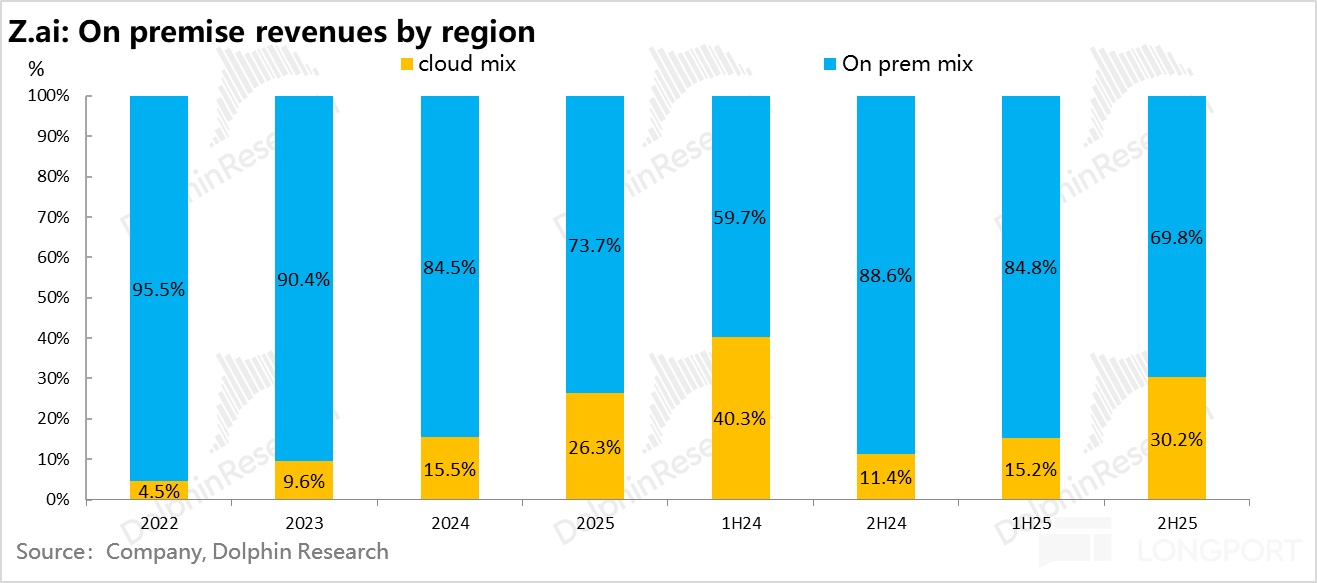
The main reason validates prior concerns: on-prem projects accounted for 80%+ of revenue, but their growth slowed to 57% in 2H25, reaching $370 mn with mix falling to 70%.
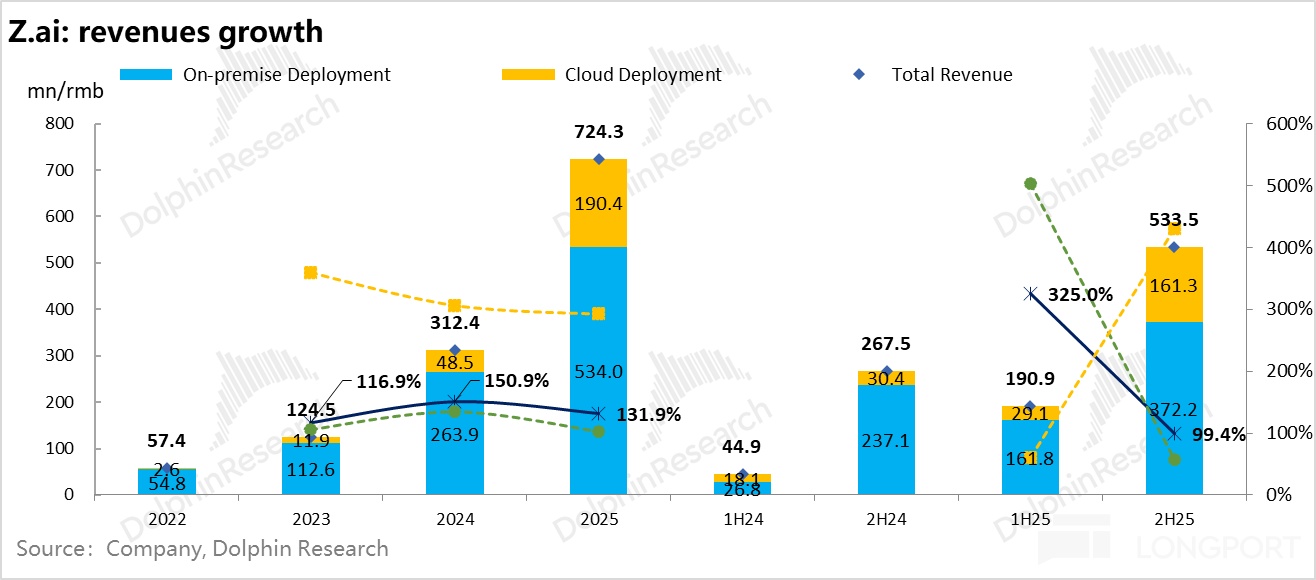
In contrast, the market-favored API and open-platform (cloud) business surged 430% YoY in 2H25 to $160 mn. Full-year API revenue reached $190 mn, roughly in line with MiniMax’s ~$180 mn.More importantly, Zhipu’s ~300% full-year growth outpaced MiniMax’s ~200%, indicating stronger momentum.
This is the core reason for multiple expansion. Model APIs and open platforms had aggressive pricing amid intense LLM competition, weighing on GPM for this stream.
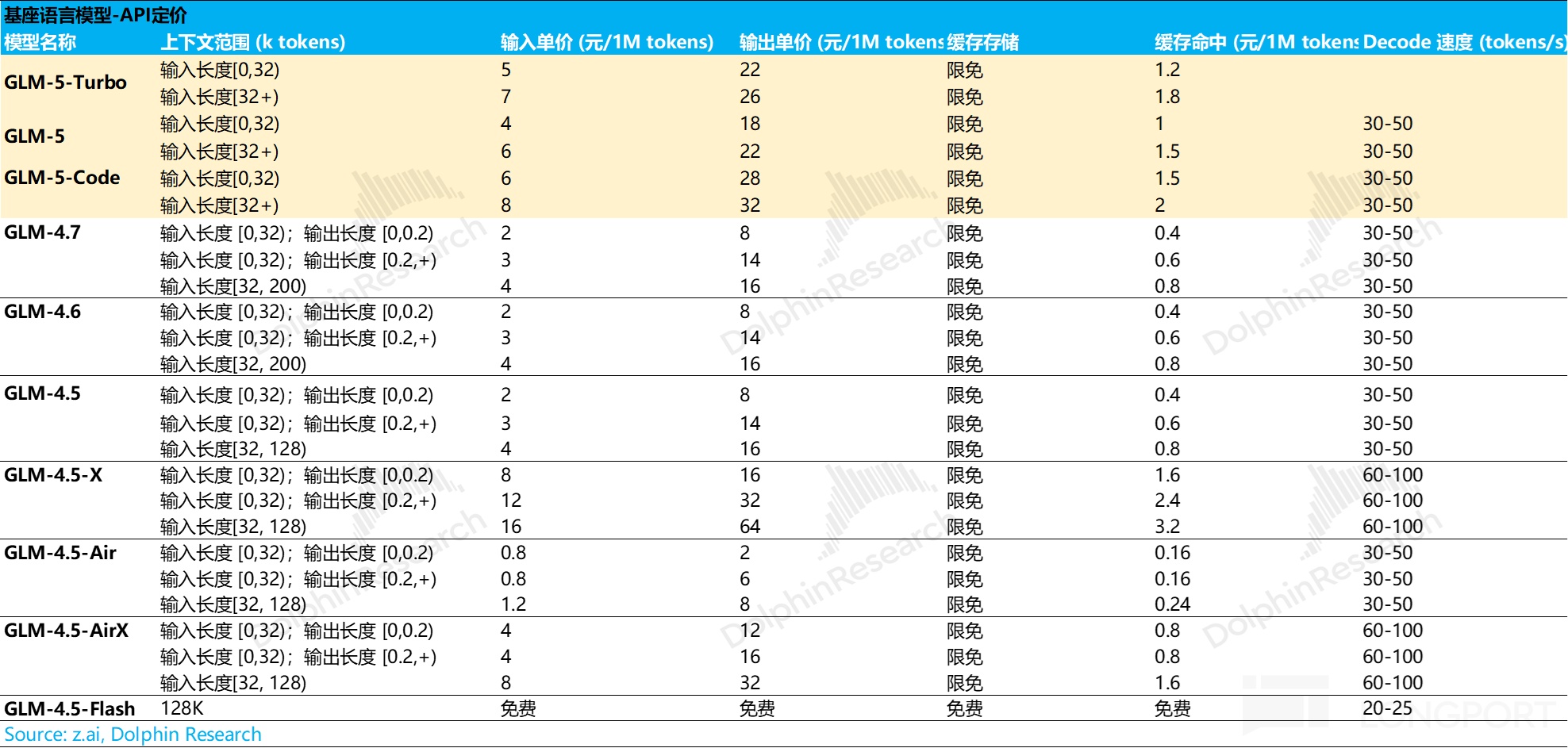
But as this standardized, light-delivery revenue scales, the upside becomes significant. Especially after the company lifted API and subscription prices in Feb, pushing API rates up by 83% within a quarter, making GPM less of a near-term constraint.
Top-line growth is the cleanest proof of token burn and model traction. Even before GLM 5 launched, open-platform revenue accelerated sharply in 2H25, underscoring that Zhipu’s models deliver real capability.
Since the Lunar New Year, Zhipu rolled out three rapid iterations:
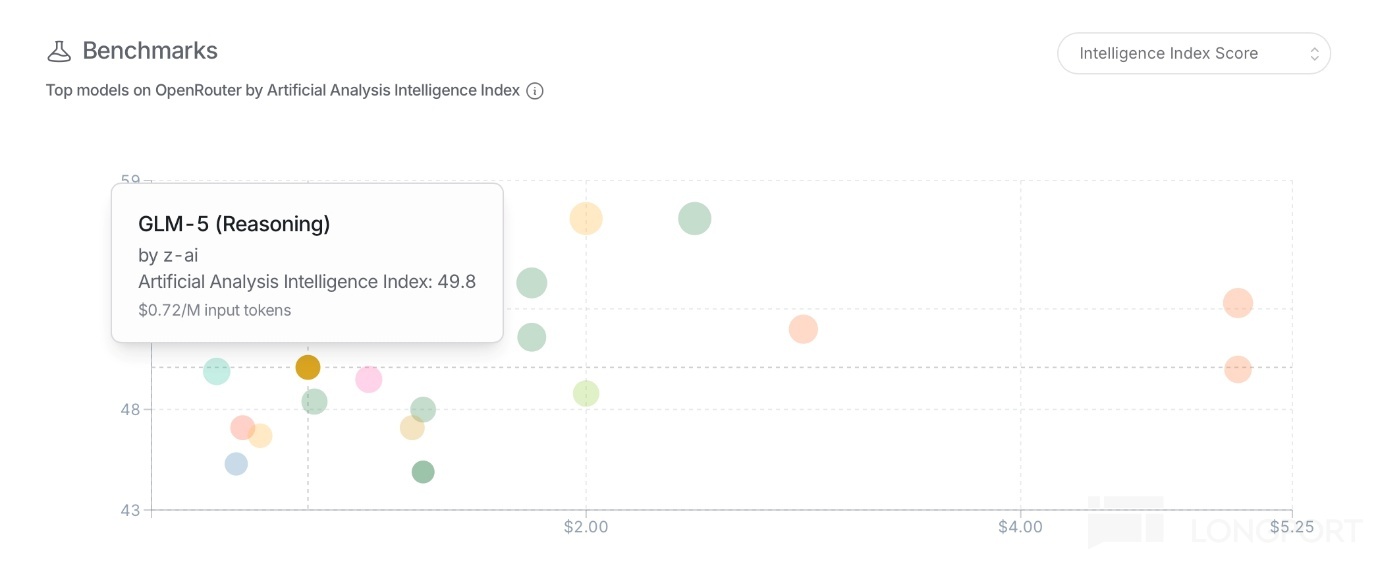
1) Feb 11: launched GLM-5, which topped the open-source ranking on Artificial intelligence’s intelligence index at release.
2) Mar 15-16: within a month, introduced GLM-5-Turbo tailored to the viral Lobster Agent use case, emphasizing tool use, multi-step tasks, complex instruction parsing, and multi-agent workflows.
3) Mar 27: GLM-5.1, a post-training optimized version of GLM-5 focused on coding, opened to all Coding Plan users.
Alongside GLM-5, the company raised prices across subscriptions and APIs. After Turbo, API prices were hiked again, taking API pricing up 83% within one quarter.
On the app side, with Openclaw going viral in China but facing official data security concerns, Zhipu launched a local alternative called AutoClaw. It features one-click deployment and simple setup, supported by token bundles such as 39/35 mn tokens and RMB 99/100 mn tokens monthly passes.
As Agents exploded and AI penetration in IT rose, the stock is up 3.5x since Feb. The driver was a shift in pricing logic and biz. model.With a ‘top-tier model’, the company has been moving from project-based on-prem delivery to cloud APIs, and even after price hikes, it still cites compute shortages, signaling tight demand.
2) Can current-period revenue cover last-gen training spend?
Since foundation models refresh annually, a year’s training spend effectively buys one year of service life. Model economics can be partly gauged by comparing current-year direct/indirect monetization to last year’s training spend.
For Zhipu, model training and R&D staffing are mainly in R&D expenses (about 70%). We use R&D to assess revenue coverage of model investment.
R&D was RMB 2.2 bn in 2024, while 2025 revenue was $720 mn, recouping only ~33% of 2024 R&D. In 2025, R&D rose to RMB 3.2 bn; 2026 revenue would need to double to ~$1.4 bn for coverage to improve to ~45%, broadly in line with MiniMax.
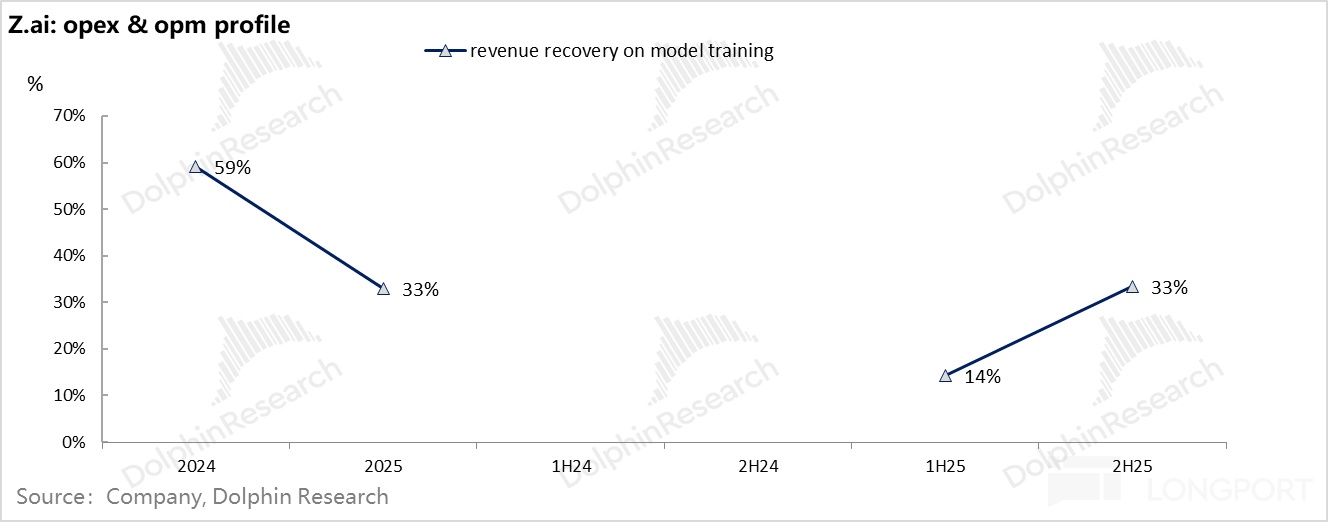
On the earnings call, mgmt. disclosed that cloud API ARR in Mar reached $250 mn (~RMB 1.75 bn), above our expectations.
This matters: with RMB 3.2 bn of actual 2025 spend, and demand constrained by compute undersupply, annualized revenue already covers ~55% of R&D. The model is on a clearly improving commercial trajectory.
For comparison among Chinese peers that disclose ARR, Keling, focused on higher-priced video models, had >$300 mn ARR in Jan. However, amid competition, its full-year guide was only in line with Jan’s annualized run-rate.
MiniMax’s Feb ARR was $150 mn (likely including some non-API recurring revenue). Zhipu looks superior on both ARR slope and absolute level.Notably, Zhipu’s accelerating ARR comes with higher pricing power and token/compute undersupply, suggesting demand is not fully unleashed.
II. GPM still in a growing-pain phase?
Unlike MiniMax’s dual-track monetization across to-B and to-C, Zhipu is almost entirely to-B, with on-prem deals mostly for Gov./SOE-type large accounts.
Post-DeepSeek, it is much harder to charge for base models, shifting monetization to local adaptation and fine-tuning in on-prem deployments. This is manpower-heavy (headcount rose from 883 in 1H25 to nearly 1,100), and the downsides became more evident in 2H25.
2H25 GP was only RMB 200 mn, up just 30% YoY. Within that, on-prem revenue grew 57% but GP rose only 5%.
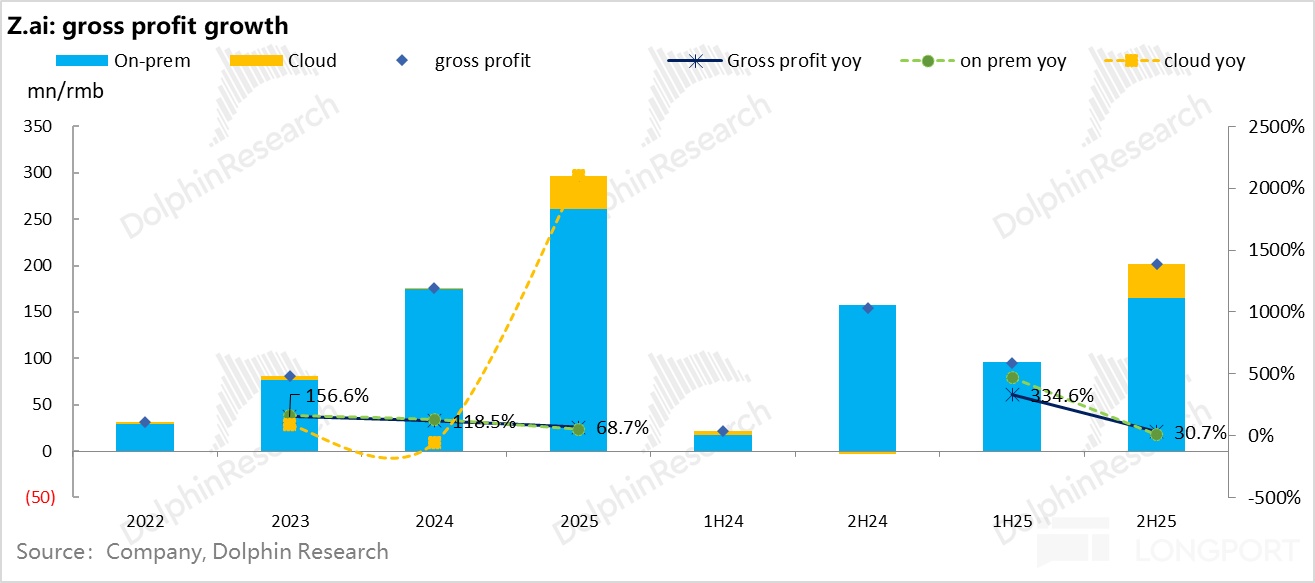
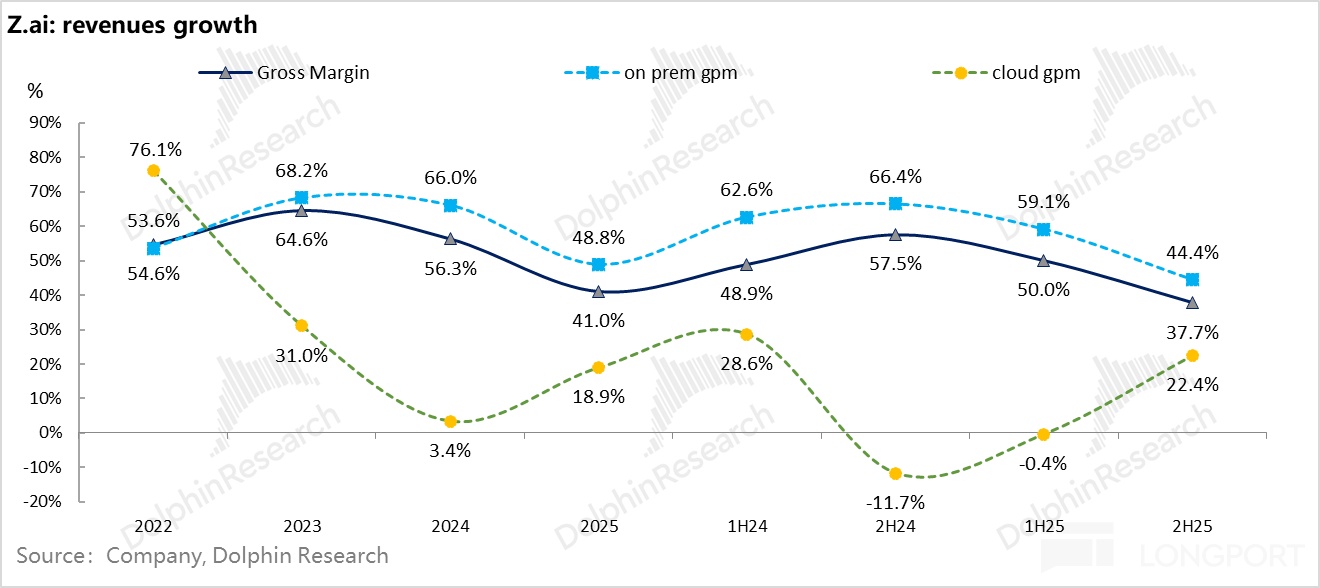
The reason is the heavy resource intensity of on-prem. Scaling revenue does not deliver strong operating leverage, and on-prem GPM fell from ~60% to 44%, trending lower as revenue grows.
By contrast, although API started with very low margins due to competition, it enjoys better scale effects. With 2H25 revenue up 430%, API GPM improved from near-zero to 22%.
The mix effect was negative: slower growth and falling GPM in the high-margin on-prem stream plus rapid growth and improving GPM in the low-margin API stream. Company-level GPM in 2H25 fell to a record low of 38%, well below market expectations.
III. $720 mn revenue, RMB 3.2 bn loss: does the dream trump the P&L?
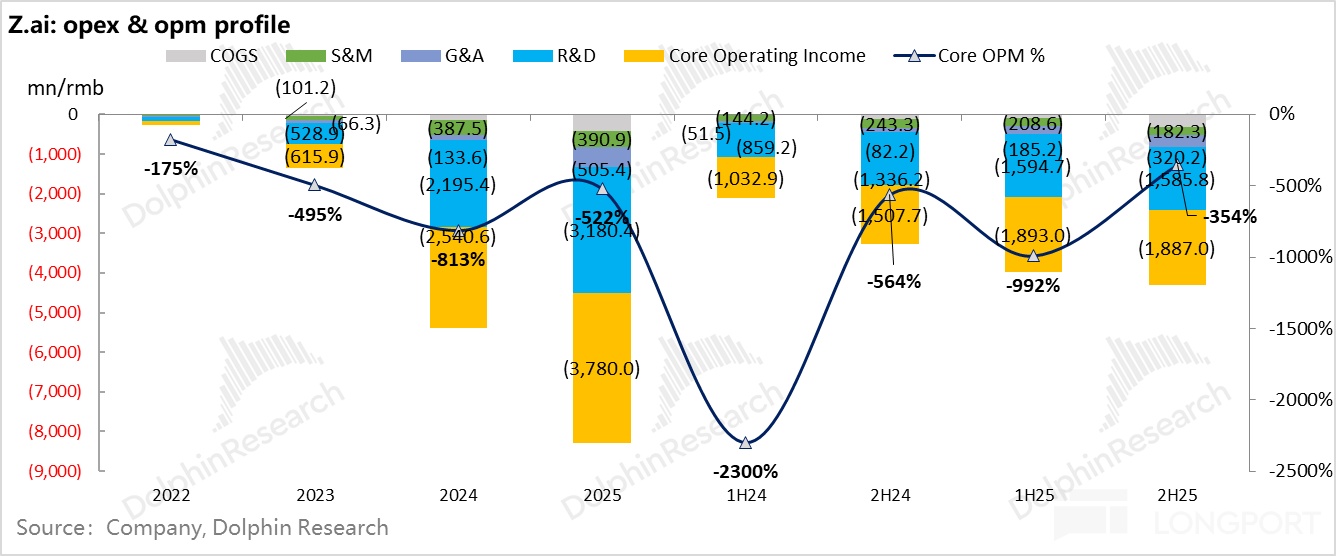
A 38% GPM doesn’t look terrible, but it excludes the biggest cost item in the LLM start-up model: training spend booked under R&D.
Typically, R&D is 3-5x revenue. As long as model training is on a fast iteration cadence, breaking even is almost impossible (cf. reasons here).
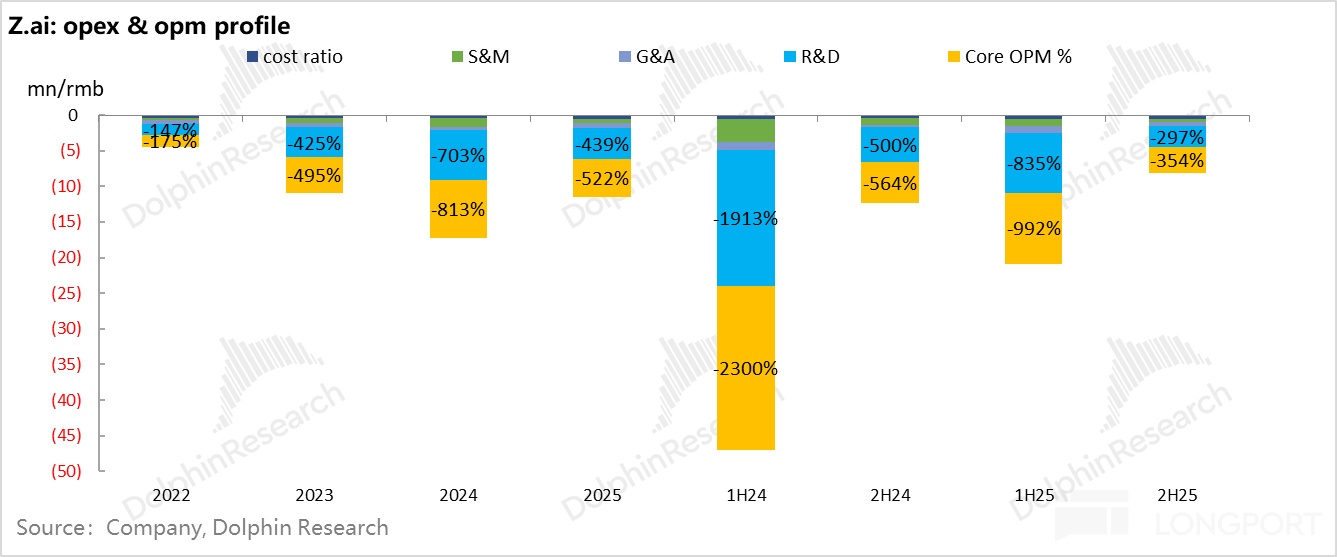
In 2H25, Zhipu’s R&D (mainly training) was nearly RMB 1.6 bn, versus revenue of RMB 530 mn; R&D was ~3x revenue.
Against this, other opex moves are secondary. G&A rose to RMB 320 mn, up ~290% YoY, relatively fast; but like MiniMax, Zhipu’s S&M fell 25% YoY to RMB 180 mn in 2H25 (client acquisition driven by model capability rather than marketing).
All in, 2H25 OP loss was RMB 1.9 bn after GP and opex, for a -354% OPM. Ex-SBC, OP loss was RMB 1.5 bn, slightly better than RMB 1.7 bn+ in 1H25.
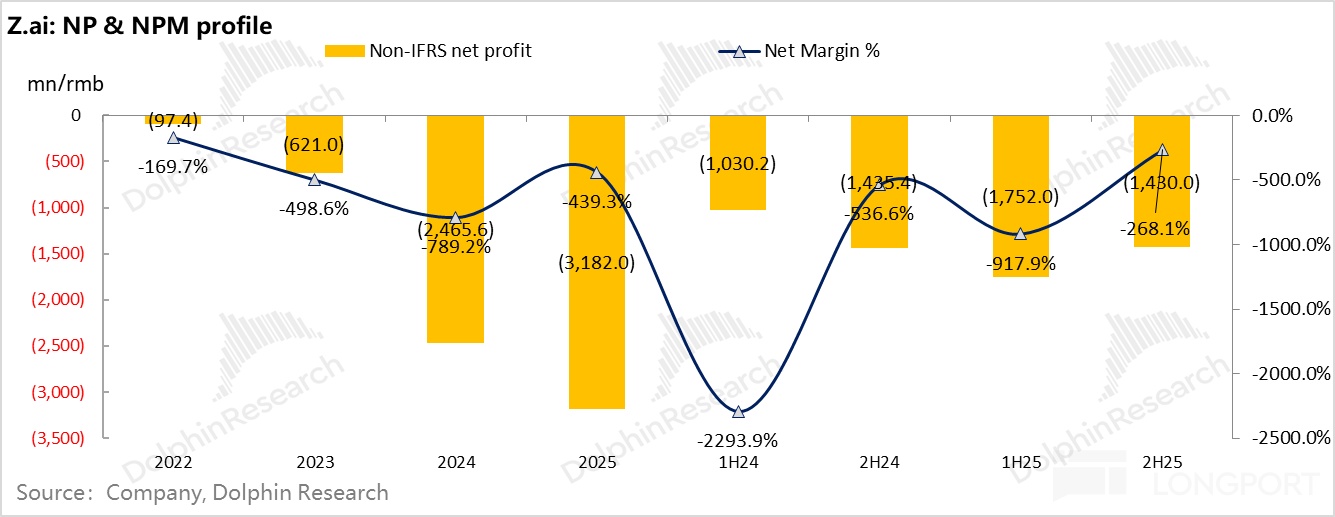
For the full year, adj. net loss was RMB 3.2 bn, a -439% margin (loss at more than 4x revenue), but it is narrowing quickly.
The improvement is more visible in 2H25: adj. net loss was RMB 1.4 bn vs. RMB 0.53 bn revenue, a -268% margin.
Dolphin Research view: AI is hot, Zhipu even hotter?
Among the two listed domestic LLM leaders, Zhipu started with a slightly weaker reputation than MiniMax, but delivered a stronger punch within just one quarter.
The key difference, in our view, is that Zhipu’s model scores higher on intelligence indices. In to-B productivity, intelligence scarcity is the core asset, and the foundation for token pricing power.
Investors still value models primarily by intelligence scarcity, and then by token volumes and revenue on top of that.
As a listed company, funding is not a near-term concern. With APIs repriced higher and tokens still in short supply, financing appears even easier.
The post-holiday stock surge also shows the market has re-rated Zhipu from a discounted on-prem AI provider toward a to-B cloud model akin to Claude’s overseas comp set.
After a 6x move in one quarter, the question is current ARR and its slope. The company clearly knows what the market wants — it opened the call noting that API ARR reached $250 mn in Mar and capacity sold out easily amid compute constraints.
This framing invites comparisons with global peers’ growth and valuation curves. After crossing the intelligence ‘G-spot’, Anthropic grew revenue from $100 mn to $1 bn in one year, and from $1 bn to $10 bn in another.
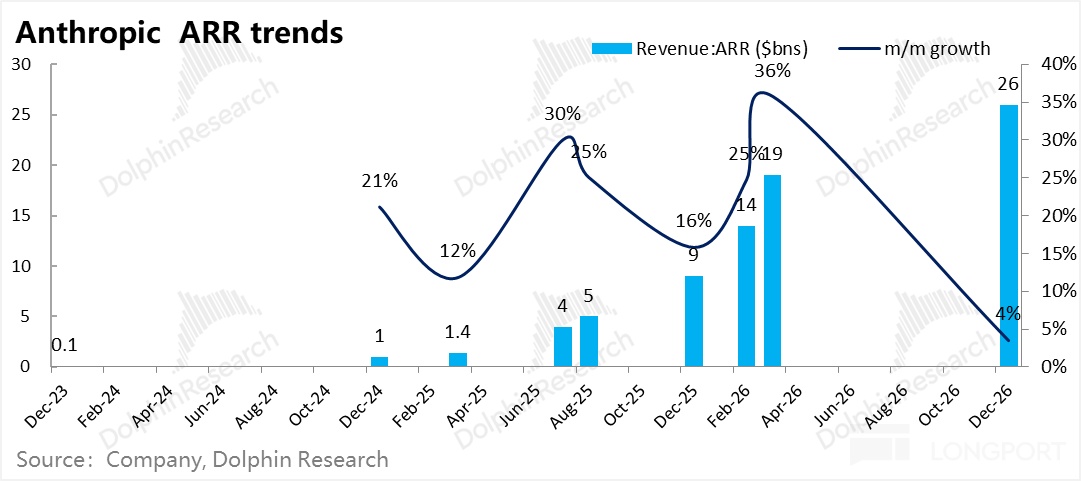
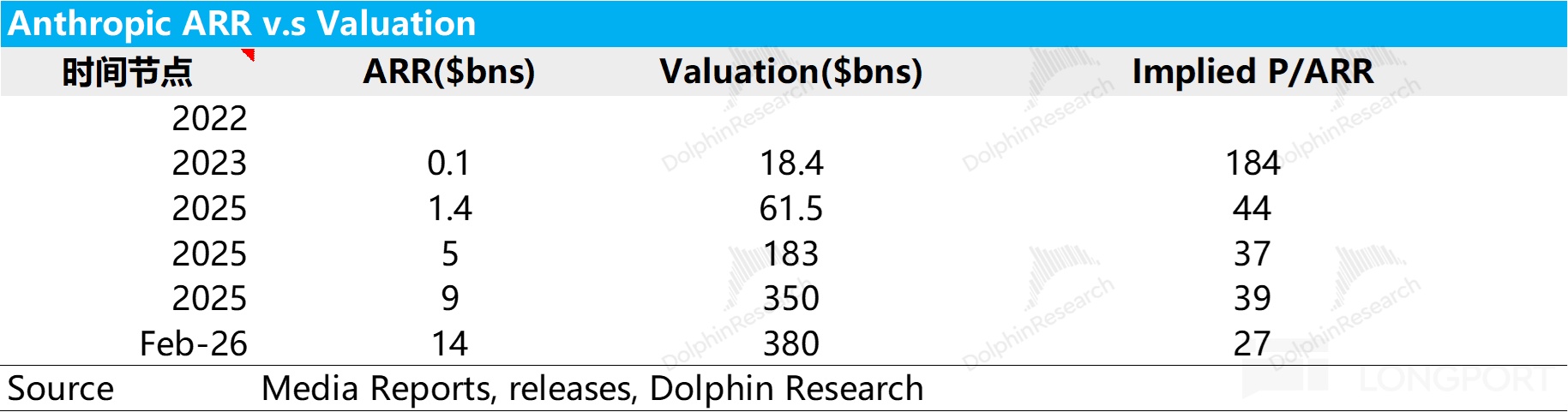
So if Zhipu follows a similar curve and hits $1 bn revenue in a year, is there more upside to valuation?
As a reference, when Anthropic’s annualized revenue was ~$1.4 bn, its latest primary-round valuation was ~$61.5 bn.
Today, Zhipu’s market cap is ~$40 bn. A push toward ~$60 bn still hinges on ARR growth and its slope, which directly quantify model intelligence and market traction.
At least for now, Zhipu’s drive appears even stronger than MiniMax’s.
<End>
Related reading:
‘Bleeding at -360% and still a market favorite? MiniMax deep-dive’
‘Sky-high valuation: MiniMax, bubble or glimpse of the future?’
‘MiniMax vs. Zhipu: LLMs, compute intensity and funding endurance’
Risk disclosure and disclaimer:Dolphin Research Disclaimer and General Disclosures
The copyright of this article belongs to the original author/organization.
The views expressed herein are solely those of the author and do not reflect the stance of the platform. The content is intended for investment reference purposes only and shall not be considered as investment advice. Please contact us if you have any questions or suggestions regarding the content services provided by the platform.
