


 Rate Of Return
 Total Assets
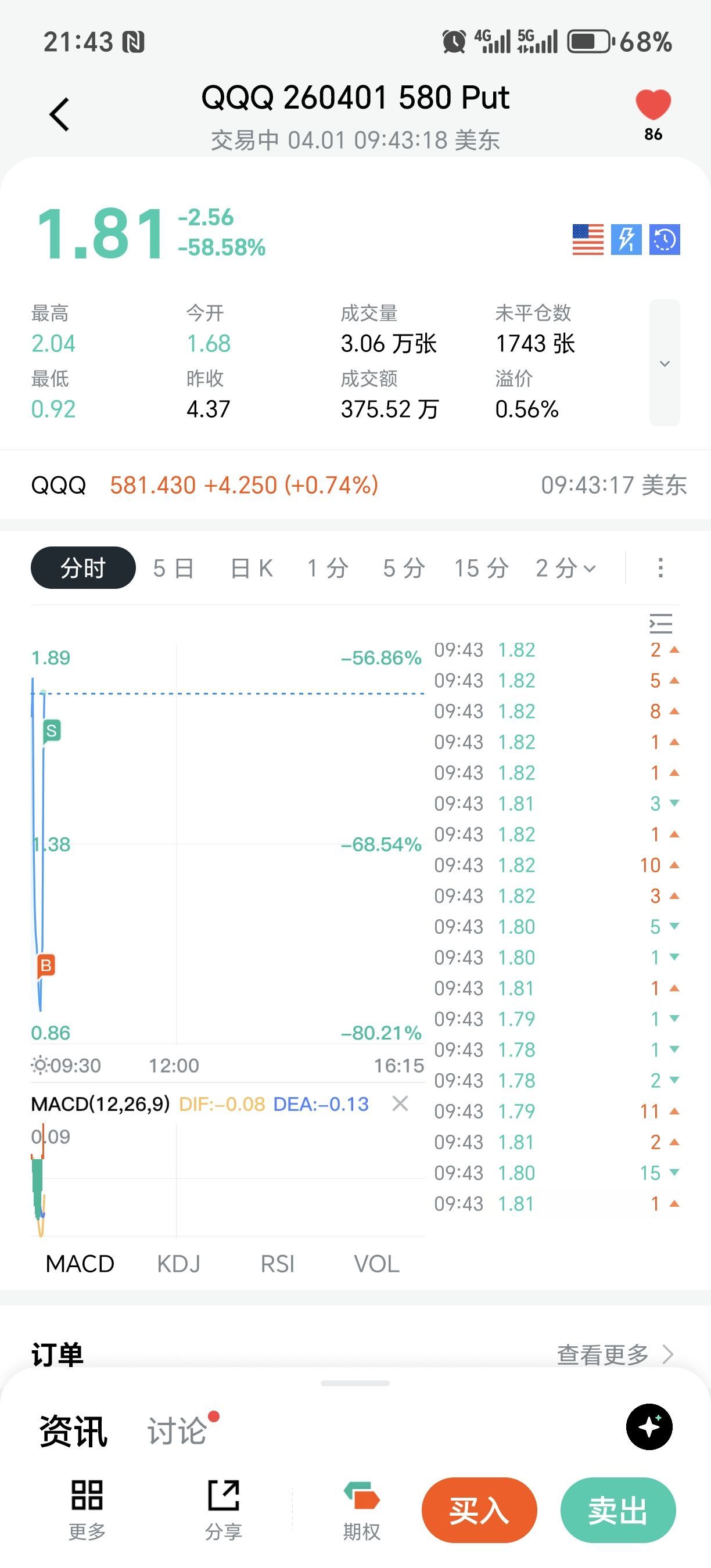
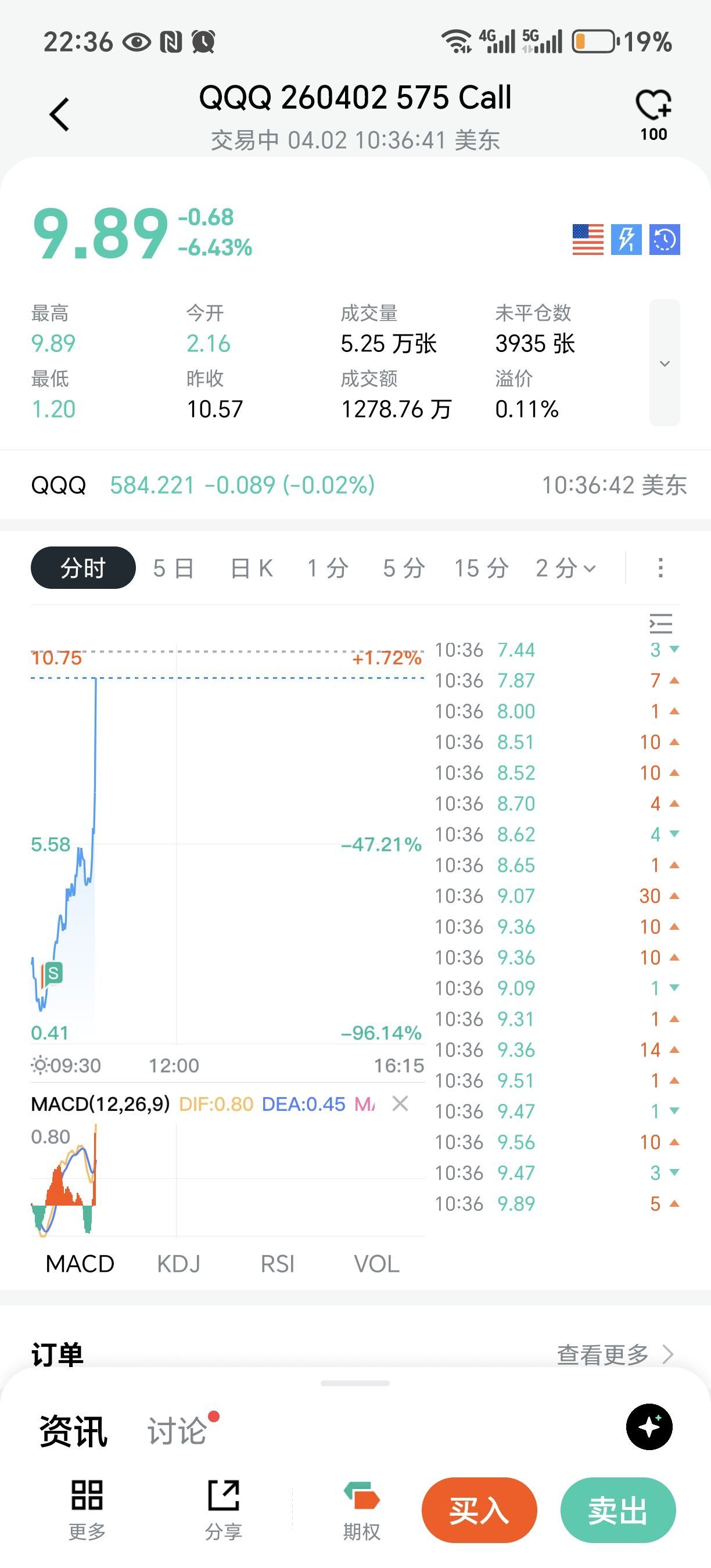
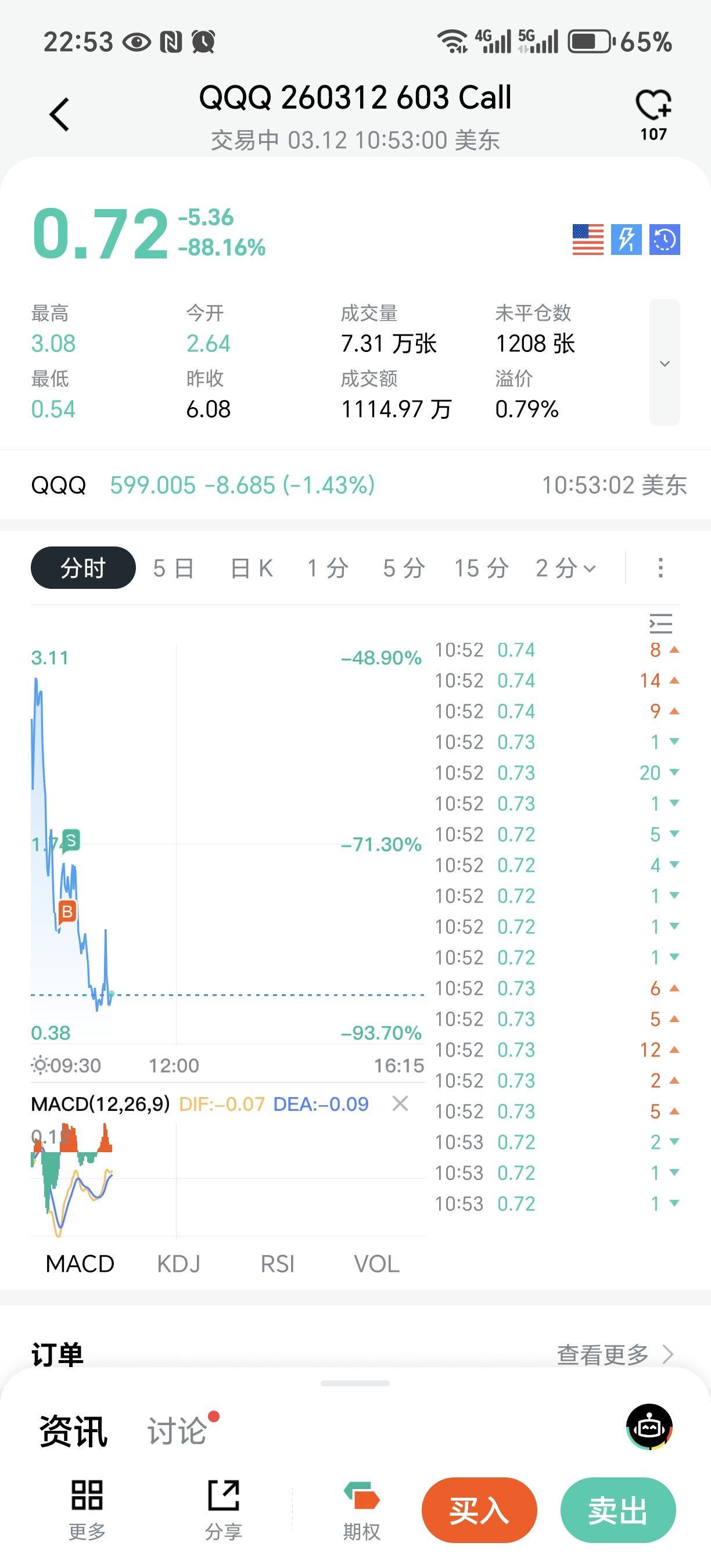
I've been refining a set of QQQ zero-day options morning trading strategies recently: only two trades within 60 minutes, go long on gap down, go short on a surge.
Recently, I've been reviewing my QQQ 0DTE trades and slowly clarifying my thought process.
My style is quite clear:
- Only trade within the first 60 minutes after the market opens.
- Do a maximum of 2 trades.
- If there's a significant gap down, prioritize finding call options to catch an oversold bounce.
- If there's a rally and then a pullback, prioritize finding put options to catch the first wave of decline.
- Most profits and losses are controlled within 30%-50%, in and out quickly.
This method is not about chasing trends in essence, but about catching the first wave of mean reversion after the morning's emotional overreaction.
I used to trade more casually, relying mostly on market feel. Recently, I've been deliberately turning it into a clearer framework. Before the market opens each day, I first mark a few key levels:
- Yesterday's high
- Yesterday's low
- Yesterday's closing price
- Pre-market high
- Pre-market low
- The most recent obvious support zone
- The most recent obvious resistance zone
- Nearby whole and half-integer levels
For example, levels like 570, 572.5, 575, 577.5, 580 are often very useful on QQQ, because a lot of short-term capital, resting orders, and option strikes are concentrated in these areas.
My biggest takeaway right now is:
Support and resistance are not precise points, but rather "reaction zones."
That is to say, it's not that 576.00 is the only resistance. Often, the entire zone from 575.8 to 576.4 should be viewed as a whole. After the price enters this zone, what you need to observe is not "has it reached it?" but "how is the market reacting here?"
Now, when I judge whether a level is tradable, I mainly look at three things:
- Has the price already entered the support or resistance zone?
- After reaching this zone, is it quickly bought up, or is it directly broken through?
- Are there any breaking news events rewriting the original technical structure?
I've felt this point particularly deeply recently. Sometimes the technical level is judged correctly initially, but a piece of news comes out during the session, and the original resistance or support level directly becomes invalid. If you stubbornly stick to the technicals, you're more likely to get hurt.
My understanding of "holding firm" and "breaking down firmly" is also becoming simpler:
Holding firm on the upside:
- After breaking out, it doesn't immediately fall back.
- It pulls back but doesn't break.
- 2-3 consecutive 1-minute candles stay above it.
Breaking down firmly on the downside:
- After breaking down, it doesn't immediately bounce back.
- It tries to bounce but can't get back above.
- 2-3 consecutive 1-minute candles stay below it.
In simple terms:
- If it can stay above after going up, that's called holding firm.
- If it can't come back after going down, that's called breaking down firmly.
The biggest help this framework gives me is not making every trade profitable, but giving my trading more rhythm and making it less likely to become chaotic.
Especially when trading QQQ 0DTE, I feel the easiest way to lose money is often not misjudging the direction, but:
- Randomly opening positions in the middle chaotic zone.
- Stubbornly trading against the technicals even when there's breaking news.
- Turning a left-side test trade into a trend trade by holding on.
- Immediately and emotionally reversing a position after one losing trade.
So now my rules for myself are very clear:
- Don't rush in during the first 1-2 minutes after opening.
- Observe for 3-5 minutes after the open.
- Maximum of two trades within 60 minutes.
- Take profit when the target is reached.
- Stop loss according to the rules.
- Don't turn a test trade into a hold-on trade.
This method is still being refined. It's not a mature system, but it's at least much clearer than before when I was "trading randomly based on feeling."
The biggest fear in trading QQQ 0DTE is not misjudging, but trading chaotically.
Especially randomly opening positions in the middle chaotic zone, trading against the news, and turning test trades into trend trades.
This method is still being refined, and I welcome discussion.
Do you guys lean more towards left-side or right-side trading for QQQ 0DTE?
The copyright of this article belongs to the original author/organization.
The views expressed herein are solely those of the author and do not reflect the stance of the platform. The content is intended for investment reference purposes only and shall not be considered as investment advice. Please contact us if you have any questions or suggestions regarding the content services provided by the platform.
