


RKLB: SpaceX's most dangerous rival?
Rocket Lab: SpaceX's most formidable rival?
In orbital launch, $Rocket Lab(RKLB.US) is among the few players that can directly challenge SpaceX. The story extends beyond launch: Rocket Lab has also built leading capabilities in satellite manufacturing and constellation deployment. How did Rocket Lab develop the means to take on the incumbent, where is the runway from here, and what are the key swing factors? This report breaks it down.
Main text:
I. What does Rocket Lab do?
In short, Rocket Lab operates in two core areas: launch services and satellite manufacturing & services. These are not siloed, but tightly integrated. The company offers an end-to-end solution spanning satellite manufacturing, launch to orbit, and even on-orbit operations.
First, a look at Rocket Lab’s key products:
(I) Electron lays the foundation; Neutron aims at SpaceX
1) Electron, a small launch vehicle, competes with SpaceX’s Falcon 9 through differentiation
Timeline: Rocket Lab started developing the Rutherford engine for Electron in 2013. Electron reached orbit on its second flight in 2018. That five-year cycle established the program.
Figure: Electron key specs
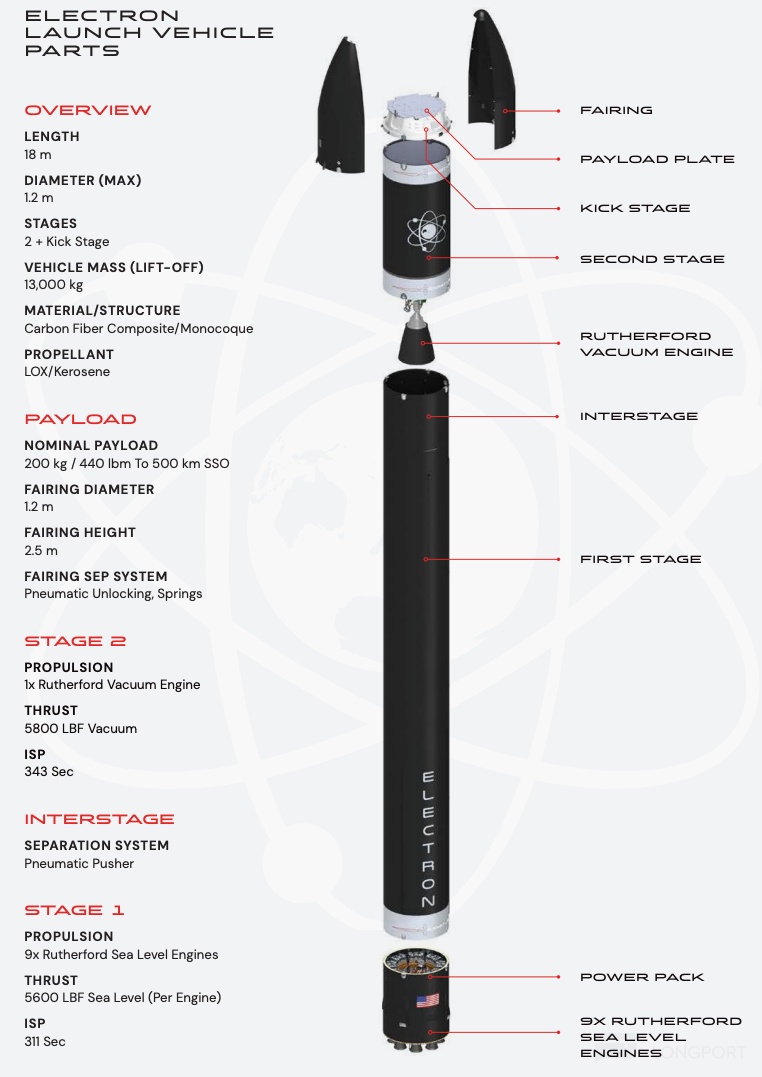
Source: Electron Payload User's Guide, Dolphin Research
Compared with SpaceX’s workhorse Falcon 9, the difference is akin to a bus vs. a taxi. Falcon 9 maximizes low cost per kg: it is first-stage reusable and flies multi-satellite rideshares (LEO lift ~17.5t in reusable mode), spreading fixed costs across many payloads. The trade-off is flexibility, as individual satellites must conform to a shared mission profile. Electron’s LEO payload is only ~300 kg, generally flying one satellite at a time. The advantage is mission flexibility and dedicated access for smallsats.
As such, Electron and Falcon 9 compete via segmentation, filling a market gap. Electron also trialed first-stage recovery via helicopter catch, but after a failed attempt, Rocket Lab discontinued that approach.
2) Electron showcases Rocket Lab’s distinctive design choices
(1) Unlike Falcon 9, Rutherford uses an electric pump-fed cycle, with lithium batteries driving electric motors to power turbopumps. This simplifies architecture and suits small launch vehicles that need compact systems and lower drive power. (2) Rutherford’s major components are fully 3D-printed, taking additive manufacturing further than SpaceX. Electron also extensively uses carbon fiber, leveraging its strength-to-weight benefits where small launchers have higher structural mass fractions and lower absolute strength demands.
3) Neutron takes direct aim at Falcon 9
Building on Electron’s success, Rocket Lab unveiled Neutron in 2021, a direct competitor to Falcon 9. Why pivot from a differentiated small-launch niche to head-on competition? We see three reasons: (1) The small-launch market is limited in size and often uncompetitive on cost for commercial customers. (2) Capabilities and assets accumulated via Electron and satellites give Rocket Lab a credible base to enter the medium-class segment. (3) Neutron need not beat SpaceX outright. U.S. Gov. and military will not tolerate a single-vendor monopoly in launch. With Falcon 9 lacking real peers, a functioning Neutron should find ready demand.
Figure: Neutron overall architecture
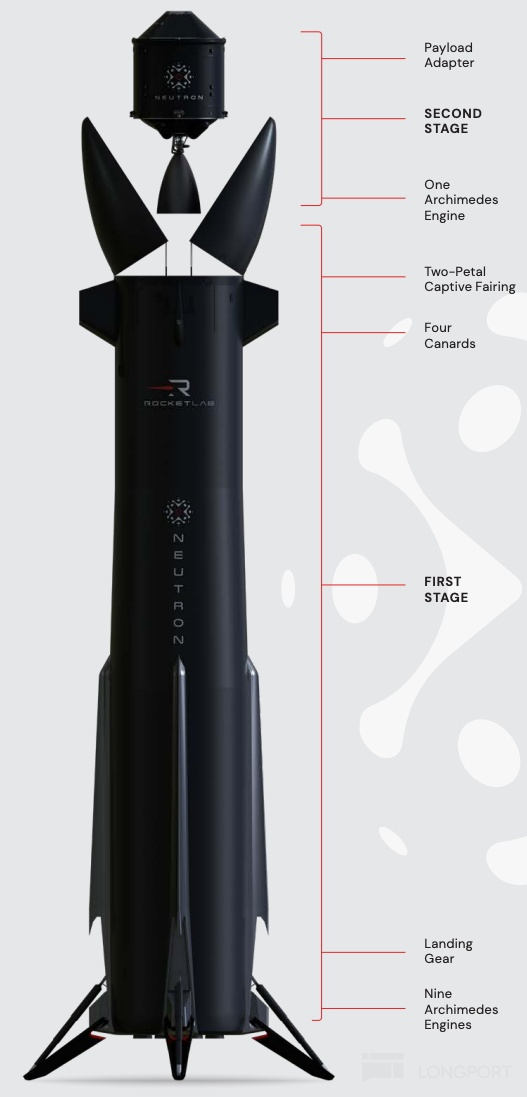
Source: Neutron Payload User's Guide, Dolphin Research
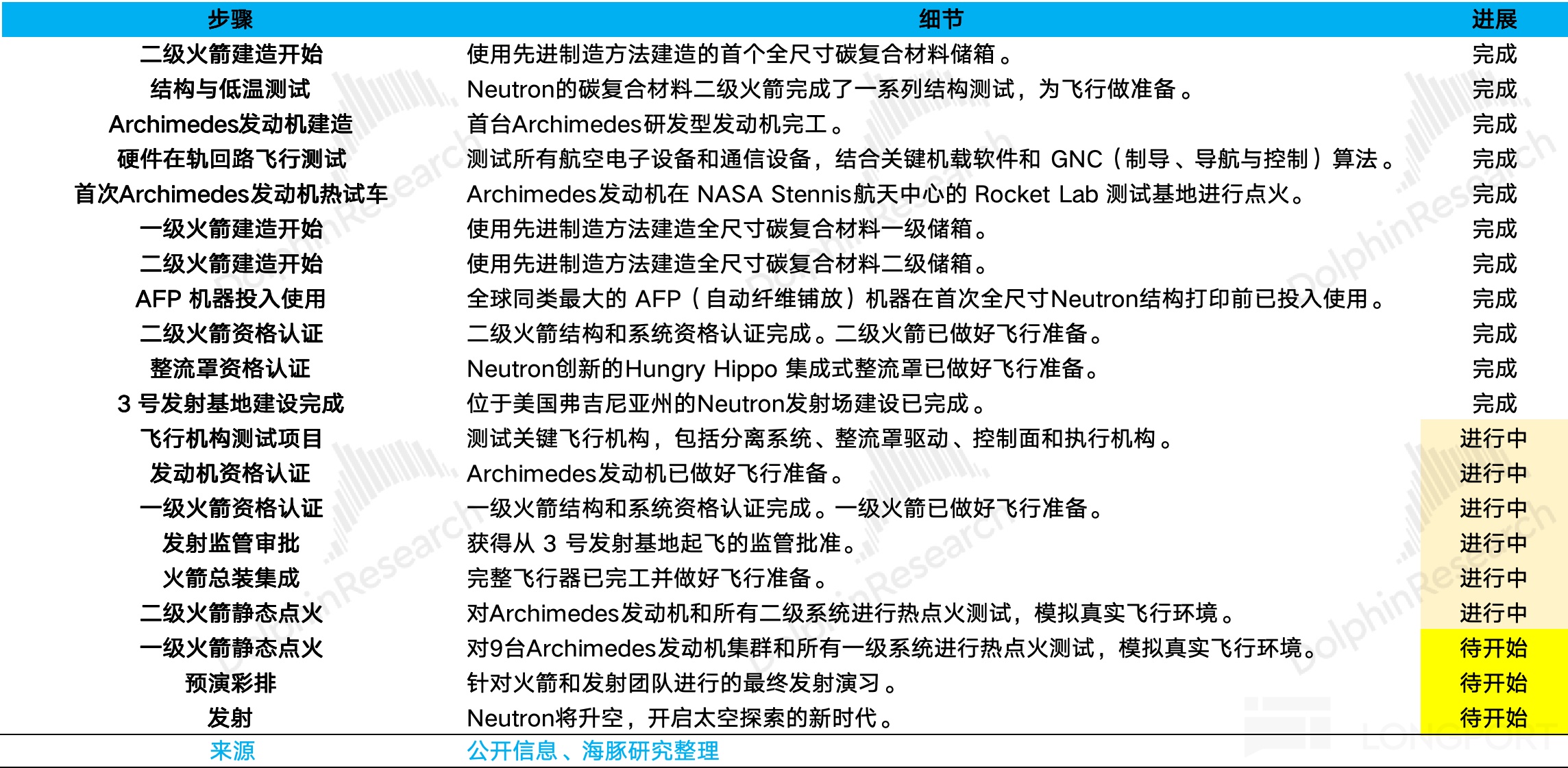
Before first flight, a launcher runs through subsystem tests (engine firings, structural static/dynamic tests, electrical integration), environmental qualification (vibration, acoustics, thermal vacuum), vehicle-level tests, and full wet dress rehearsals. The most critical gates are engine hot-fires, structural qualification, and vehicle integration testing. Neutron’s Archimedes engine has completed multiple hot-fires, and most materials- and component-level structural tests are done, with the launch pad largely complete.
Rocket Lab had targeted a maiden launch in Q2 2026. In Jan 2026, a first-stage tank burst during a proof test due to hand layup defects at a supplier, prompting a shift to automated fiber placement (AFP) for all layups. AFP is a mature in-house process for Rocket Lab. The current schedule guides to a first launch in Q4 2026.
Rocket Lab’s disclosed Neutron progress milestones are below:
While Neutron targets Falcon 9, its technical approach differs in key ways: (1) The integrated fairing, dubbed ‘Hungry Hippo,’ stays attached to the first stage, opens to release the second stage, then returns with the booster. This should boost fairing recovery rates and cut refurbishment cost. (2) Neutron’s second stage sits inside the fairing and does not require a heavy, load-bearing outer airframe, allowing a smaller, lighter stage and pushing more mass and cost into the first stage to maximize reuse-driven cost dilution.
Figure: Neutron ‘Hippo mouth’ fairing concept
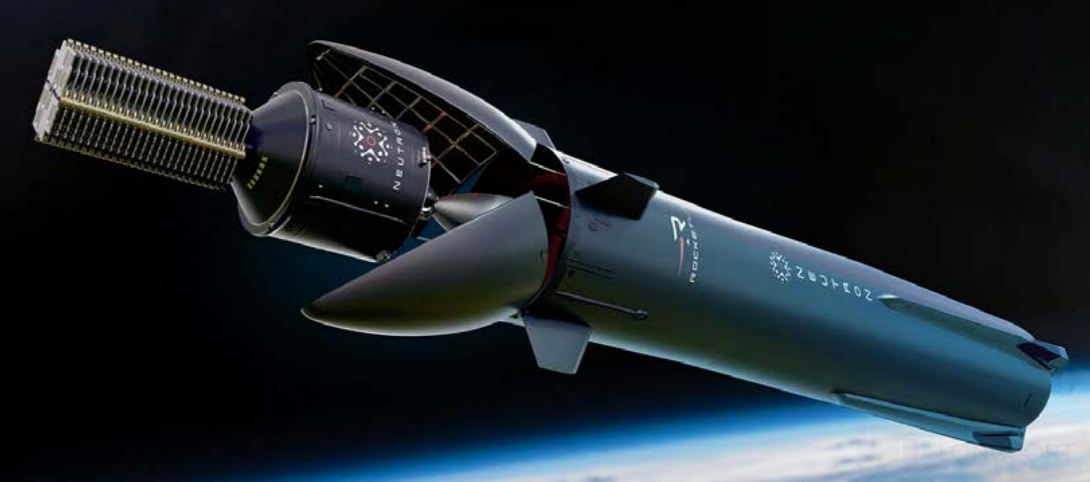
Source: Neutron Payload User's Guide, Dolphin Research
4) Vertical integration taken to the extreme
In launch vehicle manufacturing: (1) In-house engines: both Rutherford and Archimedes are designed, built, and tested by Rocket Lab. (2) In-house primary structures: Rocket Lab operates its own carbon-fiber fabrication and leads in AFP processes. (3) In-house GNC cores, flight-control algorithms, and software.
5) Although born in launch, satellites now drive the bulk of revenue
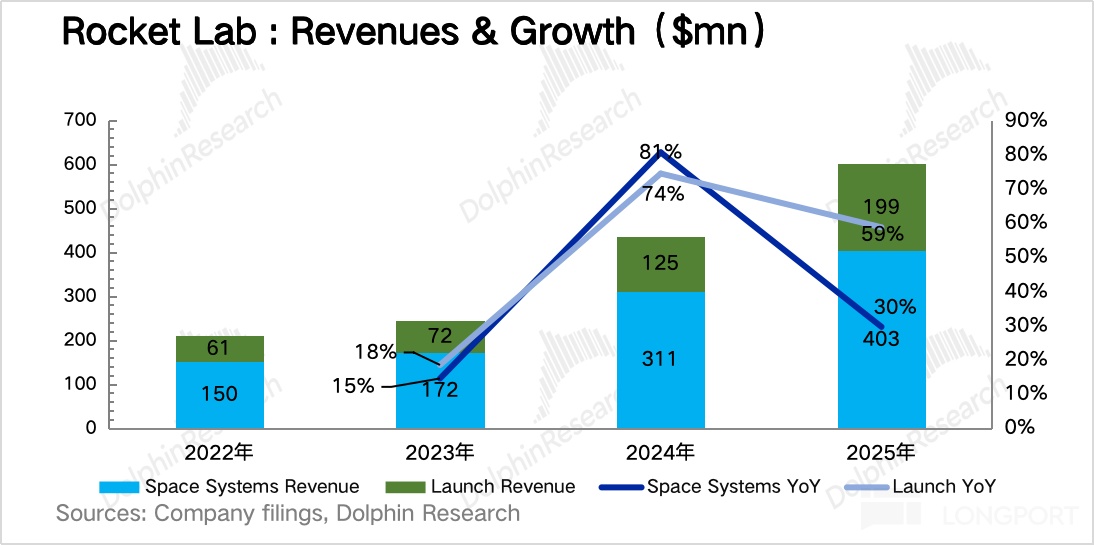
(1) Standardized satellite platforms Beyond rockets, Rocket Lab has built mature satellite capabilities via integration across the value chain and developed the Photon platform to deliver turnkey satellites. Photon provides power, propulsion, ADCS, and thermal control modules off the shelf, essentially everything except the mission payload. Think of Photon as a satellite with an ‘empty seat.’ Customers just slot in the payload—cameras, scientific instruments, etc.—and go. Photon supports EO, remote sensing, IoT, and even deep-space missions.
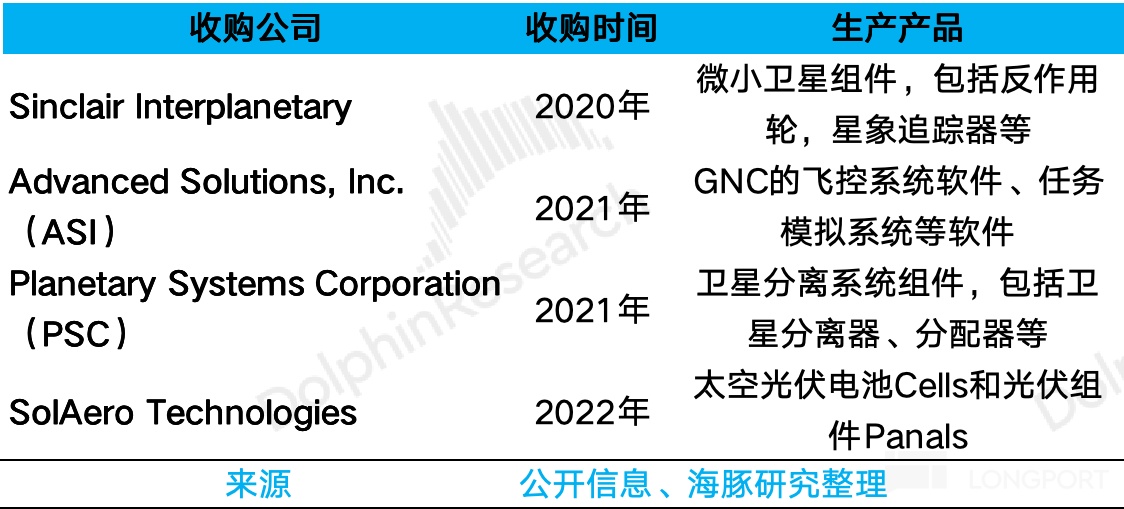
The core advantage is standardization, enabling fast delivery and low-cost volume production. (2) In-house subsystems and components for sale Rocket Lab designs and manufactures core subsystems and sells them externally: star trackers, reaction wheels, comms, separation systems, space-grade solar, and on-orbit software, among others. The company achieved this integration primarily through M&A, as shown below:
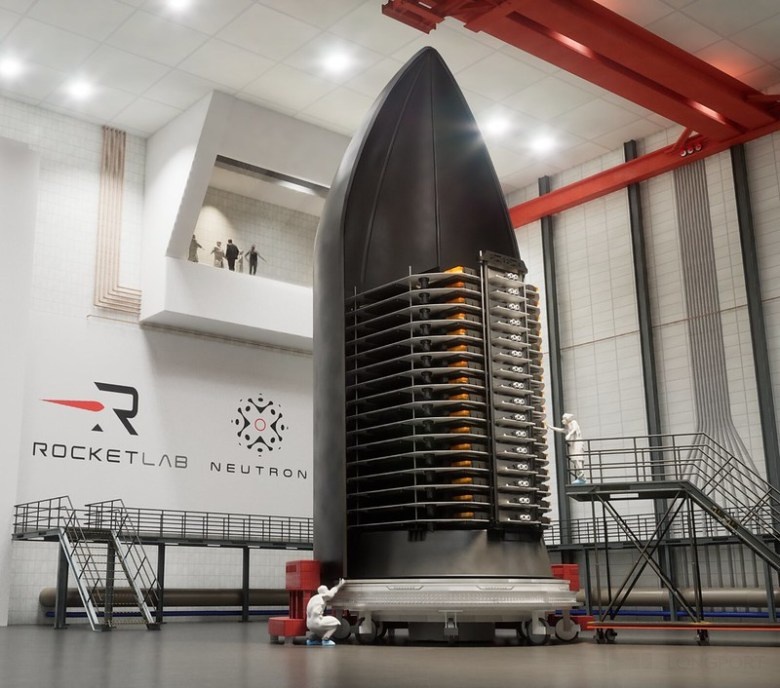
(3) Constellations: a future competitor to SpaceX; Flatellite launched in Feb 2025 In Feb 2025, Rocket Lab introduced the Flatellite platform with two core features: a) Extreme standardization via modular design and unified interfaces, allowing rapid payload integration and streamlined manufacturing and AIT. b) Ultra-flat form factor, enabling satellites to stack tightly like playing cards inside the fairing, greatly increasing per-launch satellite counts and further cutting launch cost per sat.
Today, only SpaceX uses stacked constellations at scale. Blue Origin’s Project Kuiper and several Chinese players are pursuing similar concepts but remain early.
Figure: Neutron Flatellite stacking concept
Source: Rocket Lab, Dolphin Research
Combined with its platforms, Rocket Lab can iterate quickly and drive aggressive cost-downs across satellite build and launch. This positions the company to pivot into satellite services and ultimately field its own constellations, potentially competing with SpaceX’s Starlink.
II. Why is Rocket Lab so capable?
1) Founder Peter Beck’s unique traits
(1) Hands-on intuition born from building things A lifelong rocketry enthusiast, Beck built rocket-powered bikes and scooters as a teenager and spent countless hours experimenting. He skipped university to apprentice in tools and molds at an appliance maker, later working on yachts while continuing rocket R&D on the side, then moved into composites research at a New Zealand institute. After founding Rocket Lab, he spent extensive time on the shop floor, writing code, running tests, and even welding in the early years.
(2) A pragmatic operator Beck originally argued against larger reusable rockets but reversed course as market needs and tech evolved, publicly admitting the pivot. He treats space as an industrial service business that must be scalable and on-time, not a science project. This mindset led Rocket Lab to identify and own a clear market gap: dedicated, high-cadence smallsat launches.
(3) Practice informs decisions Rocket Lab’s unconventional technical choices stem from iterative engineering, not contrarianism for its own sake. Manufacturing leadership is not about rigid adherence to precedent.
2) Embedded in the culture: pragmatism and speed
(1) Clear product-market fit for each offering. Electron targets the small LV niche with maximum flexibility, while Neutron is designed ground-up for reusability. (2) Effective vertical integration. Rocket Lab builds across rockets and satellites, even selling components externally, and has integrated acquired assets well. It operates factories and launch sites in both New Zealand and the U.S. (3) High velocity, rapid iteration. The team built its first rocket Ātea-1 with only ~$2 mn of R&D, then developed Electron for under $100 mn.
Founder involvement, in-house manufacturing, test stands and launch sites, plus deep vertical integration compress development cycles from design to flight test. Rapid iteration is critical in a sector where technology is still evolving and architectures have not converged.
III. How does Rocket Lab stack up vs. peers?
Rocket Lab’s progress has drawn investor attention. But versus peers, is it actually ahead? We compare below.
1) In launch, Rocket Lab has deep flight heritage and a high success rate
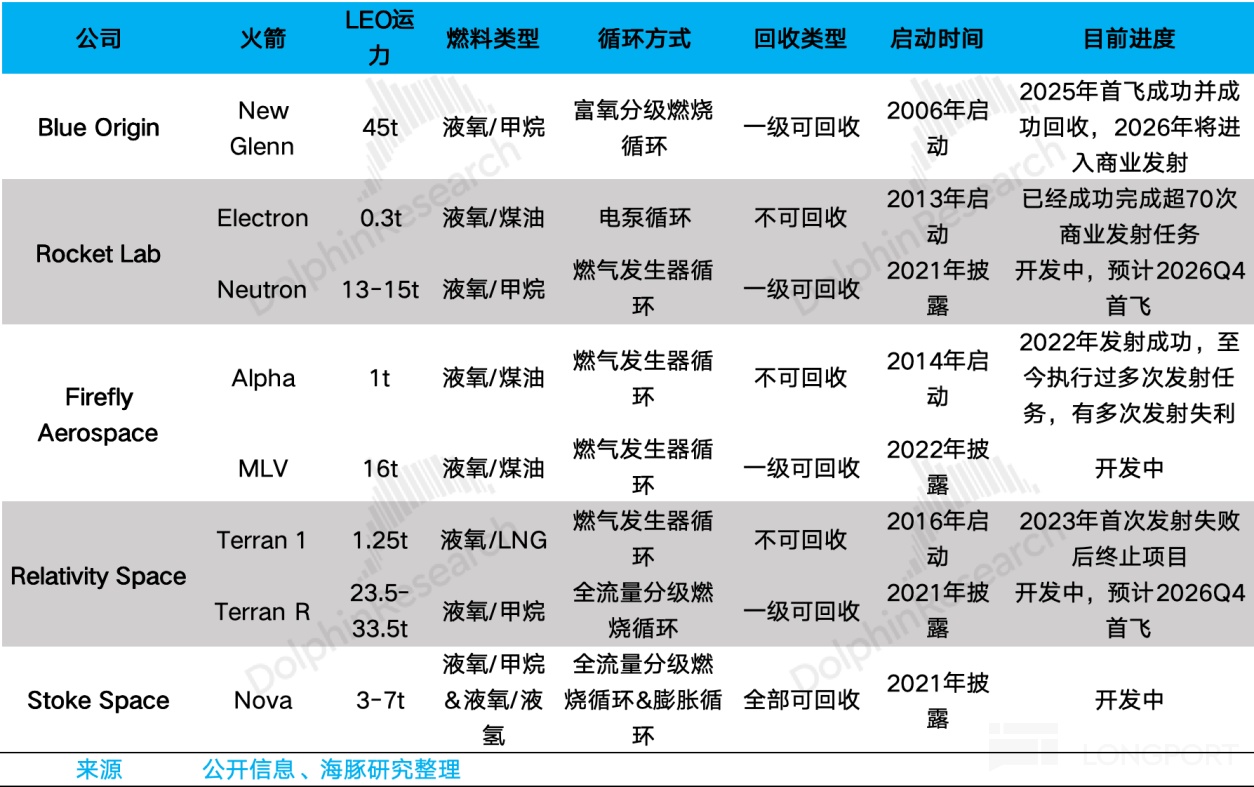
Setting SpaceX aside, compare Rocket Lab with other contenders. Rocket Lab’s cadence and success rate, especially since 2024, outpace Blue Origin, whose approach is more traditional and whose commercial operations are nascent, though Blue Origin targets heavier lift. Firefly Aerospace has multiple flights but a ~50% failure rate.
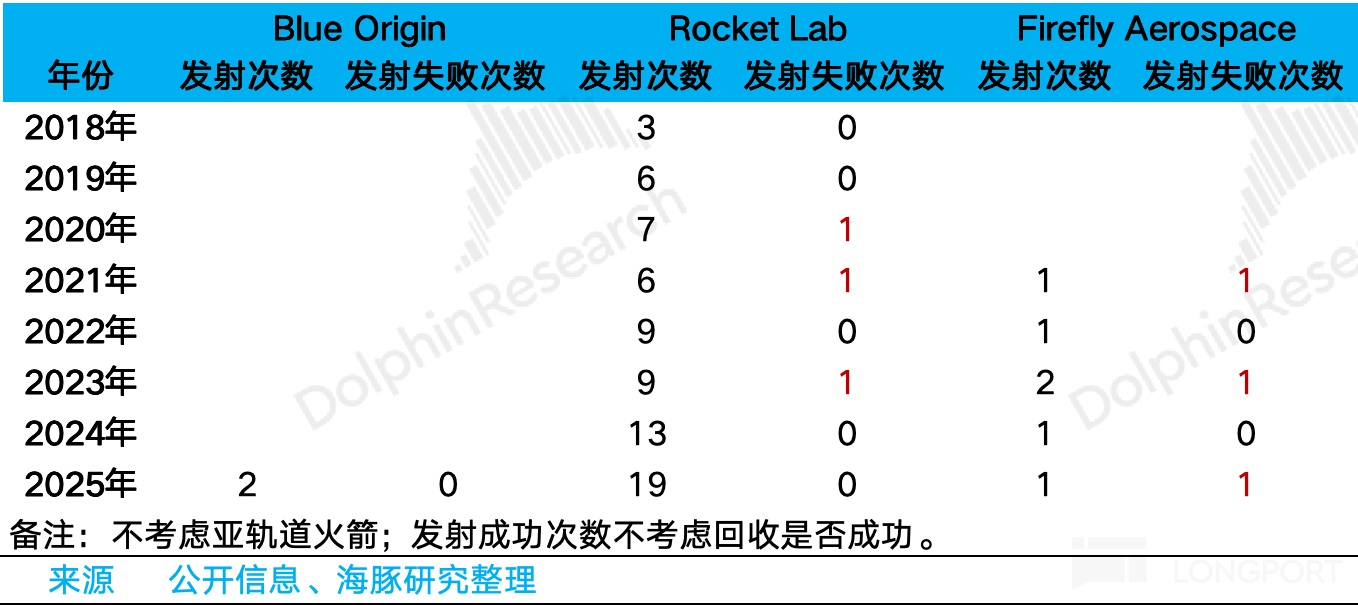
By vehicle program status: excluding Blue Origin, Firefly, Relativity Space, and Stoke Space are all progressing slowly, with Relativity and Stoke having little or no successful orbital flight heritage. This leaves Rocket Lab relatively advanced among non-SpaceX U.S. players.
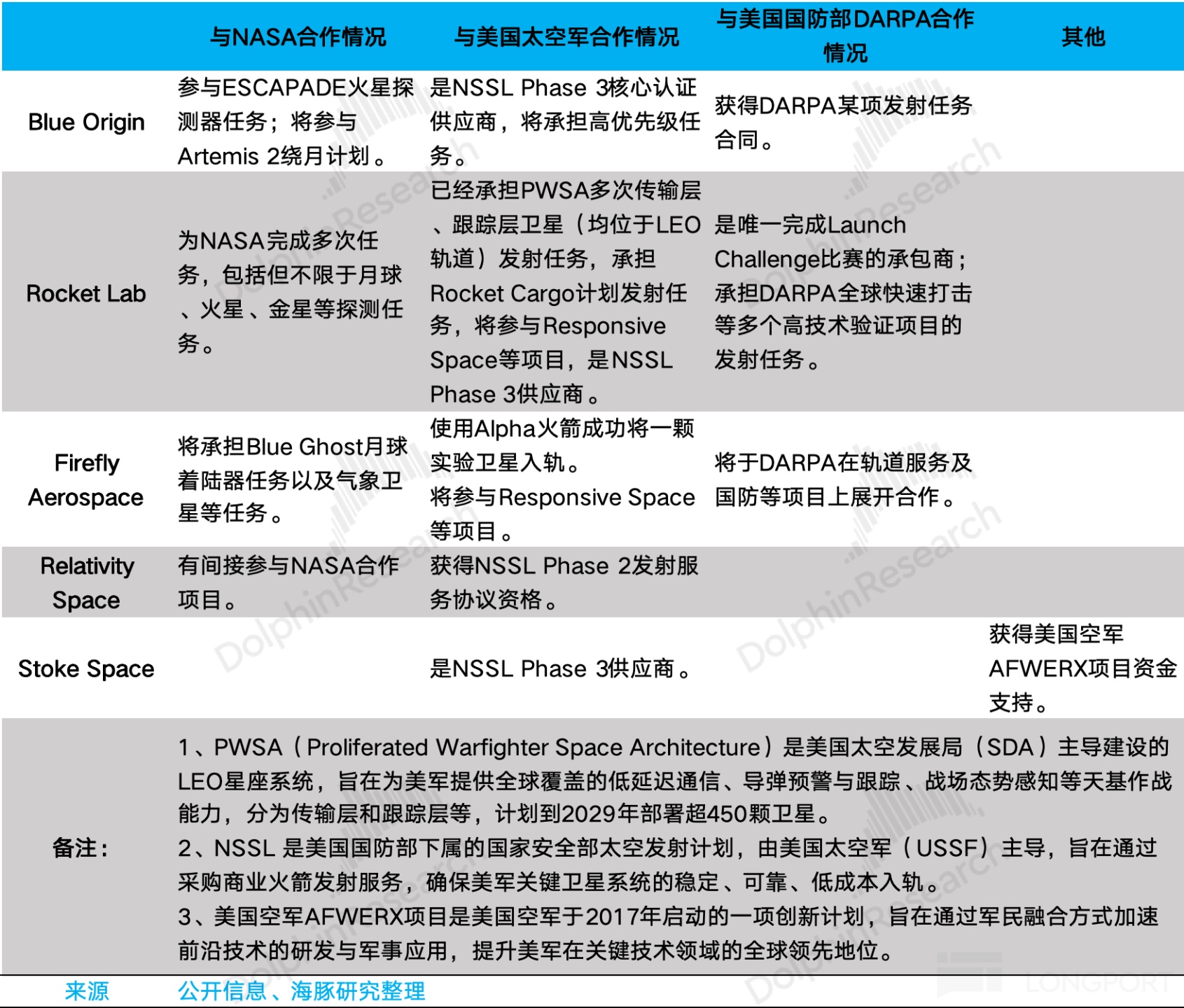
That said, both the U.S. Space Force/DoD and NASA prioritize supplier diversity. Relativity and Stoke, despite limited success in orbit, have secured NSSL Phase 2/3 roles. Firefly, despite multiple failures, continues to work with the U.S. Space Force, partnering with Rocket Lab on TacRS (Tactically Responsive Space) missions.
2) In satellites, the edge is extreme vertical integration
Key competitors in satellite manufacturing are shown below:
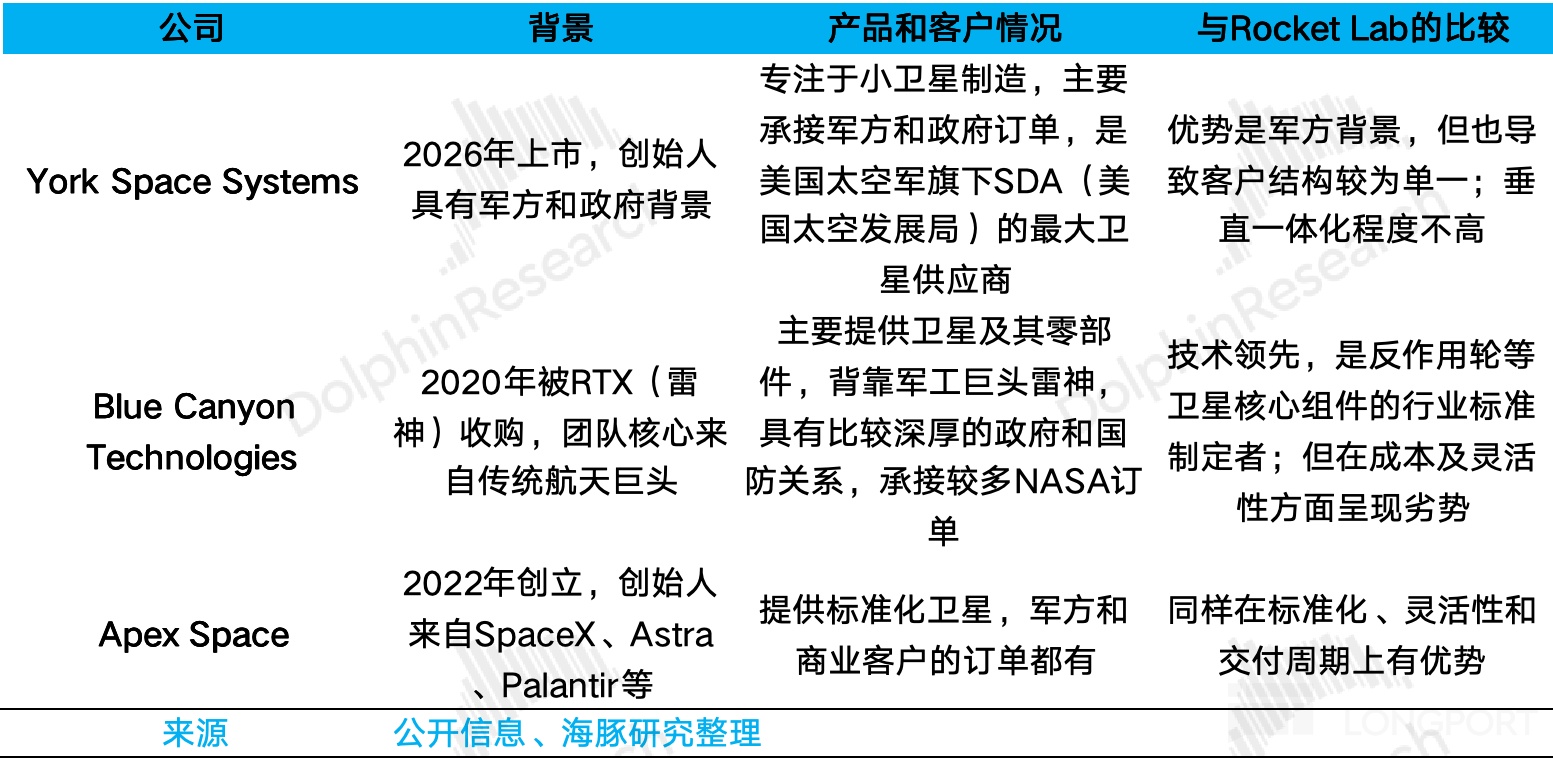
While dominance is harder here than in launch, Rocket Lab still has several advantages: (1) Vertical integration plus strong program management translate into delivery speed and cost leadership. York Space Systems and Blue Canyon Technologies lag on these dimensions, and Apex Space is also less integrated. (2) Rocket Lab is the only one that also launches. An end-to-end offering—from build to launch to ops—compounds efficiency and cost benefits. With both launch and satellite flight heritage, Rocket Lab also carries stronger credentials, a key factor for many customers when awarding contracts.
IV. Market size and sizing the opportunity
On valuation, at a near-$40 bn market cap, Rocket Lab screens rich on PS and PB and compares not unfavorably with rumored SpaceX multiples. Given today’s revenue base, public markets are already embedding optimistic expectations.
To size the upside, we first map the addressable markets:
1) Launch
(1) U.S. Gov./military Rocket Lab’s revenue is U.S.-centric and skewed to Gov./defense customers. NASA’s FY2026 budget is $24.438 bn. Excluding NASA’s own SLS, the relevant lines are Space Operations’ Space Transportation and Exploration’s Commercial Moon and Mars Infrastructure & Transportation, totaling ~11.4% of budget; assume ~10%, or ~$2.4 bn.
The U.S. Space Force FY2026 budget is ~$26 bn. Relevant lines include SDA’s PWSA launches and NSSL missions; assume ~10%, or ~$2.6 bn. Upside variables include rapid replenishment and responsive launch under a space arms race dynamic, e.g., continued PWSA expansion, as well as cadence shifts in NASA’s Moon/Mars programs.
All in, we estimate the U.S. public-sector launch market at roughly ~$5 bn/yr. If Rocket Lab is a No.3/No.4 supplier with a 20%/10% share, that implies ~$1.0 bn/~$0.5 bn annual revenue potential.
(2) Commercial Today’s backlog skews Gov./defense in part because Electron’s small lift fits dedicated, rapid, and secure missions where cost sensitivity is lower. Commercial customers are more price-sensitive, and Electron’s per-mission cost is relatively high. If Neutron succeeds, especially with reuse, Rocket Lab can serve larger Gov./defense payloads and deep-space missions and become more competitive in commercial launch.
For reference, SpaceX is guiding ~20 commercial missions in 2025 at ~$62 mn each, or ~$1.24 bn revenue. If Neutron delivers, that is the benchmark scale.
2) Satellites and components
NASA: Over 30% of the FY2026 budget relates to spacecraft (including satellites). Much of that is payload and launch, but if the satellite bus/platform is ~20% of that pool, it is ~6% of total, or roughly ~$1.5 bn. This includes programs like Orion, Gateway, and HLS, where Rocket Lab can still supply subsystems even without being the prime.
U.S. Space Force: For SDA’s PWSA, DoD plans to launch ~120 satellites in 2026, mostly Transport Layer. At ~$15–40 mn per satellite, assume ~$30 mn avg., or ~$3.6 bn total; adding other lines puts satellites at ~15% of the ~$26 bn budget, or close to ~$4.0 bn. Combined NASA + USSF satellite-related spend is roughly ~$5.5 bn. Assuming a 20% share for Rocket Lab implies close to ~$1.1 bn/yr, with additional upside from commercial satellite orders.
3) Ex-U.S. demand
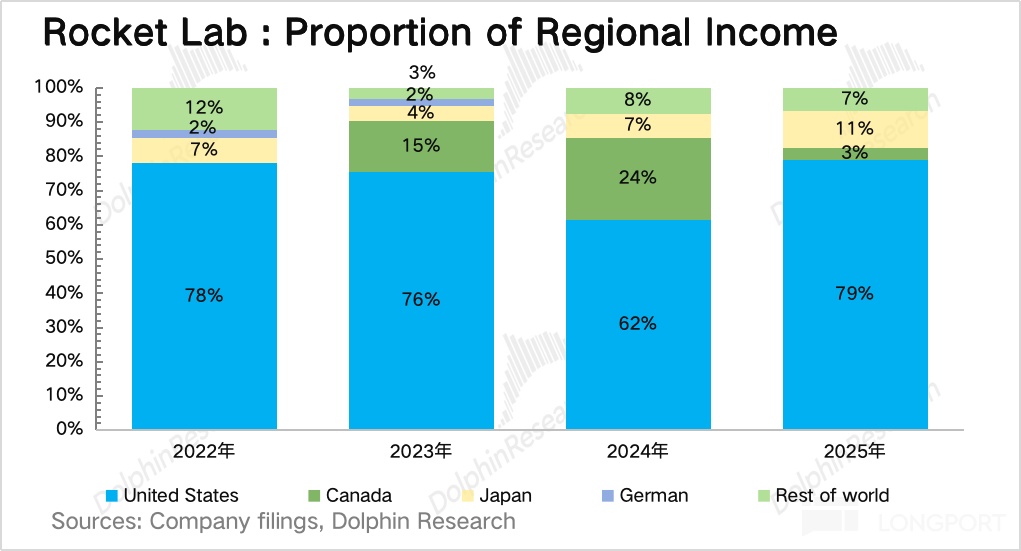
The U.S. remains the largest revenue source, but Canada and Japan are meaningful. Canada revenue is driven by Sinclair Interplanetary (reaction wheels, star trackers), with customers such as MDA Space. Japan revenue comes from constellation operators like Synspective and iQPS. Given launch capacity gaps in many regions, Rocket Lab should continue to win orders outside the U.S. and China.
4) Constellations and ops
Rocket Lab has not yet entered satellite services at scale. But given its platform, build, and launch capabilities, the barriers are low. Starlink accounts for ~60–70% of SpaceX revenue, suggesting satellite services could ultimately become Rocket Lab’s largest segment.
V. Valuation and what to watch
Even excluding services, the TAM for launch and satellites dwarfs Rocket Lab’s current ~$600 mn annual revenue, leaving ample room for growth. Yet on absolute PB/PS and vs. SpaceX comparisons, the stock already carries a premium.
Where can upside surprises come from? (1) Neutron progress is the top catalyst. Success determines whether Rocket Lab can compete at SpaceX’s level; we see high likelihood, with timing the main uncertainty. Excluding SpaceX and Blue Origin, Rocket Lab is pulling ahead of other competitors, with the gap widening. Chinese competitors are unlikely to impact RKLB due to geopolitics. (2) Then it is about order capture across U.S. Gov./defense, commercial, and international markets, which in turn depends on Neutron milestones. Profitability should follow with scale, lifting GPM and leveraging Opex.
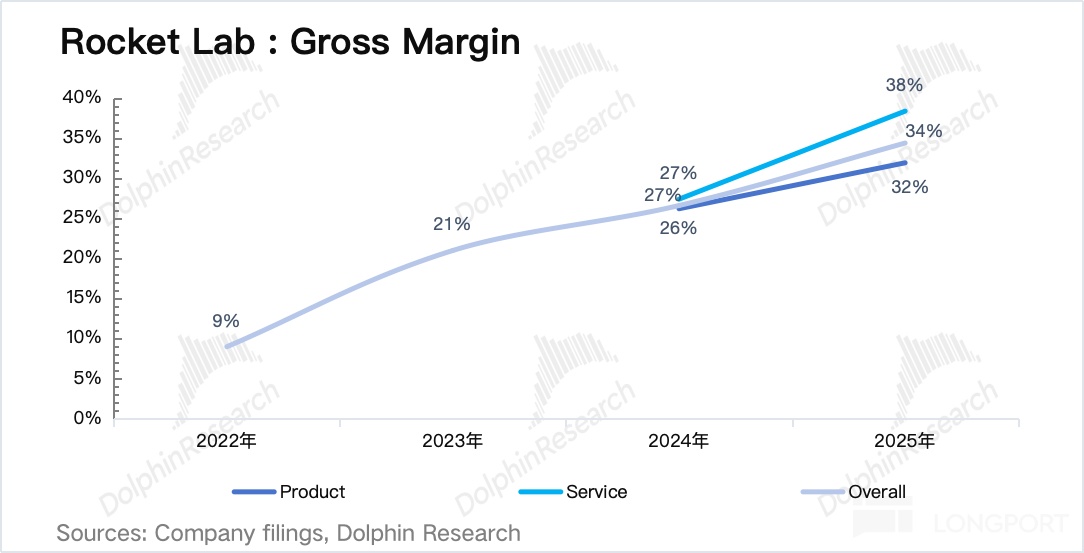
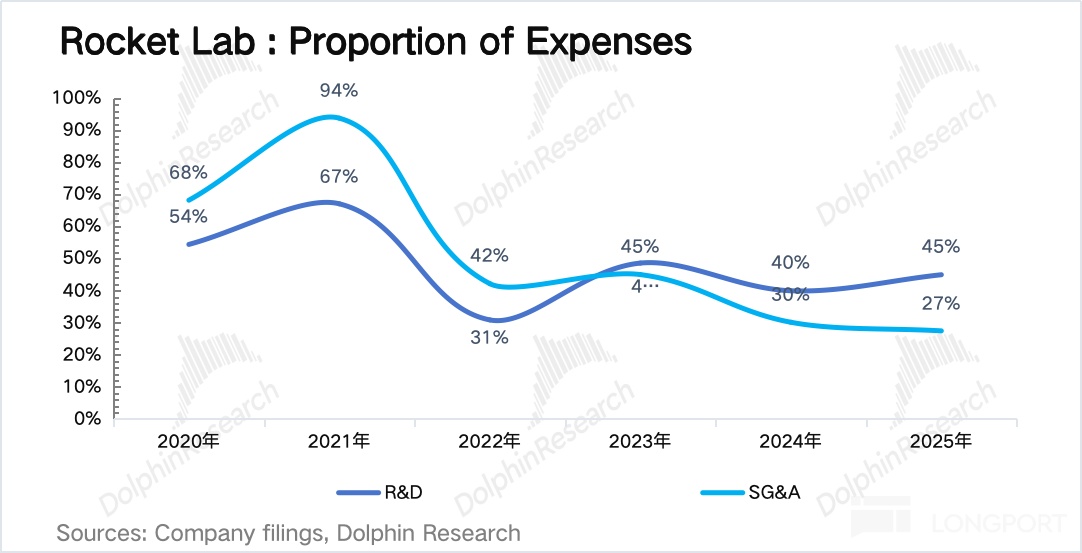
For timeline context: SpaceX was founded in 2002, reached orbit with Falcon 1 in 2008, flew Falcon 9 in 2010, and achieved first-stage reuse in 2015. Rocket Lab was founded in 2006 and reached orbit with Electron in 2018, taking longer given fewer resources early on, but the base is now stronger. Assume a roughly 10-year generational gap to SpaceX.
Based on this, we frame potential market cap ranges under two scenarios:
Industry forecasts suggest commercial space could be 2–4x larger in 2035 vs. 2025; we use 3x, including satellite services as the major growth driver. (1) If Rocket Lab’s share in 10 years matches SpaceX’s current position, revenue could be ~3x SpaceX’s 2025 revenue ($15–16 bn), or ~$45–48 bn; we use ~$46.5 bn. (2) If Rocket Lab is No.3/No.4 at ~10% share (with the leader at ~50%), that is ~1/5 of the leader’s scale, or ~$9.0–9.6 bn; we use ~$9.3 bn.
Apply a 20% net margin and a 30x PE to each scenario, then discount back. Implied market caps are roughly ~$105 bn/~$21 bn, respectively. On this framing, today’s valuation sits closer to the lower bound with favorable odds. With business visibility improving, we stay bullish on the stock.
Near term, Neutron timing is key for batch satellite deployments and reuse-driven launch cost reduction. The maiden flight has slipped from Q2 to Q4; if it flies on time, RKLB’s upside should open up further.
<End>
Risk disclosures and statement:Dolphin Research disclaimer and general disclosures
The copyright of this article belongs to the original author/organization.
The views expressed herein are solely those of the author and do not reflect the stance of the platform. The content is intended for investment reference purposes only and shall not be considered as investment advice. Please contact us if you have any questions or suggestions regarding the content services provided by the platform.
