


The tide has turned, is it CPU's turn now?
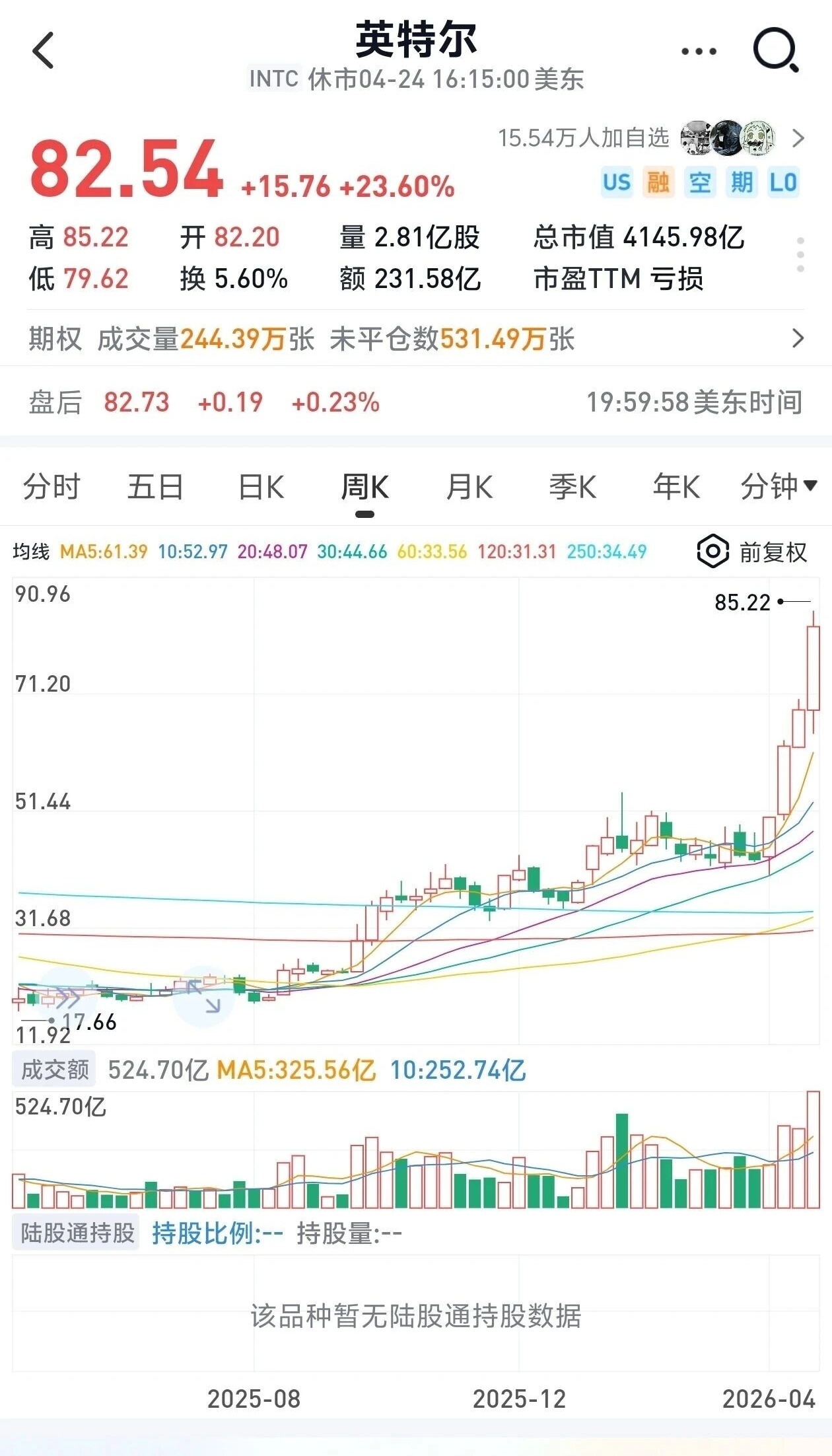
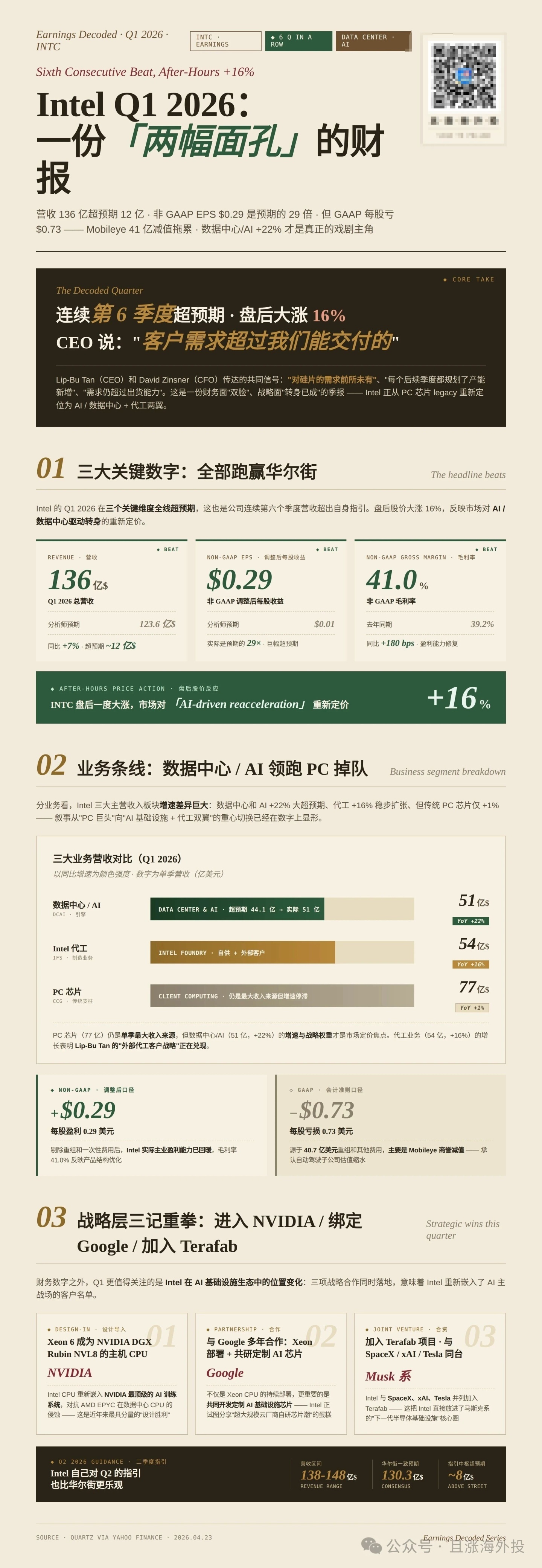
Previously, we mentioned the story about Intel's "Pinhao Fan" (group-buying meal), "Intel: The 'Pinhao Fan' of U.S. Tech Stocks." This time, with the 26Q1 earnings report, Intel delivered results that exceeded expectations, with both current performance and guidance for the next quarter surpassing market forecasts, causing the stock price to surge 20% in a single day.
Breaking down the business segments, the Data Center and AI division was the biggest highlight, with revenue reaching $5.1 billion, a significant 22% year-over-year increase. Intel's traditional foundry business recorded revenue of $5.4 billion, also growing by 16%.
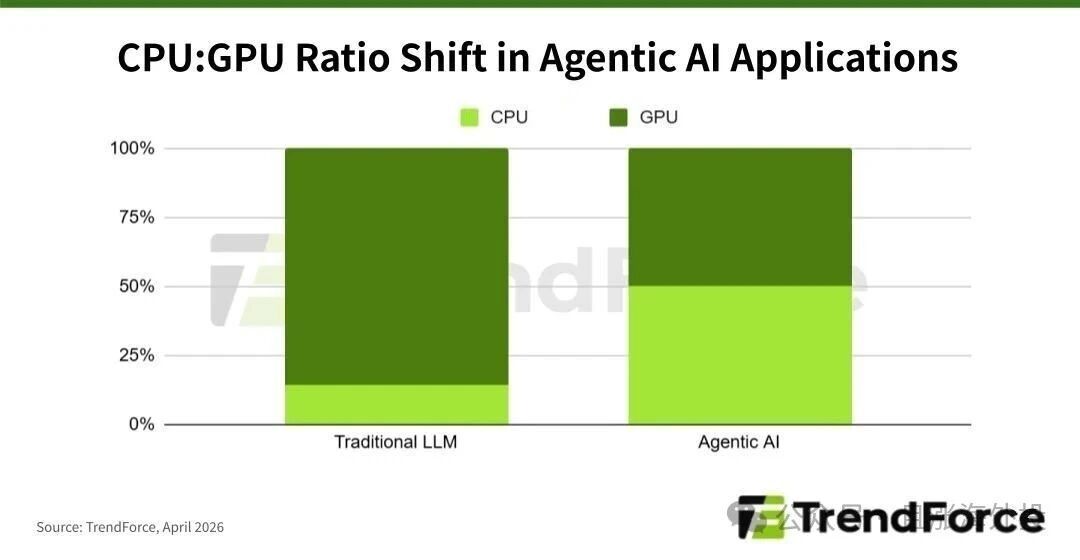
Behind the better-than-expected numbers lies a significant evolution in the underlying logic of AI computing power: the market had severely underestimated the role of CPUs in the new wave of AI.
First, the market's previous understanding remained in the first stage: the training of large language models heavily relies on GPU parallel computing, leading to the marginalization of CPUs. However, as AI moves from text generation to the era of Agentic AI, capable of autonomous planning and multi-step execution, the proportion of CPU computing power has significantly rebounded, approaching 50%. The logical reasoning, external API calls, and complex control flows required by Agentic AI are precisely the absolute domain of CPUs. The 22% better-than-expected growth in Intel's Data Center business is the tangible reflection of this logic in the earnings report.
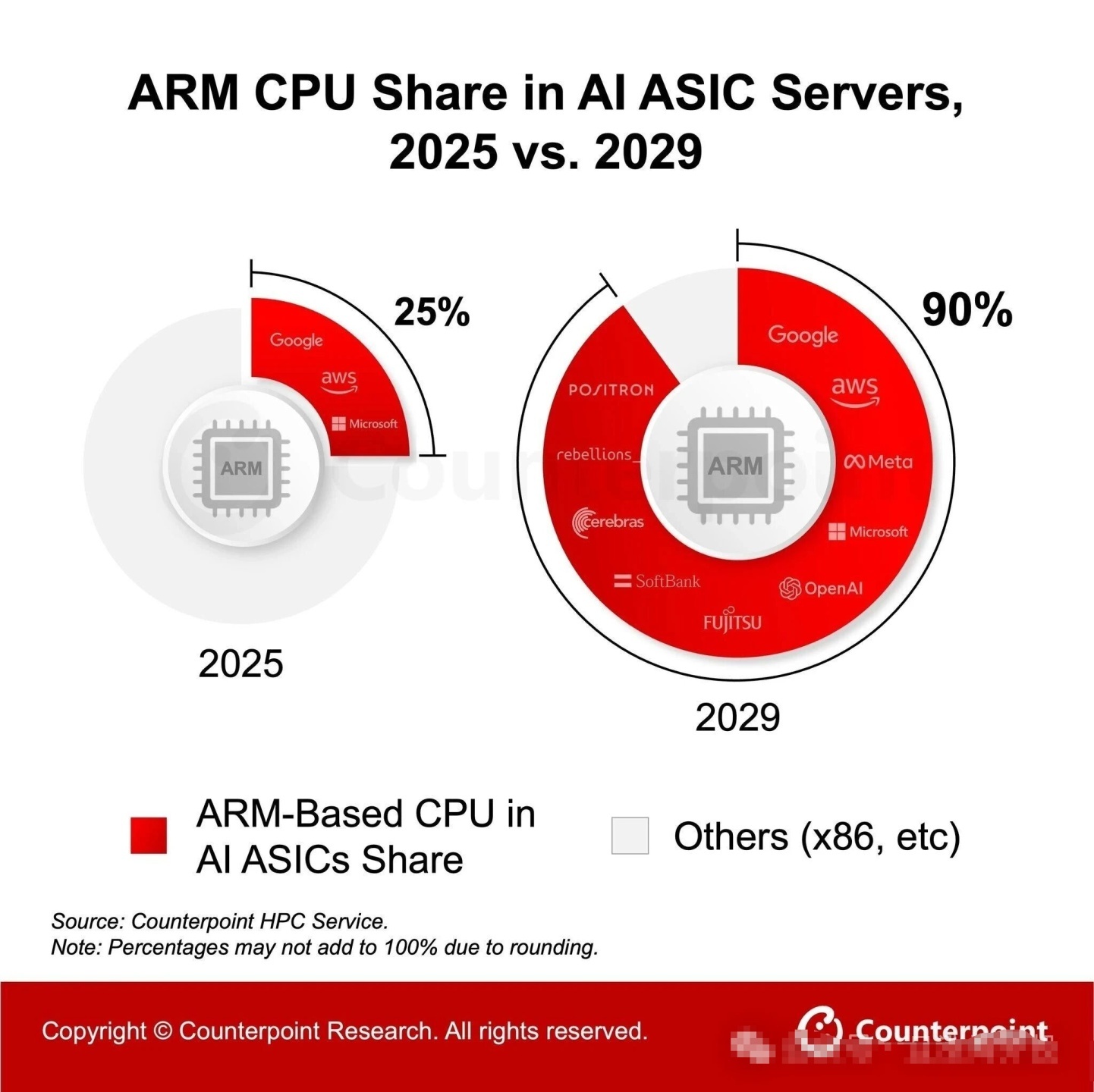
Second, let's look at Intel's previous foundry business. The current trend of large cloud providers developing their own chips (ASIC) is unstoppable, as discussed in "Recent Moves by the 'Magnificent Seven' in U.S. Stocks." According to Counterpoint's forecast, by 2029, the share of ARM-based CPUs in AI ASIC servers led by Google, AWS, Microsoft, and others will soar to 90%.
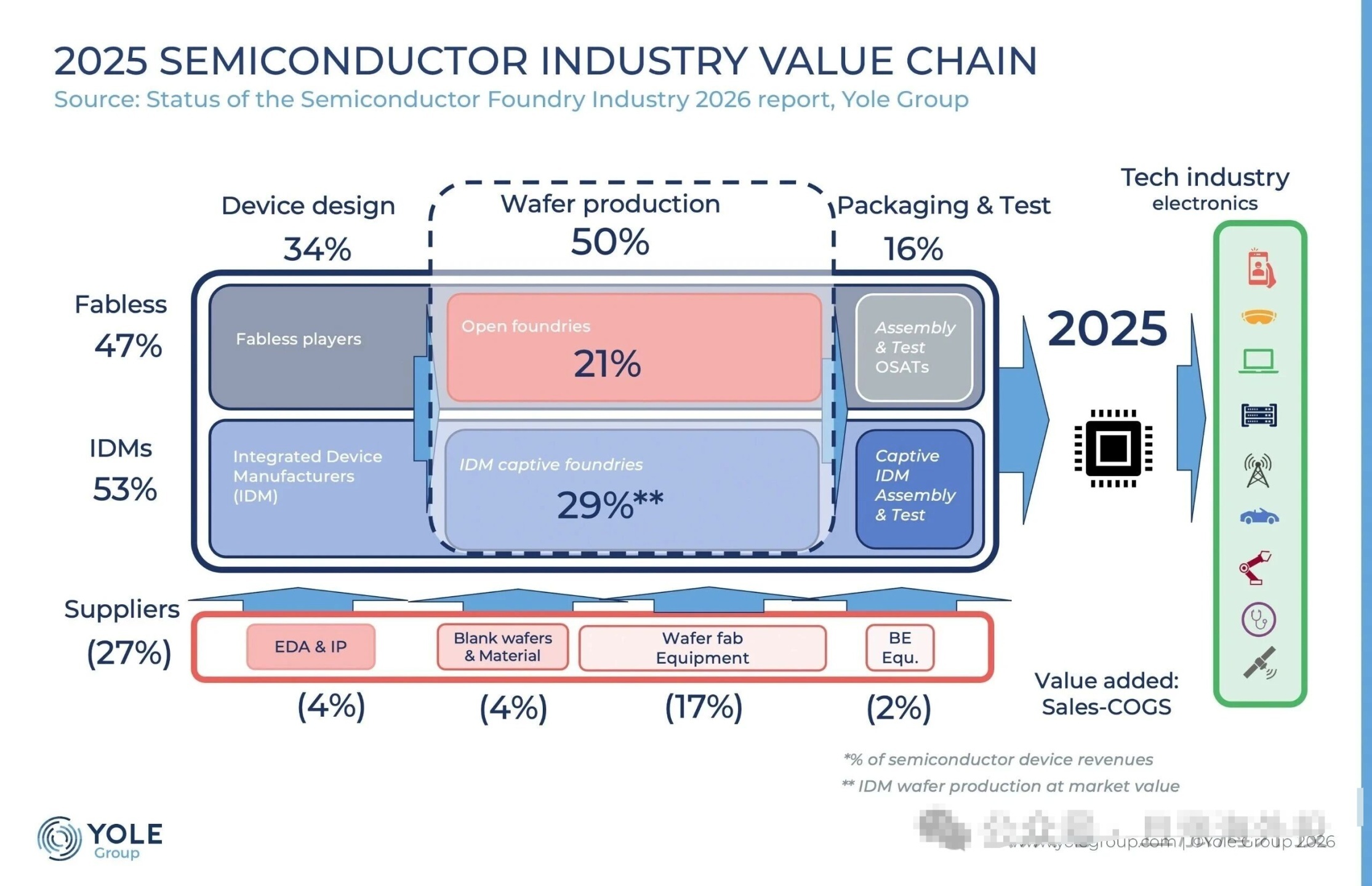
In the semiconductor value chain, wafer manufacturing (50%) and packaging & testing (16%) account for the vast majority of added value. This is Intel's other advantageous business, the foundry business. The earnings report's mention of "co-developing custom AI chips with Google" is strong evidence of Intel capturing the profits from large companies' self-developed foundry needs through advanced packaging and advanced process technologies.
Furthermore, Intel is also moving towards broader ecosystem alliances. While solidifying its computing power and foundry fundamentals, Intel has confirmed its participation in Elon Musk's Terafab project, collaborating with SpaceX, xAI, and Tesla, securing a key entry ticket in the layout of next-generation frontier technology infrastructure.
Therefore, in this phase of AI's deepening advancement, some companies that previously had relevant technological reserves but hadn't found their application are also accumulating strength for a breakthrough, achieving renewed development through AI business. Once confirmed by fundamentals, opportunities for a double boost in valuation and performance (Davis Double) will emerge. Situations like Intel's single-day surge of over 20% after exceeding earnings expectations will not be uncommon.
(Not for investment advice)
$Intel(INTC.US) $NVIDIA(NVDA.US) $Alphabet - C(GOOG.US) $Microsoft(MSFT.US)
The copyright of this article belongs to the original author/organization.
The views expressed herein are solely those of the author and do not reflect the stance of the platform. The content is intended for investment reference purposes only and shall not be considered as investment advice. Please contact us if you have any questions or suggestions regarding the content services provided by the platform.
